Star Lily (Toxicoscordion fremontii)
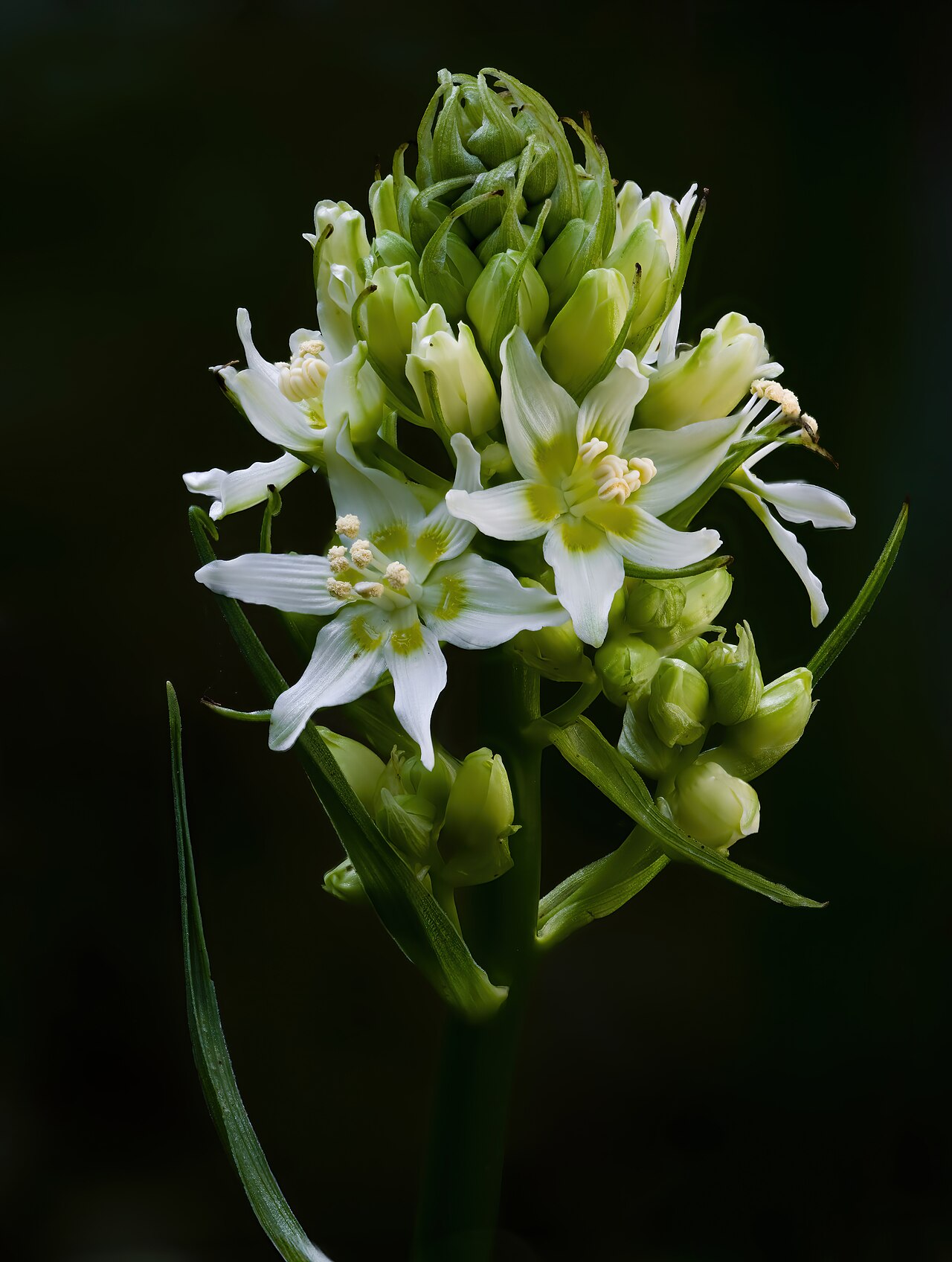
Toxicoscordion fremontii, commonly known as star lily or Fremont’s star lily (and historically called Fremont’s deathcamas), is an attractive California native wildflower that produces one of the showiest early-season bulb displays on grassy and rocky slopes from Baja California to southwestern Oregon. Despite its old common name referencing deathcamas, star lily belongs to a genus whose members are all poisonous to some degree — a trait the plant shares with its close relatives, though star lily itself is less notorious than some.
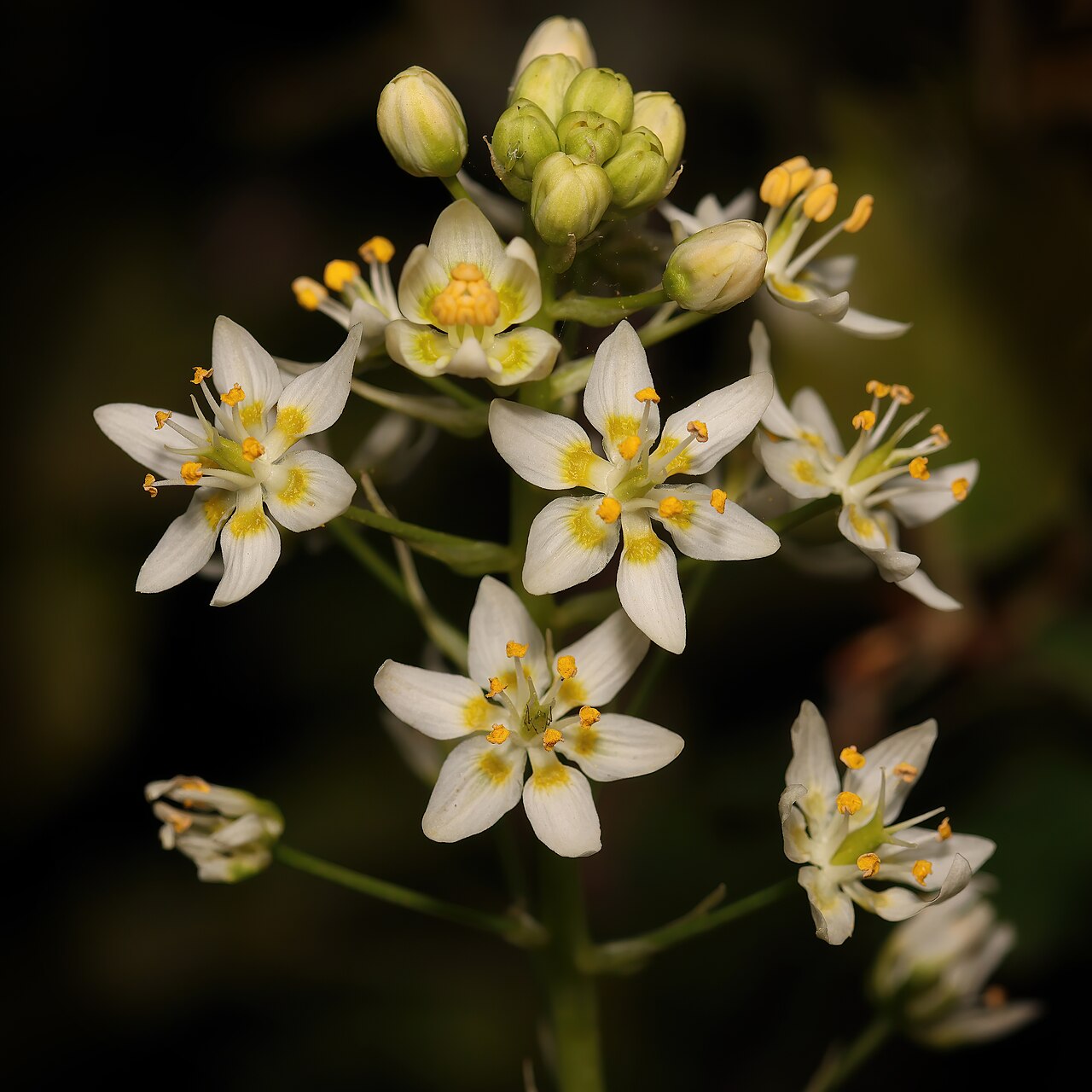
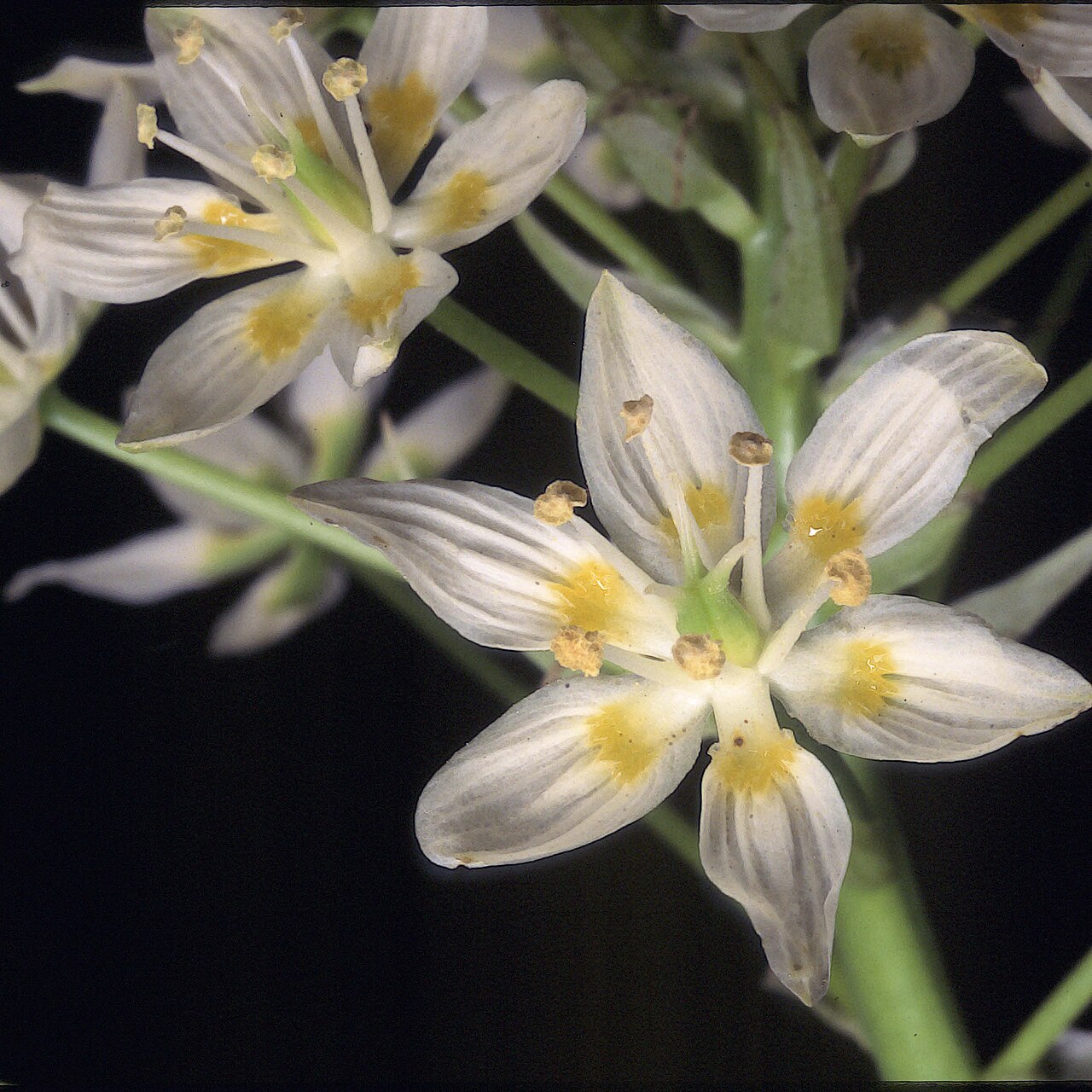
Rising from a rounded underground bulb, star lily sends up a single tall flowering stalk topped with a cluster of showy, cream to white, six-petaled, star-shaped flowers, each centered with a greenish-yellow patch and prominent yellow stamens. The display, usually from March to June, is sporadic from year to year since bulbs do not flower reliably every season — a quirk that makes a good bloom year feel like a special event for California wildflower watchers.
For gardeners building a California native wildflower meadow or grassland restoration, star lily offers an elegant, low-maintenance bulb for sunny slopes and open grassland — provided it is planted with a clear understanding of its toxicity, so children, pets, and livestock never mistake it for an edible bulb.
Identification
Star lily grows from a more or less spherical underground bulb roughly 20 to 35 mm in diameter, from which a single flowering stalk emerges each spring, typically reaching 1 to 2 feet tall.
Leaves
The leaves are long, narrow, and grasslike, growing to about half a meter in length from the base of the plant. They are channeled (folded along their length), giving them a somewhat keeled cross-section distinct from true grasses, and typically begin to yellow and die back as the plant finishes flowering and enters summer dormancy.
Flowers
Flowers are borne in a cluster (raceme) atop the single flowering stalk, each 1 to 4 cm across with six creamy white to cream-and-yellow tepals (petals and petal-like sepals combined) arranged in a symmetrical star shape — the source of the common name. A greenish-yellow gland at the base of each tepal and the bright yellow anthers give the flowers a subtle two-toned look up close. Blooming occurs from March through June, though flowering is sporadic from year to year, with some bulbs skipping a season entirely.
Fruit & Seeds
After flowering, star lily produces a dry, three-chambered capsule containing numerous small seeds. The entire plant, including the bulb, foliage, flowers, and seeds, contains toxic steroidal alkaloids typical of the genus Toxicoscordion and should never be handled with the expectation of any edible or medicinal use.
Quick Facts
| Scientific Name | Toxicoscordion fremontii (syn. Zigadenus fremontii) |
| Family | Melanthiaceae |
| Plant Type | Perennial bulb |
| Mature Height | 1–2 ft |
| Mature Spread | About 1 ft clump of basal leaves |
| Growth Rate | Slow |
| Sun Exposure | Full Sun |
| Water Needs | Low (winter-wet, summer-dry) |
| Soil Type | Well-drained; grassland loam, clay, or rocky soils |
| Soil pH | 6.0–7.5 |
| Bloom Time | March – June |
| Flower Color | Creamy white with yellow-green centers |
| Fall Color | N/A; summer-dormant |
| Fruit | Dry three-chambered seed capsule |
| Deer Resistant | Yes (toxic, generally avoided) |
| USDA Hardiness Zones | 8–10 |
Native Range
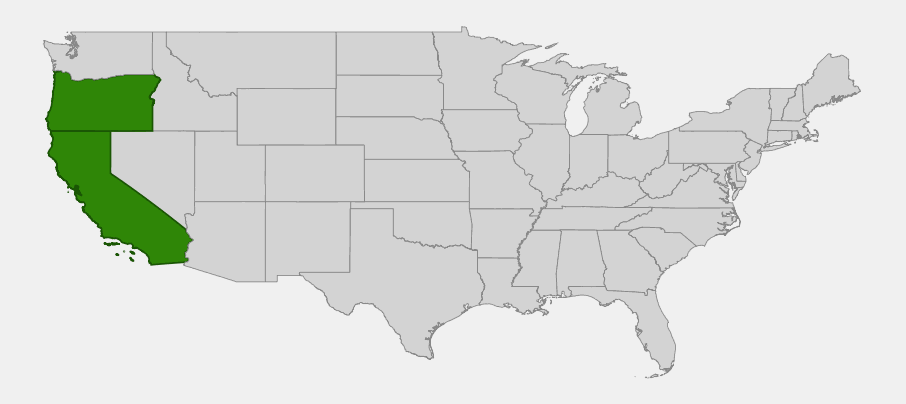
Star lily is native to California, where it has been documented in roughly 34 of the state’s 58 counties, ranging from the border of Baja California north to southwestern Oregon. Within California it is found from the coast to the western slopes of the Sierra Nevada, generally below about 3,500 feet elevation, and it also occurs in northern Baja California, Mexico.
The species grows on grassy and wooded slopes and among rocky outcrops, typically in open grassland, oak woodland edges, and coastal scrub where it can take advantage of full sun during its spring growing season before going dormant through the dry California summer.
Star lily is not documented as native outside California, southwestern Oregon, and northern Baja California; gardeners in other parts of the West should look for a regionally native bulb instead.
📋 Regional plant lists featuring Star Lily: California & Nevada · Western Oregon & Western Washington
Growing & Care Guide
Star lily is a classic California dry-grassland bulb: easy to grow once established in the right conditions, but intolerant of summer irrigation that disrupts its natural wet-winter, dry-summer rhythm.
Light
Full sun is best, mirroring its native open grassland and slope habitat. It will tolerate light shade from scattered oaks but performs best and flowers most reliably in open, sunny sites.
Soil & Water
Star lily wants well-drained soil, from grassland loam to rocky or clay substrates, and a distinct wet-winter, dry-summer watering pattern that matches California’s natural rainfall cycle. Supplemental winter and spring water can help establish new plantings, but summer irrigation should be avoided once the bulb goes dormant, as it increases the risk of bulb rot.
Planting Tips
Plant bulbs in fall, timed with the start of the rainy season, at a depth of about 3 to 4 inches in well-drained soil. Because star lily is toxic, site plantings thoughtfully away from vegetable gardens, areas where children play, or livestock pasture, and label or mark plantings clearly if there is any chance of confusion with edible bulbs such as wild onions.
Pruning & Maintenance
Allow foliage to yellow and die back naturally after flowering before removing it, since the bulb draws on the fading leaves to store energy for next year’s bloom. No fertilizer is typically needed in appropriate native grassland soils, and the plant has few pest or disease problems.
Landscape Uses
Star lily is best used thoughtfully, with its toxicity in mind, in these settings:
- California native wildflower meadows and grassland restoration
- Oak woodland understory plantings
- Naturalistic slope and hillside gardens
- Demonstration gardens teaching native plant identification and safe plant knowledge
Wildlife & Ecological Value
Star lily’s toxicity shapes much of its ecological role, making it unpalatable to the grazers and browsers that might otherwise damage its showy spring display.
For Pollinators
Star lily flowers attract a range of native bee and other insect pollinators drawn to the pale, star-shaped blooms in early spring, when few other grassland wildflowers are yet in bloom. The toxic alkaloids are concentrated more heavily in the bulb and foliage than in nectar, allowing some pollination to proceed despite the plant’s defenses.
For Mammals
Because the entire plant is toxic, star lily is generally avoided by deer, rabbits, and livestock, which makes it one of the more reliably deer-resistant native bulbs for California gardens — a useful trait where browsing pressure limits other wildflower choices.
Ecosystem Role
As a native perennial bulb, star lily contributes to the structural diversity of California grassland and oak woodland plant communities, persisting underground through fire, drought, and grazing pressure that can eliminate less resilient annual wildflowers. Its early bloom window provides an important nectar source for pollinators emerging in late winter and early spring.
Cultural & Historical Uses
Star lily’s genus name Toxicoscordion derives from Greek roots meaning “poison garlic,” and the species was historically known as Fremont’s deathcamas, a name reflecting its kinship with the more notorious death camas species in the same genus. Unlike edible bulbs such as true camas (Camassia), star lily was recognized by Indigenous peoples throughout its range as a plant to avoid rather than harvest for food.
Historical and ethnobotanical records do not document significant food, medicinal, or fiber use of star lily among California’s Indigenous peoples, consistent with its toxicity; where documented, traditional knowledge instead emphasized distinguishing star lily and its relatives from genuinely edible bulb species growing in the same grassland habitats, an important safety skill passed down through generations of careful plant observation.
Today, star lily’s primary cultural significance is as a showy, reliably native wildflower in California’s spring bloom cycle, valued by native plant gardeners and restorationists for its beauty and resilience, with its toxicity now understood and respected as a defining characteristic rather than a historical footnote.
Frequently Asked Questions
Is star lily poisonous?
Yes. Every part of the plant — bulb, leaves, flowers, and seeds — contains toxic steroidal alkaloids and should never be eaten. Keep children, pets, and livestock away from plantings, and never confuse the bulb with edible species such as wild onion or true camas.
Why doesn’t my star lily bloom every year?
Sporadic flowering is normal for this species; bulbs often skip a season, particularly after dry winters or when energy reserves are low, and will flower again in a more favorable year.
Is star lily the same plant as death camas?
Star lily is closely related to death camas species and was historically called “Fremont’s deathcamas,” but it is usually referred to today by the common name star lily to distinguish it, while the name “death camas” is more often reserved for other species in the genus, including meadow death camas (Toxicoscordion venenosum).
Does star lily need regular watering?
No — established plants follow a natural wet-winter, dry-summer cycle and should not be irrigated through summer dormancy, which can cause bulb rot.
Can I grow star lily outside California?
Its native range is limited to California, southwestern Oregon, and northern Baja California. Gardeners elsewhere should choose a regionally native bulb instead.

Looking for a nursery that carries Star Lily?
Browse our native plant nursery directory: California · Oregon