
Tufted Saxifrage (Saxifraga caespitosa)
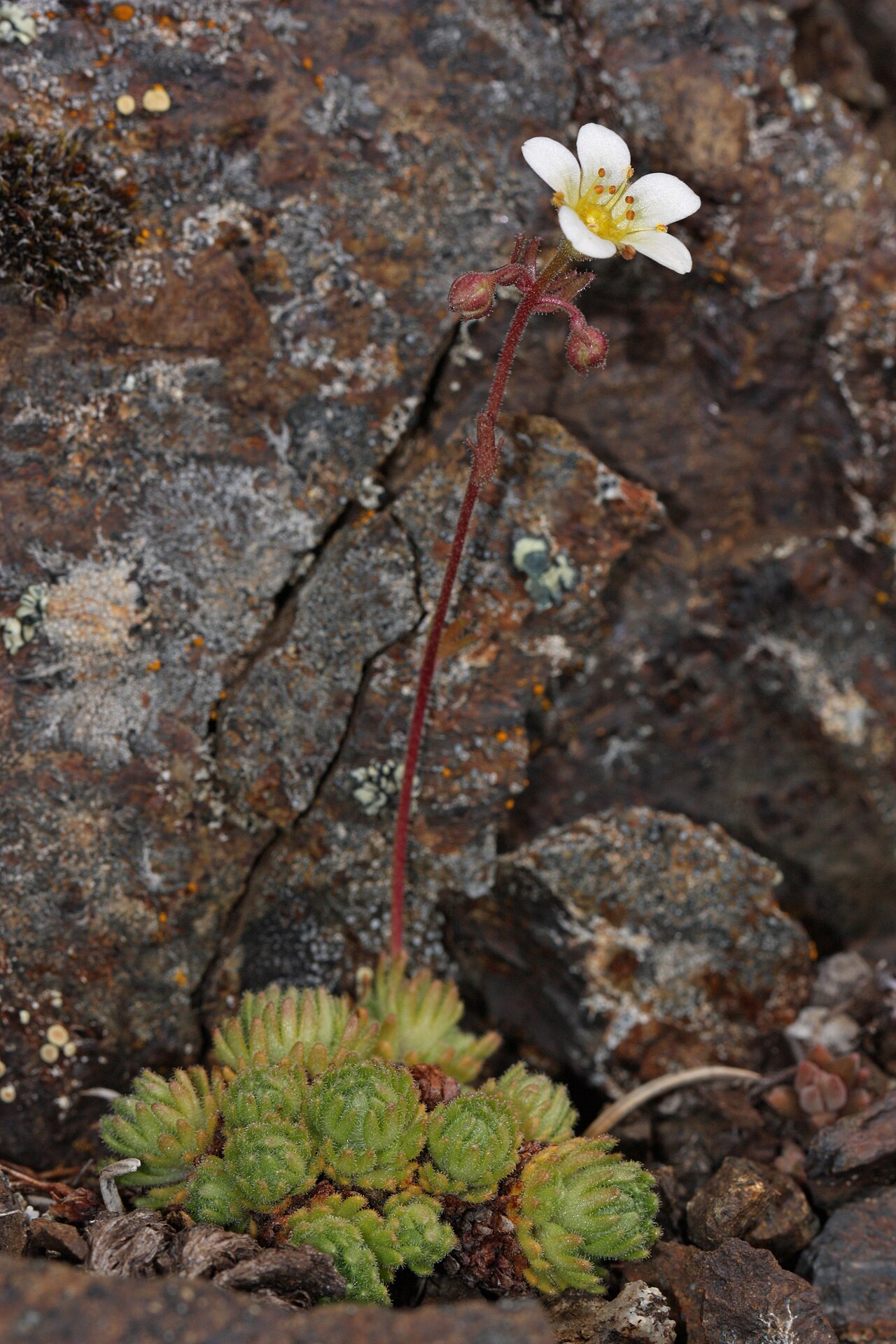
Saxifraga caespitosa (often spelled S. cespitosa), the Tufted Saxifrage (USDA: tufted alpine saxifrage), is a tiny cushion plant of cliffs, rock crevices, scree and tundra. It is one of the most widespread saxifrages in the world, growing around the Arctic in North America, Greenland, Europe and Asia, and south along the high western mountains of the United States to Arizona and New Mexico.
Out of bloom it is easy to overlook: a low, dense mound of small rosettes made of three-lobed, sticky-hairy leaves, often tucked into a crack in bare rock. In early to midsummer, slender, reddish stems rise a few inches above the cushion, each carrying one to a few cup-shaped white flowers. Seen up close, it is one of the most charming plants of the high country.
The name Saxifraga means “stone-breaker,” for the way saxifrages grow in cracks in rock, and caespitosa means “tufted.” This guide covers how to identify tufted saxifrage, where it grows, how it can be grown in a rock garden or trough from nursery-grown stock, and its place in alpine and Arctic ecosystems.
Identification
Tufted saxifrage forms small, tight cushions a few inches across. The combination of three-lobed leaves in dense rosettes and small white flowers on thin stems is distinctive among western alpine plants.
Leaves
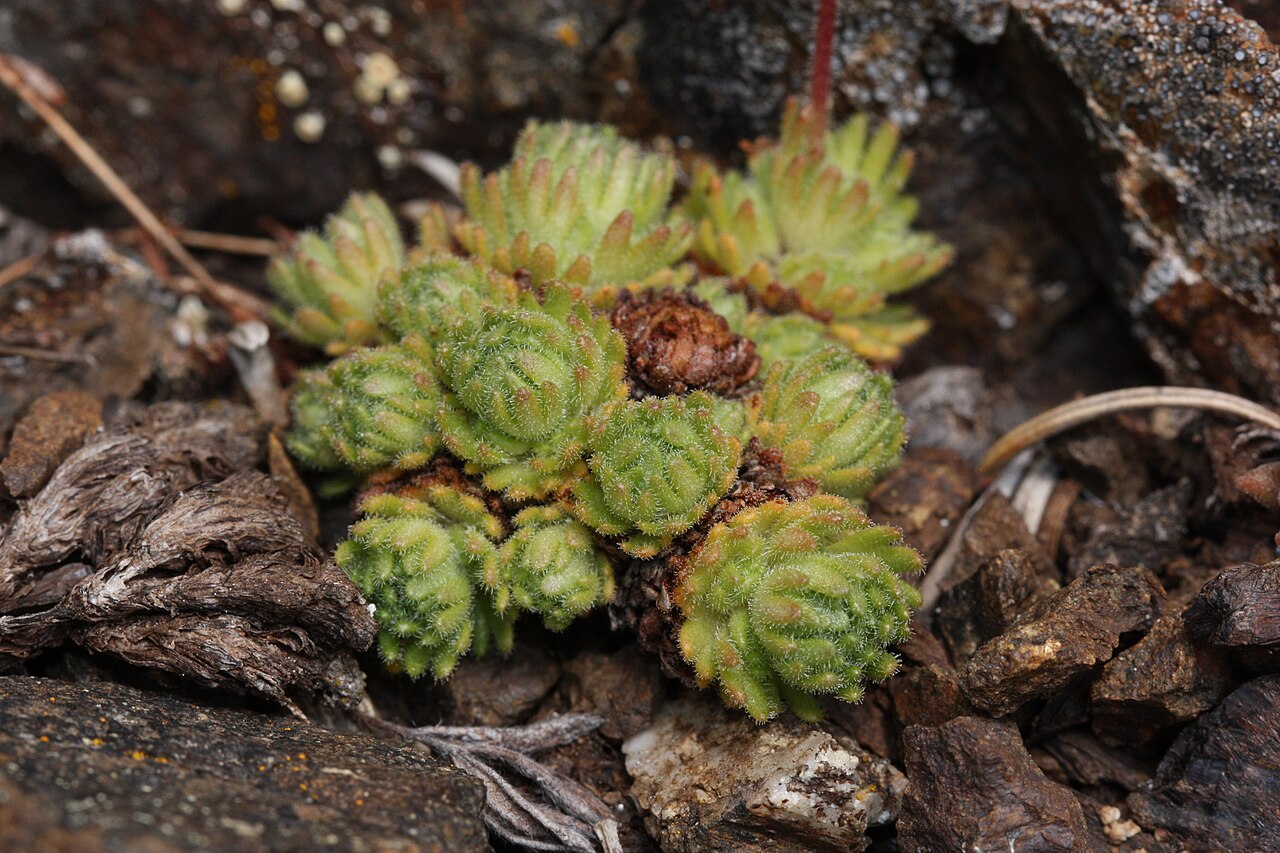
The leaves are crowded in small rosettes at the ends of short, branching stems, forming a dense mat or cushion. Each leaf is about ¼ to ¾ inch long, wedge-shaped at the base and usually divided at the tip into three (sometimes up to five) short, blunt lobes. Leaves are covered with short, sticky glandular hairs, and old dead leaves persist below the living rosettes.
Flowers
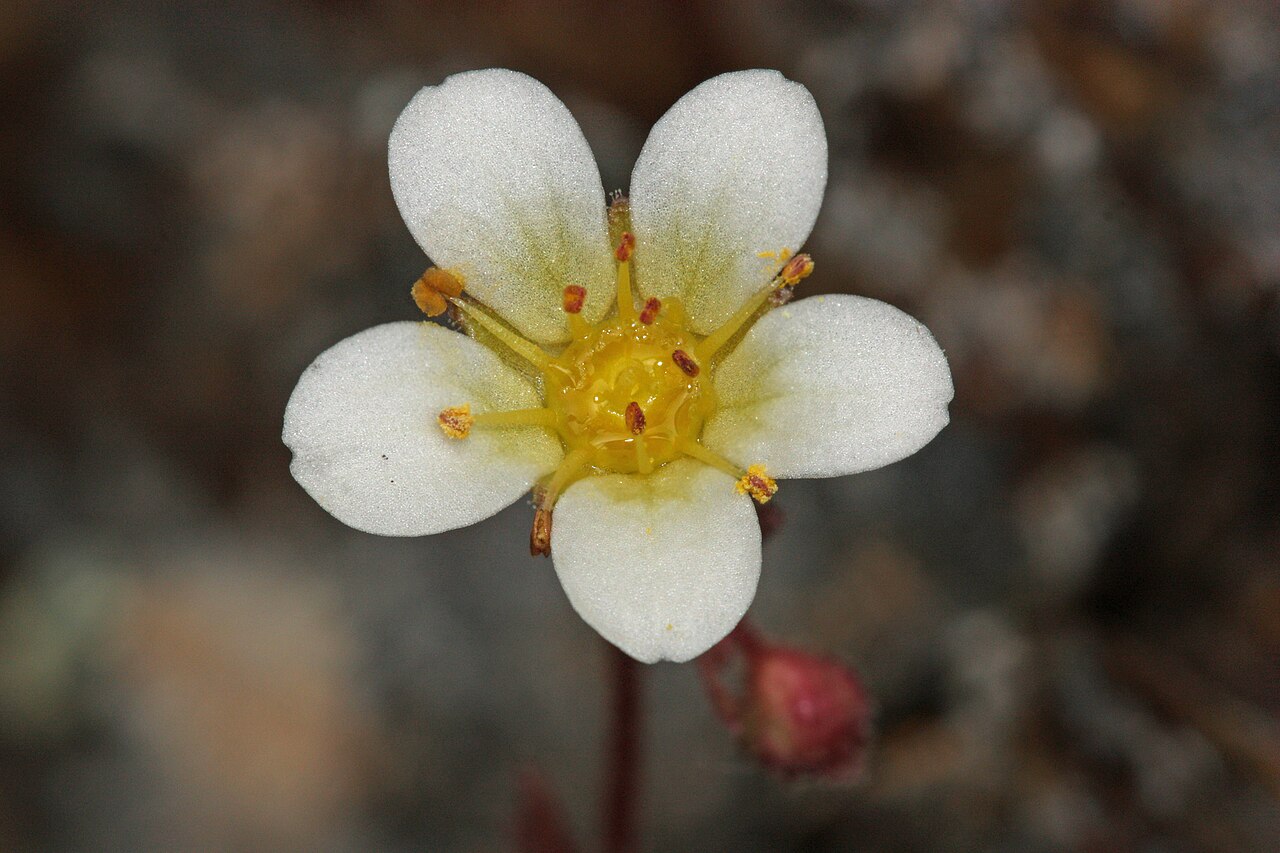
From June to August, depending on elevation and latitude, slender, glandular-hairy stems 1 to 4 inches tall (occasionally to 6 inches) rise above the cushion with a few small leaves and one to five flowers. The flowers are about ½ inch across, with five white to creamy petals, often with faint greenish veins, around a yellowish-green center and ten stamens. The sepals and upper stems are often tinged red.
Fruit
The fruit is a small two-beaked capsule that ripens in late summer and releases many tiny seeds, which are scattered by wind and gravity across the rock and gravel around the parent cushion.
Look-alikes
Mat Saxifrage (S. bronchialis) also grows in rocky alpine sites, but its leaves are undivided, stiff and spine-tipped, and its petals are dotted with yellow, orange or red. Nodding saxifrage (S. cernua) has kidney-shaped leaves and red bulblets on the stem. Moss campion (Silene acaulis) forms similar cushions but has needle-like leaves and pink flowers. In Europe, closely related Irish saxifrage (S. rosacea) is sometimes confused with it.
Quick Facts
| Scientific Name | Saxifraga caespitosa L. (also spelled S. cespitosa) |
| Family | Saxifragaceae (saxifrage family) |
| Plant Type | Cushion-forming alpine perennial |
| Mature Height | 1–4 in in flower (occasionally 6 in) |
| Mature Spread | 2–8 in cushions |
| Growth Rate | Slow |
| Sun Exposure | Full sun to partial shade |
| Water Needs | Moist in the growing season with sharp drainage |
| Soil Type | Rock crevices, gravel, scree, thin rocky soil |
| Soil pH | About 5.5–8.0 (acidic to limestone rock) |
| Bloom Time | June–August |
| Flower Color | White to cream |
| Fall Color | Cushions often redden in cold, dry weather |
| Fruit | Small two-beaked capsule with tiny seeds |
| Deer Resistant | Mostly; rarely browsed in its rocky habitat |
| USDA Hardiness Zones | 2–6 |
Native Range
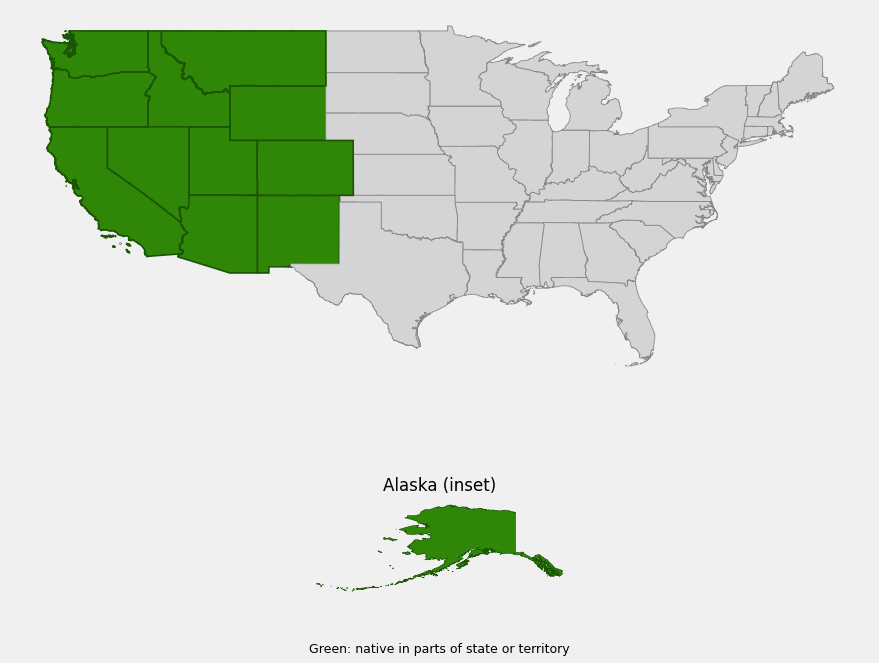
Tufted saxifrage is circumpolar, growing across Arctic and subarctic North America, Greenland, northern Europe (including Iceland, Scandinavia, Svalbard and the mountains of Britain) and northern Asia. In North America, USDA PLANTS lists it in Alaska and in the western states of Washington, Oregon, California, Nevada, Idaho, Montana, Wyoming, Utah, Colorado, Arizona and New Mexico. In Canada it ranges from British Columbia, Yukon, the Northwest Territories and Nunavut east to northern Manitoba, Ontario, Quebec, Labrador and Newfoundland.
In the Arctic it grows down to sea level, on gravel, rock outcrops and tundra. Farther south it is a plant of the mountains: the Olympic Mountains and the Cascades, the Sierra Nevada and the high ranges of Nevada, the northern and central Rocky Mountains, and the highest peaks of Arizona and New Mexico, where it grows on alpine summits and in shaded subalpine rock. In the lower 48 it is found mostly in the subalpine and alpine zones.
Its habitat is open rock: cliff faces and ledges, crevices, talus and scree slopes, gravelly ridges and fellfields, often where snowmelt keeps the ground moist in early summer. It grows on many rock types, from granite to limestone. Because it is small and slow-growing, it does best where taller plants cannot shade it.
📋 Regional plant lists featuring Tufted Saxifrage: Idaho, Eastern Oregon & Eastern Washington · Western Oregon & Western Washington · Montana & Wyoming · Utah & Western Colorado · Arizona & New Mexico · Alaska · California & Nevada
Growing & Care Guide
Tufted saxifrage is a plant for experienced rock gardeners, alpine troughs or crevice gardens rather than ordinary borders. Look for seed or plants from specialist alpine and rock-garden nurseries; never dig plants from the wild. Wild cushions are slow-growing, rarely survive transplanting, and many grow in national parks and wilderness areas where collecting is prohibited. It grows best in climates with cool summers.
Light
Full sun in cool, northern or high-elevation gardens. In warmer, lower-elevation gardens, give it morning sun and afternoon shade, or the cool side of a large rock, because hot summer afternoons quickly scorch the cushions.
Soil & Water
Sharp drainage is essential. Plant it in a crevice between rocks, in a scree bed or in a trough filled with a lean, gritty mix (for example, equal parts grit or crushed rock, coarse sand and a little loam or compost). Keep it evenly moist in spring and early summer, as it would be from snowmelt, but never waterlogged. In hot, humid summers it tends to rot or fade.
Planting Tips
Set young plants deep into a crevice or between flat stones so the roots stay cool and the crown sits on gravel. A topdressing of grit around the cushion keeps the crown dry and discourages rot and slugs.
Pruning & Maintenance
Little is needed. Remove spent flower stems if you do not want seed, and pull out any weeds or moss that start to grow into the cushion. Cushions that open up in the middle can be refreshed by replanting healthy rosettes.
Propagation
Sow the very fine seed on the surface of a gritty mix in fall or winter and leave the pots outdoors to receive cold; do not cover the seed. Seedlings are tiny and slow and take a year or more to reach flowering size. Single rosettes can also be rooted as cuttings in early summer in moist, sandy grit.
Landscape Uses
- Rock and crevice gardens: tight cushions with white flowers in early summer
- Alpine troughs: a natural fit for small containers of high-mountain plants
- Stone walls: cool, shaded wall crevices in northern gardens
- Wild appreciation: a classic plant to find on alpine hikes in the West and North
Wildlife & Ecological Value
Tufted saxifrage is one of the pioneer plants of bare rock and gravel in the Arctic and high mountains, where only a few plants can survive.
For Pollinators
Its open, white flowers are visited by small flies, including hover flies, and by small bees, which are among the most important pollinators in Arctic and alpine habitats. The flowers can also self-pollinate, which helps the plant set seed when cold weather limits insect activity.
For Birds
In alpine and Arctic habitats, birds such as ptarmigan eat the buds, leaves and seeds of low tundra plants, including saxifrages. Small seed-eating birds feed on seeds in rocky meadows.
For Mammals
Its rocky habitat is home to pikas and marmots, which harvest a wide range of alpine plants. Its small size and cliff-crevice habitat protect it from most large grazers.
Ecosystem Role
As a cushion plant, it traps windblown dust, organic matter and moisture among its rosettes, slowly building soil on bare rock and creating a sheltered microhabitat for tiny invertebrates. Cushion plants like this are important early colonists after glaciers retreat.
Cultural & Historical Uses
Carl Linnaeus named Saxifraga caespitosa in 1753 in Species Plantarum. The genus name comes from Latin saxum (rock) and frangere (to break), describing saxifrages growing in rock cracks; it was once thought, wrongly, that this made them a remedy for kidney stones. The species name means “growing in tufts.”
Botanists have long debated how to divide the tufted saxifrage complex. Several North American varieties and subspecies have been described, and some forms that grow in Europe are now treated as separate species, such as Irish saxifrage. USDA PLANTS treats the North American plants under Saxifraga caespitosa.
Because it ranges from Arctic coasts to the summits of the southern Rockies, tufted saxifrage is one of the plants that link the alpine flora of the western mountains with the Arctic. Many alpine plants of the Rockies are relicts of ice-age populations that moved south with the glaciers and retreated upslope as the climate warmed.
Frequently Asked Questions
Where can I see tufted saxifrage?
Look on rock outcrops, cliffs and scree in the subalpine and alpine zones of the western mountains, such as the Olympics, Cascades, Sierra Nevada and Rockies, or on tundra and gravel in Alaska and northern Canada. It blooms from June to August, later at higher elevations.
Is it Saxifraga caespitosa or Saxifraga cespitosa?
Both spellings refer to the same plant. Linnaeus wrote caespitosa, and USDA PLANTS uses that spelling; many modern floras use cespitosa.
Can I grow tufted saxifrage in my garden?
Yes, in a rock garden, crevice garden or trough with very sharp drainage, cool summers and steady spring moisture. Buy seed or plants from an alpine nursery, and never dig wild plants. It struggles in hot, humid climates.
How do I tell tufted saxifrage from mat saxifrage?
Tufted saxifrage has soft leaves with three blunt lobes at the tip and plain white petals. Mat saxifrage has stiff, undivided, spine-tipped leaves and white petals spotted with yellow, orange or red.
Why does it grow in rock cracks?
Crevices hold moisture and shelter the roots, while the open rock keeps taller plants from shading it out. Its cushion form also traps warmth and moisture, helping it survive wind, cold and short growing seasons.

Looking for a nursery that carries Tufted Saxifrage?
Browse our native plant nursery directory: Alaska & Arizona · California · Colorado · Idaho · Montana · Nevada & New Mexico · Oregon · Utah · Washington · Wyoming

