
Soft-Stemmed Bulrush (Schoenoplectus tabernaemontani)
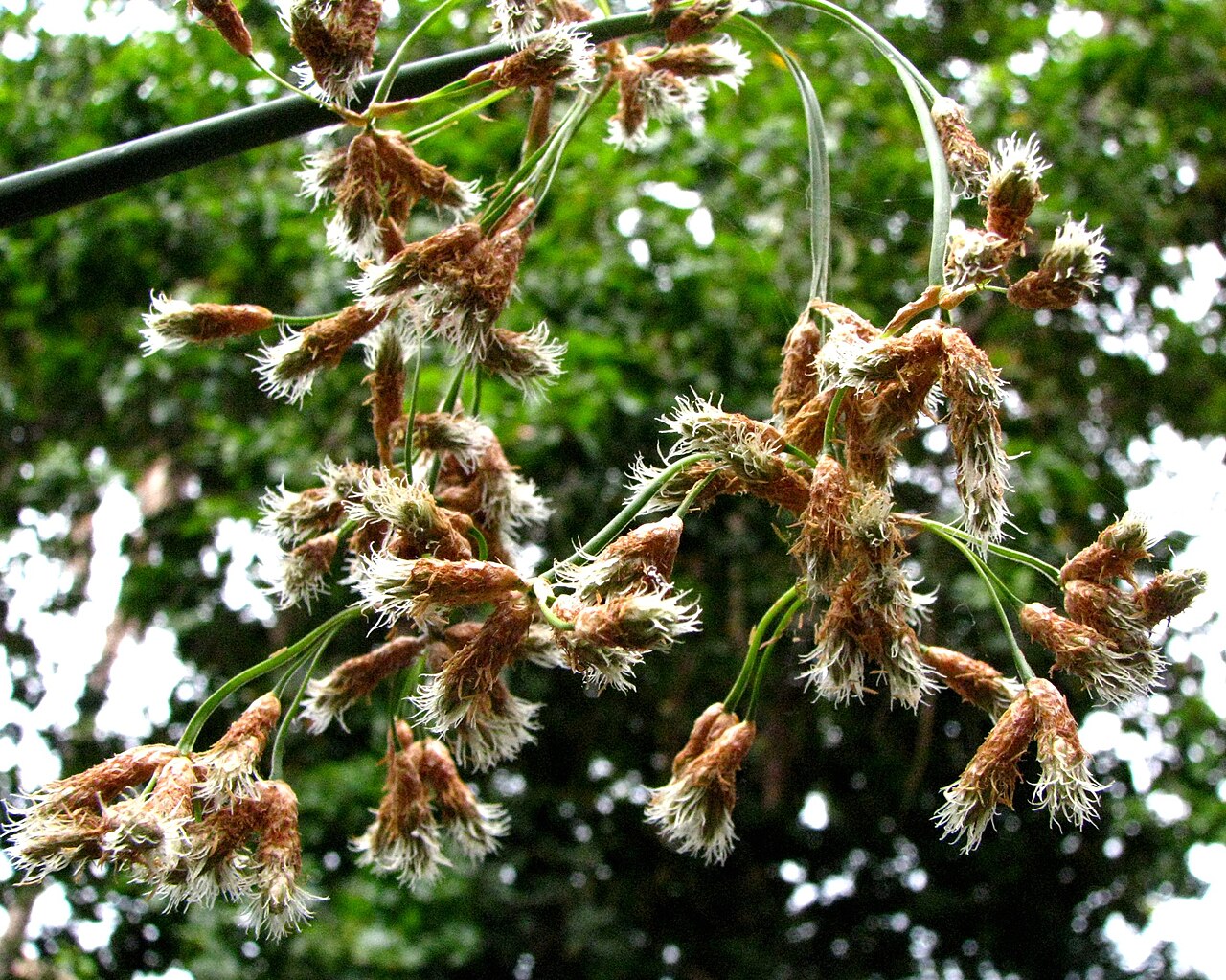
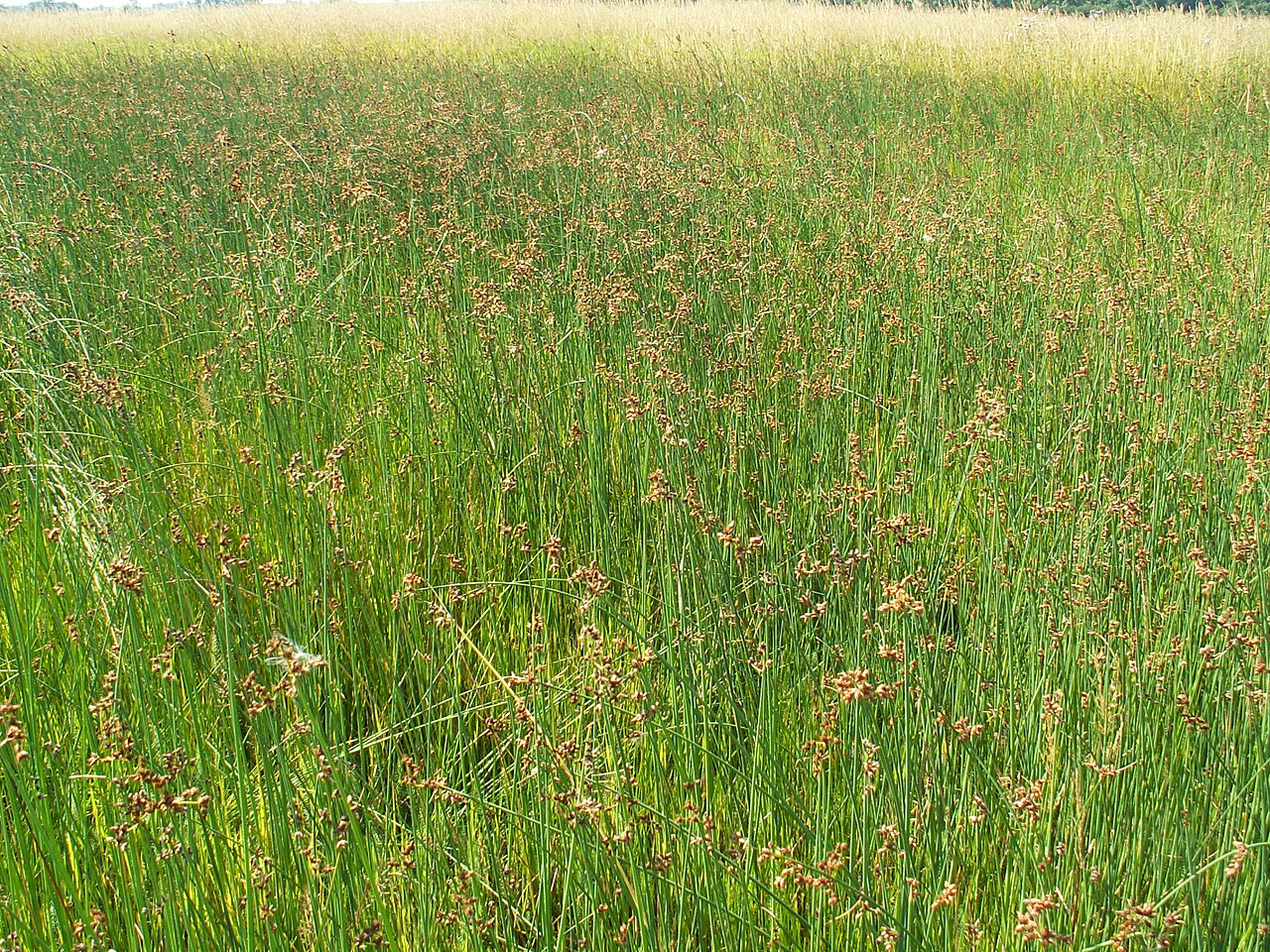
Schoenoplectus tabernaemontani, known as Soft-Stemmed Bulrush (also softstem bulrush, great bulrush or gray club-rush), is a tall, rhizomatous wetland sedge in the sedge family (Cyperaceae). It sends up round, spongy, blue-green stems 3 to 10 feet tall with almost no leaf blades, topped by loose clusters of small, reddish-brown spikelets from early summer into fall. It grows in shallow water along the edges of marshes, ponds, lakes, rivers and ditches, often forming dense colonies.
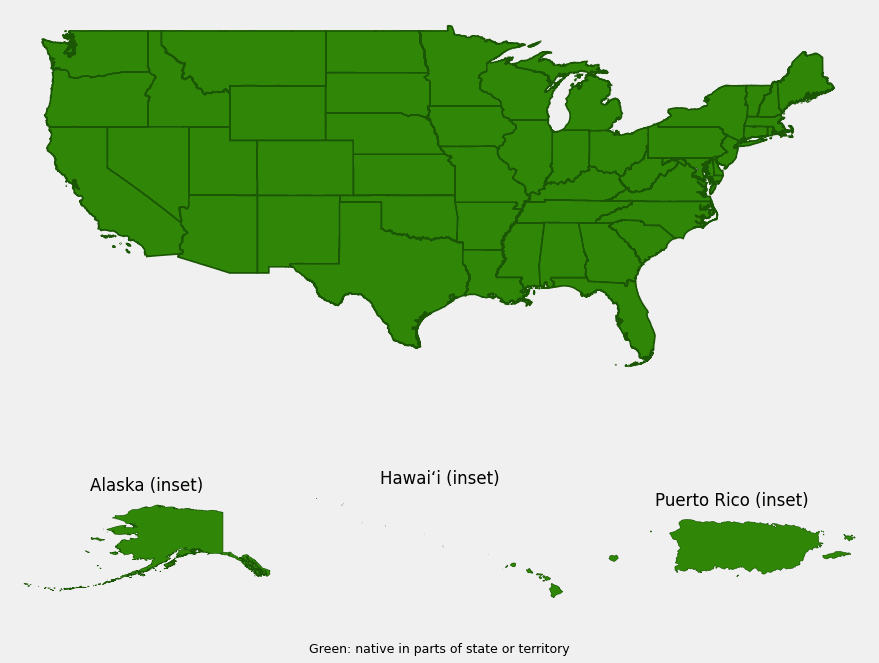
It is one of the most widespread wetland plants in North America. USDA PLANTS records it as native in all 50 states, from Alaska and Hawaii to Florida, plus Puerto Rico, the U.S. Virgin Islands and all of Canada. It also grows in Eurasia, Africa, Australia and Latin America. You will often see it listed under its older names Scirpus validus and Schoenoplectus validus, and some floras combine it with the Eurasian lake club-rush as Schoenoplectus lacustris.
For gardeners and restoration workers, soft-stemmed bulrush is a dependable plant for pond margins, rain basins, stormwater wetlands and shorelines. It tolerates fresh to slightly brackish and alkaline water, holds soft mud with its rhizomes, filters runoff, and gives cover and seed to waterfowl, marsh birds and muskrats. It spreads vigorously, so give it room or grow it in a container in small ponds.
Identification
Look for tall, round, soft, gray-green stems with no obvious leaves, growing in shallow water, with a loose, often drooping cluster of small reddish-brown spikelets that appears to come out of the side of the stem near the top.
Growth Habit
Soft-stemmed bulrush is a perennial that spreads by stout, scaly, creeping rhizomes, forming colonies that can cover large areas of shallow water. The stems are usually 3 to 8 feet tall and can reach 10 feet in rich, deep water. They die back to the rhizomes in winter in cold climates, and the old brown stems often stand through winter.
Stems & Leaves
The stems are round in cross-section, smooth, gray-green to blue-green, up to about 1 inch thick at the base and tapering to the tip. They are filled with soft, spongy pith and are easily squeezed flat between your fingers, which gives the plant its common name. The leaves are reduced to sheaths around the base of the stem; the uppermost one or two sheaths may carry a short, narrow blade.
Flowers
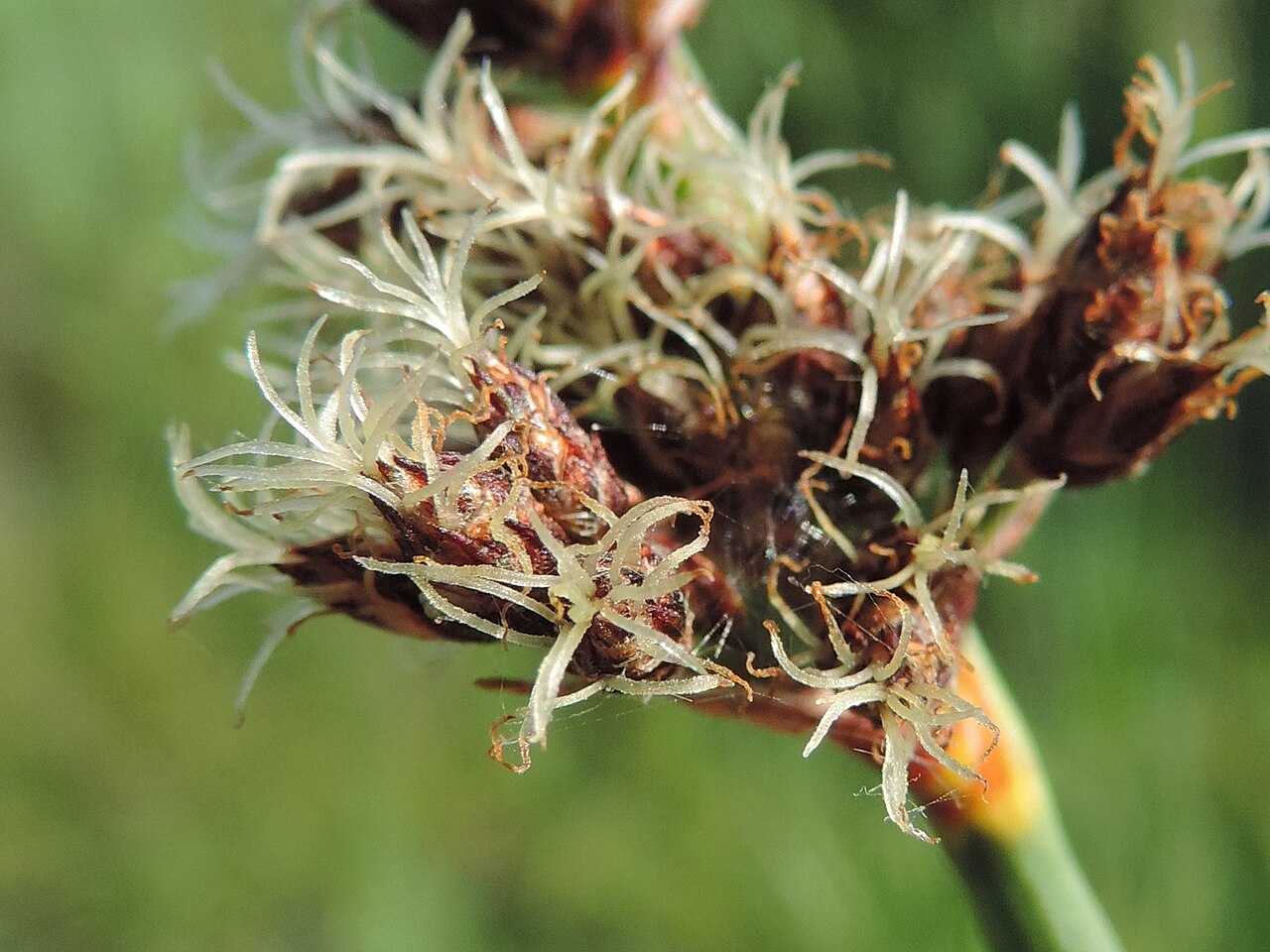
The inflorescence is a loose, branched cluster (an umbel-like panicle) of 10 to 200 or more spikelets on slender rays of uneven length, often drooping to one side. A short, erect bract continues the line of the stem above it, so the cluster looks as if it grows from the side of the stem. Each spikelet is egg-shaped, about 1/4 to 1/2 inch long, and covered with orange-brown to reddish-brown scales that often have reddish dots or lines. The flowers are wind-pollinated and bloom from about May to September, depending on latitude.
Seeds
Each flower produces a small, lens-shaped, gray-brown achene about 1/12 inch long, surrounded by a few barbed bristles. The seeds ripen from late summer into fall and are dispersed by water and by birds.
Look-alikes
Hardstem bulrush (Schoenoplectus acutus) has firm stems that do not crush easily, grayer scales and spikelets mostly crowded in tight clusters. Giant bulrush (Schoenoplectus californicus) of the South and West has stems that are triangular near the top. Chairmaker’s bulrush (Schoenoplectus americanus) is shorter, with sharply three-angled stems and a few stalkless spikelets. Soft rush (Juncus effusus) has thinner, solid-pithed stems in dense clumps and small greenish-brown flowers with six tepals.
Quick Facts
| Scientific Name | Schoenoplectus tabernaemontani |
| Family | Cyperaceae (sedge family) |
| Plant Type | Emergent aquatic perennial (rhizomatous sedge) |
| Mature Height | 3–10 ft |
| Mature Spread | Spreads indefinitely by rhizomes |
| Growth Rate | Fast |
| Sun Exposure | Full sun to light shade |
| Water Needs | Wet soil to standing water up to about 3 ft deep |
| Soil Type | Mud, muck, sand or gravel; fresh to slightly brackish or alkaline |
| Soil pH | About 6.0–8.5 |
| Bloom Time | May–September |
| Flower Color | Orange-brown to reddish-brown spikelets |
| Fall Color | Stems turn tan to golden brown |
| Fruit | Small, lens-shaped gray-brown achenes with barbed bristles |
| Deer Resistant | Yes; deer seldom browse it |
| USDA Hardiness Zones | 3–11 |
Native Range
Soft-stemmed bulrush has one of the largest ranges of any North American wetland plant. USDA PLANTS lists it as native in all 50 states, including Alaska and Hawaii, as well as in Puerto Rico and the U.S. Virgin Islands. It grows across Canada from Newfoundland and Labrador to British Columbia, the Yukon and the Northwest Territories, and south through Mexico and Central America. Outside the Americas, it is native in Europe, Asia, Africa and Australia.
In Hawaii it is regarded as an indigenous plant, known as ʻakaʻakai, and grows in coastal marshes and ponds on several islands. In the Great Plains and the arid West it is one of the main bulrushes of prairie potholes, alkaline marshes, irrigation ditches and spring-fed wetlands. In the East and South it grows in freshwater and slightly brackish tidal marshes, lakeshores and river backwaters.
Its habitat is shallow water and saturated soil: marsh edges, pond and lake shores, slow streams, ditches, wet meadows and constructed wetlands. It usually grows in water from a few inches to about 3 feet deep, and tolerates fluctuating water levels, seasonal drawdowns, mildly saline water and nutrient-rich runoff.
📋 Regional plant lists featuring Soft-Stemmed Bulrush: New York, Pennsylvania & Northern New Jersey · Idaho, Eastern Oregon & Eastern Washington · Hawaii · Ohio & Indiana · Montana & Wyoming · Michigan, Wisconsin & Eastern Minnesota · Kentucky & Tennessee · Nebraska, Kansas & Eastern Colorado · Utah & Western Colorado · Connecticut, Massachusetts & Rhode Island · New Hampshire, Maine & Vermont · Maryland, Virginia & West Virginia · Delaware, Southern New Jersey & Long Island · Arizona & New Mexico · Illinois, Iowa & Missouri · Alabama, Georgia & Mississippi · Alaska · North & South Florida · Puerto Rico · North & South Carolina · Arkansas, Louisiana, Eastern Oklahoma & Eastern Texas · South & West Texas · North Dakota, South Dakota & Western Minnesota · Western Oregon & Western Washington · California & Nevada
Growing & Care Guide
Soft-stemmed bulrush is one of the easiest native wetland plants to grow. Give it sun, wet feet and room to spread, and it will look after itself. Nursery plugs and bare-root divisions are widely available from native and aquatic plant nurseries.
Light
Full sun is best. It tolerates light shade but grows thinner and flowers less there.
Soil & Water
It grows in any wet soil, from mucky organic mud to sand and gravel, and in water from saturated soil to about 2 to 3 feet deep. The best depth for new plantings is 2 to 12 inches. It tolerates fluctuating water levels, short dry spells once established, moderately alkaline water and slightly brackish water. It does not tolerate long periods of dry soil.
Planting Tips
Plant plugs or rhizome divisions in spring or early summer, 1 to 3 feet apart, with the crown in a few inches of water or in saturated mud. In small ponds, plant it in a large pot or aquatic basket set on a shelf so the rhizomes do not take over. Protect new plantings from geese, carp and muskrats with fencing or netting until they are established.
Pruning & Maintenance
Leave the old stems standing through winter for wildlife cover, then cut them back in late winter or early spring if you want a tidy look. Divide potted plants every two or three years. It needs no fertilizer; in fact it is often planted to absorb excess nutrients.
Propagation
Division of the rhizomes in spring is the easiest method. Seed germinates poorly unless it is fresh; store ripe seed wet and cold for several months, then sow it on wet soil or in shallow water in warm, bright conditions. The ornamental cultivar ‘Zebrinus’, with horizontal cream bands on the stems, is propagated by division.
Landscape Uses
- Pond and water garden margins: tall, vertical stems for shallow water
- Stormwater and constructed wetlands: widely used to filter runoff and wastewater
- Shoreline stabilization: rhizomes bind mud and soften wave action
- Wetland restoration: a dependable early emergent for marshes and ponds
- Wildlife ponds: seed and cover for waterfowl, marsh birds and muskrats
Wildlife & Ecological Value
Stands of soft-stemmed bulrush are a core part of North American marsh habitat, giving food, shelter and nesting sites to a wide range of wildlife.
For Pollinators
The flowers are wind-pollinated and offer little nectar. Bees occasionally collect pollen, and the stems and colonies shelter dragonflies and damselflies, whose larvae climb the stems to emerge as adults.
For Birds
Ducks, geese, rails, coots and blackbirds eat the seeds, which are a well-known waterfowl food. Red-winged blackbirds, yellow-headed blackbirds, marsh wrens and least bitterns nest in the stands, and many waterbirds use them for cover.
For Mammals
Muskrats eat the rhizomes and young shoots and use the stems to build their lodges. Deer and other grazers seldom eat it.
Ecosystem Role
Its dense rhizomes stabilize shorelines and reduce erosion from waves. The stands slow water, trap sediment and take up nitrogen and phosphorus, which is why it is planted in treatment wetlands. Submerged stems provide spawning cover for fish and surfaces for aquatic insects and algae.
Cultural & Historical Uses
The genus name Schoenoplectus combines the Greek schoinos, “rush,” and plektos, “plaited,” a reference to the use of rush-like plants for weaving. The species name honors Jacobus Theodorus Tabernaemontanus, a 16th-century German physician and herbalist.
Many Native American peoples used soft-stemmed bulrush and its close relatives for weaving. The stems and leaves were twined into mats used to line the walls of lodges and for sitting and eating on, as well as into bags and baskets. The young shoots and the starchy rhizomes were also eaten in some places.
In Hawaii, where it is called ʻakaʻakai, it is one of the native sedges of coastal wetlands and is planted in wetland restoration projects. Elsewhere it has become a standard plant for constructed wetlands, where its fast growth and tolerance of polluted water help clean runoff and wastewater.
Frequently Asked Questions
Is soft-stemmed bulrush a rush or a sedge?
It is a sedge, in the family Cyperaceae, despite its common name. True rushes belong to the genus Juncus.
How deep a water can soft-stemmed bulrush grow in?
It grows from saturated mud to about 2 to 3 feet of water. Plant new plugs in 2 to 12 inches of water and let them spread deeper.
Is soft-stemmed bulrush invasive?
It is native across the United States, but it spreads quickly by rhizomes and can fill a small pond. Grow it in a container in small water gardens.
How is it different from hardstem bulrush?
Soft-stemmed bulrush has spongy stems that crush easily between your fingers and reddish-brown spikelets on long rays. Hardstem bulrush has firm stems, grayer scales and tighter clusters of spikelets.
Is soft-stemmed bulrush good for wildlife?
Yes. Waterfowl and marsh birds eat its seeds, blackbirds and marsh wrens nest in it, and muskrats eat its rhizomes and build lodges from its stems.

Looking for a nursery that carries Soft-Stemmed Bulrush?
Browse our native plant nursery directory: Alabama, Alaska, Arizona & Arkansas · California · Colorado, Connecticut, Delaware, Florida, Georgia & Hawaii · Idaho, Illinois, Indiana, Iowa & Kansas · Kentucky, Louisiana, Maine, Maryland, Massachusetts, Michigan, Minnesota, Mississippi, Missouri & Montana · Nebraska, Nevada, New Hampshire, New Jersey, New Mexico, New York, North Carolina, North Dakota, Ohio & Oklahoma · Oregon · Pennsylvania, Rhode Island, South Carolina, South Dakota, Tennessee, Texas, Utah, Vermont & Virginia · Washington · West Virginia, Wisconsin & Wyoming

