
Giant Goldenrod (Solidago gigantea)
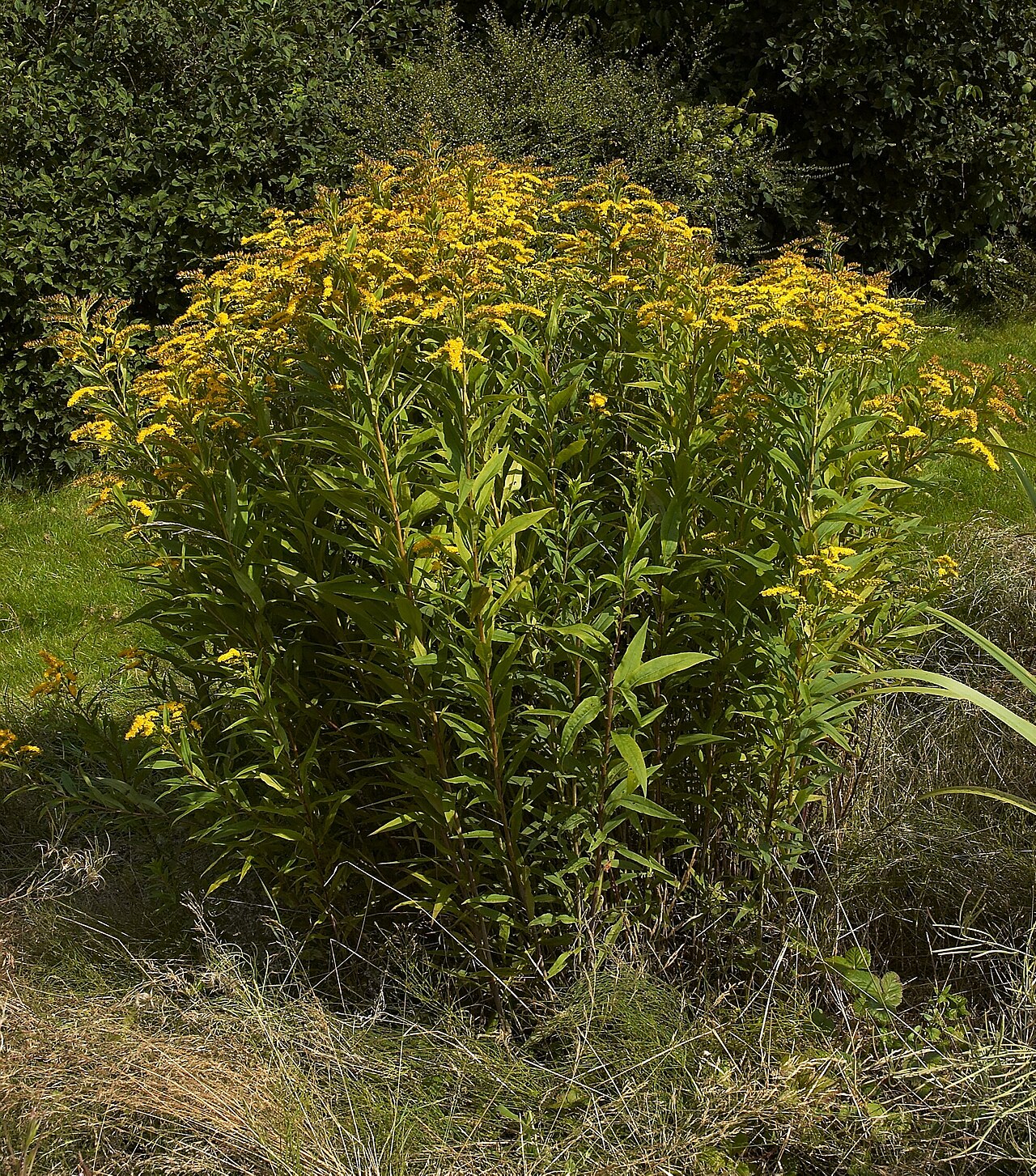
Solidago gigantea, known as Giant Goldenrod, smooth goldenrod, late goldenrod or tall goldenrod, is a tall, colony-forming perennial of the aster family (Asteraceae). It is one of the most widespread goldenrods in North America, native from the Atlantic coast to the Rocky Mountains and the interior West, and from southern Canada to Florida and Texas. In late summer and fall its leafy stems, usually 3 to 7 feet tall, end in broad, arching plumes of tiny golden-yellow flower heads.
The best field mark is the stem: unlike the similar Canada and tall goldenrods, giant goldenrod has a smooth, hairless stem that is often purplish or reddish and covered with a whitish, waxy bloom that rubs off. It grows in moist to wet places such as wet meadows, stream banks, floodplains, ditches, marsh edges and moist prairies, and spreads by creeping rhizomes into dense stands.
For gardeners, giant goldenrod is a vigorous, easy plant for rain gardens, wet meadows, pond edges and large naturalized areas, and it is one of the most valuable late-season plants for bees, butterflies and other insects. It spreads aggressively, so it suits big spaces better than small borders. It is native here but has become a serious invasive plant in Europe and Asia, where it was introduced as a garden ornamental.
Identification
Look for a tall goldenrod with a smooth, often waxy, purplish stem, narrow toothed leaves with three main veins, and arching plumes of yellow flowers in late summer, usually in moist ground.
Growth Habit
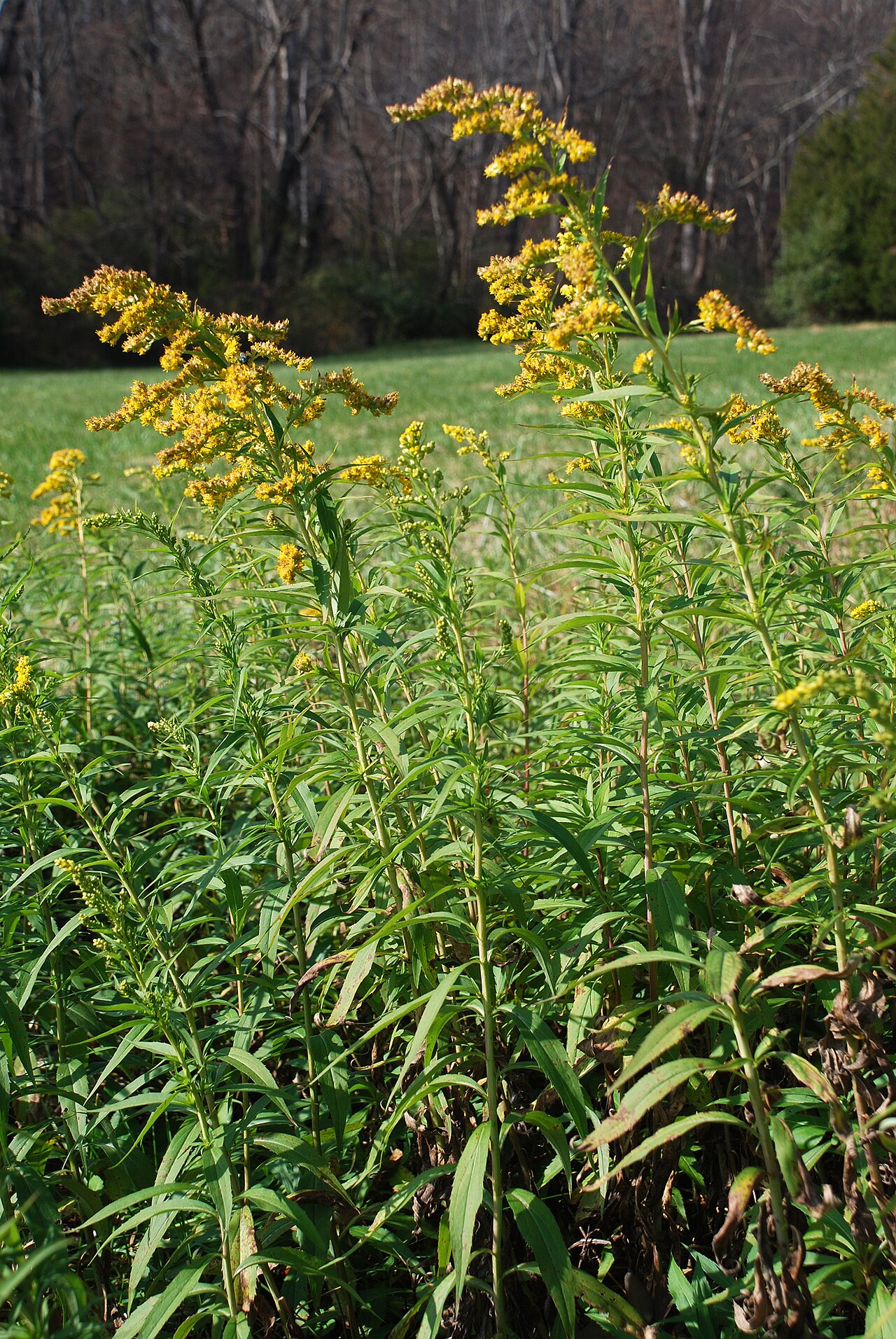
Giant goldenrod is an herbaceous perennial with long, creeping rhizomes. It forms clumps and large colonies of unbranched stems, usually 3 to 7 feet tall (occasionally shorter in dry or poor sites). There is no rosette of basal leaves at flowering time; the stems are leafy all the way up to the flower plume.
Stems
The stems are smooth and hairless below the flower clusters, green to purplish-red, and often coated with a pale, waxy bloom (glaucous). This is the most useful feature for separating it from Canada goldenrod and tall goldenrod, which have finely hairy stems. The branches of the flower cluster are usually hairy.
Leaves
The leaves are alternate, lance-shaped, about 3 to 6 inches long and up to about 1 1/4 inches wide, with sharp, forward-pointing teeth along the edges, at least in the upper half. They are smooth on the upper surface and may be slightly hairy along the veins beneath. Each leaf has three prominent, nearly parallel main veins (the midrib plus two strong side veins), a feature it shares with Canada goldenrod. The leaves are fairly evenly spaced and largest in the middle of the stem.
Flowers
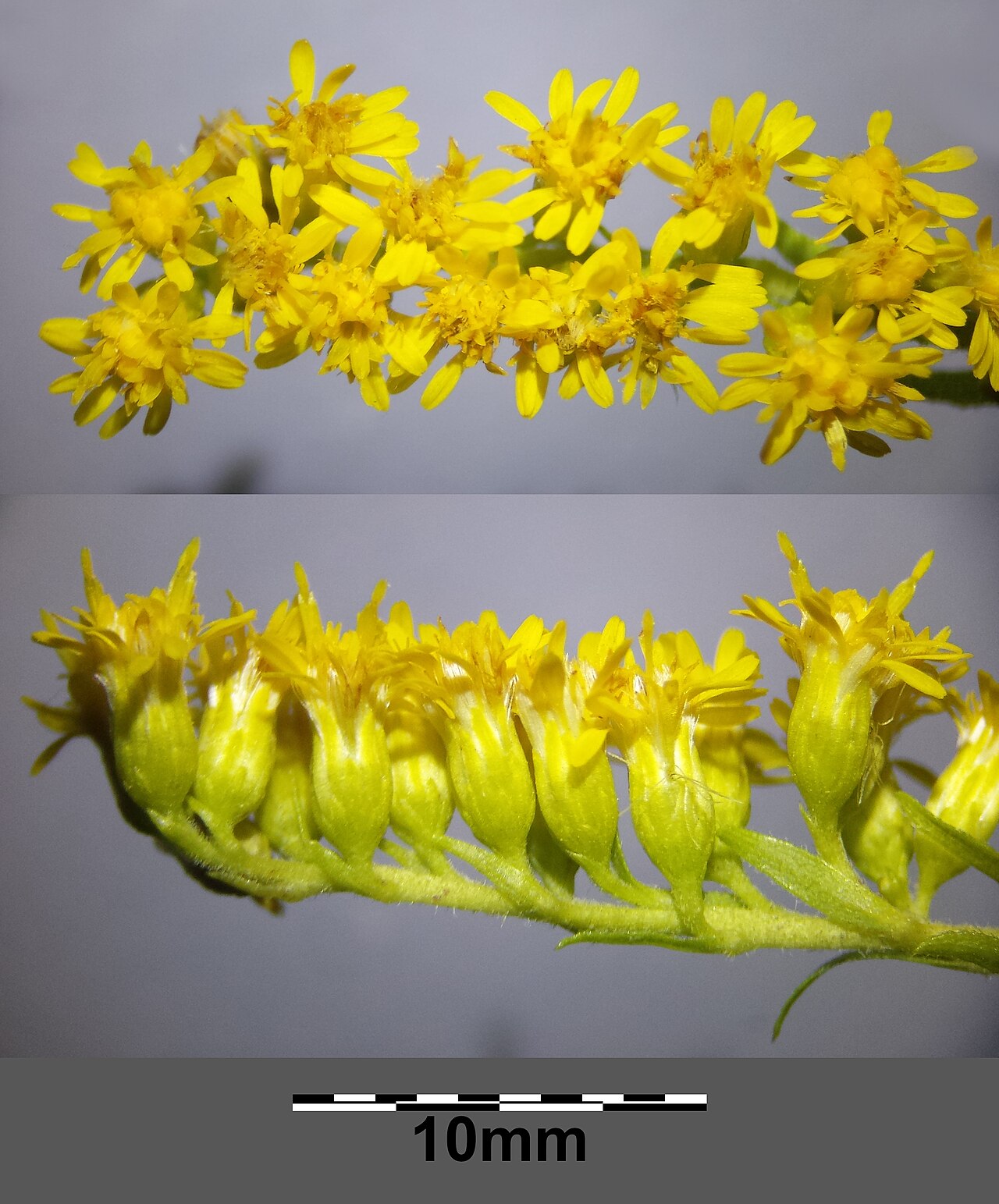
From late July or August into October, each stem ends in a pyramid-shaped or broad plume (panicle) of arching branches. Hundreds of tiny flower heads, each about 1/8 to 1/4 inch long, line the upper side of each branch. Each head has a ring of short, yellow ray florets around a few yellow disc florets.
Seeds
The flowers are followed by small, slightly hairy achenes topped with a tuft of white bristles (pappus). The fluffy, pale seed heads persist into early winter and are carried away by the wind.
Look-alikes
Canada goldenrod and tall goldenrod look very similar from a distance but have downy stems without a waxy bloom; they also tend to grow in drier ground. Rough-leaved goldenrod has a hairy stem and wrinkled, rough leaves with one main vein. In the Pacific Northwest, many older reports of giant goldenrod are now treated as western goldenrod (Solidago lepida).
Quick Facts
| Scientific Name | Solidago gigantea |
| Family | Asteraceae (aster family) |
| Plant Type | Herbaceous perennial; rhizomatous |
| Mature Height | 3–7 ft |
| Mature Spread | 2–4 ft per clump; spreads into colonies |
| Growth Rate | Fast |
| Sun Exposure | Full sun to part shade |
| Water Needs | Medium to high; moist to wet soil |
| Soil Type | Loam, clay, sand or silt; tolerates poor drainage |
| Soil pH | Slightly acidic to slightly alkaline (about 5.5–7.5) |
| Bloom Time | Late July–October |
| Flower Color | Golden yellow |
| Fall Color | Yellow flowers, then fluffy pale seed heads |
| Fruit | Small achenes with white bristles |
| Deer Resistant | Usually; deer seldom browse it heavily |
| USDA Hardiness Zones | 3–9 |
Native Range
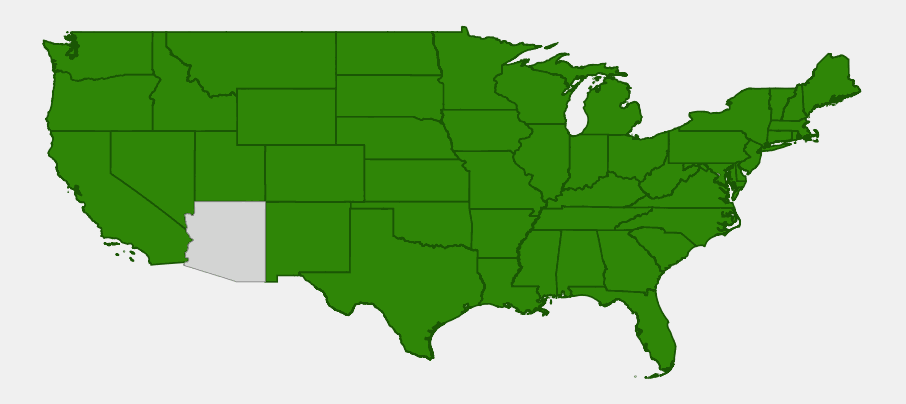
Giant goldenrod is native across most of temperate North America. USDA PLANTS lists it as native in 47 of the lower 48 states, all except Arizona, and in Canada from British Columbia and the Northwest Territories east to the Maritime provinces. It also reaches northeastern Mexico. It is most common in the eastern and central United States, from New England and the Great Lakes to the Gulf Coast and the Great Plains.
In the West it is scattered, growing along streams, irrigation ditches and moist meadows in the Rocky Mountain states, the Great Basin and the interior Northwest, mainly east of the Cascades. Some older reports from western Oregon and Washington are now regarded as misidentified western goldenrod, so the species is uncommon or absent west of the Cascade crest.
Across its range it grows in moist to wet open places: wet meadows and prairies, stream banks and floodplains, marsh and pond edges, moist woodland openings and thickets, ditches, old fields and roadsides. It needs at least seasonally moist soil and is less common than Canada goldenrod on dry upland sites.
📋 Regional plant lists featuring Giant Goldenrod: New York, Pennsylvania & Northern New Jersey · Idaho, Eastern Oregon & Eastern Washington · Ohio & Indiana · Montana & Wyoming · Michigan, Wisconsin & Eastern Minnesota · Kentucky & Tennessee · Nebraska, Kansas & Eastern Colorado · Utah & Western Colorado · Connecticut, Massachusetts & Rhode Island · New Hampshire, Maine & Vermont · Maryland, Virginia & West Virginia · Delaware, Southern New Jersey & Long Island · Illinois, Iowa & Missouri · Alabama, Georgia & Mississippi · North & South Florida · North & South Carolina · Arkansas, Louisiana, Eastern Oklahoma & Eastern Texas · North Dakota, South Dakota & Western Minnesota · California & Nevada · South & West Texas · Western Oregon & Western Washington
Growing & Care Guide
Giant goldenrod is one of the easiest natives to grow in moist soil. The main challenge is not keeping it alive but keeping it in bounds: its rhizomes spread steadily, and a single plant can become a sizable patch in a few years.
Light
Full sun gives the strongest stems and heaviest bloom. It tolerates part shade, such as a woodland edge, but stems may lean toward the light and flower less.
Soil & Water
It prefers moist to wet loam or clay and tolerates periodic flooding and poorly drained ground, which makes it a natural fit for rain gardens and swales. It will grow in average garden soil if watered in dry spells, but in dry, sandy soil it stays shorter and spreads less. Rich soil and extra fertilizer make it floppy and more aggressive, so skip the fertilizer.
Planting Tips
Plant in spring or fall, about 2 to 3 feet apart. Give it room: it is best in large rain gardens, wet meadows, prairie plantings, pond and stream margins, and other naturalized areas. In smaller gardens, plant it inside a deep root barrier or pair it with equally vigorous neighbors such as Joe Pye weed, ironweed and tall asters.
Pruning & Maintenance
Cutting the stems back by about a third in early June gives shorter, bushier plants that bloom slightly later. Leave the stems standing over winter for seed-eating birds and for insects that overwinter in stems and galls, then cut them down in spring. Dig out spreading rhizomes around the edge of the clump every year or two to control its size.
Propagation
It is easy to divide in spring, and rhizome pieces root readily. Seed can be sown outdoors in fall or cold-stratified for about 60 days before spring sowing; the tiny seeds need light to germinate, so press them onto the soil surface.
Landscape Uses
- Rain gardens and swales: tolerates wet feet and periodic flooding
- Pollinator gardens: a major late-season nectar and pollen source
- Wet meadows and prairie restoration: forms dense stands that hold soil
- Stream and pond banks: rhizomes help stabilize moist banks
- Fall color: bold yellow plumes with asters and grasses
Wildlife & Ecological Value
Goldenrods are among the most important native plants for wildlife in eastern North America, and giant goldenrod blooms at a time when many other flowers have finished.
For Pollinators
The flowers are visited by a huge range of insects: honey bees, bumble bees and many native bees, wasps, flower flies, beetles and butterflies, including migrating monarchs fueling up in fall. Goldenrods also host the caterpillars of many moths, and the genus Solidago supports more than 100 species of butterflies and moths. Some specialist bees, such as certain Colletes and Andrena species, depend on goldenrod and aster pollen in fall.
For Birds
Goldfinches, sparrows and juncos eat the seeds in fall and winter. Birds such as chickadees and downy woodpeckers peck open the round stem galls made by the goldenrod gall fly to eat the larvae inside, and the dense stands give cover to sparrows and other small birds.
For Mammals
Deer and rabbits browse goldenrods only lightly. Dense stands give cover to meadow voles and other small mammals.
Ecosystem Role
Giant goldenrod hosts a whole community of gall-making insects, including the goldenrod gall fly (Eurosta solidaginis), which has a distinct population adapted to this species, and several gall midges. These galls in turn feed parasitoid wasps, beetles and birds. In wetlands, its rhizomes help hold soil along streams and ditches.
Cultural & Historical Uses
The genus name Solidago comes from the Latin solidare, “to make whole,” a reference to the long use of goldenrods as wound herbs. The species name gigantea means “giant,” for its height. It is also known as smooth, late or tall goldenrod; the name “late goldenrod” comes from the old name Solidago serotina, which means “late.”
Goldenrods are often blamed for hay fever, but their pollen is heavy and sticky and carried by insects rather than wind. The real culprit is usually ragweed, which blooms at the same time and releases huge amounts of wind-borne pollen. Goldenrod is the state flower of Kentucky and Nebraska.
European gardeners brought giant goldenrod across the Atlantic in the 1700s as an ornamental. It escaped and is now one of the most widespread invasive plants in central Europe and parts of Asia, where it crowds out native plants in wet meadows and riverbanks. In North America, where it evolved with its native insects and competitors, it is a natural part of moist meadows and prairies.
Frequently Asked Questions
How do I tell giant goldenrod from Canada goldenrod?
Check the stem below the flowers. Giant goldenrod has a smooth, hairless stem that is often purplish with a whitish waxy bloom. Canada goldenrod and tall goldenrod have finely hairy stems.
Does giant goldenrod cause hay fever?
No. Its pollen is heavy and spread by insects. Ragweed, which blooms at the same time, is the usual cause of late-summer hay fever.
Is giant goldenrod invasive?
It is native across most of the United States, but it spreads aggressively by rhizomes, so give it room or contain it. In Europe and Asia, where it was introduced, it is a serious invasive weed.
Will giant goldenrod grow in wet soil?
Yes. It thrives in moist to wet soil and tolerates occasional flooding, which makes it ideal for rain gardens and wet meadows.
When does giant goldenrod bloom?
Usually from August into October, with a peak in late summer and early fall.

Looking for a nursery that carries Giant Goldenrod?
Browse our native plant nursery directory: Alabama & Arkansas · California · Colorado, Connecticut, Delaware, Florida & Georgia · Idaho, Illinois, Indiana, Iowa & Kansas · Kentucky, Louisiana, Maine, Maryland, Massachusetts, Michigan, Minnesota, Mississippi, Missouri & Montana · Nebraska, Nevada, New Hampshire, New Jersey, New Mexico, New York, North Carolina, North Dakota, Ohio & Oklahoma · Oregon · Pennsylvania, Rhode Island, South Carolina, South Dakota, Tennessee, Texas, Utah, Vermont & Virginia · Washington · West Virginia, Wisconsin & Wyoming

