
Hooker’s Fairybells (Prosartes hookeri)
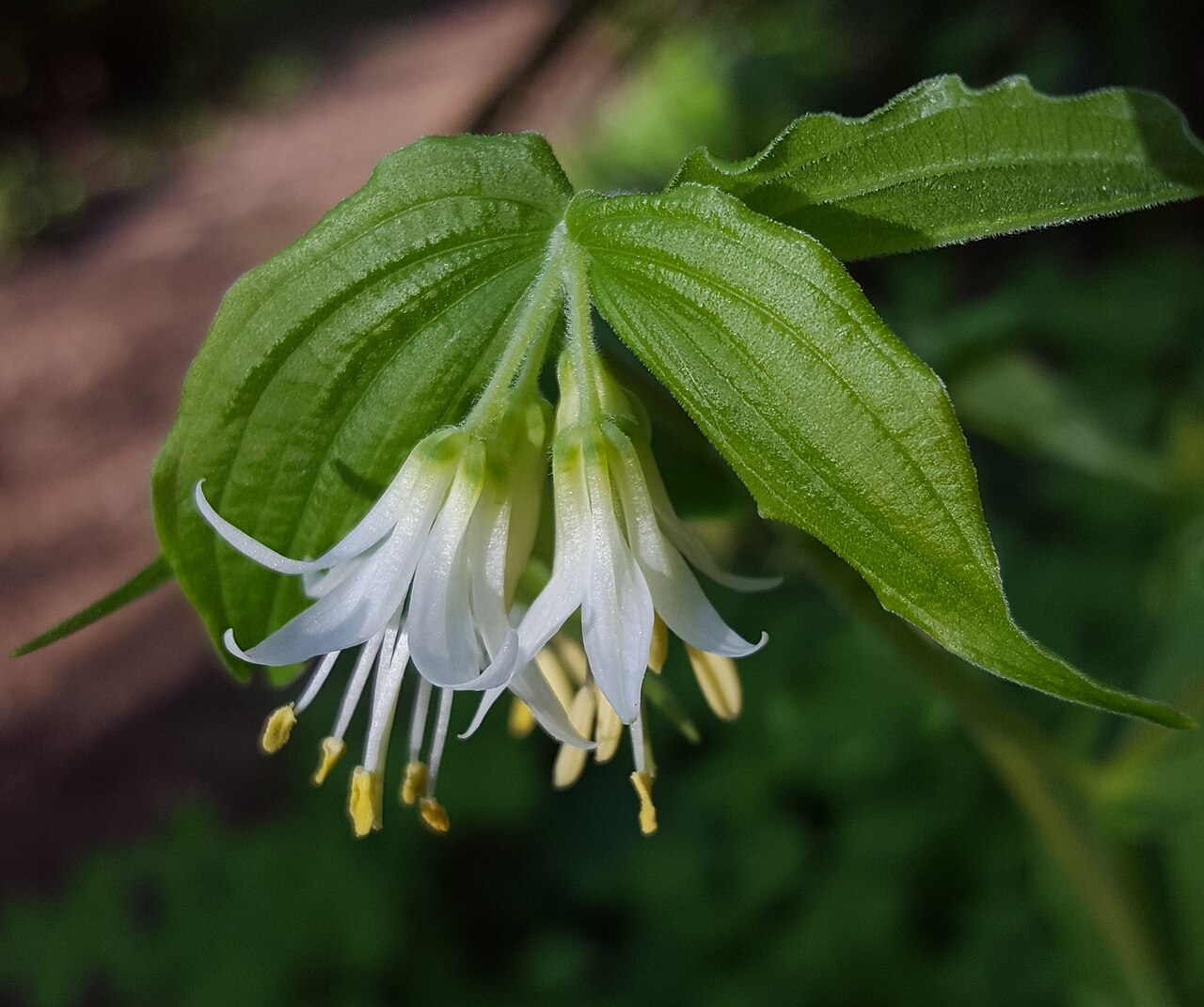
Prosartes hookeri, known as Hooker’s Fairybells (USDA: drops-of-gold), is a graceful woodland perennial of the lily family (Liliaceae). It was long known as Disporum hookeri, and many older guides still use that name. It is native to moist, shady forests of the Pacific Northwest, northern Rocky Mountains and northern California, with a remarkable disjunct population in the western Upper Peninsula of Michigan.
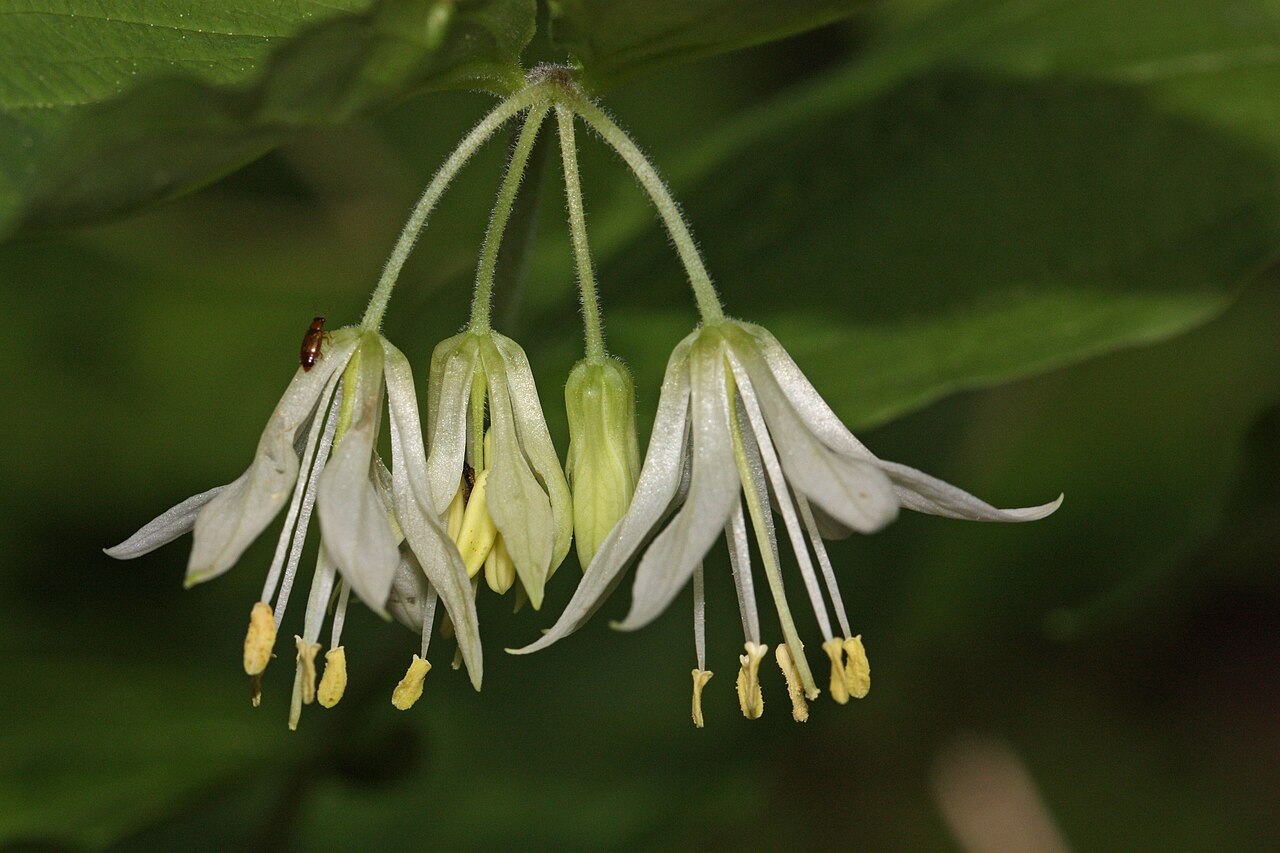
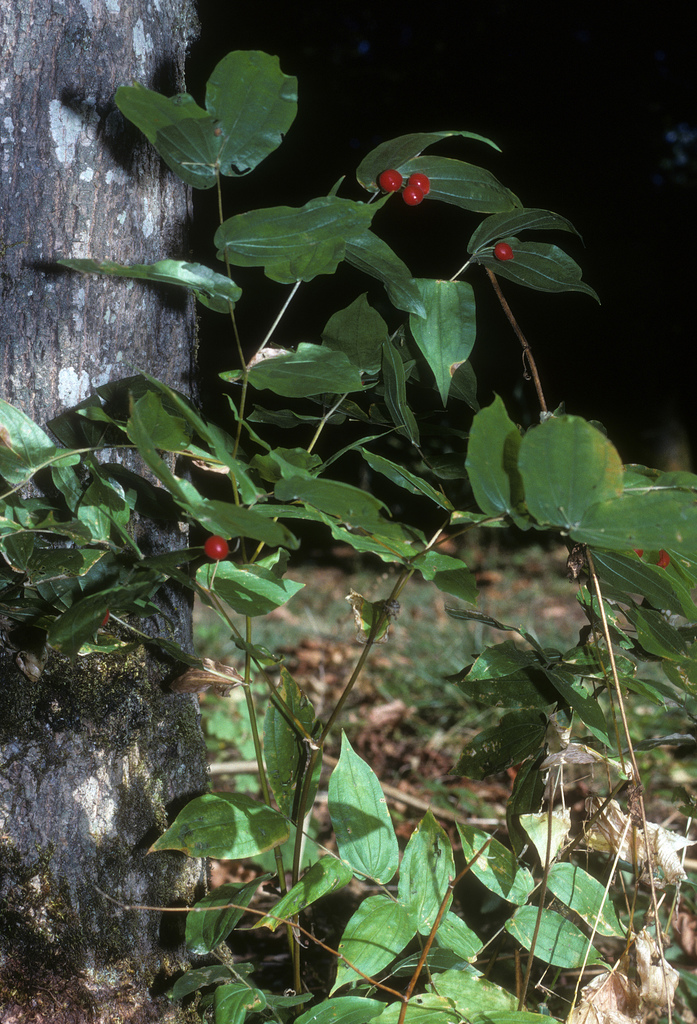
Plants grow from creeping rhizomes into arching, branched stems 1 to 3 feet tall, carrying broad, pointed, strongly veined leaves that look much like those of Solomon’s seal. In spring, one to three creamy white, narrowly bell-shaped flowers hang from the tip of each branch, with long stamens dangling below like clappers, often half hidden under the leaves. In late summer they ripen into bright orange-red berries, the “drops of gold” of the USDA name.
Hooker’s fairybells is a classic plant of the Douglas-fir, western redcedar and mixed conifer forests of the Northwest. It is a lovely, low-maintenance plant for shade gardens in its range, where it spreads slowly into small colonies. In Michigan it is a state-endangered plant known only from Ontonagon County, so there it should be admired and never collected. Anywhere, buy plants from nurseries that propagate their stock rather than digging them from the wild.
Identification
To identify Hooker’s fairybells, look for its forked, arching stems with stalkless, pointed leaves and the small, pendant, creamy flowers or red berries at the very tips of the branches.
Growth Form
A clump-forming perennial with arching stems 1 to 3 feet tall rising from slender, spreading rhizomes. The stems are usually forked once or twice above the middle and are finely hairy. Plants spread slowly to form loose colonies in the forest understory, and die back to the ground in fall.
Leaves
The leaves are alternate, stalkless, broadly oval to lance-shaped with long, tapering points, up to about 6 inches long, and slightly clasping or rounded at the base. They have prominent parallel veins. The upper surface is usually somewhat hairy, and the edges are fringed with short hairs that point forward toward the leaf tip, a feature that helps separate this species from its relatives.
Flowers
From about April to June, depending on elevation and latitude, one to three flowers hang on slender stalks from the tips of the branches. Each is narrowly bell-shaped, about 1/3 to 2/3 inch long, with six creamy white to greenish-white tepals that flare at the tips. The six stamens and the style extend beyond the tepals. The flowers are easy to miss because they hang under the leaves.
Fruit
The fruit is a smooth to slightly velvety, egg-shaped berry about 1/3 inch long that ripens from green to bright orange or red in late summer and fall. Each contains a few seeds.
Look-alikes
Rough-fruited fairybells (Prosartes trachycarpa) of the Rockies has fewer hairs on the leaves and rough, bumpy berries. Smith’s fairybells (P. smithii) of the coast has larger, tubular flowers that do not flare. Twisted stalks such as White Twisted Stalk (Streptopus amplexifolius) bear their flowers from the leaf axils along the stem rather than at the branch tips. False Solomon’s seal (Maianthemum racemosum) has an unbranched stem ending in a feathery plume of tiny white flowers.
Safety & Conservation
Hooker’s fairybells is not considered a food plant, and its berries should not be eaten; enjoy them as food for birds and other wildlife. In Michigan the species is listed as state endangered and known only from a few sites in the Porcupine Mountains and Trap Hills of Ontonagon County. Never dig plants from the wild; buy them only from nurseries that propagate their own stock.
Quick Facts
| Scientific Name | Prosartes hookeri (formerly Disporum hookeri) |
| Family | Liliaceae (lily family) |
| Plant Type | Herbaceous perennial; rhizomatous woodland wildflower |
| Mature Height | 1–3 ft |
| Mature Spread | 1–2 ft; slowly forms colonies |
| Growth Rate | Slow to moderate |
| Sun Exposure | Part shade to full shade |
| Water Needs | Moderate; evenly moist soil |
| Soil Type | Humus-rich, moist, well-drained forest soil |
| Soil pH | About 5.0–7.0 (acidic to neutral) |
| Bloom Time | April–June |
| Flower Color | Creamy white to greenish white |
| Fall Color | Leaves turn yellow before dying back |
| Fruit | Orange-red, egg-shaped berries in late summer |
| Deer Resistant | Moderately; occasionally browsed |
| USDA Hardiness Zones | 4–9 |
Native Range
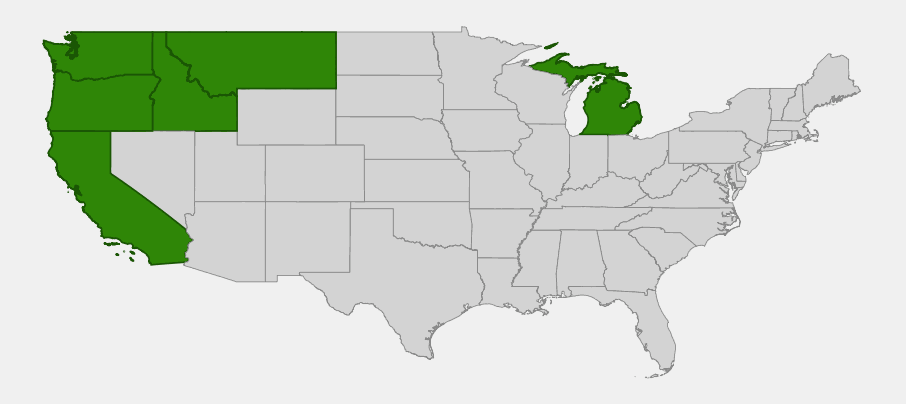
Hooker’s fairybells is native to western North America. USDA PLANTS lists it as native in Canada and the lower 48 states, in Alberta and British Columbia and in Washington, Oregon, California, Idaho, Montana and Michigan. Its core range runs from southern British Columbia and southwestern Alberta south through the Cascades and Coast Ranges of Washington and Oregon to the redwood and mixed forests of northern and central California, and east through northern Idaho to western Montana.
In Washington and Oregon it grows on both sides of the Cascades: in the moist forests of the west side, such as the Willamette Valley foothills and Puget Sound lowlands, and in the cooler, moister forests of the east slope and the Blue Mountains and northeastern Washington. In Michigan it is a striking disjunct, more than 1,000 miles from its main range, known only from a handful of sites in Ontonagon County in the western Upper Peninsula, where it was first collected in the Porcupine Mountains in 1968.
Its habitat is moist, shaded forest: the understory of Douglas-fir, western redcedar, grand fir and mixed hardwood-conifer forests, streambanks and ravines, and in California, redwood forests and shady oak woodlands. It generally grows from near sea level to middle elevations in the mountains.
📋 Regional plant lists featuring Hooker’s Fairybells: Idaho, Eastern Oregon & Eastern Washington · Montana & Wyoming · Michigan, Wisconsin & Eastern Minnesota · Western Oregon & Western Washington · California & Nevada
Growing & Care Guide
Hooker’s fairybells is an easy, elegant plant for a woodland or shade garden in the Pacific Northwest, northern California and the northern Rockies. It is offered by some native plant nurseries in the region. Buy nursery-propagated plants; never dig them from the wild, and in Michigan, where the species is endangered, leave wild plants completely undisturbed.
Light
Give it part shade to full shade, such as under trees or on the north side of a building. Morning sun is fine in cool climates, but hot afternoon sun scorches the leaves.
Soil & Water
Plant it in moist, humus-rich, well-drained soil, ideally with a layer of leaf litter or bark mulch like a forest floor. Keep the soil evenly moist in spring and early summer. Established plants in shade tolerate some summer dryness, but in dry-summer climates occasional summer water keeps them looking fresh.
Planting Tips
Plant in fall or early spring, setting rhizomes just below the soil surface and spacing plants 12 to 18 inches apart. Group it with ferns, wild ginger, vanilla leaf, false Solomon’s seal and trilliums under native trees and shrubs such as vine maple.
Pruning & Maintenance
Little care is needed. Leave fallen leaves in place as mulch, and cut back the stems after they die down in fall, or leave them for winter interest and wildlife. Divide crowded clumps in early spring or fall.
Propagation
Divide the rhizomes in early spring or fall. Plants also grow from seed cleaned from ripe berries and sown in fall outdoors, where winter cold breaks dormancy; seedlings grow slowly and may take several years to flower.
Landscape Uses
- Shade and woodland gardens: graceful arching stems and dangling spring flowers
- Native fern and wildflower plantings: pairs with sword fern, wild ginger and vanilla leaf
- Wildlife gardens: berries for birds and small mammals
- Forest restoration: native understory for moist conifer forests
- Naturalized areas under trees: slowly forms colonies in leaf litter
Wildlife & Ecological Value
Hooker’s fairybells is a characteristic part of the forest floor community in the Northwest, providing spring flowers for insects and fall fruit for wildlife.
For Pollinators
The dangling, bell-shaped flowers are visited by bumble bees and other native bees, which cling to the flowers to reach pollen and nectar, and by small flies.
For Birds
Thrushes, grouse and other forest birds eat the bright berries and disperse the seeds.
For Mammals
Small mammals such as chipmunks and mice eat the berries, and deer and elk occasionally browse the foliage.
Ecosystem Role
As a spreading, rhizomatous perennial, it helps form the herb layer of moist forests, holding soil and leaf litter and providing cover for small animals and invertebrates. Its berries are one of many small fruits that sustain forest wildlife in late summer.
Cultural & Historical Uses
The species honors William Jackson Hooker (1785–1865), the English botanist who became director of the Royal Botanic Gardens at Kew and wrote Flora Boreali-Americana, one of the first floras of northern and western North America, based in part on the collections of David Douglas and other explorers.
Botanists long placed the North American fairybells in Disporum, a genus otherwise found in Asia. DNA studies showed that the American species are more closely related to the twisted stalks (Streptopus) of the lily family than to the Asian Disporum, which belongs to a different family. They were therefore moved to the separate genus Prosartes, a name that comes from a Greek word meaning “to hang,” referring to the dangling ovules.
The Michigan population is one of the Great Lakes region’s notable botanical mysteries, a western plant growing in the forests of the Porcupine Mountains and Trap Hills near Lake Superior. Other western plants, such as devil’s club, also have isolated populations in the Lake Superior region, which botanists think may reflect plant migrations after the last ice age.
Frequently Asked Questions
Is Hooker’s fairybells the same as Disporum hookeri?
Yes. Disporum hookeri is the older name. The North American fairybells are now placed in the genus Prosartes.
Why does USDA call it drops-of-gold?
The name refers to the bright orange to red-orange berries that hang from the branch tips in late summer.
Are the berries edible?
It is not considered a food plant, and the berries should not be eaten. Leave them for birds and other wildlife.
Does it really grow in Michigan?
Yes. A small number of populations grow in Ontonagon County in the western Upper Peninsula, far from the species’ main range in the West. It is listed as state endangered in Michigan, so leave those plants undisturbed.
How do I grow it in a shade garden?
Plant it in moist, humus-rich soil in part to full shade, mulch with leaf litter, and keep it evenly moist in spring. It spreads slowly by rhizomes and needs little care.

Looking for a nursery that carries Hooker’s Fairybells?
Browse our native plant nursery directory: California · Idaho · Michigan & Montana · Oregon · Washington