Vine Maple (Acer circinatum)
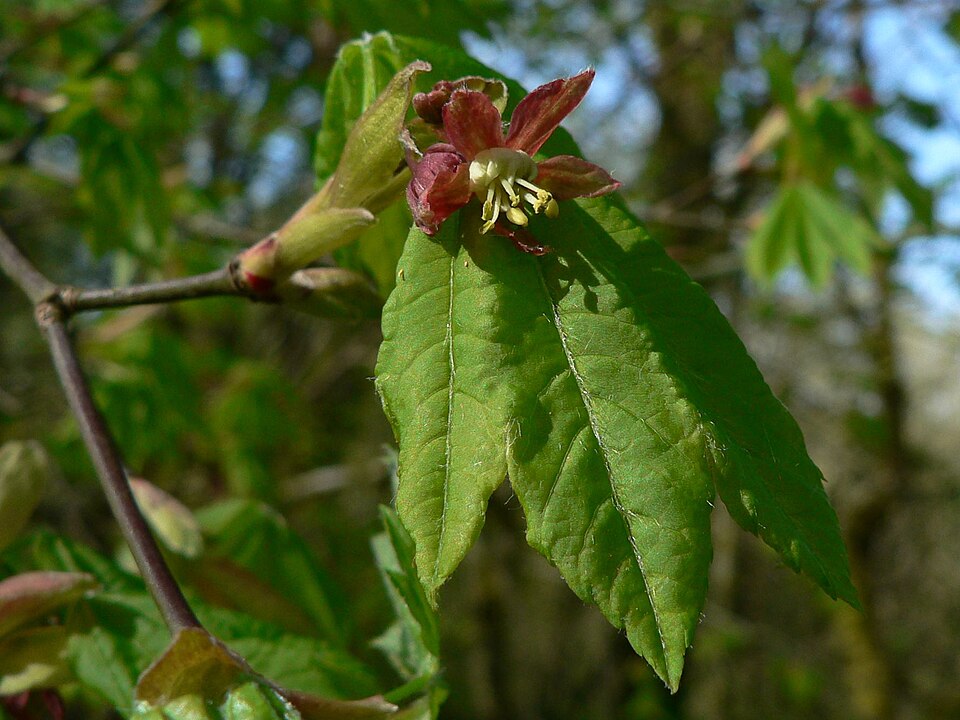
Acer circinatum, commonly known as Vine Maple, is one of the Pacific Northwest’s most distinctive and ecologically valuable native trees. This graceful deciduous maple creates some of the region’s most stunning autumn displays while playing a crucial role in forest ecosystems from sea level to mid-elevations. Unlike its towering conifer neighbors, Vine Maple adds a delicate, almost shrub-like character to the forest understory, often growing in graceful arches that sometimes touch the ground and root, creating natural bridges in the woodland landscape.
Key Takeaways
- Vine Maple is one of the most versatile native plants of the Pacific Northwest — multi-stemmed, adaptable to sun or shade
- Outstanding four-season interest: spring red flowers, summer green shade, spectacular fall color, interesting winter structure
- Thrives in a wide range of conditions — stream banks, open sun, deep shade under conifers
- Grows slowly — plan for long-term results, not quick fixes
- Supports native wildlife including native bees, butterflies, birds, and small mammals
- Minimal pest and disease problems — one of the most low-maintenance native trees available
Frequently Asked Questions
How fast does Vine Maple grow?
Vine Maple grows slowly — typically 6-12 inches per year under good conditions, slower in shade. This is actually one of its virtues in garden situations: it doesn’t outgrow its space or suddenly require major pruning to keep manageable. Young plants establish better when planted from smaller container sizes (1-gallon or 2-gallon) and grow surprisingly little in their first year as they focus energy on root establishment. By years 3-5, growth rate typically increases as the root system becomes established. Expect a 5-year-old plant to be 4-7 feet tall.
Can Vine Maple be used as a privacy screen?
Vine Maple can provide partial screening when planted in a group, but its open, multi-stemmed structure doesn’t create the dense, opaque screening that conifers provide. For privacy in Pacific Northwest gardens, consider a background planting of native conifers (Western Red Cedar, Douglas Fir) with Vine Maple as a mid-layer plant that provides beautiful seasonal interest in front of the privacy screen. The combination creates both function (privacy) and beauty (seasonal color) that a conifer-only screen lacks.
What is the fall color of Vine Maple?
Vine Maple is famous for its fall color — often the most brilliant native tree in the Pacific Northwest fall palette. In full sun, leaves turn vivid scarlet, orange, and yellow simultaneously — individual trees often display multiple colors at once, giving them a kaleidoscopic appearance. In shade, fall color tends more toward yellow and gold with less red. Peak color in western Oregon and Washington typically occurs in October, often coinciding with the first fall rains and creating a stunning contrast against the grey autumn skies. Photography-worthy color can appear from late September through early November.
Pacific Northwest native plant guides: ground covers for Oregon, palm trees for Washington State, and native flowering shrubs for gardens.