Western Wild Ginger (Asarum caudatum)
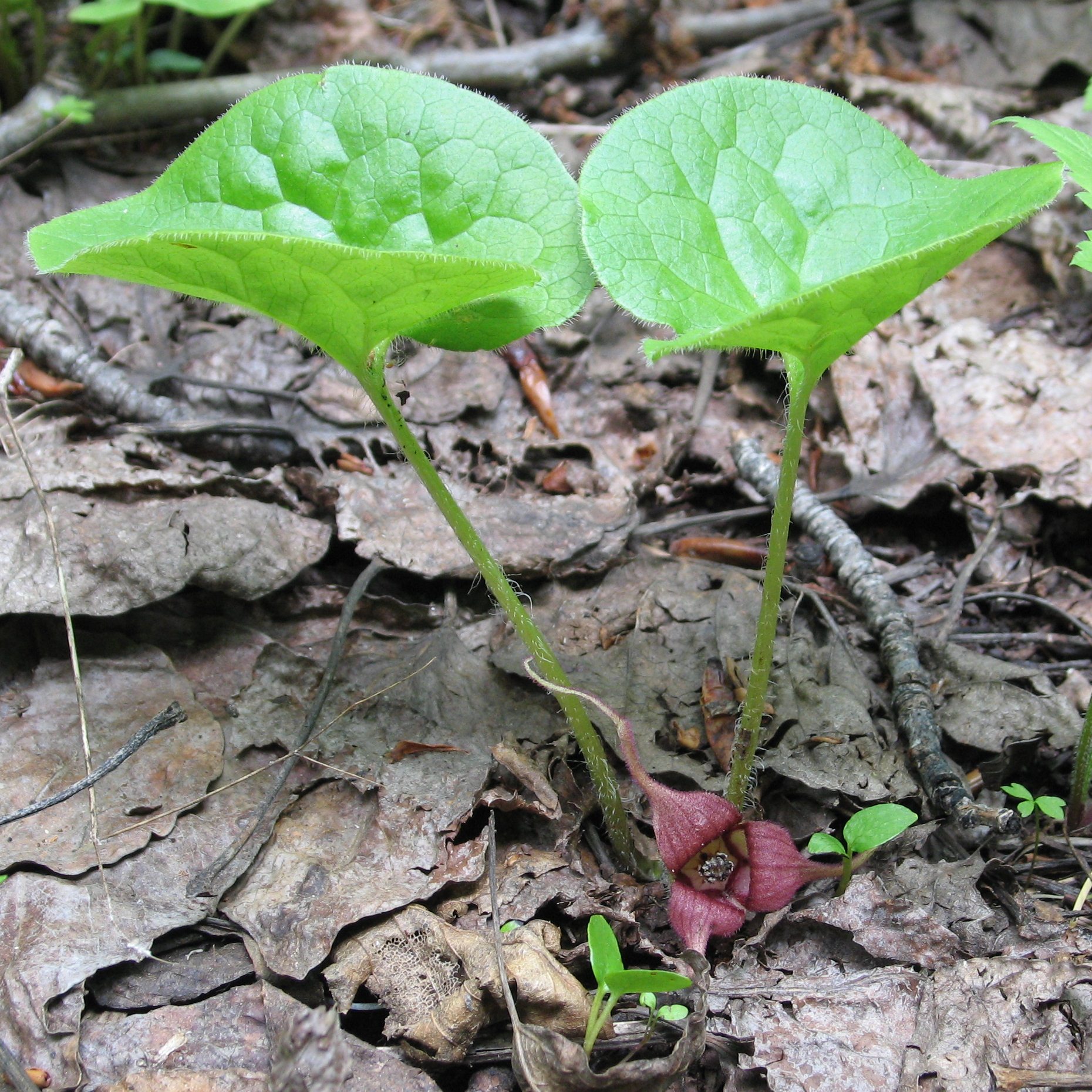
Asarum caudatum, commonly called Western Wild Ginger or British Columbia Wildginger, is a low, creeping evergreen groundcover of the moist conifer forests of the Pacific Northwest and northern California. It belongs to the birthwort family (Aristolochiaceae), not to true culinary ginger, though its rhizome shares a similar spicy fragrance when crushed — a resemblance that earned the whole genus its common name across North America.
Western Wild Ginger forms dense, slowly spreading mats of glossy, heart-shaped leaves that carpet the floor of shaded Douglas-fir and redwood forests from coastal British Columbia south through Washington, Oregon, and into the redwood belt of northern California, with an inland outpost in the cedar-hemlock forests of northern Idaho and western Montana. Its curious maroon, three-tailed flowers are produced at ground level, almost hidden beneath the foliage, where they are pollinated not by bees but by the small flies and fungus gnats drawn to their dark, fleshy color and faint decaying-fungus scent.
In the garden, Western Wild Ginger is one of the best true groundcovers available for a shaded Pacific Northwest native planting — dense enough to suppress weeds once established, evergreen through the mild coastal winters, and content in the same deep shade that frustrates most flowering groundcovers. It asks only for what it already has in the wild: consistent moisture, rich duff, and a canopy overhead.
Identification
Western Wild Ginger is a low, mat-forming evergreen perennial that spreads by slender, shallow rhizomes just below the leaf litter, gradually forming expanding colonies a few inches tall but several feet across over time.
Stems & Rhizome
The rhizome is slender, branching, and aromatic when broken, creeping just beneath the soil surface and rooting as it spreads. Leaf and flower stalks rise directly from the rhizome rather than from an upright stem, giving the whole plant a low, ground-hugging profile rarely more than 6 inches tall.
Leaves
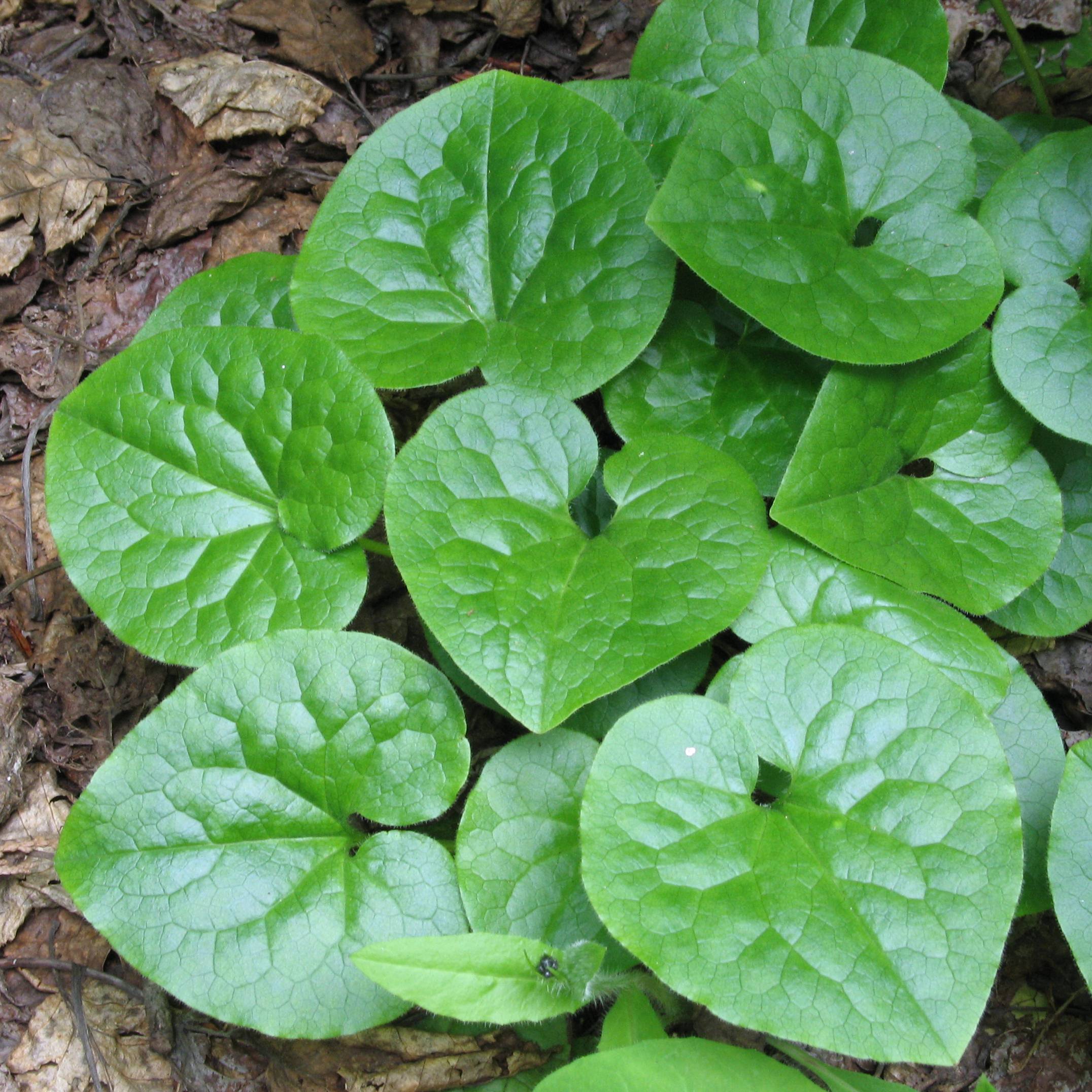
Leaves are heart- to kidney-shaped, 2 to 5 inches across, glossy dark green above with a leathery texture, and held in pairs at each node on long, softly hairy petioles. The leaf surface is often mottled with lighter green along the veins in younger growth. Unlike the related eastern wild ginger (Asarum canadense), which is deciduous, Western Wild Ginger’s leaves persist through the mild winters of the coastal Northwest, making it a genuine evergreen groundcover in much of its range.
Flowers
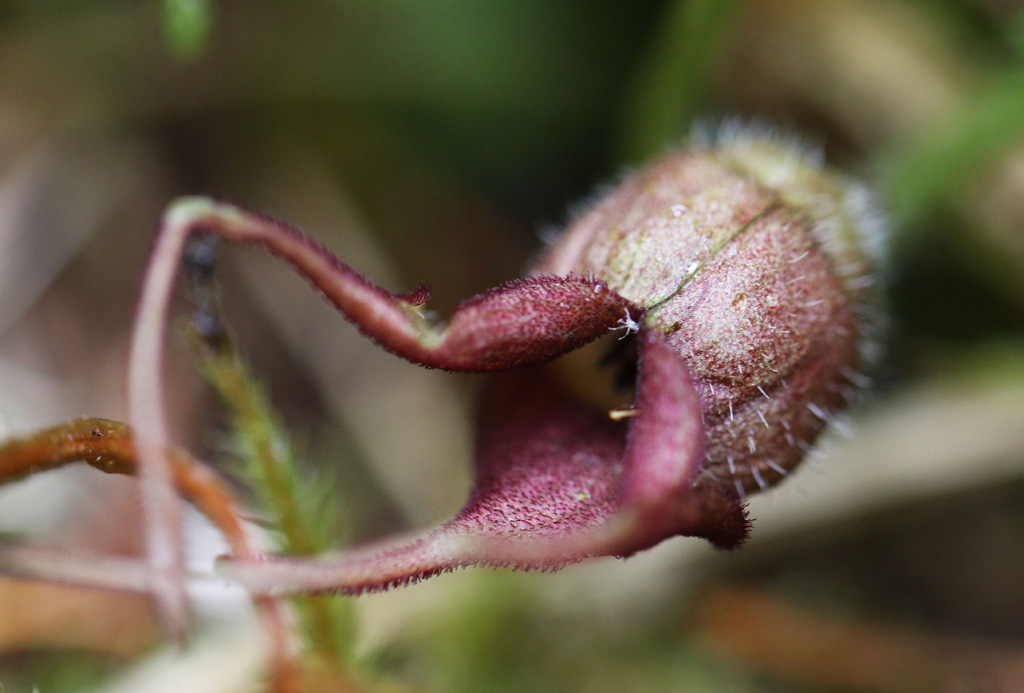
The flowers are unusual and easy to miss: borne singly at the base of the plant, partly hidden under the leaves and often right at the soil surface, with three triangular, maroon-brown sepals that taper into long, slender, tail-like tips up to 2 inches long — the source of the species name caudatum, meaning “tailed.” There are no true petals. The flowers bloom from April into June and are pollinated primarily by fungus gnats and small flies attracted to their dark color and faintly musty scent, a pollination strategy shared with several other forest-floor flowers that mimic the appearance of fungi or decaying matter.
Fruit & Seeds
The fruit is a fleshy, berry-like capsule that matures near ground level and splits to release seeds with small fleshy appendages (elaiosomes) that attract ants, which carry the seeds off and aid in dispersal — a strategy known as myrmecochory, shared with many other spring forest-floor plants.
Quick Facts
| Scientific Name | Asarum caudatum |
| Family | Aristolochiaceae (Birthwort) |
| Plant Type | Evergreen Herbaceous Groundcover |
| Mature Height | 4–6 in |
| Mature Spread | Spreads indefinitely by rhizome; 2–4 ft per established clump |
| Growth Rate | Slow |
| Sun Exposure | Full Shade to Partial Shade |
| Water Needs | Moderate to High; consistent moisture |
| Soil Type | Rich, humusy forest soil; moist but well-drained |
| Soil pH | 5.0–6.5 (acidic) |
| Bloom Time | April – June |
| Flower Color | Maroon-brown, mostly hidden under foliage |
| Fall Color | None; foliage is evergreen |
| Fruit | Small fleshy capsule at ground level, ant-dispersed seeds |
| Deer Resistant | Yes |
| USDA Hardiness Zones | 6–9 |
Native Range
Western Wild Ginger is native to the moist coniferous forests of the Pacific Coast and adjacent inland mountains, ranging from southwestern British Columbia south through virtually all of western Washington and western Oregon to the coastal and northern Sierra Nevada forests of California. It also occurs in a notable inland disjunct population in the cedar-hemlock forests of the Idaho Panhandle and immediately adjacent western Montana, a cooler, wetter pocket of the northern Rockies that shares many plant species with the Pacific Coast forests.
Within this range, it is a plant of consistently moist, shaded forest floors — most common under Douglas-fir, western redcedar, and western hemlock on the coastal side, and under similar cedar-hemlock forest in its Idaho/Montana outpost. It is absent from the drier interior Northwest, the Great Basin, and the Rocky Mountains east of the Idaho panhandle, where the humid, shaded forest conditions it requires do not occur.
Western Wild Ginger should not be confused with the unrelated eastern species Asarum canadense (Canadian wild ginger), which occupies a separate, entirely non-overlapping range across the eastern United States and Canada; the two are similar in general appearance and common name but are native to different regions and have different growth habits, with the eastern species being deciduous rather than evergreen.
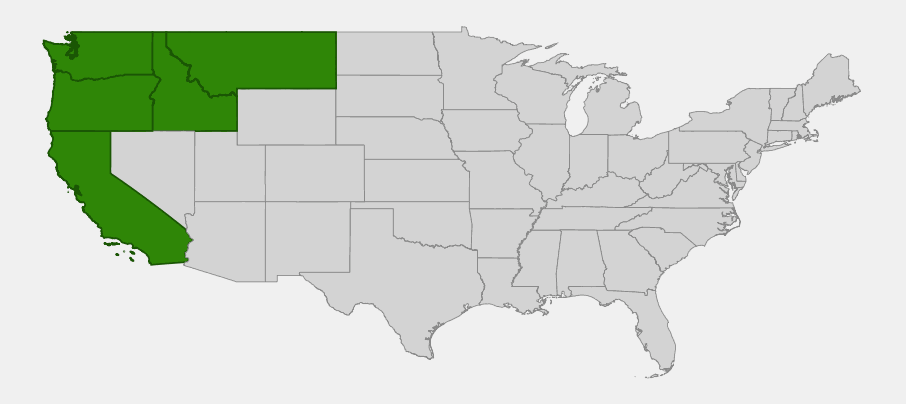
📋 Regional plant lists featuring Western Wild Ginger: Western Oregon & Western Washington · Idaho, Eastern Oregon & Eastern Washington · Montana & Wyoming (native only in western Montana; not native in Wyoming).
Growing & Care Guide
Western Wild Ginger rewards patience rather than effort. It spreads slowly and asks for conditions that closely mirror its native forest floor, but once established it needs almost no ongoing care.
Light
Full to partial shade is essential — this is a true forest-floor plant that scorches and bleaches in direct sun, particularly in hot inland gardens. Dappled light beneath trees or the north side of a building suits it well; the deeper the shade, the more it resembles its natural habitat.
Soil & Water
Rich, humusy soil that stays consistently moist is key to good establishment and spread. A thick layer of leaf mold or forest duff, either natural or added as mulch, closely mimics the conditions it grows in naturally. Established plants tolerate brief summer dry spells in coastal gardens with regular rainfall but struggle in hot, dry inland sites without supplemental water.
Planting Tips
Plant divisions or container stock in fall or early spring, spacing them 12 to 18 inches apart if a solid groundcover is the goal — it will take two to three years to knit together at that spacing given its slow growth rate. Working leaf compost or aged conifer duff into the planting area before setting plants out significantly improves establishment. Because the rhizome sits just below the surface, avoid deep cultivation once planted.
Pruning & Maintenance
Essentially none is needed. Remove tattered or winter-damaged leaves in early spring if desired, though the evergreen foliage generally looks presentable year-round in the mild, moist climate where this species thrives. No fertilizer is required in reasonably fertile forest soil; a yearly top-dressing of leaf mulch is more beneficial than any fertilizer.
Landscape Uses
Western Wild Ginger fills a specific and valuable niche in Pacific Northwest native gardens:
- Dense shade groundcover beneath conifers and other forest-canopy trees where few flowering plants persist
- Weed-suppressing mat once established, reducing the need for mulch renewal in shaded beds
- Woodland garden companion planted among ferns, trilliums, and other forest-floor natives
- Erosion control on shaded slopes under tree cover
- Container and shade-rockery plantings where its glossy evergreen foliage provides year-round texture
Wildlife & Ecological Value
Western Wild Ginger plays a quiet but specialized ecological role tied closely to its unusual flower and seed biology.
For Pollinators
Unlike most garden flowers, Western Wild Ginger is pollinated primarily by fungus gnats and small flies rather than bees, drawn to the dark maroon color and faint musty odor of the ground-level flowers, which mimic the appearance and scent of forest fungi closely enough to fool these insects into visiting.
For Birds & Mammals
The dense evergreen mat provides year-round ground-level cover for small forest-floor wildlife, including insects, salamanders, and other moisture-dependent species that shelter beneath the foliage. The foliage is generally left alone by deer and other browsers.
Ecosystem Role
Seeds bear fleshy, nutrient-rich appendages (elaiosomes) that ants collect and carry back to their nests, a dispersal partnership called myrmecochory that is widespread among Pacific Northwest forest-floor plants and helps move seeds short distances into favorable germination sites. As a slow-spreading, long-lived groundcover, established colonies contribute to forest-floor soil stability and moisture retention under the shaded conditions where few other plants form a continuous living mat.
Cultural & Historical Uses
Indigenous peoples throughout the Pacific Northwest, including Coast Salish, Nuu-chah-nulth, and other nations within its range, were familiar with Western Wild Ginger and used the aromatic rhizome in various traditional preparations, valuing its ginger-like fragrance and flavor. As with the related eastern species, historical accounts describe the rhizome being used as a flavoring and in traditional remedies by different communities across the plant’s range.
Modern research has found that plants in the genus Asarum, including this species, contain aristolochic acid and related compounds that are now understood to be toxic to the kidneys and are classified as carcinogenic; historical food and medicinal use of wild ginger species is documented as part of Indigenous ethnobotanical history, but is not a current food safety recommendation, and the rhizome should not be consumed.
Today, Western Wild Ginger’s significance is almost entirely horticultural and ecological — prized by native-plant gardeners and restoration ecologists throughout the Pacific Northwest as one of the best true evergreen groundcovers for deep shade, and valued by naturalists for its unusual fly-pollinated flower, a frequent subject of interest on forest wildflower walks.
Frequently Asked Questions
Is Western Wild Ginger the same plant as culinary ginger?
No. Despite the aromatic, ginger-scented rhizome, Asarum caudatum is unrelated to true ginger (Zingiber officinale) and is not a culinary spice substitute. It also contains aristolochic acid, a compound known to be toxic, and should not be eaten.
Why don’t I ever see the flowers on my Wild Ginger?
The maroon, tailed flowers are produced right at the base of the plant, often hidden beneath the leaves or partly buried in leaf litter. Gently lifting the foliage in April or May is usually the only way to spot them — they are adapted to be found by ground-level fungus gnats, not by passing eyes.
How fast will Western Wild Ginger fill in as a groundcover?
Slowly. It typically takes two to three years for plants spaced a foot or so apart to form a continuous mat. Patience and consistent moisture during establishment matter more than any other single factor.
Can Western Wild Ginger grow in full sun?
Not successfully. It is adapted to shaded forest-floor conditions and will scorch, bleach, or simply fail to thrive in direct sun, especially away from the cool, humid coastal climate of its native range.
Is this the same species found in eastern gardens as “wild ginger”?
No — eastern gardens and nurseries typically offer Asarum canadense, a related but distinct, deciduous species native to the eastern United States and Canada. The two are not interchangeable in terms of native range, and only Asarum caudatum is native to the Pacific Northwest.

Looking for a nursery that carries Western Wild Ginger?
Browse our native plant nursery directory: Washington · Oregon · California · Idaho · Montana