
Plains Larkspur (Delphinium geyeri)
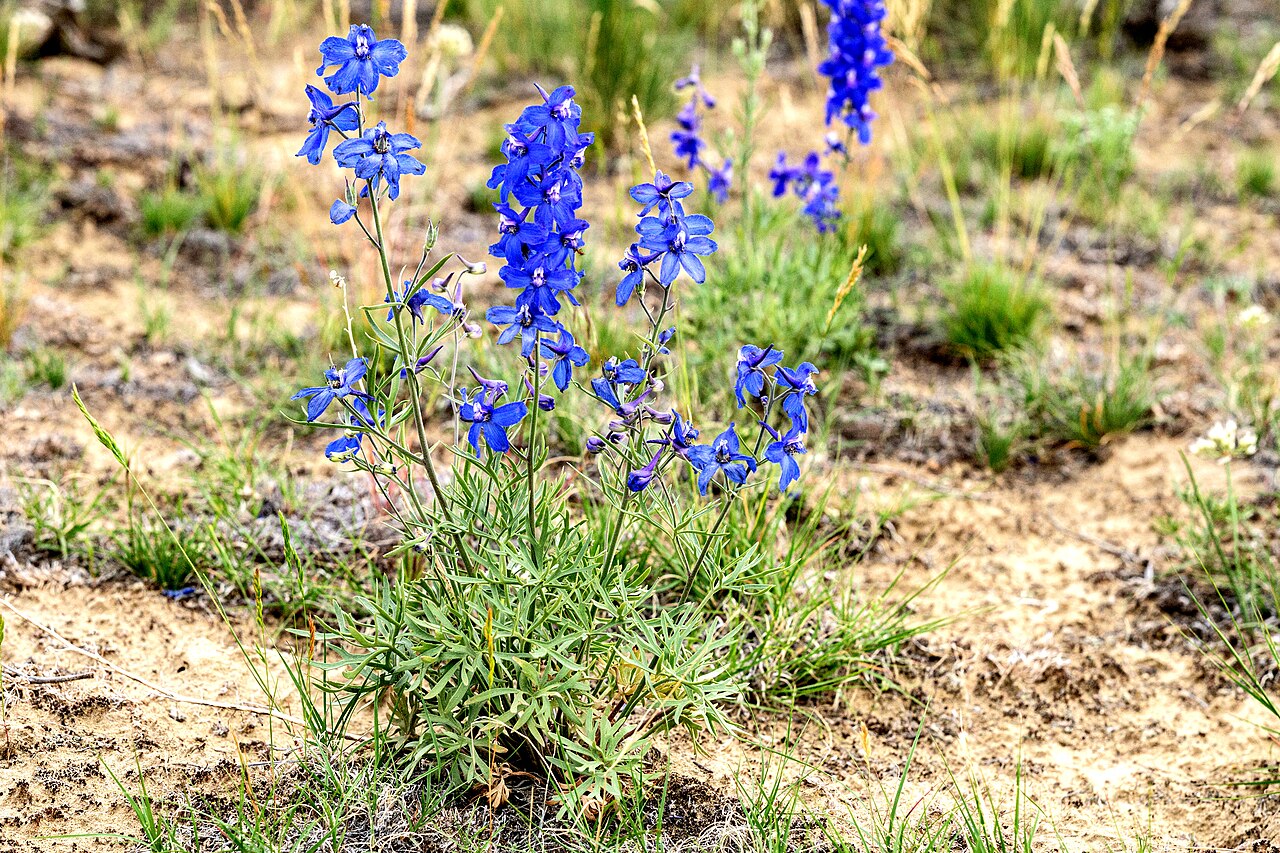
Delphinium geyeri, known as Plains Larkspur, Geyer’s larkspur or Wyoming larkspur, is a striking blue wildflower of the shortgrass prairie and sagebrush foothills of the central Rockies and western Great Plains. In late spring it sends up dense spikes of deep, electric-blue, spurred flowers above clumps of finely divided, gray-green leaves.
It is also one of the best-known poisonous range plants of the region. Plains larkspur is a “low larkspur,” and it has killed many cattle on rangelands in Wyoming and Colorado, where it is often one of the first green plants in spring. Anyone who keeps livestock, or who has children or pets, should know how to recognize it.
This guide covers how to identify plains larkspur, where it grows, its toxicity, whether and how to grow it in a dry western garden, and its value to hummingbirds and bumble bees.
Identification
Look in May and June for clumps 8 to 30 inches tall, with gray-green, finely divided leaves and one to several stiff, upright spikes packed with deep blue flowers, each with a long, straight spur.
Leaves
The leaves are mostly near the base and on the lower stem, on long stalks, and are divided into many narrow, almost thread-like segments. They are covered with fine, short hairs that give the plant a grayish-green look, a useful clue that separates it from greener larkspurs. Leaves appear early in spring, often before most grasses green up.
Flowers
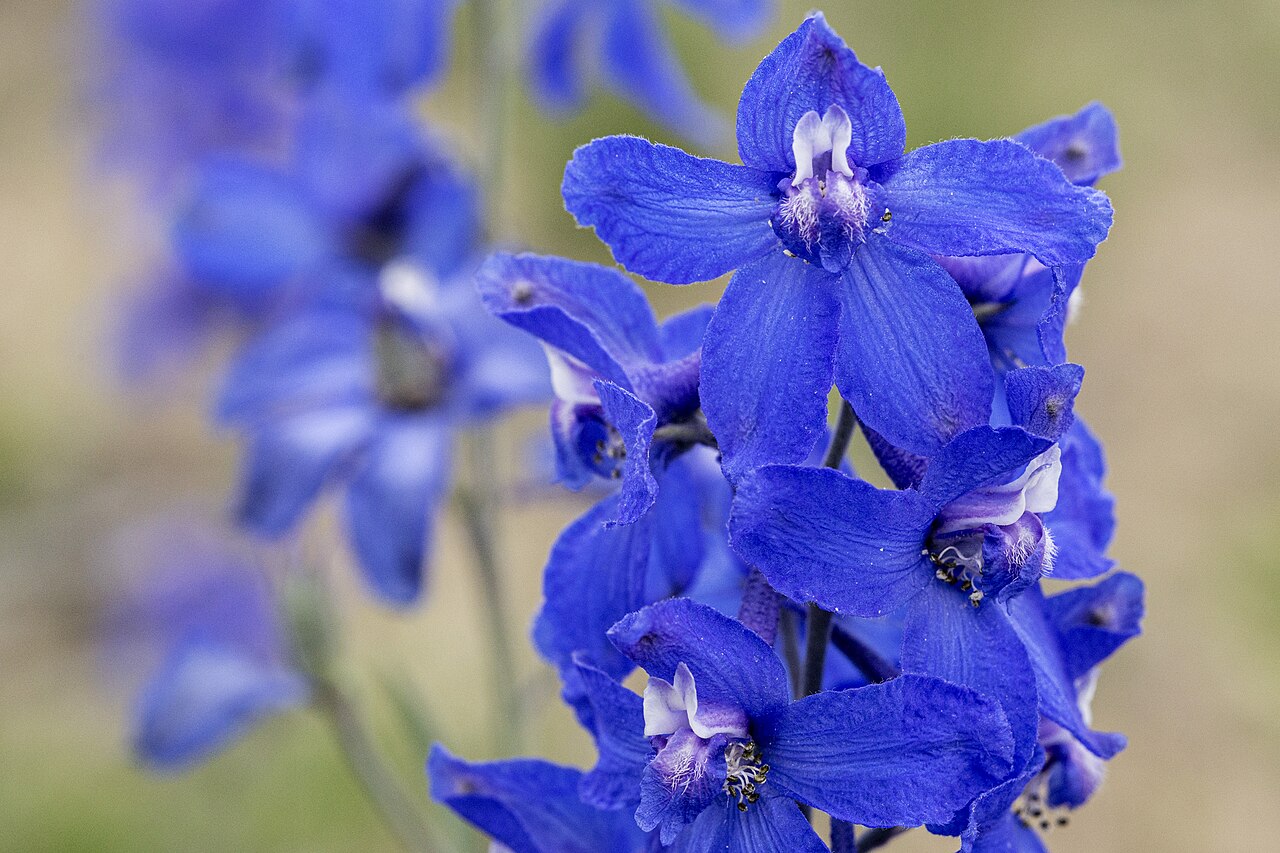
The flowers are deep, bright blue, about 1 inch across, and crowded in a dense spike (raceme) of 10 to 30 or more. Each has five petal-like sepals, the upper one extended into a straight spur about ½ to ¾ inch long, and a small center of whitish to pale blue petals. Plants bloom from May into early July, depending on elevation.
Fruit & Roots
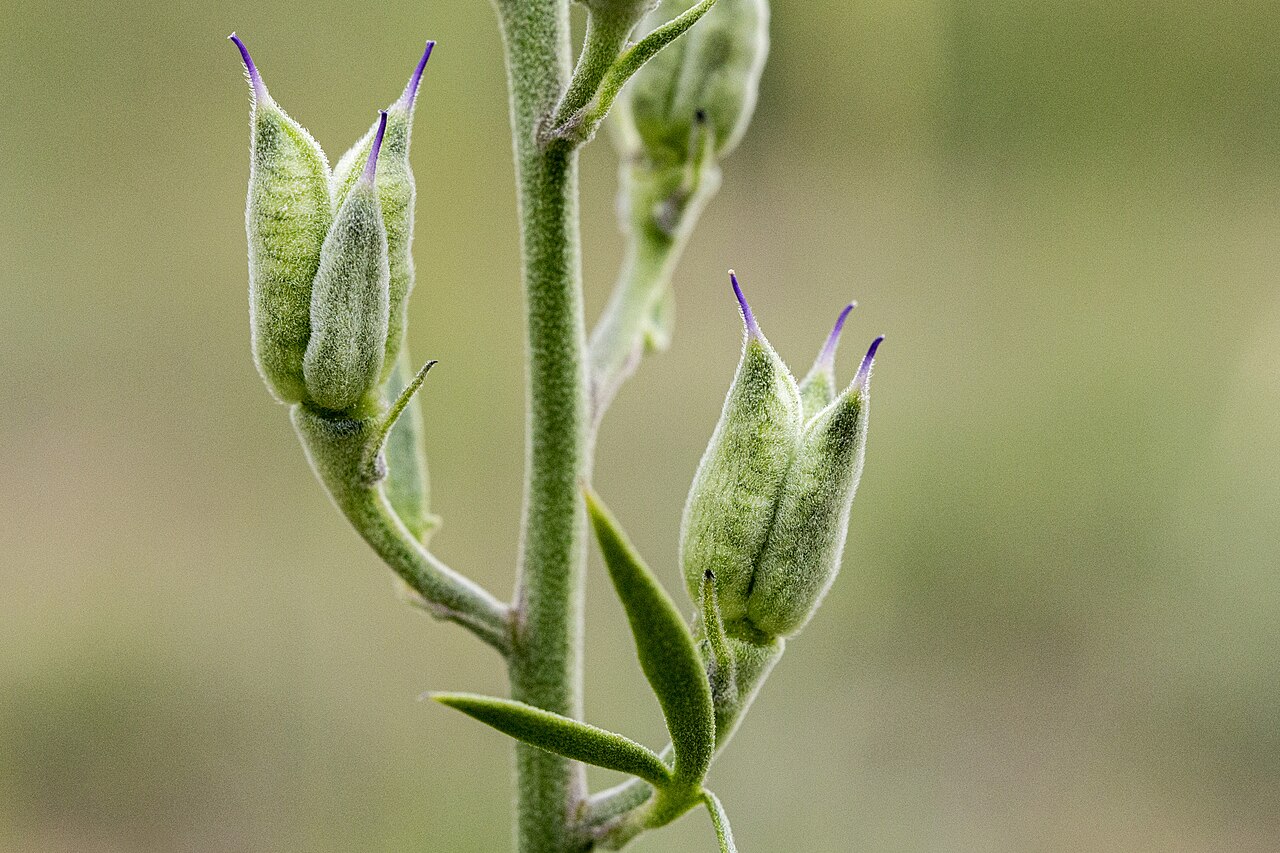
Each flower forms three upright, pod-like follicles that split open in summer to release small, winged brown seeds. The plant grows from a thick, woody root and goes dormant by midsummer in dry years.
Look-alikes
Other larkspurs in its range include the low larkspur Delphinium nuttallianum, which is shorter, with looser flower spikes and greener, less hairy leaves, and the tall larkspurs (such as D. barbeyi) of moist mountain meadows. Prairie Larkspur (D. virescens) of the Great Plains has white to pale blue flowers. Lupines can look similar from a distance but have palmate leaves and pea-like flowers without spurs.
Quick Facts
| Scientific Name | Delphinium geyeri Greene |
| Family | Ranunculaceae (buttercup family) |
| Plant Type | Herbaceous perennial from a woody root |
| Mature Height | 8–30 in |
| Mature Spread | 8–18 in |
| Growth Rate | Slow to establish |
| Sun Exposure | Full sun |
| Water Needs | Low; dry once established |
| Soil Type | Well-drained sandy, gravelly or clay-loam soil |
| Soil pH | About 6.5–8.5 |
| Bloom Time | May–July (mostly May–June) |
| Flower Color | Deep bright blue |
| Fall Color | None; summer dormant |
| Fruit | Three upright follicles with winged seeds |
| Deer Resistant | Yes; toxic, rarely browsed by deer |
| USDA Hardiness Zones | 4–7 |
Native Range
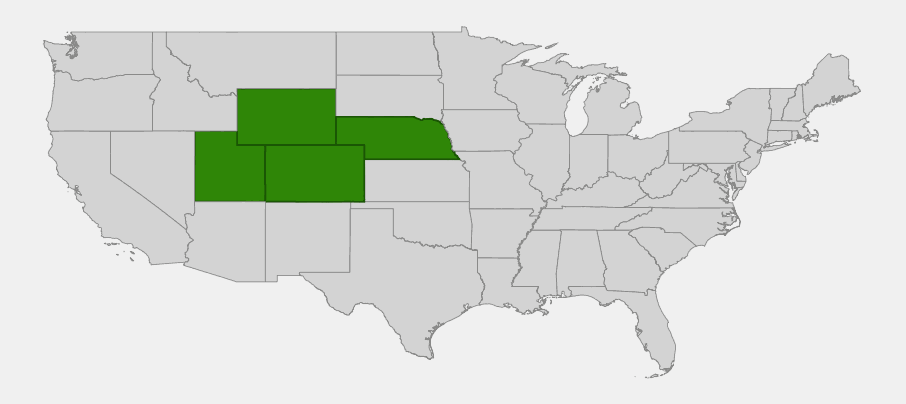
USDA PLANTS lists plains larkspur as native in Wyoming, Colorado, Nebraska and Utah. Its center of distribution is southeastern and central Wyoming and northern and eastern Colorado, including the high plains and foothills along the Front Range.
In Nebraska it reaches the western Panhandle, on the high plains near the Wyoming and Colorado borders. In Utah it grows in the northeast, near the Wyoming and Colorado borders. It is a plant of dry, open ground, roughly between 4,500 and 9,000 feet.
Typical habitats are shortgrass prairie, mixed-grass prairie on the high plains, sagebrush steppe and foothill scrub with mountain mahogany. It often grows on sandy, gravelly or rocky slopes and benches, and it can be common on rangeland, sometimes forming dense patches.
📋 Regional plant lists featuring Plains Larkspur: Montana & Wyoming · Nebraska, Kansas & Eastern Colorado · Utah & Western Colorado
Growing & Care Guide
Safety note: all parts of plains larkspur are poisonous, especially the young leaves and the seeds. Like other larkspurs, it contains diterpenoid alkaloids (such as methyllycaconitine) that block nerve signals to the muscles and can cause muscle weakness, collapse and death by respiratory paralysis. Cattle are particularly vulnerable, and plains larkspur is a major cause of cattle losses on spring and early summer range in Wyoming and Colorado. Do not plant it where livestock graze, keep children and pets from chewing on it, and wear gloves if you handle the seeds. If you suspect poisoning, call a veterinarian or Poison Control (1-800-222-1222 in the U.S.) right away.
With that caution, plains larkspur is a beautiful, very drought-tolerant wildflower for dry gardens in its native region, where livestock are not a concern. It is occasionally available as seed from regional native seed suppliers and is grown in Colorado demonstration gardens.
Light
Full sun. In shade it becomes floppy and blooms poorly.
Soil & Water
It needs well-drained, lean soil: sandy, gravelly or clay-loam soils of the plains and foothills all work. It relies on spring moisture and goes dormant in summer, so do not water it in summer once it is established; wet soil in summer can rot the root.
Planting Tips
Sow seed outdoors in fall so the winter cold breaks dormancy, or cold-stratify seed in the refrigerator for 6 to 8 weeks before spring sowing. Plant it where the summer-dormant gap will not matter, for example among bunchgrasses that stay green after it fades.
Pruning & Maintenance
Cut back flowering stems after the seeds ripen if you do not want it to self-sow. Wear gloves. No fertilizer is needed. Mark its location, since it disappears in summer.
Propagation
Grow from fresh seed with cold stratification. Seedlings take two or more years to flower. The woody root resents disturbance, so division and transplanting are rarely successful.
Landscape Uses
- Dry prairie and xeriscape gardens: in the high plains and foothills, away from livestock
- Hummingbird and bumble bee gardens: long-spurred blue flowers rich in nectar
- Rock gardens: on well-drained slopes with native bunchgrasses
- Not for pastures: toxic to cattle; do not plant where livestock graze
Wildlife & Ecological Value
Plains larkspur’s spurred flowers are built for long-tongued visitors, and its early spring growth and bloom make it an important nectar source on the dry plains.
For Pollinators
Bumble bees are its main pollinators, reaching the nectar at the end of the spur, and some short-tongued bees steal nectar by chewing through the spur. Sphinx moths and other moths also visit the flowers.
For Birds
Broad-tailed and other hummingbirds visit the flowers during spring migration and the early nesting season. Few birds eat the toxic seeds.
For Mammals
Most mammals avoid it. Sheep tolerate larkspur alkaloids better than cattle and have been used to graze larkspur-infested range, but it remains dangerous to cattle.
Ecosystem Role
As an early-blooming perennial of shortgrass prairie and sagebrush steppe, it adds to the spring flower diversity that supports native bees. Its abundance on rangeland is closely tied to grazing history and to wet springs.
Cultural & Historical Uses
The species was named by Edward Lee Greene in 1887 in honor of Charles A. Geyer, a German botanist who collected plants across the American West in the 1830s and 1840s. “Plains larkspur” and “Wyoming larkspur” are ranchers’ names that reflect where it causes the most trouble.
Larkspur poisoning is one of the most costly plant poisonings of cattle in the western United States. The USDA Agricultural Research Service’s Poisonous Plant Research Laboratory in Logan, Utah, has long studied plains larkspur and other low larkspurs, including how their toxicity changes through the season and how grazing management can reduce losses.
Larkspurs in general have a long history in European herbal medicine, for example as a treatment for lice, but they are far too toxic for home remedies. Today plains larkspur is appreciated mainly for its intense blue flowers and its role in prairie wildflower displays.
Frequently Asked Questions
Is plains larkspur poisonous?
Yes. All parts contain toxic alkaloids, especially the young leaves and seeds. It is a major cause of cattle deaths on western rangelands, and it is dangerous to people and pets if eaten. Call a veterinarian or Poison Control (1-800-222-1222) if you suspect poisoning.
Why is plains larkspur so dangerous to cattle?
It greens up early in spring, when little else is available, and cattle readily eat it. Its alkaloids block nerve signals to the muscles, causing weakness, collapse and death by respiratory failure. Cattle are much more susceptible than sheep.
Where does plains larkspur grow?
In shortgrass prairie, sagebrush steppe and foothill scrub of Wyoming, Colorado, western Nebraska and northeastern Utah, mostly between about 4,500 and 9,000 feet.
Can I grow plains larkspur in my garden?
Yes, in a dry, sunny garden in its native region, away from livestock and where children and pets will not chew on it. Sow seed in fall, provide good drainage, and do not water it in summer.
Do hummingbirds like plains larkspur?
Yes. Hummingbirds and bumble bees visit its long-spurred blue flowers for nectar in late spring and early summer.


