
Brownplume Wirelettuce (Stephanomeria pauciflora)
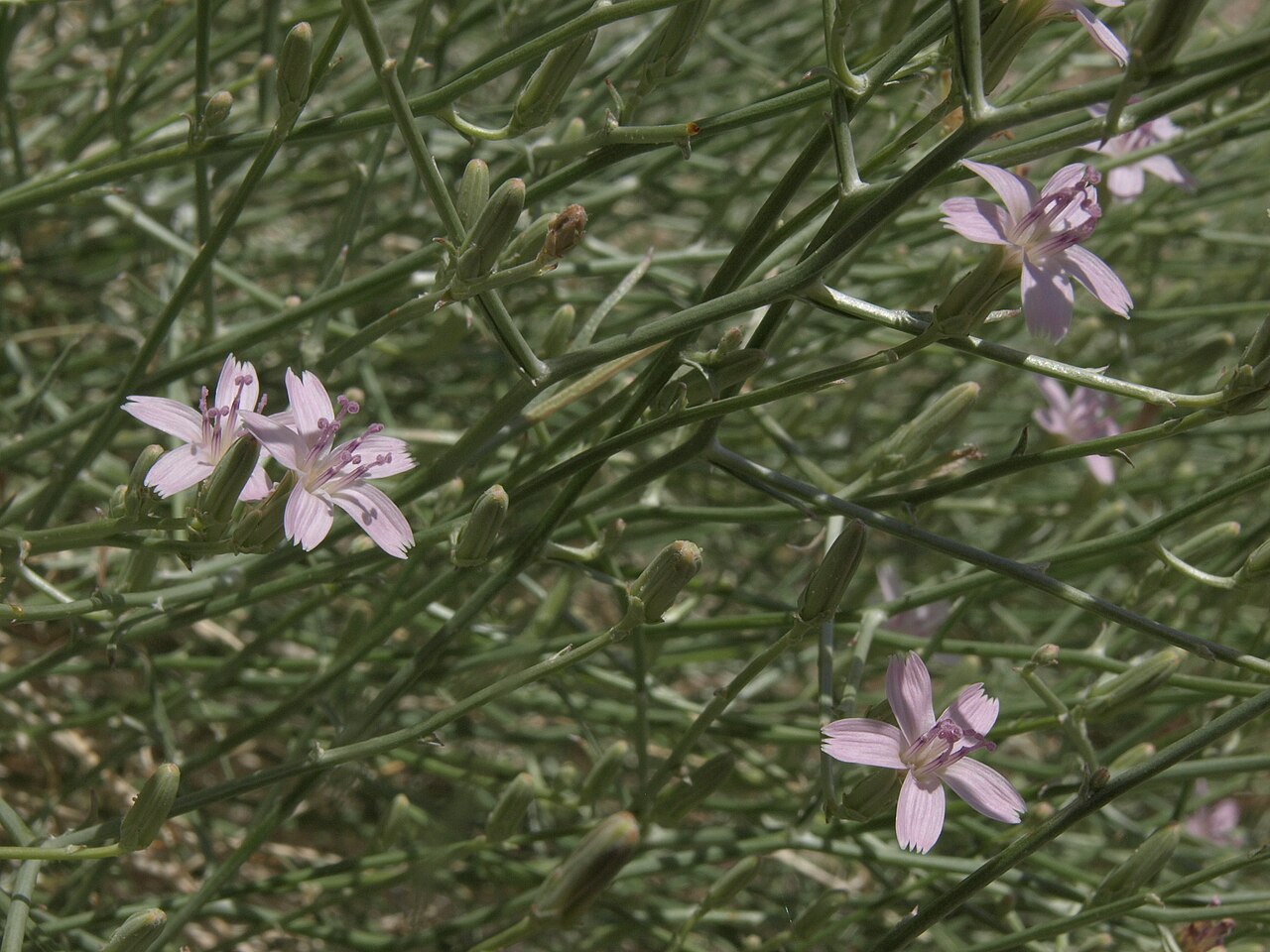
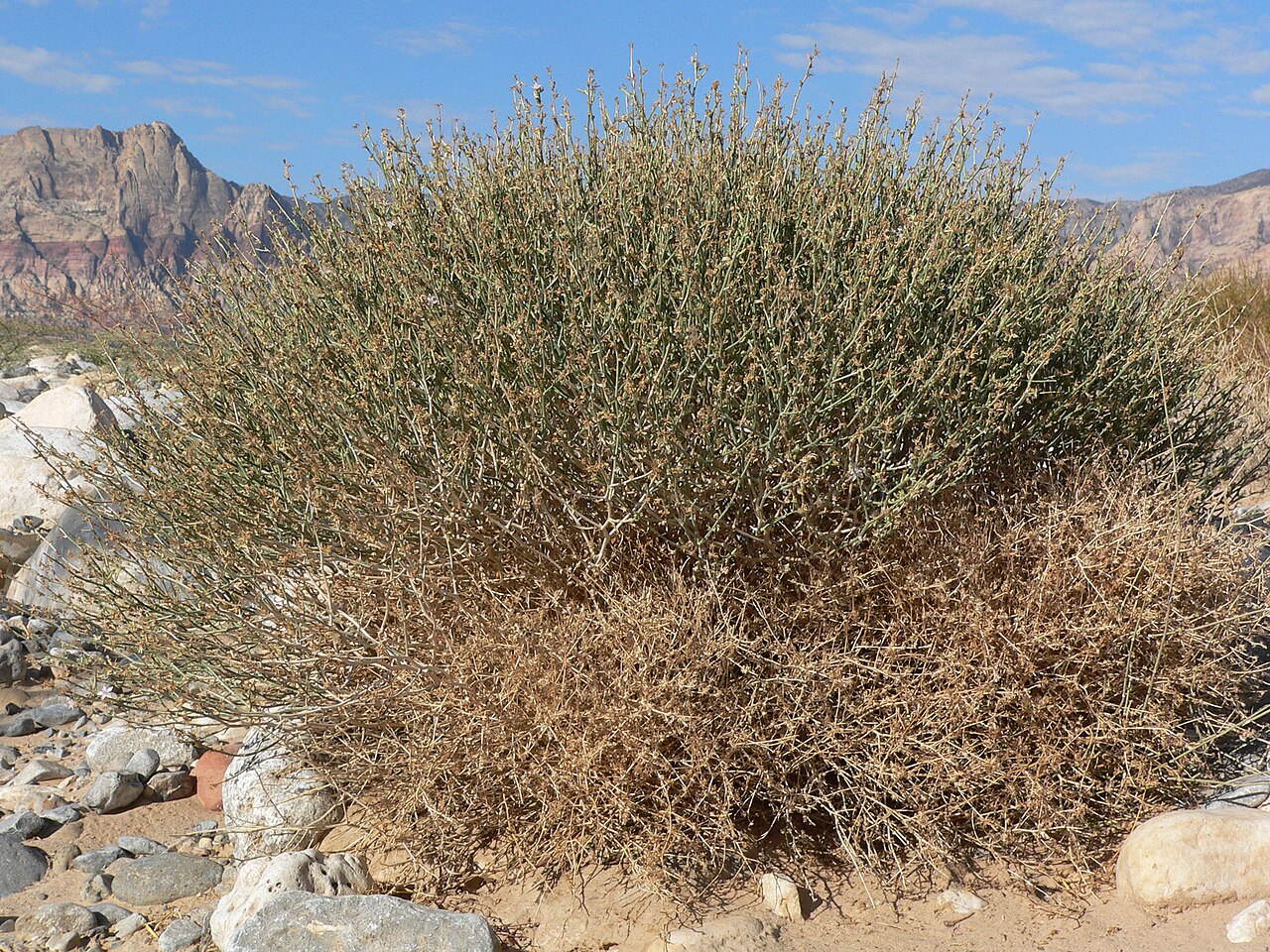
Stephanomeria pauciflora, known as Brownplume Wirelettuce, desert straw, wire lettuce or bush wirelettuce, is a low, rounded, broom-like perennial of the aster family (Asteraceae) that grows across the deserts, plains and plateaus of the American Southwest. It forms a dense tangle of slender, green, nearly leafless stems, usually 8 to 20 inches tall, that looks almost like a clump of wire or straw.
From late spring to fall, the wiry stems are dotted with small, pale pink, lavender or white flower heads about 3/4 inch across, each with just a few strap-shaped, finely toothed rays. The name pauciflora means “few-flowered”, referring to the small number of florets in each head. The flowers are followed by small seed heads of feathery, tan to brownish bristles, the “brown plumes” of its common name. Like other members of the chicory tribe, the stems contain a milky sap.
Brownplume wirelettuce is very drought-tolerant and grows in some of the driest, rockiest and sandiest places in the Southwest, from the low desert to pinyon-juniper woodland. The Xerces Society notes it as having special value to native bees. This guide covers how to identify it, where it grows, how to grow it in a dry garden, and its value to wildlife.
Identification
Brownplume wirelettuce is easiest to identify by its growth form: a rounded, much-branched mass of thin green stems with almost no leaves, decorated with small pink flowers in summer and fluffy brownish seed heads later.
Growth Habit
It is a perennial with a woody base and a deep taproot. The many slender, stiff, green stems branch repeatedly to form a rounded or broom-shaped clump, usually 8 to 20 inches tall and somewhat wider. The stems are smooth, often slightly grayish, and exude a milky sap when broken. The plant is often partly dry and straw-colored by late summer.
Leaves
The basal leaves are narrow, up to about 3 inches long, and often lobed or toothed, but they wither early in the season. The leaves on the stems are reduced to tiny scales, so for most of the year the plant appears leafless and does its photosynthesis in its green stems.
Flowers
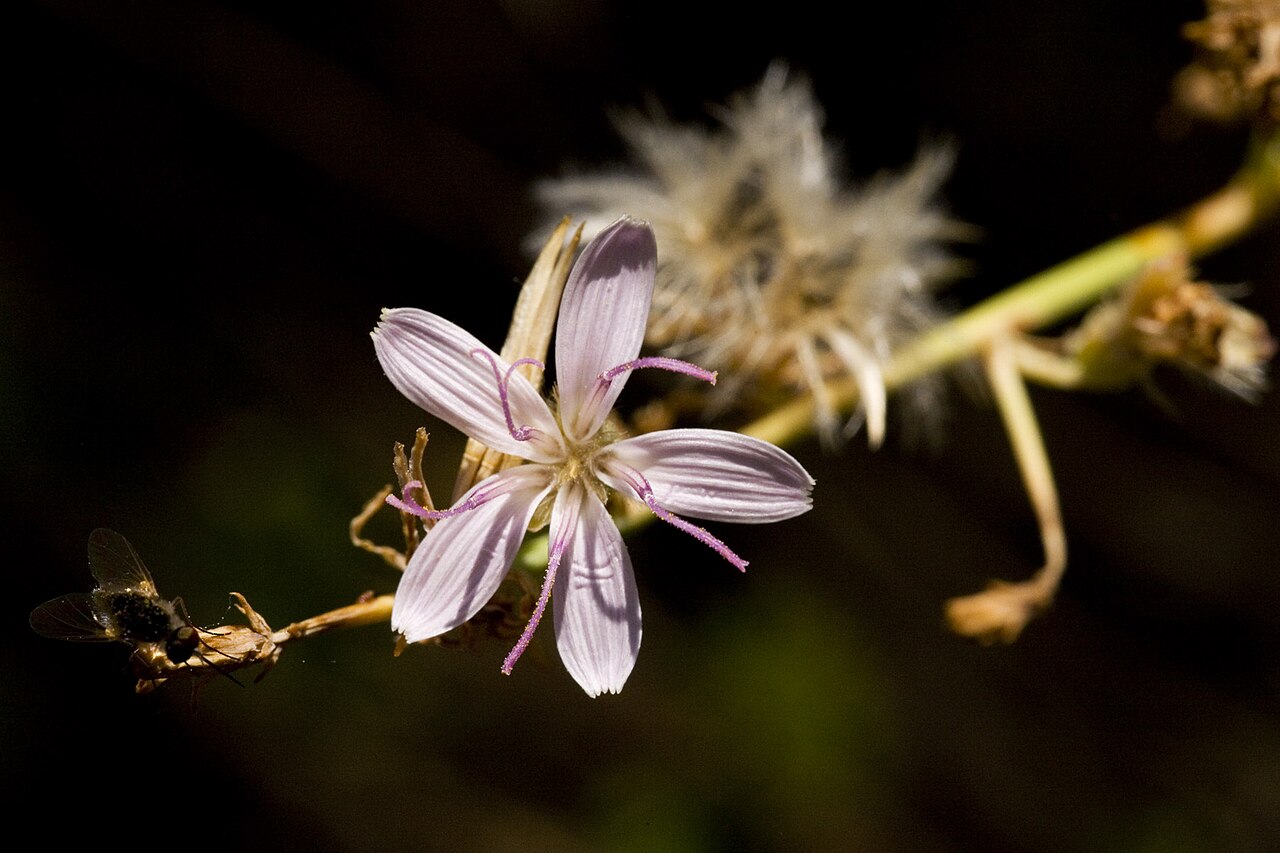
The flower heads are borne singly at the tips of the many small branches. Each head has about 3 to 5 ray flowers, typically 4 or 5, with no disk flowers. The rays are pale pink, lavender or white, with fine teeth at the tip, and the dark-tipped styles project from the center. The main bloom is from May to September, with flowers in spring and fall in the hottest deserts.
Fruit & Seeds
The seeds (achenes) are small, slender and ridged, topped with a pappus of feathery (plumose) bristles that are tan to light brown. The bristles carry the seeds on the wind.
Look-alikes
Skeletonweeds of the genus Lygodesmia, such as Texas skeleton plant, also have nearly leafless stems and pink flower heads, but their heads are usually larger, with more rays, and their pappus bristles are not feathery. Other wirelettuces (Stephanomeria species) of the West differ in the number of florets per head, the color of the pappus and whether they are annual or perennial. Look for the wiry, rounded clump, few-flowered pink heads and brownish feathery plumes.
Quick Facts
| Scientific Name | Stephanomeria pauciflora (Torr.) A. Nelson |
| Family | Asteraceae (aster family; chicory tribe) |
| Plant Type | Herbaceous perennial or subshrub with a woody base |
| Mature Height | 8–20 in |
| Mature Spread | 1–2 ft |
| Growth Rate | Moderate |
| Sun Exposure | Full sun |
| Water Needs | Very low |
| Soil Type | Dry sandy, gravelly or rocky soils; tolerates poor and alkaline soils |
| Soil pH | About 7.0–8.5 |
| Bloom Time | May–September (spring to fall in the hottest deserts) |
| Flower Color | Pale pink, lavender or white |
| Fall Color | Stems often dry to straw color in late summer and fall |
| Fruit | Small achenes with feathery, tan to brownish bristles |
| Deer Resistant | Not well documented |
| USDA Hardiness Zones | 5–10 |
Native Range
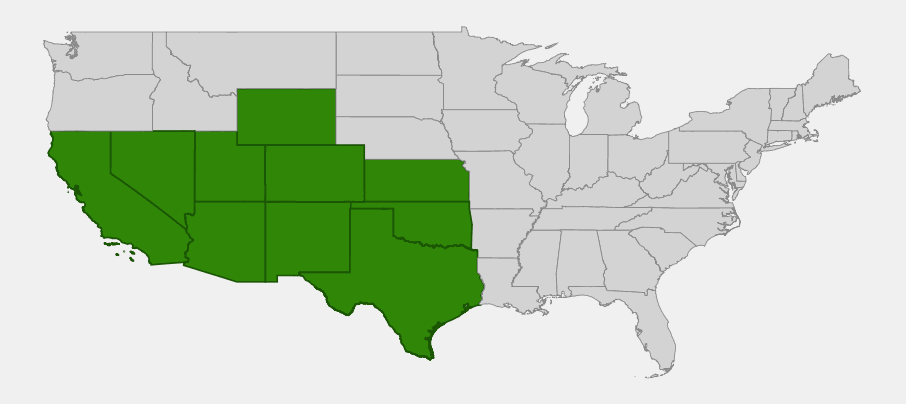
Brownplume wirelettuce is one of the most widespread wildflowers of the arid Southwest. USDA PLANTS lists it as native to Arizona, California, Colorado, Kansas, Nevada, New Mexico, Oklahoma, Texas, Utah and Wyoming, and its range extends south into northern Mexico.
It is common across the Mojave, Sonoran and Chihuahuan Deserts, the Great Basin edge and the Colorado Plateau, including places such as Red Rock Canyon in Nevada, Arches and Canyonlands National Parks in Utah, and the Organ Mountains of New Mexico. In Texas it grows in West Texas and the Panhandle. The records in southwestern Kansas, western Oklahoma and southern Wyoming lie at the eastern and northern edges of its range, on dry plains and badlands.
Typical habitats are dry, open places with sandy, gravelly or rocky soils: desert washes, rocky slopes, sandstone ledges, sandy plains, dry grassland, desert scrub and openings in pinyon-juniper woodland. It also grows readily on roadsides and other disturbed ground.
📋 Regional plant lists featuring Brownplume Wirelettuce: Montana & Wyoming · Nebraska, Kansas & Eastern Colorado · Utah & Western Colorado · Arizona & New Mexico · South & West Texas · California & Nevada
Growing & Care Guide
Brownplume wirelettuce is a tough, delicate-looking native for dry gardens, rock gardens and xeriscapes in the Southwest and the western Great Plains. It is occasionally included in native seed mixes and sold by specialty nurseries. It needs sun, lean soil and very little water.
Light
Grow it in full sun. In shade, the stems become weak and sparse and flowering is reduced.
Soil & Water
Plant it in dry, sandy, gravelly or rocky soil with excellent drainage. It tolerates poor, alkaline and disturbed soils. Once established, it needs little or no supplemental water in most of its range; occasional deep watering in long summer droughts can extend flowering. Rich soil and regular irrigation make it floppy and short-lived.
Planting Tips
Plant container plants in fall or spring, or sow seed in fall. Use it in rock gardens, along dry paths, on gravelly slopes and in desert or prairie plantings, where its fine, airy texture contrasts with bolder plants such as yuccas and cacti.
Pruning & Maintenance
Little maintenance is needed. If the plant looks untidy in late winter, cut the old stems back to a few inches above the ground before new growth starts. Leave the seed heads in fall for birds and for reseeding.
Propagation
Grow it from seed. Collect the seeds when the feathery pappus is fully developed and the seed heads begin to break apart, then sow them in fall on the surface of a sandy, well-drained mix or directly in the garden. Seedlings develop a deep taproot quickly, so transplant them while they are small.
Landscape Uses
- Xeriscapes and rock gardens: fine, airy texture and pink flowers with almost no water
- Pollinator gardens: noted by the Xerces Society as having special value to native bees
- Desert and plains restoration: a widespread native perennial of dry, disturbed and rocky soils
- Roadside and erosion control: establishes on poor, gravelly soils and helps hold the surface
- Natural areas: a common summer wildflower of desert washes and sandstone country
Wildlife & Ecological Value
Because it blooms through the hot summer months, when few other plants are flowering, brownplume wirelettuce is a useful source of pollen and nectar in the arid West.
For Pollinators
The Xerces Society, through the Lady Bird Johnson Wildflower Center database, lists brownplume wirelettuce as having special value to native bees. Small native bees, including sweat bees and other ground-nesting bees, visit the open heads for pollen and nectar.
For Insects
The stems and flower heads are used by a variety of plant-feeding insects. The flowering stems also attract predatory and parasitic insects, adding to the diversity of the desert insect community.
For Birds & Mammals
Seed-eating birds, such as sparrows and finches, eat the seeds, and the dense clumps give shelter to lizards and small mammals. Its value as forage for livestock and wildlife is generally low because the stems are tough and nearly leafless.
Ecosystem Role
As a drought-tolerant perennial with a deep taproot, brownplume wirelettuce is one of the first plants to colonize dry, disturbed ground, such as washes after floods and roadsides. It helps stabilize sandy and gravelly soils and provides summer flowers when the desert is at its driest.
Cultural & Historical Uses
The genus name Stephanomeria comes from the Greek stephanos, crown or wreath, and meris, part, possibly referring to the crown-like pappus. The species name pauciflora means “few-flowered”. The plant was first described by John Torrey and was later placed in Stephanomeria by Aven Nelson.
Names such as wire lettuce and desert straw describe its wiry, straw-like stems, while “lettuce” reflects its membership in the chicory tribe, which also includes garden lettuce and has the same milky sap. Brownplume refers to the color of the feathery pappus on the seeds.
Wirelettuces are a familiar part of the summer landscape in the canyon country of Utah and Arizona and in the Mojave Desert. Their delicate pink flowers on a seemingly dead tangle of stems are a reminder of how much life persists in the hottest and driest season.
Frequently Asked Questions
Why is it called brownplume wirelettuce?
Its seeds carry feathery bristles (plumes) that are tan to brownish, its stems are thin and wiry, and it belongs to the lettuce tribe of the aster family, with milky sap like lettuce.
Is brownplume wirelettuce a perennial?
Yes. It grows from a deep taproot and a woody base and comes back each year, unlike some annual wirelettuces.
When does brownplume wirelettuce bloom?
Mainly from May to September. In the hottest deserts it may also flower in spring and fall.
Where does brownplume wirelettuce grow?
It is widespread in the Southwest, from California, Nevada and Utah east to Colorado, New Mexico and West Texas, with edge records in Wyoming, Kansas and Oklahoma, and south into northern Mexico. It grows in dry washes, rocky slopes, sandy plains and roadsides.
Is brownplume wirelettuce good for bees?
Yes. It blooms through the hot summer and is listed by the Xerces Society as having special value to native bees.

Looking for a nursery that carries Brownplume Wirelettuce?
Browse our native plant nursery directory: Arizona · California · Colorado · Kansas · Nevada, New Mexico & Oklahoma · Texas & Utah · Wyoming

