Four-Wing Saltbush (Atriplex canescens)
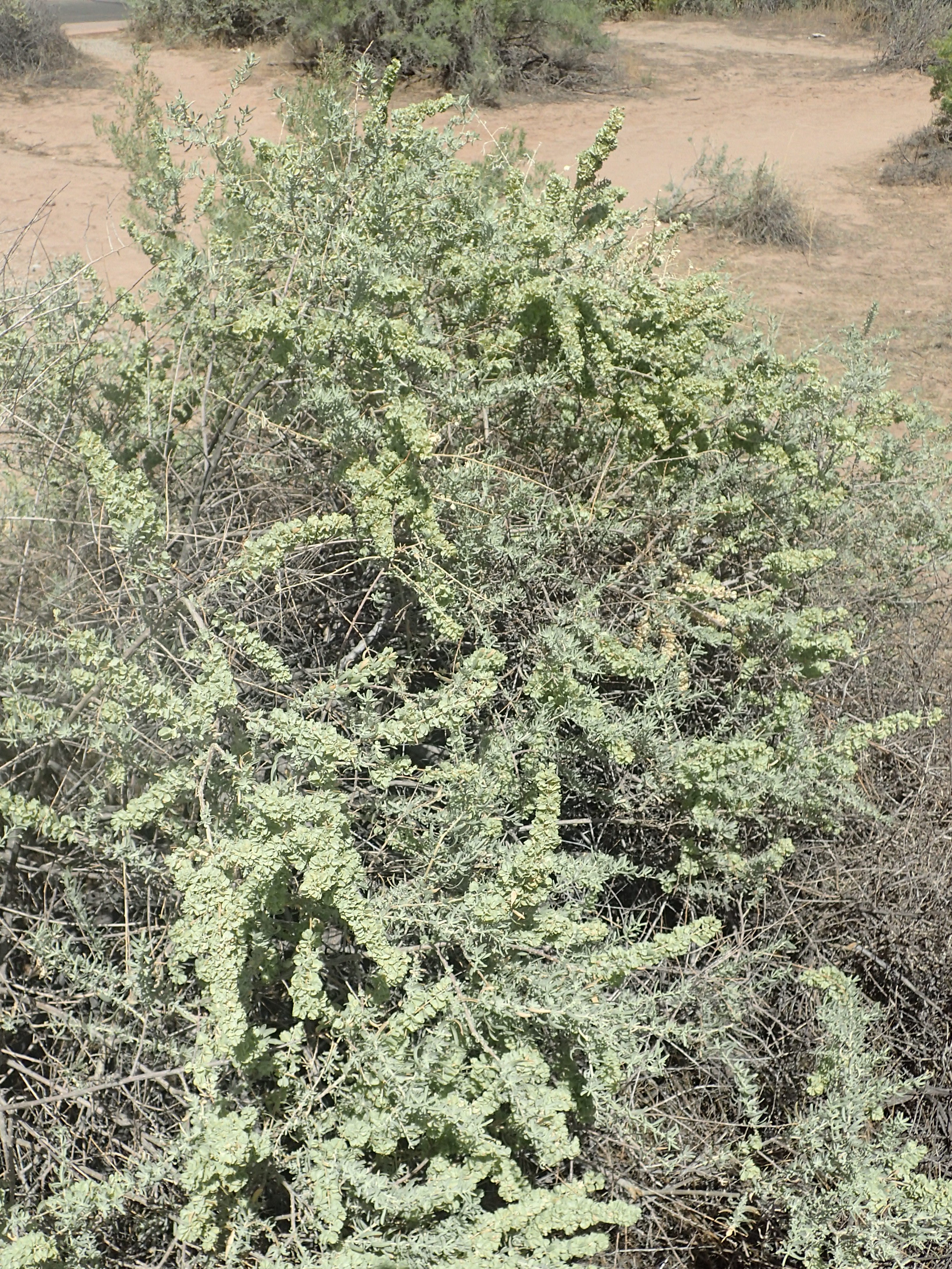
Atriplex canescens, commonly known as Four-Wing Saltbush, Chamiso, or Shadscale, is one of the most ecologically versatile and widely distributed native shrubs of the American West. A member of the Chenopodiaceae (or Amaranthaceae) family, this tough evergreen shrub is instantly recognizable by its four-winged, papery seed bracts that cover the plant in late summer and fall, creating a shimmering, honey-colored display. The “canescens” in its scientific name means “becoming gray” — referring to the silver-gray color of its foliage caused by a dense covering of tiny salt-excreting scales.
Four-Wing Saltbush is a master of harsh environments. It thrives in alkaline and saline soils where most plants fail, tolerates extreme heat, drought, wind, and cold, and provides critical food and cover for birds throughout the year. Its seeds are an important food source for a variety of birds and small mammals, while its dense, wind-firm structure provides essential cover in the open desert. For these reasons, it is widely used in revegetation, erosion control, and wildlife habitat projects across the arid West.
Beyond its ecological importance, Four-Wing Saltbush has served as a food source, dye plant, and ceremonial plant for Indigenous peoples across the Southwest and Great Basin for centuries. Today it is increasingly valued in xeriscape landscaping for its low maintenance, drought tolerance, and year-round visual interest — particularly during the long fruiting season when the plants are laden with golden-winged seeds that rattle in the wind.
Identification
Four-Wing Saltbush grows as a rounded to spreading shrub, typically 2 to 8 feet (60–240 cm) tall and wide, with flexible, pale gray-white branches. The overall appearance is silver-gray due to the dense covering of salt-excreting scales on all surfaces. It is dioecious — male and female flowers grow on separate plants. Female plants produce the showy four-winged fruits; male plants produce small, inconspicuous flower spikes.
Leaves
The leaves are simple, alternate or opposite, linear to spatula-shaped, ¼ to 2 inches (6–50 mm) long, and covered with tiny, salt-excreting glands that give the foliage a mealy, silver-gray appearance. The salt-excreting mechanism allows Four-Wing Saltbush to grow in highly saline soils — it actually concentrates salt from the soil and excretes it through leaf glands, which is why leaves taste salty. Leaves are semi-evergreen to evergreen, persisting year-round in milder climates.
Flowers
The plant is wind-pollinated. Male plants produce small, reddish, inconspicuous flowers in dense terminal spikes in spring and summer. Female flowers are even smaller and less visible. Flowering occurs from spring through fall depending on location.
Fruit
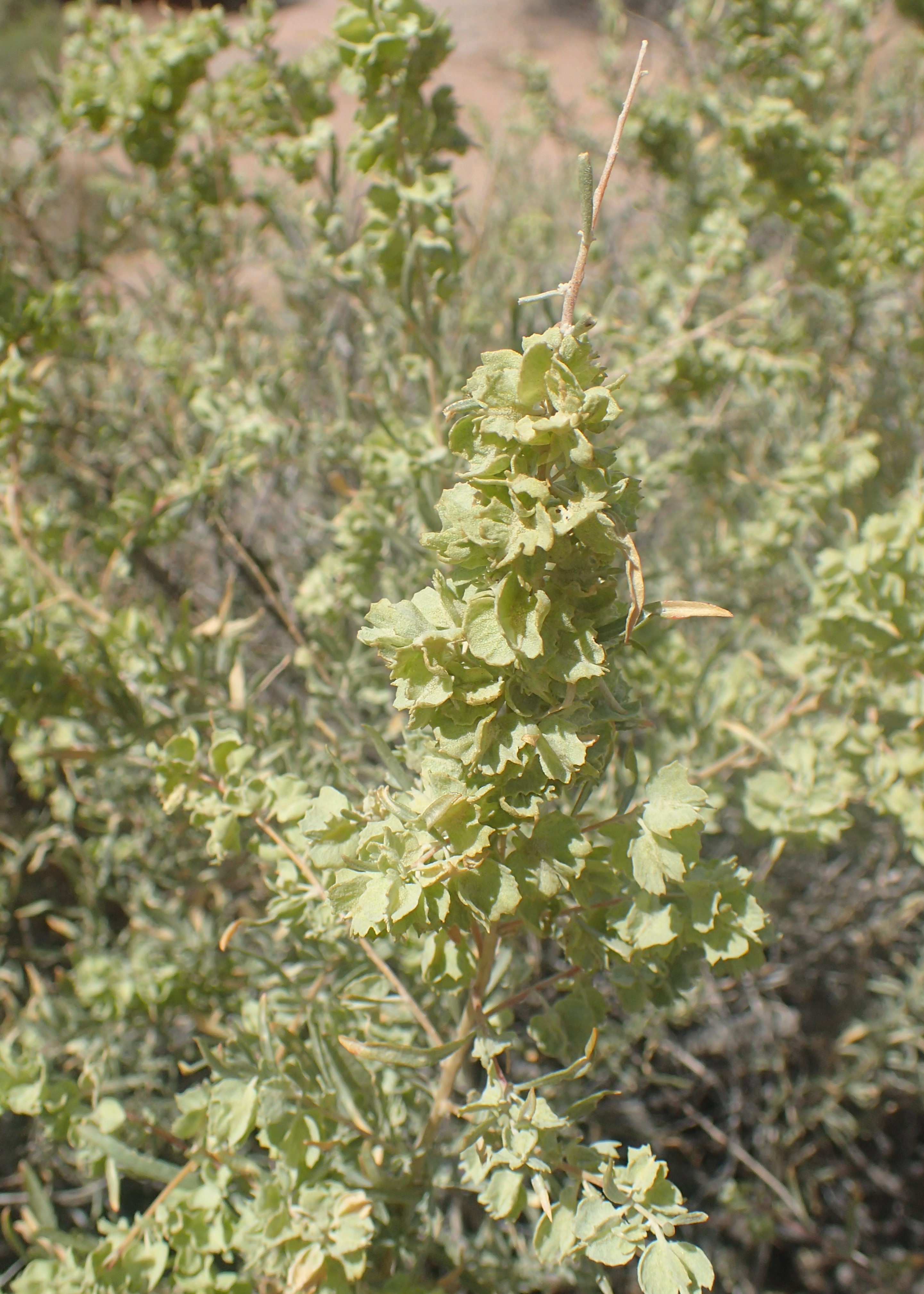
The female plant produces the defining characteristic: clusters of papery, four-winged bracts (the “four wings”), each enclosing a small seed. The wings are joined in pairs, forming an X-shape when viewed from the end. The fruiting bracts turn from green to golden-tan to honey-brown as they mature, and cover the plant so densely that the foliage becomes almost invisible. The winged fruits are persistent, remaining on the plant through winter and into the following spring, providing emergency food for wildlife during the coldest months.
Quick Facts
| Scientific Name | Atriplex canescens |
| Family | Amaranthaceae (Amaranth / Goosefoot) |
| Plant Type | Evergreen Shrub (dioecious) |
| Mature Height | 5 ft |
| Sun Exposure | Full Sun |
| Water Needs | Low (Drought Tolerant) |
| Bloom Time | Spring – Summer |
| Flower Color | Inconspicuous (reddish-tan) |
| Ornamental Feature | Four-winged golden seed bracts; silver-gray foliage |
| Soil Tolerance | Saline, alkaline, clay, sandy — highly adaptable |
| USDA Hardiness Zones | 4–9 |
Native Range
Four-Wing Saltbush has one of the broadest native ranges of any shrub in North America, spanning the arid and semi-arid regions of the western United States from the Pacific Coast to the Great Plains. It grows from sea level to 7,000 feet elevation and is found in every western state from North Dakota to Texas and west to the Pacific. It is most abundant in the Great Basin, Chihuahuan Desert, and Colorado Plateau, where it often forms extensive stands on flats, washes, and gentle slopes with alkaline or saline soils.
The species is remarkably tolerant of a wide range of soil types — from deep, well-drained sandy soils to heavy, compacted clays and highly saline playas. This soil tolerance, combined with drought resistance and adaptability to temperature extremes, allows Four-Wing Saltbush to colonize disturbed sites, roadsides, and degraded rangelands where competing vegetation has been eliminated. It is a pioneer species on recently disturbed soils throughout the arid West.
In its natural habitat, Four-Wing Saltbush grows in association with Big Sagebrush, Shadscale (Atriplex confertifolia), Greasewood (Sarcobatus vermiculatus), and various saltgrasses and alkali-tolerant forbs. At higher elevations, it may grow with Bitterbrush, Mountain Mahogany, and Ponderosa Pine. It is commonly found along dry washes, alluvial fans, desert playas, and saline flats.
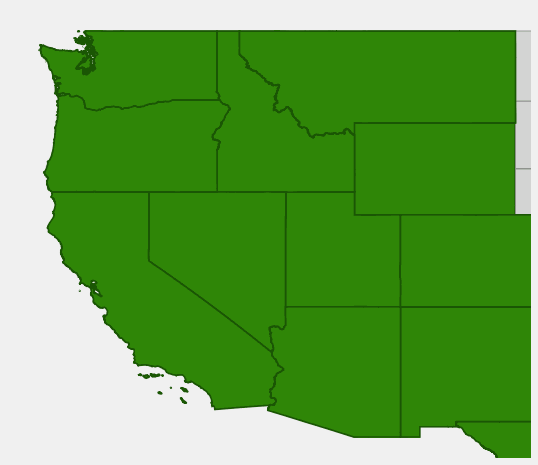
📋 Regional plant lists featuring Four-Wing Saltbush: Intermountain West
Growing & Care Guide
Four-Wing Saltbush is one of the most reliable and low-maintenance native shrubs for challenging sites in the arid West. It is especially valuable on alkaline or saline soils where other plants fail, and on sites subject to erosion, wind, and extreme temperatures.
Light
Full sun is required. Four-Wing Saltbush is a desert shrub that grows best with 8 or more hours of direct sunlight. It will not thrive in partial shade and will lose its attractive silver-gray color and compact form in low-light conditions. Site it where sunlight is direct and unobstructed throughout the day.
Soil & Water
Four-Wing Saltbush is exceptionally adaptable to soil type — sandy, clay, loam, alkaline, saline, and gravelly soils are all acceptable. It is one of the few shrubs that actively thrives in salty soils. Once established (after 1–2 years), it is highly drought tolerant and requires no supplemental irrigation in most of its native range. During establishment, water deeply every 2–3 weeks. Do not plant in boggy or persistently wet conditions — good drainage is important even for this tough shrub.
Planting Tips
Plant in fall or early spring. Four-Wing Saltbush transplants well from container stock. For a wildlife planting, install both male and female plants (the sex is often not labeled, so plant at least 3–5 shrubs to ensure both sexes are present). Space plants 5–8 feet apart. Four-Wing Saltbush also establishes readily from seed broadcast in fall — useful for large-scale revegetation projects.
Pruning & Maintenance
Four-Wing Saltbush can be pruned heavily (cut back by half or more) in late winter to rejuvenate leggy plants and stimulate dense new growth. The plant is resilient and responds well to hard pruning. For an informal, natural appearance, little pruning is necessary. Remove dead branches as needed. This species is essentially pest-free and disease-resistant.
Landscape Uses
- Bird gardens — seeds attract Quail, Sparrows, Juncos, and many other species
- Erosion control on dry, alkaline slopes and road cuts
- Windbreaks and screens in exposed desert gardens
- Saline and alkaline soil plantings where other plants fail
- Xeriscape foundation plantings for year-round silver foliage
- Revegetation and restoration of degraded desert shrubland
Wildlife & Ecological Value
Four-Wing Saltbush is one of the most wildlife-friendly shrubs in the arid West, providing both food and cover throughout the year for a wide variety of species.
For Birds
The seeds of Four-Wing Saltbush are a major food source for California Quail, Gambel’s Quail, Scaled Quail, various sparrows (Lark Sparrow, Sage Sparrow, White-crowned Sparrow), Juncos, and Horned Larks. During winter, when many seed sources have been depleted, the persistent four-winged fruits that remain on the plant provide critical emergency food for seed-eating birds. The dense branching provides nesting habitat and year-round cover for small songbirds.
For Mammals
Mule Deer, Pronghorn, Elk, and Bighorn Sheep browse the foliage, especially in winter. Jackrabbits and cottontails eat the leaves and stems. Rodents including Kangaroo Rats and various ground squirrels cache and eat the seeds. The dense shrub structure provides hiding and thermal cover for a variety of small mammals.
For Pollinators
While wind-pollinated, Four-Wing Saltbush provides leaf surfaces and associated insects that support diverse invertebrate communities. The massed shrubs create habitat for solitary ground-nesting bees and provide galls, leaf miners, and other insects that serve as food for insectivorous birds and their nestlings.
Ecosystem Role
Four-Wing Saltbush is a pioneer species that stabilizes soils and rebuilds native shrubland communities on disturbed sites. Its deep root system (roots can reach 20 feet deep) mines subsoil moisture and brings nutrients to the surface through leaf litter. The salt excreted on leaf surfaces, when leaves fall and decompose, can gradually alter soil chemistry in ways that facilitate other salt-tolerant native plant communities. It is a foundation species of the saline desert shrubland ecosystem.
Cultural & Historical Uses
Four-Wing Saltbush was one of the most important multipurpose plants for Indigenous peoples of the arid West. The Navajo, Zuni, Hopi, Apache, Paiute, and many other nations used it extensively. The seeds were ground into meal and mixed with corn flour to make bread and porridge — the seed meal is nutritious and was a significant food source during lean periods. The salty, edible leaves were used as seasoning and in a pinch as survival food. The dried plant material was burned and the ash used as a salt substitute and as a leavening agent in bread-making.
Medicinally, preparations from the leaves and roots were used to treat skin irritations, stomach ailments, and as a general tonic. The Navajo used Four-Wing Saltbush in ceremonial sand paintings and as part of healing rituals. The plant material was also used to create a yellow dye for textiles and basketry.
In the 20th century, Four-Wing Saltbush became a cornerstone species in federal revegetation programs throughout the arid West. It was used extensively to stabilize mine spoils, road cuts, and overgrazed rangeland across millions of acres. The Soil Conservation Service (now the Natural Resources Conservation Service) maintained seed production fields of selected cultivars, and it remains one of the most widely used native shrubs in arid-land restoration today.
Frequently Asked Questions
Why does Four-Wing Saltbush grow in salty soil?
Four-Wing Saltbush has evolved a remarkable salt-tolerance mechanism: it actively concentrates salt from the soil and excretes it through specialized glands on its leaf surfaces. The excreted salt gives the foliage its characteristic salty taste and grayish, mealy appearance. This adaptation allows the plant to thrive in soils too saline for most other plants.
Is Four-Wing Saltbush male or female?
Four-Wing Saltbush is dioecious — individual plants are either male or female. Only female plants produce the ornamental four-winged seeds. When purchasing plants, the sex is often unlabeled — buy several plants to ensure you get at least one female for seed production and bird value.
How do I tell Four-Wing Saltbush from other Atriplex species?
The distinctive four-winged fruiting bract is the key identification feature. Other Saltbush species have different bract shapes (two-winged, triangular, etc.). The size, winged arrangement, and silvery-gray foliage distinguish Four-Wing Saltbush from most similar species.
Will deer eat Four-Wing Saltbush?
Yes — mule deer, pronghorn, and elk all browse Four-Wing Saltbush, especially in winter when other food sources are scarce. The salty foliage is apparently palatable to ungulates; in fact, livestock also consume it. If deer pressure is extremely high, young plants may need protection while establishing.
How quickly does Four-Wing Saltbush establish?
Four-Wing Saltbush is relatively fast-establishing for a desert shrub. Container plants establish well in 1–2 seasons with moderate watering, after which they are essentially self-sufficient. From seed, plants can reach blooming size in 2–3 years. It is one of the fastest-establishing native shrubs for arid-land revegetation projects.