
California Saxifrage (Saxifraga californica)
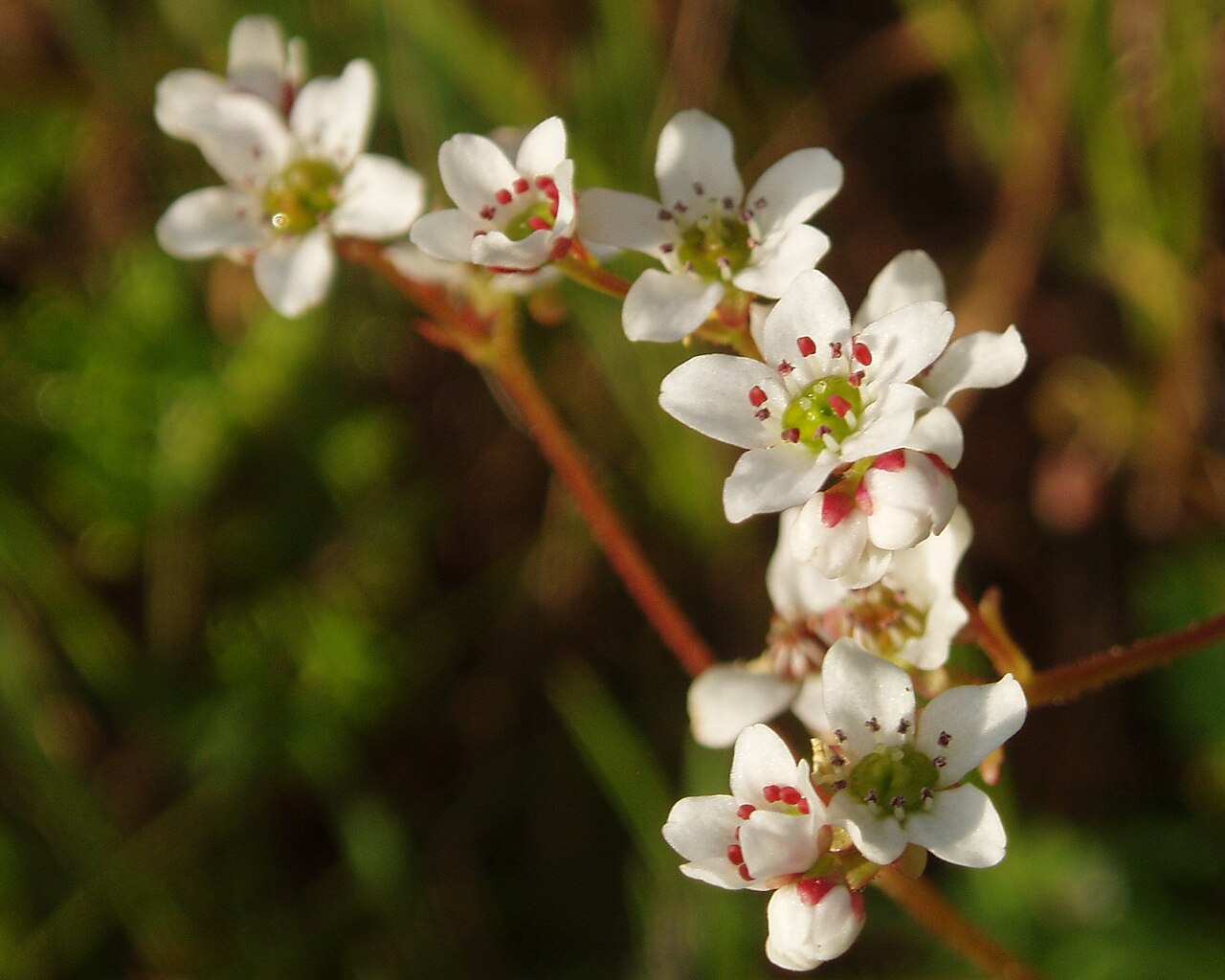
Saxifraga californica, known as California Saxifrage, is a small spring wildflower of the hills and woodlands of California and southwestern Oregon. Many botanists now place it in the genus Micranthes, as Micranthes californica. It grows from a low rosette of oval, toothed leaves and, from late winter into spring, sends up slender, reddish, glandular stalks topped with loose clusters of small white flowers.
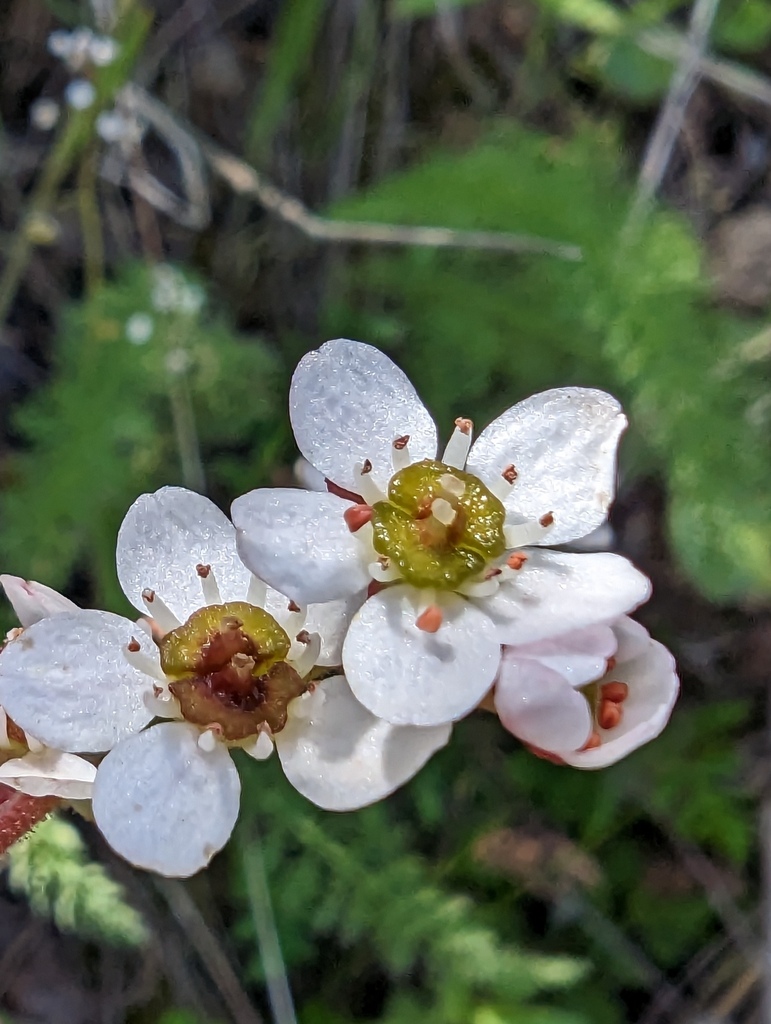
The flowers are only about 1/4 to 1/3 inch across, with five rounded white petals, a green center and ten stamens with reddish anthers, but in numbers they brighten shady banks, mossy rocks and grassy slopes early in the year. Like many California wildflowers, it grows during the rainy season and dies back to a dormant root crown in summer.
California saxifrage belongs to the saxifrage family (Saxifragaceae). It grows from the Klamath region and southwestern Oregon south through the Coast Ranges and Sierra Nevada foothills to southern California. This guide covers how to identify it, where it grows, how to grow it in a shady rock or woodland garden, and its value to early pollinators.
Identification
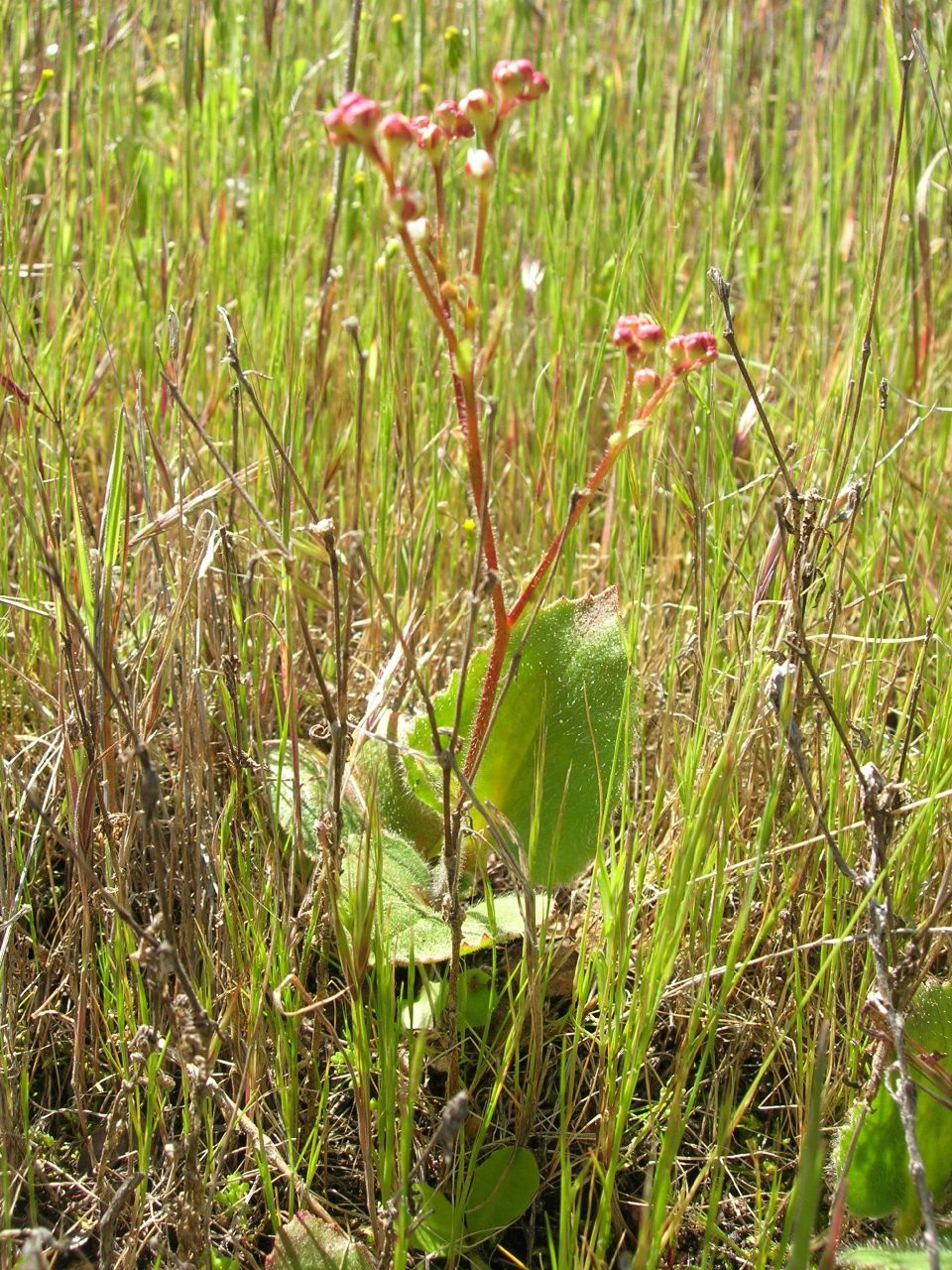
California saxifrage is easiest to recognize in early spring, when its leafless flowering stalks rise above a flat rosette of oval leaves.
Growth Habit
It is a small perennial from a short, thick root crown. All the leaves are basal, forming a flat or slightly upright rosette. One to several flowering stalks rise from the rosette, usually 4 to 14 inches tall. The plant is dormant during the dry summer.
Leaves
The leaves are oval to egg-shaped, about 3/4 to 3 inches long, with toothed or scalloped edges and short stalks. They are green, often tinged red or purple beneath, and somewhat hairy. They appear with the winter rains.
Flowers
The flowering stalk is leafless, reddish, and covered with sticky glandular hairs. It branches near the top into a loose, open cluster of small flowers. Each flower has five white, rounded petals, five small sepals that bend back, ten stamens with reddish to orange anthers, and a green to yellowish ovary in the center. Bloom time is about January to June, earliest at low elevations in the south.
Fruit & Seeds
After flowering, each flower forms a small, two-beaked capsule that releases many tiny seeds.
Look-alikes
Other western saxifrages are similar. Peak saxifrage and related species of higher elevations have more compact flower clusters and grow on rocks in the mountains. Woodland stars (Lithophragma), which bloom at the same time, have white petals that are deeply lobed or fringed, and leaves that are divided. California saxifrage has unlobed petals and undivided, toothed leaves.
Quick Facts
| Scientific Name | Saxifraga californica Greene (syn. Micranthes californica (Greene) Small) |
| Family | Saxifragaceae (saxifrage family) |
| Plant Type | Herbaceous perennial; summer-dormant |
| Mature Height | 4–14 in in flower |
| Mature Spread | 3–8 in |
| Growth Rate | Moderate |
| Sun Exposure | Part shade to light sun |
| Water Needs | Moderate in winter and spring; dry in summer |
| Soil Type | Well-drained loam, rocky or mossy banks |
| Soil pH | About 6.0–7.5 |
| Bloom Time | January–June |
| Flower Color | White |
| Fall Color | None; dormant in summer and fall |
| Fruit | Small, two-beaked capsule with tiny seeds |
| Deer Resistant | Not well documented |
| USDA Hardiness Zones | 7–10 |
Native Range
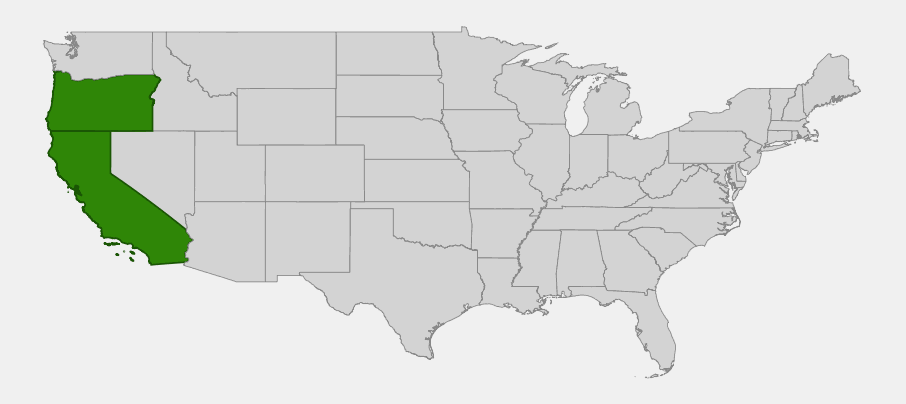
California saxifrage is native to California and southwestern Oregon. USDA PLANTS lists it in both states, and its range may extend into northern Baja California. In Oregon it is limited to the southwest, mainly in the Klamath-Siskiyou region.
In California it is widespread in the Coast Ranges from the North Coast through the San Francisco Bay Area and Central Coast, in the Klamath Mountains and the Cascade foothills, and along the western foothills of the Sierra Nevada. It continues south through the Transverse and Peninsular Ranges of southern California, including the Santa Monica Mountains.
It grows in partly shaded places at low to middle elevations: mossy banks and rock outcrops, grassy slopes, and the edges of oak woodland, chaparral and mixed-evergreen forest, especially on north-facing slopes that stay moist in spring.
📋 Regional plant lists featuring California Saxifrage: Western Oregon & Western Washington · California & Nevada
Growing & Care Guide
California saxifrage is a charming small plant for shady rock gardens, mossy banks and woodland edges in California and southwestern Oregon. It is occasionally offered by native nurseries and seed suppliers. Treat it as a winter-growing, summer-dormant perennial.
Light
Plant it in part shade or light, dappled sun, such as a north-facing slope, the edge of an oak canopy, or among rocks on the shady side of a garden.
Soil & Water
It needs well-drained soil, rocky or loamy, with some organic matter. Keep it moist from fall through spring while it is growing and flowering. Once it goes dormant in late spring, keep it fairly dry; summer water in heavy soil can rot the root crown.
Planting Tips
Plant in fall as the rains begin, setting the crown at soil level. It is small, so place it at the front of a planting, in a rock crevice, or in a container where it can be seen up close. Pair it with other spring wildflowers such as shooting stars, woodland stars and miner’s lettuce.
Pruning & Maintenance
Remove spent flowering stalks after the seeds drop if you like. Mark its location so it is not disturbed while dormant. Keep larger plants from shading it out completely.
Propagation
Sow the tiny seeds on the surface of a fine, moist mix in fall without covering them, and keep them cool and damp. Plants may also be divided carefully when dormant. Seedlings usually flower in their second or third year.
Landscape Uses
- Shady rock gardens: small white flowers on reddish stalks among stones
- Woodland and oak gardens: early spring bloom under deciduous oaks
- Mossy banks and slopes: grows naturally on north-facing, mossy banks
- Containers and troughs: small enough to enjoy up close
- Early pollinator plantings: winter and spring flowers for small bees and flies
Wildlife & Ecological Value
California saxifrage blooms early in the year, when few other flowers are open, and supports small insects in the cool, wet season.
For Pollinators
The open, white flowers offer easy access to nectar and pollen for small native bees, flies and other small insects. Saxifrage flowers are often visited by small flies and solitary bees in cool weather.
For Birds
It is too small to be an important food for birds, but it grows in oak woodlands and chaparral edges that support many bird species.
For Mammals
Its leaves may be eaten by deer and small mammals in spring along with other green growth.
Ecosystem Role
As a winter-growing, summer-dormant perennial, it is part of the diverse spring wildflower community of California’s grasslands, oak woodlands and rocky slopes. It often grows with mosses on rock outcrops, helping build thin soils.
Cultural & Historical Uses
The genus name Saxifraga comes from the Latin saxum, rock, and frangere, to break, because many saxifrages grow in rock crevices. The name Micranthes means “small flowers”. California saxifrage was described by the California botanist Edward Lee Greene.
Botanists have split the large genus Saxifraga into several groups. Studies of DNA showed that the group to which California saxifrage belongs, with basal leaves and leafless flowering stalks, is distinct, and many floras now use the name Micranthes californica. USDA PLANTS still lists it as Saxifraga californica.
California saxifrage is one of the first wildflowers to bloom in California’s hills each year, and a familiar sight to hikers on shady trails in the Bay Area and Coast Ranges in late winter.
Frequently Asked Questions
Is it Saxifraga californica or Micranthes californica?
Both names refer to the same plant. USDA PLANTS uses Saxifraga californica, while many recent floras, including the Jepson Manual, use Micranthes californica.
Where does California saxifrage grow?
In California and southwestern Oregon, in the Coast Ranges, Klamath Mountains, Sierra Nevada foothills and southern California mountains, on mossy banks, rocky slopes and woodland edges.
When does it bloom?
From about January to June, starting earliest at low elevations and in southern California.
Can I grow California saxifrage in my garden?
Yes, in a shady, well-drained spot with winter moisture and a dry summer. It suits rock gardens, woodland edges and containers.
What visits its flowers?
Small native bees, flies and other small insects visit the open white flowers for nectar and pollen.

Looking for a nursery that carries California Saxifrage?
Browse our native plant nursery directory: California · Oregon

