
Purple Sanicle (Sanicula bipinnatifida)
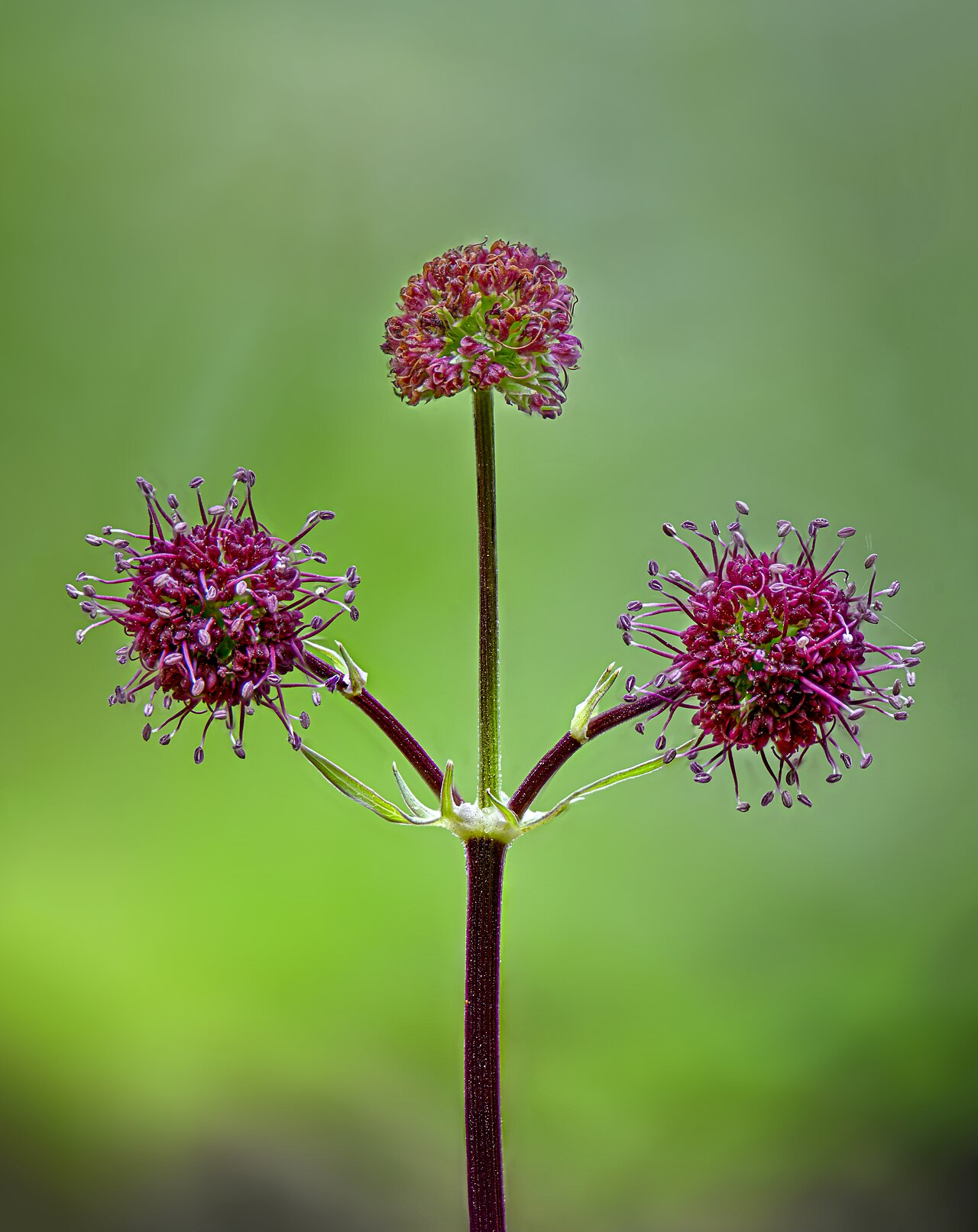
Sanicula bipinnatifida, known as Purple Sanicle (also purple black-snakeroot or shoe buttons), is a spring wildflower of the grasslands, oak woodlands and rocky balds of the Pacific Coast, from southern British Columbia to Baja California. It belongs to the carrot or parsley family (Apiaceae). Unlike the flat, lacy umbels of most of its relatives, its tiny flowers are packed into small round heads, like purple pincushions or shoe buttons, held on branching, often purplish stems.
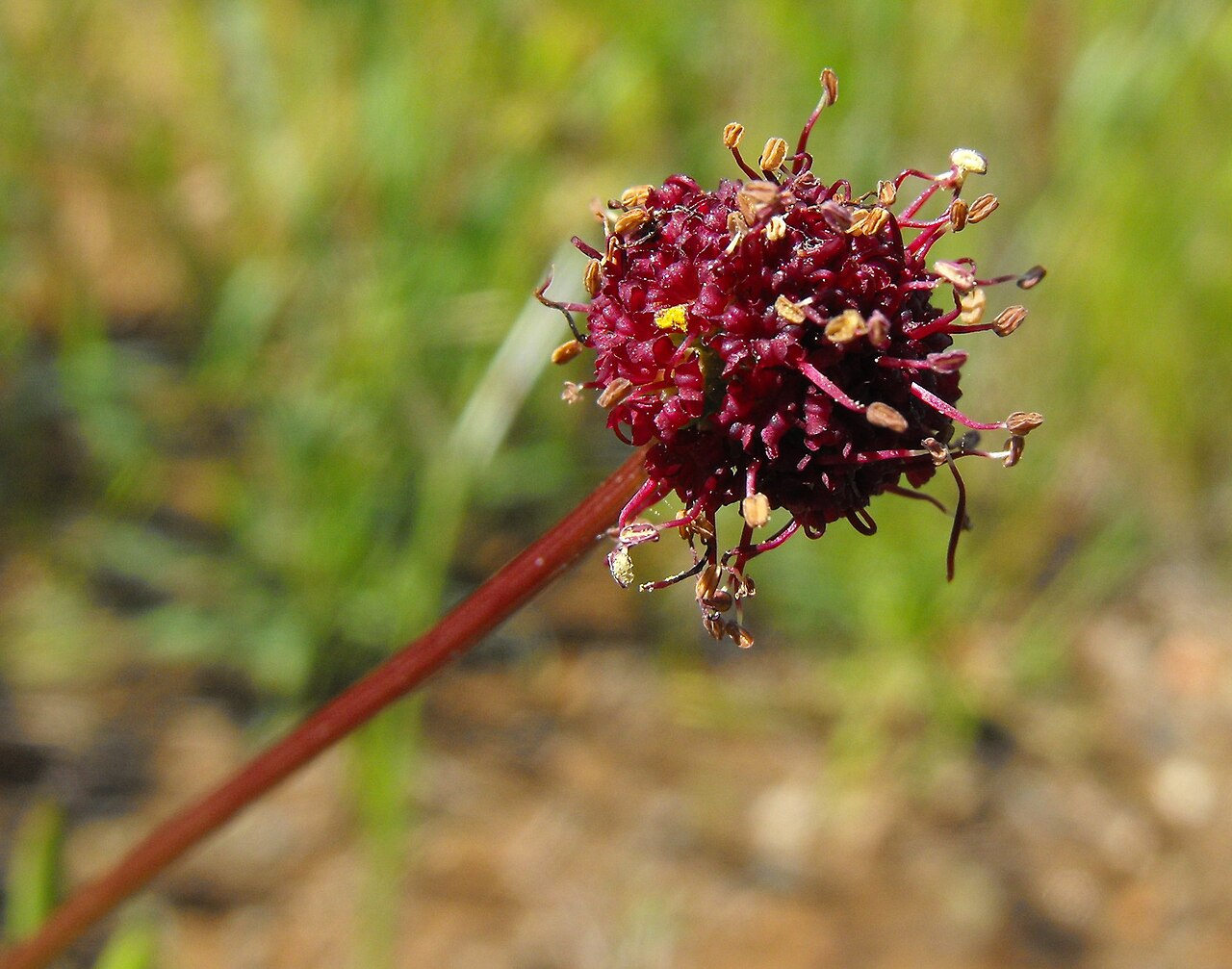
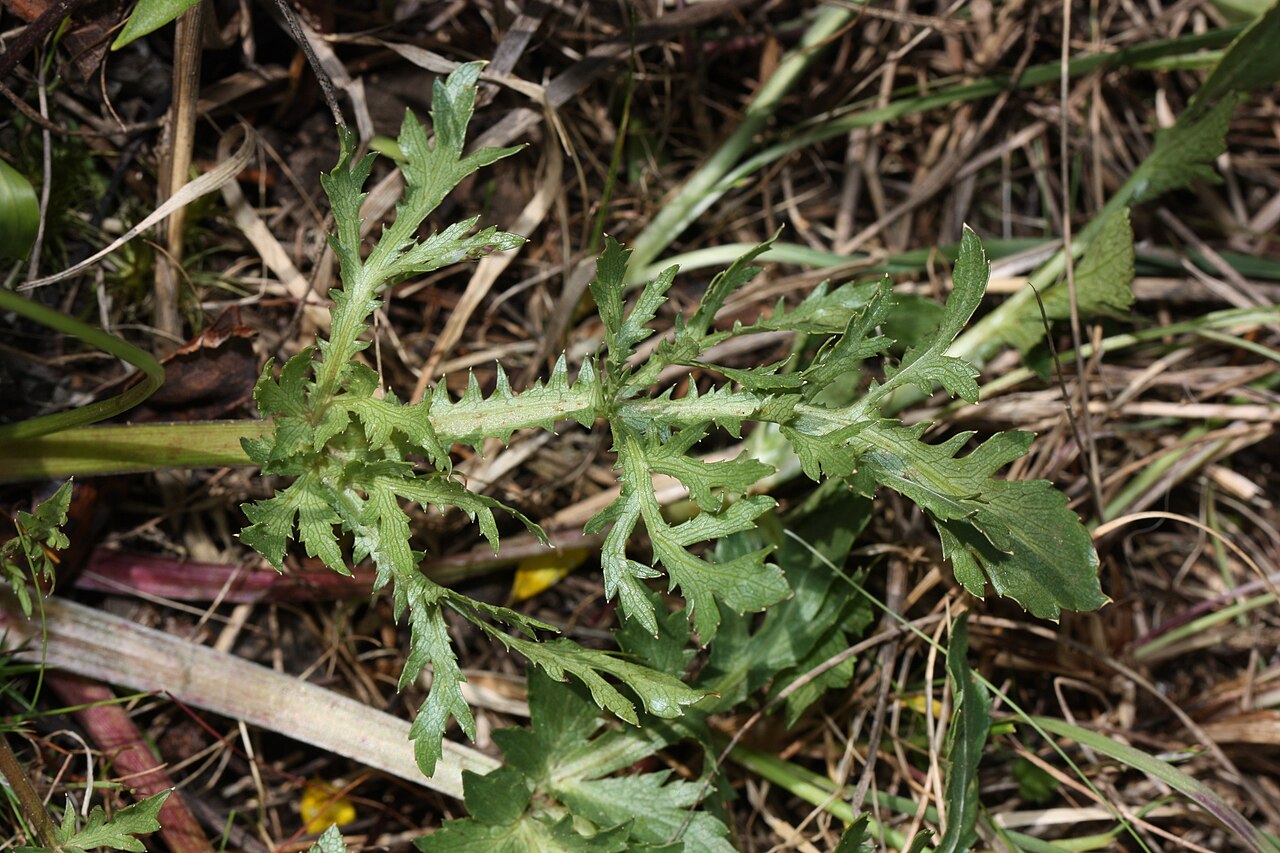
The plant grows from a taproot and makes a low rosette of deeply divided, toothed leaves with a distinctive winged, toothed central rib. In spring, from about March to June, it sends up stems 4 inches to 2 feet tall with a few deep maroon to purple flower heads. A few populations in California have yellow flowers. The heads ripen into small, bur-like fruits covered with hooked prickles that cling to fur and clothing.
Purple sanicle is a characteristic plant of the oak savannas and grassy balds of the Pacific Northwest and the grasslands of California. In Canada it is listed as threatened. It can be grown from seed in sunny, summer-dry native meadows and rock gardens. It is a relative of Pacific Sanicle, which has yellow flowers and less divided leaves.
Identification
Look for small, round, dark purple heads on branched, often reddish stems in open grassland or rocky meadows in spring, above a rosette of deeply cut, toothed leaves.
Roots & Stems
The plant grows from a thick taproot. The one to few stems are 4 to 24 inches (10 to 60 cm) tall, branching above, and green to deep purple. The whole plant is often tinged purple, especially in sun.
Leaves
Most leaves are basal, on long stalks. The blades are 1 1/2 to 5 inches (4 to 13 cm) long, pinnately divided once or twice into toothed segments, with a broad, winged and toothed central rib (rachis) between the segments. The leaves are bright green to purplish. A few smaller leaves grow on the stem and become stalkless upward.
Flowers
From March to June, depending on location, the stems branch into a few irregular rays, each ending in a small, round, head-like umbel about 1/2 inch across with roughly 20 tiny flowers. The flowers are brownish-red to deep purple, rarely yellow, with long stamens that make the head look fuzzy. Each head has both bisexual and male-only flowers and is surrounded by small leafy bracts.
Fruit & Seeds
The fruits are ovoid to almost round, about 1/8 to 1/4 inch (3 to 6 mm) long, covered with stout, hooked prickles. They cling to animal fur and clothing, which spreads the seeds.
Look-alikes
Pacific sanicle (Pacific Sanicle, Sanicula crassicaulis) has yellow flowers and broad, palmately lobed leaves, and often grows in shadier places. Sierra sanicle (S. graveolens) has yellow flowers and finely divided leaves. Yellow-flowered purple sanicle (var. flava) can be told by its winged, toothed leaf rachis. The round purple heads on branched stems and winged leaf rib are distinctive.
Safety & Conservation
Purple sanicle is not known to be toxic, but it is in the carrot family, which includes deadly poisonous plants such as poison hemlock and water hemlock, so never eat wild members of this family. It is common in California and western Oregon and not of concern in Washington. In Canada it is listed as threatened under the Species at Risk Act and is limited to about 20 sites on southeastern Vancouver Island and the Gulf Islands. Do not dig or collect wild plants.
Quick Facts
| Scientific Name | Sanicula bipinnatifida |
| Family | Apiaceae (carrot or parsley family) |
| Plant Type | Taprooted herbaceous perennial; summer-dormant |
| Mature Height | 4–24 in |
| Mature Spread | 6–12 in |
| Growth Rate | Moderate |
| Sun Exposure | Full sun to part shade |
| Water Needs | Low; moist in winter and spring, dry in summer |
| Soil Type | Well-drained, shallow, rocky, gravelly or loamy soils, including serpentine |
| Soil pH | About 5.5–7.5 |
| Bloom Time | March–June |
| Flower Color | Deep maroon to purple; rarely yellow |
| Fall Color | None; dormant in summer |
| Fruit | Small round fruits covered with hooked prickles |
| Deer Resistant | Moderately |
| USDA Hardiness Zones | 7–10 |
Native Range
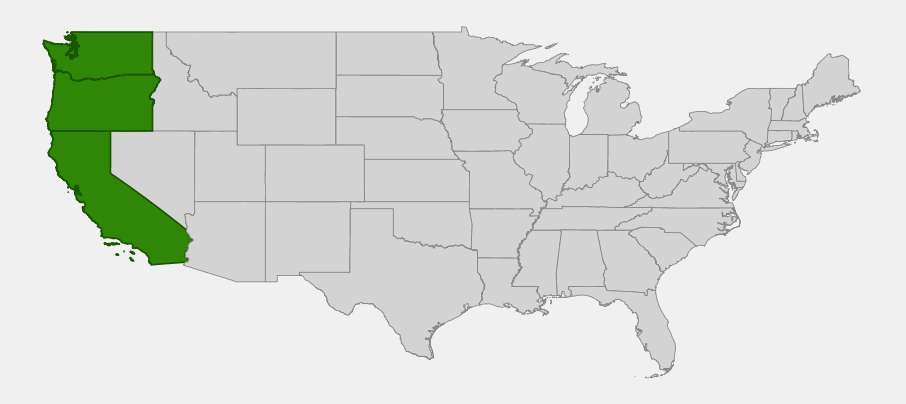
Purple sanicle is native to the Pacific Coast of North America. USDA PLANTS lists it as native in California, Oregon and Washington, and in British Columbia. It also reaches northern Baja California in Mexico. The Burke Herbarium notes that in Washington it occurs chiefly west of the Cascade crest.
In California it is widespread in the Coast Ranges, the Sierra Nevada foothills, the Transverse and Peninsular Ranges and other foothill areas, from the north coast to San Diego County. In Oregon it grows in the Willamette, Umpqua and Rogue valleys and the Siskiyous. In Washington it is found mainly in the Puget Trough and San Juan Islands, on rocky balds and in oak and prairie remnants. In British Columbia it is limited to a few sites on southeastern Vancouver Island and the Gulf Islands.
It grows in grasslands, oak savannas and woodlands, rocky balds and bluffs, chaparral openings and forest edges, often on shallow, rocky or serpentine soils, at low to moderate elevations.
📋 Regional plant lists featuring Purple Sanicle: Western Oregon & Western Washington · California & Nevada
Growing & Care Guide
Purple sanicle is an uncommon but rewarding plant for native meadow and rock gardens in the Pacific states. It is grown mostly by native plant enthusiasts and restoration nurseries, from seed. Its dark heads add an unusual color to spring meadows.
Light
Full sun to light shade. It flowers best in open, sunny meadows and on rocky slopes.
Soil & Water
Give it well-drained soil, ideally shallow, rocky or gravelly. It tolerates clay in summer-dry climates if drainage is good. Water in winter and spring if rains fail, then let it go dry in summer, when it goes dormant. Summer watering shortens its life.
Planting Tips
Sow seed in fall directly in a meadow or rock garden, or start it in deep pots to protect the taproot. Plant it among low bunchgrasses and spring bulbs such as camas and brodiaeas, where taller plants will not shade it.
Pruning & Maintenance
Very little care is needed. Leave the stems standing until seeds ripen if you want it to self-sow. Keep aggressive non-native grasses under control around it.
Propagation
Grow it from seed sown in fall outdoors so it gets a cool, moist winter. Seedlings develop a taproot and should be planted out young. Established plants do not divide well.
Landscape Uses
- Prairie and oak savanna restoration: a native forb of Willamette Valley, Puget Trough and California grasslands
- Rock gardens: dark, button-like flowers for gritty, summer-dry pockets
- Native meadow gardens: with bunchgrasses, camas and brodiaeas
- Pollinator plantings: spring nectar for bees, flies and moths
- Conservation plantings: for rare prairie and bald habitats in Washington and British Columbia
Wildlife & Ecological Value
Purple sanicle is part of the spring wildflower community of Pacific Coast grasslands and balds, and it supports many small insects.
For Pollinators
The Burke Herbarium lists bees, flies and moths as pollinators. The small flowers offer easy access to nectar and pollen for short-tongued insects.
For Birds
Seeds may be eaten by ground-feeding birds, and the hooked fruits may be carried on feathers. The plant grows in prairie and oak habitats that support western bluebirds, western meadowlarks and other birds.
For Mammals
The hooked fruits catch in the fur of deer, rabbits and other mammals, which carry the seeds to new places.
Ecosystem Role
Purple sanicle is a characteristic species of native oak savanna, prairie and rocky bald communities. These habitats have declined greatly in the Pacific Northwest, so healthy populations are a sign of high-quality remnant habitat.
Cultural & Historical Uses
The species was described by William Jackson Hooker in 1832 from collections made by David Douglas, the Scottish botanist who explored the Pacific Northwest in the 1820s and 1830s. The name bipinnatifida refers to the twice-divided leaves. The genus name Sanicula comes from the Latin sanare, “to heal,” from the medicinal use of the European sanicle.
Common names like shoe buttons refer to the small, dark, round flower heads. Black-snakeroot is an old American name for sanicles in general, referring to their dark roots.
In British Columbia, purple sanicle is one of several species protected as part of the recovery of the endangered Garry oak ecosystems of southeastern Vancouver Island and the Gulf Islands. Its relative on this site, Pacific Sanicle, is a common yellow-flowered sanicle of western woodlands.
Frequently Asked Questions
Why is it called purple sanicle?
Its tiny flowers are deep purple to maroon, and sanicle is the common name for the genus Sanicula, from a Latin word meaning to heal.
How is purple sanicle different from Pacific sanicle?
Purple sanicle has purple flowers and deeply divided leaves with a winged, toothed central rib. Pacific sanicle has yellow flowers and broader, palmately lobed leaves.
Is purple sanicle rare?
It is common in California and western Oregon, but in Canada it is listed as threatened and limited to about 20 sites. In Washington it grows mainly west of the Cascades and is not considered at risk.
Can I grow purple sanicle in my garden?
Yes, from seed, in a sunny, well-drained, summer-dry spot such as a meadow or rock garden. It goes dormant in summer.
Why do the seeds stick to my socks?
The fruits are covered with hooked prickles that cling to fur and clothing, a way of spreading seeds.

Looking for a nursery that carries Purple Sanicle?
Browse our native plant nursery directory: California · Oregon · Washington