
Green Comet Milkweed (Asclepias viridiflora)
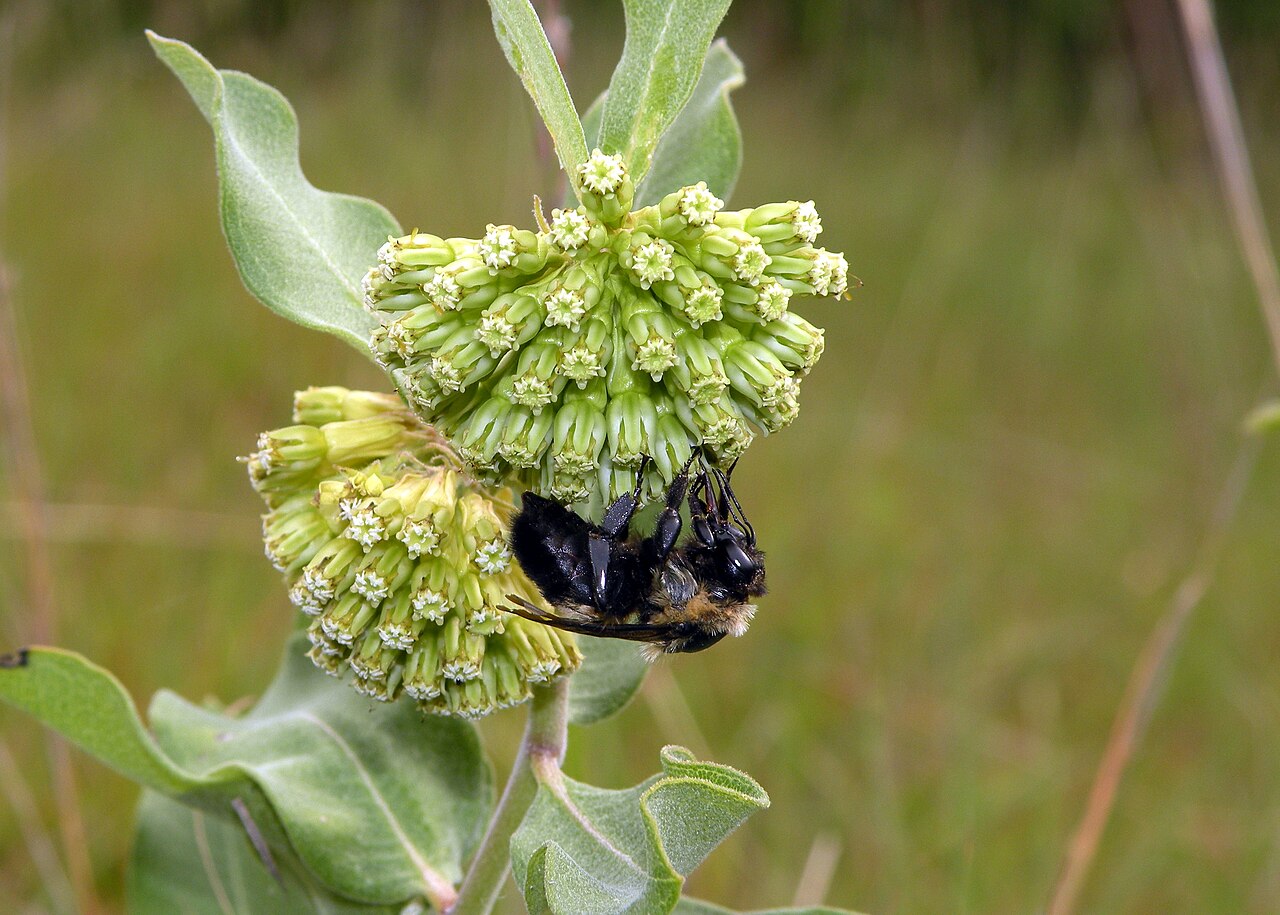
Asclepias viridiflora, the Green Comet Milkweed (also called green milkweed or green-flowered milkweed), is a low, sturdy milkweed of dry prairies, sand barrens, rocky glades and open woods across much of the United States. It usually grows only 1 to 2 feet tall, often leaning, with thick, leathery leaves and, from late spring through summer, dense, rounded clusters of pale green flowers tucked into the upper leaf axils.
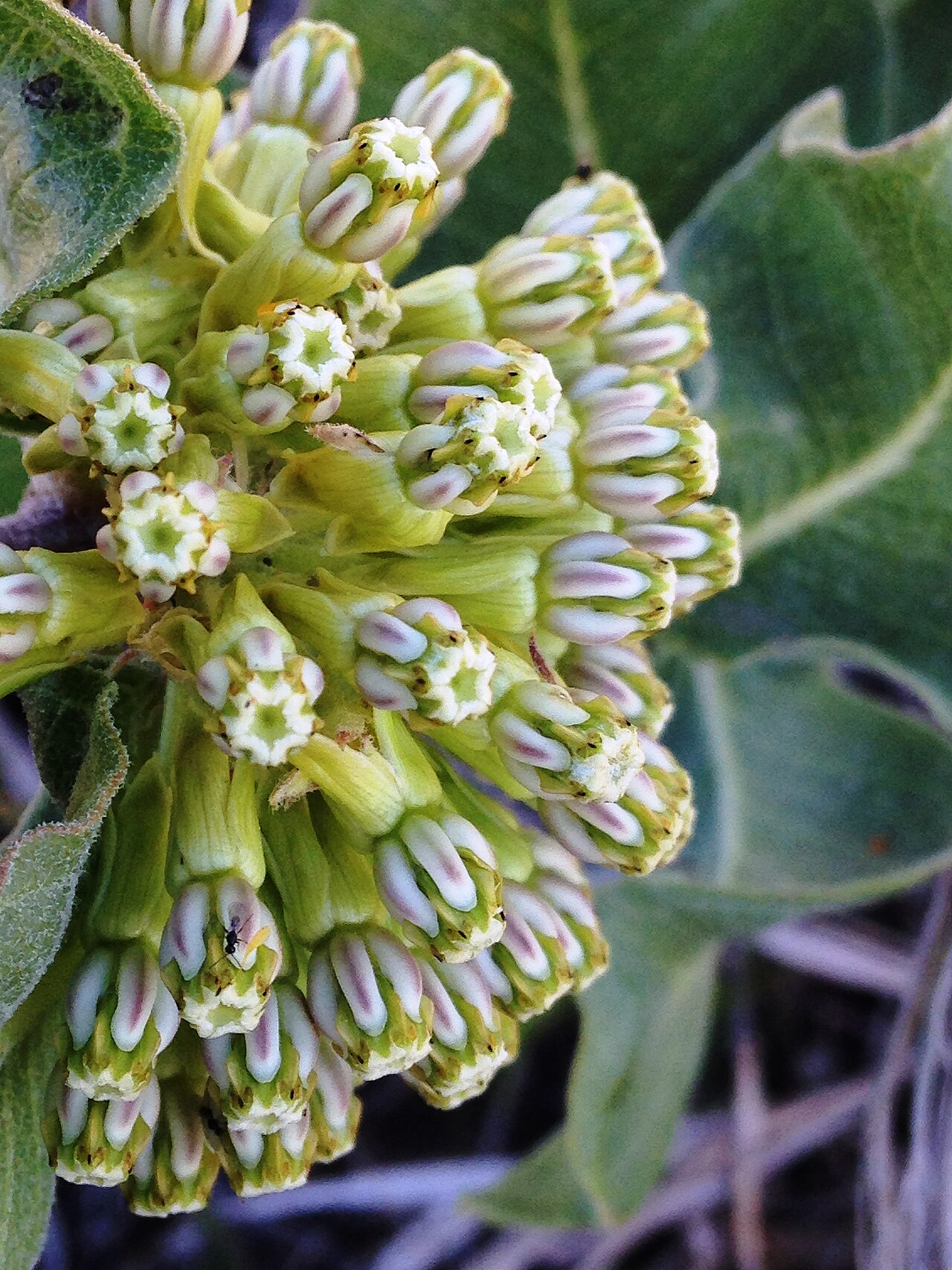
Its flowers are easy to overlook. They are green rather than pink or orange, and their petals stay swept back around a small crown that lacks the curved horns found in most milkweeds. For this reason the species was long placed in a separate genus, Acerates, meaning “without horns.” Up close, the tight, ball-shaped clusters, sometimes likened to a comet’s head, are attractive and remarkably busy with bees and wasps.
Like all milkweeds, green comet milkweed is a host plant for monarch butterfly caterpillars and contains toxic cardiac glycosides. It is a choice plant for dry, sunny prairie gardens and restorations, especially in sandy or rocky soils where taller milkweeds struggle. This guide covers how to identify it, where it grows, how to grow it from seed, and how to handle it safely.
Identification
Green comet milkweed has the milky sap and paired seed pods of other milkweeds, but its short stature, variable leathery leaves and nearly stalkless green flower clusters set it apart.
Growth Habit & Stems
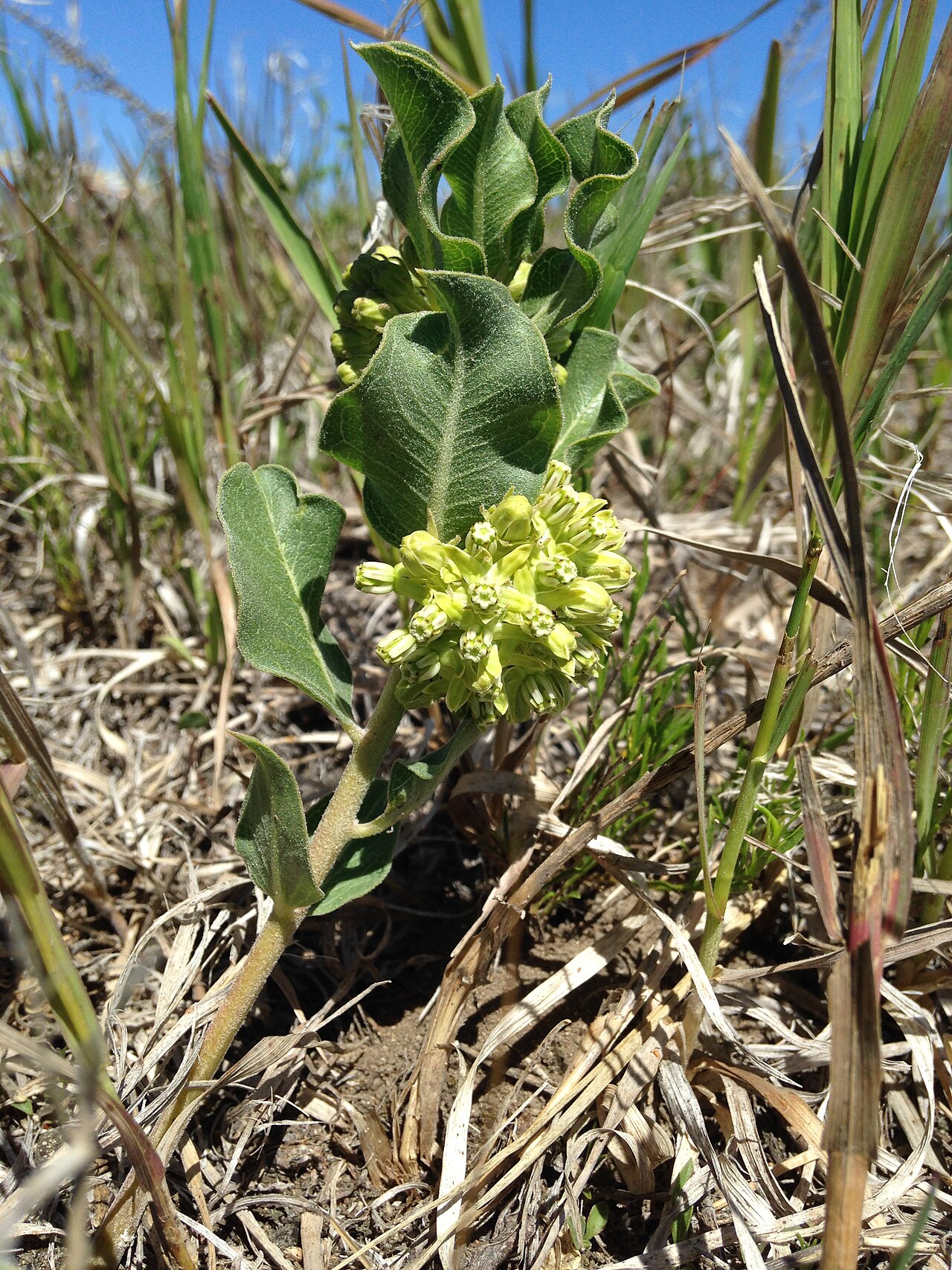
It is a herbaceous perennial from a deep, thick taproot. Most plants have one to a few unbranched stems, usually 1 to 2 feet long, sometimes up to about 3 feet. Stems are often leaning or sprawling rather than strictly upright, and they are finely hairy. Like all milkweeds, the plant bleeds white, milky latex when cut.
Leaves
The leaves are opposite or sometimes alternate, thick and somewhat leathery, with short stalks. Their shape is extremely variable, from broadly oval with wavy margins to narrowly lance-shaped or almost linear, sometimes on plants in the same population. Leaves are typically 2 to 5 inches long, rough or finely hairy, and dull green with a paler underside.
Flowers
From about May to August, depending on latitude, dense, rounded clusters (umbels) of 20 to 80 or more flowers form in the upper leaf axils on very short stalks, so they appear to hug the stem. Each flower is about half an inch long, with five pale green petals, often tinged purple, that are bent sharply backward. In the center is a crown of five short, pale green hoods that lack the horns of most other milkweeds.
Pods & Seeds
After pollination, the plant produces narrow, smooth, spindle-shaped pods about 3 to 6 inches long. Unlike the pods of common milkweed, they lack warts or soft spines. In late summer and fall, the pods split along one side and release flat brown seeds, each with a tuft of silky white hairs that carries it on the wind.
Similar Species
Whorled milkweed has very narrow leaves in whorls and white flowers. Green antelopehorn (Asclepias viridis) has much larger, open flowers with green petals and a purple crown. Short green milkweed (Asclepias stenophylla) has narrow leaves and smaller, cream-colored flowers. Green comet milkweed’s tight, nearly stalkless green flower balls and hornless crowns are distinctive.
Quick Facts
| Scientific Name | Asclepias viridiflora Raf. (syn. Acerates viridiflora) |
| Family | Apocynaceae (dogbane family; milkweed subfamily Asclepiadoideae) |
| Plant Type | Herbaceous perennial with a deep taproot |
| Mature Height | 1–2 ft (occasionally to about 3 ft) |
| Mature Spread | 6–12 in |
| Growth Rate | Slow |
| Sun Exposure | Full sun to light shade |
| Water Needs | Low; drought tolerant once established |
| Soil Type | Dry, well-drained sandy, gravelly, rocky or thin loam soils |
| Soil pH | About 5.5–8.0 |
| Bloom Time | May–August |
| Flower Color | Pale green, sometimes tinged purple |
| Fall Color | Leaves yellow before dormancy |
| Fruit | Smooth, narrow pods 3–6 in long with silky-tufted seeds |
| Deer Resistant | Yes; foliage is toxic and seldom browsed |
| USDA Hardiness Zones | 3–9 |
Native Range
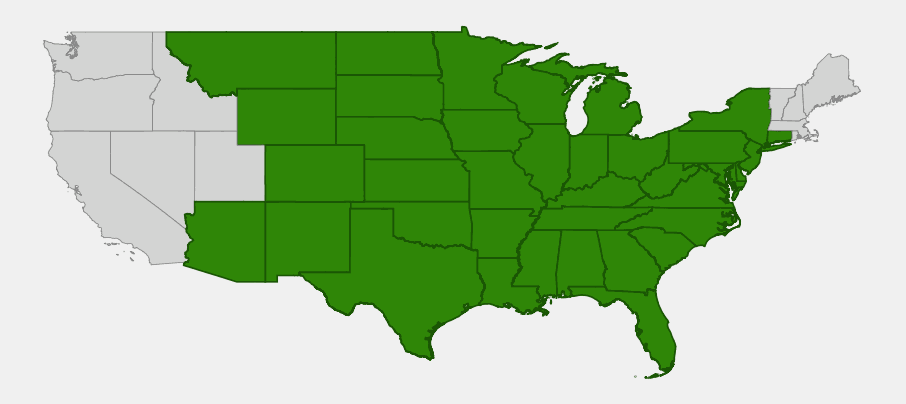
Green comet milkweed has one of the widest ranges of any North American milkweed. USDA PLANTS lists it as native in 37 states and the District of Columbia, from Connecticut, New York and Michigan south to Florida and Texas, and west across the Great Plains to Montana, Wyoming, Colorado, New Mexico and Arizona. In Canada it grows from Ontario west through Manitoba and Saskatchewan to Alberta and British Columbia, and it extends south into northern Mexico.
It is most common in the Great Plains and Midwest, where it grows in dry upland prairies, hill prairies, sand prairies and loess bluffs. In the East it is scattered and local, found in sand barrens, serpentine and shale barrens, glades, dry open woods and pine savannas. It is listed as endangered in Florida and Connecticut and as threatened in New York.
Across this range green comet milkweed is a plant of open, sunny and often dry places, with relatively low competition from tall grasses and shrubs. Many of these habitats depend on periodic fire or grazing to stay open, and the plant has declined where prairies and barrens have been plowed, developed or overgrown by trees and shrubs.
📋 Regional plant lists featuring Green Comet Milkweed: New York, Pennsylvania & Northern New Jersey · Idaho, Eastern Oregon & Eastern Washington · Ohio & Indiana · Montana & Wyoming · Michigan, Wisconsin & Eastern Minnesota · Kentucky & Tennessee · Nebraska, Kansas & Eastern Colorado · Connecticut, Massachusetts & Rhode Island · New Hampshire, Maine & Vermont · Maryland, Virginia & West Virginia · Delaware, Southern New Jersey & Long Island · Arizona & New Mexico · Illinois, Iowa & Missouri · Alabama, Georgia & Mississippi · North & South Florida
Growing & Care Guide
Green comet milkweed is a tough, long-lived plant once established, but it is rarely sold, grows slowly and does not like to be moved. The best approach is to start it from seed and plant it in a permanent spot in a dry, sunny prairie garden or meadow.
Light
Plant in full sun. It tolerates light shade, as in open woods and savannas, but flowers best with at least six hours of direct sun.
Soil & Water
Provide well-drained, lean soil: sand, gravel, rocky or thin loam. It rots in heavy, wet clay and is crowded out in rich soils by taller plants. Water seedlings and young plants during their first summer; after that, the deep taproot makes it very drought tolerant and supplemental water is rarely needed.
Planting Tips
Sow seed outdoors in fall, or give it 30 to 60 days of cold, moist stratification in the refrigerator before sowing in spring. Grow seedlings in deep pots or plant them out young, because the taproot is easily damaged. Choose companions of modest height, such as little bluestem, sideoats grama, prairie clovers and coneflowers, so the low milkweed is not shaded out.
Pruning & Maintenance
Little maintenance is needed. Leave stems standing until pods have opened and released their seed. Mark plants, since they emerge late in spring and are easy to damage while weeding. Do not try to transplant established plants.
Propagation
Propagation is by seed. Collect pods as they begin to split in late summer or fall, remove the silky fluff and sow in fall or after stratification. Seedlings may take two to three years or more to bloom. Only collect seed from wild plants where it is legal and abundant, and never in states where the species is protected.
Landscape Uses
- Prairie and meadow gardens: a low, unusual milkweed for dry, sunny sites
- Monarch and pollinator gardens: a larval host for monarchs and a nectar source for many bees and wasps
- Sand and gravel gardens: thrives in lean, fast-draining soils where many perennials fail
- Prairie and barrens restoration: a characteristic species of dry prairies, sand barrens and glades
- Rock gardens: its compact size suits rockeries and dry slopes
Wildlife & Ecological Value
Green comet milkweed is a modest-looking plant with an important role. It feeds monarch caterpillars, attracts a wide range of pollinators, and is a sign of intact dry prairie and barrens habitat.
For Pollinators
The flowers produce nectar and are visited by bumblebees, other native bees, honey bees and many wasps, as well as flies and beetles. As in all milkweeds, the pollen is packaged in pairs of sacs (pollinia) that clip onto the legs of visiting insects and are carried to other flowers.
For Birds
Birds rarely eat milkweed foliage or seeds because of their toxins. The plant contributes indirectly by supporting insects that birds eat, and some birds use the silky seed fluff to line nests.
For Mammals
The milky sap contains cardiac glycosides that are toxic to mammals, so deer, rabbits and livestock generally avoid it. Poisoning of grazing animals is rare because the plant is distasteful, but it can occur in overgrazed pastures or in contaminated hay.
Ecosystem Role
Green comet milkweed is a host plant for monarch butterfly caterpillars, which store the plant’s toxins and become distasteful to predators. Milkweed specialists such as milkweed beetles, milkweed bugs and milkweed tussock moth caterpillars also feed on milkweeds. Because it often grows in dry habitats where taller milkweeds are scarce, it can be an important monarch host in prairies and barrens.
Cultural & Historical Uses
The species was described by Constantine Samuel Rafinesque in 1808. Its name means “green-flowered.” It was later moved to the genus Acerates, created for milkweeds with hornless hoods, as Acerates viridiflora (Raf.) Pursh ex Eaton. Modern studies place these species back in Asclepias, but Acerates viridiflora still appears in older manuals.
Several Plains peoples used green comet milkweed. The Blackfoot are recorded as applying a poultice of chewed roots to swellings and rashes, chewing the root for sore throats and using the root as food, and the Brulé Lakota gave pulverized root to children with diarrhea. These are historical uses. The plant is toxic, and no part of it should be eaten or used as medicine.
Today green comet milkweed is valued by prairie restorationists and monarch conservationists as one of the most widespread native milkweeds, and by native plant gardeners as a small, unusual species for dry, sunny sites.
Frequently Asked Questions
Is green comet milkweed poisonous?
Yes. Like all milkweeds, it contains cardiac glycosides in its milky sap, leaves, stems and roots. Eating any part can cause vomiting, irregular heartbeat and other serious symptoms in people, pets and livestock. Wear gloves if you are sensitive, wash your hands after handling it, keep sap away from your eyes, and plant it where children and pets will not chew on it.
Do monarchs use green comet milkweed?
Yes. Monarch females lay eggs on it and the caterpillars can complete their development on it. It is especially useful in dry prairies and sandy sites where common and swamp milkweed do not grow well.
Why are the flowers green?
The green petals and hornless crown are simply this species’ version of the milkweed flower. They are less showy to people than the pink or orange blooms of other milkweeds, but they still offer nectar and attract plenty of bees and wasps.
Can I transplant green comet milkweed?
It is best not to. The plant has a deep taproot and rarely survives being dug up. Grow it from seed or buy small container-grown plants and set them in a permanent location.
How is green comet milkweed different from green antelopehorn?
Green antelopehorn (Asclepias viridis) has larger, open flowers with green petals and a purple center in loose, rounded clusters at the stem tips. Green comet milkweed has smaller, tightly packed green flowers in nearly stalkless clusters along the upper stem.

Looking for a nursery that carries Green Comet Milkweed?
Browse our native plant nursery directory: Alabama, Arizona & Arkansas · Colorado, Connecticut, Delaware, Florida & Georgia · Illinois, Indiana, Iowa & Kansas · Kentucky, Louisiana, Maryland, Michigan, Minnesota, Mississippi, Missouri & Montana · Nebraska, New Jersey, New Mexico, New York, North Carolina, North Dakota, Ohio & Oklahoma · Pennsylvania, South Carolina, South Dakota, Tennessee, Texas & Virginia · West Virginia, Wisconsin & Wyoming