
Nuttall’s Violet (Viola nuttallii)
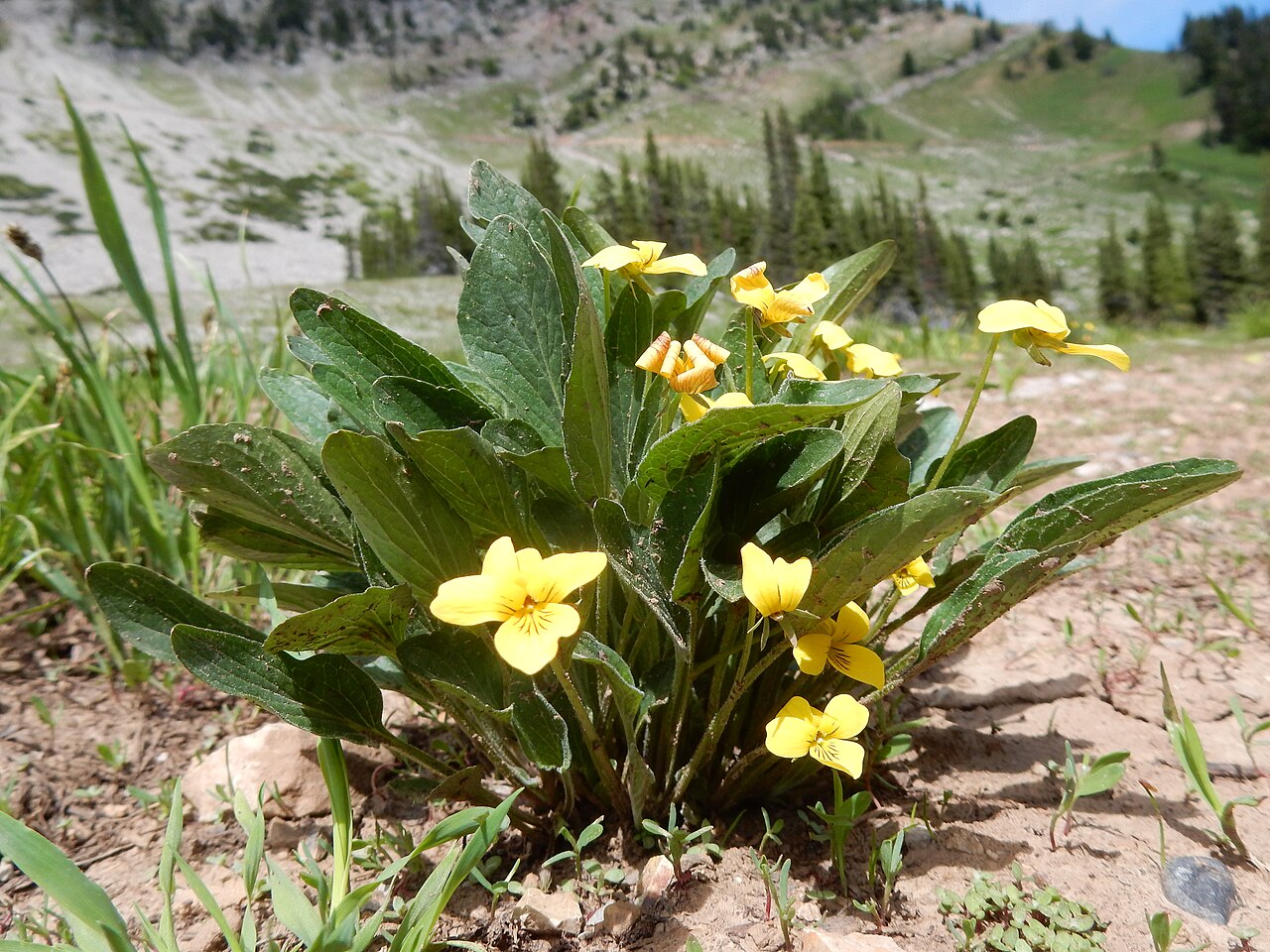
Viola nuttallii, known as Nuttall’s Violet or yellow prairie violet, is a small, early-blooming wildflower of the Great Plains and Rocky Mountains. It grows in prairies, sagebrush grasslands, open pine woods and mountain meadows from the Dakotas and Nebraska west to Montana, Wyoming, Colorado and Idaho, and north into Alberta and Saskatchewan.
Unlike the heart-shaped leaves of most violets, its leaves are long and lance-shaped, tapering gradually into their stalks. In spring it produces bright yellow flowers marked with fine purple-brown lines, usually on plants less than 6 inches tall. It is one of the first flowers to appear on the open plains after snowmelt, often blooming alongside pasqueflowers and early phlox.
Nuttall’s violet is a larval host for fritillary butterflies, and its early flowers feed native bees. It is rarely grown in gardens, but it can be a charming addition to a dry prairie or rock garden within its native range. This guide covers how to identify it, where it grows, how to grow it and its value to wildlife.
Identification
Nuttall’s violet is one of only a few western violets with yellow flowers and narrow, lance-shaped leaves. Look closely at the leaf shape, which is the most reliable way to tell it from other yellow violets.
Growth Habit
Nuttall’s violet is a low, tufted perennial that grows from a short, thick, upright rootstock. It forms a small clump of leaves and short flower stalks, usually 2 to 6 inches tall. Plants may have short leafy stems or appear nearly stemless early in the season, and they become leafier as spring goes on.
Leaves
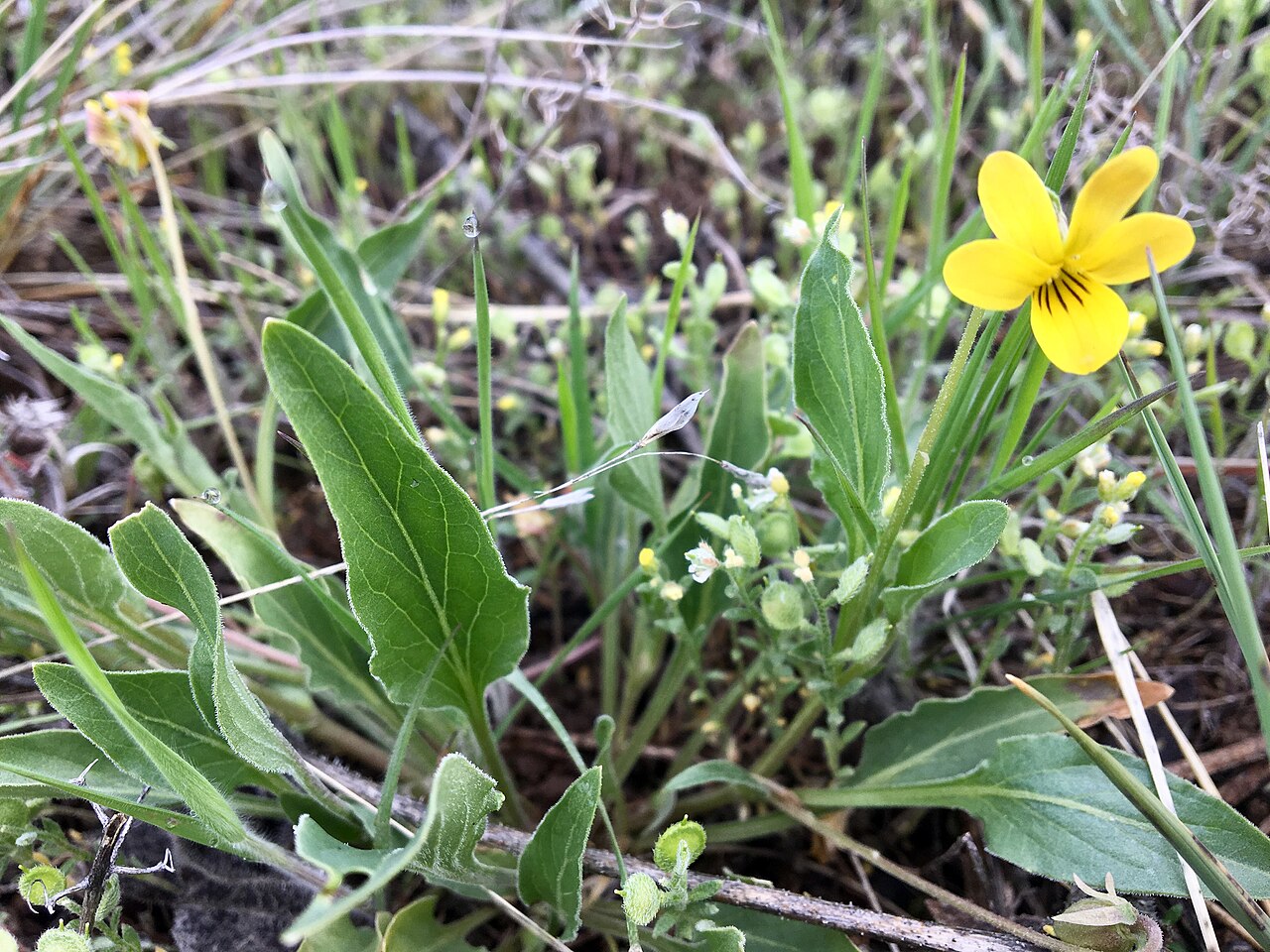
The leaves are lance-shaped to narrowly elliptic, mostly 1 to 4 inches long, and typically more than two or three times as long as wide. The blades taper gradually into a long stalk rather than ending in a heart-shaped base. They are green, smooth to finely hairy, and the edges are usually entire or have a few shallow teeth.
Flowers
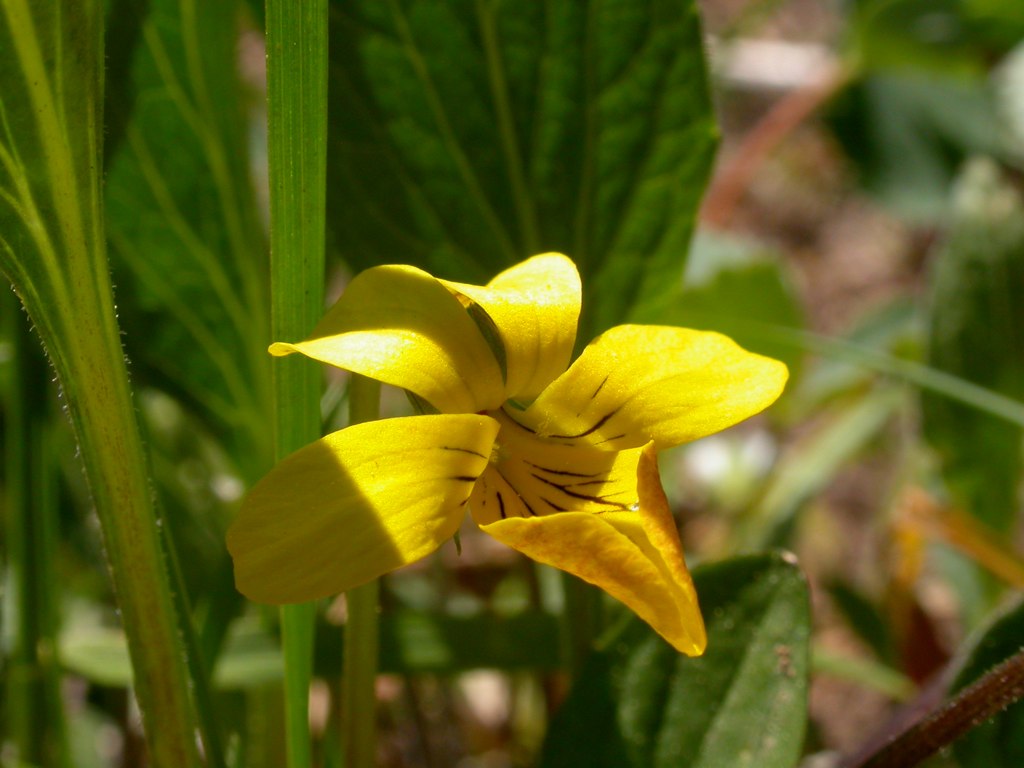
The flowers are bright lemon-yellow, about 1/2 to 3/4 inch across, borne singly on slender stalks among or above the leaves. The lower three petals have dark purple-brown lines, the nectar guides, and the upper two petals are often tinged brownish-purple on the back. The lowest petal forms a short spur at the back of the flower. Bloom time is mainly April to June, earlier on the plains and later at higher elevations. Like many violets, it may also produce small, closed, self-pollinating flowers later in the season.
Fruit & Seeds
The fruit is a small, three-parted capsule. When ripe it splits open, and the walls squeeze the seeds out, flinging them a short distance. Violet seeds generally have a small oily appendage that attracts ants, which carry them further.
Look-alikes
Several western yellow violets were once included within Viola nuttallii, and the group is still confusing. Valley violet (Viola vallicola) has broader, more oval leaves, and upland yellow violet (Viola praemorsa) is larger and hairier, with oval leaves; both are now usually treated as separate species and are common farther west. Goosefoot violet (Viola purpurea) has toothed, often purplish leaves. Eastern yellow violets such as downy yellow violet have heart-shaped leaves.
Quick Facts
| Scientific Name | Viola nuttallii Pursh |
| Family | Violaceae (violet family) |
| Plant Type | Herbaceous perennial |
| Mature Height | 2–6 in |
| Mature Spread | 3–6 in |
| Growth Rate | Slow |
| Sun Exposure | Full sun to partial shade |
| Water Needs | Low to moderate; moist in spring, dry in summer |
| Soil Type | Well-drained loam, sandy or gravelly soils |
| Soil pH | About 6.0–8.0 |
| Bloom Time | April–June |
| Flower Color | Yellow with purple-brown lines |
| Fall Color | None; leaves fade in summer |
| Fruit | Small three-parted capsule that ejects its seeds |
| Deer Resistant | Not well documented |
| USDA Hardiness Zones | 3–7 |
Native Range
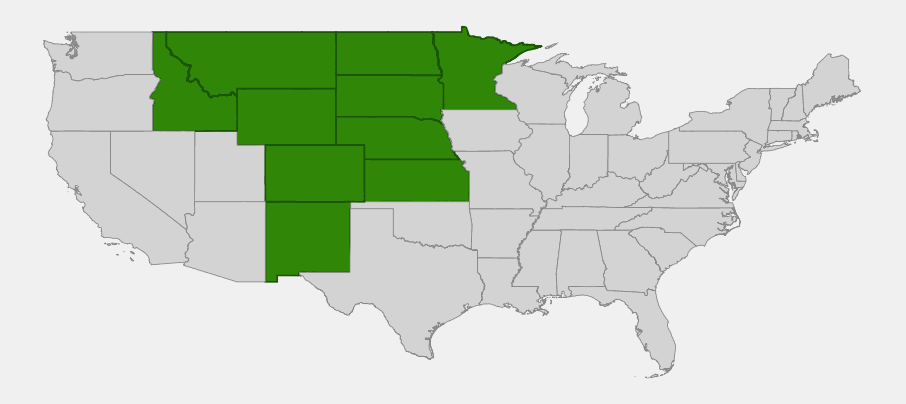
Nuttall’s violet is a plant of the northern Great Plains and the Rocky Mountains. USDA PLANTS lists it as native in Colorado, Idaho, Kansas, Minnesota, Montana, Nebraska, New Mexico, North Dakota, South Dakota and Wyoming, and in Canada it grows in Alberta and Saskatchewan.
It is most common in Montana, Wyoming, the western Dakotas and Colorado. At the eastern edge of its range it reaches western Minnesota, where it is rare, and the western parts of Nebraska and Kansas; New Mexico is at its southern limit. In Idaho it grows mainly in the eastern and southern mountains and valleys. Plants from Oregon, Washington, Utah and California that were once called Viola nuttallii are now generally placed in related species such as Viola vallicola and Viola praemorsa.
Typical habitats are mixed-grass and shortgrass prairie, sagebrush grasslands, open ponderosa pine and aspen woods, and grassy mountain slopes and meadows, from the high plains up to subalpine elevations. It favors sites that are moist in spring and dry out in summer.
📋 Regional plant lists featuring Nuttall’s Violet: Idaho, Eastern Oregon & Eastern Washington · Montana & Wyoming · Michigan, Wisconsin & Eastern Minnesota · Nebraska, Kansas & Eastern Colorado · North Dakota, South Dakota & Western Minnesota
Growing & Care Guide
Nuttall’s violet is seldom sold in nurseries, but native seed suppliers and specialty growers in the Plains and Rockies occasionally offer it. It is a small plant for a sunny, well-drained spot where it will not be crowded out by larger perennials.
Light
Grow it in full sun or light, open shade, such as at the edge of pines or under a high shrub canopy. It flowers best with plenty of spring sun.
Soil & Water
Use well-drained loam, sandy or gravelly soil. In nature it gets moisture from snowmelt and spring rain and then dries out in summer, so water it in spring if the season is dry and keep it on the dry side after flowering. Heavy, wet soil in summer can rot the rootstock.
Planting Tips
Plant it near the front of a prairie planting, in a rock garden or among low bunchgrasses such as blue grama, where its small rosettes stay visible. Because it is small and slow, keep aggressive spreading plants away from it. Mark its location, since the leaves often fade by midsummer.
Pruning & Maintenance
No pruning is needed. Remove tall weeds or grasses that shade it in spring. A light, open mulch of gravel suits it better than thick wood mulch.
Propagation
Grow it from seed. Collect the capsules just as they turn upright and tan, before they split, and sow the seed outdoors in fall. Violet seeds usually need a period of cold, moist stratification to germinate, so fall sowing or 60 to 90 days in a refrigerator in moist sand works well. Established plants resent disturbance; move only small seedlings.
Landscape Uses
- Prairie and meadow gardens: early yellow flowers among low bunchgrasses
- Rock gardens: a small, neat perennial for well-drained gravelly soil
- Butterfly gardens: a larval host plant for fritillary butterflies
- Restoration plantings: an early-season forb for prairie and sagebrush grassland restoration in its native range
- Early pollinator plantings: spring nectar and pollen for native bees
Wildlife & Ecological Value
Nuttall’s violet blooms early, when few other flowers are open on the plains, and its leaves feed the caterpillars of several fritillaries.
For Pollinators
The flowers are visited by small native bees, bee flies and early butterflies. The dark lines on the petals guide them to the nectar in the spur, and as they probe they pick up and deposit pollen.
For Butterflies
Violets are the larval host plants of the greater fritillaries (Speyeria). The Lady Bird Johnson Wildflower Center lists Nuttall’s violet as a larval host of the Coronis fritillary (Speyeria coronis), and other western fritillaries likely use it as well. The caterpillars hatch in late summer, overwinter and feed on the new violet leaves in spring.
For Birds & Mammals
Ground-feeding birds and small rodents may eat the seeds, and grouse and other wildlife may browse the leaves and flowers in spring.
Ecosystem Role
As one of the earliest spring flowers in prairies and mountain grasslands, Nuttall’s violet provides food for insects at a time when resources are scarce. Its seeds are thrown from the capsule and are then often carried by ants, a common dispersal pattern in violets.
Cultural & Historical Uses
The species is named for Thomas Nuttall (1786–1859), an English-born botanist and naturalist who explored the Missouri River and the western plains in the early 1800s. Plants he collected were described by Frederick Pursh, who named this violet in his honor in 1814.
The genus name Viola is the classical Latin name for violets. As a U.S. Fish and Wildlife Service photo caption notes, the only violet color on Nuttall’s violet is in the fine lines on its petals.
Botanists have long debated how to divide the yellow violets of the West. For much of the twentieth century, Viola nuttallii was treated broadly to include plants from the Pacific Northwest and California, which are now often recognized as separate species. As a result, older field guides may show it over a larger range than the one described here.
Frequently Asked Questions
What does Nuttall’s violet look like?
It is a small, tufted plant 2 to 6 inches tall with long, lance-shaped leaves that taper into their stalks, and bright yellow flowers with fine purple-brown lines on the lower petals.
Where does Nuttall’s violet grow?
It grows in prairies, sagebrush grasslands, open woods and mountain meadows of the northern Great Plains and Rocky Mountains, from the Dakotas, western Minnesota, Nebraska and Kansas west to Montana, Wyoming, Colorado, New Mexico and Idaho, and into Alberta and Saskatchewan.
When does Nuttall’s violet bloom?
Mainly from April to June, starting soon after snowmelt on the plains and later at higher elevations.
Is Nuttall’s violet a host plant for butterflies?
Yes. Violets are the larval host plants of fritillary butterflies, and Nuttall’s violet is listed as a host of the Coronis fritillary.
Can I grow Nuttall’s violet in my garden?
Yes, within its native range, in a sunny, well-drained spot such as a rock garden or a short-grass prairie planting. Start it from seed sown outdoors in fall, and keep it dry in summer.

Looking for a nursery that carries Nuttall’s Violet?
Browse our native plant nursery directory: Colorado · Idaho & Kansas · Minnesota & Montana · Nebraska, New Mexico & North Dakota · South Dakota · Wyoming

