
Sand Myrtle (Leiophyllum buxifolium)
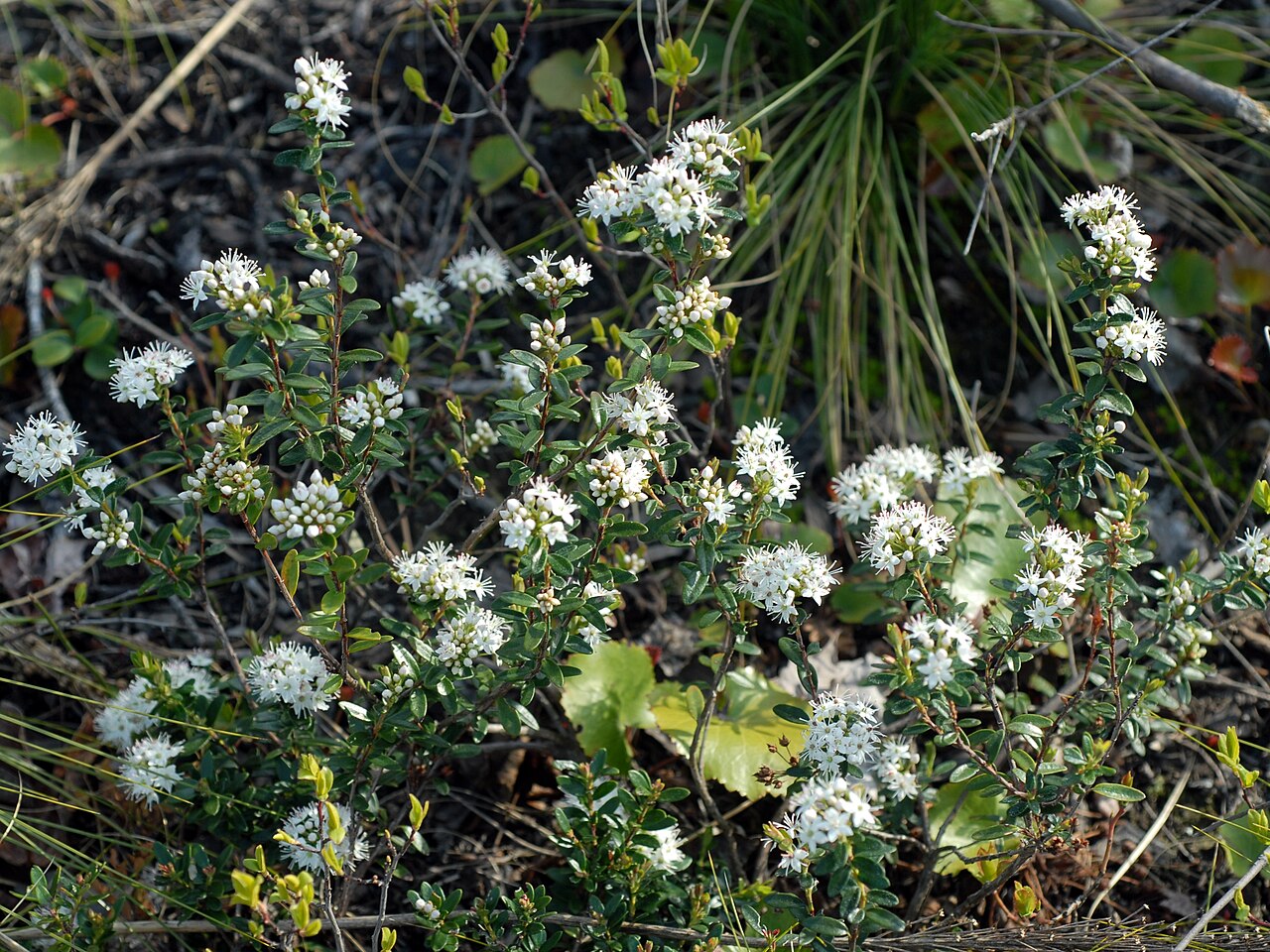
Leiophyllum buxifolium, known as Sand Myrtle (USDA: sandmyrtle), is a small evergreen shrub of the heath family (Ericaceae) with tiny, glossy, box-like leaves and, in spring, a froth of small white to pale pink flowers. It is the only species in its genus, but DNA studies show it belongs among the laurels, and many botanists now call it Kalmia buxifolia. Both names refer to the same plant.
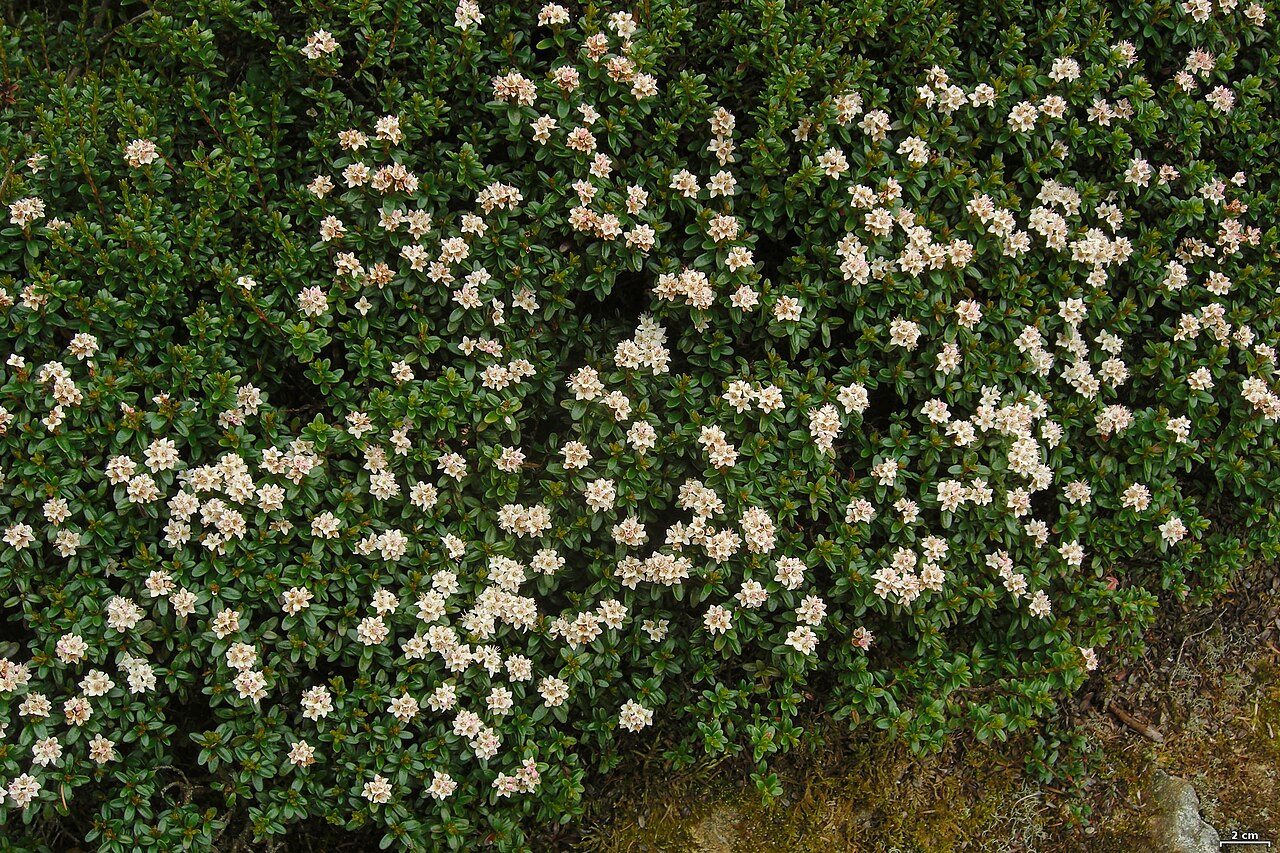
Sand myrtle has one of the most curious ranges of any eastern shrub. It grows in three widely separated areas: the sandy Pine Barrens of New Jersey, the Sandhills and Coastal Plain of the Carolinas, and high rocky summits and cliffs of the southern Blue Ridge. In the Pine Barrens it is an upright shrub up to about 3 feet tall; on mountain ledges it often forms prostrate, cushion-like mats only a few inches high.
For gardeners it is a choice plant for rock gardens and sandy, acidic sites: neat, evergreen and covered in bloom in spring. It is not the easiest plant to grow, because it needs very good drainage, acidic soil and cool roots, but in the right spot it is long-lived and attractive in every season.
Identification
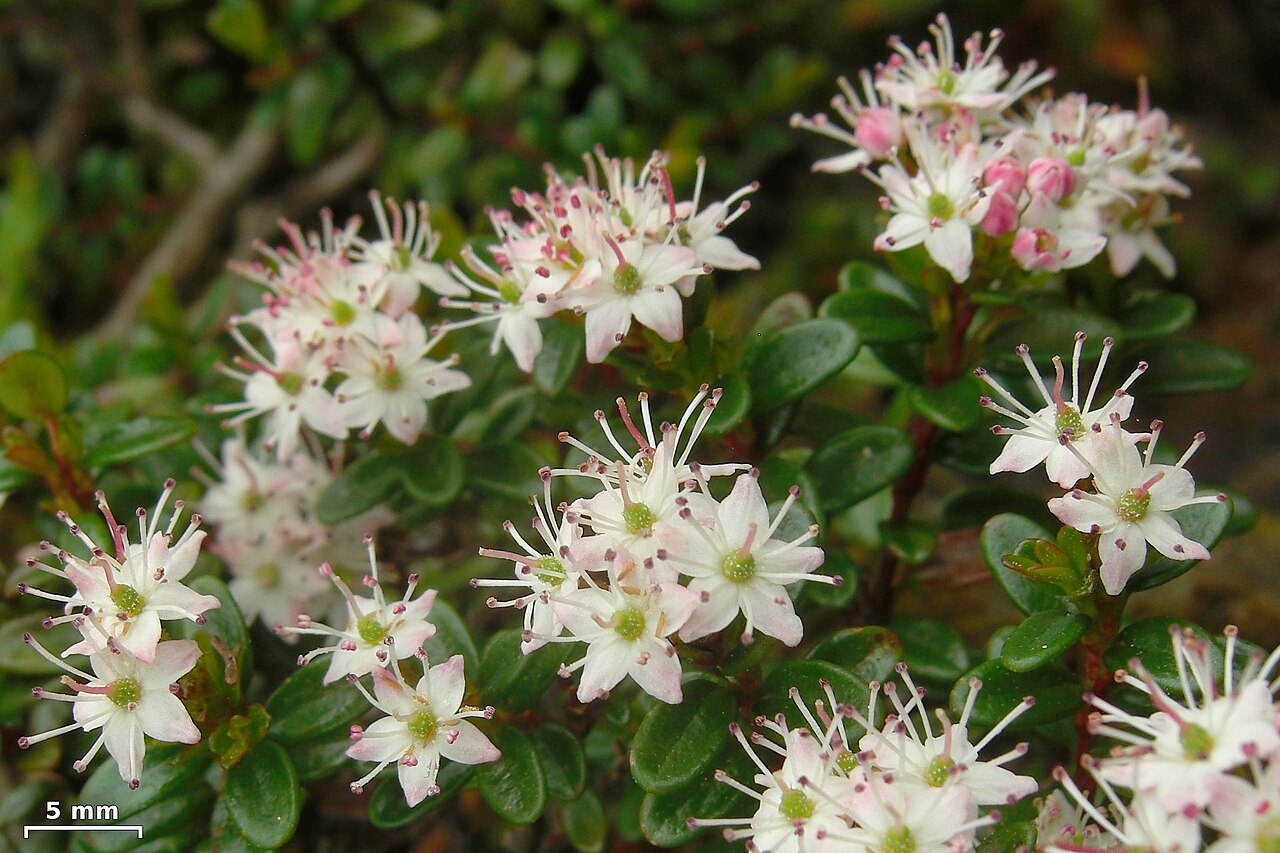
Look for a low, much-branched evergreen shrub with tiny, shiny, oval leaves and, in spring, rounded clusters of small, starry white flowers with pink buds and protruding stamens.
Growth Habit
Sand myrtle is a compact, densely branched evergreen shrub. In sandy lowlands it is usually upright, 1 to 3 feet tall, with stiff, twiggy stems. On exposed mountain rock it can be prostrate, forming dense mats a few inches high and several feet across. Older stems have gray to reddish-brown, shreddy bark.
Leaves
The leaves are small, about 1/4 to 1/2 inch long, oval to elliptic, thick and leathery, and glossy dark green above and paler below. Their edges are smooth and often slightly rolled under. They may be alternate or nearly opposite on the same plant and are crowded along the twigs, giving the shrub a boxwood-like look. In winter they often turn bronze or reddish.
Flowers
The flowers open from April to June, depending on elevation. They are carried in dense, rounded clusters of up to 18 at the tips of the twigs. Each flower is about 1/4 inch across, with five spreading white petals and ten long, protruding stamens with reddish-brown anthers, giving the clusters a fuzzy look. The buds are usually pink, so clusters often appear pink and white.
Fruit
The fruit is a small, dry, oval capsule about 1/8 inch long, which splits open from the top in late summer and fall to release many tiny seeds. Old capsules often persist on the twigs into winter.
Look-alikes
Sheep laurel and mountain laurel have much larger leaves and cup-shaped flowers with pockets that hold the anthers. Mountain or Allegheny Pieris has toothed leaves and hanging, urn-shaped flowers. Beach heather, which grows with sand myrtle in sandy places, has scale-like leaves and yellow flowers.
Quick Facts
| Scientific Name | Leiophyllum buxifolium (syn. Kalmia buxifolia) |
| Family | Ericaceae (heath family) |
| Plant Type | Small evergreen shrub |
| Mature Height | 6 in–3 ft |
| Mature Spread | 1–4 ft |
| Growth Rate | Slow |
| Sun Exposure | Full sun to part shade |
| Water Needs | Low to medium; sharply drained |
| Soil Type | Sandy, gravelly or rocky acidic soil |
| Soil pH | Strongly acidic (about 4.5–5.5) |
| Bloom Time | April–June |
| Flower Color | White, pink in bud |
| Fall Color | Leaves bronze to reddish in winter |
| Fruit | Small dry capsule |
| Deer Resistant | Yes; seldom browsed |
| USDA Hardiness Zones | 5–8 |
Native Range
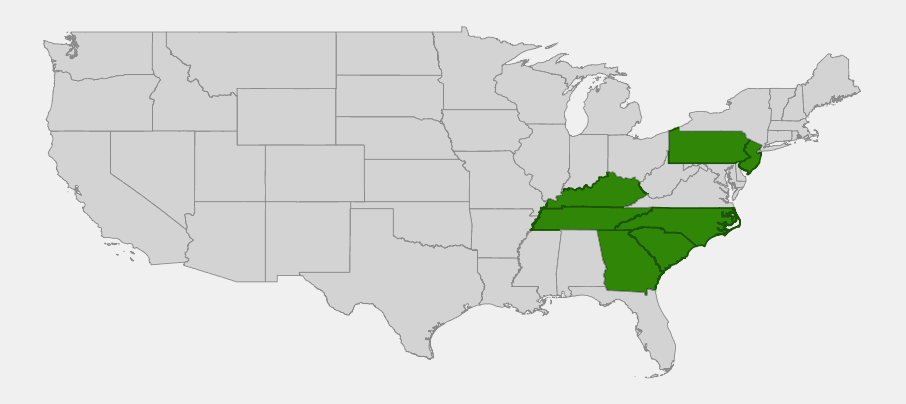
Sand myrtle is native only to the eastern United States. USDA PLANTS records it from seven states: New Jersey, Pennsylvania, North Carolina, South Carolina, Georgia, Tennessee and Kentucky. Its range falls into three separate pieces. The best known is the New Jersey Pine Barrens, where it is common in dry, sandy pine-oak barrens and on the edges of bogs. A second group of populations grows in the Sandhills and Coastal Plain of North and South Carolina.
The third group grows in the mountains: on high, exposed rocky summits, granite domes and heath balds of the southern Blue Ridge in North Carolina, South Carolina, Georgia and Tennessee, including well-known sites such as Mount Le Conte in the Great Smoky Mountains. USDA also lists Kentucky. The Pennsylvania record is historical: NatureServe ranks the species as extirpated (SX) in Pennsylvania, and it is rare in Georgia.
Across these very different settings, its needs are the same: very acidic, nutrient-poor, well-drained soil and open conditions with little competition, whether on sand or on bare rock.
📋 Regional plant lists featuring Sand Myrtle: New York, Pennsylvania & Northern New Jersey · Kentucky & Tennessee · Delaware, Southern New Jersey & Long Island · Alabama, Georgia & Mississippi · North & South Carolina
Growing & Care Guide
Sand myrtle rewards gardeners who can give it what it has in the wild: lean, acidic, perfectly drained soil and plenty of light. Buy nursery-propagated plants; never dig it from the wild.
Light
Full sun to part shade. It flowers most heavily in sun, but in hot, humid lowland gardens it appreciates some afternoon shade. Mountain forms in particular like cool roots and bright light.
Soil & Water
Plant in sandy or gravelly, strongly acidic soil with plenty of drainage; a mix of coarse sand, grit and pine bark or peat-free leaf mold works well. It does not tolerate clay, lime or soggy soil, and root rot is its main problem. Water regularly the first year, then only during long droughts.
Planting Tips
Plant in spring or early fall from a container, setting the crown at or slightly above grade. A raised bed, rock garden pocket or sandy slope gives the drainage it needs. Mulch lightly with pine needles or shredded pine bark to keep roots cool; avoid heavy wood mulch and fertilizer.
Pruning & Maintenance
Little pruning is needed. Trim lightly right after flowering to keep the plant dense or remove a stray branch. Like other heath family shrubs, it depends on root fungi and resents root disturbance, so place it where it can stay.
Propagation
Take semi-hardwood cuttings in summer and root them in a sandy, acidic mix with rooting hormone. Seed is tiny and can be sown on the surface of moist, acidic peat-free medium, but seedlings grow slowly. Several compact selections are sold by specialty nurseries.
Landscape Uses
- Rock gardens: a tidy evergreen cushion for sunny, acidic pockets
- Sandy and coastal gardens: well suited to dry, lean, sandy soils
- Pine barrens and heath plantings: pairs with blueberries, huckleberries and bearberry
- Low hedges and edging: compact forms make a fine-textured low border
- Containers and troughs: slow growth suits acidic-mix containers
Wildlife & Ecological Value
Sand myrtle is a characteristic plant of some of the East’s most specialized habitats, from the Pine Barrens to mountain summits.
For Pollinators
The open, shallow flowers are visited by small native bees, flies, beetles and butterflies in spring. In the Pine Barrens it is one of many heath-family shrubs that bloom in sequence and feed early-season bees.
For Birds
Its dry capsules have little food value for birds, but its dense, evergreen branches provide low cover in open barrens and on rocky summits.
For Mammals
It is rarely browsed by deer. Small mammals use the dense mats for cover.
Ecosystem Role
Sand myrtle stabilizes sand and thin soils on rock, and helps form the low evergreen heath that covers exposed summits and barrens. In the Pine Barrens it is adapted to frequent fire and resprouts from its base after burning.
Cultural & Historical Uses
The genus name Leiophyllum comes from the Greek for “smooth leaf,” and the species name buxifolium means “with leaves like box” (Buxus). The combination describes its glossy, boxwood-like foliage well.
For many years sand myrtle was placed in its own genus. DNA studies by Kathleen Kron and colleagues showed that it is closely related to the laurels, and it was transferred to Kalmia as Kalmia buxifolia. Many gardeners and nurseries still use the older name.
The species has received the Royal Horticultural Society’s Award of Garden Merit. As in many heath family plants, the foliage of its relatives contains toxic compounds; sand myrtle’s chemistry is little studied, so no part of it should be eaten.
Frequently Asked Questions
Is sand myrtle the same as Kalmia buxifolia?
Yes. Kalmia buxifolia is the newer name, based on DNA evidence that it belongs with the laurels. Leiophyllum buxifolium is the older name still used by USDA PLANTS and many nurseries.
Is sand myrtle evergreen?
Yes. Its small, glossy leaves stay on all year and often turn bronze or reddish in winter.
Why is sand myrtle hard to grow?
It needs strongly acidic, very well-drained soil and cannot stand wet or limy conditions. In heavy or alkaline soil it declines from root rot or nutrient problems.
Where does sand myrtle grow wild?
In three separate areas: the New Jersey Pine Barrens, the Sandhills and Coastal Plain of the Carolinas, and high rocky summits of the southern Appalachians.
Is sand myrtle poisonous?
Its toxicity is not well studied, but related plants such as mountain laurel and sheep laurel are poisonous to people and livestock. Treat sand myrtle as inedible and keep it away from grazing animals.

Looking for a nursery that carries Sand Myrtle?
Browse our native plant nursery directory: Georgia · Kentucky · New Jersey & North Carolina · Pennsylvania, South Carolina & Tennessee

