
Tall Poppymallow (Callirhoe leiocarpa)
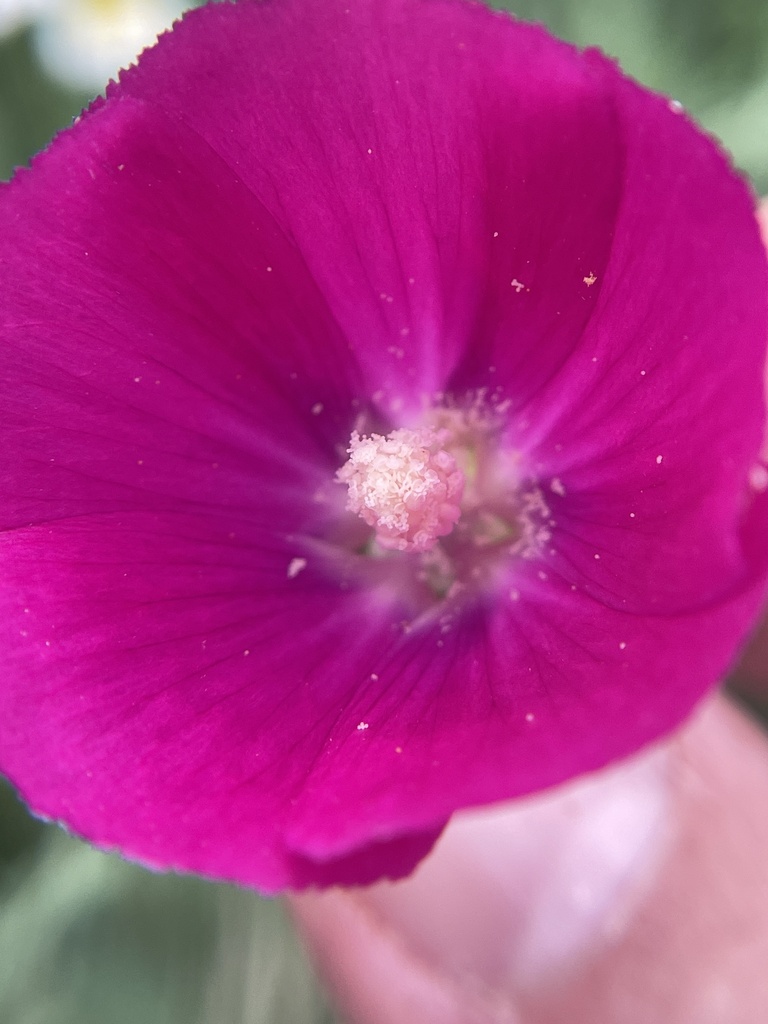
Callirhoe leiocarpa, known as Tall Poppymallow or annual winecup, is a native wildflower of the southern Great Plains, found mainly in central and south Texas, with scattered records in Oklahoma and Kansas. It grows on prairies, open woods, mesquite groves, rocky slopes and roadsides, and it is one of the showiest spring annuals of the Texas Hill Country.
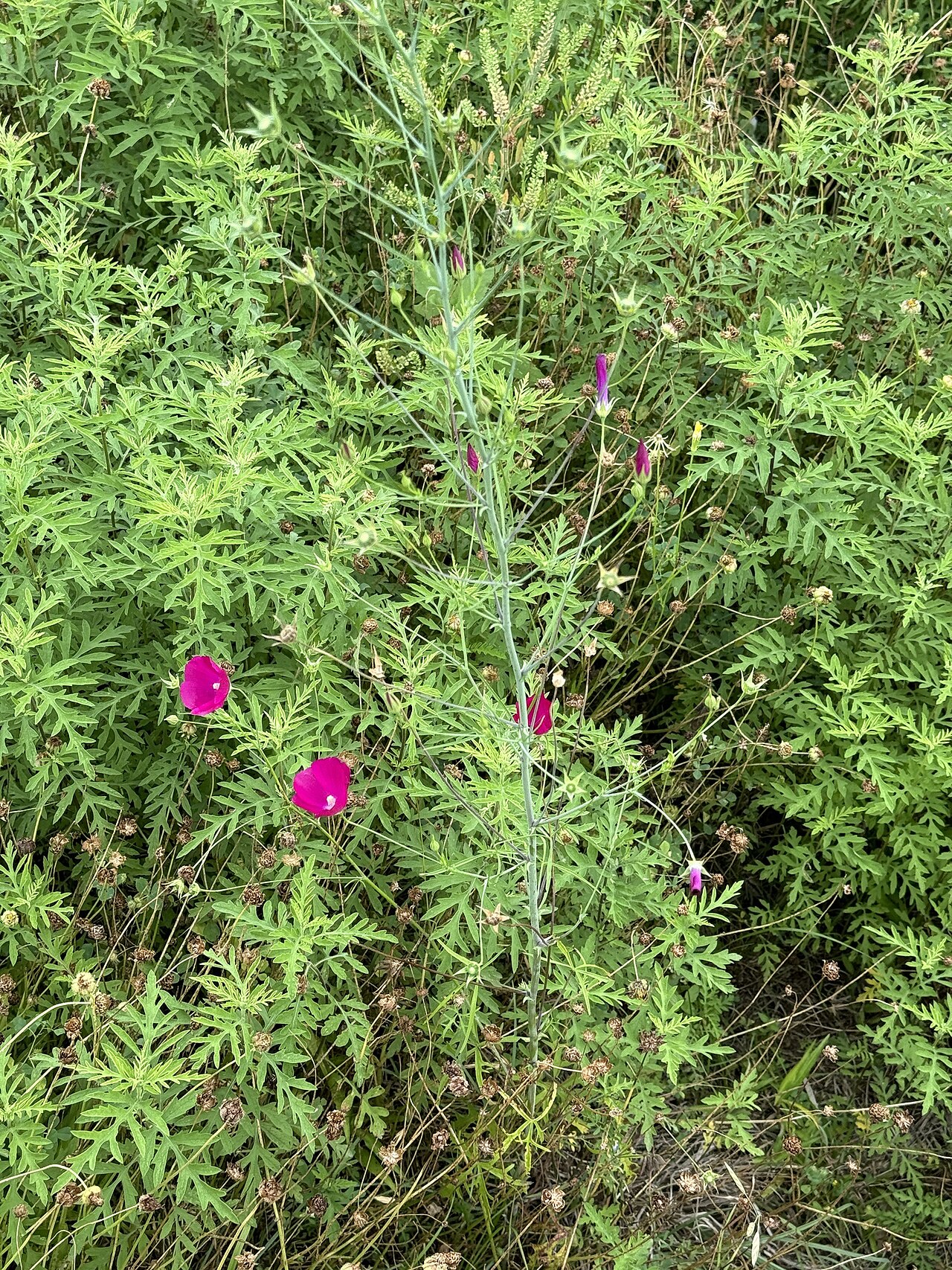
Unlike the familiar trailing winecup, tall poppymallow grows upright, with slender, branching stems 1 1/2 to 3 feet tall and finely divided upper leaves. From March into early summer it carries cup-shaped, magenta to wine-red flowers, 1 1/2 to 2 inches across, on long stalks above the surrounding grasses. Each flower opens for a day or two, but a single plant produces a long succession of them.
It is an annual that grows from seed sown in fall, overwinters as a rosette and blooms in spring. In gardens it is easy from seed, drought tolerant and a good partner for other Texas wildflowers in a meadow or wildflower bed. This guide covers how to identify it, where it grows, how to grow it from seed and what it does for pollinators.
Identification
Tall poppymallow is one of several winecups (Callirhoe) in Texas and the Plains. Its upright annual habit and the absence of small bracts under the flower are the best ways to tell it apart.
Growth Habit
Plants are annuals with one to several erect or ascending stems, usually 1 1/2 to 3 feet tall, branching above. Seedlings start as a low rosette of rounded, lobed leaves in fall and winter, then send up flowering stems in spring. It has a slender taproot rather than the thick, tuber-like root of the perennial winecups.
Leaves
The lower leaves are rounded and shallowly to moderately lobed, on long stalks. The upper stem leaves are deeply cut, palmately divided into five to seven narrow, finger-like segments, giving the upper plant a lacy look. The stems and leaves are smooth to sparsely hairy.
Flowers
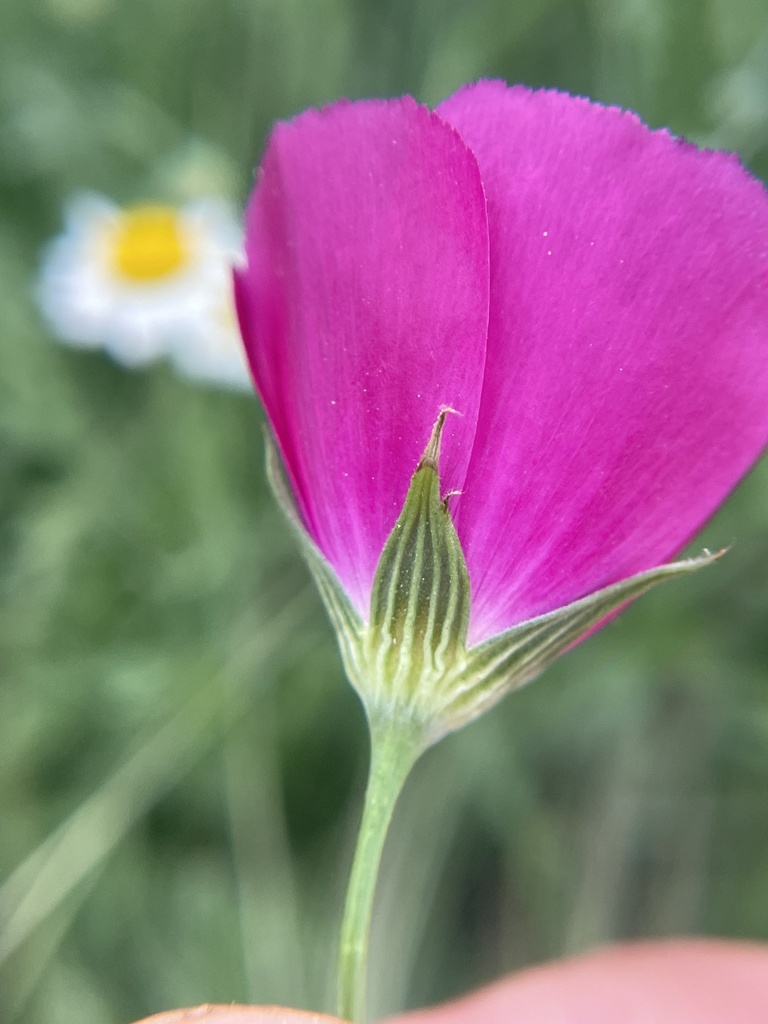
The flowers are borne singly on long, slender stalks from the upper leaf axils. Each has five broad, fan-shaped petals with finely toothed or ragged tips, opening into a cup 1 1/2 to 2 inches across. They are bright magenta to wine-red, often with a small white or pale spot at the base of each petal, around a central column of stamens. Under each flower is a five-lobed calyx with no involucel, the small ring of bractlets that purple poppy mallow has.
Fruit
After flowering, the calyx closes around a flattened, wheel-shaped fruit made of many wedge-shaped segments (mericarps). In tall poppymallow these segments are smooth or nearly so, which is the meaning of the species name leiocarpa, “smooth fruit.” Each segment holds a single seed.
Look-alikes
Purple poppy mallow (C. involucrata) is a trailing perennial with a thick root and three small bracts just below each flower. Woodland poppymallow (C. papaver) is a sprawling perennial of eastern Texas and the Southeast. Bush’s poppy mallow (C. bushii) is an upright perennial of the Ozarks and nearby prairies. Tall poppymallow is the one that is both upright and annual, without bracts below the calyx.
Quick Facts
| Scientific Name | Callirhoe leiocarpa R.F. Martin |
| Family | Malvaceae (mallow family) |
| Plant Type | Annual wildflower (winter annual) |
| Mature Height | 1 1/2–3 ft |
| Mature Spread | 1–1 1/2 ft |
| Growth Rate | Fast |
| Sun Exposure | Full sun to part shade |
| Water Needs | Low to moderate |
| Soil Type | Well-drained sandy, loamy, rocky or limestone soils |
| Soil pH | Neutral to alkaline (about 6.5–8) |
| Bloom Time | March–June, sometimes later |
| Flower Color | Magenta to wine-red, often with a pale center |
| Fall Color | None; dies after setting seed |
| Fruit | Wheel-shaped schizocarp of smooth segments |
| Deer Resistant | Minimally |
| USDA Hardiness Zones | Grown as a winter annual; about 6–9 |
Native Range
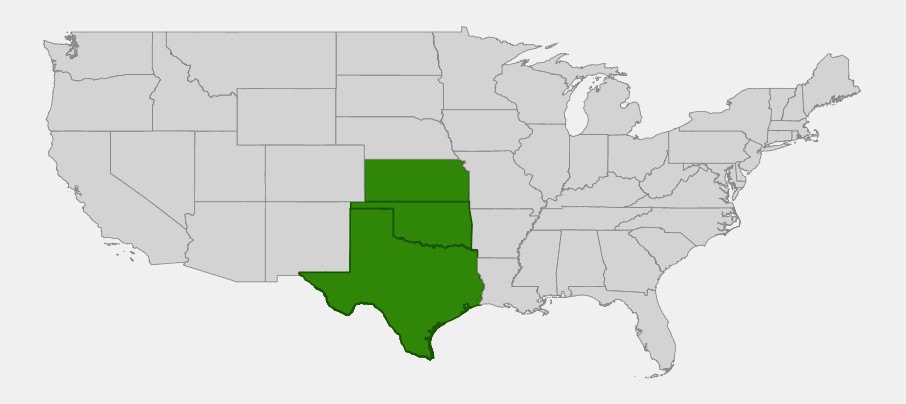
Tall poppymallow is native to the southern Great Plains. USDA PLANTS lists it in Kansas, Oklahoma and Texas. The Lady Bird Johnson Wildflower Center describes it as a plant of central and south Texas, also found in Oklahoma, and Texas is the heart of its range by far. Oklahoma and Kansas records are few and scattered, at the northern edge of its range.
In Texas it is most common on the Edwards Plateau and in the Hill Country, around Austin and San Antonio, and on the blackland and post oak prairies to the east and south. It reaches north into the Cross Timbers and the Dallas–Fort Worth area and south into the brush country of South Texas. Because it is sold in wildflower seed mixes, plants in gardens and roadside plantings outside these areas may come from seed rather than wild populations.
Typical habitats are open prairies, grassy openings in oak and juniper woodland, mesquite groves, rocky limestone slopes, creek terraces and roadsides, usually in well-drained soil. It thrives on disturbed ground and often appears in large numbers after a wet fall and winter.
📋 Regional plant lists featuring Tall Poppymallow: Nebraska, Kansas & Eastern Colorado · South & West Texas · Arkansas, Louisiana, Eastern Oklahoma & Eastern Texas
Growing & Care Guide
Tall poppymallow is one of the easier native annuals to grow from seed. It wants sun, good drainage and a fall sowing, and in a meadow or wildflower bed it will often reseed itself year after year.
Light
Full sun gives the most flowers and the sturdiest stems. It also tolerates part shade, such as the light shade of oaks and mesquites where it often grows wild, though plants may lean toward the light.
Soil & Water
Grow it in well-drained soil: sandy, loamy, gravelly or rocky soils, including the shallow limestone soils of the Hill Country. It tolerates drought, but like many spring annuals it blooms longest and looks best with some moisture in spring. Avoid heavy, poorly drained clay that stays wet in winter. No fertilizer is needed.
Planting Tips
Sow seed in fall, from September to November, directly where you want the plants. Rake the seed lightly into bare, loosened soil so it makes good contact. The seed coat is hard, and many growers nick or rub seed with sandpaper before sowing, or sow it in fall and let winter weather soften it. Seedlings form rosettes over winter and bloom in spring. It is lovely with bluebonnets, Indian blanket and standing cypress, which share its season.
Pruning & Maintenance
Little care is needed. Plants die after setting seed in early summer. If you want them to return, leave them standing until the fruits dry and seeds drop, then pull or mow the dead stems. Thin seedlings if they come up too thickly, and keep tall grasses from smothering young rosettes in winter.
Propagation
It is grown from seed. Collect the dry, wheel-shaped fruits in late spring or early summer when they turn tan, and let them dry before storing. Seed is also sold by Texas wildflower seed companies. Because of its taproot, it does not transplant well once large; sow it in place or move seedlings while they are small.
Landscape Uses
- Wildflower meadows: bright magenta color with bluebonnets and other spring annuals
- Pollinator gardens: open, bowl-shaped flowers for native bees
- Hill Country and xeric gardens: handles rocky, limestone soils and dry summers
- Roadside and prairie restoration: a quick-growing native annual from seed
- Cottage-style beds: tall, airy stems that weave between perennials
Wildlife & Ecological Value
Like other winecups, tall poppymallow is a valuable spring flower for native bees and a host for some mallow-feeding insects.
For Pollinators
The open, cup-shaped flowers offer plenty of pollen and nectar and are visited by many native bees, including bumble bees, sweat bees and long-horned bees, as well as beetles and flies. Chimney bees (Diadasia), which collect pollen mainly from mallow-family flowers, are frequent visitors to winecups.
For Butterflies
Plants in the mallow family, including winecups, are larval host plants for the common checkered-skipper and the gray hairstreak, whose caterpillars feed on the leaves and seeds. Adult butterflies occasionally nectar at the flowers.
For Birds & Mammals
Seed-eating birds and small mammals may eat the seeds from the dry fruits. Deer browse the plants to some extent, so it is not reliably deer resistant.
Ecosystem Role
Tall poppymallow is a native pioneer of open and disturbed ground in prairies and woodland openings. It fills gaps after drought, fire or soil disturbance and adds to the spring wave of wildflowers that feeds early-season bees in central Texas.
Cultural & Historical Uses
The genus name Callirhoe comes from Callirrhoe, a figure in Greek mythology, and is often translated as “beautiful flowing.” The species name leiocarpa means “smooth-fruited,” from the smooth fruit segments that help separate it from its relatives. The species was formally described by the American botanist Robert F. Martin in 1938.
The common name winecup refers to the wine-red, cup-shaped flowers shared by the genus. Tall poppymallow is sometimes called annual winecup to separate it from the perennial purple poppy mallow, the trailing winecup of many Texas gardens. Both are widely sold by Texas wildflower seed companies.
Several Callirhoe species, especially purple poppy mallow, have thick, starchy roots that were eaten by Plains peoples. Tall poppymallow is an annual with a slender taproot and is not known as a food plant.
Frequently Asked Questions
Is tall poppymallow an annual or a perennial?
It is an annual. Seeds germinate in fall, plants overwinter as rosettes, bloom in spring and die after setting seed. It often reseeds in the same spot.
How is tall poppymallow different from purple poppy mallow?
Tall poppymallow is an upright annual without small bracts below the flower. Purple poppy mallow is a trailing perennial with a thick root and three small bracts just below each flower.
When should I plant tall poppymallow seeds?
Sow them in fall, from September to November, on bare, loosened soil in sun. Nicking or sanding the hard seed coat can improve germination.
Does tall poppymallow need much water?
No. It is drought tolerant and grows on dry, rocky soils, though spring rain or occasional spring watering gives a longer bloom.
Where does tall poppymallow grow wild?
Mainly in central and south Texas, especially the Hill Country and nearby prairies, with scattered records in Oklahoma and Kansas.


