Greenthread (Thelesperma filifolium)
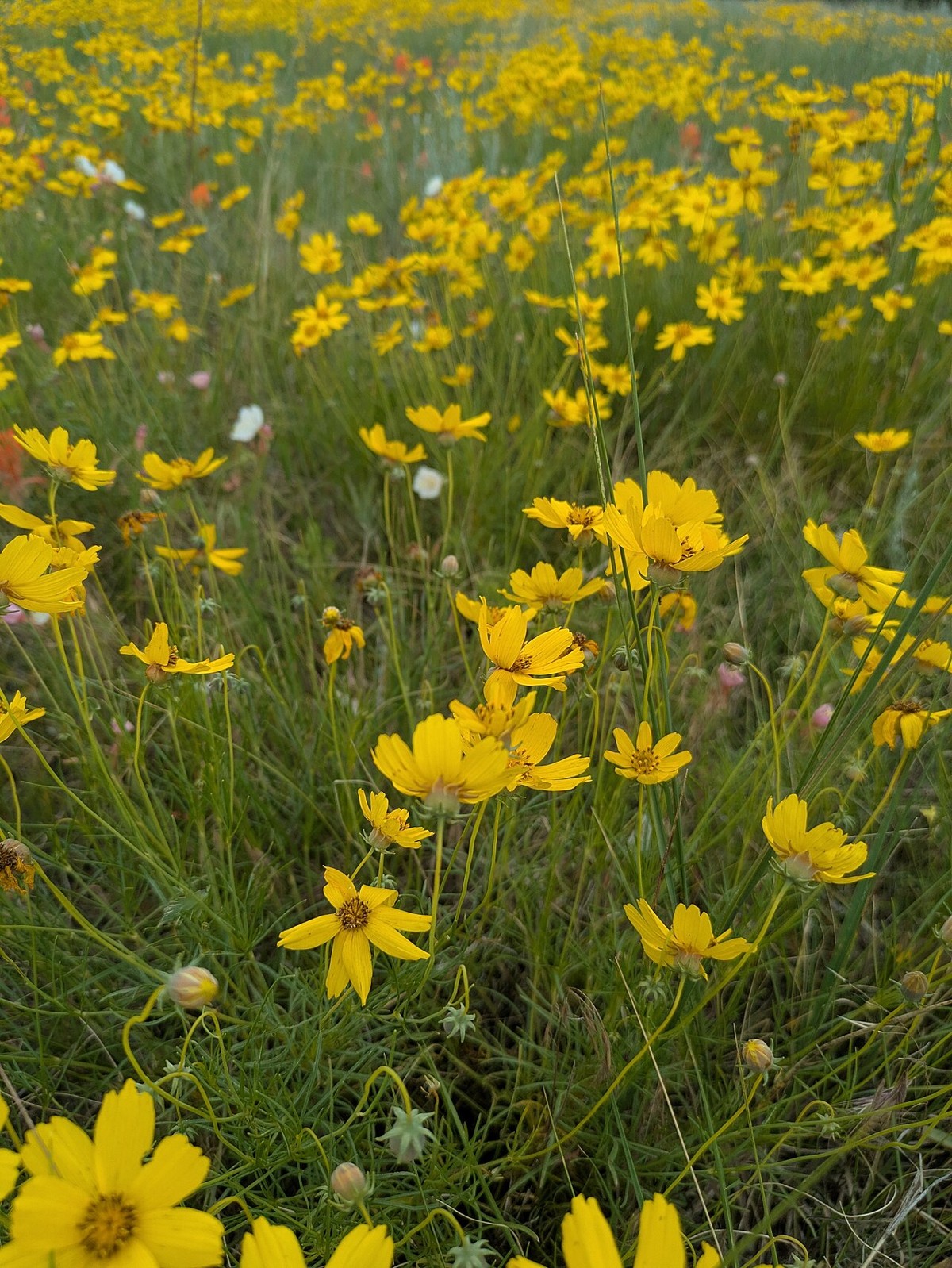
Thelesperma filifolium, commonly known as Greenthread or Stiff Greenthread, is a short-lived native wildflower of the southern and central Great Plains that paints roadsides, prairies and pastures gold every spring and early summer. Its common name comes from the thin, thread-like leaves that give the plant a wispy, almost grass-like appearance even before it blooms. Where it is abundant, Greenthread forms sweeping drifts that rival the famous bluebonnets and Indian blankets it so often grows beside.
Greenthread is an annual or short-lived perennial, typically 1 to 2½ feet tall, with slender, branching stems that carry finely divided, almost filament-like leaves. From April through June — and again after summer rains — it produces abundant 1 to 2-inch flowerheads with eight broad, bright yellow ray petals surrounding a tight cluster of yellow-to-reddish disk flowers. The genus name Thelesperma comes from Greek words meaning “nipple seed,” a reference to the small bump at the tip of each seed.
This is a plant of open, sunny, disturbed ground: caliche roadcuts, overgrazed pastures, dry prairie, and rocky limestone hills across Texas, Oklahoma, New Mexico, Colorado, Kansas and Nebraska. It thrives on neglect, reseeds readily, and needs essentially no care once sown — making it one of the easiest and most rewarding native annual wildflowers to establish from seed in a sunny, well-drained garden bed or meadow planting.
Identification
Greenthread grows as a slender, upright to sprawling annual or short-lived perennial, usually 1 to 2½ feet tall, with multiple branching stems arising from the base. The overall look is airy and open, since the foliage is so finely cut that individual plants can seem almost leafless from a distance until they bloom.
Leaves
Leaves are opposite, 1 to 4 inches long, and divided into narrow, thread-like (filiform) segments — the source of both the common name “Greenthread” and the species name filifolium, meaning “thread-leaved.” The foliage is a bright, slightly grayish green and has a mild, pleasant fragrance when crushed; some foragers steep the dried leaves for a tea similar to Navajo Tea, made from the closely related Thelesperma megapotamicum.
Flowers
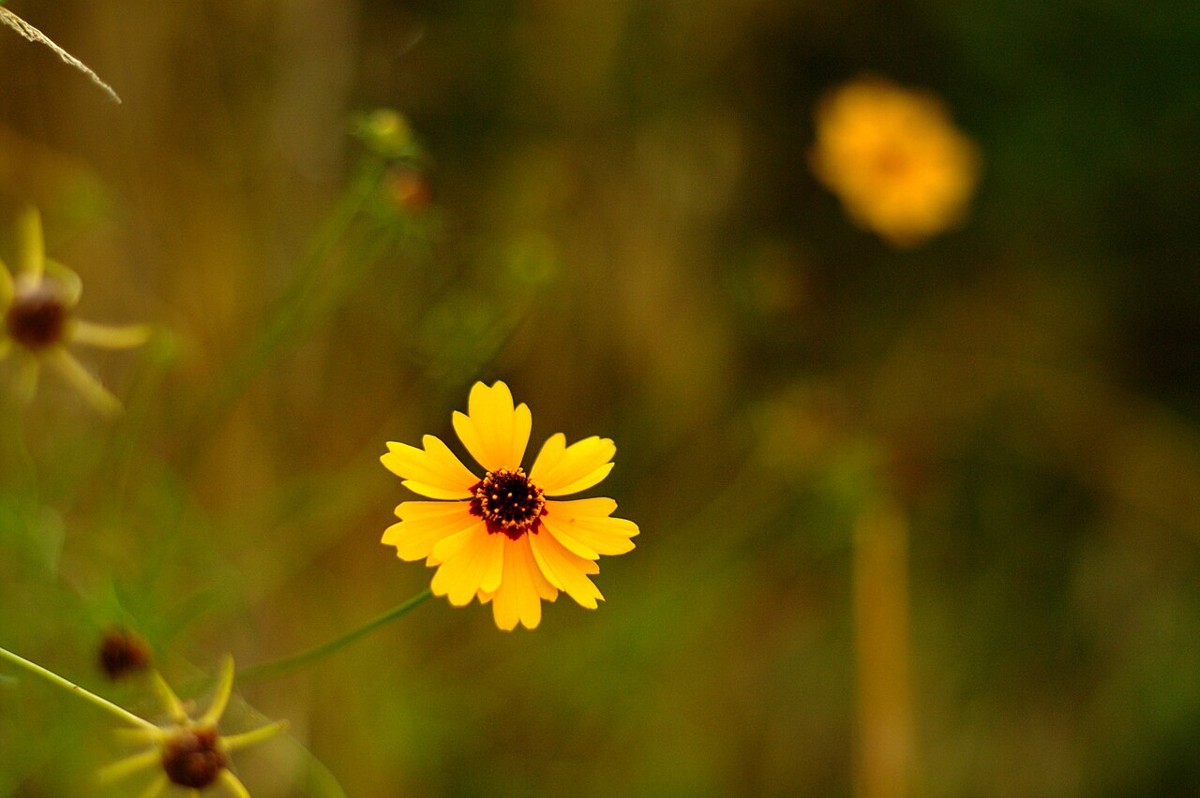
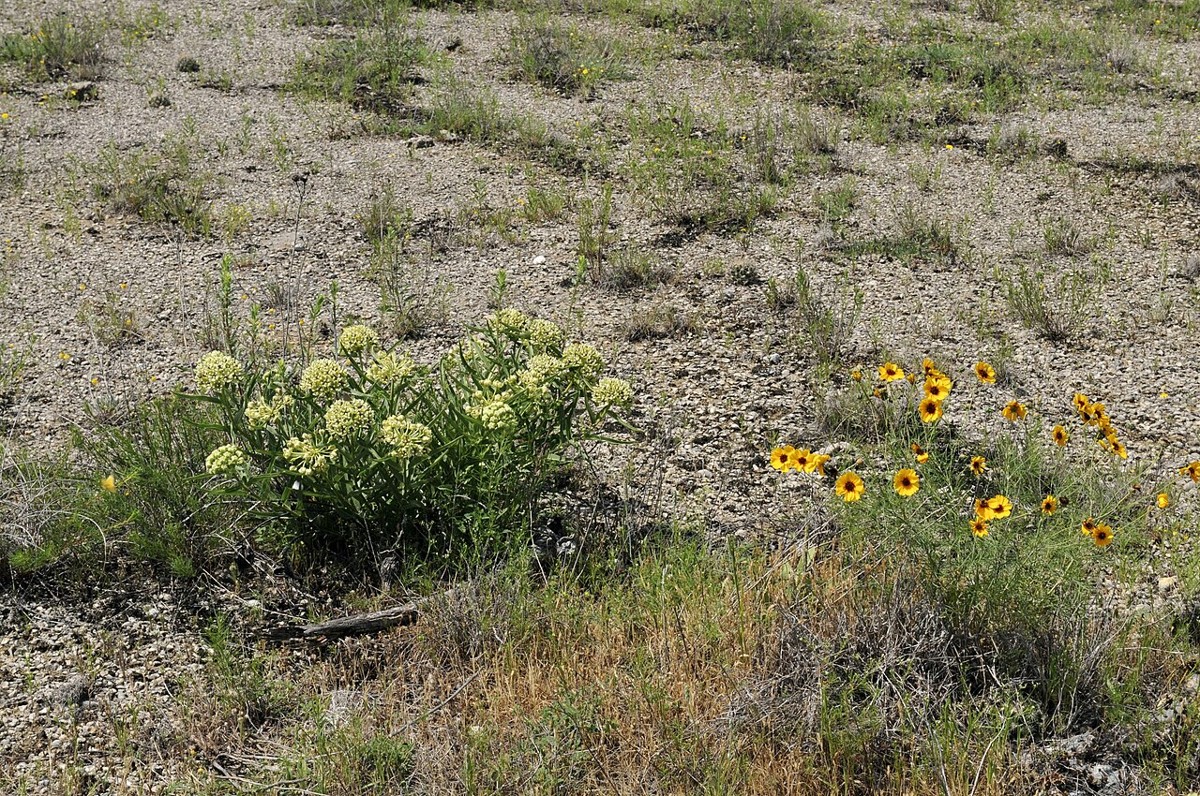
Flowerheads are borne singly on long, naked stalks (peduncles) well above the foliage, each 1 to 2 inches across with 8 broad, slightly notched yellow ray petals surrounding a center of disk flowers that can range from yellow to orange-red, sometimes giving the eye a two-toned look. Bloom is heaviest from April to June, often continuing sporadically into summer and fall after rain. Unlike many composite wildflowers, the flowerheads lack chaffy bracts between the disk flowers, a detail botanists use to confirm the genus.
Fruit & Seeds
The fruit is a small, narrow, curved achene with a distinctive small knob or “nipple” at the tip. Seeds mature quickly after bloom and drop readily, which is how Greenthread forms such dense, self-sustaining colonies on disturbed and bare ground year after year.
Quick Facts
| Scientific Name | Thelesperma filifolium |
| Family | Asteraceae (Aster/Sunflower) |
| Plant Type | Annual or Short-Lived Herbaceous Perennial |
| Mature Height | 1–2½ ft |
| Mature Spread | 1–2 ft |
| Growth Rate | Fast |
| Sun Exposure | Full Sun |
| Water Needs | Low; drought tolerant |
| Soil Type | Well-drained; caliche, limestone, rocky or sandy soils |
| Soil pH | Neutral to alkaline |
| Bloom Time | April – June, sporadically to fall |
| Flower Color | Yellow with orange-red disk |
| Fall Color | None; plant dies back after seed set |
| Fruit | Small curved achenes (inconspicuous) |
| Deer Resistant | Yes, generally avoided by deer |
| USDA Hardiness Zones | 4–9 |
Native Range
Greenthread is native to the south-central and southern Great Plains, with its core range centered on Texas and extending north through Oklahoma, Kansas and Nebraska, and west across New Mexico and much of Colorado. It is especially common and conspicuous across the prairies, plains and limestone hill country of central and west Texas, where spring drives are often lined with its gold.
Across this range, Greenthread favors open, sunny ground with little competition: dry prairies, rocky or caliche hillsides, roadside right-of-ways, and heavily grazed or otherwise disturbed pastures. It is especially quick to colonize bare or recently disturbed soil, often appearing the first spring after construction, grading, or overgrazing opens up ground for its seed to germinate.
Gardeners east of its range — in Arkansas, Louisiana, Missouri and the Deep South — should note that while a few scattered populations exist there, Greenthread is not considered reliably native in those states, so it should not be planted as a native species east of the core Plains region described here.
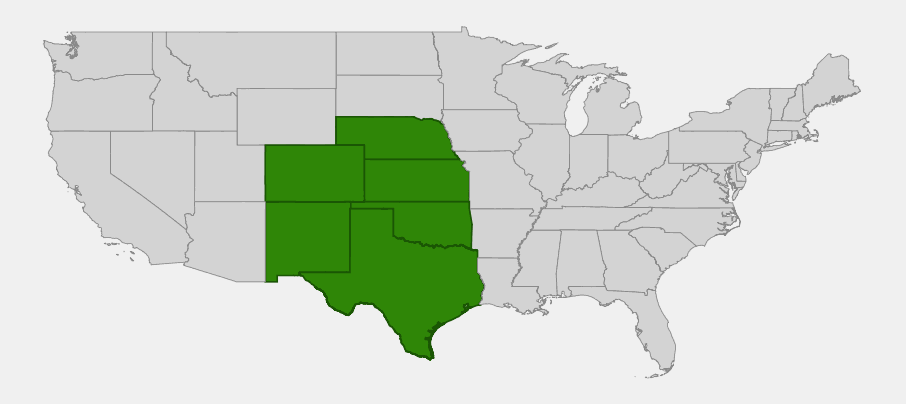
📋 Regional plant lists featuring Greenthread: South and West Texas · Arkansas, Louisiana, Eastern Oklahoma & Eastern Texas · Nebraska, Kansas & Eastern Colorado · Arizona & New Mexico
Growing & Care Guide
Greenthread is one of the easiest native wildflowers to grow from seed, performing best when treated like the pioneer species it is — sown on bare, sunny ground and then left alone.
Light
Full sun is essential. Greenthread is a plant of open prairie and disturbed ground; in shade it grows leggy, flowers sparsely, and is easily outcompeted by other vegetation.
Soil & Water
This species thrives in poor, rocky, caliche or limestone-based soils with excellent drainage and needs very little supplemental water once seedlings are up — in fact, overly fertile, consistently moist soil tends to favor grasses and other competitors over Greenthread. Established stands need no irrigation beyond natural rainfall in their native range.
Planting Tips
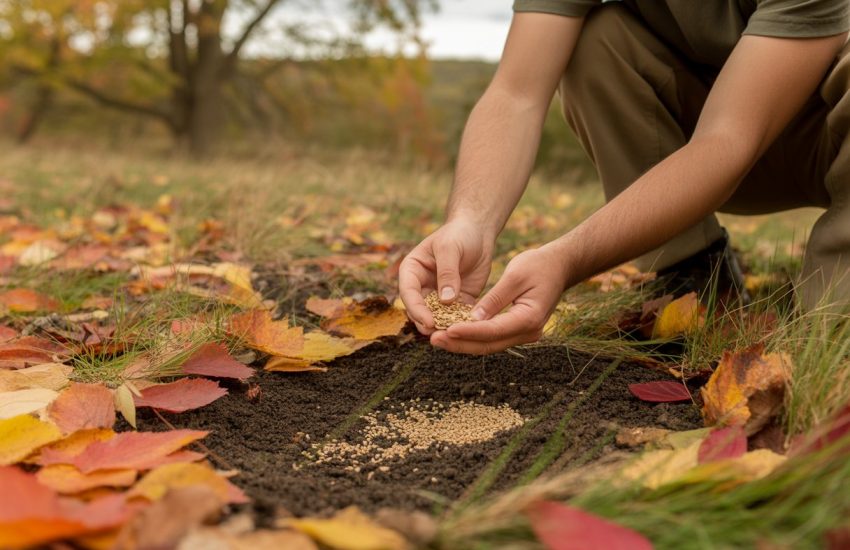
Direct-sow seed in fall, scattering onto bare or lightly raked soil so the seed has good soil contact; Greenthread germinates with fall and winter moisture and blooms the following spring. Avoid mulching the seedbed heavily, since this species relies on open ground for germination. Because it reseeds readily, a single good planting often continues to return for years with minimal reseeding effort.
Pruning & Maintenance
No pruning is needed. For a tidier look, mow or cut plants back after seed has dropped in early summer; for continued self-seeding and wildlife value, let the dried seed heads stand through fall and winter before any cleanup.
Landscape Uses
Greenthread shines in several informal, low-input settings:
- Wildflower meadows and prairie plantings, often paired with bluebonnets and Indian Blanket
- Roadside and right-of-way seeding for low-maintenance color
- Erosion control on disturbed, caliche or rocky slopes
- Pollinator gardens for an easy-care source of nectar and seed
- Cut-flower rows, since the long stems hold up well in arrangements
Wildlife & Ecological Value
Greenthread’s abundant, long-lasting bloom and prolific seed production make it a reliable food source for pollinators and seed-eating wildlife throughout the Plains growing season.
For Pollinators
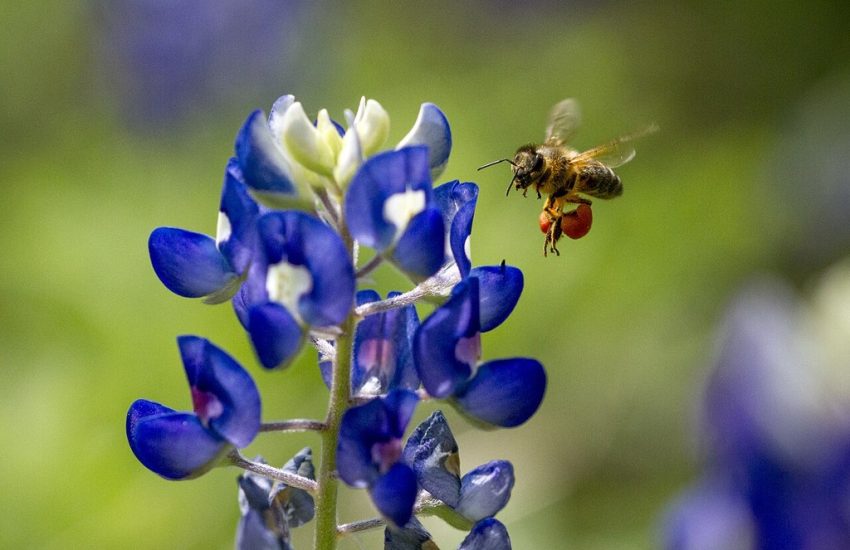
The open, accessible flowerheads attract a wide range of native bees, small butterflies, and other beneficial insects. Because it often blooms in dense drifts, Greenthread can provide an especially concentrated nectar and pollen resource during its spring peak.
For Birds
Seed-eating birds such as sparrows and finches forage on the small achenes once flowerheads dry, particularly where stands are left standing into late summer and fall rather than mowed immediately after bloom.
For Mammals
Greenthread is grazed by cattle and other livestock, especially while young and tender, and its ability to colonize overgrazed or disturbed pasture makes it a familiar sight on working rangeland across its range.
Ecosystem Role
As a fast-colonizing pioneer species, Greenthread plays an important role in stabilizing bare or disturbed prairie soils and providing quick floral cover while slower-growing perennial grasses and forbs become established. Its dense seed production and readiness to reseed make it a resilient, self-renewing component of healthy Plains grassland communities.
Cultural & Historical Uses
Several species in the genus Thelesperma, especially the closely related Thelesperma megapotamicum and Thelesperma filifolium itself, have a long history of use among Indigenous peoples of the southern Plains and Southwest as the source of a pleasant, mild herbal tea commonly called “Navajo Tea,” “Hopi Tea,” or “Cota.” The dried stems and flowerheads were steeped in hot water to produce a reddish-gold infusion traditionally valued both as an everyday beverage and for various traditional wellness uses.
On the ranches and farms of Texas and Oklahoma, Greenthread has long been recognized simply as one of the showiest and most reliable of the Plains spring wildflowers, often blooming in the same fields as bluebonnets and Indian Blanket to create the layered wildflower displays the region is famous for. Its ease of establishment from seed has also made it a popular, inexpensive choice in commercial Texas wildflower seed mixes for decades.
Today Greenthread is grown primarily for its ornamental and pollinator value rather than for any commercial or medicinal product, though home herbalists in its native range still occasionally gather the foliage for tea in the tradition of its Indigenous use.
Frequently Asked Questions
Is Greenthread an annual or a perennial?
It can behave as either, depending on conditions — typically a true annual in harsher, drier sites, but capable of persisting as a short-lived perennial for a couple of seasons where moisture and soil are more favorable. Either way, it reseeds readily and tends to return reliably from year to year once established.
Can I make tea from Greenthread?
The dried foliage and flowering stems have traditionally been steeped as a mild herbal tea, often called Navajo Tea or Cota, most commonly using the related species Thelesperma megapotamicum. If trying this with garden-grown Greenthread, confirm your plant’s identity carefully and treat it as a historical beverage, not a medicinal remedy.
Why do my Greenthread plants disappear after a year or two?
This is normal. Greenthread is a short-lived species that depends on reseeding to persist. Leaving some spent flowerheads in place to drop seed each year, rather than deadheading everything, will keep a planting self-sustaining.
Does Greenthread need rich garden soil?
No — it actually performs best in poor, rocky or caliche soils with sharp drainage, much like its native prairie habitat. Rich, heavily amended soil tends to produce weaker, floppier plants that are more easily crowded out by other vegetation.
Is Greenthread the same plant people call “Texas wildflower seed” greenthread or coreopsis?
Greenthread is sometimes confused with its relatives in the Coreopsis genus because of its similar yellow daisy-like flowers, but it belongs to Thelesperma and is distinguished by its finely thread-like leaves and the small knob at the tip of each seed.

Looking for a nursery that carries Greenthread?
Browse our native plant nursery directory: Texas · New Mexico, Nebraska & Oklahoma · Kansas · Colorado