Purple Poppy Mallow (Callirhoe involucrata)
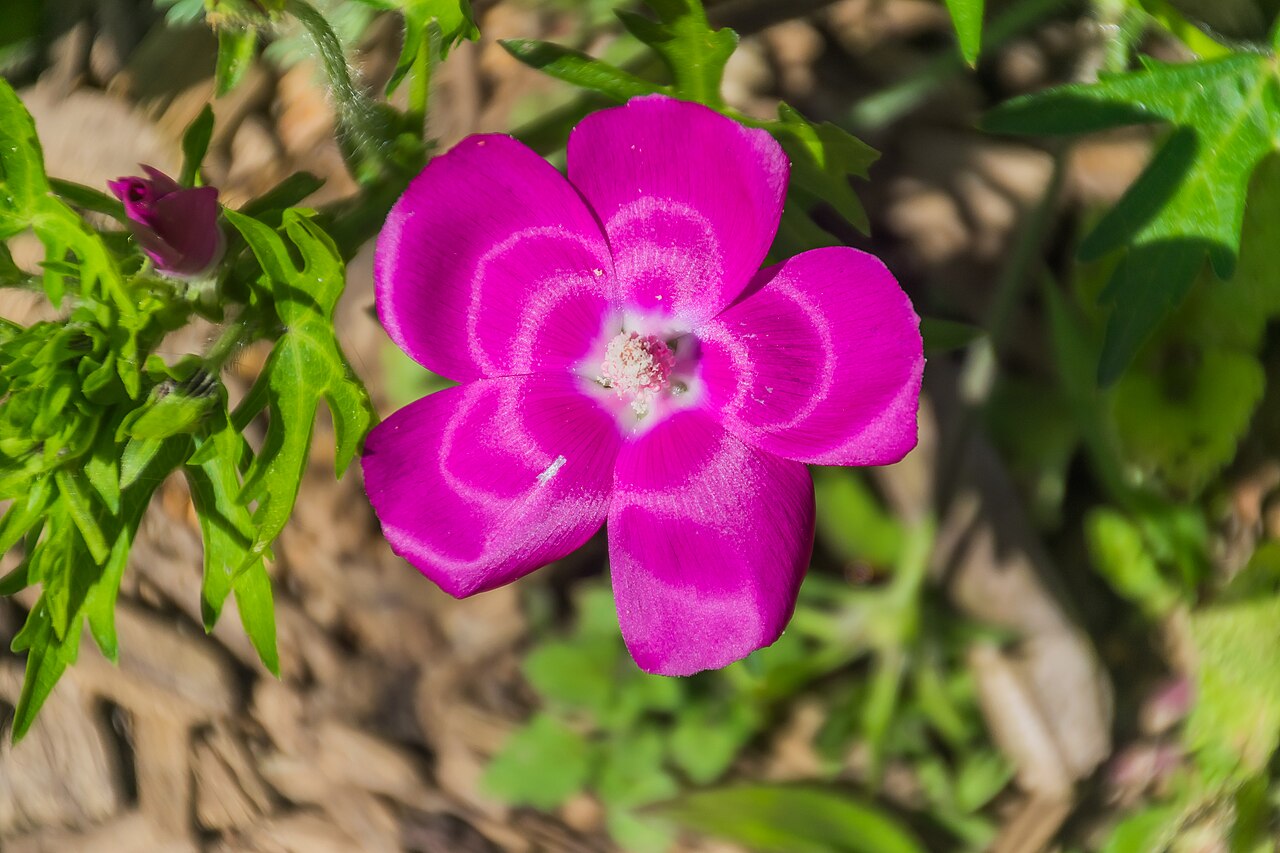
Purple poppy mallow (Callirhoe involucrata), also called winecups or buffalo rose, brings an unusually saturated magenta to a low, sprawling perennial. Instead of standing in a tall clump, its stems reach out from a persistent crown, holding cups of flowers above deeply divided foliage. The effect works especially well where a gardener wants color at the front of a sunny native planting without hiding the plants behind it.
This is a Great Plains and central North American plant, not a poppy and not a native wildflower of every state where it is sold. It belongs to the mallow family, Malvaceae. Its best garden role follows its natural architecture: let the stems weave between well-spaced neighbors or spill over a rock edge. An established root system tolerates dry periods, but a small new transplant still needs careful establishment watering.
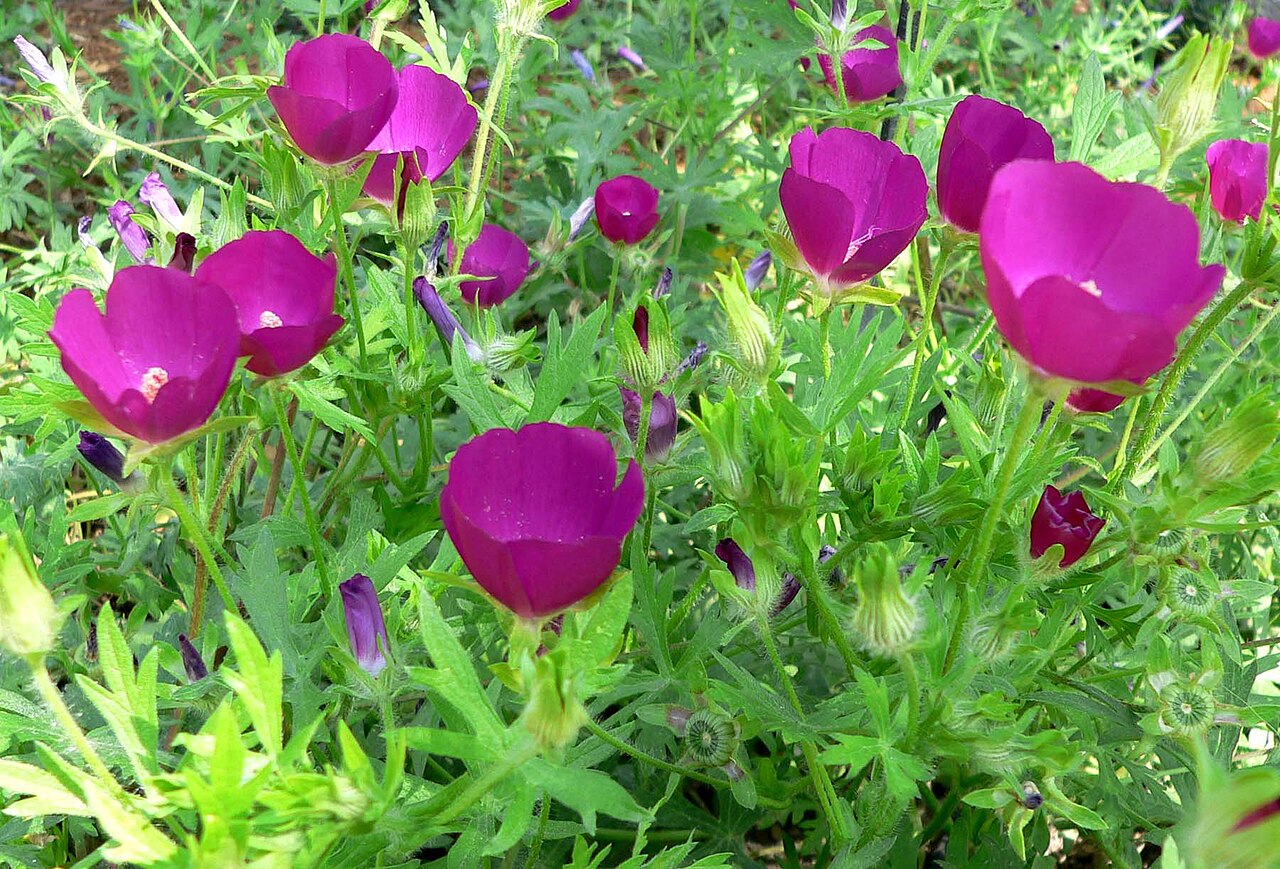
For Nebraska, Kansas and eastern Colorado gardens, the crucial decisions are sun, drainage and room for the spreading stems. A low crown can support a surprisingly broad display. Plan for a plant generally 6–12 inches high and up to about 3 feet wide; stems resting on neighboring vegetation may look taller. That is a very different shape from an upright, two-foot perennial.
Identification
Stems and growth habit
The stems radiate outward and often lie close to the soil. Green to reddish stems can carry conspicuous hairs, and a close view is more informative than a distant carpet of color. Do not judge mature size by the height of a nursery pot: the long horizontal stems develop after planting. A single established crown and a patch of multiple seedlings can look similar from above, so check their bases before dividing or moving a planting.
Leaves
The green leaves are roughly rounded in outline but cut into prominent, fingerlike lobes. Their divided shape gives the planting a light texture even when it is not flowering. Leaf shape varies with position and maturity; photographs of flowers alone are not enough to separate all members of Callirhoe. Keep the nursery botanical label with the planting, particularly if several poppy-mallow species or named selections are being grown together.
Flowers
Five broad magenta petals form an open cup around a conspicuous pale center and central staminal structure. Flowers are commonly around 1½–2½ inches across. The blossoms face upward, making the species effective on banks and low walls seen from above. Flowers open and close with their daily cycle; a closed flower in the evening is not automatically evidence of drought stress. Successive blossoms produce the long display rather than one flower persisting for months.
Fruit and seeds
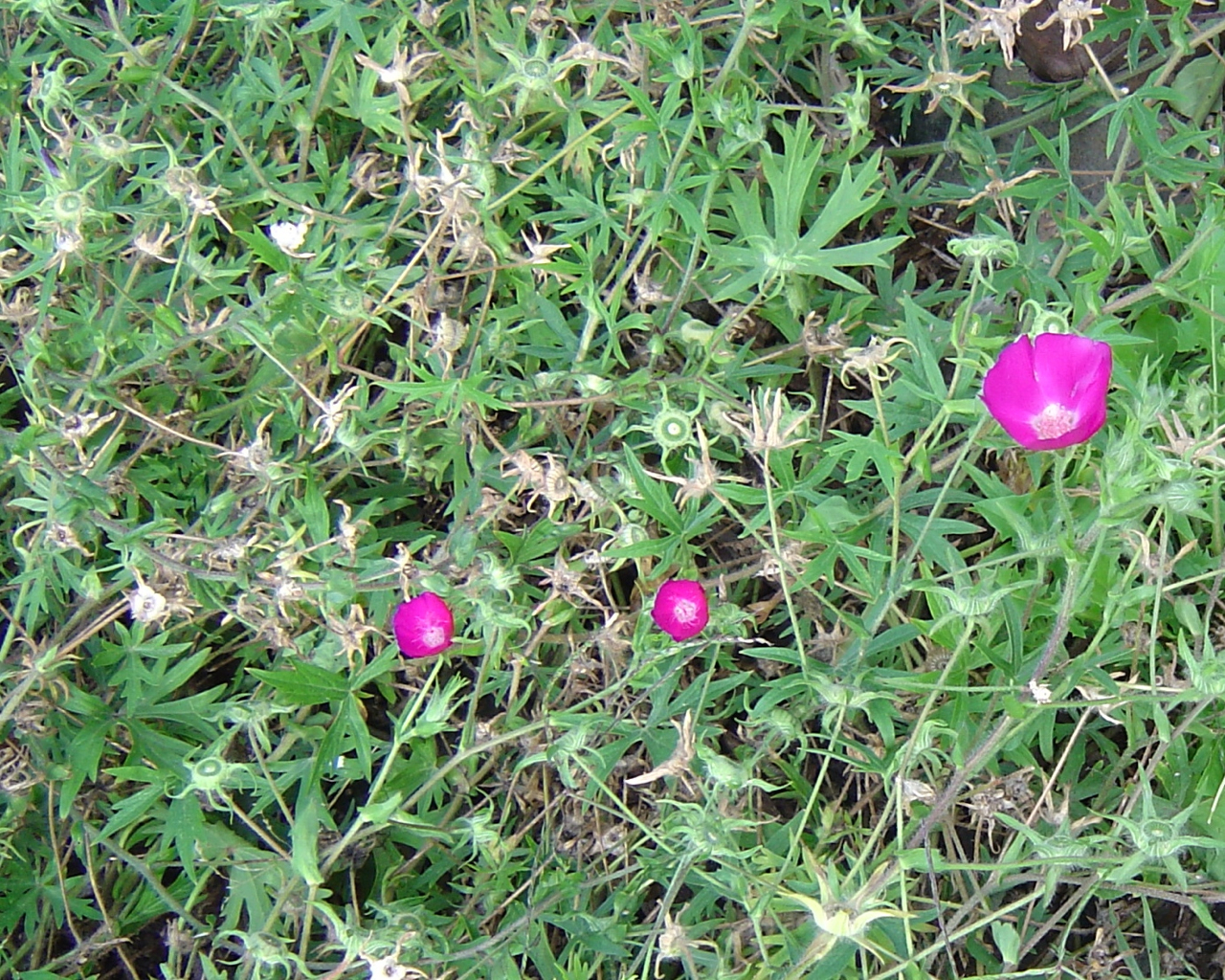
After flowering, the center develops into a ring of small seed-bearing segments, a typical mallow-family fruit structure. The fruit is not a poppy capsule. Leaving a portion of the fruits to mature can permit seedlings where bare soil and conditions suit them. Mark desired seedlings early, before routine weeding removes them. Collect seed only from your own planting or another authorized source, and keep different species separately labeled.
Quick Facts
| Scientific Name | Callirhoe involucrata |
| Family | Malvaceae (mallow family) |
| Plant Type | Herbaceous perennial; low spreading wildflower |
| Mature Height | Usually 6–12 inches; sprawling stems may be supported higher |
| Mature Spread | Up to approximately 3 feet |
| Growth Rate | Seasonal stems spread from an established taproot |
| Sun Exposure | Full sun |
| Water Needs | Average to dry after establishment; excellent drainage |
| Soil Type | Well-drained sandy, loamy or rocky soil; tolerates drained clay |
| Soil pH | No narrow pH target established here; prioritize drainage |
| Bloom Time | Late spring through summer; varies with climate and moisture |
| Flower Color | Magenta to wine-purple, pale center |
| Fall Color | Not a dependable fall-color feature; foliage may decline earlier |
| Fruit | Ring of dry, single-seeded segments |
| Deer Resistant | Reported resistance varies; rabbits may browse |
| USDA Hardiness Zones | Generally 4–8 |
Native Range
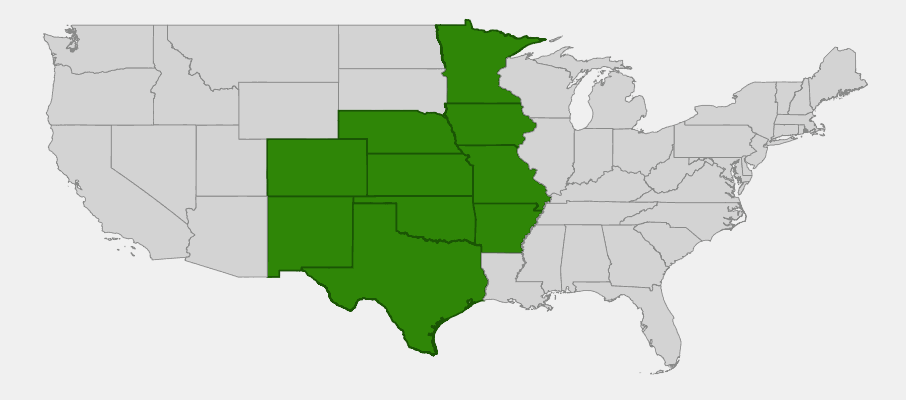
The native range is centered on the Great Plains and adjacent central United States, extending into northeastern Mexico. This map follows the native-state treatment in Kew’s Plants of the World Online, rather than coloring every state with a garden escape or occurrence record. The distinction matters for a species that is widely planted far beyond its original range.
Within the Nebraska, Kansas and eastern Colorado region, seek seed or plants with a documented regional origin when ecological restoration is the goal. A state shaded on a map does not mean the plant occurs in every county, elevation or soil type. The high mountains of Colorado, irrigated urban beds and dry prairie sites are not interchangeable environments.
Dry open ground and well-drained prairie settings help explain its garden requirements. A bright slope can be a better fit than a rich low spot that stays wet in winter. Use the map as a starting point, then check local floras and nursery provenance. The cultivated photographs on this page illustrate identification and habit, not evidence of a wild native population at the location where each photograph was taken.
📋 Regional plant list: Nebraska, Kansas and Eastern Colorado
Growing & Care Guide
Light
Choose an open sunny location. A front-of-border position is useful only if taller plants do not shade it as summer develops. Before planting beside grasses, consider their mature width and the direction of afternoon shade. In a small bed, keeping the winecup crown on the sunny edge is often more effective than repeatedly pruning taller neighbors to rescue it.
Soil and water
Drainage is the main safeguard. Test a proposed site after substantial rain: if water lingers around the crown, choose another location or improve the overall grading rather than filling a small planting hole with a radically different soil mix. Water new plants through the surrounding root zone, then let the surface begin to dry before watering again. Established drought tolerance is not a reason to leave a recently planted nursery root ball dry.
Planting tips
Handle young plants gently and set the crown at the same depth it occupied in the pot. The substantial taproot makes an established specimen a poor candidate for casual relocation, so choose a lasting position. Leave enough horizontal space for stems to spread without continually being stepped on. A group can read as a groundcover, but individual crowns should remain identifiable for watering and inspection.
Pruning and maintenance
Remove damaged stems when needed and keep encroaching weeds away from the crown. Do not interpret normal seasonal decline after flowering as an immediate call for fertilizer or daily irrigation. Note the crown’s position before winter dormancy so spring cleanup does not disturb it. If seedlings appear in paths, move very small ones carefully or remove unwanted plants while their roots are still manageable.
Propagation
Nursery-grown plants offer the most predictable starting point. Seed can be used, with scarification recommended in extension guidance to improve germination through the hard seed coat. Follow the seed supplier’s treatment instructions for the particular lot rather than assuming every batch responds identically. Use a clearly labeled container and do not repeatedly dig up seeds to inspect them; record sowing date and treatment so a later attempt can be improved.
Troubleshooting
Crown rot is associated with poor drainage. Check soil conditions before applying a fungicide or blaming cold weather. Rabbit browsing can also remove foliage; temporary physical protection is more diagnostic than adding fertilizer. If the plant becomes hidden by vigorous neighbors, reduce competition instead of expecting the low-growing stems to overtop them. A summer gap can be planned for with neighboring plants rather than filled by disturbing the winecup root.
Landscape Uses
- Front edge of a sunny native border where the magenta flowers remain visible.
- A well-drained rock garden or upper edge of a retaining wall.
- Loose interplanting with regionally appropriate short grasses.
- A sunny bank without regular foot traffic across the crown.
- A small meadow planting where seedlings and seasonal dormancy are acceptable.
Wildlife & Ecological Value
For pollinators
The open flowers give insects access to floral resources. Observe visitors at several times of day rather than assuming that a single quiet visit means the planting has no value. Pair winecups with earlier and later flowering natives so the garden does not depend on one species for an entire season. Avoid spraying open flowers, especially during active insect visits.
Birds
A low native planting can contribute vegetation structure and insect life, but winecups should not be advertised as a major bird-food shrub or berry crop. Combine it with other native plants that provide the fruit, seed and shelter needed in your locality. Leave some undisturbed ground and stems where this is compatible with the garden’s layout.
Mammals
Browsing is part of the planting’s ecological context. Rabbit damage can be noticeable even where deer tend to leave the species alone. Protect a small establishing patch if repeated clipping prevents growth, then reassess whether protection is still needed. No plant should be sold as absolutely deer-proof; animal pressure and alternative food change throughout the year.
Ecosystem role
The useful role here is a low, flowering perennial within a diverse community, not a universal replacement for turf or a single-species restoration solution. In native-range plantings, locally sourced material is preferable when available. Outside that range, describe the plant honestly as a North American garden species rather than implying it is locally indigenous.
Cultural & Historical Uses
The common name winecups describes the blossoms directly, while purple poppy mallow combines the flower’s poppy-like impression with its real family relationship. Botanical names make those distinctions clearer: it is Callirhoe, not Papaver. Historical synonyms include Malva involucrata, so older records should be reconciled by identity before being counted as another plant.
The species has an established place in ornamental horticulture, including recognition in the Plant Select program. Its appeal comes from a combination that is useful in smaller gardens: conspicuous flowers, a low profile and tolerance of dry conditions once rooted. Those horticultural qualities do not change its geographic native status.
This guide does not recommend medicinal or food uses. A common name is not sufficient evidence of edibility, and related mallows should not be substituted for one another. The practical conservation choice is nursery propagation with a recorded botanical name and origin, leaving wild populations intact.
Frequently Asked Questions
Is purple poppy mallow a true poppy?
No. Callirhoe involucrata belongs to Malvaceae, the mallow family. Its cup-shaped flower suggests a poppy, but the foliage, central flower structure and ring-shaped fruit are different.
Why is my plant wider than it is tall?
That is its normal architecture. The crown sends out trailing stems, so plan around spread as well as height rather than treating it as a narrow upright perennial.
Can I move a large established winecup?
It can be difficult because of the taproot. Choose the long-term location carefully; a small nursery plant or young seedling is generally a more manageable starting point than moving an old crown.
Does drought tolerance mean I never water it?
No. A new root ball can dry before its roots reach surrounding soil. Establish the plant first, then adjust irrigation to rainfall, soil drainage and actual plant condition.
Is it native wherever it grows outdoors?
No. Cultivation and escaped populations extend beyond the native range. The map uses a native-range source, while individual garden photographs may have been taken elsewhere.
Sources & Further Reading
- NC State Extension: purple poppy mallow
- Kew: accepted name and native versus introduced distribution
- University of Wisconsin Extension: winecups
- University of Arkansas Extension: poppy mallow
Find Native Plants
Ask growers about nursery propagation and regional provenance. Browse our Nebraska native plant nurseries, Kansas native plant nurseries, Colorado native plant nurseries directory for suppliers.