Lemon Beebalm (Monarda citriodora)
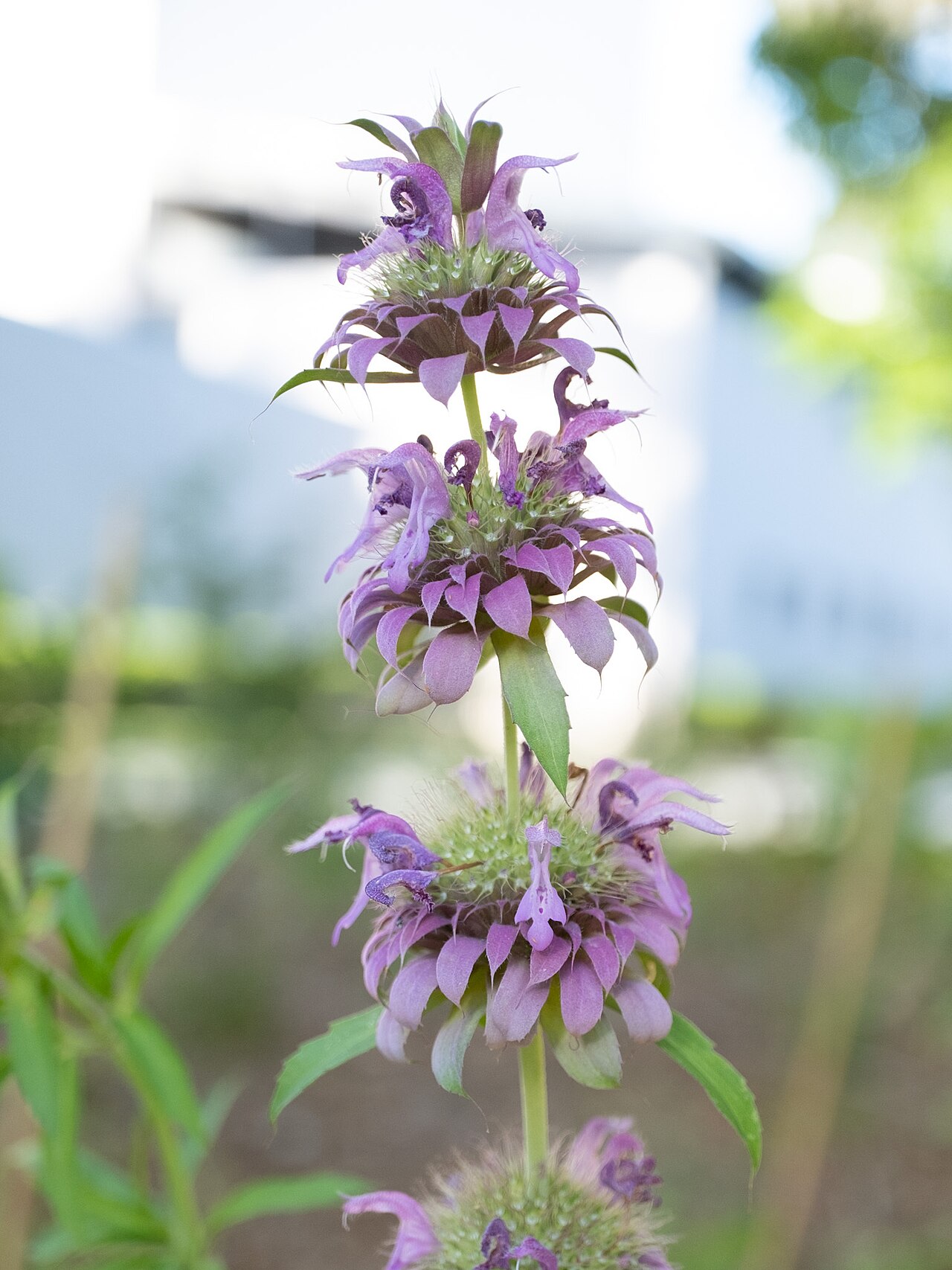
Monarda citriodora, commonly called Lemon Beebalm (also Lemon Mint, Purple Horsemint, or Plains Horsemint), is an aromatic wildflower of the southern Great Plains and south-central United States. It belongs to the mint family, Lamiaceae, and like most mints it announces itself before you even see it: crush a leaf and a sharp, citrusy fragrance rises immediately, the trait behind both its common and scientific names (citriodora means “lemon-scented”).
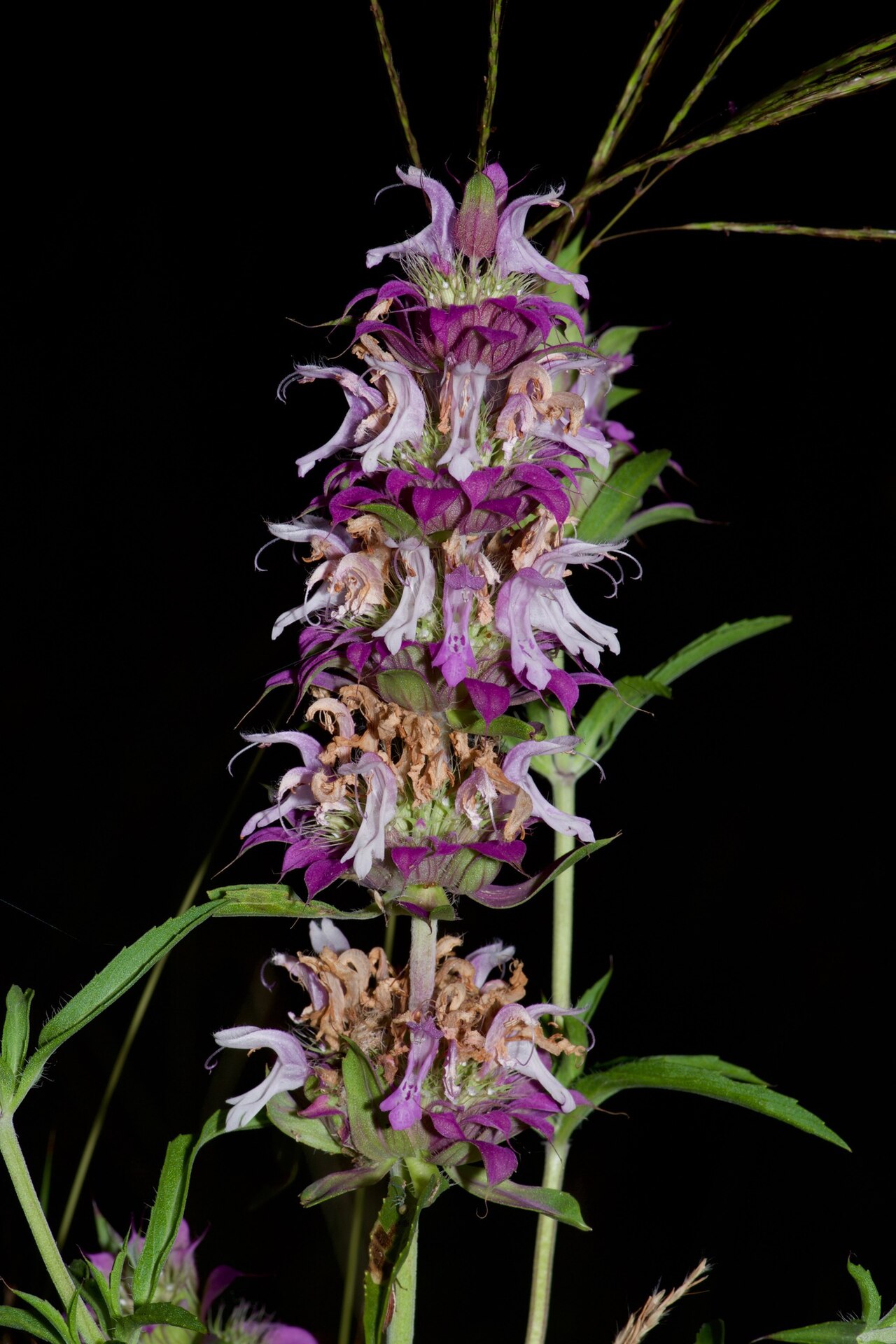
The plant grows as an upright annual or biennial, usually 1 to 2.5 feet tall, topped by a distinctive candelabra of flowers. Rather than a single bloom cluster, lemon beebalm stacks several whorls of tubular pink-to-lavender flowers in tiers up the stem, each whorl cupped by whitish or purple-tinged, leaf-like bracts. The effect is architectural and a little strange, which is part of why gardeners who grow native wildflowers love it.
In the wild, lemon beebalm colonizes disturbed and open ground fast — roadsides, pastures, caliche flats, and limestone prairies across its native range from eastern Kansas and Missouri south through Oklahoma, Arkansas and Texas to New Mexico. It is a short-lived, fast-blooming pioneer species, and a single healthy stand can draw in more native bees and butterflies per square foot than almost any other summer wildflower in the region.
Identification
Lemon beebalm is easiest to identify by its flowering structure, but the whole plant has a distinctive look even before it blooms.
Stems & Leaves
Stems are square in cross-section, as in all mints, and usually branch from the base, giving the plant a clumping, bushy habit. The leaves are narrow and lance-shaped, 1 to 3 inches long, arranged in opposite pairs, with short hairs that give the foliage a slightly grayish, soft-textured look. Crushing or brushing against the foliage releases the plant’s strong lemon-oregano scent, which is one of the fastest ways to confirm an identification in the field.
Flowers
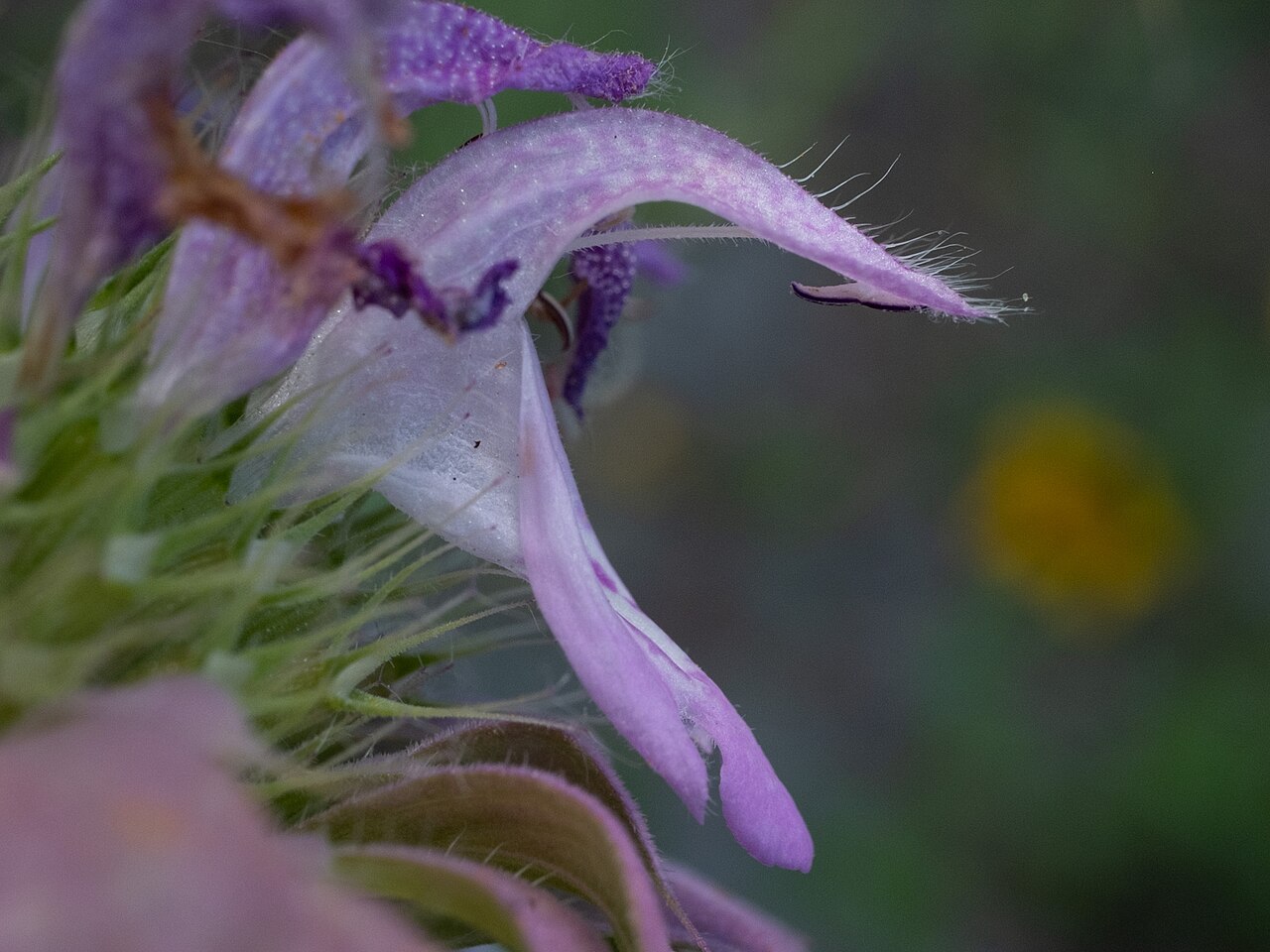
The flowering spike is the plant’s signature feature: 2 to 5 dense, globe-shaped whorls stack at intervals up the upper stem, each whorl subtended by a ruff of papery, whitish-to-lavender bracts that are often tipped in purple. Individual flowers are small, tubular, two-lipped, and pale pink to lavender-purple, with the long upper lip arching over the shorter lower lip in classic mint-family fashion. Flowering runs from late spring into mid-summer, and with supplemental moisture a stand can keep blooming into early fall.
Fruit & Seeds
After flowering, each flower produces four small nutlets held inside the persistent, bristly calyx. The dried seed heads remain attractive into fall and winter and are a useful self-seeding mechanism — established patches of lemon beebalm often return reliably from dropped seed year after year.
Quick Facts
| Scientific Name | Monarda citriodora |
| Family | Lamiaceae (Mint) |
| Plant Type | Annual/biennial wildflower |
| Mature Height | 1–2.5 ft |
| Mature Spread | 1–1.5 ft, often in dense colonies |
| Growth Rate | Fast |
| Sun Exposure | Full Sun to Part Shade |
| Water Needs | Low; thrives on neglect once established |
| Soil Type | Sandy loam, caliche, or rocky/clay loam; well-drained |
| Soil pH | Neutral to alkaline |
| Bloom Time | May – July (into September with moisture) |
| Flower Color | Lavender-pink to purple, whitish bracts |
| Fall Color | None notable; dried seed heads persist |
| Fruit | Four small nutlets in a dry calyx |
| Deer Resistant | Yes — aromatic foliage is rarely browsed |
| USDA Hardiness Zones | 6–10 |
Native Range
Lemon beebalm’s native core runs through the southern Great Plains and south-central United States: eastern Kansas and Missouri, south through Oklahoma and Arkansas to Texas and New Mexico, and on into northern Mexico. Within this band it is a true prairie and plains native, turning up in rocky and sandy prairies, pastures, savannas, and limestone glades, and spreading readily along roadsides and other disturbed open ground.
Outside this core range, lemon beebalm has become widely naturalized well to the east — it is frequently seeded in wildflower mixes and “meadow in a can” blends, which has carried it into states where it is not native. Gardeners in states such as Alabama, Georgia, Florida, Illinois, or Tennessee should know the plant growing along their roadsides is very likely an introduced population rather than a native one, even though it is a true native a few hundred miles to the west.
Across its home range, lemon beebalm is a quick-blooming pioneer of open, sunny, often poor or rocky soil. It does not persist in shaded or heavily vegetated ground, and tends to show up strongest after a dry winter or in a freshly disturbed patch of prairie, then taper off as competing grasses and perennials fill back in.
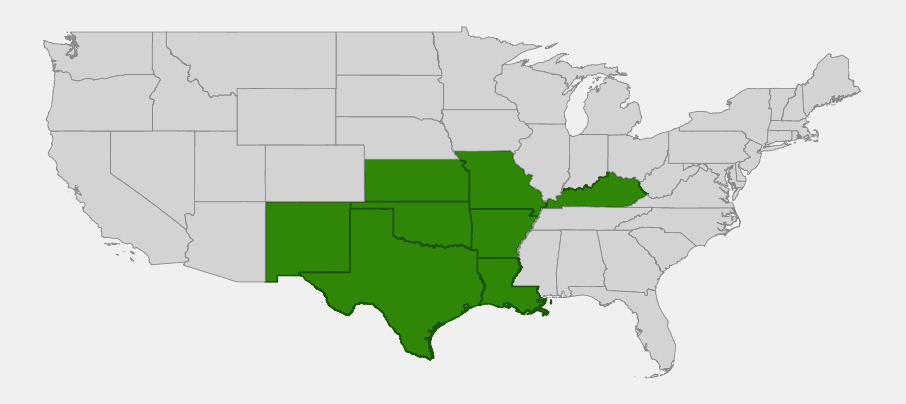
📋 Regional plant lists featuring Lemon Beebalm: Arkansas, Louisiana, Eastern Oklahoma & Eastern Texas · Nebraska, Kansas & Eastern Colorado · Arizona & New Mexico · Kentucky & Tennessee · Illinois, Iowa & Missouri
Growing & Care Guide
Lemon beebalm is about as low-maintenance as native wildflowers get, and it rewards neglect more than coddling. Give it sun, lean soil, and room to self-seed, and it will keep coming back without much help from the gardener.
Light
Full sun produces the densest flower spikes and the stockiest, least floppy plants. Light afternoon shade is tolerated, especially in the hottest parts of its range, but flowering is noticeably sparser in shadier spots.
Soil & Water
This is a plant for lean, well-drained ground — sandy loam, caliche, rocky clay loam, all work well. Rich, heavily amended garden soil with regular irrigation tends to produce tall, floppy plants that need staking and are more prone to powdery mildew. Water needs are low once seedlings are established; occasional deep watering during a long dry summer will extend the bloom period but is not required for survival.
Planting Tips
Direct-seed in fall or very early spring; the seed benefits from a period of cold, moist stratification and germinates readily in disturbed, sunny ground. Because it is an annual or short-lived biennial, lemon beebalm is best used in a wildflower meadow or informal bed where it can reseed freely, rather than in a tightly maintained perennial border. Thin crowded seedlings if a denser, more uniform stand of mature plants is wanted.
Pruning & Maintenance
Deadheading extends bloom but isn’t necessary — leaving spent flower heads in place lets seed drop for next year’s stand and provides winter interest and bird food. In a formal bed, cutting plants back hard after the first flush of bloom can trigger a second, lighter round of flowering. Watch for powdery mildew in humid years, especially on plants grown with too much shade or crowding; good airflow is the best preventive.
Landscape Uses
Lemon beebalm earns its keep in several garden settings:
- Wildflower meadows and pocket prairies, where it reseeds and fills gaps quickly
- Pollinator gardens — few native annuals draw in as many bees per square foot
- Dry, rocky or caliche beds where few other flowering plants thrive
- Roadside and erosion-control plantings in its native range
- Cut flowers — the tiered flower spikes and bracts hold up well in arrangements
- Xeriscaping and low-water native plant gardens
Wildlife & Ecological Value
Few summer-blooming native annuals in the southern plains pull in as much pollinator activity as a thriving stand of lemon beebalm.
For Pollinators
The tubular flowers are built for long-tongued bees and butterflies. Native bees — including bumblebees, leafcutter bees, and long-horned bees — work the flowers heavily, along with honeybees and a wide range of butterflies and skippers. The combination of abundant nectar, a long bloom window, and the plant’s tendency to grow in dense stands makes it one of the most reliable nectar sources on the southern plains in early-to-mid summer.
For Birds
Hummingbirds visit the tubular flowers opportunistically, and seed-eating birds such as sparrows and finches forage the dried nutlet heads through fall and winter, especially where stands are left standing rather than cut back.
For Mammals
The strongly aromatic foliage is rarely browsed by deer or rabbits, which is part of why lemon beebalm persists so well in grazed pastures and rangeland — livestock and wildlife tend to pass it over in favor of less pungent forage.
Ecosystem Role
As a fast-germinating pioneer species, lemon beebalm plays an important early-succession role on disturbed prairie and rangeland ground, stabilizing bare soil and providing a nectar resource while slower-growing perennial grasses and forbs reestablish. Its dense root system and quick cover help limit erosion on freshly disturbed caliche and rocky slopes within its native range.
Cultural & Historical Uses
Lemon beebalm has a long history of use among Native American peoples of the southern plains, particularly the Comanche, Kiowa, and other Plains tribes, who historically used the aromatic leaves and flowers to flavor food and brew a fragrant tea, much as other Monarda species were used across the continent. The strong citrus-oregano scent made it a natural choice for flavoring, and historical accounts describe it being rubbed on hides or added to foods as a seasoning and insect deterrent.
The genus Monarda itself commemorates Nicolás Monardes, a 16th-century Spanish physician and botanist who catalogued many medicinal plants brought back from the New World, cementing the genus’s long association with traditional plant use long before it became a garden favorite.
Today, lemon beebalm is grown mainly as an ornamental and pollinator-garden plant rather than for any practical use, prized by gardeners across its native range and well beyond it for its unusual flower structure, strong fragrance, and reliability in difficult, dry soils where little else blooms so readily.
Frequently Asked Questions
Is lemon beebalm the same as bee balm (Monarda didyma)?
No. They are both in the genus Monarda, but Monarda didyma (scarlet bee balm) is a perennial of moist eastern woodlands with red flowers, while Monarda citriodora is a shorter-lived, drought-tolerant annual/biennial of the southern plains with lavender flowers and a distinctive tiered, whorled flower spike.
Will lemon beebalm come back every year?
As an annual or short-lived biennial, individual plants don’t persist for many years, but an established stand reseeds itself reliably where the ground isn’t heavily mulched or tilled, so a planting typically renews itself year after year on its own.
Is lemon beebalm aggressive or weedy?
It can self-seed enthusiastically in open, disturbed soil, which is exactly what makes it valuable in a wildflower meadow, but it’s easily controlled in a cultivated bed by deadheading or thinning seedlings, and it doesn’t spread by runners or persist indefinitely the way some perennial mints do.
Does lemon beebalm need regular watering?
No — once seedlings are established it is quite drought tolerant and actually performs best in lean, well-drained soil with minimal supplemental water. Overwatering in rich soil tends to produce weak, floppy growth and more disease problems.
Is lemon beebalm native to my state?
Only within its core range in eastern Kansas, Missouri, Oklahoma, Arkansas, Louisiana, Texas, New Mexico, and eastern Kentucky. It has been widely planted in wildflower seed mixes well outside that range, so a roadside stand in the Southeast or Midwest is most likely a naturalized population rather than a native one.

Looking for a nursery that carries Lemon Beebalm?
Browse our native plant nursery directory: Texas · Oklahoma & New Mexico · Kansas · Missouri, Kentucky & Louisiana · Arkansas