Bush’s Poppy Mallow (Callirhoe bushii)
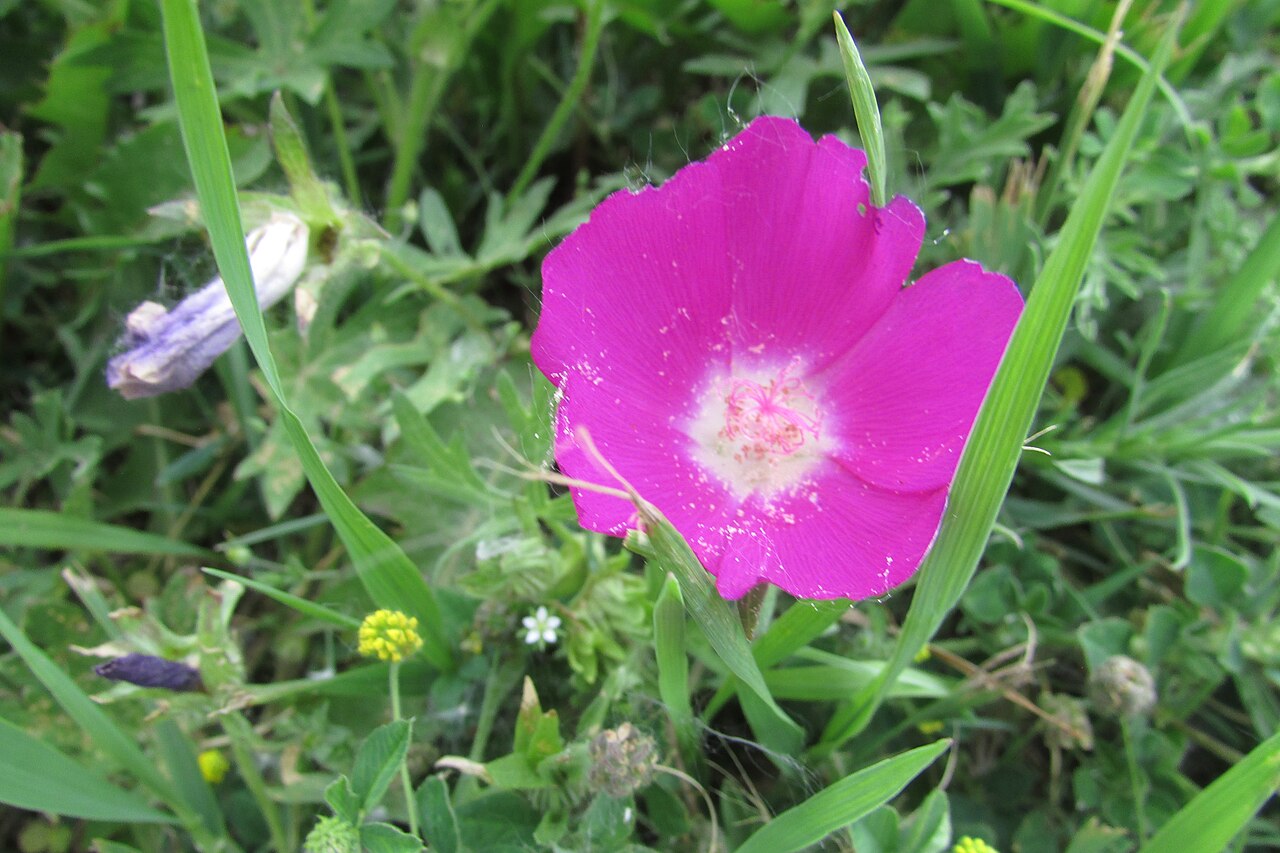
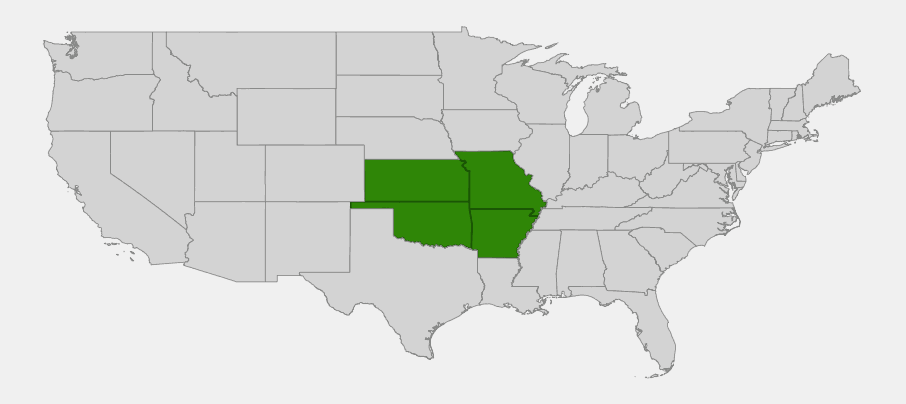
Callirhoe bushii, commonly known as Bush’s Poppy Mallow or Bush’s poppy-mallow, is an uncommon perennial wildflower of the Ozark region, named for Missouri botanist Benjamin Franklin Bush, who first collected it. It belongs to the mallow family (Malvaceae), the same family that gives us hollyhocks and hibiscus, and its flowers show the family resemblance clearly — five broad, silky petals arranged in a shallow cup around a central column of fused stamens. Unlike its close relative the winecup (Callirhoe involucrata), which is common across much of the Great Plains, Bush’s poppy mallow is a genuine rarity, known from only about 49 documented occurrences scattered across four states.
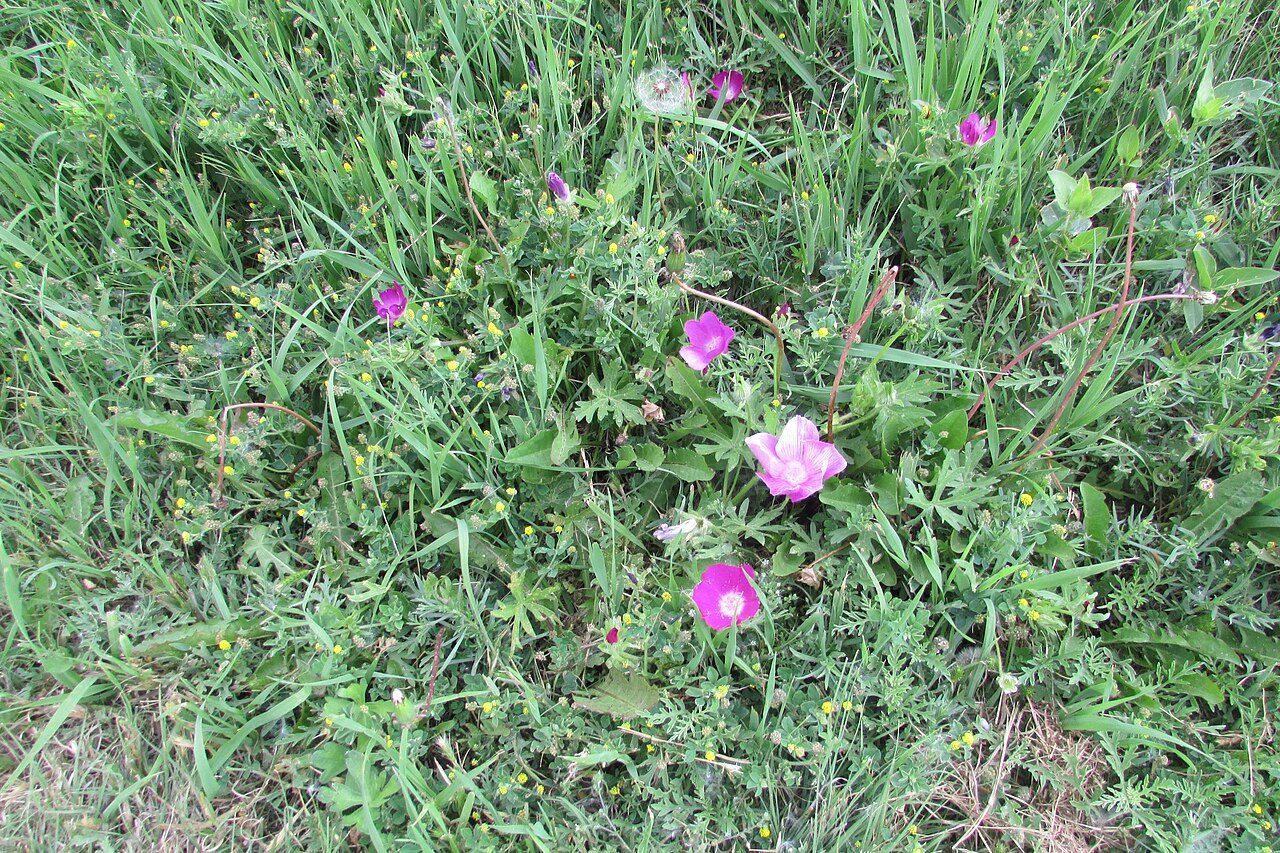
In the wild, this plant grows on rocky, calcareous soils in open woodlands, glade margins, and ravine bottoms of the Ozark Plateau and nearby prairies. Its stems sprawl outward from the base more than they grow upright, so a mature plant often forms a loose, ground-hugging patch 1 to 2 feet across even though individual stems rarely top 2 feet in height. The deeply lobed, palmately divided leaves give the foliage a lacy texture, and the large magenta flowers — among the showiest of any plant in this genus — open in succession through the summer, each lasting only a day or two before closing for good.
Because of its restricted range and habitat loss from development, grazing, and conversion of glades to cropland, Bush’s poppy mallow is considered vulnerable (NatureServe G3) and is tracked by conservation programs in its native states. It is, however, cultivated and sold by a number of native plant nurseries, which gives home gardeners within its range a responsible way to enjoy this rare wildflower without disturbing the wild populations that remain.
Identification
Bush’s poppy mallow is a herbaceous perennial (sometimes behaving as a short-lived biennial) that dies back to a stout taproot each winter and resprouts from the crown in spring. Its sprawling habit, large flat-faced flowers, and deeply cut leaves distinguish it from the smaller-flowered mallows it sometimes grows alongside.
Stems
Stems emerge from a woody crown atop a deep taproot and spread outward along the ground before turning upward at the tips, reaching 1 to 2 feet tall but often 2 feet or more across. The stems are covered in fine, star-shaped (stellate) hairs typical of the mallow family, giving the whole plant a slightly grayish-green, softly textured look.
Leaves
The leaves are alternate and palmately divided into five to seven narrow, toothed or further-lobed segments, giving each leaf a deeply cut, almost fern-like silhouette. Lower leaves are larger and less deeply divided than the upper ones, which become progressively narrower and more finely cut as they ascend the stem.
Flowers & Fruit
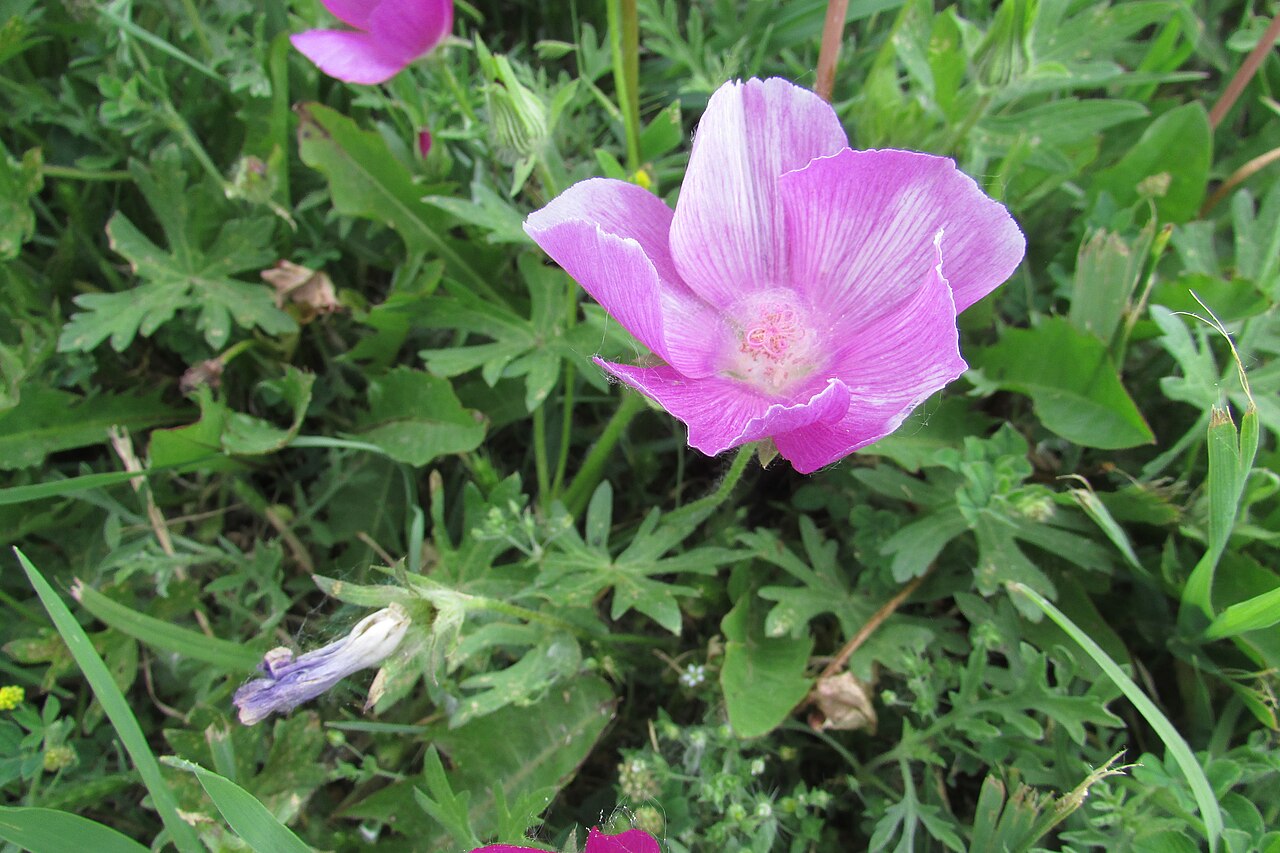
Flowers are solitary on long stalks rising from the leaf axils, each one 2 to 3 inches across with five broad, overlapping magenta to deep pink petals surrounding a pale, nearly white throat. The poppy-like shape — flat-faced with crinkled, silky petals — is what gives the plant its common name. Flowering runs from late spring through summer, with new buds opening in succession. The fruit is a flattened, disc-shaped cluster of single-seeded segments (a schizocarp) typical of the mallow family, which splits apart at maturity to release the seeds.
Quick Facts
| Scientific Name | Callirhoe bushii |
| Family | Malvaceae (Mallow) |
| Plant Type | Herbaceous Perennial Wildflower |
| Mature Height | 1–2 ft |
| Mature Spread | 1–2 ft, sprawling |
| Growth Rate | Moderate |
| Sun Exposure | Full Sun to Part Shade |
| Water Needs | Low |
| Soil Type | Rocky, well-drained; tolerates thin, dry soils |
| Soil pH | Neutral to alkaline (calcareous) |
| Bloom Time | Late spring – summer |
| Flower Color | Magenta to deep pink with a pale eye |
| Fruit | Flattened disc of single-seeded segments (schizocarp) |
| Deer Resistant | Moderate |
| USDA Hardiness Zones | 5–8 |
Native Range
Bush’s poppy mallow is native to a compact area of the south-central United States centered on the Ozark Plateau, occurring in Arkansas, Kansas, Missouri, and Oklahoma. Within this range it is genuinely rare, known from roughly 49 scattered occurrences rather than forming continuous populations, with most sites holding fewer than 50 individual plants. It has also been reported as an introduced, non-native planting in Iowa, well outside its natural range, so gardeners there should not treat it as a local native.
The species favors the limestone and dolomite country of the Ozark Highlands and the prairie-woodland transition zone to its west, where thin, rocky, calcareous soils keep taller competing vegetation in check. In Missouri it turns up in rocky open woods, wooded valleys, ravine bottoms, and glade borders; farther west in Kansas and Oklahoma it extends into rocky prairie and glade habitat with similar thin, well-drained soils.
Because so few populations remain and each is small, Bush’s poppy mallow is considered vulnerable across its range. The greatest threats are habitat loss from residential and commercial development, conversion of glade and woodland habitat to cropland, and overgrazing, though the plant can tolerate light, periodic disturbance. Protecting the open, rocky glades and woodland margins it depends on is the single best thing land managers in its native range can do for it.
📋 Regional plant lists featuring Bush’s Poppy Mallow: Arkansas, Louisiana, Eastern Oklahoma & Eastern Texas · Nebraska, Kansas & Eastern Colorado · Illinois, Iowa & Missouri
Growing & Care Guide
Bush’s poppy mallow rewards gardeners who can mimic the lean, rocky, well-drained conditions it evolved with. It is not a plant for rich, moist garden beds — give it sun, gritty soil, and room to sprawl, and it will reward you with months of magenta blooms.
Light
Full sun produces the most compact growth and the heaviest flowering, though the plant also tolerates part shade, especially in the hotter southern portion of its range, where afternoon shade can reduce stress during summer heat waves.
Soil & Water
This species needs sharp drainage above almost everything else. In the wild it grows in thin, rocky, often calcareous soils that dry out quickly, and it will struggle or rot in heavy clay or soils that stay wet. A lean, gravelly, or limestone-based garden soil suits it best; amending heavy soil with coarse grit or planting it in a raised bed or rock garden solves most drainage problems. Established plants are drought-tolerant and need supplemental water only during extended dry spells in their first year or two.
Planting Tips
Set out container-grown plants in spring or fall, and give each plant 18 to 24 inches of room to spread, since the stems sprawl outward rather than growing upright. A taproot makes this species difficult to transplant once established, so choose the planting site carefully the first time. Seed benefits from a hot-water soak to soften the hard seed coat, followed by cold, moist stratification, or simply let a fall-sown planting weather naturally over winter.
Pruning & Maintenance
Little maintenance is needed beyond removing spent flower stalks to tidy the plant’s appearance; deadheading does not reliably extend bloom, since Bush’s poppy mallow flowers in a long natural succession regardless. Cut the plant back to the crown after it dies down in fall. Avoid overwatering or planting in poorly drained spots, since crown rot is the main problem this species faces in cultivation.
Landscape Uses
Bush’s poppy mallow fits naturally into dry, sunny gardens that favor Ozark and prairie plants:
- Rock gardens and gravel gardens where sharp drainage is already built in
- Glade and limestone-prairie restorations within its native range
- Sprawling ground cover at the front of a sunny border
- Xeriscaping and low-water native plantings
- Pollinator gardens paired with other dry-prairie wildflowers
- Container or raised-bed culture for gardeners with heavy native soil
Wildlife & Ecological Value
Despite its rarity in the wild, Bush’s poppy mallow offers real value to pollinators and fits into the larger web of life on the glades and open woodlands where it grows.
For Pollinators
The large, open-faced flowers are well suited to bees, including specialist mallow bees in the genus Diadasia that favor plants in the mallow family, along with bumblebees and other native bees that visit for pollen and nectar. The long bloom season provides a steady nectar source through much of the summer, when many spring wildflowers have already finished.
Birds & Small Wildlife
The seeds, held in small disc-shaped fruit, are eaten by seed-eating birds and small mammals typical of open glade and prairie-edge habitat. The sprawling foliage also offers low cover for ground-dwelling insects and small creatures moving through the thin, rocky vegetation of glade habitats.
Ecosystem Role
As a glade and open-woodland specialist, Bush’s poppy mallow is part of a distinctive plant community adapted to thin, rocky, calcareous soils that resist takeover by more aggressive, deep-soil vegetation. Because it is uncommon and has a restricted range, individual populations matter disproportionately to the genetic diversity of the species as a whole, which is part of why habitat protection in its remaining Ozark and prairie-margin sites is so important to its long-term survival.
Cultural & Historical Uses
Bush’s poppy mallow carries the name of Benjamin Franklin Bush, a Missouri botanist and prolific plant collector active in the late 1800s and early 1900s who collected extensively throughout the Ozark region and documented many of its lesser-known plants. The species was formally described in 1909 and named in his honor, reflecting his role in bringing attention to this rare Ozark wildflower.
As with many members of the genus Callirhoe, there is no significant historical record of Indigenous medicinal or culinary use specific to this particular species, likely owing to its rarity and scattered distribution compared to more common and widespread poppy mallows such as winecup. The genus name itself honors Callirhoe, the daughter of the river god Achelous in Greek mythology, a nod to the delicate, water-colored look of the flowers.
Today, Bush’s poppy mallow is primarily valued as a garden and restoration plant rather than for any historical practical use. Specialty native plant nurseries propagate and sell seed and plants, giving gardeners within its native range — and conservation groups working to restore glade habitat — a way to grow this uncommon species without collecting from the wild.
Frequently Asked Questions
Is Bush’s poppy mallow the same as winecup?
No. Winecup (Callirhoe involucrata) is a closely related, much more common and widespread species found across the Great Plains. Bush’s poppy mallow is a distinct, rarer species restricted to the Ozark region of Arkansas, Kansas, Missouri, and Oklahoma, with larger flowers and a more sprawling habit.
Is Bush’s poppy mallow endangered?
It is not federally listed, but NatureServe ranks it as vulnerable (G3) due to its small number of scattered populations — roughly 49 known occurrences — and ongoing habitat loss from development, grazing, and cropland conversion. Several of its native states track it as a plant of conservation concern.
Can I grow Bush’s poppy mallow outside its native Ozark range?
It can be grown in gardens outside its native range as long as you can provide full sun and sharp, rocky or gravelly drainage, but it is best suited to USDA zones 5–8 with a climate similar to its native Ozark and southern Plains habitat. Avoid planting it where it could escape into natural areas outside its native states.
Why does Bush’s poppy mallow sprawl instead of growing upright?
Its stems grow outward along the ground before the tips turn upward, an adaptation common among plants of thin, rocky glade soils where staying low helps the plant conserve moisture and avoid wind exposure. This habit also makes it useful as a low, spreading ground cover in cultivated gardens.
What is the best way to start Bush’s poppy mallow from seed?
Soak the seed briefly in hot water to soften its hard outer coat, then give it about 30 days of cold, moist stratification before sowing — or simply sow seed outdoors in fall and let winter weathering do the work naturally. Germination is best once soil temperatures warm into the 60s°F in spring.