
Grayleaf Willow (Salix glauca)
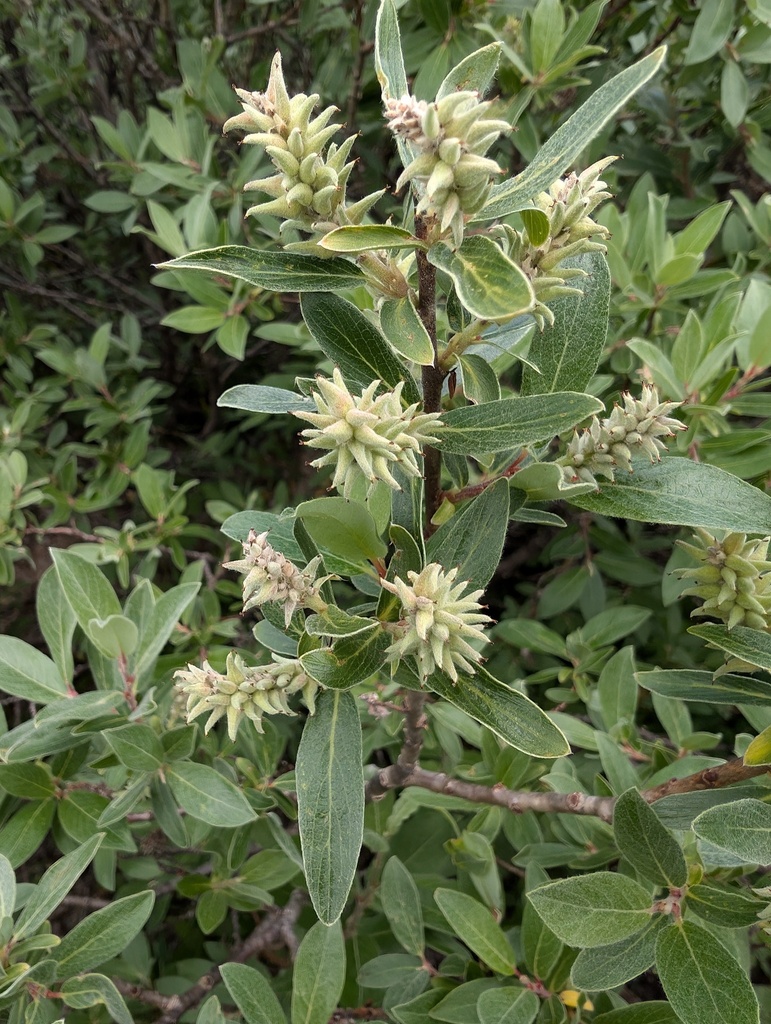
Salix glauca, known as Grayleaf Willow (also glaucous willow or gray willow), is a medium-sized shrub willow of the Arctic, the boreal forest and the high mountains of the West. It usually grows 2 to 6 feet tall, with stiff, much-branched stems and soft, gray-green leaves that are whitish and often silky-hairy beneath. In early summer it produces fuzzy catkins with or just after the leaves.
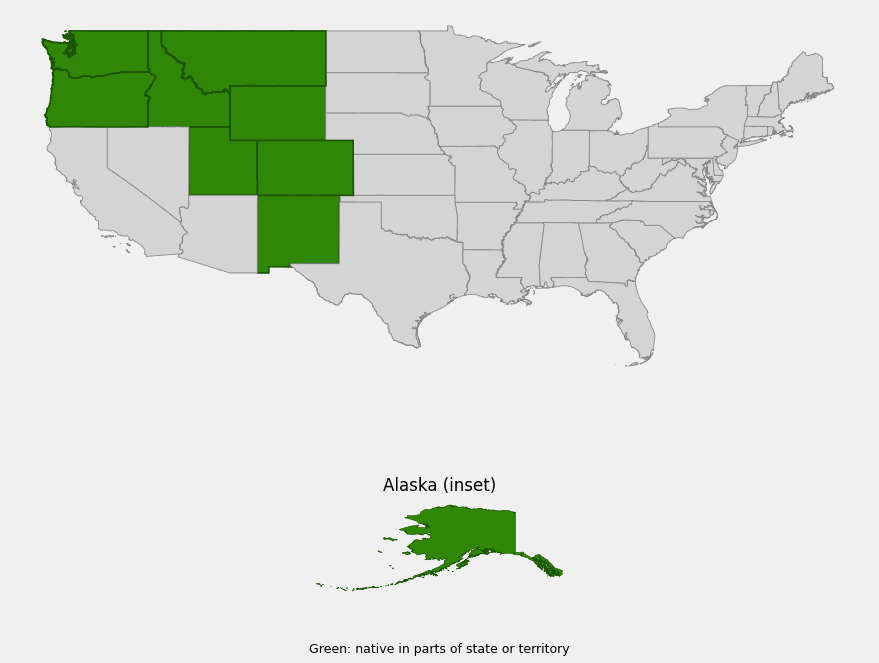
It is one of the most widespread willows in the Northern Hemisphere, found across arctic and subarctic North America, Greenland, northern Europe and Asia. In the United States it is common in Alaska and grows south in the Rocky Mountains to Colorado and northern New Mexico, mostly in subalpine and alpine meadows, along streams and in willow thickets near timberline.
Grayleaf willow is an important plant for wildlife in the North and the high country: moose, caribou, elk, ptarmigan and hares browse it, and its early catkins feed bumble bees. For gardeners in cold climates it is a hardy native shrub for wet meadows, streambanks and restoration plantings, easily grown from cuttings.
Identification
Look for a rounded, many-stemmed shrub 2 to 6 feet tall near timberline or on the tundra, with elliptic, smooth-edged, gray-green leaves that are pale and hairy beneath, and catkins appearing with the leaves in June and July.
Growth Habit
Grayleaf willow is a deciduous, multi-stemmed shrub, usually 1 to 6 feet tall, rarely taller in sheltered sites, and in exposed tundra sometimes only knee-high or sprawling. The twigs are reddish brown to gray-brown and often hairy when young. It forms dense patches and thickets, often with other willows.
Leaves
The leaves are alternate, elliptic to oblong or obovate, about 1 to 3 inches long, with smooth (or faintly toothed) edges. The upper surface is gray-green to dull green and often thinly hairy; the underside is whitish (glaucous) and usually covered with silky or woolly hairs. Leaves can vary a great deal from place to place, and several varieties have been described.
Flowers
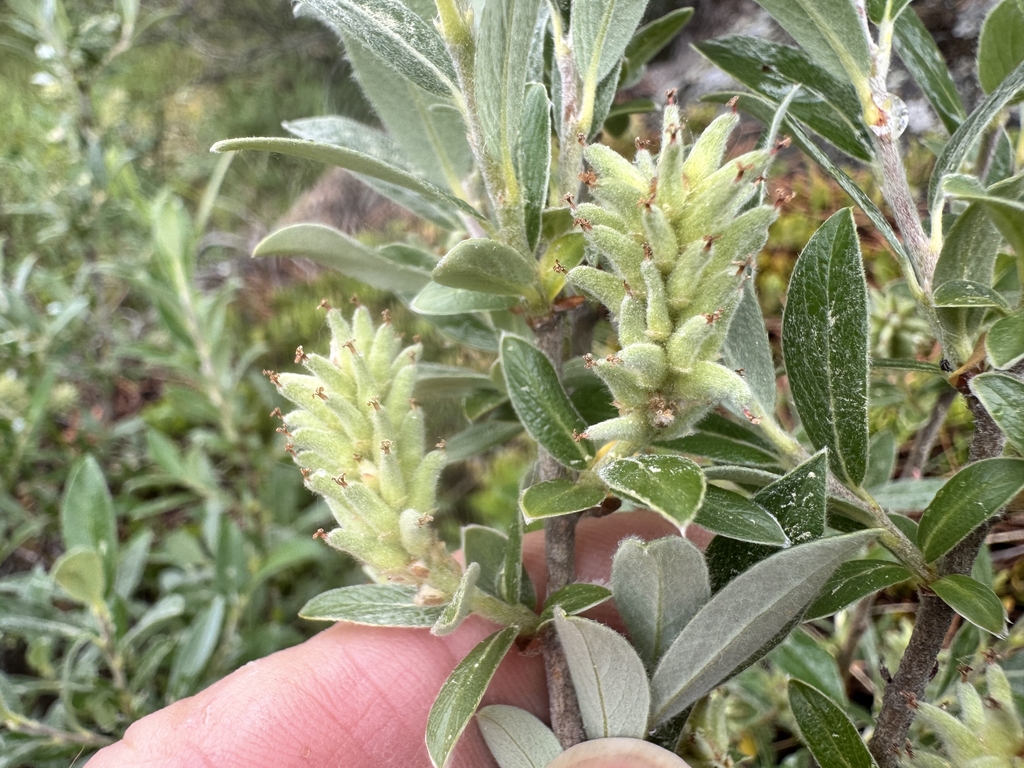
Like all willows, grayleaf willow is dioecious: male and female flowers grow on separate plants. The catkins appear with or after the leaves in June and July, on short leafy shoots. Male catkins are about 1/2 to 1 1/2 inches long with yellow anthers; female catkins are 1 to 2 1/2 inches long, with many small, hairy, greenish capsules.
Fruit & Seeds
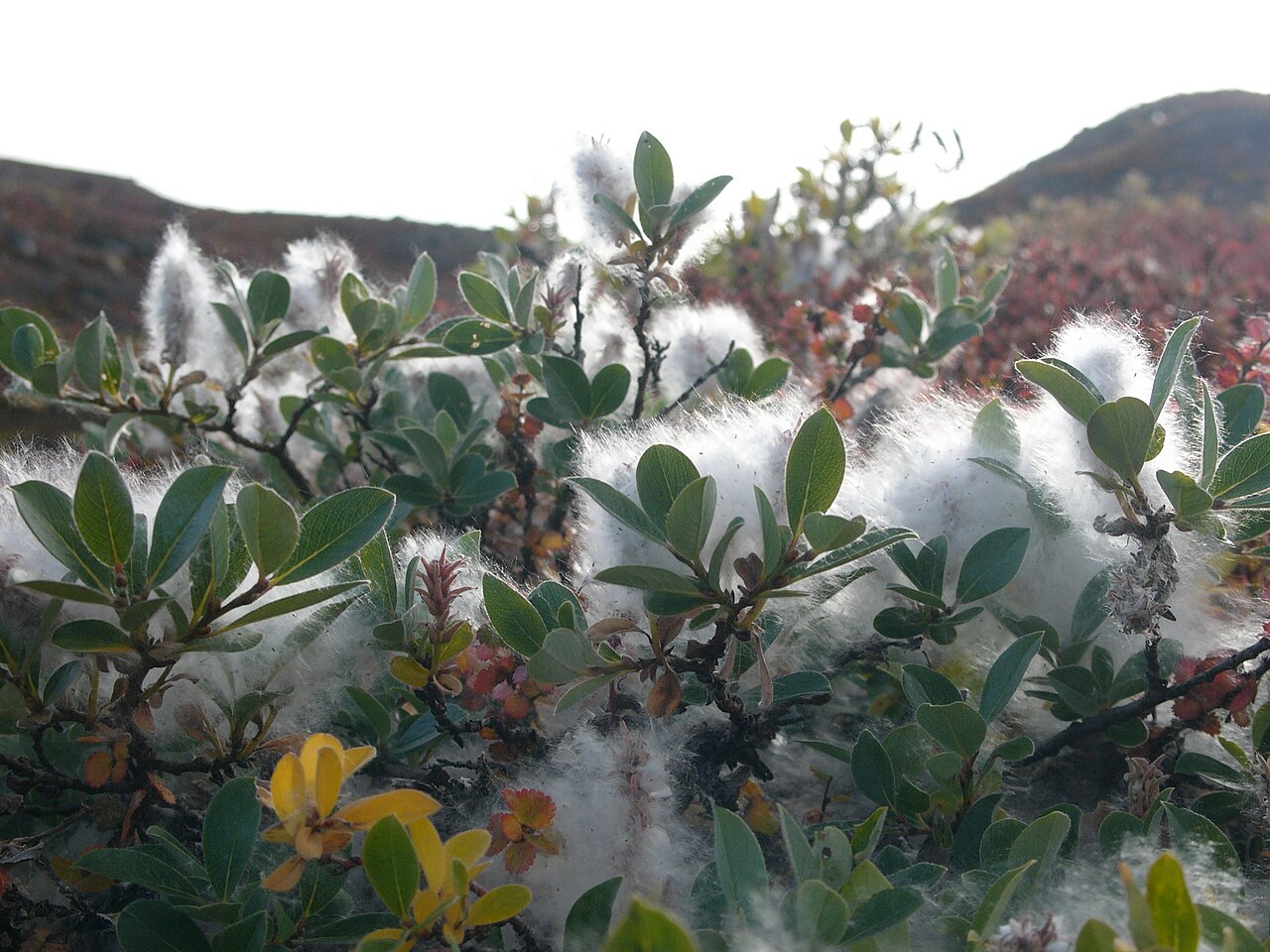
In mid to late summer the hairy capsules split open and release tiny seeds attached to tufts of white, cottony hairs, which drift on the wind. Willow seeds are short-lived and germinate within days on wet, bare soil.
Look-alikes
Willows are notoriously hard to identify. Diamondleaf willow (Salix planifolia), common in the same Rocky Mountain wetlands, has shiny, dark green leaves and catkins that appear before the leaves. Bebb willow is usually taller and has long-stalked capsules and finely wrinkled leaves. In Alaska, feltleaf willow has thick, white-felted leaf undersides and much larger catkins, and northern willow and least willow are low, creeping tundra willows.
Quick Facts
| Scientific Name | Salix glauca |
| Family | Salicaceae (willow family) |
| Plant Type | Deciduous, multi-stemmed shrub |
| Mature Height | 1–6 ft (occasionally taller) |
| Mature Spread | 3–6 ft; forms thickets |
| Growth Rate | Moderate |
| Sun Exposure | Full sun to part shade |
| Water Needs | Medium to high; moist soil |
| Soil Type | Moist gravel, loam, silt or peaty soils |
| Soil pH | Slightly acidic to slightly alkaline (about 5.5–7.5) |
| Bloom Time | June–July (catkins with the leaves) |
| Flower Color | Yellowish (male) to greenish (female) catkins |
| Fall Color | Yellow |
| Fruit | Hairy capsules releasing cottony seeds |
| Deer Resistant | No; heavily browsed by moose, elk and deer |
| USDA Hardiness Zones | 1–6 |
Native Range
Grayleaf willow is circumpolar. In North America it grows across Alaska, the Yukon, the Northwest Territories and Nunavut, south through all of the Canadian provinces from British Columbia to Labrador, Newfoundland and Nova Scotia, and in Greenland. It is also widespread in northern Europe and Asia.
In the United States, USDA PLANTS lists it in Alaska and eight western states: Washington, Oregon, Idaho, Montana, Wyoming, Utah, Colorado and New Mexico. South of Canada it is a plant of the high Rocky Mountains, reaching its southern limit in northern New Mexico. In Washington and Oregon it is rare, found in high mountains east of the Cascade crest.
It grows in moist, open places: willow thickets along streams and around ponds, wet subalpine and alpine meadows, moist tundra, talus slopes with seepage, and openings in spruce forest. In the southern Rockies it grows mostly in the subalpine and alpine zones, up to and above timberline.
📋 Regional plant lists featuring Grayleaf Willow: Idaho, Eastern Oregon & Eastern Washington · Montana & Wyoming · Utah & Western Colorado · Alaska
Growing & Care Guide
Grayleaf willow is a tough, very cold-hardy native shrub for wet, sunny sites in Alaska and the high-elevation West. It is mostly used in restoration, but it also makes a handsome silvery shrub for large, moist gardens in cold climates.
Light
Full sun is best; it tolerates light shade but becomes thin and leggy in deep shade.
Soil & Water
Grow it in soil that stays moist through the summer: streambanks, pond edges, wet meadows or rain gardens. It tolerates gravelly, rocky and peaty soils and short periods of flooding, but not long summer drought. It does best where summers are cool; in hot, low-elevation gardens it struggles.
Planting Tips
Plant dormant cuttings or container plants in spring, 3 to 5 feet apart for a thicket or hedge. For streambank stabilization, live stakes (dormant cuttings 1 to 3 feet long) can be pushed directly into moist soil so that most of their length is buried.
Pruning & Maintenance
Prune in late winter to remove dead wood or to renew old stems; it resprouts readily from the base. Willows are fast to recover from browsing and cutting. Watch for willow leaf beetles and rust, which rarely cause serious harm.
Propagation
Willows root very easily from dormant hardwood cuttings taken in late winter or early spring and set in moist soil or water. Seed must be sown within days of ripening on a moist surface.
Landscape Uses
- Streambank restoration: live stakes stabilize banks and trap sediment
- Wet meadows and pond edges: a silvery shrub for moist, sunny sites
- Cold-climate gardens: hardy in Alaska and at high elevations
- Wildlife plantings: browse for moose and elk, cover for birds
- Pollinator gardens: early catkins for bumble bees
Wildlife & Ecological Value
In the Arctic and the high Rockies, willow thickets are among the most important wildlife habitats, and grayleaf willow is one of the main species that forms them.
For Pollinators
The catkins are an early source of pollen and nectar for queen bumble bees, solitary bees and flies in the short northern and alpine summer. Willows are also host plants for many butterflies and moths, including mourning cloaks and viceroys, and many sawflies.
For Birds
Ptarmigan, including the white-tailed ptarmigan of the Rockies, depend heavily on willow buds and twigs in winter. Willow thickets provide nesting habitat for songbirds such as Wilson’s warblers, white-crowned sparrows and redpolls.
For Mammals
Moose, caribou, elk, deer, bighorn sheep, snowshoe hares, marmots and beavers browse the twigs and leaves. In Alaska, willows are among the most important winter foods for moose.
Ecosystem Role
Grayleaf willow stabilizes streambanks and gravel bars, shades and cools streams, traps snow and sediment, and builds soil in harsh environments. As the Arctic warms, willow shrubs, including this species, are spreading onto open tundra.
Cultural & Historical Uses
The species name glauca means “bluish-gray” or “covered with a whitish bloom,” for the pale undersides of the leaves. Salix is the classical Latin name for willow.
Indigenous peoples of the North have long used shrub willows for many purposes: the inner bark for cordage, the stems for fish traps, baskets and snowshoe frames, and the wood for fuel where trees are scarce. Willow bark contains salicin, the natural compound from which aspirin was later developed, and willows were widely used in traditional medicine for pain and fever.
Grayleaf willow is one of the most variable willows, and botanists have described several varieties and subspecies across its range, such as var. villosa with especially hairy leaves. It also hybridizes with other willows, which adds to the challenge of identifying it.
Frequently Asked Questions
How tall does grayleaf willow grow?
Usually 2 to 6 feet tall, sometimes taller in sheltered spots, and much lower on exposed tundra.
Where does grayleaf willow grow in the United States?
In Alaska and in the high Rocky Mountains from Montana, Idaho and Wyoming south to Utah, Colorado and northern New Mexico, with rare sites in the mountains of eastern Washington and Oregon.
How do I grow grayleaf willow?
Plant dormant cuttings or nursery plants in full sun and moist soil. It roots very easily from cuttings and is excellent for streambank restoration in cold climates.
Is grayleaf willow good for wildlife?
Yes. It is browsed by moose, elk and hares, provides winter food for ptarmigan, nesting cover for songbirds and early pollen for bumble bees.
When does grayleaf willow bloom?
Its catkins appear with or just after the leaves, usually in June and July.

Looking for a nursery that carries Grayleaf Willow?
Browse our native plant nursery directory: Alaska · Colorado · Idaho · Montana · New Mexico · Oregon · Utah · Washington · Wyoming

