
Wild Four O’Clock (Mirabilis nyctaginea)
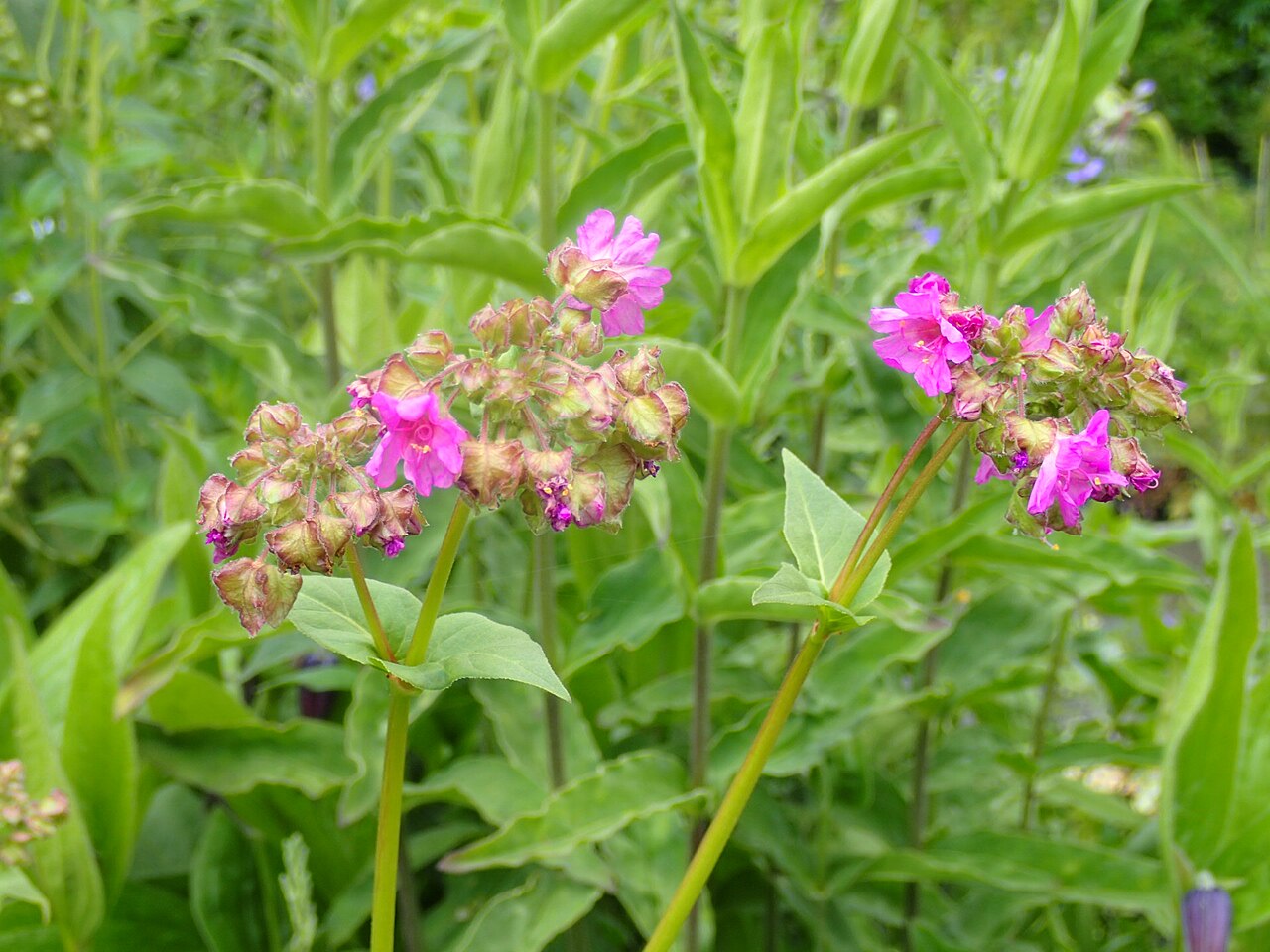
Mirabilis nyctaginea, known as Wild Four O’Clock, heartleaf four o’clock or heart-leaved umbrellawort, is a tough, bushy perennial of prairies, rocky hillsides, roadsides and other open, disturbed ground in the central United States. It grows from a thick, fleshy taproot and sends up branching stems 1 to 4 feet tall with pairs of broad, heart-shaped leaves. From late spring through summer, small clusters of magenta to pink flowers open in the late afternoon or evening and fall off by the next morning.
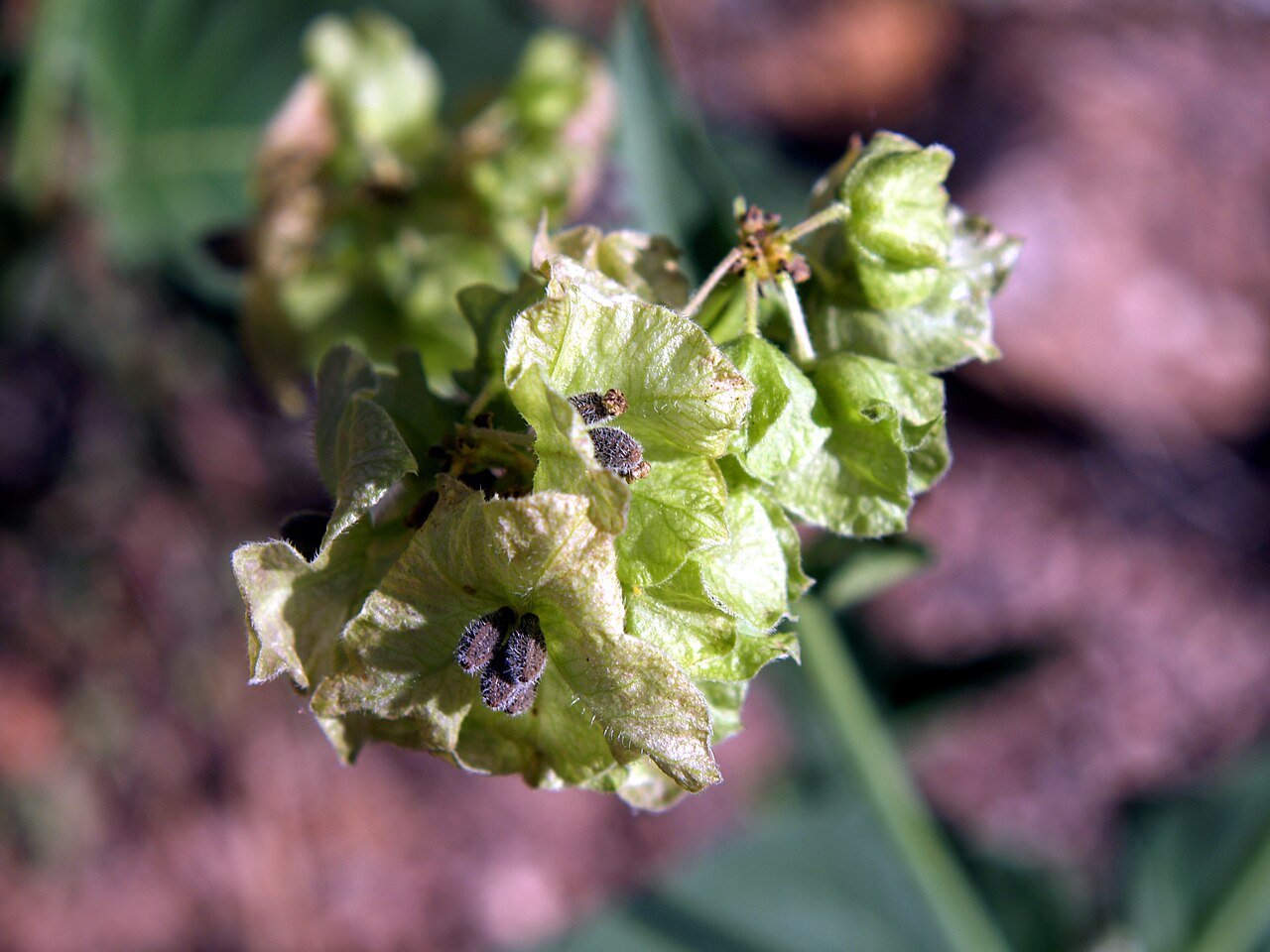
The plant gets its common name from this habit of opening late in the day, like its familiar garden cousin, the four o’clock (Mirabilis jalapa) from tropical America. What looks like the showiest part of the plant after bloom is not a flower at all: each flower cluster sits in a green, saucer-shaped cup of five joined bracts that enlarges, turns papery and often pinkish, and holds the ripening fruits like a little umbrella.
Wild four o’clock is native mainly to the Great Plains and Midwest, and it spreads easily along roads and railroads. In much of the Northeast, the Atlantic states and California it is considered an introduced weed. This guide covers how to identify it, where it is native, how to grow it in a dry prairie or wildlife garden, and why you should handle the roots with care.
Identification
Wild four o’clock is easiest to recognize by the combination of opposite, heart-shaped leaves, forked upper stems, and small magenta flowers that sit in green, five-lobed cups that become papery in fruit.
Stems & Growth Habit
Several stems rise from a thick, carrot-like taproot that can reach well over a foot deep. Stems are 1 to 4 feet tall, often swollen at the nodes, smooth or slightly hairy, and branch repeatedly in pairs (forked) toward the top, giving older plants a broad, bushy outline. Plants die back to the root each winter and re-emerge in spring.
Leaves
Leaves are opposite, simple and smooth-edged, mostly 2 to 4 inches long. Lower leaves have short stalks and broad, heart-shaped or triangular-oval blades; upper leaves are smaller and nearly stalkless. They are somewhat fleshy and medium to dark green. Most of the large leaves are on the lower two-thirds of the plant, below the forked flowering branches.
Flowers
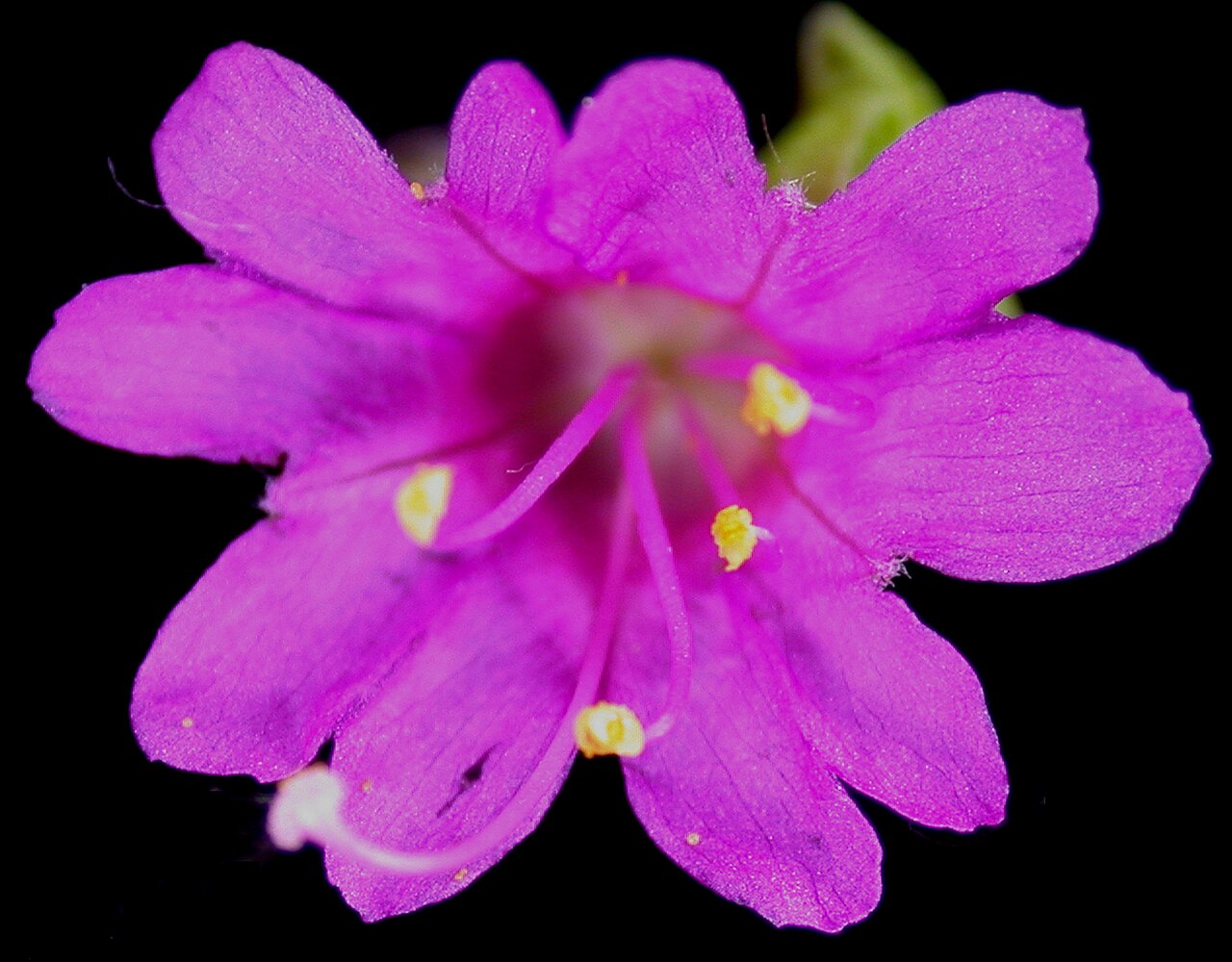
Flowers grow in small clusters of usually three to five at the ends of the branches. Each cluster sits in a bell- or saucer-shaped involucre of five partly fused green bracts. The flowers are funnel-shaped, about 3/8 to 1/2 inch across, with five notched lobes, and are magenta, rose-pink or occasionally paler. The color comes from the calyx, since the plant has no true petals. Three to five long stamens with yellow anthers stick out of each flower. Flowers open in late afternoon or evening and wither by the next morning, so a plant usually shows only a few open flowers at a time. Bloom runs from about May into August, with scattered flowers later in the season.
Fruit & Seeds
After flowering, the involucre grows to about 1 inch across, becomes thin, papery and veined, and turns pale green to pinkish or purplish. It holds a few hard, club-shaped, ribbed fruits about 1/5 inch long, often covered in short hairs. The papery cups are the most noticeable feature of plants in mid to late summer and are often mistaken for faded flowers.
Look-alikes
White four o’clock (Mirabilis albida) has narrower, lance-shaped leaves, hairier stems and pale pink to white flowers. Narrowleaf four o’clock (Mirabilis linearis) has very narrow, linear leaves. Colorado four o’clock (Mirabilis multiflora), of the Southwest, has much larger, trumpet-shaped magenta flowers 1 to 2 inches long. The garden four o’clock (Mirabilis jalapa) has single large, long-tubed flowers in each involucre and is not native to the United States.
Quick Facts
| Scientific Name | Mirabilis nyctaginea |
| Family | Nyctaginaceae (four o’clock family) |
| Plant Type | Herbaceous perennial with a thick taproot |
| Mature Height | 1–4 ft (usually 1–3 ft) |
| Mature Spread | 1–3 ft |
| Growth Rate | Fast |
| Sun Exposure | Full sun to part shade |
| Water Needs | Low |
| Soil Type | Dry to medium, sandy, rocky, gravelly or loamy soils |
| Soil pH | About 6.0–8.0 (tolerates limestone) |
| Bloom Time | May–August (sporadically to fall) |
| Flower Color | Magenta to rose-pink |
| Fall Color | None of note; papery bracts pinkish in late summer |
| Fruit | Small hairy, ribbed nutlets held in papery bracts |
| Deer Resistant | High (rarely browsed) |
| USDA Hardiness Zones | 3–9 |
Native Range
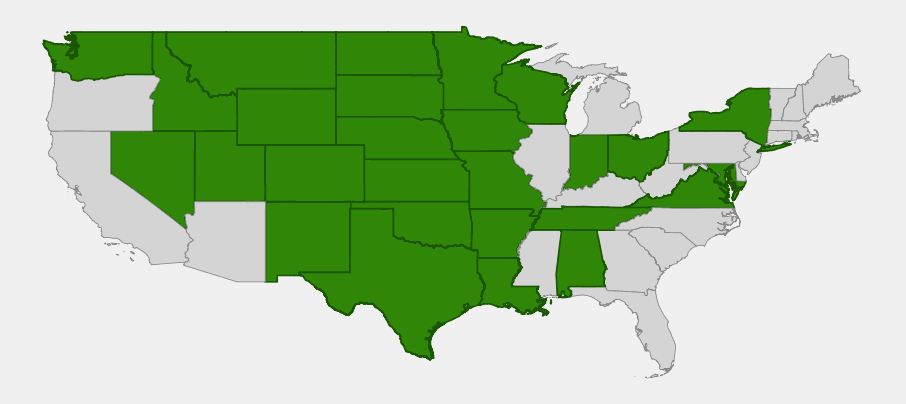
Wild four o’clock is native to the central part of North America. Its core range is the Great Plains and Midwest, from Montana, Wyoming, the Dakotas and Minnesota south through Nebraska, Kansas, Iowa, Missouri and Oklahoma to Texas, New Mexico and Colorado, and east into the Mississippi Valley. It also extends into northern Mexico and the southern Canadian prairies of Saskatchewan and Manitoba. Its exact original range is hard to pin down because the plant spreads so readily along roads and railroads.
USDA PLANTS maps it as native in more than 40 states, but most regional floras treat the populations in the Northeast and much of the East as introduced. Go Botany describes it as native to the central United States and spreading east and west, and NatureServe lists it as exotic in Connecticut, Delaware, Illinois, Kentucky, Maine, Michigan, New Hampshire, New Jersey, North Carolina, Pennsylvania, Rhode Island, Vermont and West Virginia. The Lady Bird Johnson Wildflower Center also notes it is introduced in California. Those states are left off the map here, along with Massachusetts. Records from New York, Maryland, Virginia, Ohio, Indiana, Tennessee, Alabama and Louisiana, and from Idaho, Washington, Utah and Nevada in the West, are scattered and outlying, and some of them may also be the result of spread along roads and railways.
Within its native range it grows in dry upland prairies, rocky and gravelly slopes, limestone and gypsum hills, sandy ground in post oak and cross timbers country, stream terraces, and especially in disturbed places such as pastures, field edges, roadsides, vacant lots and railroad embankments. It is most abundant where the ground has been disturbed by grazing, digging animals or people.
📋 Regional plant lists featuring Wild Four O’Clock: New York, Pennsylvania & Northern New Jersey · Idaho, Eastern Oregon & Eastern Washington · Ohio & Indiana · Montana & Wyoming · Michigan, Wisconsin & Eastern Minnesota · Kentucky & Tennessee · Nebraska, Kansas & Eastern Colorado · Utah & Western Colorado · Maryland, Virginia & West Virginia · Delaware, Southern New Jersey & Long Island · Illinois, Iowa & Missouri · Alabama, Georgia & Mississippi · Arkansas, Louisiana, Eastern Oklahoma & Eastern Texas · South & West Texas · North Dakota, South Dakota & Western Minnesota · California & Nevada
Growing & Care Guide
Wild four o’clock is about as easy to grow as a native wildflower gets. It thrives in poor, dry soil and full sun, shrugs off heat and drought, and comes back reliably from its deep taproot. The same traits make it weedy: it self-sows freely, and once the taproot is established it is hard to remove. Grow it where you want a tough, informal plant for dry ground, such as a prairie planting, a dry slope or a wildlife garden, and avoid tidy beds. It is best suited to gardens within its native range in the Great Plains and Midwest; in the Northeast and other areas where it is introduced, choose a local native instead.
Light
Full sun gives the sturdiest plants and the most flowers. It tolerates part shade, such as the edge of a woodland or the east side of a building, but stems become taller and floppier in shade.
Soil & Water
Plant it in well-drained, dry to medium soil. Sandy, gravelly, rocky, clay-loam and limestone soils are all fine, and it does well in poor ground where many plants struggle. Once established it needs no watering except in extreme drought; the taproot stores water. Avoid soggy soil, which can rot the root. Do not fertilize, since rich soil makes the plants lanky.
Planting Tips
Sow seed outdoors in fall or early spring, or set out small container plants in spring. Plant it where it can stay: the taproot makes older plants very difficult to move. Space plants 2 to 3 feet apart. It looks best mixed with native bunchgrasses and other dry-prairie wildflowers, which also help hide its somewhat coarse foliage after bloom.
Pruning & Maintenance
Little care is needed. To limit self-sowing, cut back the stems after the main flush of bloom, before the papery bracts drop their seeds. Cut the dead stems to the ground in late winter or early spring. Pull unwanted seedlings while they are small, before the taproot develops. Wear gloves when digging or handling the roots.
Propagation
Grow it from seed. Collect the hard fruits from the papery bracts in late summer and fall when they turn brown. Sow them outdoors in fall, or give them about 30 to 60 days of cold, moist stratification before sowing in spring. Germination is usually good, and plants often flower in their first or second year. Large established plants can be divided in early spring only with difficulty because of the deep taproot.
Landscape Uses
- Dry prairie and meadow plantings: a tough, long-blooming forb for poor, dry soils with native grasses
- Erosion control and disturbed ground: quickly covers bare, gravelly or sandy slopes and banks
- Evening and moth gardens: flowers open in late afternoon and evening for night-flying insects
- Wildlife and naturalistic gardens: an informal plant for areas where self-sowing is welcome
- Restoration of disturbed prairie: an early colonizer of disturbed prairie soils within its native range
Wildlife & Ecological Value
Although its flowers are short-lived, wild four o’clock blooms over a long season and supports a surprising number of insects, from evening pollinators to several specialized moths.
For Pollinators
The flowers open in late afternoon and evening, and they are visited mainly by evening- and night-flying insects, especially moths, with some bees and flies visiting in the evening and early morning before the flowers fall. The plant can also self-pollinate, which helps it set plenty of seed.
For Birds
Ground-feeding birds and gamebirds may eat some of the hard fruits. The open, branching plants also offer a little cover in grassland plantings.
For Mammals
Deer, rabbits and livestock generally avoid it, probably because of the compounds in its roots and leaves, which is one reason it increases in heavily grazed pastures.
Ecosystem Role
Wild four o’clock is a host plant for several small moths: the caterpillars of Embola ionis bore in the stems, those of Neoheliodines species skeletonize the leaves, and Aetole tripunctella mines the leaves. As an early colonizer of bare and disturbed soil, it helps stabilize ground and provides cover until longer-lived prairie plants fill in.
Cultural & Historical Uses
The genus name Mirabilis is Latin for “wonderful” or “marvelous.” The species name nyctaginea comes from the Greek nyx (night) and refers to the flowers opening in the evening. The plant has also been placed in the genera Allionia and Oxybaphus, names that still appear in older references.
Plains peoples used the root as medicine. The Skiri Pawnee called the plant Kactáhkata and used the yellowish root to treat coughs, as a powder for sore mouths in babies, and in a tea after childbirth. Other tribes reportedly used it for wounds, swelling and fevers. These are historical uses only.
Safety note: The thick roots of wild four o’clock, like those of other Mirabilis species, are considered toxic and can cause stomach upset if eaten, and the plant is not palatable to livestock. Do not eat any part of it or use it as a home remedy, keep children and pets from chewing on dug roots, and wear gloves when digging or dividing plants.
Frequently Asked Questions
Is wild four o’clock native?
Yes, it is native to the central United States, especially the Great Plains and Midwest, and to the southern Canadian prairies. In New England, the Mid-Atlantic, parts of the Great Lakes region and California it is generally considered introduced, having spread along roads and railroads.
Why is it called four o’clock?
Its flowers open in the late afternoon or evening and close by the next morning, like the related garden four o’clock (Mirabilis jalapa).
Is wild four o’clock poisonous?
The roots are considered toxic and can cause stomach upset if eaten, and livestock usually avoid the plant. Don’t eat any part of it, keep children and pets away from dug roots, and wear gloves when handling the roots.
Is wild four o’clock invasive?
It can be weedy. It self-sows readily and has a deep taproot that makes established plants hard to remove, and Go Botany notes it is considered a noxious weed in some states outside its native range. Plant it only in informal, dry areas within its native range, and cut stems back after bloom if you want to limit seedlings.
What are the papery cups on the plant?
They are the involucres, cups of five joined bracts that hold each flower cluster. After flowering they enlarge, become papery and turn pinkish, and they hold the developing fruits. They are often mistaken for faded flowers.

Looking for a nursery that carries Wild Four O’Clock?
Browse our native plant nursery directory: Alabama & Arkansas · Colorado · Idaho, Indiana, Iowa & Kansas · Louisiana, Maryland, Minnesota, Missouri & Montana · Nebraska, Nevada, New Mexico, New York, North Dakota, Ohio & Oklahoma · South Dakota, Tennessee, Texas, Utah & Virginia · Washington · Wisconsin & Wyoming