Missouri Primrose (Oenothera macrocarpa)
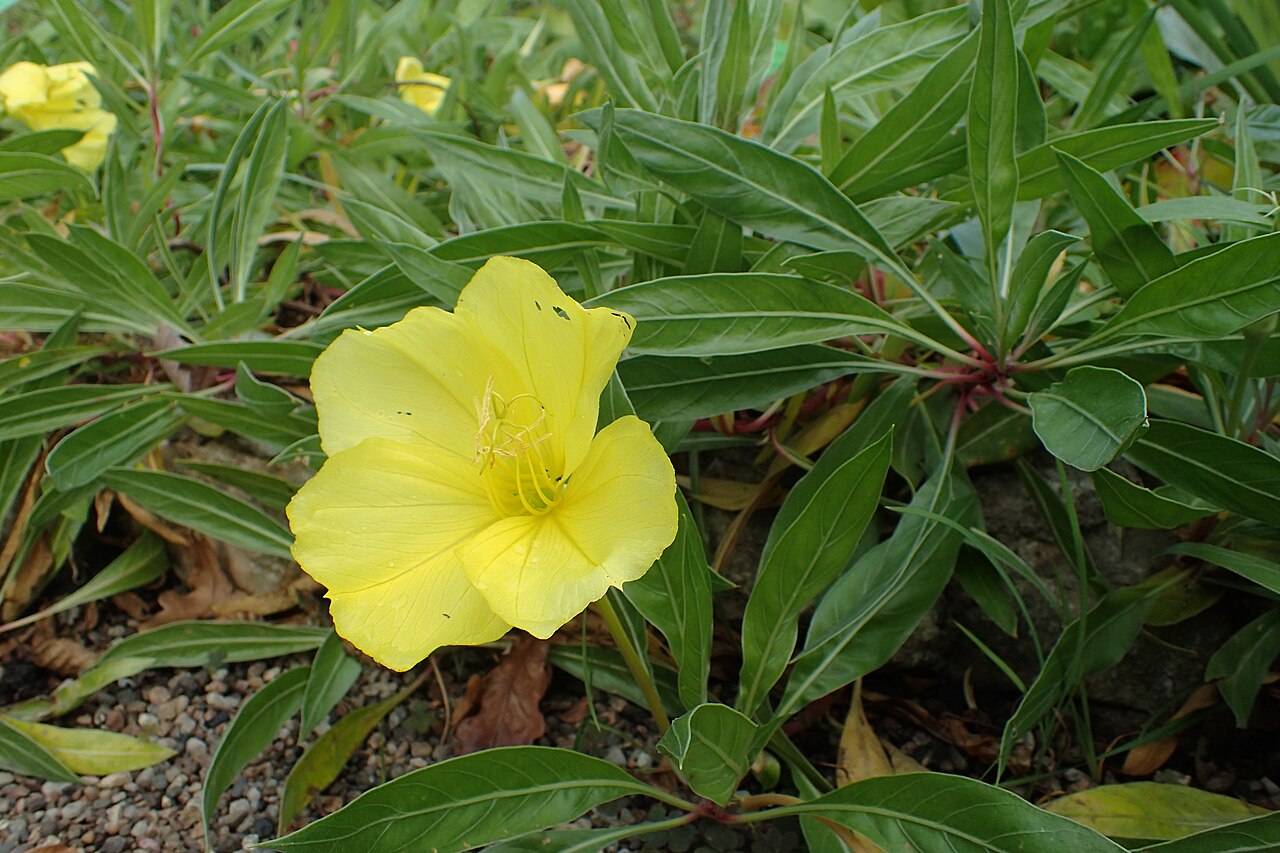
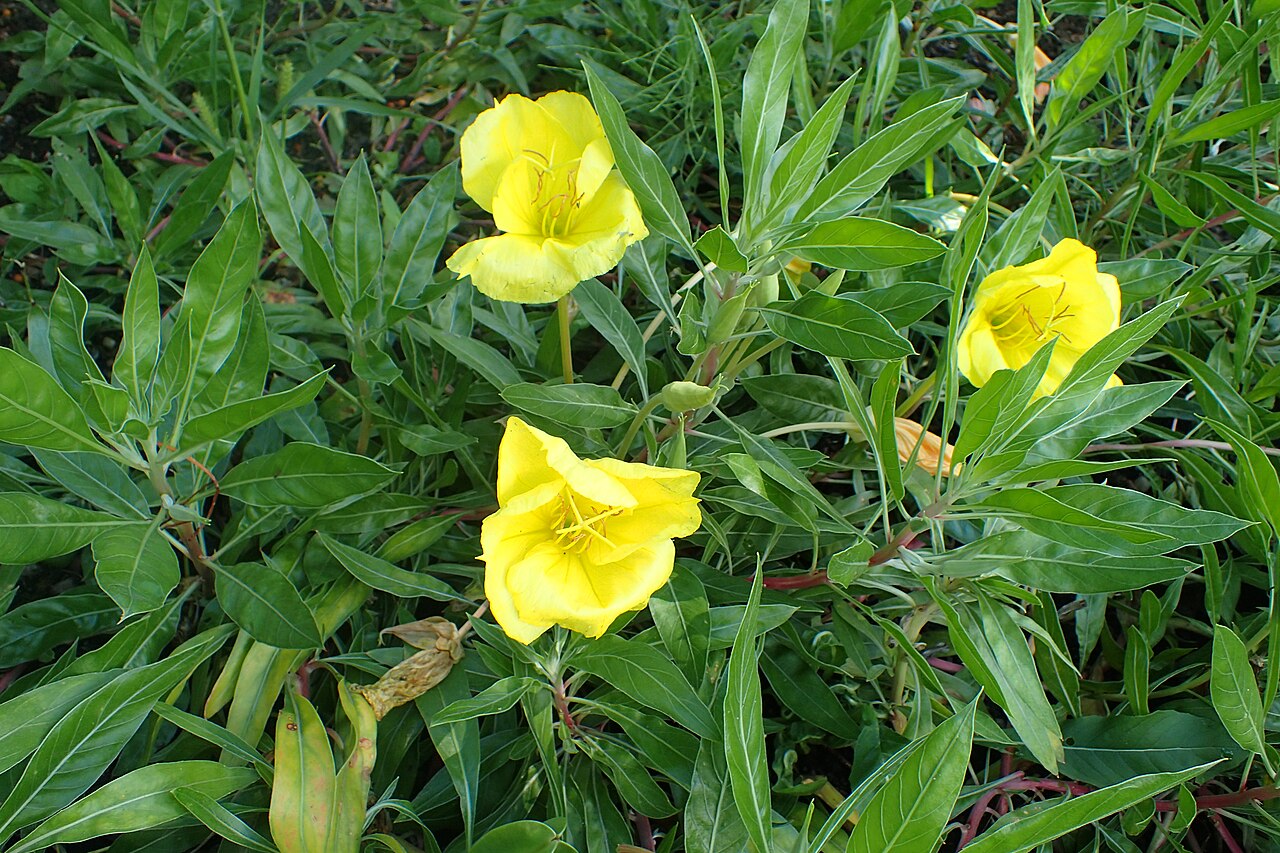
Missouri primrose produces flowers that seem oversized for the plant carrying them. Oenothera macrocarpa stays low and sends stems outward, while broad lemon-yellow blossoms open close to the ground. It is particularly effective where a gardener can see it beside a path, spilling toward the edge of a rock garden, or occupying a sunny gap between more upright native plants.
The Iowa, Illinois, and Missouri regional list gives a height of 6–12 inches, full sun, and dry-to-average moisture. Those are useful garden specifications, but nativity is not identical across the three states: Kew lists Illinois and Missouri in the species’ range, not Iowa. Treat the regional page as a shared gardening resource rather than evidence that every listed species occurs naturally throughout the entire region.
The older name Oenothera missouriensis remains common in nursery catalogs. It refers to the same familiar Missouri evening primrose treated here, not a reason to create a second garden profile. Its distinctive features are the low spreading habit, four-petaled yellow flowers, and large winged seed capsules. Good drainage is central to keeping that display healthy.
Identification
Stems & Growth Form
Several stems spread or trail outward from the perennial base. A plant can cover considerably more width than its low height suggests. Flowers may rest close to the ground, which is natural for the species rather than a reason to stake every stem upright. Give the plant a clear horizontal footprint instead of squeezing it between dense clumping neighbors.
Leaves
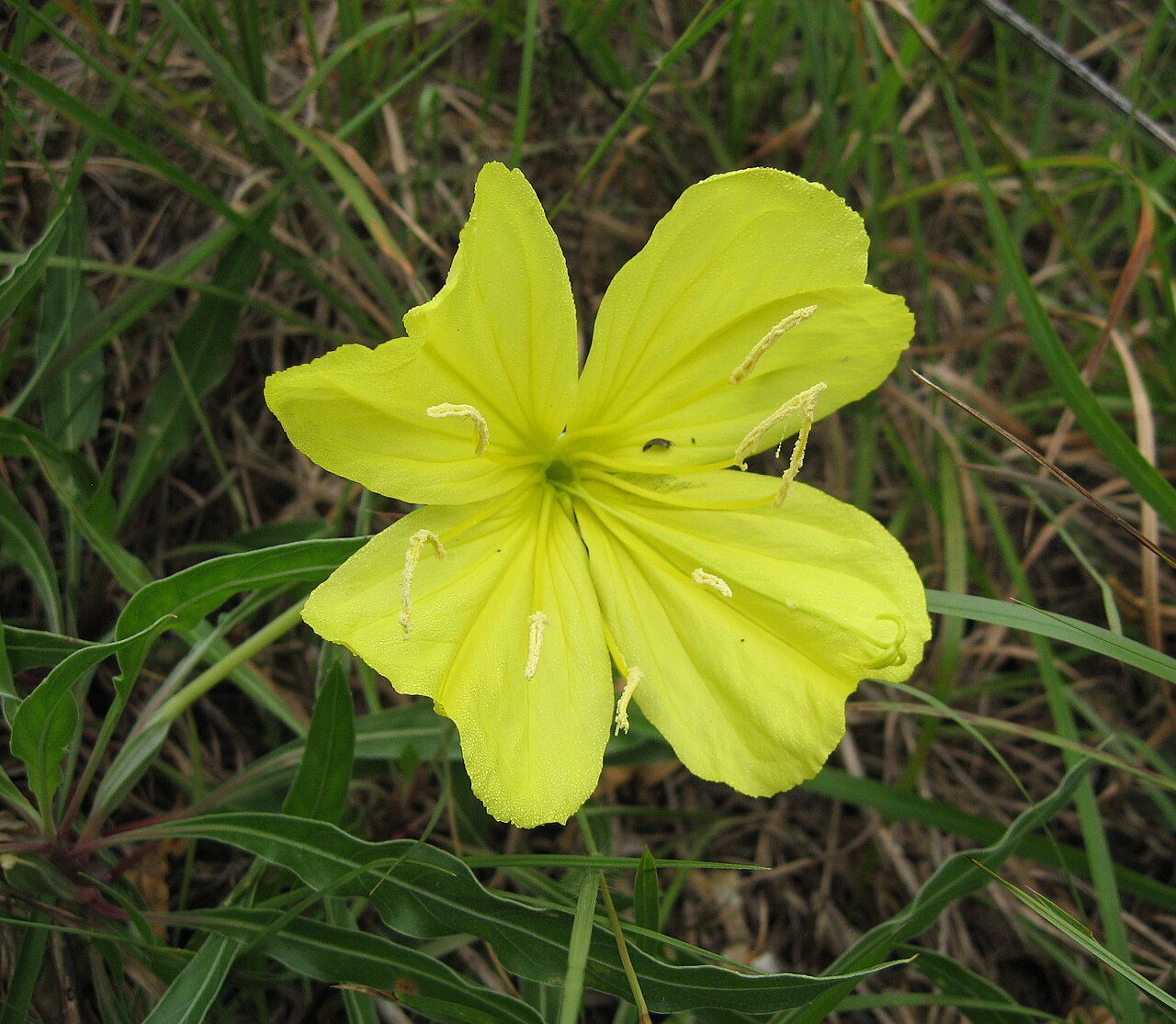
The leaves are narrow and lance-shaped along the stems. Look at their arrangement together with the spreading habit and flower structure when confirming identity. Many plants have yellow flowers, including other evening primroses and unrelated members of the daisy family. A correct nursery label is useful, but observing the whole plant remains important when seedlings appear nearby.
Flowers
The showy blossoms have four broad yellow petals and can reach several inches across. They typically open late in the day and last into the following morning, with each individual flower short-lived. A faded blossom is therefore not evidence that the plant is failing. The display comes from successive flowers over the season rather than one flower remaining fresh for weeks.
Fruit & Seeds
The large winged capsules are a second distinctive feature. They develop after successful flowering and remain visually interesting as they mature. The species name macrocarpa refers to the large fruit. Leave some capsules if seed or a complete seasonal display is wanted, while removing selected ones where self-sowing into paving would be inconvenient.
Quick Facts
| Scientific Name | Oenothera macrocarpa; often sold as Oenothera missouriensis |
| Family | Onagraceae (evening primrose family) |
| Plant Type | Low, spreading herbaceous perennial |
| Mature Height | Usually 6–12 inches |
| Mature Spread | About 1–2 feet |
| Growth Rate | Moderate |
| Sun Exposure | Full sun |
| Water Needs | Dry to average after establishment |
| Soil Type | Well-drained rocky, gravelly, sandy, or suitable clay soil |
| Soil pH | Tolerates limy and calcareous soils |
| Bloom Time | Late spring through summer, commonly May–August |
| Flower Color | Bright lemon yellow |
| Fall Color | No dependable showy autumn foliage |
| Fruit | Large, distinctively winged dry capsules |
| Deer Resistant | Do not assume complete browsing resistance |
| USDA Hardiness Zones | 3–7 in Missouri Botanical Garden’s listing |
Native Range
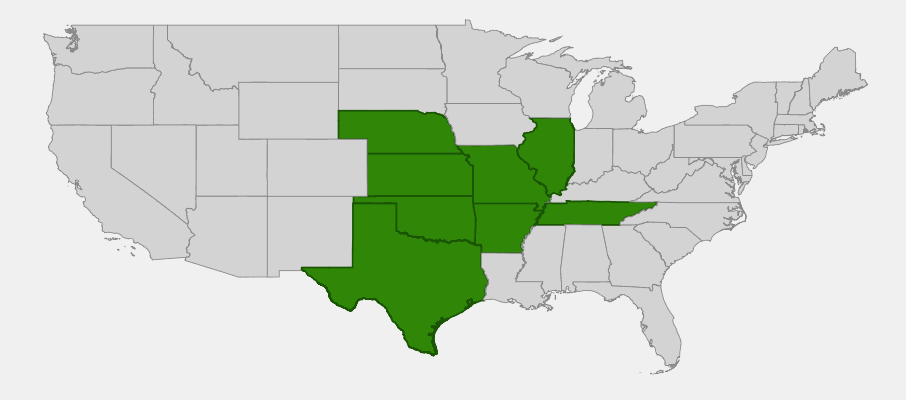
Kew records native occurrence in Arkansas, Illinois, Kansas, Missouri, Nebraska, Oklahoma, Tennessee, and Texas, extending into northeastern Mexico. Those U.S. states are highlighted in the map. The species contains several named subspecies, so this is a species-level summary rather than a map of one nursery selection or local population.
Missouri Department of Conservation describes it especially in Ozark limestone glades, bluffs, and rocky prairie. These are open, freely drained settings, often with relatively little tall competing vegetation. In a garden, a sunny rock bed or dry border can reproduce the useful physical conditions without pretending to recreate an entire glade ecosystem.
Match the stock to the project. A locally sourced plant is preferable for restoration, while named cultivars may be appropriate for an ornamental bed when their selected traits are understood. Do not assume that a small silver-leaved cultivar has the exact mature dimensions of the ordinary species, or that garden cultivation in Iowa proves native occurrence there.
📋 Regional plant list: Iowa, Illinois & Missouri
Growing & Care Guide
Light
Provide full sun. A little light shade may be tolerated, but this is not a woodland-floor primrose. Check whether taller plants will shade the spreading stems later in summer. A location that looks open in April can become crowded by midsummer grasses, so plan the whole seasonal planting rather than only the spring view.
Soil & Water
Use well-drained soil and avoid persistent saturation around the crown. Missouri Botanical Garden notes tolerance of poor, limy, dry, and rocky soils, while warning about root rot in wet ground. Water new plants through their root ball and surrounding soil, then allow a suitable drying interval. Once established, manage the plant with its dry-to-average companions rather than the irrigation schedule of a thirsty annual bed.
Planting Tips
Allow a broad, low footprint near the front of a planting. Set the crown at its existing level and avoid burying it beneath fine mulch. On a slope, make sure establishment water reaches the roots without collecting in a permanent basin. A few plants placed with room to spread are preferable to a tightly packed line that immediately needs cutting back to keep a walkway clear.
Pruning & Maintenance
Remove broken stems or exhausted material as needed, but do not repeatedly clip the whole plant into a compact mound. Its natural spreading stems are part of the display. Decide whether seed capsules are welcome before deadheading every blossom. Where a stem extends into a path, make a selective adjustment rather than assuming the entire plant needs heavy pruning.
Propagation
Seed is a practical method described by Missouri Botanical Garden, and plants may self-sow under favorable conditions. Purchase correctly labeled seed or collect from known cultivated plants with permission. Keep the species name and source attached to every batch. Young seedlings require establishment care even though mature plants tolerate dry conditions; protect them from abrupt drying and from being buried by neighboring growth.
Watching the Evening Display
Place at least one plant where it can be seen late in the day. The flower-opening rhythm is part of its interest, and a morning-only inspection can miss the freshest blossoms. Compare flowers at several times rather than judging performance from one midday visit. A succession of buds and short-lived flowers is normal, not a problem requiring fertilizer to make each bloom last longer.
Managing Competition
Keep vigorous weeds and spreading groundcovers away from the crown and trailing stems. This is a low plant whose flowers can be hidden by taller growth. Use compatible short companions and leave access for selective weeding. In a naturalistic bed, a little open mineral soil can make the plant’s form more legible without requiring a sterile, vegetation-free surface around every specimen.
Landscape Uses
- Sunny rock gardens and dry borders in locally appropriate parts of Illinois and Missouri.
- Low front-of-bed groups where the large yellow flowers remain visible.
- Edges of gravel paths with enough setback for spreading stems.
- Mixed glade-inspired plantings using compatible dry-site native species.
- An evening-view garden where the opening flowers can be observed from a nearby seat.
Wildlife & Ecological Value
For Pollinators
Missouri Department of Conservation connects its late-opening flowers with moth and other evening pollination activity. Retain the natural timing of the display and avoid spraying blossoms. A garden observed only at midday can underestimate activity around evening flowers. Combine the species with plants offering resources at other times and seasons.
For Birds
The plant’s principal documented role here is floral and herbaceous habitat rather than a major fleshy-fruit resource. Do not substitute it for seed-rich grasses, fruiting shrubs, or woody cover in a bird garden. It can contribute to the lower layer of a broader native planting while those other elements meet different needs.
For Mammals
Inspect young plants for browsing or disturbance rather than assuming a native wildflower will always be left alone. Low trailing stems can also be damaged by foot traffic during maintenance. A clear path and thoughtful setback often prevent more injury than repeated pruning after stems are stepped on.
Ecosystem Role
The species occupies open, dry rocky settings where its low form and flowering cycle fit the surrounding community. In a garden, preserve that fit through appropriate drainage and restrained irrigation. Avoid treating a glade plant as a decoration that must be supported by constant inputs in an unsuitable wet bed.
Cultural & Historical Uses
The name Missouri evening primrose reflects both a regional association and the flower-opening pattern. Glade lily is another common name, although the plant is not a true lily. Botanical names prevent that familiar-name overlap from causing confusion when buying plants.
Oenothera missouriensis appears widely in older horticultural literature and remains in commerce. Recording it as a synonym helps gardeners connect labels without treating the two names as different species. The winged capsules provide an especially useful visible link to the current name macrocarpa, meaning large-fruited.
The species is a well-established native-gardening choice because it combines conspicuous flowers with a low, dry-site habit. Obtain propagated material instead of digging plants from bluffs or glades. Those wild settings contain many interacting species, and removing one attractive plant can disturb more than the individual specimen.
Frequently Asked Questions
Is Oenothera missouriensis a different plant?
It is an older name still used for the familiar Missouri evening primrose treated here as Oenothera macrocarpa. Check subspecies or cultivar details when a nursery offers a selected form.
Why does each flower fade so quickly?
Individual blossoms are short-lived, often opening late in the day and lasting into the next morning. The plant’s seasonal display comes from a succession of flowers.
How much space should I allow?
The plant is usually about 6–12 inches tall but can spread roughly 1–2 feet. Leave horizontal room for its naturally trailing stems.
Can it grow in a wet border?
Persistent wetness and poor drainage are a poor fit. Use dry-to-average, well-drained ground and distinguish establishment watering from a permanently moist regime.
Is it native in all three states on the regional page?
Kew lists Illinois and Missouri but not Iowa in its native distribution. For local restoration, consult regional botanical records and use appropriate provenance.
Sources & Further Reading
- Missouri Botanical Garden: Missouri evening primrose
- Missouri Department of Conservation: Missouri evening primrose
- Kew Plants of the World Online: Oenothera macrocarpa
Find Native Plants
Ask growers about nursery propagation and regional provenance. Browse our Iowa native plant nurseries, Missouri native plant nurseries directory for suppliers.