
Stream Orchid (Epipactis gigantea)
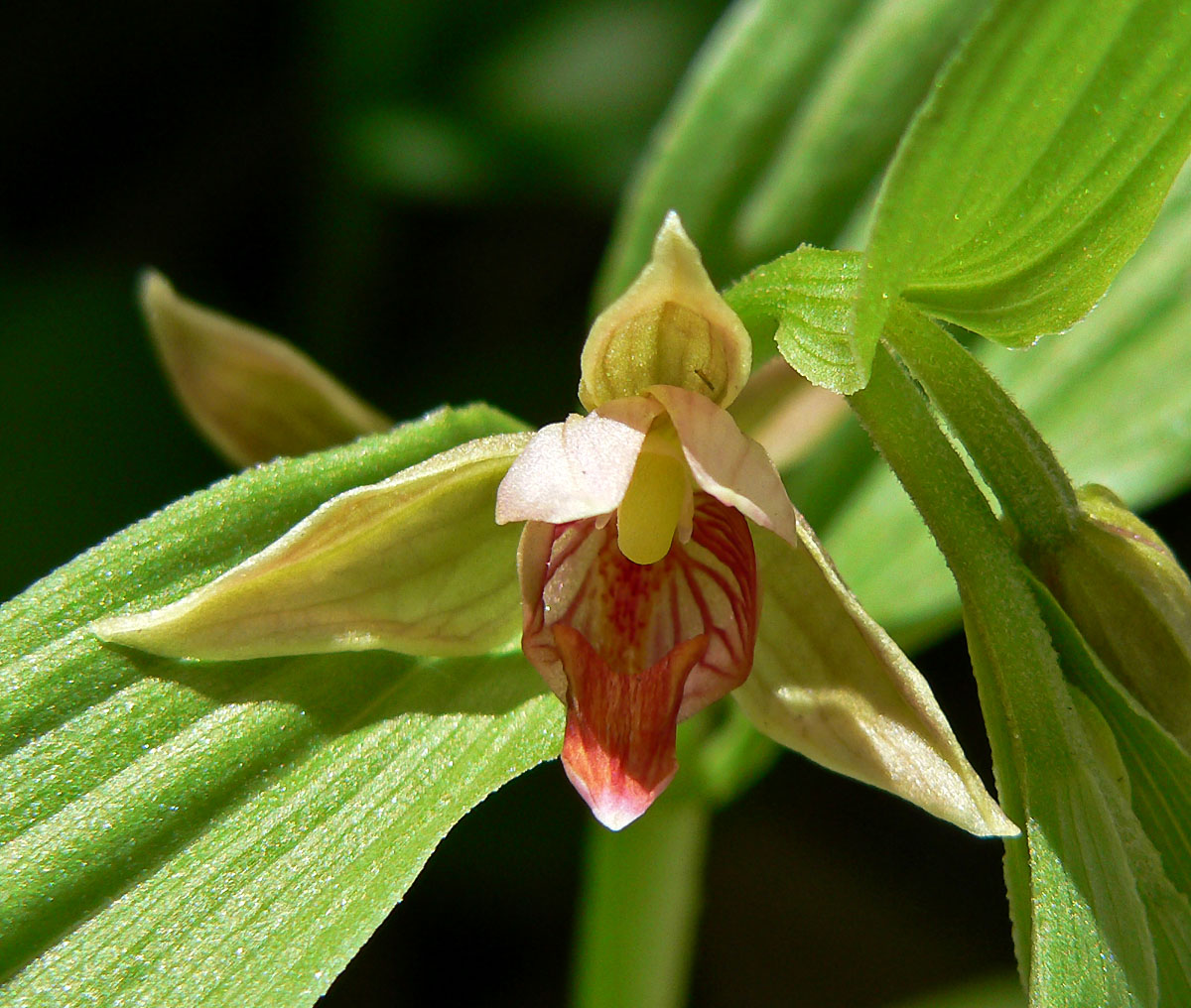
Epipactis gigantea, known as Stream Orchid (USDA: stream orchid) and also as giant helleborine or chatterbox, is a large native orchid of springs, seeps and stream banks across the western United States, southern British Columbia and northern Mexico. It is one of the few orchids that grow almost anywhere water flows year-round in the West, from coastal canyons and desert springs to mountain meadows and hot springs.
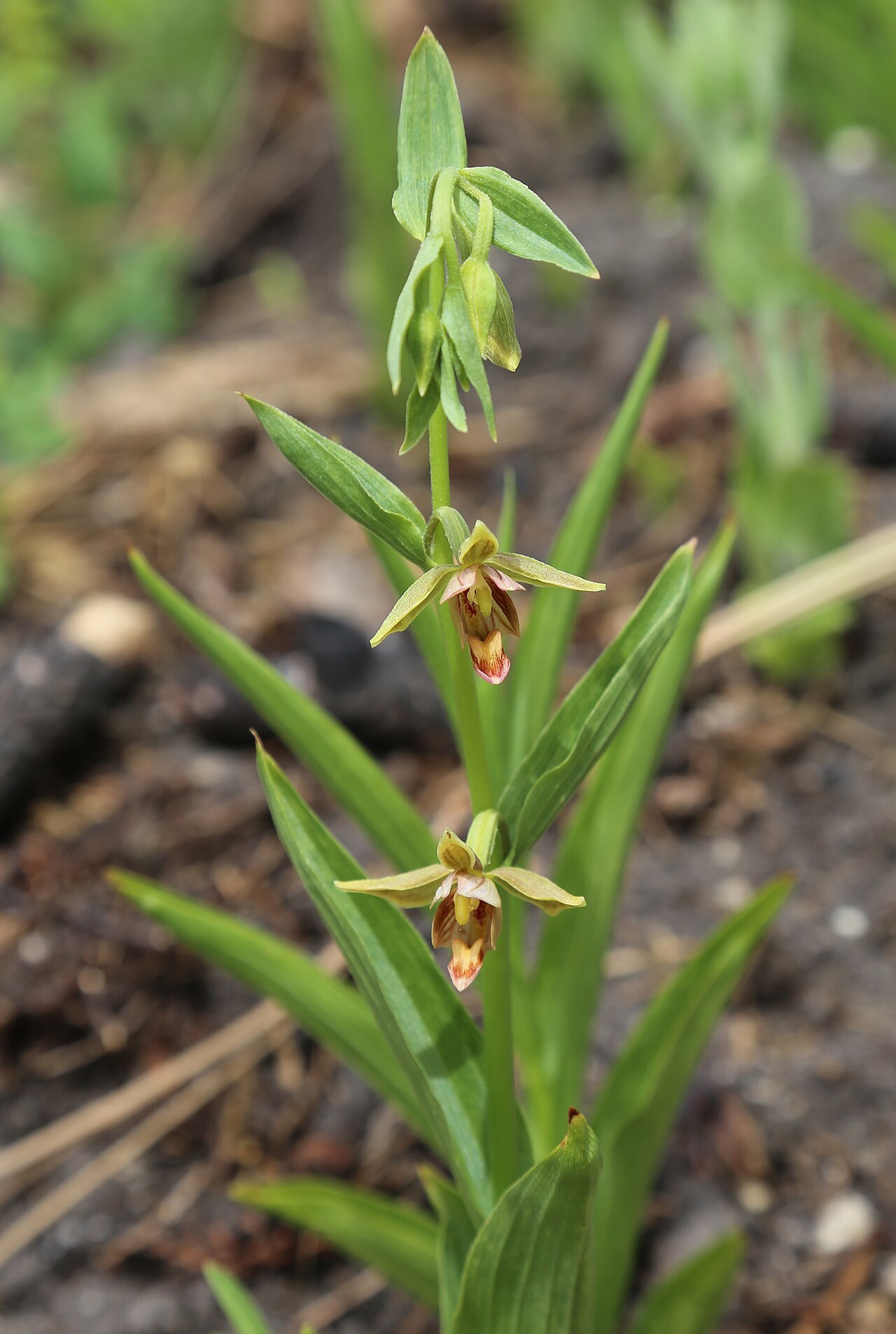
Leafy stems 1 to 3 feet tall rise from creeping rhizomes, often forming dense colonies. In spring and summer each stem carries up to 15 or more striking flowers, about 1 1/2 inches across, with greenish to yellowish sepals, pinkish petals veined in purple, and a cupped, red-veined lip ending in a hinged, orange-yellow tip. When touched, the tip moves up and down, which earned it the nickname “chatterbox.”
Stream orchid is native and protected or rare in several states at the edges of its range, and its spring habitats are threatened by water diversion and grazing. Never dig orchids from the wild. It is one of the easiest native orchids to grow, and nursery-propagated plants are widely available from native plant and orchid growers.
Identification
Look for a leafy orchid with pleated, lance-shaped leaves and a loose spike of brownish-green and red flowers growing right at the water’s edge.
Growth Habit
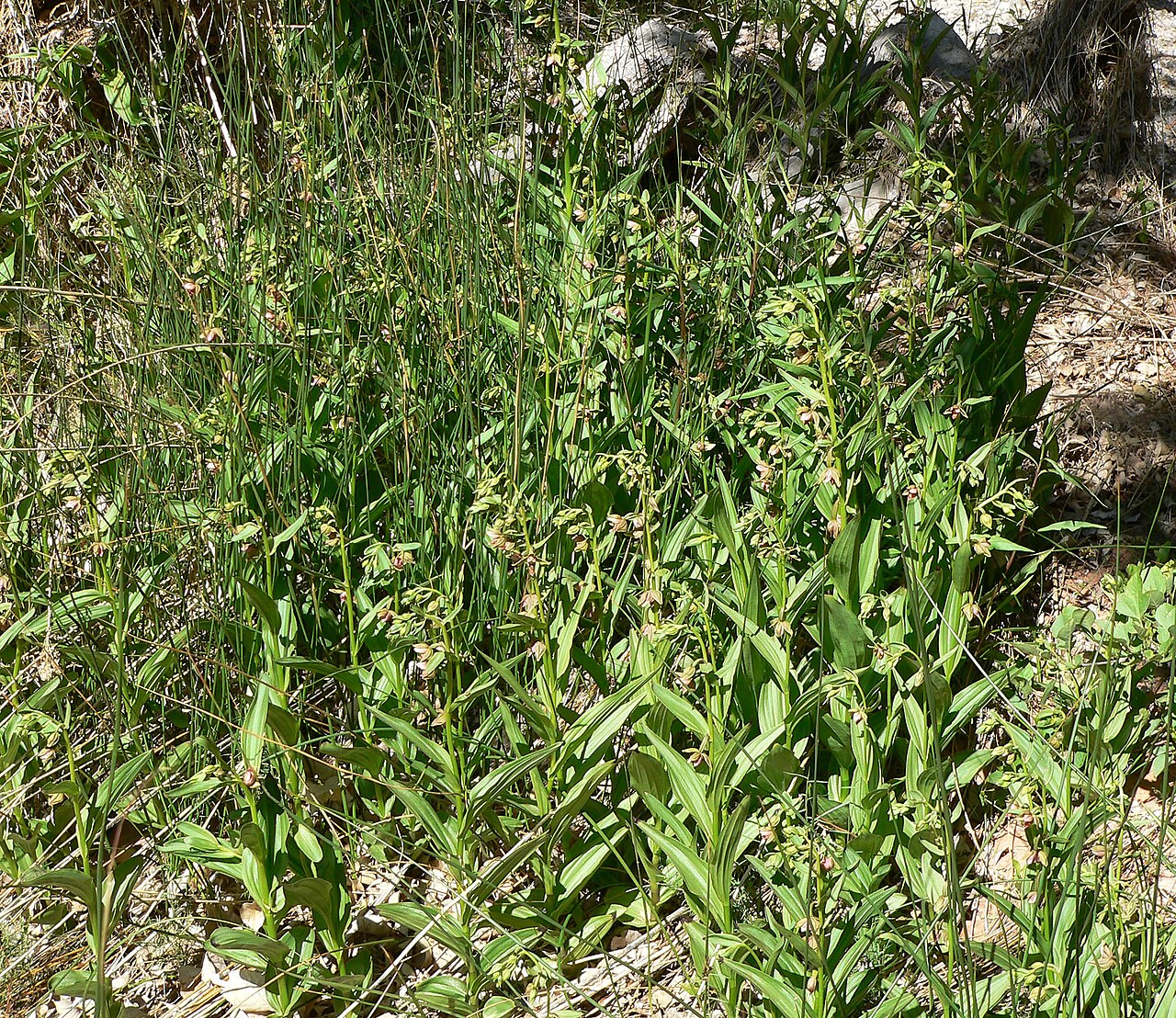
A perennial orchid that spreads by creeping rhizomes, forming patches or dense colonies. Stems are 1 to 3 feet tall (occasionally taller), stout, unbranched and leafy all the way up.
Leaves
Leaves are alternate, 4 to 8 inches long, lance-shaped to oval, with parallel veins and a pleated surface, clasping the stem at the base. They are bright green; a dark purple-leaved selection called ‘Serpentine Night’ is popular in gardens.
Flowers
From about April to August, depending on elevation, each stem carries a loose, one-sided spike of 3 to about 15 flowers, each in the axil of a leafy bract. The three sepals are greenish to yellowish-brown and spreading. The two upper petals are pinkish with purple or red veins. The lip has a cupped base veined in red-purple and a movable, tongue-like tip that is yellow to orange, hinged so it bobs when touched or when the wind blows.
Fruit & Seeds
Pollinated flowers form drooping, ribbed capsules about 1 inch long, filled with thousands of tiny, dust-like seeds that drift on the wind. Like other orchids, the seeds need specific fungi in the soil to germinate.
Look-alikes
Broadleaf helleborine (Epipactis helleborine) is a Eurasian orchid that has become naturalized in parts of North America. It grows in shady woods and lawns rather than at water’s edge, has broader leaves and smaller, more numerous flowers. White Bog Orchid (Platanthera dilatata) grows in similar wet places but has a dense spike of small, fragrant, white flowers.
Safety & Conservation
Stream orchid is not known to be toxic. The main concern is conservation: it is tracked as rare in several states, such as South Dakota and Montana at the edges of its range, and its springs and seeps are easily damaged by water diversion, trampling and livestock. Never dig plants from the wild; buy nursery-propagated plants from reputable native plant or orchid growers.
Quick Facts
| Scientific Name | Epipactis gigantea |
| Family | Orchidaceae (orchid family) |
| Plant Type | Rhizomatous herbaceous perennial orchid |
| Mature Height | 1–3 ft |
| Mature Spread | 1–3 ft; spreads by rhizomes into colonies |
| Growth Rate | Moderate |
| Sun Exposure | Full sun to partial shade |
| Water Needs | High; constantly moist to wet soil |
| Soil Type | Wet sand, gravel, loam or rock crevices at springs and streams |
| Soil pH | About 6.0–8.0; tolerates alkaline water |
| Bloom Time | April–August |
| Flower Color | Greenish-yellow, pink and red-purple, orange-tipped lip |
| Fall Color | Foliage yellows and dies back |
| Fruit | Drooping capsule with dust-like seeds |
| Deer Resistant | Moderately |
| USDA Hardiness Zones | 5–9 |
Native Range
USDA PLANTS lists stream orchid as native in the lower 48 states and Canada, with records from 14 western states (Arizona, California, Colorado, Idaho, Montana, Nevada, New Mexico, Oklahoma, Oregon, South Dakota, Texas, Utah, Washington and Wyoming) and from British Columbia. It also grows in northern Mexico. It is most common in California, Oregon, Nevada, Utah and Arizona.
It grows on both sides of the Cascades in Washington and Oregon, in Idaho, and through the Great Basin and the Colorado Plateau to the Rocky Mountains. In Texas it grows at springs and seeps in the Trans-Pecos and on the Edwards Plateau, often on limestone. Populations in South Dakota (in the warm springs of the southern Black Hills), Oklahoma and Montana are small and outlying.
It is almost always found where there is a permanent supply of water: springs, seeps, stream and river banks, canyon walls and wet ledges, fens, wet meadows, lakeshores and around hot springs. It often grows on gravel bars and in rock crevices, in sun or partial shade, from desert canyons to conifer forests.

📋 Regional plant lists featuring Stream Orchid: Idaho, Eastern Oregon & Eastern Washington · Montana & Wyoming · Utah & Western Colorado · Arizona & New Mexico · South & West Texas · North Dakota, South Dakota & Western Minnesota · Western Oregon & Western Washington · California & Nevada
Growing & Care Guide
Stream orchid is one of the easiest native orchids to grow, and a good choice for a pond edge, bog garden or constantly moist bed. Buy nursery-propagated plants only; never dig from the wild, where many populations are small and protected.
Light
Full sun to partial shade. In hot, dry climates, give it afternoon shade; in cooler, coastal climates it can take full sun if the soil stays wet.
Soil & Water
Keep the soil constantly moist to wet; it should never dry out during the growing season. It grows well in sandy or gritty loam, at the edge of a pond or stream, in a bog garden or in a container set in a shallow saucer of water. Unlike many bog plants, it tolerates neutral to alkaline water. Avoid stagnant, airless mud.
Planting Tips
Plant rhizomes in spring about 1 to 2 inches deep, with the growing buds just below the surface. Space plants about a foot apart; they will fill in. Mulch with gravel or leaf litter to keep the soil cool and moist.
Pruning & Maintenance
Cut back dead stems after the foliage yellows in fall or in late winter. Divide crowded clumps every few years in early spring. Watch for aphids and slugs on new growth.
Propagation
Divide the rhizomes in early spring, making sure each division has at least one growing bud and some roots. Seed is not practical for home gardeners, since orchid seeds need special fungi or laboratory culture to germinate.
Landscape Uses
- Pond and stream edges: spreads along wet margins, in sun or part shade
- Bog and rain gardens: a showy native orchid for constantly moist soil
- Containers and water features: grows well in a pot set in a saucer of water
- Spring and seep restoration: part of the native flora of western springs
- Native orchid collections: one of the easiest native orchids to grow
Wildlife & Ecological Value
Stream orchid is a key plant of western springs and seeps, where it feeds pollinators and helps hold wet soils in place.
For Pollinators
The flowers are pollinated mainly by hover flies (syrphid flies), which are drawn to the nectar on the lip; the scent of the flowers is thought to resemble the honeydew of aphids, a food source for these flies. Bees and wasps also visit.
For Birds
Birds use the dense, wet thickets where stream orchid grows for cover and foraging, and insects attracted to the flowers provide food for flycatchers and warblers.
For Mammals
Deer and other mammals occasionally browse the stems. Grazing livestock can trample and eat plants around springs, which is a major threat in some areas.
Ecosystem Role
Its rhizomes help stabilize soil along streams and around springs, and it depends on soil fungi to germinate and grow, linking it to the underground network of the wetland. Large populations indicate a reliable, clean water source.
Cultural & Historical Uses
The genus name Epipactis was used by the ancient Greek botanist Theophrastus for a different plant, and was later applied to this group of orchids. The species name gigantea refers to its size: it is the largest member of the genus in North America. It was described by William Jackson Hooker from material collected by David Douglas in the Pacific Northwest.
The common name “chatterbox” comes from the hinged tip of the lip, which bobs up and down when touched or blown by the wind, as if the flower were talking. Some gardeners and photographers enjoy touching it gently to see the motion, though wild plants are best left untouched.
Stream orchid is popular with gardeners in the West and in Europe, where it is grown in bog gardens and pond margins. The purple-leaved selection ‘Serpentine Night’ is widely sold, along with hybrids between stream orchid and other Epipactis species.
Frequently Asked Questions
Is stream orchid hard to grow?
No. It is one of the easiest native orchids to grow, as long as the soil stays constantly moist and it gets sun or partial shade.
Can I dig stream orchids from the wild?
No. Many wild populations are small and protected, and springs are easily damaged. Buy nursery-propagated plants, which are widely available.
Why is it called chatterbox?
The tip of the flower’s lip is hinged and bobs up and down when touched or moved by the wind, as if it were chattering.
Where does stream orchid grow?
At springs, seeps, stream banks and wet canyon walls across the western United States, southern British Columbia and northern Mexico, from deserts to mountain meadows.
Does stream orchid need acidic soil?
No. Unlike many bog plants, it tolerates neutral to alkaline soil and water, and often grows on limestone and around mineral springs.

Looking for a nursery that carries Stream Orchid?
Browse our native plant nursery directory: Arizona · California · Colorado · Idaho · Montana · Nevada, New Mexico & Oklahoma · Oregon · South Dakota, Texas & Utah · Washington · Wyoming