Scarlet Monkeyflower (Erythranthe cardinalis)
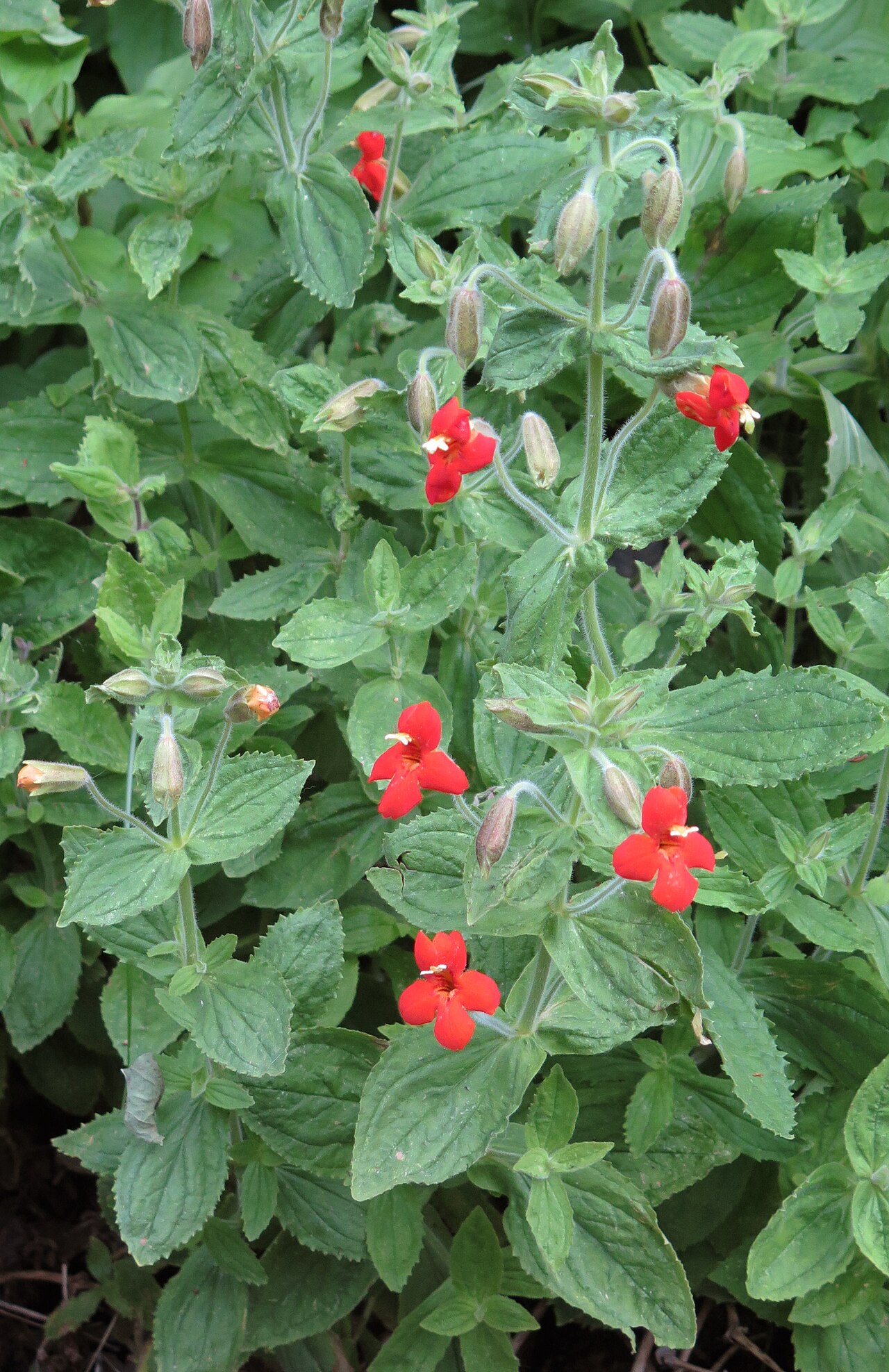
Erythranthe cardinalis (long known as Mimulus cardinalis), commonly called scarlet monkeyflower, is one of the most vividly colored wildflowers of western streambanks and seeps. Its strongly reflexed, trumpet-shaped red flowers are a textbook example of hummingbird pollination syndrome — tubular, nectar-rich, odorless, and colored exactly the shade of red that hummingbird vision is tuned to find irresistible.
A sprawling, spreading perennial that reaches 1 to 3 feet tall, scarlet monkeyflower grows in the wettest microsites of an otherwise dry western landscape: spring seeps, stream edges, wet rock faces and seasonally flooded banks, from low elevations near the coast up into mid-elevation mountain canyons. Where other plants shy away from constantly saturated soil, scarlet monkeyflower thrives on it, often forming bright red patches that are visible from a distance along a shaded canyon stream.
In the garden, scarlet monkeyflower is a favorite for anyone with a damp, sunny spot — a pond edge, rain garden, or the drip line of an irrigated bed — where it blooms for months and reliably draws hummingbirds. It has also become a workhorse of the horticulture trade and plant genetics research alike, prized by gardeners for its color and by botanists for the ease with which it hybridizes with related monkeyflowers.
Identification
Scarlet monkeyflower is a spreading to semi-upright perennial herb, typically 1 to 3 feet tall and often wider, with stems that root where they touch damp soil, allowing established plants to form expanding patches over several growing seasons.
Stems & Leaves
Stems are soft, somewhat fleshy, and covered in fine, sticky hairs. Leaves are opposite, oval to broadly lance-shaped, 1 to 4 inches long, with coarsely toothed margins and a downy, slightly sticky texture. The leaves clasp the stem at their base and have a strong vein pattern that is easy to see against the light.
Flowers
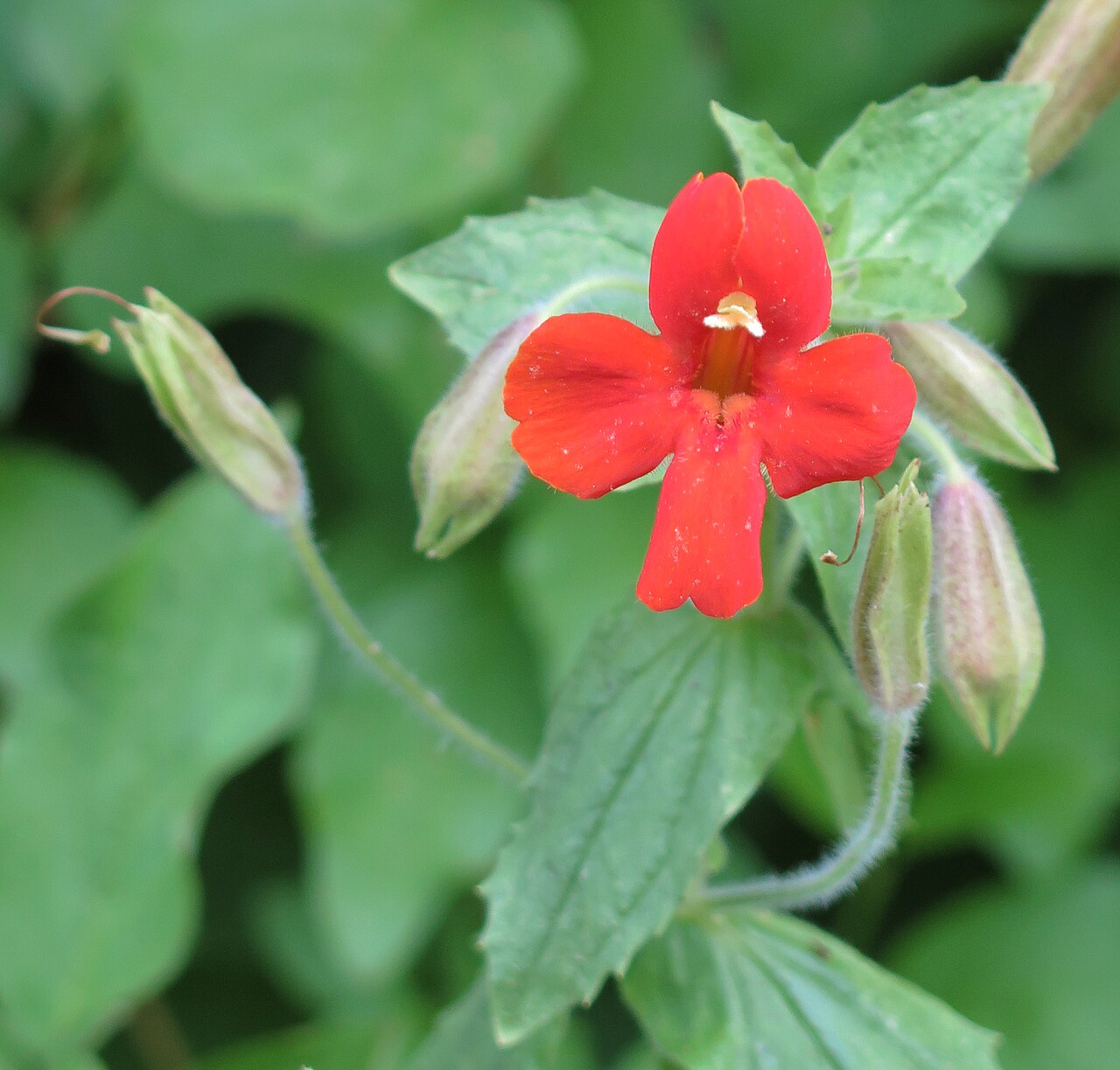
The flowers are the plant’s standout feature: tubular, bilaterally symmetrical blooms 1½ to 2 inches long, in a rich scarlet to orange-red that occasionally shades toward yellow in uncommon populations lacking red pigment. The five lobes are strongly reflexed (bent backward), pulling away from the long floral tube and exposing the protruding stamens and style — a shape that lines up almost perfectly with a hovering hummingbird’s bill and head. Flowers appear singly on long stalks from the leaf axils and bloom over a long season, typically spring through fall where soil moisture holds.
Fruit & Seeds
After pollination, flowers form a small, two-chambered capsule packed with numerous tiny seeds. The capsules dry and split open to release seed near the parent plant, while the spreading, rooting stems do much of the work of expanding an established colony.
Quick Facts
| Scientific Name | Erythranthe cardinalis (syn. Mimulus cardinalis) |
| Family | Phrymaceae (Lopseed, formerly Scrophulariaceae) |
| Plant Type | Perennial herbaceous wildflower |
| Mature Height | 1–3 ft |
| Mature Spread | 2–4 ft (spreads by rooting stems) |
| Growth Rate | Fast |
| Sun Exposure | Full Sun to Part Shade |
| Water Needs | High; needs consistently moist to wet soil |
| Soil Type | Moist to saturated; tolerates sand, loam or rocky seep soil |
| Soil pH | 6.0–7.5 (slightly acidic to neutral) |
| Bloom Time | Spring through fall where moisture is steady |
| Flower Color | Scarlet to orange-red (rare yellow forms exist) |
| Fall Color | None notable |
| Fruit | Small two-chambered seed capsule |
| Deer Resistant | Low (foliage can be browsed) |
| USDA Hardiness Zones | 7–10 |
Native Range
Scarlet monkeyflower is native to the West Coast of the United States, found in California, Nevada, Oregon and Washington, and continuing south to Cedros Island off Baja California, Mexico. It is most abundant and widespread in California, occurring from the coastal ranges and the Sierra Nevada foothills down into the southern California mountains and the edges of the desert ranges.
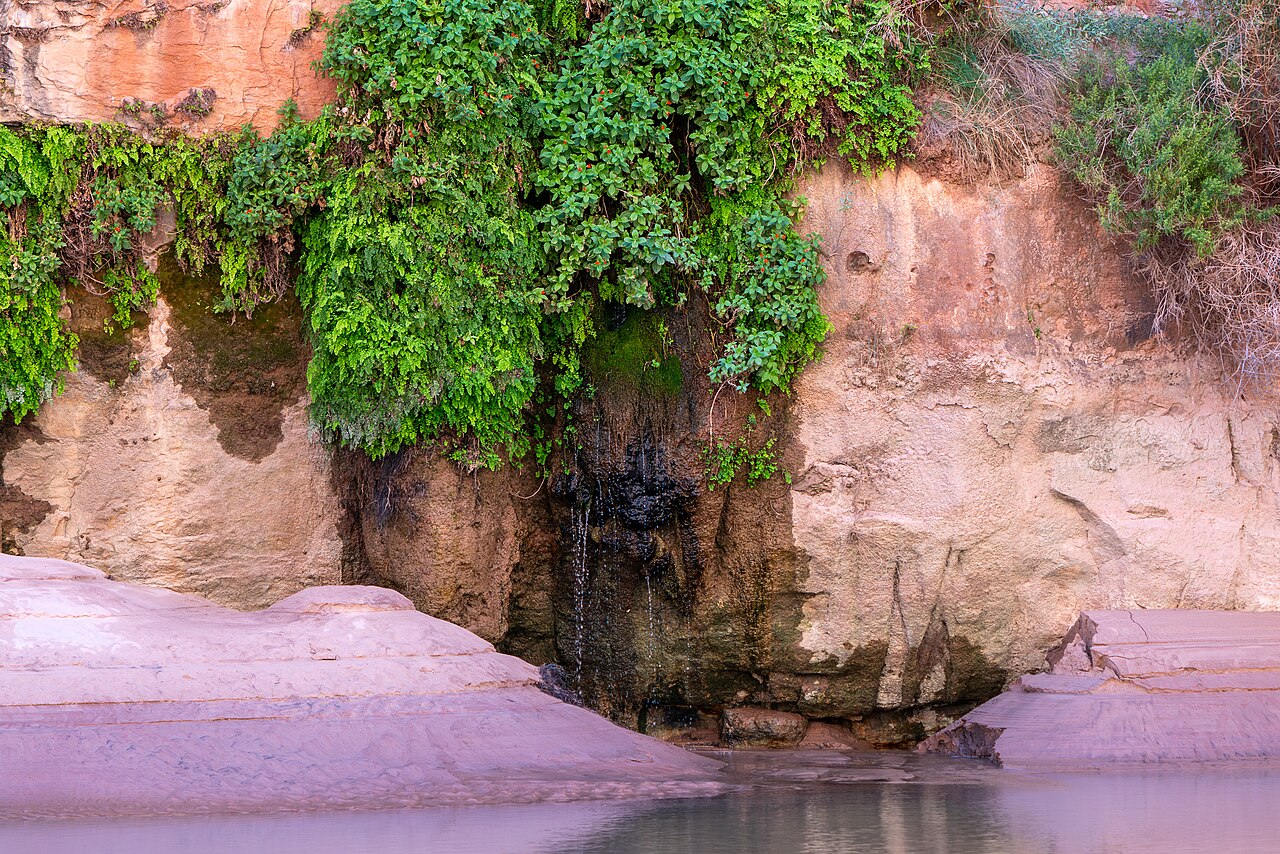
Across this range the plant is a true water-finder, restricted almost entirely to places where water is reliably present at or near the surface: spring-fed seeps, streambanks, the base of wet cliffs and rock faces, and the margins of ponds and slow water, usually at low to moderate elevations. It is common along shaded canyon streams in the Coast Ranges and Sierra Nevada foothills, where it can form large, showy colonies wherever a steady water source keeps the ground wet through the dry season.
Because it depends on consistent moisture, scarlet monkeyflower is a useful indicator species — its presence along a wash or canyon is a reliable sign of near-surface water, even in otherwise dry chaparral or oak woodland country.
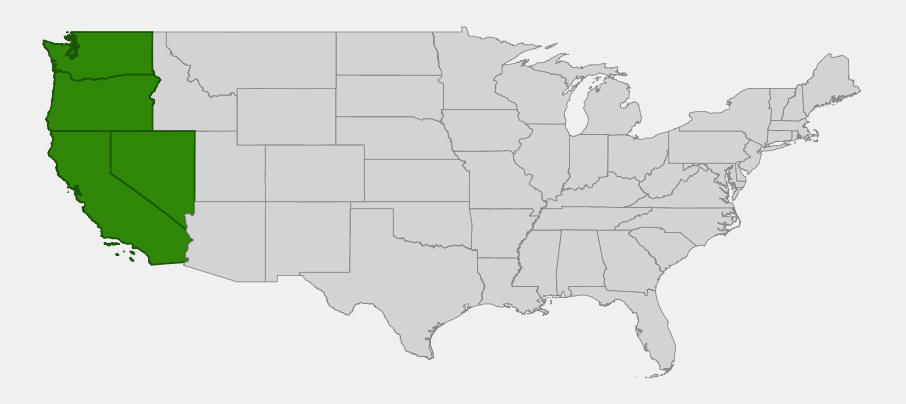
📋 Regional plant lists featuring scarlet monkeyflower: California & Nevada · Western Oregon & Western Washington
Growing & Care Guide
Scarlet monkeyflower is easy to grow wherever a garden can offer steady moisture and good sun — the main limiting factor is almost always water, not climate or soil fertility.
Light
Full sun produces the most compact growth and heaviest bloom near the coast; in hot inland gardens, light afternoon shade helps prevent wilting and extends the bloom season. In all cases, consistent soil moisture matters more than exact light exposure.
Soil & Water
This is a plant for the wettest spot in a native garden — pond edges, rain garden basins, bioswales, or the soggy ground near a downspout or irrigation drip line. It tolerates occasional standing water and does best in soil that never fully dries out during the growing season. Where summer moisture can’t be maintained, scarlet monkeyflower will decline or go dormant; it is not a true xeriscape plant despite being native to a dry-summer climate, since it is restricted in the wild to naturally wet microsites.
Planting Tips
Plant in spring after the last frost, in full sun to part shade with reliably moist soil. Space plants 18 to 24 inches apart to allow for its spreading, rooting stems. It establishes and spreads quickly in favorable conditions, so it works well as a fast-filling groundcover at a pond or stream edge.
Pruning & Maintenance
Cut plants back hard in late fall or winter to tidy sprawling growth and encourage denser regrowth the following spring. Deadheading spent flowers through the growing season can extend bloom. In mild winter climates the plant may stay semi-evergreen; in colder sites it dies back to the root crown and resprouts in spring.
Propagation
Scarlet monkeyflower is easy to propagate from stem cuttings, which root readily in moist soil or even water, reflecting the same rooting habit that lets wild stems expand a colony. It also grows well from seed sown on the soil surface in a consistently damp seedbed.
Landscape Uses
- Rain gardens and bioswales where soil stays wet after storms
- Pond and stream-edge plantings
- Hummingbird gardens — among the most reliable hummingbird-pollinated natives in its range
- Container water gardens with consistently moist soil
- Riparian restoration plantings along creeks and seeps
Wildlife & Ecological Value
Scarlet monkeyflower’s bright, tubular red flowers make it one of the more conspicuous wildlife-support plants of western riparian corridors.
For Pollinators
The flower shape and color are a near-perfect match for hummingbird pollination: a long floral tube holding nectar at its base, reflexed petals that keep them out of the way, and protruding stamens and style positioned to brush pollen onto a hovering bird’s head and bill. Bumblebees and other large bees also visit and can “rob” the shorter-tubed flowers of nectar, sometimes pollinating them in the process.
For Birds
Anna’s hummingbird, Allen’s hummingbird, black-chinned hummingbird and other western hummingbird species rely heavily on scarlet monkeyflower nectar during its long bloom season, and the plant is considered one of the most dependable hummingbird-attracting wildflowers in California gardens.
For Mammals
Deer and other browsers will eat the foliage where it is accessible, and the plant’s association with reliable water sources means its habitat often overlaps with wildlife corridors used by a wide range of mammals coming to drink.
Ecosystem Role
As an obligate wetland-margin species, scarlet monkeyflower helps stabilize wet banks and seep faces with its rooting stems, and its presence is a useful on-the-ground indicator of perennial or near-perennial water in otherwise dry California and Southwest landscapes. Its long bloom season provides a season-spanning nectar resource in riparian zones that might otherwise have gaps in flowering plant availability.
Cultural & Historical Uses
Scarlet monkeyflower has long been admired for its color and has a significant horticultural history: it was introduced into European gardens in the nineteenth century and quickly became popular in British and continental horticulture, eventually earning the Royal Horticultural Society’s Award of Garden Merit. Plant breeders have used it extensively to develop many of the hybrid monkeyflower cultivars sold in the ornamental trade today, including forms ranging from deep red to orange and yellow.
In its native range, the plant’s dependence on perennial water made streamside stands of scarlet monkeyflower a familiar landmark for travelers and early botanists mapping reliable water sources through California’s dry-summer landscape, and it remains a favorite subject for botanical illustrators and nature photographers today.
Frequently Asked Questions
Why are scarlet monkeyflower’s petals bent backward?
This reflexed shape is a hummingbird-pollination adaptation. By folding the petals away from the floral tube, the flower exposes its nectar, stamens and style in a configuration that lines up with a hovering hummingbird’s head and bill, improving pollen transfer.
Does scarlet monkeyflower need a pond to grow well?
Not necessarily a pond, but it does need consistently moist to wet soil. A rain garden basin, bioswale, irrigation drip line or stream edge all work, as long as the soil doesn’t dry out for extended periods during the growing season.
Is scarlet monkeyflower the same plant as Mimulus cardinalis?
Yes. Taxonomists moved most of the showy, non-Australian monkeyflowers from the genus Mimulus into Erythranthe in the 2010s, so Mimulus cardinalis and Erythranthe cardinalis refer to the same plant; many nurseries and older references still use the Mimulus name.
How long does scarlet monkeyflower bloom?
In gardens with steady moisture, it can bloom from spring through fall, one of the longest bloom seasons among California native wildflowers, making it valuable for season-long hummingbird support.
Is scarlet monkeyflower deer resistant?
No — deer will browse the foliage where they have access to it. Gardeners in deer-heavy areas should plan for protection or accept some browsing on unfenced plantings.

Looking for a nursery that carries Scarlet Monkeyflower?
Browse our native plant nursery directory: California · Nevada · Oregon · Washington