Fuchsia-Flowered Gooseberry (Ribes speciosum)
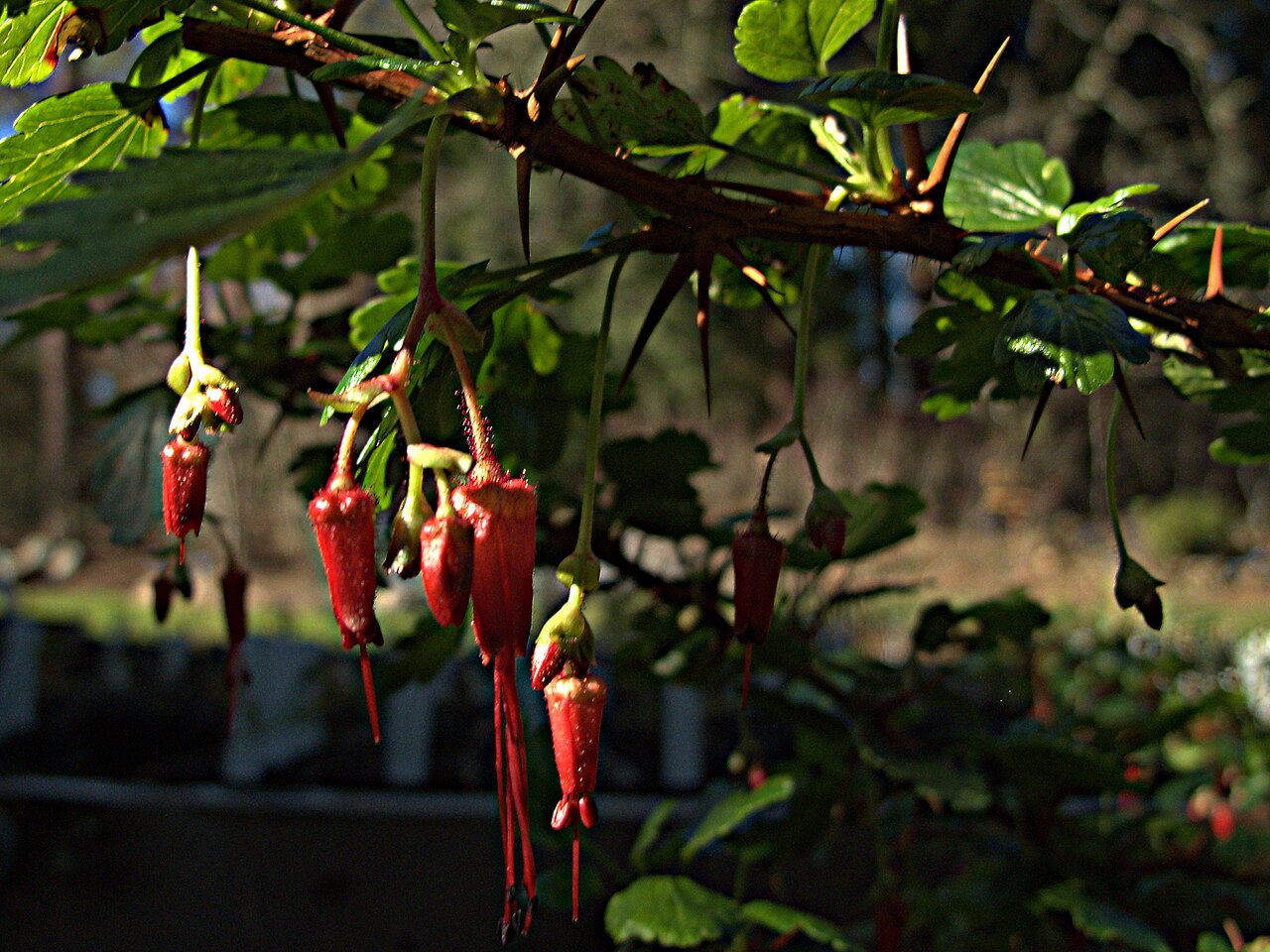
Ribes speciosum, commonly called fuchsia-flowered gooseberry or fuchsiaflower gooseberry, is one of California’s showiest native shrubs and one of the earliest to bloom, often flowering while much of the surrounding chaparral is still dormant from winter. Its common name describes it perfectly: the pendant, tubular crimson flowers with their long, protruding stamens look remarkably like fuchsia blossoms, though the two plants are not closely related.
A spiny, arching deciduous shrub typically 4 to 8 feet tall, fuchsia-flowered gooseberry grows in the shaded understory and canyon edges of California’s coastal chaparral, oak woodland and coastal sage scrub, usually not far from the ocean’s moderating influence. Each red flower dangles like a tiny earring from the thorny branches, and the plant’s late-winter to early-spring bloom makes it one of the very first nectar sources available to early-emerging hummingbirds each year.
For California gardeners, fuchsia-flowered gooseberry is a striking, low-maintenance choice for a shaded or lightly shaded native garden bed, rewarding minimal summer water with weeks of hummingbird activity and a dramatic late-winter flower display unlike almost anything else blooming at that time of year.
Identification
Fuchsia-flowered gooseberry is a deciduous shrub with long, arching, thorny branches, typically growing 4 to 6 feet tall and wide, occasionally reaching 8 feet in favorable sites with support from surrounding vegetation.
Stems
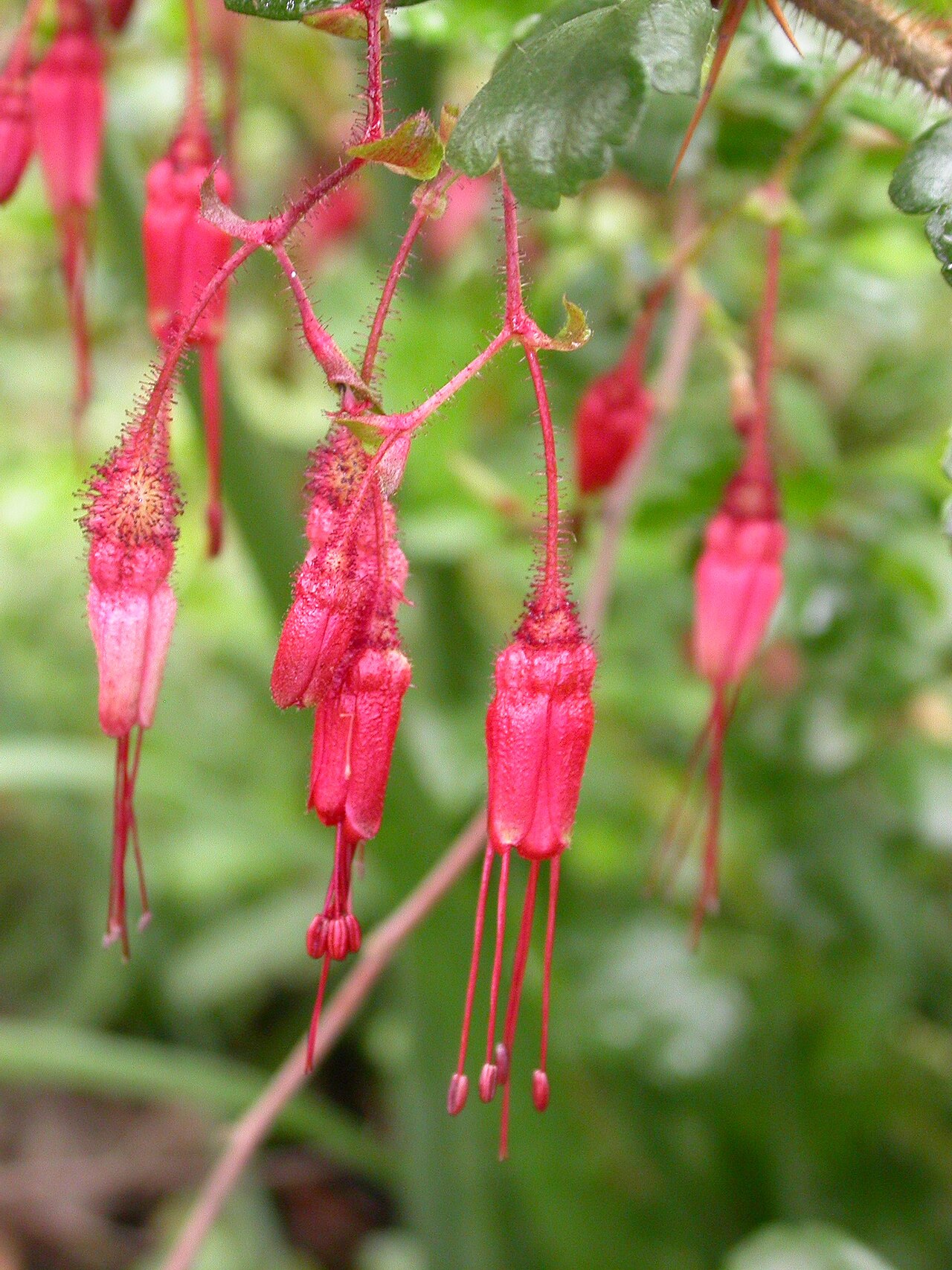
Stems are densely armed with sharp spines, both in scattered single thorns along the length of the branches and in clusters of three stout spines at the leaf nodes, a combination that makes the plant notably thorny to handle and effectively deer-proof. The arching growth habit means older plants often lean on neighboring shrubs for support.
Leaves
Leaves are small, 1 to 2 inches across, lobed and somewhat maple-like in shape, with a glossy, slightly sticky surface. The plant is winter-deciduous to briefly so, often dropping its leaves for only a short dormant period before new growth and flowers emerge together in late winter.
Flowers
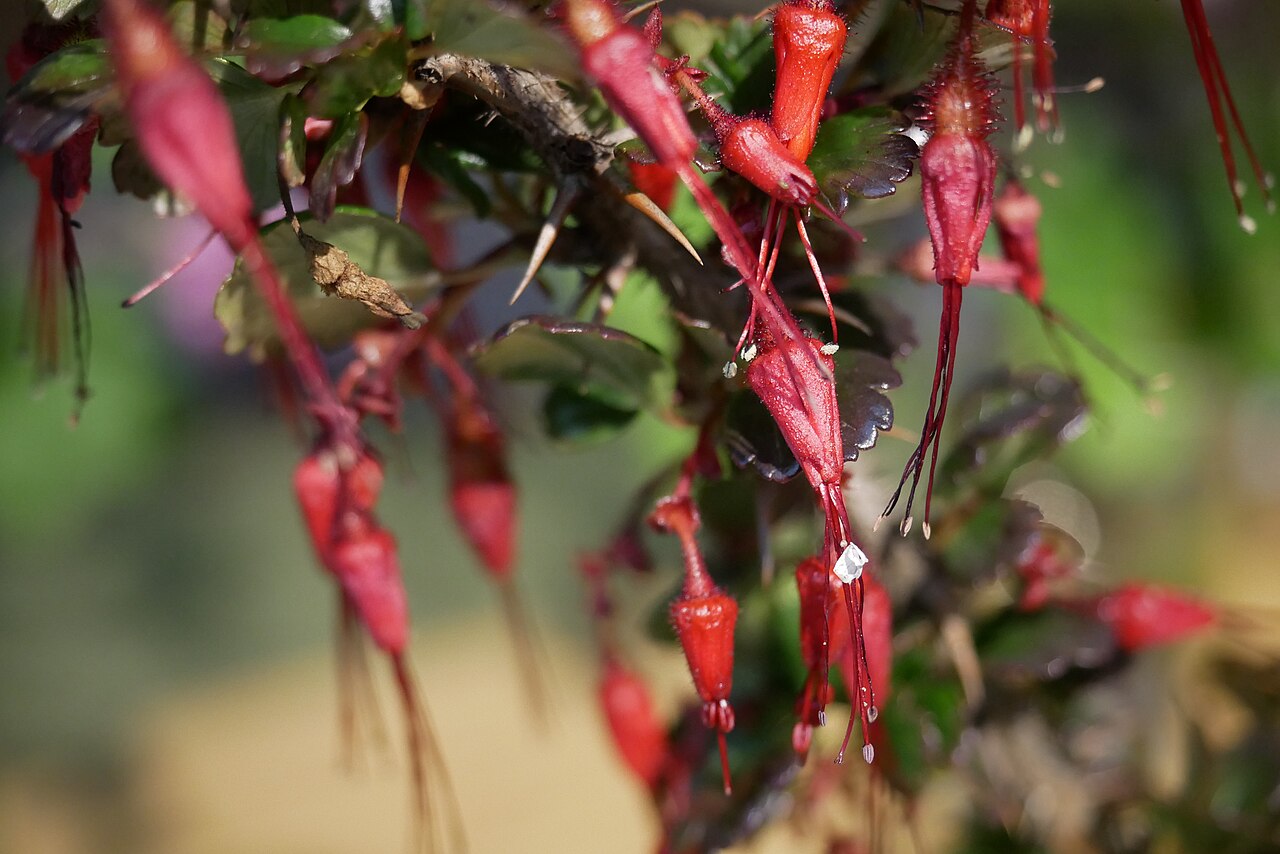
The flowers are the plant’s signature feature: tubular, pendant, and crimson-red, with long, exserted red stamens and styles that extend well beyond the petals, giving each bloom a distinctly fuchsia-like silhouette. Flowers hang singly or in small clusters along the arching branches and are covered in fine, sticky glandular hairs. Bloom begins as early as December in mild coastal sites and continues into April, making this one of the earliest-flowering native shrubs in California.
Fruit & Seeds
The fruit is a small, bristly, spine-covered berry that ripens from green to reddish-purple in late spring to early summer. The spiny covering distinguishes it clearly from smooth-fruited currants in the same genus and discourages all but the most determined animals from eating it before it ripens.
Quick Facts
| Scientific Name | Ribes speciosum |
| Family | Grossulariaceae (Currant/Gooseberry) |
| Plant Type | Deciduous spiny shrub |
| Mature Height | 4–6 ft (occasionally to 8 ft) |
| Mature Spread | 4–6 ft, wider when sprawling on support |
| Growth Rate | Moderate |
| Sun Exposure | Part Shade (tolerates full sun near the coast) |
| Water Needs | Low once established; appreciates occasional deep water |
| Soil Type | Well-drained loam, sand or clay-loam |
| Soil pH | 6.0–7.5 (slightly acidic to neutral) |
| Bloom Time | December – April (earliest in mild coastal sites) |
| Flower Color | Crimson red |
| Fall Color | None notable; drops leaves for a brief dormant period |
| Fruit | Small, spiny berry, green ripening to reddish-purple |
| Deer Resistant | Yes (dense spines discourage browsing) |
| USDA Hardiness Zones | 8–10 |
Native Range
Fuchsia-flowered gooseberry is native to California, where it grows along the Coast Ranges, Transverse Ranges, Peninsular Ranges and the Channel Islands, from the San Francisco Bay Area south through the Central Coast and Southern California to the Mexican border, continuing a short distance into northern Baja California. It is a true coastal and near-coastal species, rarely found far from maritime influence, and it is absent from California’s Central Valley, high mountains and deserts.
Within this range the shrub favors shaded to partly shaded sites in coastal sage scrub, chaparral and oak woodland, often growing along canyon bottoms, north-facing slopes, and the partial shade beneath taller shrubs or trees, typically from near sea level up to around 2,000 feet elevation. Its thorny, arching branches frequently lean into and through the branches of companion shrubs for structural support, a growth habit well suited to the dense, mixed-shrub chaparral communities where it is most often found.
Fuchsia-flowered gooseberry is not native beyond California and extreme northern Baja California — gardeners outside this narrow coastal belt should treat it as a specialty regional native rather than a widely adaptable garden shrub.
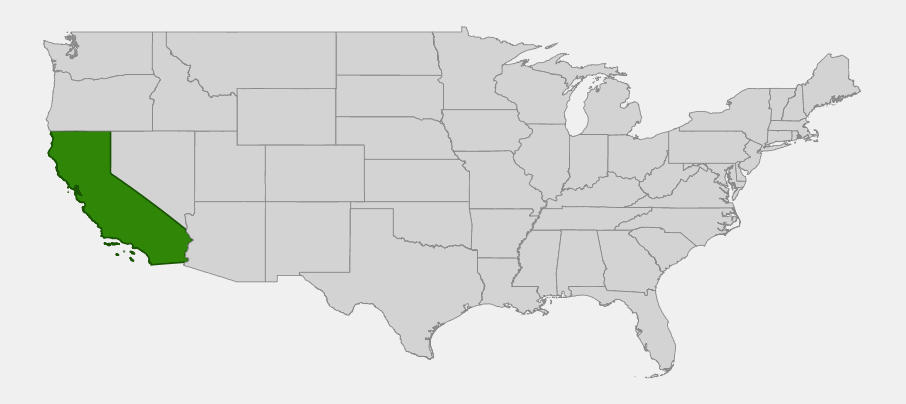
📋 Regional plant lists featuring fuchsia-flowered gooseberry: California & Nevada
Note: fuchsia-flowered gooseberry is native to California but is not native to Nevada, despite both states sharing this regional plant list.
Growing & Care Guide
Fuchsia-flowered gooseberry is a satisfying, low-care shrub for California gardens that can offer it some shade and respect its thorns.
Light
Part shade is ideal, particularly in hot inland gardens, where the plant grows best with protection from the most intense afternoon sun. Near the coast, where temperatures are milder, it tolerates considerably more sun.
Soil & Water
This shrub adapts to a range of well-drained soils, from sandy loam to clay-loam, and does not require rich or amended soil. It is drought tolerant once established and typically needs little to no summer water in coastal gardens, though an occasional deep soak during long dry spells keeps it looking its best. Avoid heavy, poorly drained soil, which can lead to root problems.
Planting Tips
Plant container-grown specimens in fall to take advantage of winter rains for root establishment. Choose a site with some afternoon shade, away from paths and high-traffic areas given the plant’s dense spines. Allow 4 to 6 feet of space for the shrub’s arching, spreading habit, and consider planting it where it can lean into or through a companion shrub, mimicking its natural chaparral growth form.
Pruning & Maintenance
Minimal pruning is needed. Remove dead wood and thin congested growth after flowering, wearing thick gloves given the dense spines on both old and new stems. The plant’s naturally arching, somewhat untidy habit is part of its charm and does not need to be corrected with heavy shaping.
Propagation
Propagate from hardwood cuttings taken during winter dormancy, or from seed, which benefits from cold stratification over winter to break dormancy, mimicking the natural chilling the seed would experience on the ground through a California winter.
Landscape Uses
- Shaded native plant beds beneath oaks or other canopy trees
- Hummingbird gardens — one of the earliest nectar sources of the year
- Barrier or security plantings, thanks to its dense spines
- Chaparral and woodland restoration plantings
- Specimen shrub for its striking winter-to-spring flower display
Wildlife & Ecological Value
Fuchsia-flowered gooseberry plays an outsized ecological role for its size, largely because of its unusually early bloom time.
For Pollinators
The tubular red flowers are specialized for hummingbird pollination, but their timing is what makes them especially valuable: blooming as early as December, they provide one of the very first significant nectar sources of the year in California’s chaparral and coastal sage scrub, at a time when few other native plants are flowering.
For Birds
Anna’s hummingbird, which overwinters in much of coastal California, depends heavily on early-blooming nectar plants like fuchsia-flowered gooseberry to get through the lean late-winter months before spring bloom becomes widespread. The dense, thorny structure of the shrub also offers excellent predator-proof nesting sites for small songbirds.
For Mammals
Birds and small mammals eat the ripe, spiny berries despite their bristly covering, helping disperse seeds through the chaparral. The plant’s dense spines make it unpalatable to deer, which effectively avoid browsing it — a trait that makes it a reliably deer-resistant choice in gardens where deer pressure limits other native shrub options.
Ecosystem Role
As one of the earliest shrubs to flower each year, fuchsia-flowered gooseberry helps bridge the nectar gap between the last fall-blooming plants and the main spring wildflower bloom, supporting pollinators and nectar-feeding birds through an otherwise lean period. Its dense, thorny form also provides valuable cover and nest protection within the chaparral and oak woodland communities where it grows.
Cultural & Historical Uses
Fuchsia-flowered gooseberry has a long history in cultivation dating back to the nineteenth century, when its strikingly fuchsia-like flowers drew the attention of early California botanists and plant collectors documenting the state’s native flora. It was among the California native shrubs introduced to English and European gardens during the Victorian era, prized for its unusual winter flowering season and distinctive red blooms.
Within California, the species has long been a recognizable component of coastal chaparral and oak woodland plant communities, and it continues to be valued today chiefly for its ornamental and wildlife-support qualities in native plant horticulture rather than for any significant traditional food or material use, as its small, densely spiny berries make harvesting impractical compared to other native fruits.
Frequently Asked Questions
Why does fuchsia-flowered gooseberry bloom so early?
Its bloom time, as early as December in mild coastal sites, is an adaptation to California’s mild, wet winters, allowing the plant to take advantage of winter rainfall and provide an early nectar source for overwintering Anna’s hummingbirds before most other plants flower.
Are the berries edible?
The berries are covered in dense, bristly spines that make them impractical and unpleasant to handle or eat; they are best left for birds and wildlife rather than treated as a garden food crop.
Is fuchsia-flowered gooseberry deer resistant?
Yes. Its dense covering of sharp spines on both old and new growth effectively discourages deer browsing, making it a reliable choice in gardens with deer pressure.
Can I grow fuchsia-flowered gooseberry outside California?
It is native only to coastal and near-coastal California and a small area of northern Baja California, and it is best suited to that same mild, dry-summer coastal climate. Gardeners well outside this range, especially in colder or more humid climates, should expect it to perform poorly or not survive.
Does fuchsia-flowered gooseberry need full sun?
No — it generally performs best with some shade, especially in hot inland gardens, though it tolerates more sun in milder coastal conditions.

Looking for a nursery that carries Fuchsia-Flowered Gooseberry?
Browse our native plant nursery directory: California