
Roundleaf Alumroot (Heuchera cylindrica)
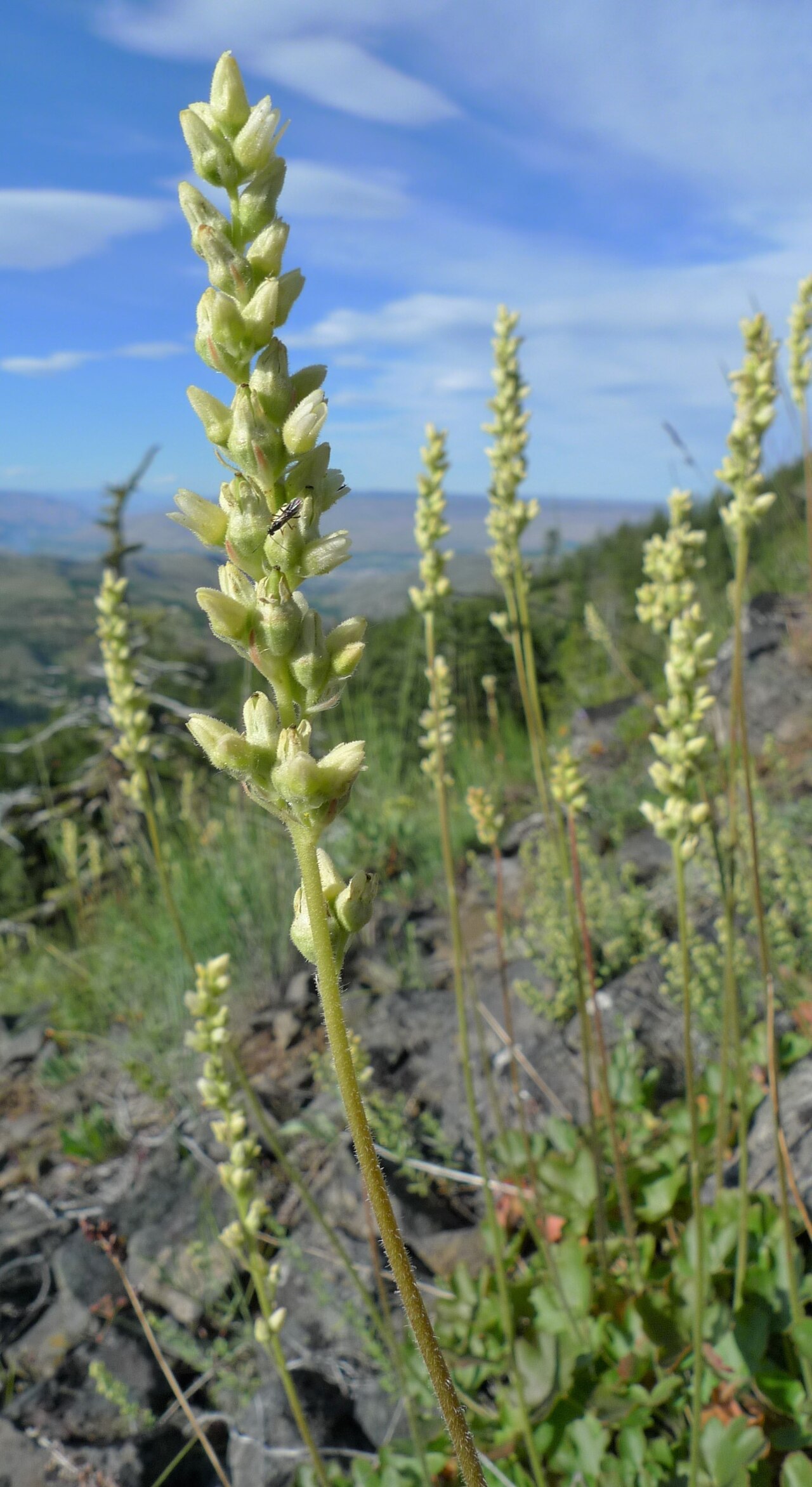
Heuchera cylindrica, known as Roundleaf Alumroot, poker alumroot or lava alumroot, is a tough, evergreen wildflower of rocky places in the interior Northwest and northern Rockies. It forms a low mound of rounded, scalloped, leathery leaves and in late spring sends up wiry stems 6 to 35 inches tall, each topped with a dense, narrow, poker-like spike of creamy white to greenish-yellow, bell-shaped flowers.
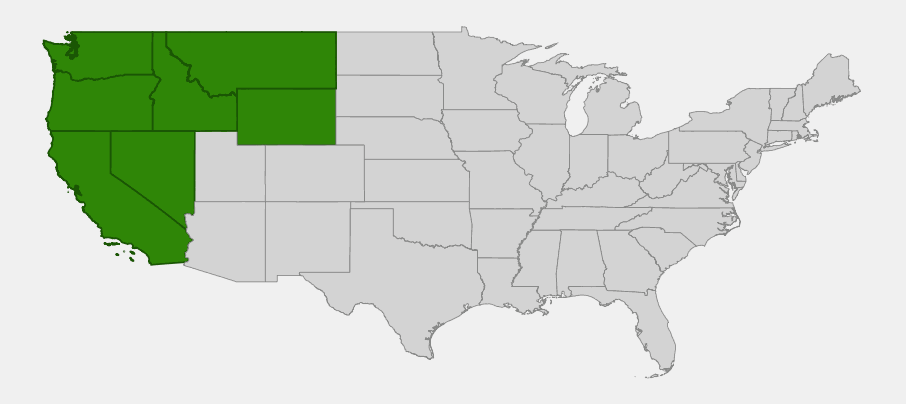
It is native to Washington, Oregon, Idaho, Montana, Wyoming, northern Nevada and northeastern California, and in Canada to British Columbia and Alberta. It grows on cliffs, ledges, talus, lava flows and rocky slopes, from sagebrush steppe and ponderosa pine forest up to subalpine meadows. It is a relative of the colorful coral bells grown in gardens, and its genes appear in some of their hybrids.
Roundleaf alumroot is not as showy as the red-flowered coral bells, but it is long-lived, drought tolerant once established, and one of the best native perennials for rock gardens, walls and dry shade in the inland West. This guide covers how to identify it, where it grows, how to grow it and its value to wildlife.
Identification
Alumroots are notoriously variable and hybridize readily, but roundleaf alumroot’s combination of dense, cylindrical flower spikes and tiny or missing petals sets it apart from most of its relatives.
Leaves & Growth Habit
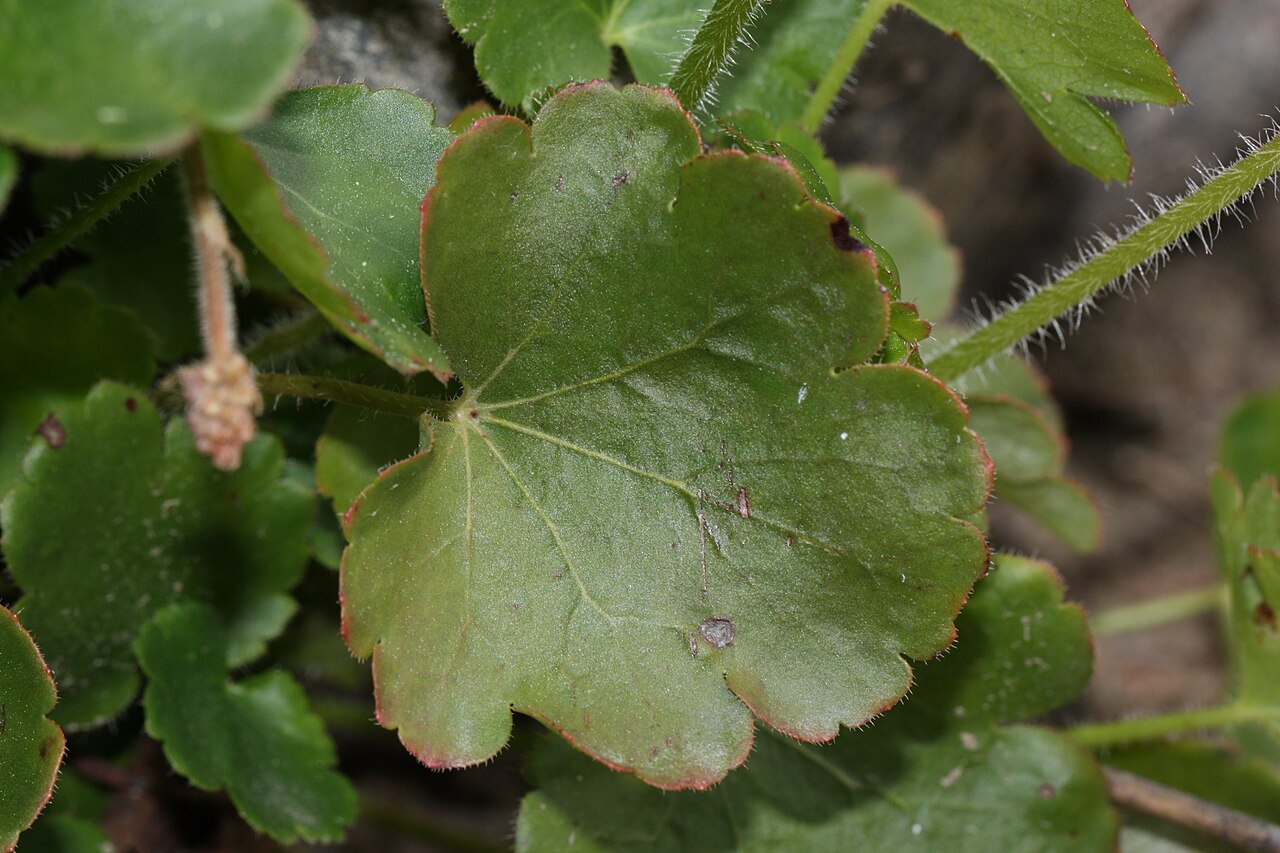
A clump-forming, evergreen perennial from a stout, branching rootstock. All the leaves are basal, on long stalks. The blades are 1 to 3 inches across, round to broadly oval or heart-shaped, shallowly lobed and scalloped along the edges, thick and somewhat leathery, and smooth to glandular-hairy. The edges often turn reddish in sun or in winter.
Flowers
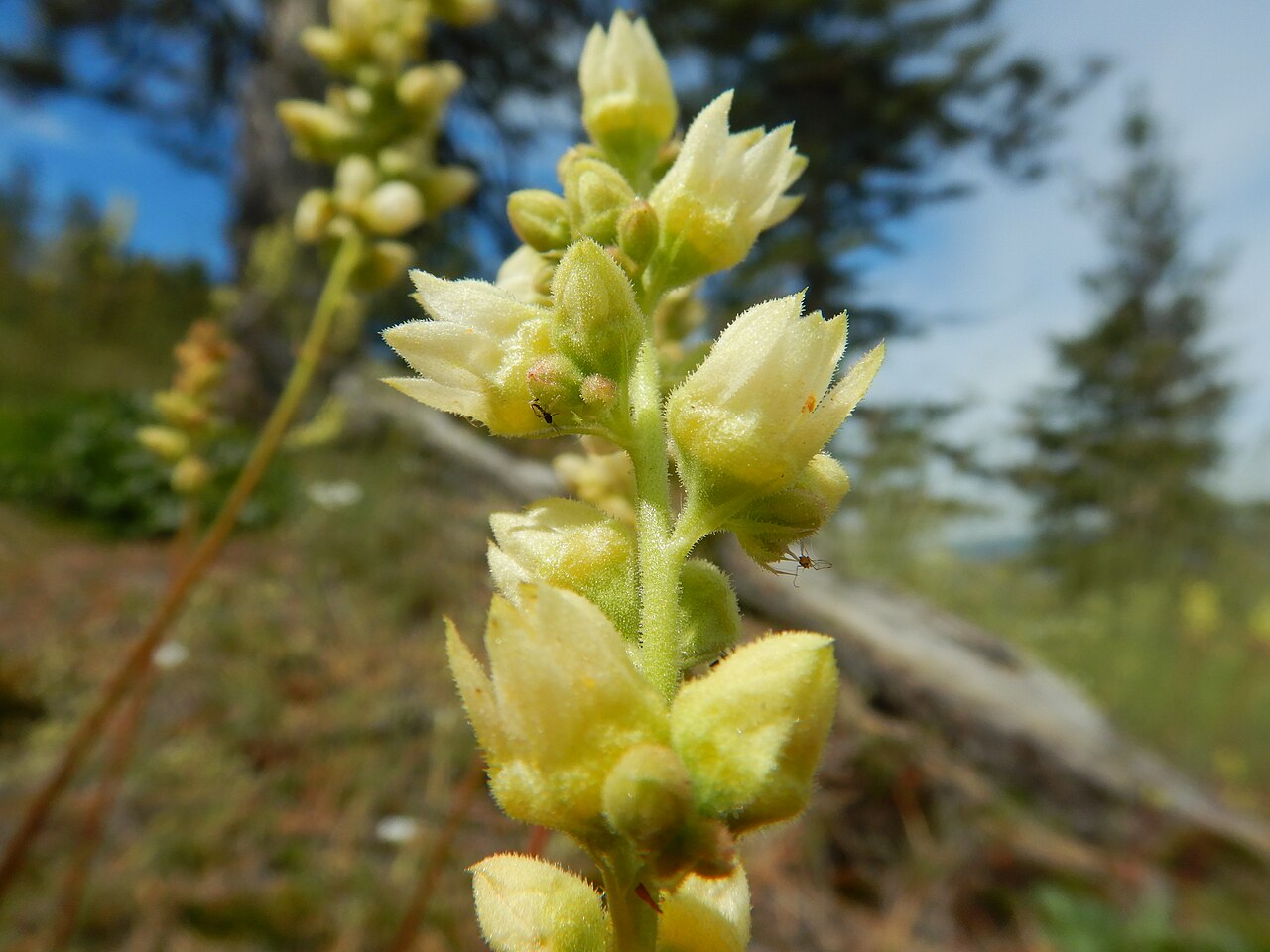
Flowers bloom from April to August, depending on elevation, on leafless stems that are densely glandular-hairy, especially near the top. The flowers are crowded into a narrow, cylindrical spike 1 to 6 inches long. Each flower is a bell-shaped calyx about ¼ to ½ inch long, creamy white, pale yellow or greenish, sometimes tinged pink. The petals are tiny or absent, and the stamens stay inside the bell.
Fruit
The fruit is a small, two-beaked capsule that holds many tiny, dark brown seeds, which shake out of the dry spikes in late summer and fall.
Look-alikes
Crevice Alumroot grows in similar rocky places but has open, airy clusters of tiny white flowers with visible petals. Smallflower alumroot (Heuchera parvifolia) of the Rockies has smaller flowers in a looser cluster. Poker alumroot’s large, cream bells packed into a dense spike are its best field mark.
Quick Facts
| Scientific Name | Heuchera cylindrica |
| Family | Saxifragaceae (saxifrage family) |
| Plant Type | Evergreen herbaceous perennial |
| Mature Height | 6–35 in in flower (leaves 4–8 in) |
| Mature Spread | 8–15 in |
| Growth Rate | Slow to moderate |
| Sun Exposure | Full sun to part shade |
| Water Needs | Low to medium; drought tolerant once established |
| Soil Type | Well-drained rocky, gravelly or sandy soil |
| Soil pH | Slightly acidic to neutral |
| Bloom Time | April–August |
| Flower Color | Cream, pale yellow or greenish, sometimes pink-tinged |
| Fall Color | Leaves often edged red in fall and winter |
| Fruit | Small capsule with many tiny seeds |
| Deer Resistant | Moderately; occasionally browsed |
| USDA Hardiness Zones | About 4–8 |
Native Range
Roundleaf alumroot is a plant of the interior Pacific Northwest and northern Rocky Mountains. USDA PLANTS lists it in Washington, Oregon, Idaho, Montana, Wyoming, Nevada and California, and in Canada in British Columbia and Alberta. It is most common east of the Cascade crest, from the eastern Cascades and Columbia Basin canyons to the Blue Mountains, the mountains of Idaho, western Montana and northwestern Wyoming.
At the southern edge of its range it reaches northern Nevada and northeastern California, mostly in the Modoc Plateau and Warner Mountains. Several varieties have been described, including var. alpina of higher elevations and var. glabella, but they intergrade, and many floras now treat the species without varieties.
Its habitat is rock: cliffs, ledges, crevices, talus slopes, rocky ridges and old lava flows, in sagebrush steppe, open ponderosa pine and Douglas-fir forest and subalpine meadows. It often grows where little else can root, from low canyon walls to near treeline.
📋 Regional plant lists featuring Roundleaf Alumroot: Idaho, Eastern Oregon & Eastern Washington · Montana & Wyoming · California & Nevada · Western Oregon & Western Washington
Growing & Care Guide
Roundleaf alumroot is easy to grow in the inland West and is offered by native plant nurseries in the Northwest and Rockies. Its evergreen mounds look good all year, and the cultivar ‘Greenfinch’, with chartreuse flower spikes, is sold more widely. It is far more tolerant of sun and drought than most garden heucheras.
Light
Full sun to part shade. In hot, low-elevation gardens, afternoon shade keeps the leaves from scorching; at higher elevations and in cool climates it takes full sun.
Soil & Water
Sharp drainage is the key. Grow it in gravelly, rocky or sandy soil, between rocks or in a wall crevice. Water regularly the first summer, then only occasionally in long dry spells. Wet, heavy soil, especially in winter, causes crown rot.
Planting Tips
Plant in spring or early fall, setting the crown at or slightly above soil level. It is ideal for rock gardens, dry stone walls, slopes and the edges of dry woodland gardens. Pair it with penstemons, buckwheats, stonecrops and bunchgrasses.
Pruning & Maintenance
Remove the old flower stems after the seeds have dropped, and tidy dead leaves in spring. After several years, crowns can become woody and raised; lift and replant them more deeply or divide them. No fertilizer is needed.
Propagation
Sow the tiny seed on the surface of a gritty mix in fall or late winter and leave it uncovered, since it needs light to germinate. Cold, moist stratification for a few weeks improves germination. Established clumps can be divided in spring or early fall, and rosettes with a piece of rootstock can be rooted as cuttings.
Landscape Uses
- Rock gardens and walls: evergreen mounds that thrive in crevices and gravel
- Dry shade: under pines and other open conifers in the inland West
- Pollinator gardens: early-summer flowers for native bees
- Slope and restoration plantings: rocky slopes, talus and road cuts within its range
Wildlife & Ecological Value
On cliffs and rocky slopes, roundleaf alumroot is one of the most dependable sources of flowers in late spring and early summer.
For Pollinators
Its bell-shaped flowers are visited mainly by bees, including bumble bees and small native bees, as well as flies. Hummingbirds sometimes visit, though the pale flowers are less attractive to them than red coral bells.
For Birds
Seed-eating birds may pick at the tiny seeds, and the insects drawn to the flowers feed songbirds. The plant itself is of minor food value to birds.
For Mammals
Deer, elk, bighorn sheep and mountain goats occasionally graze the leaves and flower stalks, but its cliff and talus habitat protects most plants from heavy browsing.
Ecosystem Role
As a long-lived perennial anchored in rock crevices and talus, it helps stabilize thin soils on cliffs and steep slopes and is part of the specialized flora of rocky outcrops in the inland Northwest.
Cultural & Historical Uses
The genus Heuchera honors Johann Heinrich von Heucher, an 18th-century German physician and botanist. The species was described by William Jackson Hooker from plants collected by David Douglas, the Scottish plant explorer who traveled the Columbia River region in the 1820s. The name cylindrica describes the narrow, cylindrical flower spike.
The common name “alumroot” comes from the strongly astringent, tannin-rich roots of the genus, which were compared to the mineral alum. Several Indigenous peoples of the Plateau region used alumroot roots as an astringent medicine for sores, diarrhea and other ailments.
Plant breeders have used roundleaf alumroot in hybrid heucheras, and the selection ‘Greenfinch’, with chartreuse flower spikes, is valued by flower arrangers and gardeners who like its architectural form.
Frequently Asked Questions
Why is it called alumroot?
The roots of Heuchera species are rich in tannins and strongly astringent, like the mineral alum, and were used medicinally for that reason.
Is roundleaf alumroot the same as coral bells?
It is in the same genus. “Coral bells” usually refers to the red-flowered Heuchera sanguinea and garden hybrids. Roundleaf alumroot has cream to greenish flowers and is sometimes also sold as coral bells.
Does it need shade?
No. Unlike most garden heucheras, it tolerates full sun in cool climates and at higher elevations. In hot, low-elevation gardens, it does best with afternoon shade.
Is it evergreen?
Yes. Its leathery basal leaves stay through winter, often turning red at the edges in cold weather.
How do I grow it from seed?
Scatter the tiny seed on the surface of a gritty potting mix in fall or late winter, leave it uncovered, and keep it moist and cold for a few weeks. Germination improves with cold stratification and light.

Looking for a nursery that carries Roundleaf Alumroot?
Browse our native plant nursery directory: California · Idaho · Montana · Nevada · Oregon · Washington · Wyoming

