
Ko’oloa ‘ula (Abutilon menziesii)
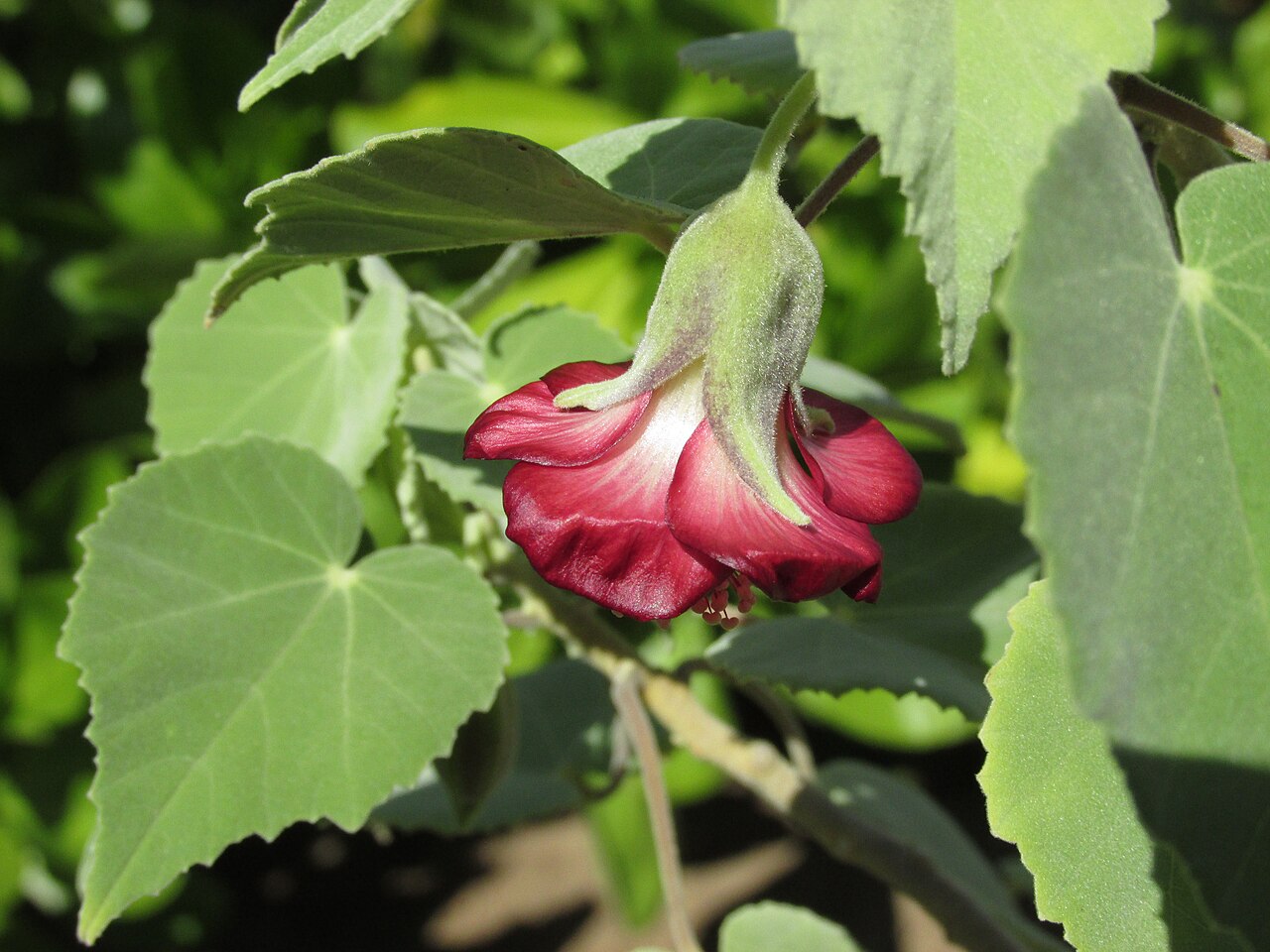
Abutilon menziesii, known in Hawaiian as Koʻoloa ʻula (also written koʻoloaʻula) and sometimes called red ʻilima, is a rare shrub of the mallow family (Malvaceae) found only in the Hawaiian Islands. It is a sprawling, soft-leaved shrub up to about 10 feet tall, with small, nodding, hibiscus-like flowers that are usually deep red or wine-colored, though pink, salmon, white-and-pink and pale yellow forms also occur.
Koʻoloa ʻula is federally listed as endangered under the U.S. Endangered Species Act and is ranked critically endangered by the IUCN. Only a few hundred wild plants remain, in fewer than ten natural populations on Lānaʻi, Maui, Oʻahu and Hawaiʻi Island, mostly in remnants of lowland dry forest and shrubland. Habitat loss, grazing by goats, deer and cattle, invasive grasses and fire have all contributed to its decline.
Thanks to conservation propagation, it is also one of the most widely planted endangered Hawaiian plants: nurseries in Hawaiʻi grow it from seed, and it is a favorite in native landscapes and lei gardens. Buy only nursery-propagated plants, and never collect plants, cuttings or seeds from the wild. This guide covers how to identify it, where it grows, how to grow it in Hawaiian gardens, and its cultural value.
Identification
Koʻoloa ʻula looks like a small, soft-leaved hibiscus relative whose flowers hang down beneath the foliage. Up close the flowers are striking, but from a distance they can be hidden by the leaves.
Growth Habit
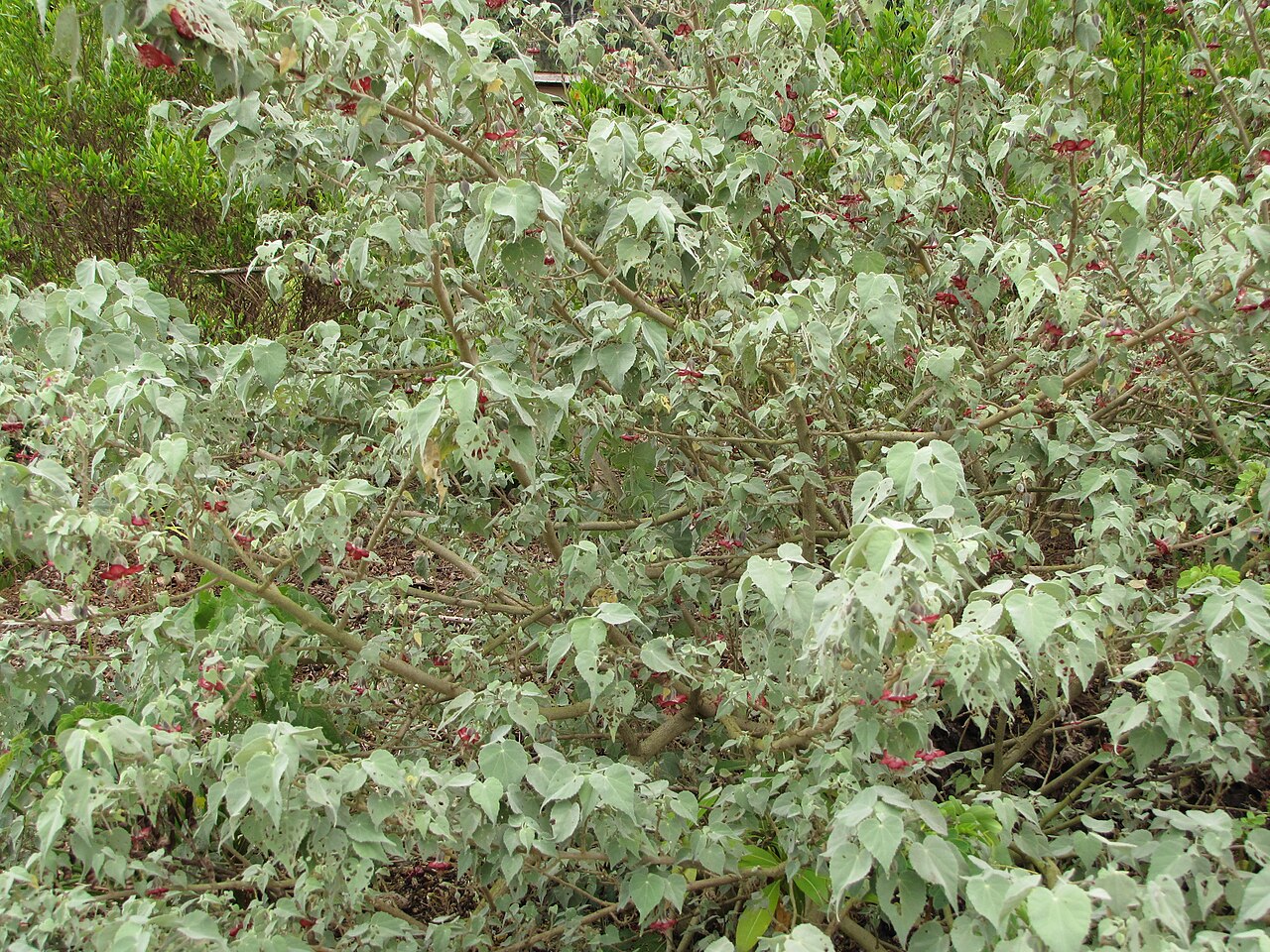
A sprawling, multi-stemmed shrub, usually 3 to 6 feet tall in gardens and up to about 10 feet in the wild, often wider than tall. Young stems and leaves are covered in fine, soft hairs.
Leaves
Leaves are alternate, heart-shaped to rounded, from about 1 to 5 inches long, with toothed margins and long stalks. They are gray-green and velvety to the touch, and vary a good deal in size and shape from plant to plant.
Flowers
Flowers are borne singly or a few together from the leaf axils on slender, jointed stalks, and hang downward. Each is about ¾ to 1 inch across, cup- or bell-shaped, with five overlapping petals and a central yellowish staminal column. The usual color is deep red to wine or maroon, which gives the plant the Hawaiian name ʻula (“red”), but pink, pink-and-white, salmon, and pale yellow (“butter” or “blond”) forms are known. Plants can flower at almost any time of year.
Fruit & Look-alikes
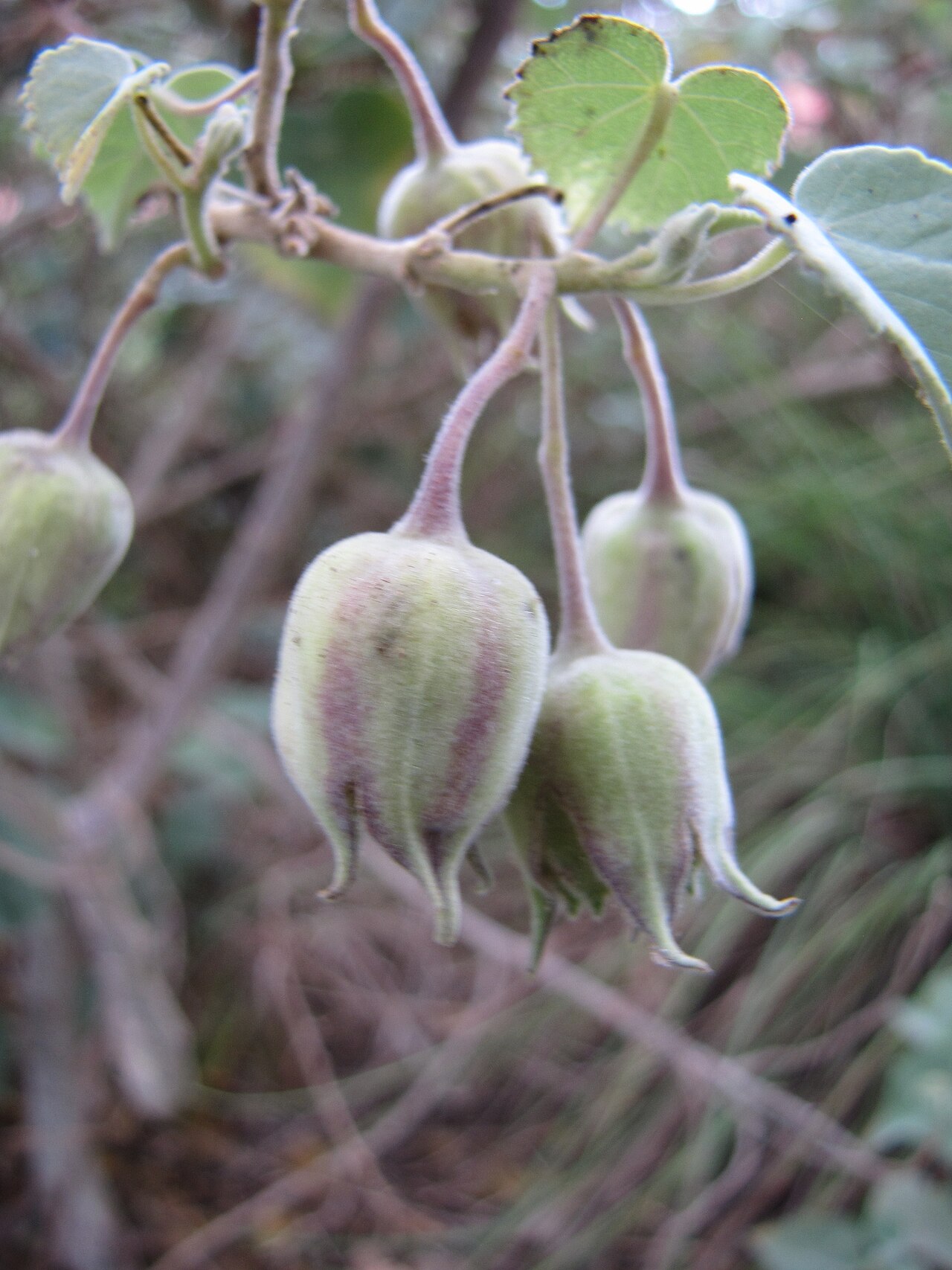
The fruit is a pale green to pale brown, fuzzy, ribbed capsule about ⅜ inch long that hangs like a small lantern and holds many small, dark brown seeds. The closely related Pelotazo (A. incanum), also native to Hawaiʻi, has smaller, upward-facing, pale flowers with a dark red center and a star-shaped fruit. ʻIlima has small, flat, yellow-orange flowers that face upward.
Quick Facts
| Scientific Name | Abutilon menziesii Seem. |
| Family | Malvaceae (mallow family) |
| Plant Type | Evergreen shrub; Hawaiian endemic; federally endangered |
| Mature Height | 3–10 ft |
| Mature Spread | 4–8 ft |
| Growth Rate | Moderate to fast |
| Sun Exposure | Full sun to partial shade |
| Water Needs | Low to moderate; well-drained soil |
| Soil Type | Rocky, well-drained soils; tolerates clay that drains well |
| Soil pH | Slightly acidic to slightly alkaline |
| Bloom Time | Year-round, heaviest in the warmer months |
| Flower Color | Deep red to maroon; also pink, salmon, white-and-pink or pale yellow |
| Fall Color | None; gray-green foliage |
| Fruit | Fuzzy, ribbed capsule about ⅜ in long |
| Deer Resistant | No; browsed by axis deer and goats |
| USDA Hardiness Zones | 10–12 (outdoors in Hawaiʻi) |
Native Range
Koʻoloa ʻula is endemic to the Hawaiian Islands; it grows nowhere else in the wild. USDA PLANTS lists it as native only in Hawaiʻi. Its natural populations survive on Lānaʻi, Maui, Oʻahu and Hawaiʻi Island, in the dry, leeward lowlands and lower slopes where rainfall is low and seasonal.
It belongs to the lowland dry forest and shrubland, one of the most heavily altered ecosystems in Hawaiʻi. These forests once covered much of the leeward lowlands; today most have been converted to pasture, agriculture and housing or overrun by invasive grasses that carry fire. Wild koʻoloa ʻula plants are mostly restricted to small remnants, often on rocky ground, and many populations contain only a few individuals.
Conservation agencies, botanical gardens and native plant nurseries have propagated it widely, and it has been outplanted into restoration sites and fenced, protected areas. Garden plants are common in Hawaiian landscapes, but these do not replace wild populations, which carry the species’ natural genetic diversity.
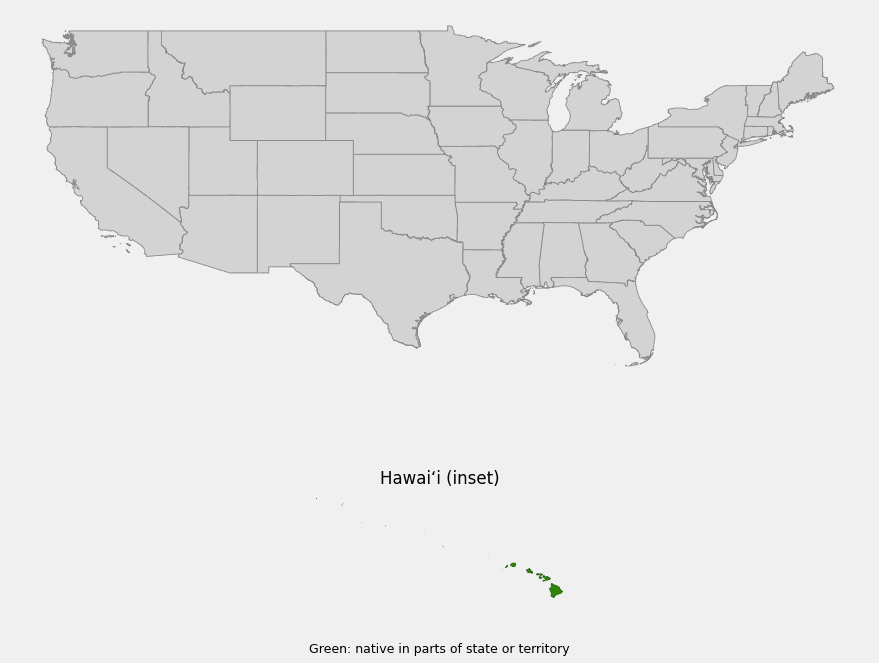
📋 Regional plant lists featuring Ko’oloa ‘ula: Hawaii
Growing & Care Guide
Despite its endangered status, koʻoloa ʻula is easy to grow in Hawaiʻi and is sold by native plant nurseries across the islands. Buy only nursery-propagated plants from reputable Hawaiian native plant growers. Never collect plants, cuttings or seeds from wild populations; as a federally and state-listed endangered species, it is protected, and taking it from the wild requires permits. It grows outdoors only in frost-free climates (about USDA zones 10–12). It is not a houseplant, though it can be kept in a large container on a sunny lanai.
Light
Full sun to partial shade. Plants in full sun are more compact and flower more heavily; in shade they become open and leggy.
Soil & Water
Any well-drained soil, including rocky and cinder soils. Water regularly until established; after that it tolerates dry periods, though occasional deep watering keeps it flowering. Avoid soggy soil and overwatering, which can cause root rot.
Planting Tips
Plant in a sunny spot with room to sprawl, or use it as an informal hedge, a specimen near a path where the nodding flowers can be seen up close, or a container plant. In windy coastal sites, give it some shelter. Outside Hawaiʻi, it is grown mainly in conservatories and botanical gardens.
Pruning & Maintenance
Prune lightly after flowering to keep it compact and bushy; it responds well to shaping. Watch for scale insects, mealybugs and whiteflies, which are often tended by ants, and treat with horticultural oil or soap if needed. Light feeding with a slow-release fertilizer keeps garden plants vigorous.
Propagation
Nurseries grow it from seed collected from cultivated plants. Seeds have a hard coat; nicking or a brief soak in hot water speeds germination. Softwood cuttings can also be rooted. Home gardeners should propagate only from their own nursery-bought plants.
Landscape Uses
- Hawaiian native gardens: a rare endemic that is easy to grow in leeward, dry-land landscapes
- Lei gardens: the nodding red flowers are used in lei
- Informal hedges and specimens: a soft, gray-green sprawling shrub that blooms year-round
- Conservation plantings: outplanting in dry-forest restoration projects with appropriate permits
Wildlife & Ecological Value
As a dry-forest shrub, koʻoloa ʻula is part of one of Hawaiʻi’s most endangered plant communities.
For Pollinators
The nodding, nectar-producing flowers are visited by insects in gardens. Their natural pollinators in the wild are not well documented.
For Birds
In gardens it provides cover and nesting sites for small birds. Dry-forest shrubs like it help support the native insects on which Hawaiian forest birds depend.
For Mammals
Hawaiʻi has only one native land mammal, the Hawaiian hoary bat, which forages for insects over dry forest. Introduced goats, cattle and axis deer browse koʻoloa ʻula heavily and are among the main threats to wild plants.
Ecosystem Role
It is a component of the lowland dry forest understory. Restoring it, along with other native dry-forest plants, helps rebuild habitat in places where invasive grasses and fire have replaced the native forest.
Cultural & Historical Uses
The Hawaiian name koʻoloa ʻula is usually explained as “red koʻoloa.” The scientific name honors Archibald Menzies, the Scottish surgeon and naturalist who sailed with Captain George Vancouver and collected plants in Hawaiʻi in the 1790s. The species was described by the botanist Berthold Seemann in the 19th century.
In Hawaiian tradition the flowers of related mallows, such as ʻilima, are prized for lei, and the small red bells of koʻoloa ʻula can also be strung into lei by gardeners who grow the plant. Its popularity in Hawaiian landscaping has made it one of the best-known endangered native plants in the islands.
Koʻoloa ʻula was listed as an endangered species by the U.S. Fish and Wildlife Service in 1986. Recovery work includes protecting and fencing remaining habitat, controlling weeds and fire, establishing new populations, and storing seed in seed banks and botanical gardens. It shows how a rare plant can be both critically endangered in the wild and common in cultivation.
Frequently Asked Questions
Is ko’oloa ‘ula endangered?
Yes. It is federally listed as endangered and ranked critically endangered by the IUCN, with only a few hundred wild plants left in fewer than ten natural populations.
Can I grow it in my garden?
Yes, in Hawaiʻi or other frost-free climates. Buy only nursery-propagated plants from reputable native plant growers, and never collect plants, cuttings or seeds from the wild.
What color are the flowers?
Usually deep red to wine or maroon, but pink, pink-and-white, salmon and pale yellow forms also exist. The flowers hang downward beneath the leaves.
Where does it grow in the wild?
Only in the Hawaiian Islands, in lowland dry forest and shrubland on Lānaʻi, Maui, Oʻahu and Hawaiʻi Island.
Can it be grown as a houseplant?
It needs strong sun and is best grown outdoors in frost-free climates. In colder regions it can be kept in a bright conservatory or greenhouse, but it is not a typical indoor plant.

Looking for a nursery that carries Ko’oloa ‘ula?
Browse our native plant nursery directory: Hawaii

