Lama (Diospyros sandwicensis)
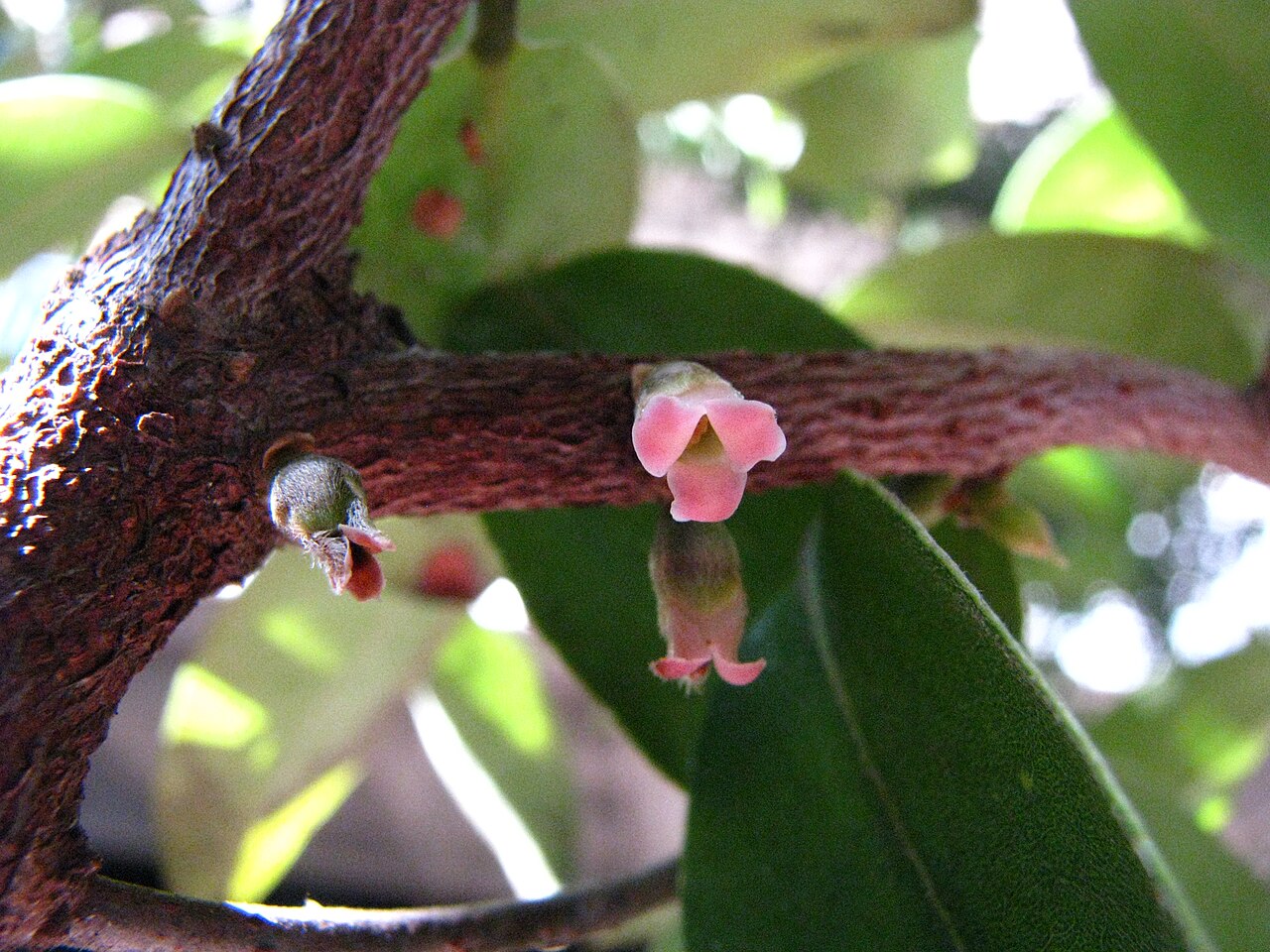
Lama (Diospyros sandwicensis) is an endemic Hawaiian persimmon with a quiet, enduring presence in native forest. Its small flowers are less conspicuous than the colorful new foliage and the dense green crown. It belongs to the ebony family, Ebenaceae, but should not be confused with the large-fruited Asian persimmons grown as orchard trees.
A tree-sized lama commonly reaches about 20–40 feet. Slow early growth is part of the gardener’s experience with this species, not necessarily a sign that it needs stronger fertilizer. A healthy nursery plant, a permanent planting site, and time are more appropriate investments than trying to force a rapid canopy.
Lama is useful in a native garden where a naturally shaped evergreen tree is wanted and its cultural significance can be appreciated. Choose a position with good drainage and sufficient space. It is not a species to keep indefinitely in a small decorative pot while waiting for a place to plant it.
Identification
Bark & Stems
The bark is gray to dark and becomes rougher with age. Branches can form a layered crown, with leaves arranged along smaller twigs. A garden plant’s young bark will not yet resemble the deeply textured bark of an old forest tree; compare several characters rather than relying on trunk appearance alone.
Leaves
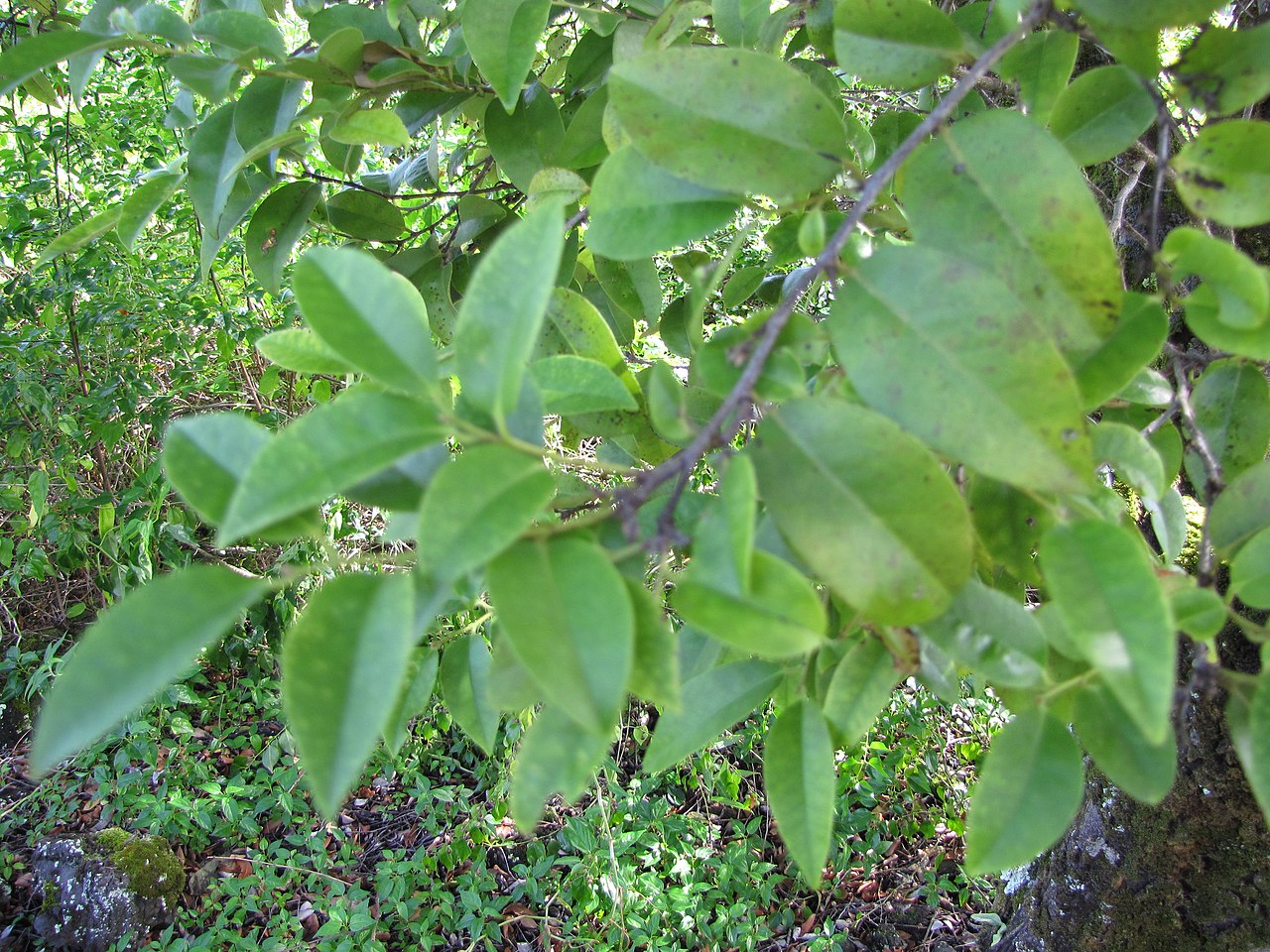
Simple, alternate leaves are thick and generally oval to oblong. New growth may contrast with the older green foliage, and the amount of hairiness varies. The leaves are not compound. Hawaiʻi also has another native species known as lama, Diospyros hillebrandii, so the shared Hawaiian name is not sufficient for species identification.
Flowers
Small pale flowers occur near the leaf bases and can be easy to overlook in the crown. This is a tree for foliage, form, fruit, and cultural interest more than a spectacular floral display. Close observation of flowers is worthwhile, but do not break branches from a wild tree merely to make identification easier.
Fruit & Seeds
The fruits mature toward yellow-orange tones and are much smaller than familiar orchard persimmons. Hawaiian sources call the fruit piʻoi and document its use as food. A history of use is not a reason to eat fruit from an unidentified tree: confirm the species and avoid harvesting from protected or managed sites without permission.
Quick Facts
| Scientific Name | Diospyros sandwicensis |
| Family | Ebenaceae |
| Plant Type | Evergreen native tree |
| Mature Height | 20–40 ft |
| Mature Spread | More than 20 ft at maturity |
| Growth Rate | Slow, especially when young |
| Sun Exposure | Full sun to partial sun |
| Water Needs | Dry to average once established; well-drained soil |
| Soil Type | Well-drained, site-appropriate soils; protect roots from compaction |
| Soil pH | Assess actual soil and local nursery performance; do not amend routinely |
| Bloom Time | Seasonal to sporadic; timing varies with source and conditions |
| Flower Color | Small greenish-white to pink flowers |
| Fall Color | Evergreen; new growth may provide seasonal contrast |
| Fruit | Small yellow to reddish-orange fruits |
| Deer Resistant | Protect young plants from introduced browsing animals |
| USDA Hardiness Zones | Hawaiian tropical to subtropical sites; match island, elevation, and exposure |
Native Range
Lama is endemic to Hawaiʻi. The University of Hawaiʻi profile describes it on Kauaʻi, Oʻahu, Molokaʻi, Lānaʻi, Maui, and Hawaiʻi Island, in dry and mesic forest and sometimes wetter forest. Its botanical habitat extends from low elevations into upland settings, rather than being confined to one familiar dry-forest locality.
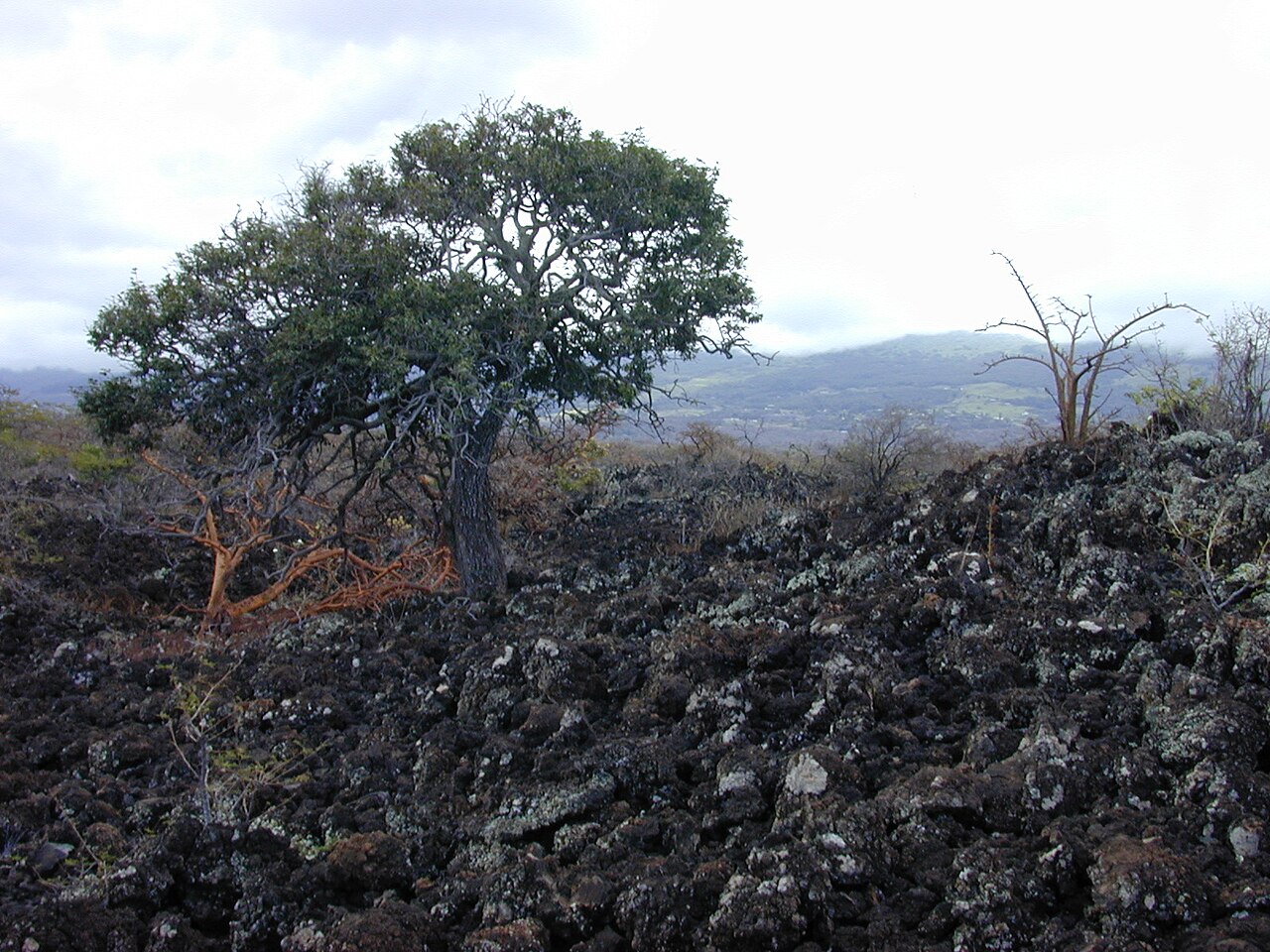
A lama seen on open lava or in a remnant woodland demonstrates the species’ ecological range, not a guarantee that any nursery seedling can be planted into exposed rock without establishment care. Rooting opportunities, rainfall, and provenance matter. Ask the nursery about the collection source and conditions under which its stock has performed well.
The state-level map does not establish occurrence on every shaded island. For restoration, use locality-specific guidance and appropriate stock. For a garden, recognize that being native to the state is the beginning of site selection, not its conclusion.
Native Range
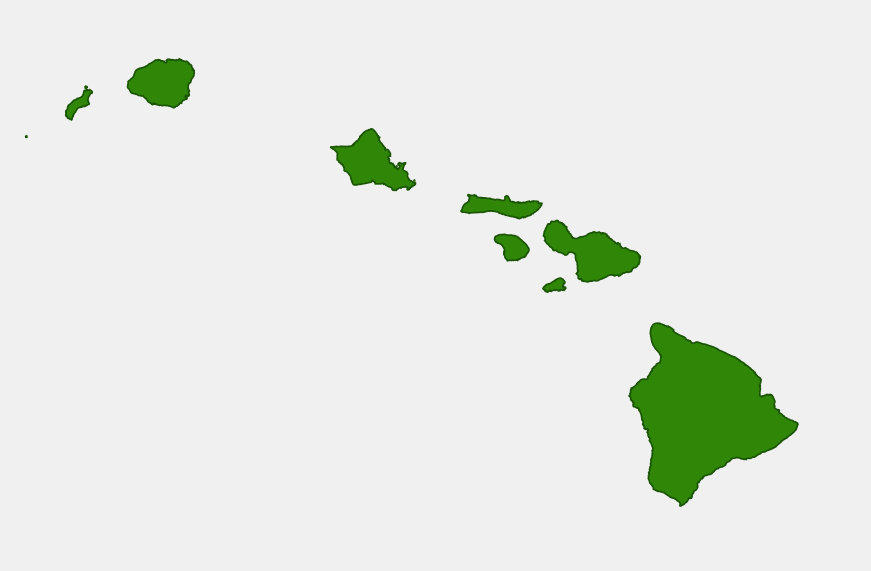
| U.S. States | Hawaii |
| Hawaiian Islands | Kauaʻi, Oʻahu, Molokaʻi, Lānaʻi, Maui, Hawaiʻi |
| Mexico / Canadian Provinces | Not included in the verified native range used here |
| Ecoregion | Hawaiian tropical forest and woodland |
| Elevation Range | About 15–4,000 ft |
| Habitat | Dry and mesic forest, sometimes wet forest |
| Common Associates | Locally appropriate native trees and understory matched to the same habitat |
USDA PLANTS profile (DISA10). Species identity verified; this link is not a guarantee of county-level distribution data.
📋 Explore our Hawaii native plant list for compatible trees and understory plants.
Growing & Care Guide
Light
Lama grows in full sun or partial sun. A sunny or moderately shaded position with adequate room is preferable to squeezing it beneath a dense canopy. Consider future shade as neighboring plants grow, and give the tree a location where it can develop without leaning toward a small opening.
Soil & Water
Provide well-drained ground and establishment water suited to actual conditions. Once established, lama tolerates relatively dry conditions, but a newly planted root ball has not yet developed the root access of a forest tree. Check moisture directly and adjust irrigation to rainfall rather than using the same schedule year-round.
Keep lawn sprinklers from repeatedly soaking the stem base. If runoff collects at the proposed planting point, fix the site or choose another position before planting. Root-zone drainage cannot be replaced by applying more fertilizer to a tree that is growing slowly in saturated soil.
Planting Tips
Plant healthy nursery stock while it is still young enough to establish well. The University of Hawaiʻi cautions against keeping lama in pots for the long term, where growth can become severely restricted. A larger top in an overheld container is not automatically a better purchase than a smaller tree with sound roots.
Set the root collar at the established nursery depth. Protect the surrounding ground from compaction and keep mulch away from the bark. Control competing weeds gently; repeated digging close to the tree can damage the same young roots needed for establishment.
Pruning & Maintenance
Allow a natural crown to develop. Slow growth makes unnecessary pruning especially unhelpful, because the removed structure is not rapidly replaced. Choose the right spacing at the outset and make any corrective cuts for a clear structural reason rather than shearing routinely.
Track new growth, leaf condition, and soil moisture over time. If the tree stalls, check light, root restriction, and irrigation before assuming a nutrient shortage. Take photographs and seek local nursery or extension advice when decline persists.
Propagation
Obtain seed or young plants from a documented source, keeping D. sandwicensis separate from other lama species. Retain collection labels through germination and potting. Nursery propagation can require patience; do not discard a well-managed seed lot merely because it does not behave like a fast-germinating vegetable crop.
For conservation projects, collect only under an appropriate plan and with permission. The aim is to establish plants suited to the receiving habitat, not simply to move whatever seed happens to be available into a wild area.
Landscape Uses
- Evergreen native tree: a long-term structural element for a well-drained garden.
- Cultural landscape: a living connection with the significance of lama in hula and sacred spaces.
- Forest-style planting: combine with locally appropriate native canopy and understory species.
- Educational garden: demonstrate the difference between a native persimmon and an orchard fruit tree.
Wildlife & Ecological Value
For Pollinators
Small flowers can be overlooked by people while still being part of the forest’s reproductive cycle. Observe local visitors rather than assuming a showy-flower model of pollination. Avoid indiscriminate spraying during bloom.
For Birds
The crown and fruiting branches contribute to native habitat. A garden tree is most useful as part of a varied planting that also offers shelter and a healthy ground layer. Do not assume a particular rare bird will appear solely because a lama has been planted.
For Mammals
Where introduced browsing animals enter a site, protect young trees and monitor regeneration. Retaining mature trees without successful replacement is not enough to maintain a forest community over time.
Ecosystem Role
Lama can be a major or minor component of Hawaiian native forest. Its canopy, roots, and litter participate in the structure of those communities. A managed native planting should address invasive competition and soil disturbance along with the survival of the focal tree.
Cultural & Historical Uses
Lama has a significant place in Hawaiian cultural practice, including associations with Laka and the kuahu of the hālau hula. Its name and wood cannot be adequately explained by calling it simply a “native persimmon.” Interpretive work should involve knowledgeable practitioners and respect the context of the practice being described.
The wood also had practical uses in construction, tools, and fishing equipment. The fruit, piʻoi, is documented in Hawaiian food use. These distinct uses should not be collapsed into a generic list of benefits or a suggestion to harvest every part of a garden tree.
A living lama can provide an enduring focus for a cultural garden without removing material from wild populations. Source the plant responsibly, keep its identity clear, and give it the time and space needed to grow rather than treating it as a short-term decorative installation.
Frequently Asked Questions
Is lama a persimmon?
Yes, it belongs to Diospyros, but it is not the same species as the large-fruited Asian orchard persimmon.
Why is my lama growing slowly?
Slow growth, particularly when young, can be normal. Check roots, light, water, and drainage before using more fertilizer.
Can it stay in a patio pot indefinitely?
That is not a good long-term plan. Hawaiian horticultural guidance recommends planting it out while young rather than allowing severe container restriction.
Does the name lama identify only one species?
No. Another Hawaiian Diospyros is also called lama, so retain the full scientific name from a reliable nursery.
Is the map an island-by-island distribution guide?
No. It marks Hawaii at state scale. Use the written range and locality-specific sources for more precise planning.
Sources & Further Reading
- University of Hawaiʻi, Native Plants Hawaiʻi species profile
- USDA Forest Service, Common Forest Trees of Hawaii species account
Botanical range, identification, and cultural information are based on these sources. Garden-management advice should be adapted to local soil, exposure, and nursery provenance.
Find Native Plants Near You
Look for correctly identified, nursery-propagated plants with documented Hawaiian provenance. Visit our Hawaii native plant nursery directory and ask about stock suited to your island, elevation, and rainfall.