Lama (Diospyros hillebrandii)
Diospyros hillebrandii, known in Hawaiian as Lama or Ēlama, is a small endemic tree in the ebony family (Ebenaceae) found only on the islands of Kauaʻi and Oʻahu. It is easy to confuse with its far more widespread sister species, Diospyros sandwicensis, which carries the same Hawaiian name and grows across most of the main Hawaiian Islands — but the two are distinct species with different native ranges. If you are gardening or restoring habitat on Kauaʻi or Oʻahu and want the locally correct Lama, this is the species to plant; see our separate page on Lama (Diospyros sandwicensis) for the more widespread relative found on Hawaiʻi, Maui, Molokaʻi, Lānaʻi, and Oʻahu.
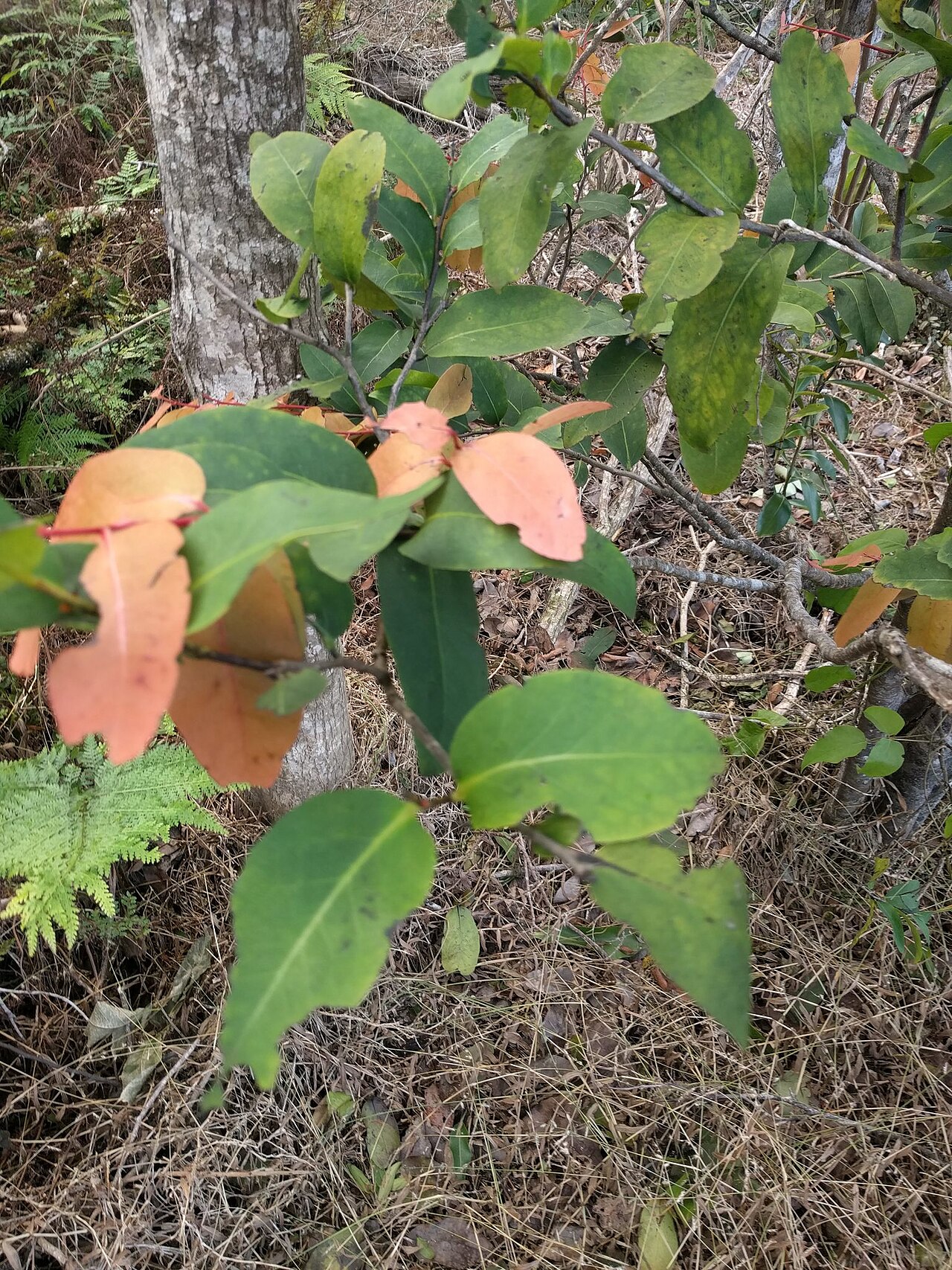
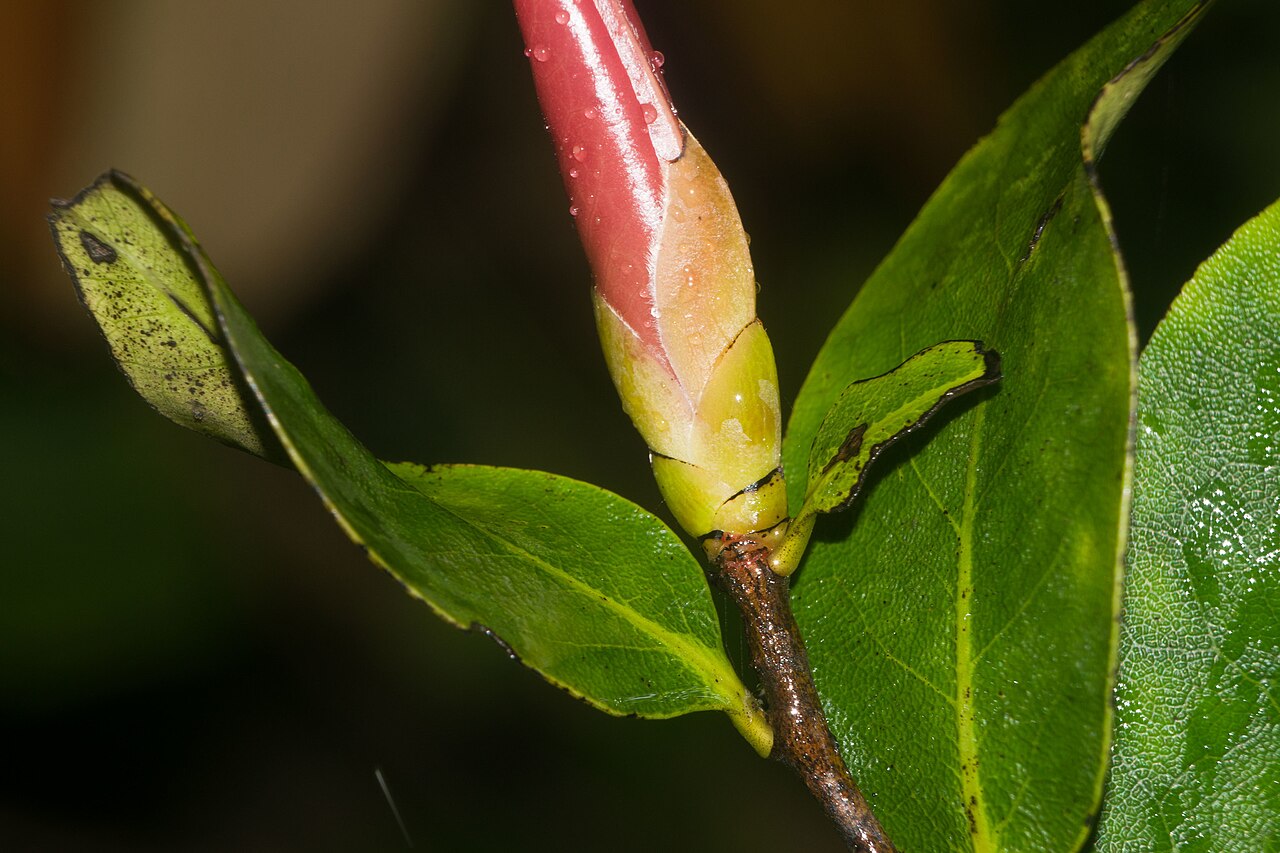
Like other members of its genus, Lama produces a flush of strikingly colored new leaves — ranging from salmon-pink to orange-red — that stand out against the older, leathery dark-green foliage. This color show, paired with the plant’s dense, fine-grained wood, gave rise to one of the tree’s Hawaiian meanings: “lama” also translates to torch, light, or flame, an image often extended to the idea of enlightenment. The tree holds deep cultural significance in Hawaiian tradition, particularly in hula, where lama wood from either species was placed on altars dedicated to the goddess Laka.
In the garden or in restoration plantings, Lama is a quiet, slow-growing presence rather than a showpiece. It tolerates the same range of conditions as other native Hawaiian dry-to-mesic forest trees and asks for very little once established, making it a solid long-term choice for anyone restoring native forest structure on Kauaʻi or Oʻahu.
Identification
Lama (D. hillebrandii) is a small to medium-sized tree, typically reaching 13 to 33 feet (4–10 m) in height. It can be distinguished from its sister species mainly by its more limited range — Kauaʻi and Oʻahu only — and by close botanical comparison of leaf and flower detail; the two lama species are similar enough in general appearance that confirming identity by location and, where possible, expert verification is worthwhile before relying on this species name alone.
Bark & Stems
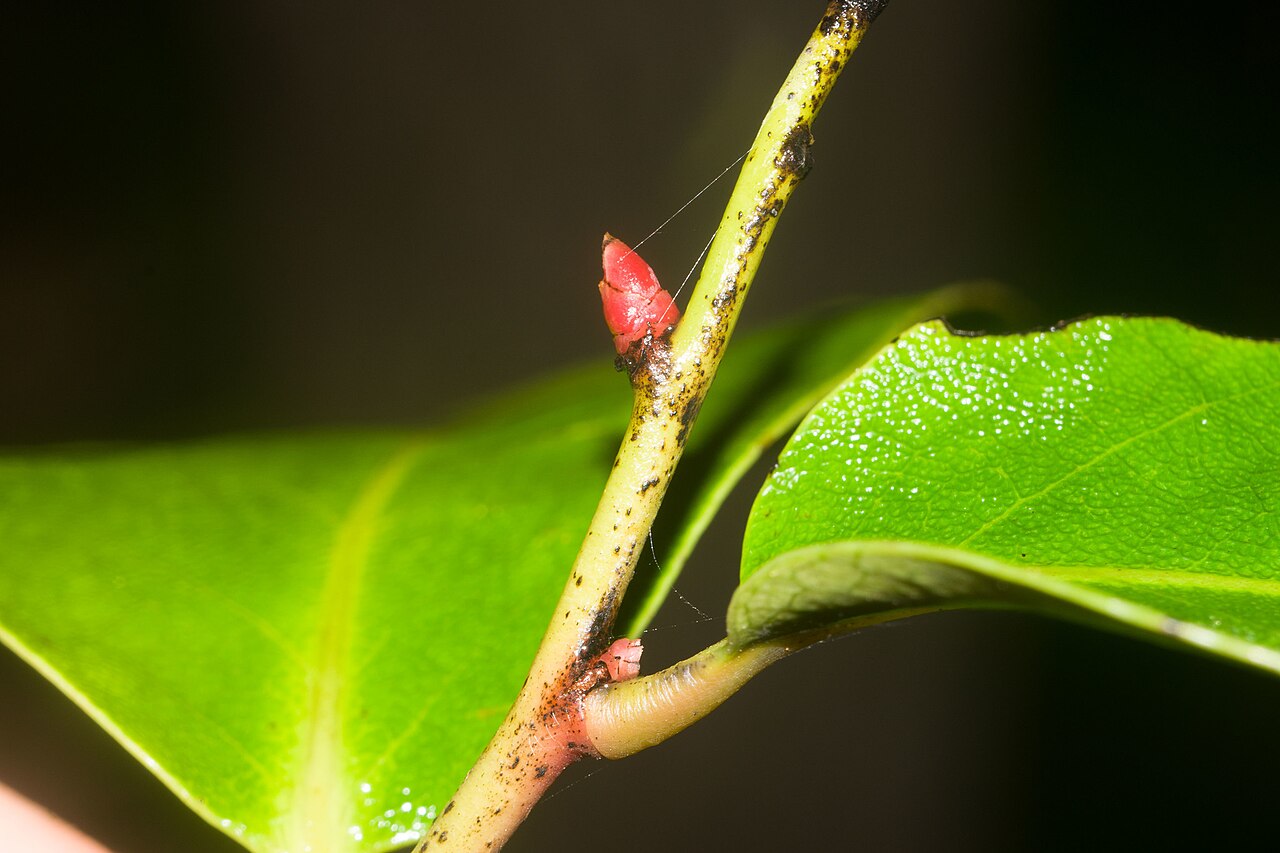
As in other Ebenaceae, the wood is dense and fine-grained, and mature bark darkens with age. Young stems and branchlets are slender, often retaining a reddish or yellow-green cast near the growing tips where new leaves are emerging.
Leaves
Mature leaves are simple, alternate, leathery, and a dull dark green, held in a single plane along the branch. The newest leaves emerge in a distinctive salmon-pink to orange flush, a trait shared with D. sandwicensis and one of the most reliable field clues that you are looking at a lama tree rather than another forest shrub.
Flowers
Flowers are small, waxy, and greenish-white to pale pink. As in its sister species, Lama is understood to be dioecious — individual trees bear either pollen-producing (male) or fruit-producing (female) flowers, not both — so a planting intended to produce fruit should include more than one tree.
Fruit & Seeds
The fruit is a small, fleshy berry typical of the persimmon relatives in this genus, maturing from green toward yellow, orange, or red. Hawaiians traditionally ate the ripe fruit of lama (piʻoi) after drying, as the fresh fruit can be slightly astringent; inside are a few hard brown seeds.
Quick Facts
| Scientific Name | Diospyros hillebrandii |
| Family | Ebenaceae (Ebony) |
| Plant Type | Evergreen native tree |
| Mature Height | 13–33 ft (4–10 m) |
| Growth Rate | Slow |
| Sun Exposure | Full sun to partial shade |
| Water Needs | Low to average once established; well-drained soil |
| Soil Type | Well-drained forest soils; tolerates rocky substrates |
| Bloom Time | Seasonal; timing varies with site |
| Flower Color | Greenish-white to pale pink |
| New Leaf Color | Salmon-pink to orange flush |
| USDA Hardiness Zones | Hawaiian mesic forest sites only; match elevation and exposure to Kauaʻi or Oʻahu |
Native Range
Lama (D. hillebrandii) is endemic to Hawaiʻi and, within the islands, is found only on Kauaʻi and Oʻahu — a far narrower range than its sister species D. sandwicensis, which occurs across most of the main islands. Because the two trees share the same Hawaiian common name, it is worth confirming which species you actually have before planting, especially if sourcing seed or seedlings from outside your island.
On Kauaʻi and Oʻahu, this species grows in coastal mesic and mixed mesic forests, generally at elevations of roughly 490 to 2,490 feet (150–760 m). It shares this habitat niche with other native dry-to-mesic forest trees and shrubs rather than occupying the wetter, high-elevation rainforest zones found elsewhere on these islands.
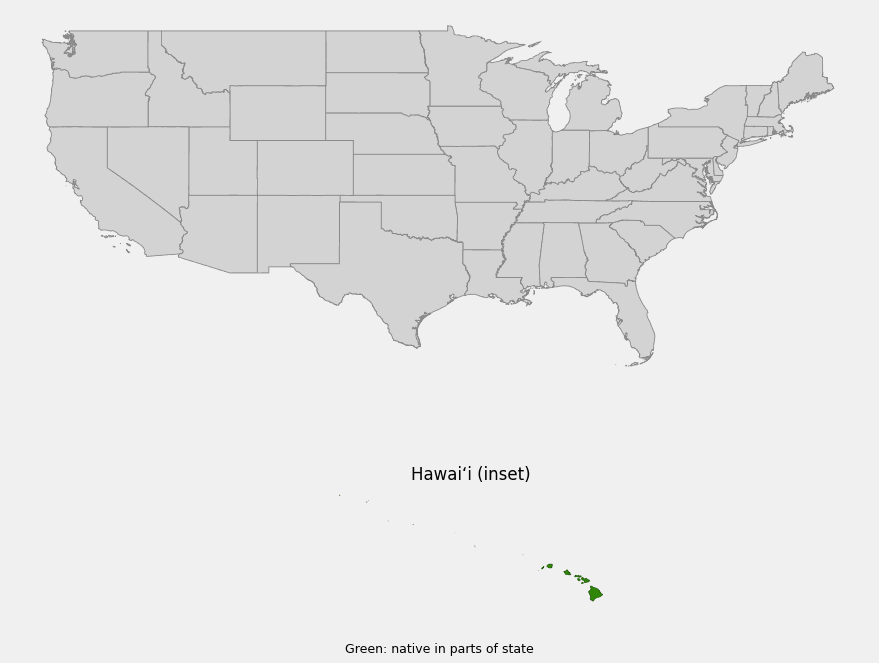
Because USDA PLANTS maps native status at the state level only, the range map below shows Hawaiʻi as a whole; the species itself is restricted to Kauaʻi and Oʻahu and should not be assumed present on Hawaiʻi, Maui, Molokaʻi, Lānaʻi, Niʻihau, or Kahoʻolawe.
📋 Regional plant lists featuring Lama: Hawaii
Growing & Care Guide
Lama is a patient, long-lived tree rather than a fast landscape filler. If you are restoring native forest structure on Kauaʻi or Oʻahu, or simply want an authentic island native in the yard, give it time and modest care rather than heavy inputs.
Light
Lama grows well in full sun to partial shade. In the wild it establishes in both open coastal mesic forest and beneath a broken canopy, so it adapts to a range of light conditions as long as drainage is good.
Soil & Water
Well-drained soil is essential. Water newly planted trees regularly until they are established, then taper off; mature trees handle the seasonal dry spells typical of mesic forest sites and do not want to sit in constantly wet soil.
Planting Tips
Plant small, young trees rather than large container stock — like its sister species, Lama tends to develop a taproot that can spiral and stunt the tree if left too long in a pot. Give it room: a mature tree can reach 13 to 33 feet, so plan spacing accordingly if planting more than one.
Pruning & Maintenance
Minimal pruning is needed. Remove dead or damaged branches as they appear. Because growth is slow, avoid heavy cutting back, which can set a young tree back for years.
Propagation
Propagation is typically from seed collected from ripe fruit. Because the species is dioecious, growing more than one seedling improves the odds of ending up with both a male and a female tree if fruit production is a goal.
Landscape Uses
- Native forest restoration on Kauaʻi and Oʻahu, where this species belongs instead of the more widespread D. sandwicensis
- Specimen or accent tree, valued for the colorful pink-to-orange flush of new leaves
- Cultural landscaping for hālau hula, cultural centers, or gardens referencing traditional Hawaiian plant use
- Mixed native plantings alongside other Hawaiian dry-to-mesic forest species
Wildlife & Ecological Value
As a native forest tree restricted to just two islands, Lama plays a role in the mesic forest community of Kauaʻi and Oʻahu that is easily overlooked but worth protecting.
For Pollinators
The small flowers, though inconspicuous, provide nectar and pollen resources within the native forest canopy and understory, supporting the native insects that pollinate Hawaiian dry and mesic forest plants.
For Birds
The ripe, fleshy fruit is a food source for native and introduced forest birds that pass through mesic forest habitat, with seeds dispersed as birds move between feeding and roosting sites.
For Mammals
Fruit-eating mammals present in Hawaiian forests, including introduced rats, will also take ripe lama fruit, which can affect seed availability and dispersal in some areas.
Ecosystem Role
As a component of native Hawaiian mesic forest, Lama contributes canopy and understory structure alongside other native trees and shrubs. Because it is restricted to Kauaʻi and Oʻahu and competes with introduced plants across much of its range, maintaining and restoring stands of this species supports the broader integrity of native forest on these two islands.
Cultural & Historical Uses
In Hawaiian tradition, the name “lama” is shared by both this species and its more widespread relative, Diospyros sandwicensis, and carries a second meaning: torch, light, or flame — a meaning later extended to suggest enlightenment, as in the learning of hula. Wood from either lama tree held deep ceremonial significance: a block of lama wood wrapped in scented yellow kapa was traditionally placed on the kuahu (altar) inside a hālau hula, the house of hula instruction, as the embodiment of Laka, the goddess of hula.
Beyond its ceremonial role, lama wood was used more broadly in old Hawaiʻi for house and temple framing, the handles of stone tools, and torches for night fishing, and was used to fence off sacred places. The dense, fine-grained wood of this ebony-family tree made it well suited to such uses. The ripe fruit, known as piʻoi, was traditionally eaten after drying to reduce its natural astringency; lama is related to the cultivated persimmon.
Today, lama wood is still occasionally worked by woodworkers drawn to its dense, dark grain, and the ripe fruit is sometimes eaten by hikers who come across a fruiting tree. Because D. hillebrandii is confined to Kauaʻi and Oʻahu, it represents a more location-specific piece of this shared cultural legacy than its island-spanning sister species.
Frequently Asked Questions
Is this the same tree as the other Lama on PlantNative?
No. PlantNative also has a page for Diospyros sandwicensis, the more widespread lama found on most of the main Hawaiian Islands except Niʻihau and Kahoʻolawe. Diospyros hillebrandii is a distinct, more narrowly distributed sister species found only on Kauaʻi and Oʻahu. Both share the Hawaiian name lama.
Where does Lama (Diospyros hillebrandii) grow natively?
Only on Kauaʻi and Oʻahu, in coastal mesic and mixed mesic forest between roughly 490 and 2,490 feet in elevation. It is not native to Hawaiʻi Island, Maui, Molokaʻi, Lānaʻi, Niʻihau, or Kahoʻolawe.
Can you eat the fruit of Lama?
Traditionally, yes — the ripe fruit (piʻoi) was eaten after drying to reduce astringency, a practice associated with lama generally in Hawaiian tradition. As with any wild fruit, positively confirm the species and ripeness before eating, and note that fresh, under-ripe fruit is astringent.
Why do the new leaves look pink or orange?
The salmon-pink to orange flush of new growth is a signature trait of lama trees in general, including this species, and is one of the most useful field marks for recognizing them among other mesic forest trees.
How fast does Lama grow, and is it hard to keep in a pot?
Growth is slow. Young plants develop a taproot that can spiral and stunt the tree if left too long in a container, so it is best to plant young trees in the ground relatively early rather than keeping them potted for years.
Sources & Further Reading
Botanical range, identification, and cultural information are based on these sources. Garden-management advice should be adapted to local site conditions on Kauaʻi or Oʻahu.

Looking for a nursery that carries Lama (Diospyros hillebrandii)?
Look for correctly identified, nursery-propagated plants with documented Kauaʻi or Oʻahu provenance. Browse our Hawaii native plant nursery directory and ask specifically for Diospyros hillebrandii, since nurseries may carry the more common D. sandwicensis under the same “lama” name.