Tall Larkspur (Delphinium exaltatum)
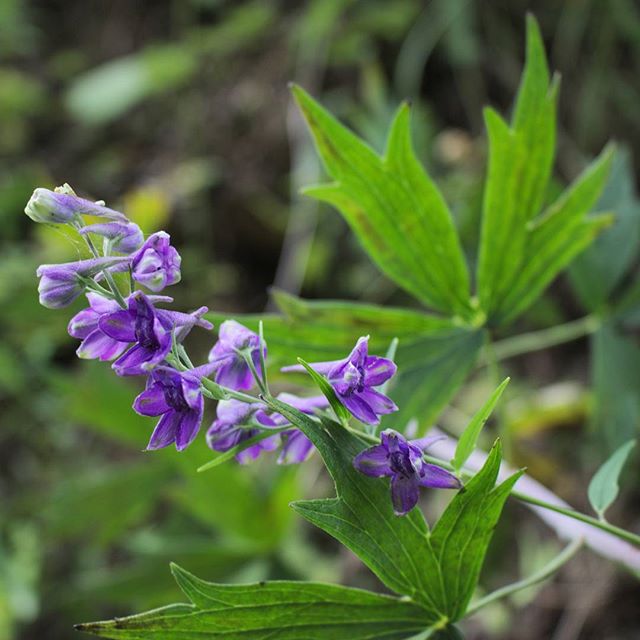
Tall larkspur adds blue-violet flowers late enough in the season to distinguish it from many spring-flowering native woodland plants. Delphinium exaltatum sends upright flowering stems above divided leaves, giving a border or open woodland edge a vertical accent without the dense woody mass of a shrub. It is a native species, not one of the large-flowered garden delphinium hybrids.
Within the Iowa, Illinois, and Missouri regional list, its documented native connection is especially important in Missouri’s Ozarks. Missouri Botanical Garden describes small isolated populations in south-central Missouri, and Missouri flora records place it on wooded rocky slopes. It should not be presented as equally native throughout all three states merely because they share a regional gardening page.
Allow more height than the old regional entry suggested. Both NC State and Missouri Botanical Garden give a garden height of roughly 4–6 feet, so the linked row has been corrected from 24–48 inches. A plant of that size needs thoughtful placement, moisture during active growth, and shelter from damaging wind. It is a striking native perennial, but not a low, drought-proof edging plant.
Identification
Stems & Growth Form
The seasonal shoots rise erect and carry a series of leaves below the flowering portion. In Missouri, the flora describes relatively smooth, sometimes glaucous stems and a plant reaching around five feet. Individual plants vary with site and age, so identification should not rest on height alone. Avoid confusing a young short shoot with a different species before its flowering stem has developed.
Leaves
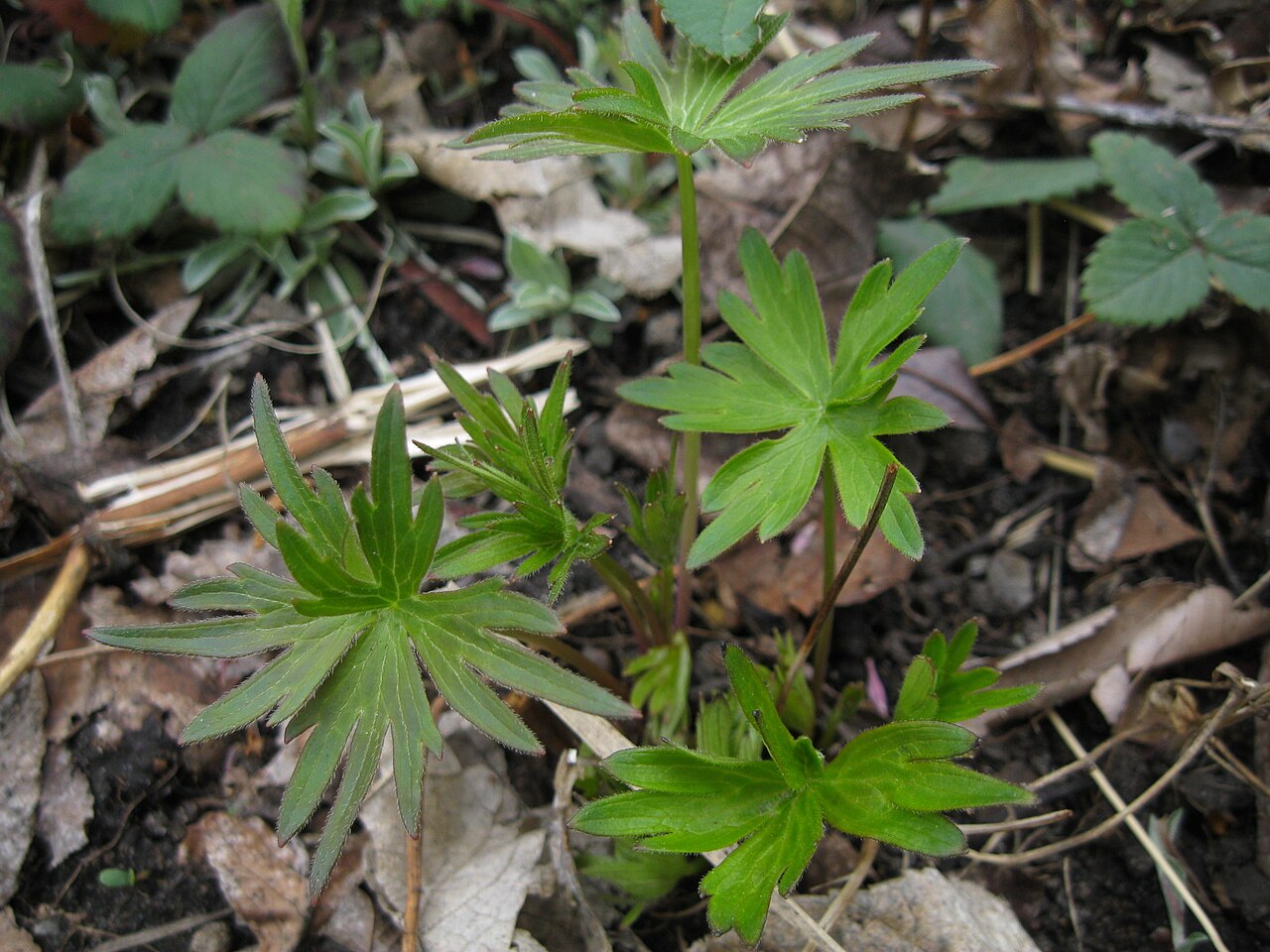
Leaves are alternate and deeply divided, with broader lobes than some other regional larkspurs. Lower leaves have longer stalks, while the arrangement changes farther up the stem. The divided foliage can look similar to certain monkshoods before flowering. Use the flowers and regional botanical characters to confirm identity instead of assuming any palmately lobed woodland plant is this larkspur.
Flowers
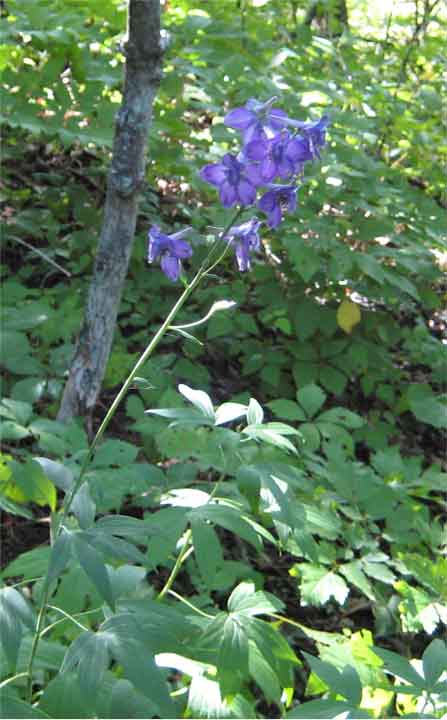
Blue or violet flowers occur along the upper stem. The conspicuous parts include petal-like sepals, one extended backward into the characteristic spur. View a flower from the side to appreciate that shape. The late flowering season is a useful clue, but it is not sufficient on its own: several Delphinium species are called tall larkspur, and garden hybrids can also flower in summer.
Fruit & Seeds
After bloom, dry follicles develop and release seeds as they mature. Leave selected stems if seed production is wanted, while accepting that seedling establishment is not automatic. Label any collected seed with the species and source. Dark seeds from an unlabeled ornamental delphinium should not be assumed to produce the native species described here.
Quick Facts
| Scientific Name | Delphinium exaltatum |
| Family | Ranunculaceae (buttercup family) |
| Plant Type | Herbaceous perennial |
| Mature Height | Usually 4–6 feet in garden conditions |
| Mature Spread | About 1–2 feet |
| Growth Rate | Rapid seasonal stem growth from an established crown |
| Sun Exposure | Full sun to partial shade; afternoon shade useful in hot summers |
| Water Needs | Average; keep adequately moist during active growth |
| Soil Type | Fertile, moist but well-drained soil |
| Soil pH | Generally neutral to locally suitable woodland soils |
| Bloom Time | Summer into early fall, commonly July–September |
| Flower Color | Blue to violet; occasional paler forms |
| Fall Color | No dependable showy autumn leaf color |
| Fruit | Dry follicles containing dark seeds |
| Deer Resistant | Often avoided, but not browse-proof; toxic if eaten |
| USDA Hardiness Zones | About 4–7; Missouri Botanical Garden lists 5–7 |
Native Range
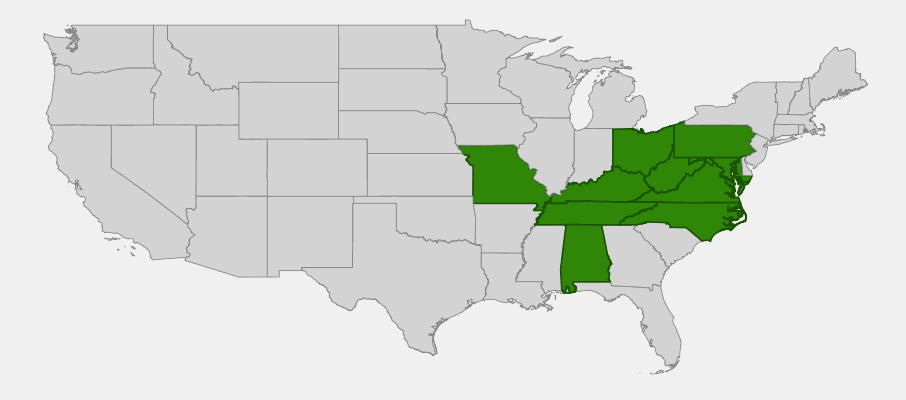
The native distribution is centered in the central-eastern United States, with Appalachian occurrences and separated Ozark populations in Missouri. The map emphasizes the core range supported by the regional and horticultural sources used here. Some broader databases disagree over peripheral state reports; a generalized map should not substitute for a local flora when a restoration project depends on exact nativity.
Missouri Botanical Garden and the Missouri flora provide particularly useful regional context. They describe Missouri plants on rocky wooded slopes, including dolomite and limestone settings, rather than as a widespread plant of every open Midwestern prairie. The species can be cultivated beyond that habitat, but garden success outside a documented native area does not expand its historical native range.
For a Missouri garden, choose nursery material suited to the site and preserve existing wild populations. For Iowa or Illinois, distinguish ornamental native-region gardening from a strict local-ecotype restoration goal. The same regional plant-list page can contain useful garden options whose natural distributions differ substantially within the three-state area.
📋 Regional plant list: Iowa, Illinois & Missouri
Growing & Care Guide
Light
Provide good light, with afternoon shade where summers are hot. A woodland edge can be useful if the plant is not crowded beneath a dense canopy. Deep shade may encourage weak or leaning growth, while an exposed hot site may increase stress. Watch the proposed location through a summer day, including reflected heat from walls and paving, before deciding it meets the plant’s needs.
Soil & Water
Use fertile soil that stays reasonably moist during active growth but drains well. This is not the same regime as a dry gravel garden. Water a new transplant through the root ball and into surrounding soil, then check moisture rather than relying on a fixed schedule. Do not keep the crown in a waterlogged depression. If summer growth repeatedly collapses, examine drainage, heat, and moisture together before adding fertilizer.
Planting Tips
Plan for the corrected 4–6-foot height. Place the plant where flowers will rise above lower companions without blocking access or leaning into a narrow path. Install supports early if the site or plant requires them, using a loose arrangement that allows normal movement and stem expansion. Avoid driving stakes through the crown after growth is already tall. Nursery-propagated material is preferable to moving a wild plant from a rare local population.
Pruning & Maintenance
Remove damaged stems as needed and consider selective removal of spent flower spikes if additional bloom is desired. Keep some stems for seed if propagation is a goal. Do not assume that cutting back repeatedly will turn a tall species into a compact one. Where plants lean each year, reassess exposure, wind, and companion spacing rather than treating staking as the only design solution.
Propagation
Seed is a recognized propagation route in the horticultural sources. Obtain correctly identified seed and follow instructions for that lot, including any seasonal treatment. Young seedlings should be kept separate from lookalike weeds until their identity is clear. A labeled nursery trial is easier to monitor than scattering seed into an already dense border. Keep propagation material away from areas where it could be mistaken for food or animal feed.
Pests & Disease Observation
Inspect emerging shoots for slug or snail damage and watch crowded foliage for disease symptoms during humid weather. NC State lists several possible pests and diseases, but a list of possibilities is not a diagnosis. Look at the distribution of damage, soil moisture, and airflow first. Use targeted management if a specific problem is confirmed instead of routinely treating all native perennials with pesticides.
Placement Around People & Animals
Larkspurs are toxic if eaten. Place this species where it will not be confused with edible garden plants, and keep clippings away from livestock feed or accessible piles. The same chemistry associated with browsing resistance does not make the plant safe to sample. A simple, clearly labeled ornamental planting is the appropriate context; the page is not an invitation to prepare herbal remedies.
Landscape Uses
- A tall summer-flowering accent in a Missouri native border with adequate moisture.
- An open woodland-edge planting where afternoon shade moderates summer heat.
- Small groups among lower perennials that leave room for the flowering stems.
- A mixed garden with protected airflow and an unobtrusive early-installed support if needed.
- An educational planting illustrating the difference between a native larkspur species and ornamental delphinium hybrids.
Wildlife & Ecological Value
For Pollinators
Flowers are visited by bees, butterflies, and hummingbirds according to NC State. The spurred structure is part of that interaction and makes the plant worth observing closely. Preserve flower access by avoiding routine insecticide spraying during bloom. Combine tall larkspur with species that flower earlier and later so the garden does not depend on a single seasonal display.
For Birds
Hummingbird visitation is a documented floral association. Do not turn that into a claim that the plant provides every kind of bird food or shelter. A taller perennial offers seasonal structure, but woody native plants and other food sources are needed for a more complete habitat. Keep those elements positioned so they do not eventually shade out the larkspur.
For Mammals
Browsing resistance is not a reason to use the plant as forage. Its toxicity makes it unsuitable where livestock might consume it or where clippings could enter feed. In a residential garden, protect young plants from physical disturbance if necessary and keep identification clear. Investigate any browsing pattern directly instead of assuming a resistant plant can never be damaged.
Ecosystem Role
The species adds a late-season flowering component to appropriate woodland-edge communities. Its relatively restricted Missouri occurrences are a reason to value accurate identification and propagated stock. A cultivated plant can educate visitors about regional diversity without being harvested from the wild. Retain a balanced mix of companion species and avoid making a rare native into a disposable annual display.
Cultural & Historical Uses
The name larkspur refers to the backward-projecting flower structure, while exaltatum indicates the tall form. Several different species share the English name tall larkspur, which is why the scientific name matters on labels and seed packets. A photograph labeled only with the common name is not sufficient evidence of this species.
Delphiniums have a long ornamental history, but the needs and appearance of garden hybrids should not be copied wholesale into a profile of Delphinium exaltatum. This native species has its own seasonal timing and regional habitat. Its value in a native planting comes from that identity, not from resembling a larger hybrid flower spike.
Modern cultivation can support appreciation of a plant whose natural populations are localized in parts of the region. Buy propagated material, maintain accurate records, and leave wild stands undisturbed. Historical plant-use claims do not override the well-established toxicity of larkspurs or justify harvesting them for home remedies.
Frequently Asked Questions
How tall is tall larkspur?
Plan for roughly 4–6 feet in garden conditions. The linked regional row has been corrected to that range, replacing a shorter value that understated its mature flowering height.
Is it native throughout Iowa, Illinois, and Missouri?
The sources used here document isolated native populations in Missouri, not a uniform native distribution across all three states. Use local botanical records for restoration decisions.
Does it need full sun all day?
Good light is important, but afternoon shade can help in hot-summer climates. Avoid both deep shade and a harsh exposed position without adequate moisture.
Is it safe for pets or livestock to eat?
No. Larkspurs are toxic if consumed. Keep plants and clippings separate from feed and do not use them as edible or medicinal garden material.
Why do the stems lean?
Height, wind, shade, and site conditions can all contribute. Support early if needed, and reassess placement rather than repeatedly forcing a tall species into a cramped location.
Sources & Further Reading
- NC State Extension: Delphinium exaltatum
- Missouri Botanical Garden Plant Finder: tall larkspur
- Missouri flora: Delphinium exaltatum
Find Native Plants
Ask growers about nursery propagation and regional provenance. Browse our Iowa native plant nurseries, Missouri native plant nurseries directory for suppliers.