
Pelotazo (Abutilon incanum)
Abutilon incanum, known as Pelotazo, hoary abutilon or Indian mallow, is a gray-leaved shrub of the mallow family (Malvaceae) with an unusual native range: the deserts and dry hills of the American Southwest and northern Mexico, and the dry lowlands of the Hawaiian Islands, where it is known as maʻo. It is one of the few flowering plants that is native both to the mainland United States and to Hawaiʻi.
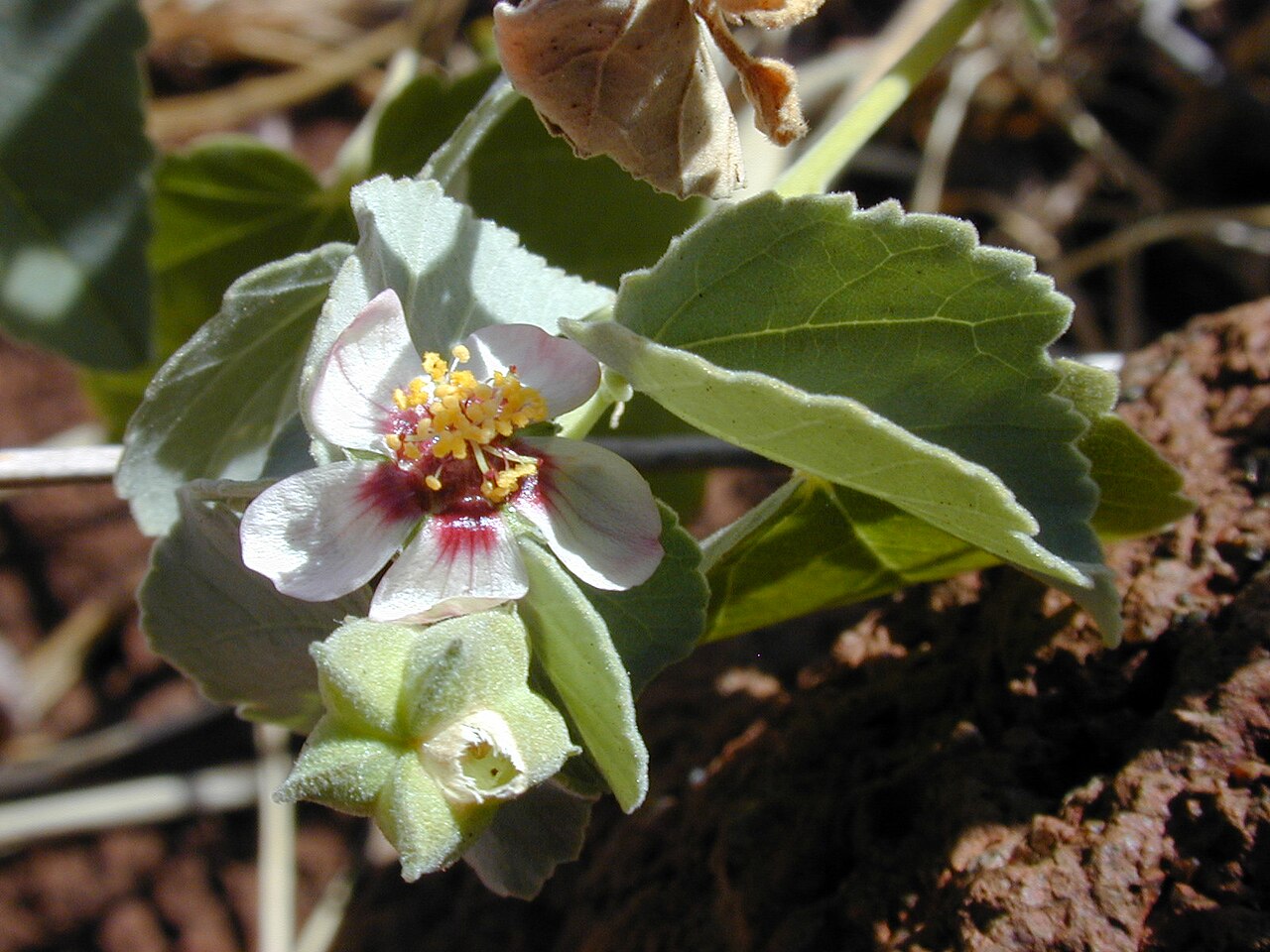
It is a loosely branched shrub, usually 2 to 6 feet tall, covered in fine star-shaped hairs that give the leaves and stems a soft, gray-green, felt-like look. Small, cup-shaped flowers, pale yellow-orange to pinkish-white with a dark red spot at the base of each petal, open in the leaf axils over a long season, followed by hairy, star-shaped fruits.
Tough, fast-growing and drought tolerant, pelotazo is a useful plant for xeriscapes and dry native gardens in the low desert and in Hawaiian coastal plantings. Its flowers feed bees and butterflies, and its leaves host the caterpillars of several small skippers and hairstreaks. This guide covers how to identify it, where it grows, how to grow it, and its value to wildlife.
Identification
Pelotazo is a typical desert mallow: a soft, gray, hairy shrub with heart-shaped leaves and small, five-petaled flowers. The dark spot at the base of the petals and the multi-segmented, star-like fruit help separate it from its relatives.
Growth Habit
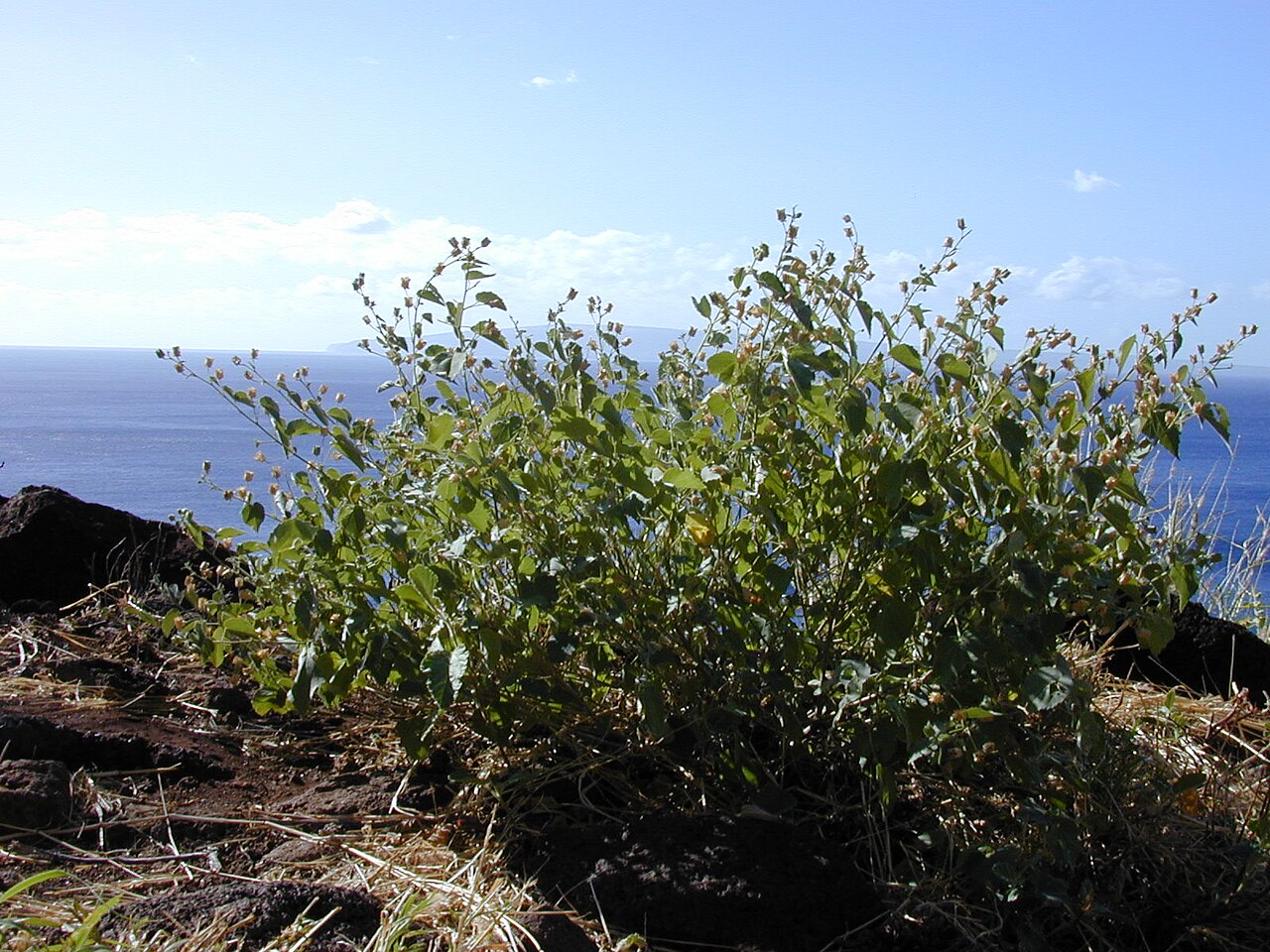
A woody-based shrub or subshrub, usually 2 to 6 feet tall and about as wide, with many slender, spreading to upright branches from the base. Stems and leaves are densely covered with tiny star-shaped (stellate) hairs, which make the whole plant look grayish and feel velvety. It often looks sparse and twiggy in the dry season and leafs out quickly after rain.
Leaves
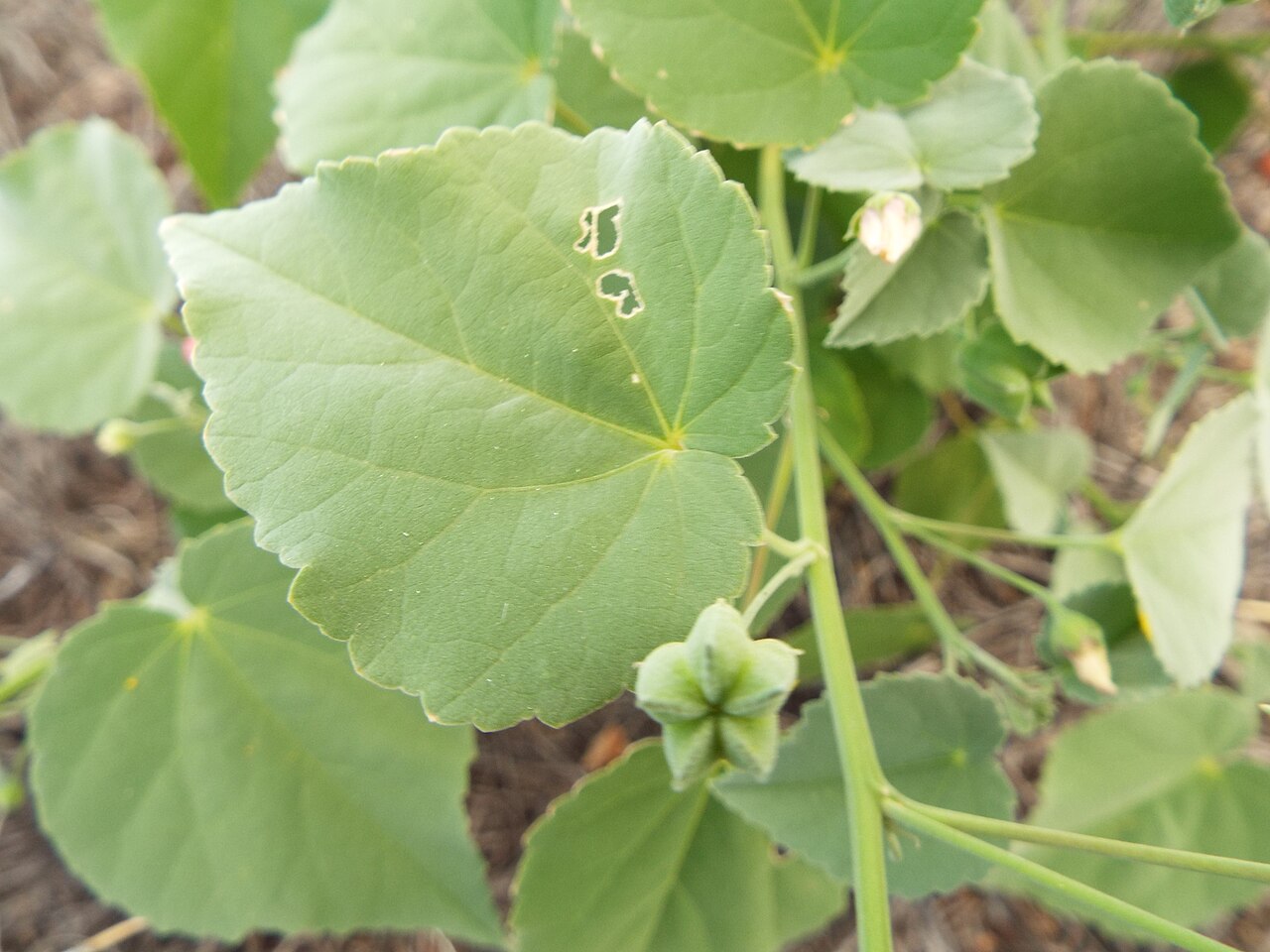
Leaves are alternate, simple and soft, ovate to lance-ovate with a heart-shaped base, about ¾ to 2½ inches long, on slender stalks. The margins are finely scalloped (crenate). They are gray-green above and paler beneath because of the dense hairs. The species name incanum means “hoary” or “gray,” a reference to this covering.
Flowers
Flowers are borne singly, or a few together, in the leaf axils on jointed stalks. Each is about ½ inch across, with five petals that are pale yellow-orange, peach, or nearly white to pinkish, with a dark red to maroon spot at the base, and a central column of yellow stamens typical of the mallow family. Flowers open for a single day. In the Southwest it blooms mainly from spring through fall after rains; in Hawaiʻi it can flower through much of the year.
Fruit & Look-alikes
The fruit is a small, hairy schizocarp, about ¼ inch across, made of 4 to 6 segments arranged like a star. It splits when dry into separate seed-bearing sections. Sweet Indian Mallow (A. fruticosum) has yellow-orange flowers without a dark center, and Palmer’s Indian Mallow (A. palmeri) has larger, rounder, velvety leaves and bright orange-yellow flowers. Globemallows (Sphaeralcea) such as Copper Globemallow have narrower or lobed leaves and flowers in spikes. In Hawaiʻi, ʻIlima has solid yellow-orange flowers and smaller, toothed leaves.
Quick Facts
| Scientific Name | Abutilon incanum (Link) Sweet |
| Family | Malvaceae (mallow family) |
| Plant Type | Evergreen to semi-deciduous shrub or subshrub |
| Mature Height | 2–6 ft |
| Mature Spread | 2–5 ft |
| Growth Rate | Fast |
| Sun Exposure | Full sun |
| Water Needs | Low; dry, well-drained soil |
| Soil Type | Rocky, gravelly or sandy soils; lava and coralline soils in Hawaiʻi |
| Soil pH | Neutral to alkaline |
| Bloom Time | Spring–fall after rains; much of the year in Hawaiʻi |
| Flower Color | Pale yellow-orange to pinkish-white with a dark red center |
| Fall Color | None; gray-green foliage |
| Fruit | Small, hairy, star-shaped schizocarp with 4–6 segments |
| Deer Resistant | Moderately; occasionally browsed |
| USDA Hardiness Zones | About 9–12 |
Native Range
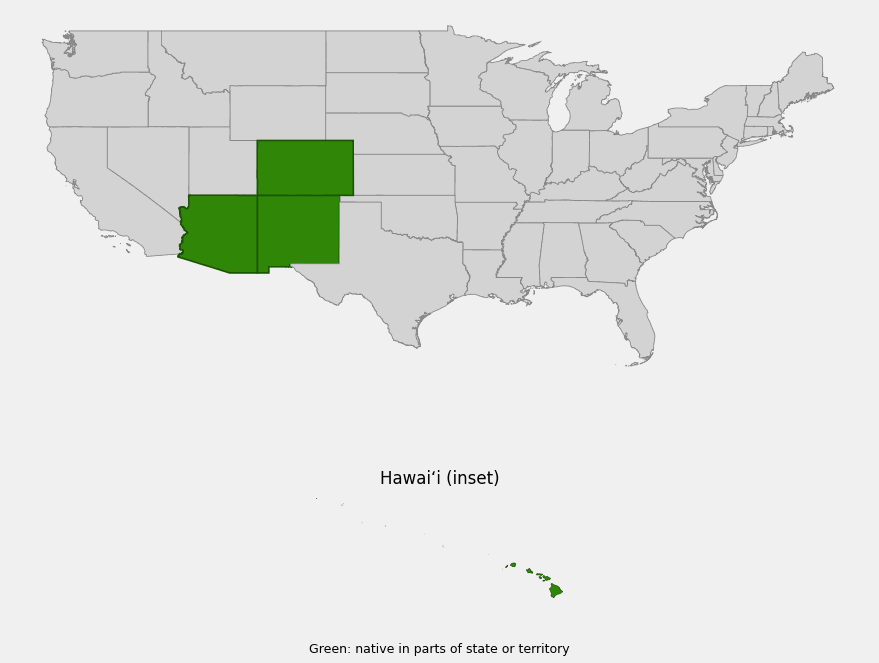
Pelotazo is native to the warm, arid Southwest and northern Mexico, and to Hawaiʻi. USDA PLANTS lists it as native in Arizona, New Mexico, Colorado and Hawaiʻi. The Colorado record is an outlying one at the northern edge of its range. In Arizona it is common in the Sonoran Desert and its desert grasslands, on rocky slopes, gravelly flats and in washes, up to about 4,500 feet. It needs warm-season rain and mild winters, so it grows in the Sonoran Desert but not in the colder, winter-rain Mojave Desert. It ranges south into Sonora, Chihuahua and other states of northern Mexico. Texas plant references, including the Lady Bird Johnson Wildflower Center, also report it from the Edwards Plateau to West Texas, although USDA does not map it there.
In Hawaiʻi it is considered indigenous, meaning it arrived on its own and also grows elsewhere. It grows in dry coastal and lowland shrublands and dry forest, mostly from sea level to about 700 feet, on the leeward sides of the islands. It is especially common on Kahoʻolawe, Lānaʻi, Molokaʻi and leeward Maui, where it often colonizes rocky, disturbed or eroded ground and regrows quickly after fire.
In both regions it favors open, sunny, well-drained sites with little competition: desert washes and arroyos, rocky hillsides, lava fields and coastal flats. Two subspecies are recognized: ssp. incanum, with larger, paler orange-yellow flowers, and ssp. pringlei, with smaller, deep orange flowers spotted with maroon.
📋 Regional plant lists featuring Pelotazo: Arizona & New Mexico · Hawaii
Growing & Care Guide
Pelotazo is one of the easiest native shrubs for hot, dry gardens. It is offered by some native plant nurseries in Arizona and by Hawaiian native plant growers, and it grows readily from seed. It is hardy outdoors in about USDA zones 9 to 12; plants can be damaged by hard frost but often regrow from the base.
Light
Full sun. It tolerates reflected heat and light from walls and pavement. In shade it becomes leggy and flowers poorly.
Soil & Water
Any well-drained soil, including rocky, sandy, gravelly and alkaline soils, or lava and coralline soils in Hawaiʻi. Once established it is very drought tolerant. In the low desert, a deep watering every two to four weeks in the hot season keeps it leafy and flowering; with no extra water it will drop leaves and rest until rain. Avoid heavy, wet soils.
Planting Tips
Plant in fall or spring in the Southwest, and at any time in Hawaiʻi, ideally before the rainy season. Space plants 3 to 4 feet apart. It works well in coastal Hawaiian gardens, as it tolerates wind and some salt spray. It is not a houseplant, but it can be grown in a large, very well-drained container in a sunny spot.
Pruning & Maintenance
It can become rangy. Cut it back by about a third to a half in late winter to keep it dense and encourage fresh growth and flowers. It is short-lived compared with many shrubs but reseeds gently, so a few volunteers usually replace older plants.
Propagation
Grow it from seed. The seeds have a hard coat, so nick them or soak them in hot water overnight before sowing in warm weather; they germinate within one to three weeks. Collect seed from dry, brown fruits. Softwood cuttings also root.
Landscape Uses
- Xeriscapes and desert gardens: a soft, gray shrub that blooms with little water
- Hawaiian coastal and dry-land gardens: a fast, salt- and wind-tolerant native for lowland plantings
- Butterfly gardens: a nectar source and larval host for small skippers and hairstreaks
- Revegetation: colonizes eroded, burned or disturbed dry ground
Wildlife & Ecological Value
Pelotazo is a small but busy wildlife plant in arid landscapes, supporting pollinators, caterpillars and seed-eaters.
For Pollinators
The open, cup-shaped flowers are visited by native bees, including small sweat bees, as well as butterflies. Because it flowers over a long season, often after rains when little else blooms, it can be an important nectar and pollen source.
For Birds
Seed-eating birds such as sparrows and finches eat the seeds, and the twiggy shrub provides cover for small birds and lizards. In Hawaiʻi, dry-land shrubs like pelotazo help support native insect populations that birds feed on.
For Mammals
Deer, javelina and rabbits occasionally browse the foliage in the Southwest. It is not a preferred food and recovers quickly.
Ecosystem Role
It is a larval host plant for the Texas powdered skipper (Systasea pulverulenta), the common streaky-skipper (Celotes nessus) and the white scrub-hairstreak (Strymon albata). As a fast-growing pioneer it helps stabilize bare, eroded and burned soils in deserts and on dry Hawaiian islands.
Cultural & Historical Uses
The genus name Abutilon comes from an Arabic name for a mallow-like plant used by the medieval physician Avicenna. The species was described in the early 1800s by the German botanist Heinrich Friedrich Link, and later moved to Abutilon by Robert Sweet. “Pelotazo” and “pelotazo chico” are among its Spanish names in Mexico and the Southwest, along with “tronadora.”
In Hawaiʻi, the name maʻo is shared with the native Hawaiian cotton, Maʻo (Gossypium tomentosum), another gray-green mallow of dry coastal lowlands. The two can grow in similar places but are easy to tell apart: Hawaiian cotton has bright yellow flowers and lobed leaves.
On Kahoʻolawe, an island severely damaged by grazing goats and military use, pelotazo is one of the native shrubs that persists and spreads on eroded, burned ground, which makes it of interest for native revegetation. Its ability to grow fast on poor, dry soils makes it valuable for restoration on both sides of the Pacific.
Frequently Asked Questions
Is pelotazo native to Hawaiʻi?
Yes. It is considered indigenous to Hawaiʻi, where it is called maʻo or hoary abutilon, and it is also native to the American Southwest and northern Mexico. USDA PLANTS lists it as native in Hawaiʻi, Arizona, New Mexico and Colorado.
How big does pelotazo get?
Usually 2 to 6 feet tall and about as wide. Cutting it back in late winter keeps it compact.
Is it drought tolerant?
Very. Once established it survives on rainfall alone in the Sonoran Desert and in dry Hawaiian lowlands, though occasional summer water keeps it leafier and in flower longer.
Does it attract butterflies?
Yes. Butterflies visit the flowers, and it is a caterpillar host for the Texas powdered skipper, common streaky-skipper and white scrub-hairstreak.
How do I grow it from seed?
Nick the seeds or soak them in hot water overnight, then sow them in warm weather in well-drained mix. They usually sprout within a few weeks and can flower in their first year.

Looking for a nursery that carries Pelotazo?
Browse our native plant nursery directory: Arizona · Colorado & Hawaii · New Mexico

