Foothill Palo Verde (Parkinsonia microphylla)
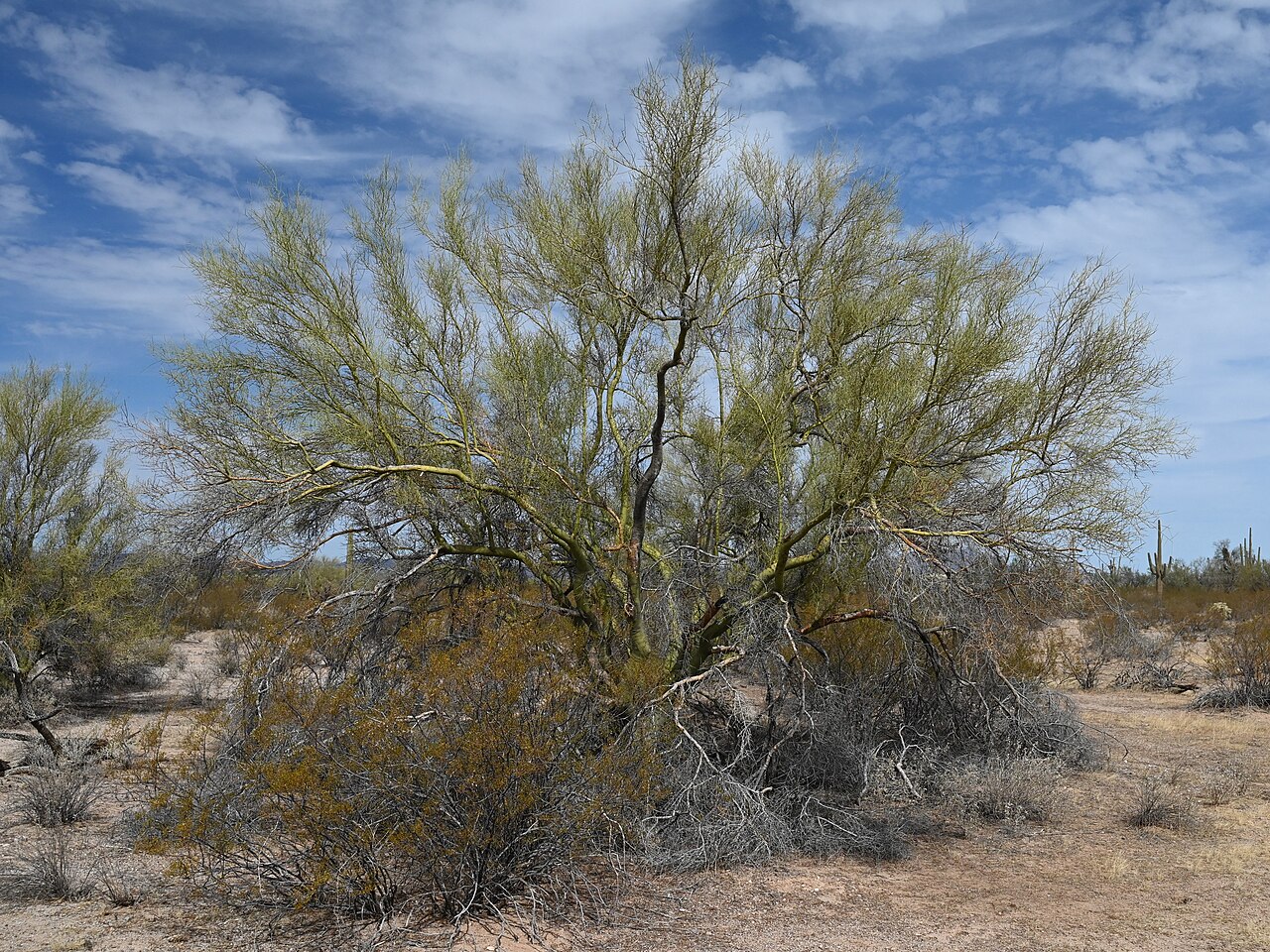
Parkinsonia microphylla, commonly known as Foothill Palo Verde or Yellow Palo Verde, is one of the signature small trees of the Sonoran Desert, instantly recognizable by its yellow-green bark, fine lacy foliage, and rounded, wide-spreading crown. Unlike its lowland relative the blue palo verde, foothill palo verde favors rocky slopes, bajadas, and upland desert soils, and it is the longest-lived and slowest-growing of the Southwest’s palo verdes, with some individuals surviving well over a century.
Growing 15 to 25 feet tall with a broad, rounded canopy, foothill palo verde is best known as a classic “nurse plant” of the Sonoran Desert, sheltering young saguaro cacti beneath its dappled shade until they are large enough to survive on their own. Its tiny, short-lived leaflets and smooth green bark allow the tree to keep photosynthesizing through the leafless months of the hottest, driest part of the year, erupting into a brilliant haze of small yellow flowers each spring.
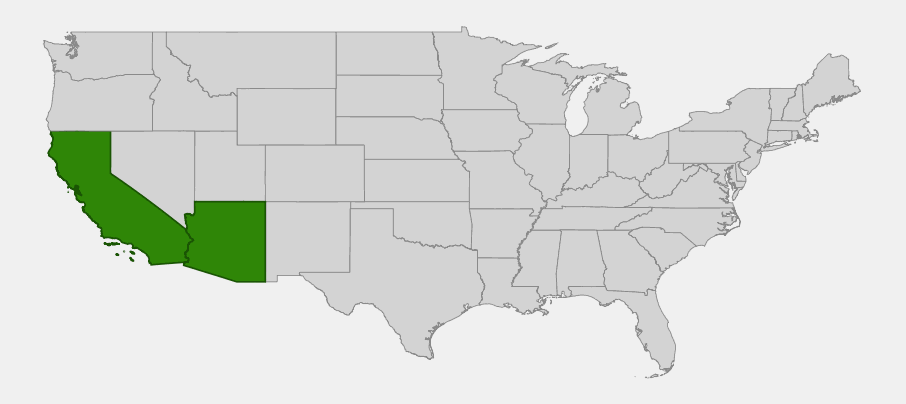
Foothill palo verde is native to southern and central Arizona and the southeastern corner of California, extending south into Sonora and Baja California, Mexico — it does not occur naturally anywhere outside the Sonoran Desert region. In Arizona, it is protected under the state’s native plant law, meaning wild specimens may not be harvested, collected, or destroyed without a permit; gardeners should always buy nursery-propagated stock rather than salvaging wild trees.
Identification
Foothill palo verde can be confused with other palo verde species at a glance, but its smaller, more yellow-toned bark, finer foliage, and rounder growth habit set it apart from the blue palo verde and Mexican palo verde once you know the differences.
Bark & Stems
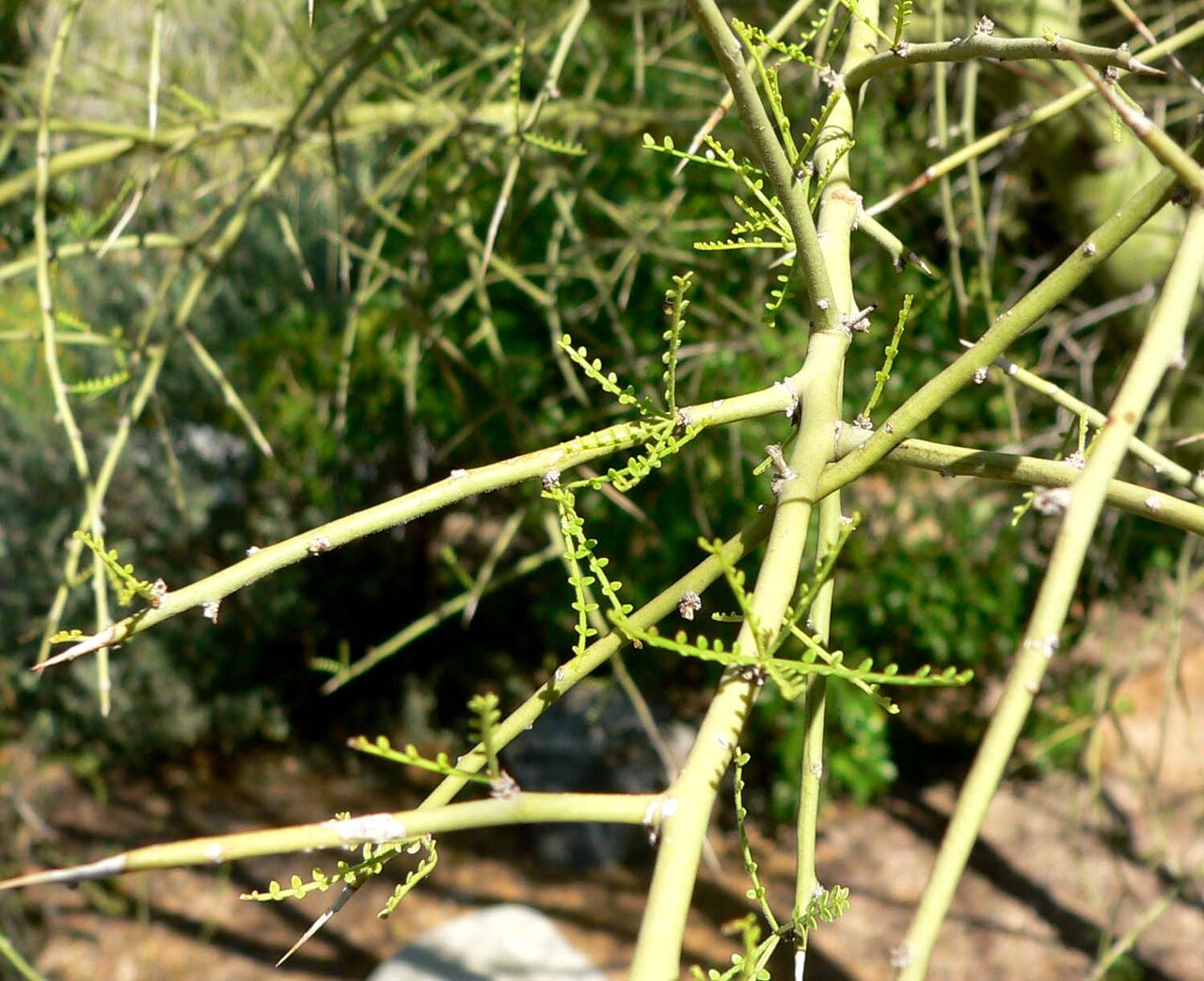
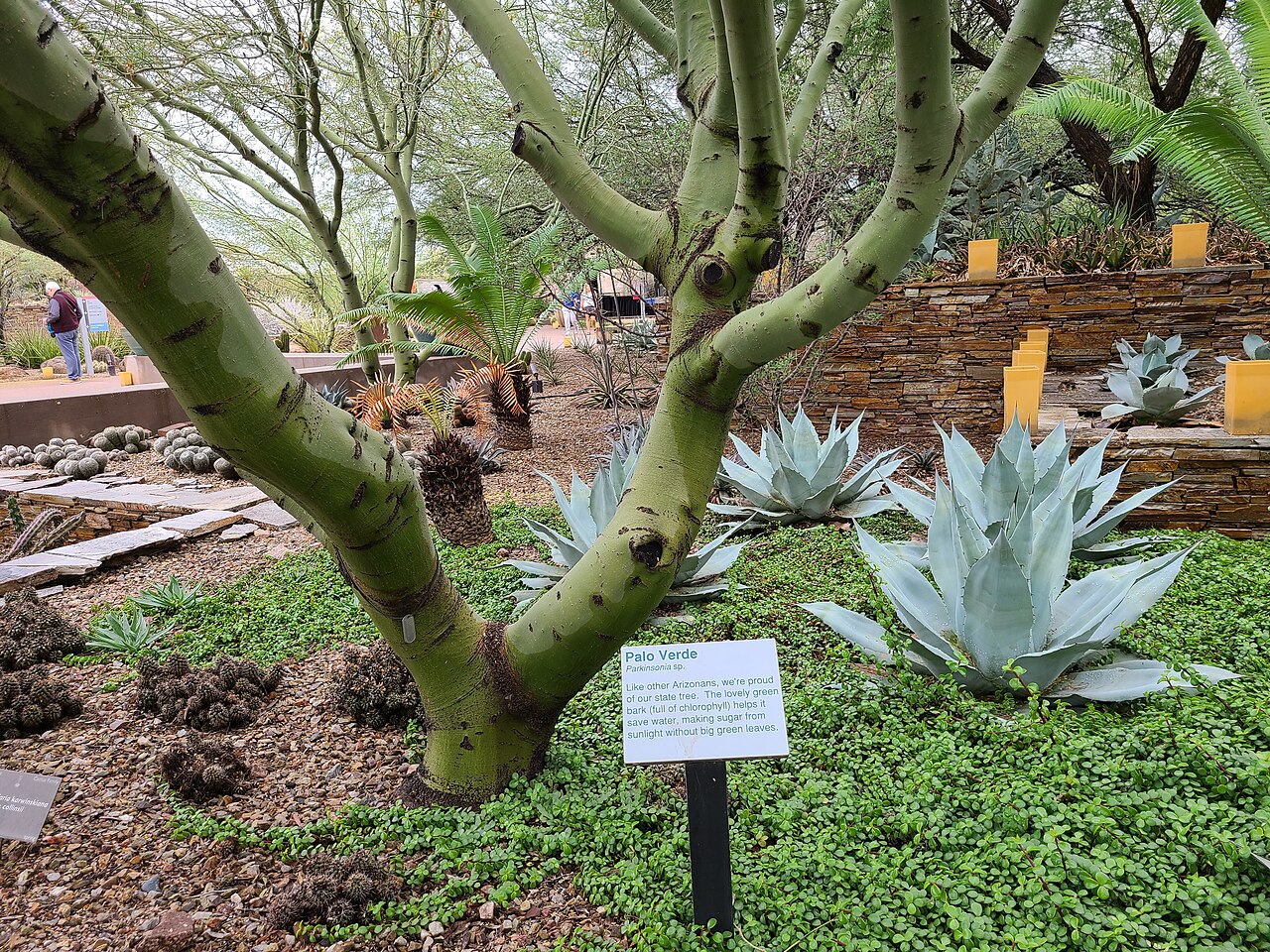
Bark and young twigs are smooth and yellow-green to olive-green — paler and more yellow-toned than the blue-gray bark of blue palo verde (Parkinsonia florida) — and stay photosynthetically active for most of the year. Twigs end in short, rigid spines, and the overall branching is dense and intricate, giving older trees a tangled, sculptural silhouette. Trunks are usually short and multi-branched rather than single and upright.
Leaves
Leaves are tiny and bipinnately compound, with just one or two pairs of pinnae, each bearing 4 to 8 pairs of minute leaflets around 1/8 inch long — among the smallest leaves of any Sonoran Desert tree, which is the source of the species name microphylla (“small-leaved”). The leaflets emerge briefly after rain and drop quickly in drought, leaving the green twigs and bark to carry on photosynthesis for most of the year.
Flowers
In spring, usually March through May, the canopy becomes covered in a haze of small, pale yellow flowers about 1/2 inch across, each with five rounded petals and one petal marked with fine reddish streaks. Bloom is typically a few weeks later than blue palo verde and somewhat less showy, but it still draws heavy pollinator activity across the desert.
Fruit & Seeds
The fruit is a short, flattened, pointed seedpod 1 to 3 inches long, often slightly constricted between the one or two seeds it contains. Pods mature from green to tan and persist on the tree into summer. The seeds are hard-coated and can remain dormant in desert soil for years, germinating only after sufficient rain scarifies the seed coat.
Quick Facts
| Scientific Name | Parkinsonia microphylla |
| Family | Fabaceae (Pea/Legume) |
| Plant Type | Deciduous Small Tree |
| Mature Height | 15–25 ft |
| Mature Spread | 15–25 ft |
| Growth Rate | Slow |
| Sun Exposure | Full Sun |
| Water Needs | Low |
| Soil Type | Rocky, well-drained desert soils; caliche or decomposed granite |
| Soil pH | 7.0–8.5 (alkaline) |
| Bloom Time | March – May |
| Flower Color | Pale yellow with faint red streaks |
| Fall Color | None; yellow-green bark provides year-round color |
| Fruit | Short, flattened tan seedpods, 1–3 in |
| Deer Resistant | Yes (spiny growth discourages browsing) |
| USDA Hardiness Zones | 8–11 |
Native Range
Foothill palo verde is native to the Sonoran Desert of southern and central Arizona and the southeastern corner of California, roughly from the Colorado Desert of Riverside, San Bernardino, and Imperial counties, extending south through Sonora and Baja California, Mexico. It does not occur naturally outside this Sonoran Desert range and is absent from the Mojave and Chihuahuan deserts.
Within its range, foothill palo verde is most common on rocky bajadas, foothills, and upland desert slopes between about 500 and 4,000 feet elevation, typically in association with saguaro cactus, brittlebush, and creosote bush. It generally occupies drier, rockier, better-drained sites than blue palo verde, which favors washes and lower elevations with more available moisture.
In Arizona, foothill palo verde is protected under the state’s native plant law, which regulates the harvesting, salvage, and transport of wild specimens on both public and private land. Anyone wanting to grow this tree should purchase nursery-propagated stock; removing wild plants without the required permits is illegal and also damages the slow-growing desert populations that depend on this species as nurse habitat for young saguaros.
📋 Regional plant lists featuring Foothill Palo Verde: Arizona & New Mexico
Growing & Care Guide
Foothill palo verde rewards gardeners with patience: it is slower-growing and longer-lived than its relatives, and once established it is one of the toughest, lowest-maintenance trees for a true desert landscape.
Light
Plant in full sun. Foothill palo verde is built for open, intensely bright desert exposure and does not perform well with significant shade, which produces sparse, leggy growth and far fewer flowers.
Soil & Water
This species demands sharp drainage and does best in rocky, caliche, or decomposed-granite soils typical of desert bajadas; it struggles in heavy clay or any soil that holds standing water. Established trees need little to no supplemental irrigation and are extremely drought tolerant. Avoid regular summer watering near the trunk, which encourages fast, weak growth and root rot; occasional deep, infrequent watering during the driest months is enough for landscape specimens.
Planting Tips
Plant small, young nursery stock rather than large boxed trees — foothill palo verde establishes its extensive root system best when planted young, and larger transplants often struggle. Choose a site with excellent drainage and full sun, and avoid low spots where water collects after storms. Because it grows slowly, be patient; a newly planted tree may show little top growth for the first year or two while its roots establish.
Pruning & Maintenance
Minimal pruning is needed. Remove dead, crossing, or storm-damaged branches while the tree is young to establish good structure, since mature trees can be difficult to reshape. Avoid heavy pruning or “lion-tailing,” which stresses the tree and encourages weak regrowth. The spines are sharp, so use thick gloves when working close to the canopy.
Landscape Uses
Foothill palo verde is a mainstay of authentic Sonoran Desert landscaping:
- Low-water shade tree for xeriscape and desert gardens
- Nurse tree plantings to establish young saguaro and other cacti
- Wildlife and pollinator gardens in the low desert
- Accent or specimen tree for its sculptural form and year-round green bark
- Desert restoration on disturbed bajadas and upland desert sites
Fire Ecology
Foothill palo verde is poorly adapted to fire. Sonoran Desert plant communities historically experienced very infrequent fire, and this species has thin bark and limited resprouting ability, so even moderate fire can kill mature trees. The increasing spread of invasive grasses that carry fire into desert habitat is considered a significant threat to foothill palo verde populations and the saguaros they shelter.
Wildlife & Ecological Value
Few trees are as central to Sonoran Desert ecology as foothill palo verde, which functions as both a wildlife resource and a literal nursery for the desert’s most iconic cactus.
For Pollinators
The spring flower display draws heavy activity from native bees, including many species of desert-adapted solitary bees, as well as honeybees and a variety of butterflies. The relatively long, staggered bloom period across individual trees helps support pollinators through the Sonoran Desert’s brief, intense spring season.
For Birds
The dense, thorny branching provides secure nesting sites for desert birds such as verdins, cactus wrens, and various sparrows, while the canopy’s light shade offers rare cover in open desert terrain. Seed-eating birds forage on the mature seedpods.
For Mammals
Foliage, flowers, and pods are browsed by desert mammals including jackrabbits and, at times, mule deer, especially when more palatable forage is scarce. Rodents and other small mammals also consume the fallen seeds, and the dense branching offers shelter from predators and summer heat.
Ecosystem Role
Foothill palo verde is best known as the primary “nurse plant” for young saguaro cacti throughout much of the Sonoran Desert: saguaro seedlings germinate and survive at dramatically higher rates in the dappled shade and frost protection a palo verde canopy provides, and many older saguaros can be found growing through or beside the dead or dying remains of the palo verde that once sheltered them. As a long-lived nitrogen-fixing legume, it also improves fertility in the harsh, rocky desert soils where it grows.
Cultural & Historical Uses
Foothill palo verde has long been part of the cultural landscape of the Sonoran Desert, recognized by the O’odham and other Indigenous peoples of southern Arizona as one of the desert’s dependable, long-lived trees. Its wood, while not large, has been used locally for small implements and firewood, and its presence has traditionally served as a reliable marker of good upland desert soil and nearby saguaro habitat.
In more recent horticultural history, foothill palo verde — along with its relative blue palo verde — was adopted as Arizona’s official state tree in 1954, recognizing the broader palo verde group’s central place in the identity of the Sonoran Desert landscape. Its bright yellow-green bark and long lifespan, often exceeding 100 years, have made it a valued specimen tree in xeriscape gardens throughout the low desert Southwest.
Because of its ecological importance as saguaro nurse habitat and its sensitivity to disturbance, foothill palo verde is covered by Arizona’s native plant protection law, which restricts the harvest or destruction of wild specimens. This history is presented here as background, not as guidance for wild collection — any plant for the garden should come from a licensed nursery.
Frequently Asked Questions
How is foothill palo verde different from blue palo verde?
Foothill palo verde has more yellow-toned bark, much smaller leaflets, a rounder and denser crown, and grows on rockier upland sites, while blue palo verde (Parkinsonia florida) has blue-gray bark, larger leaflets, a more open form, and favors washes and lower, moister ground. Foothill palo verde is also slower-growing and longer-lived.
Is it legal to dig up a wild foothill palo verde in Arizona?
No, not without a permit. Foothill palo verde is protected under Arizona’s native plant law, which restricts harvesting, salvaging, or destroying wild specimens on both public and private land. Buy nursery-propagated trees for your landscape instead.
How fast does foothill palo verde grow?
Slowly, especially compared to blue or Mexican palo verde. Expect modest growth each year, but the tradeoff is a much longer lifespan — foothill palo verde trees can live well over a century in the wild.
Does foothill palo verde need water once established?
Very little. Established trees are highly drought tolerant and typically thrive on natural rainfall alone in low-desert landscapes. Occasional deep watering during extended drought can help, but routine irrigation is unnecessary and can promote weak growth.
Why do saguaro cacti often grow next to foothill palo verde?
Young saguaros are vulnerable to frost and intense sun, and they germinate and survive far more often in the sheltering shade of a nurse plant like foothill palo verde. Over decades, the saguaro grows up through or beside the palo verde, which is why paired saguaro-palo verde groupings are such a common sight in the Sonoran Desert.

Looking for a nursery that carries Foothill Palo Verde?
Browse our native plant nursery directory: Arizona · California