
Pineneedle Milkweed (Asclepias linaria)
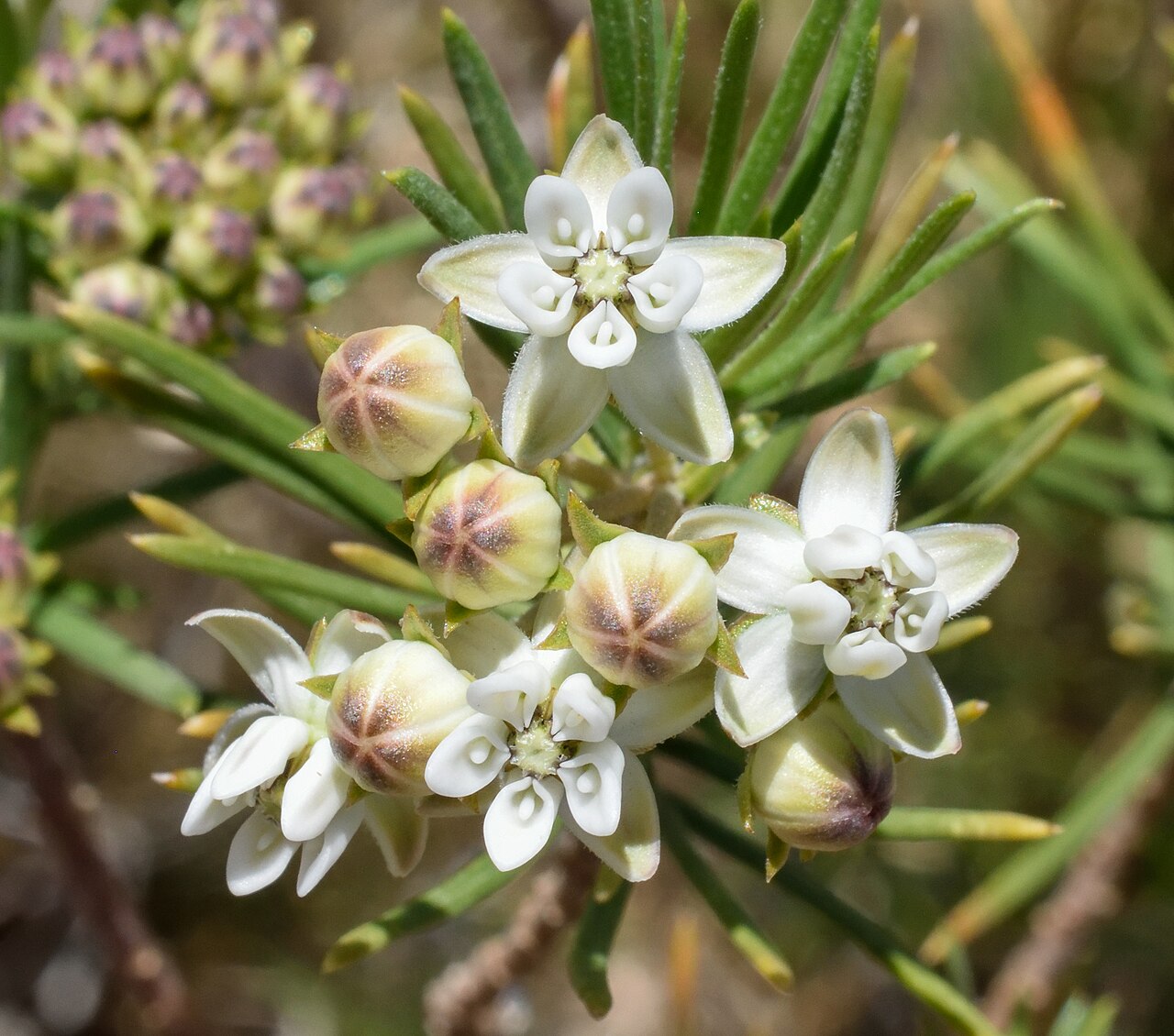
Asclepias linaria, known as Pineneedle Milkweed or needle-leaf milkweed, is a shrubby, evergreen milkweed of the Southwest and Mexico. Its stems are densely clothed in narrow, bright green leaves about an inch long that look remarkably like pine needles, so out of bloom it is easy to mistake for a small pine seedling or a rosemary bush. It grows 1 to 5 feet tall and, given a little water, flowers over a long season from spring into fall, with rounded clusters of small creamy white flowers often tinged pink or purple.
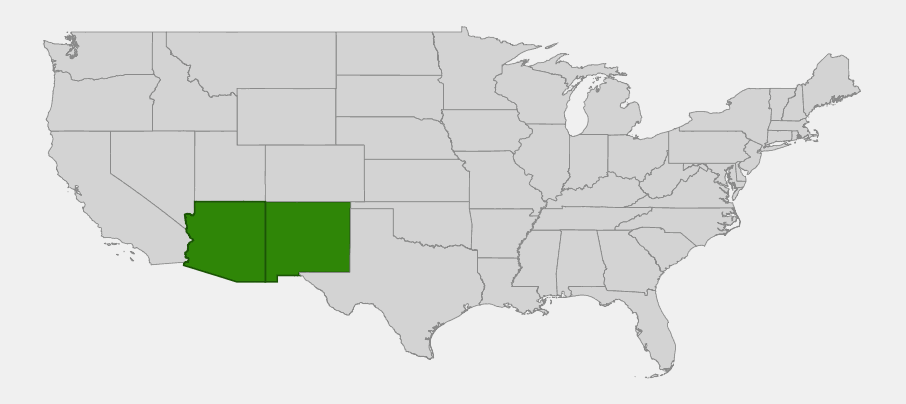
In the United States it is native mainly to central and southern Arizona, where it grows on rocky hillsides, canyon slopes and desert grassland. USDA PLANTS also lists New Mexico. It is a larval host for the monarch butterfly, and studies of monarch health have found that its very high cardenolide content helps caterpillars resist the protozoan parasite Ophryocystis elektroscirrha. Because it stays green year-round and tolerates heat and drought, it has become a favorite milkweed for desert gardens.
Safety note: like all milkweeds, pineneedle milkweed contains cardiac glycosides (cardenolides), and this species has some of the highest levels in the genus. It is toxic if eaten by people, pets or livestock, and its milky sap can irritate skin and eyes. Plant it away from grazing animals, wash your hands after handling it, and do not eat any part of it. This guide covers how to identify it, where it grows, how to grow it and its value to monarchs and other pollinators.
Identification
Pineneedle milkweed is one of the easiest milkweeds to recognize: no other southwestern milkweed has such dense, needle-like foliage on a woody-based, shrubby plant.
Leaves & Growth Habit
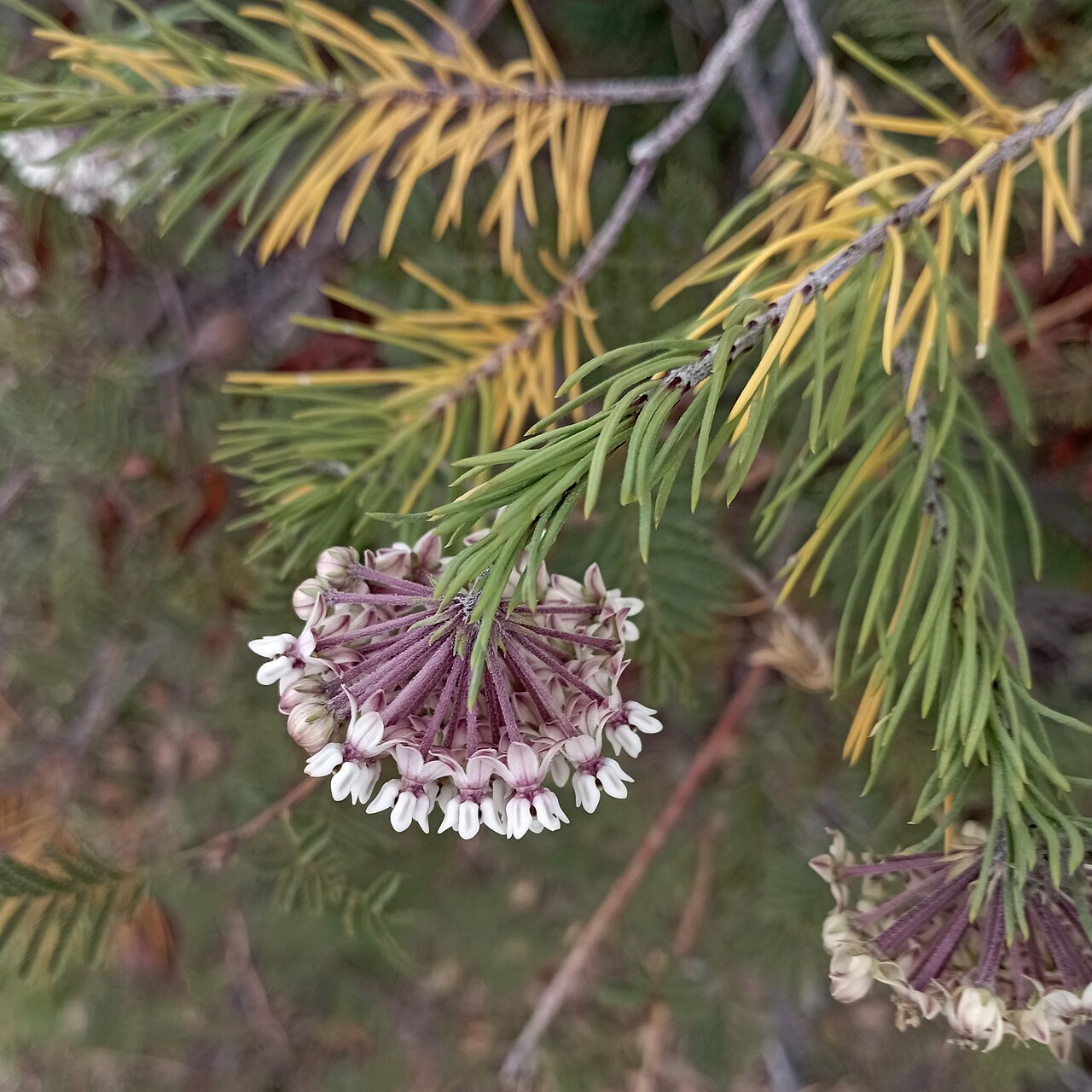
A bushy, evergreen perennial or subshrub with many upright stems from a woody base, usually 1 to 3 feet tall and occasionally to about 5 feet. The leaves are crowded along the stems, needle-like, about ½ to 1½ inches long and less than 1/16 inch wide, with rolled edges. The stems and young growth are finely hairy, and broken stems bleed milky sap.
Flowers
Flowers appear in rounded, umbel-like clusters near the tips of the stems, mainly from spring into early fall, and in mild sites almost any month. Each flower is about ¼ inch across, with five reflexed petals that are white to greenish white and five cupped hoods at the center that are white to pink-tinged. Flower stalks and buds are often purplish, giving the clusters a pink cast.
Fruit
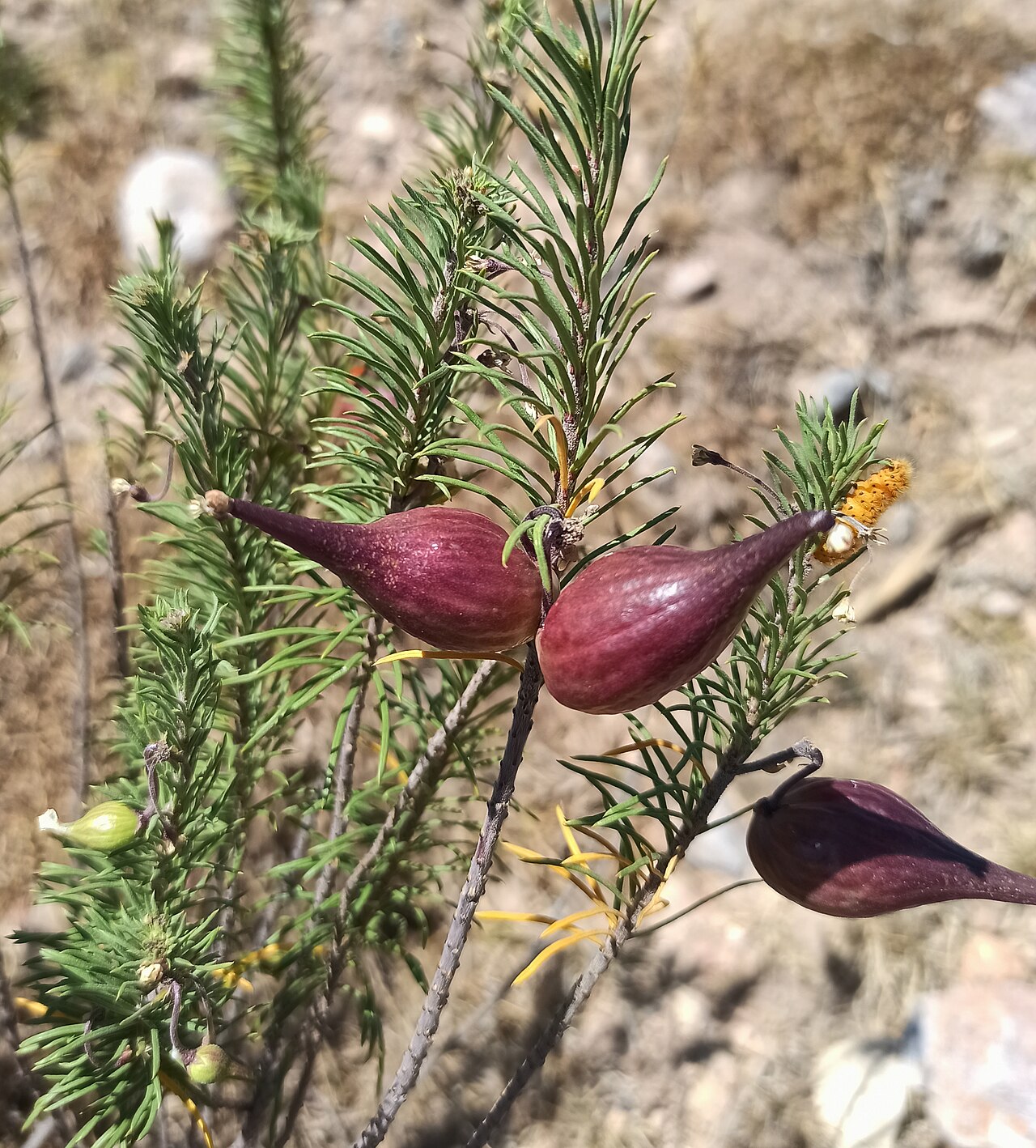
The fruit is a smooth, plump follicle 2 to 3 inches long with a tapered beak, green at first and often turning reddish-purple. When ripe it splits along one side to release flat brown seeds, each with a tuft of silky white hairs that carries it on the wind.
Look-alikes
Rush Milkweed has nearly leafless, rush-like gray-green stems. Horsetail Milkweed and Arizona Milkweed have narrow leaves too, but they are herbaceous, die back in winter, and their leaves are longer and arranged in whorls or pairs rather than packed densely along woody stems.
Quick Facts
| Scientific Name | Asclepias linaria |
| Family | Apocynaceae (dogbane family; milkweed subfamily) |
| Plant Type | Evergreen perennial subshrub |
| Mature Height | 1–5 ft (usually 2–3 ft) |
| Mature Spread | 2–3 ft |
| Growth Rate | Moderate to fast |
| Sun Exposure | Full sun to part shade |
| Water Needs | Low; occasional deep watering in summer |
| Soil Type | Well-drained rocky, gravelly or sandy soils |
| Soil pH | Neutral to alkaline |
| Bloom Time | March–September (longer with water) |
| Flower Color | White to cream, often tinged pink or purple |
| Fall Color | None; evergreen |
| Fruit | Plump, beaked follicle with silky-tufted seeds |
| Deer Resistant | Yes; toxic and rarely browsed |
| USDA Hardiness Zones | About 8–11 |
Native Range
Pineneedle milkweed is mainly a Mexican species, ranging from Sonora, Chihuahua and Baja California south through the Sierra Madre and the central highlands of Mexico. In the United States it reaches its northern limit in Arizona, where it grows across the central and southern parts of the state, from the mountains around Phoenix and Tucson south to the border. USDA PLANTS also lists it for New Mexico, near the edge of its range.
USDA PLANTS also records it in California, but Calflora treats it as not native there, and the few California records appear to be garden escapes, so this page maps it as native to Arizona and New Mexico only.
Its habitats are rocky slopes, canyon sides, washes and gravelly flats in desert grassland, the upper Sonoran Desert, chaparral and oak woodland, mostly at foothill and lower mountain elevations above the hottest desert floors. It often grows among boulders, where runoff collects and roots stay a little cooler.
📋 Regional plant lists featuring Pineneedle Milkweed: Arizona & New Mexico
Growing & Care Guide
Pineneedle milkweed is one of the most garden-friendly milkweeds for hot, dry climates. Native plant nurseries in Arizona and southern California often stock it, and it is easy to grow from seed. It stays evergreen in mild winters, so it gives monarchs and other insects something to visit for much of the year.
Light
Full sun is best for compact growth and heavy flowering. In the low desert it appreciates afternoon shade or the filtered shade of a tree, which reflects where it often grows in nature, among rocks and shrubs.
Soil & Water
Plant in well-drained, gravelly, rocky or sandy soil; it rots in heavy, wet clay. Once established it is drought tolerant, but in the desert a deep watering every two to four weeks in summer keeps it green and blooming. Do not fertilize.
Planting Tips
Plant from containers in fall or early spring. Space plants about 2 to 3 feet apart. It does well in containers, on slopes and in rock gardens, and pairs well with penstemons, desert marigold and globemallow. Because it is toxic, keep it away from livestock and from pets that chew plants. It tolerates a few degrees of frost, and in colder areas the tops may be damaged but usually regrow from the base.
Pruning & Maintenance
Cut back older, leggy stems by up to half in late winter to keep the plant dense. Aphids (often orange oleander aphids) are common on milkweeds; tolerate them or rinse them off with water, and avoid insecticides, which kill monarch caterpillars. Wear gloves when pruning, since the sap can irritate skin and eyes.
Propagation
Grow it from seed, which germinates readily in warm soil without cold stratification. Sow in spring or summer, barely covering the seed. Seedlings grow quickly and often bloom in their first or second year. It can also be grown from stem cuttings taken in warm weather.
Landscape Uses
- Monarch and pollinator gardens: an evergreen, long-blooming larval host for monarchs and queens
- Xeriscapes and rock gardens: fine, pine-like texture that contrasts with broad-leaved desert shrubs
- Containers: compact and tidy in pots on patios in warm climates
- Habitat restoration: rocky slopes and desert grassland within its Arizona range
Wildlife & Ecological Value
Like other milkweeds, pineneedle milkweed supports an entire community of specialized insects, and its long bloom season makes it unusually valuable in a dry climate.
For Pollinators
Monarch and queen butterflies lay their eggs on it, and the caterpillars feed on its leaves, storing its toxins as a defense against predators. Its nectar draws native bees, bumble bees, honey bees, wasps and butterflies, and the Xerces Society notes its special value to native bees and to beneficial insects used in conservation biological control. Milkweed specialists such as milkweed bugs and tussock moth caterpillars also feed on it.
For Birds
Its foliage is toxic and its seeds have little food value for birds, but the many insects it supports are food for songbirds, and some birds use the silky seed fibers in their nests.
For Mammals
The leaves and stems are toxic, and mammals generally avoid them. Milkweeds are considered poisonous to livestock, which may eat them when other forage is scarce.
Ecosystem Role
Its cardenolides are among the highest measured in milkweeds. Research on monarchs has found that caterpillars raised on high-cardenolide milkweeds such as this species are less harmed by the parasite Ophryocystis elektroscirrha (OE), a common disease of monarchs. This makes it one of the more beneficial milkweeds to plant for monarchs in the Southwest.
Cultural & Historical Uses
The species was described in 1801 by the Spanish botanist Antonio José Cavanilles, from plants grown in Madrid from Mexican seed. The name linaria refers to the resemblance of its narrow leaves to those of toadflax (Linaria). The genus Asclepias is named for Asclepius, the Greek god of medicine.
In Mexico it is widely known as pinillo (“little pine”), romerillo (“little rosemary”) or algodoncillo (“little cotton”), names that describe its foliage and its cottony seeds. It has been used in traditional medicine there, including for toothache, but its toxicity makes home use dangerous.
Interest in the plant has grown with monarch conservation. As gardeners in the Southwest look for native alternatives to tropical milkweed (Asclepias curassavica), which is not native to the United States, pineneedle milkweed has become one of the most recommended species for Arizona gardens because it is evergreen, drought tolerant and long-blooming.
Frequently Asked Questions
Is pineneedle milkweed good for monarchs?
Yes. It is a monarch larval host plant, and its very high cardenolide content has been shown to help monarch caterpillars resist the OE parasite. It also provides nectar for adult butterflies and many bees.
Is pineneedle milkweed poisonous?
Yes. Like all milkweeds it contains cardiac glycosides, and this species has unusually high levels. It is toxic if eaten by people, pets or livestock, and the milky sap can irritate skin and eyes. Wear gloves and wash your hands after handling it.
Is it evergreen?
Yes, in mild climates it keeps its needle-like leaves all year. In colder areas within zones 8 and 9, a hard frost may kill the tops back, but plants usually regrow from the woody base in spring.
Is pineneedle milkweed native to California?
USDA PLANTS lists California, but Calflora treats it as not native there. Its natural U.S. range is Arizona, with records in New Mexico, and it extends far south into Mexico.
How do I grow it from seed?
Sow seed in warm weather in a well-drained mix, barely covering it. Unlike many milkweeds, it does not need cold stratification. Keep seedlings in full sun and water them until they are established.

Looking for a nursery that carries Pineneedle Milkweed?
Browse our native plant nursery directory: Arizona · New Mexico

