Jojoba (Simmondsia chinensis)
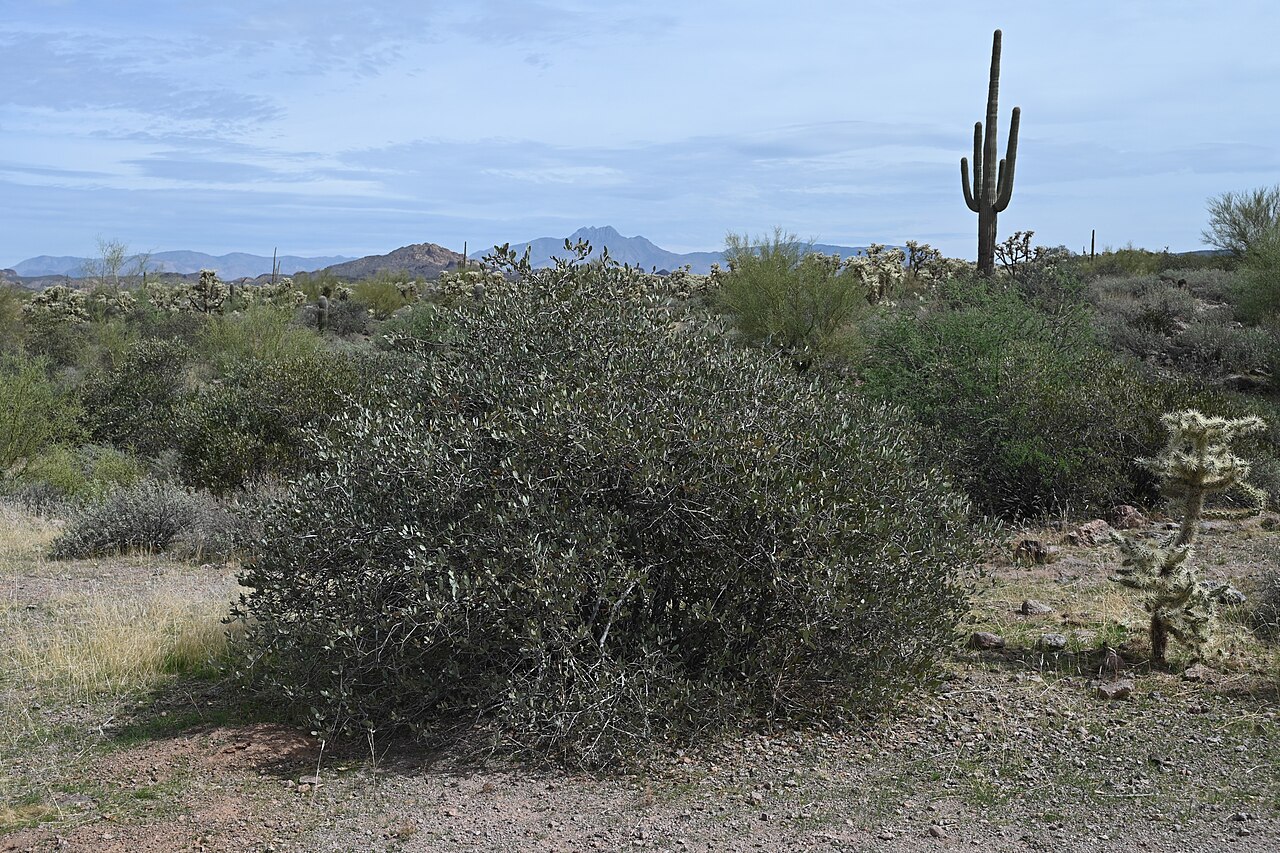
Simmondsia chinensis, commonly known as Jojoba (pronounced ho-HO-ba), is a tough, slow-growing evergreen shrub of the Sonoran and Mojave Deserts and the sole member of the plant family Simmondsiaceae. Despite its scientific name, jojoba has nothing to do with China — an 18th-century botanist mislabeled an herbarium specimen, and the error stuck. The plant is far better known today for the golden liquid wax pressed from its seeds, marketed worldwide as “jojoba oil,” than for its modest desert flowers.
Jojoba is a dioecious shrub, meaning individual plants are either male or female, with only female plants producing the oil-rich seeds after pollination from a nearby male. It grows as a rounded, densely branched shrub 3 to 6 feet tall, clothed year-round in thick, leathery, blue-gray leaves oriented edge-on to the sun — a classic desert adaptation that reduces water loss under intense heat. Left alone in rocky washes and bajadas, it can live for well over a century.
In the home landscape, jojoba is prized as one of the most reliable evergreen shrubs for low-water gardens in the Southwest, valued for its year-round gray-green foliage, extreme drought tolerance, and resistance to browsing by deer and rabbits. It asks for almost nothing once established, making it a mainstay of xeriscaping from Tucson to Palm Springs.
Identification
Jojoba is unmistakable once you know what to look for: a rounded, multi-stemmed shrub with stiff, upright branches and a uniform grayish-green color that persists through every season, standing out against the browns and tans of the surrounding desert.
Bark & Stems
Young stems are green to reddish-brown and slightly hairy, becoming gray and woody with age. Branching is dense and somewhat rigid, giving older shrubs a tidy, rounded silhouette even without pruning.
Leaves
The leaves are the plant’s signature feature: opposite, oval to elliptical, 1 to 2 inches long, thick and leathery, with a dusty blue-gray-green color from a waxy coating that reduces moisture loss. Leaves are held nearly vertically, edge-on to the midday sun, which limits heat and water stress — an adaptation sometimes called “compass orientation.” Unlike most desert shrubs, jojoba never drops its leaves; a plant that looks parched in August still holds full, blue-green foliage.
Flowers & Fruit
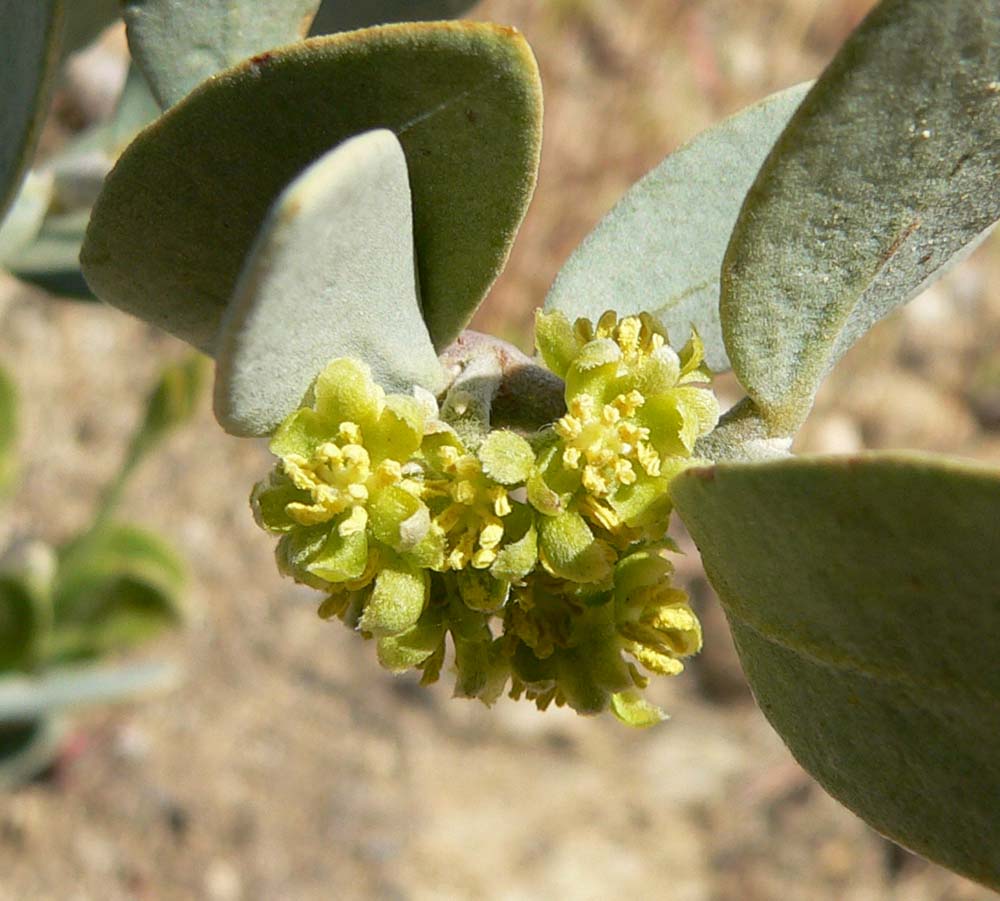
Flowers appear from late winter into spring, small, greenish-yellow, and petal-less, clustered in the leaf axils. Male flowers form showier, pollen-laden clusters; female flowers are solitary and far less conspicuous. Pollination is mostly by wind. Each fertilized female flower matures into a leathery, acorn-shaped brown capsule containing a single large, oval seed that is roughly half liquid wax by weight — the source of commercial jojoba oil.
Jojoba seeds are not food. They contain simmondsin, a bitter cyanogenic glycoside that makes raw seeds toxic and unpalatable to people and to most animals if eaten in quantity. Any human use of jojoba — then or now — is for the pressed oil applied externally, never the seed itself as a snack.
Quick Facts
| Scientific Name | Simmondsia chinensis |
| Family | Simmondsiaceae |
| Plant Type | Evergreen Shrub (dioecious) |
| Mature Height | 3–6 ft |
| Mature Spread | 3–6 ft |
| Growth Rate | Slow |
| Sun Exposure | Full Sun |
| Water Needs | Very Low |
| Soil Type | Well-drained, rocky or sandy |
| Soil pH | 6.5–8.0 (tolerates alkaline) |
| Bloom Time | February – April |
| Flower Color | Greenish-yellow |
| Fall Color | Evergreen (no change) |
| Fruit | Brown capsule, single oily seed (not edible) |
| Deer Resistant | Yes |
| USDA Hardiness Zones | 9–11 |
Native Range
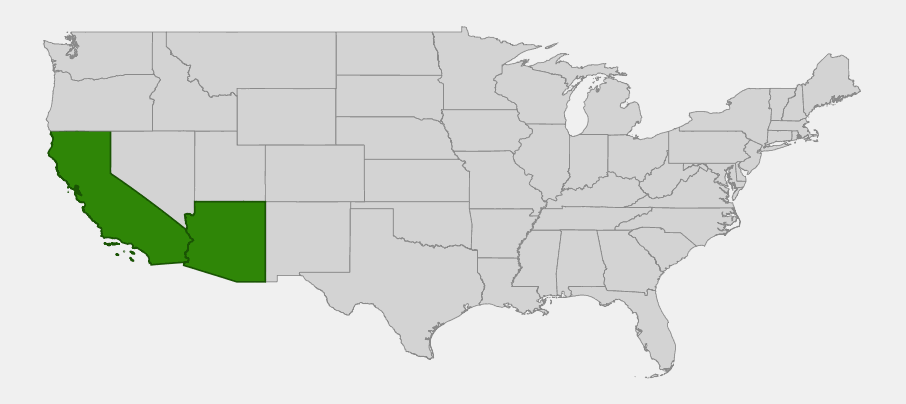
Jojoba is native to the Sonoran and Mojave Deserts of the American Southwest and northwestern Mexico, where it occupies a relatively narrow band of hot, arid lowland and foothill terrain. In the United States it occurs natively in southern California and Arizona; its full range also extends south into Baja California and Sonora, Mexico. Reports of jojoba elsewhere in the Southwest usually reflect cultivated plantings rather than wild populations.
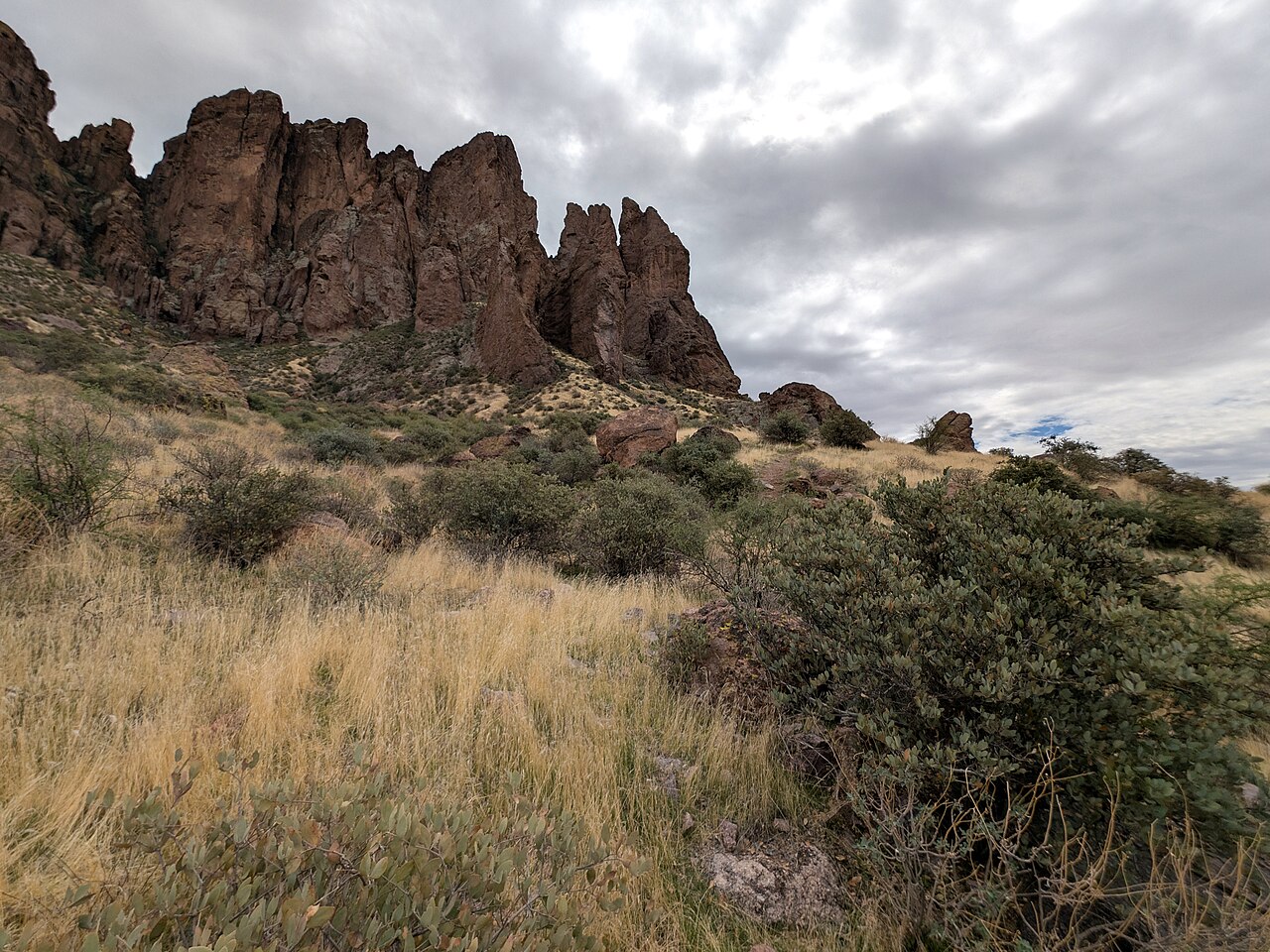
Within this range, jojoba favors rocky slopes, bajadas, and the margins of desert washes from roughly 1,000 to 5,000 feet in elevation, where its deep taproot can reach moisture unavailable to shallower-rooted neighbors. It is a classic component of Sonoran desert scrub, growing alongside saguaro, palo verde, and creosote bush rather than forming pure stands.
Because the plant tolerates heat, drought, and poor soils so well, it has also been planted commercially well beyond its native range for oil production, including large plantations in Arizona, California, and overseas in Israel, Argentina, and Australia. Those agricultural plantings are not wild populations and should not be mistaken for natural range.
📋 Regional plant lists featuring Jojoba: Arizona & New Mexico
Growing & Care Guide
Jojoba thrives on neglect. Gardeners in hot, dry climates often struggle to kill it rather than keep it alive, which makes it a forgiving choice for low-maintenance desert landscaping.
Light
Give jojoba full, unfiltered sun. It is adapted to intense desert light and heat and performs poorly, becoming leggy and sparse, in shade or in overly sheltered sites.
Soil & Water
Excellent drainage is essential — rocky, gravelly, or sandy soils mimic its native bajadas. Jojoba tolerates alkaline soil without complaint. Water deeply but infrequently the first one to two years to establish a deep taproot; after that, established plants need little to no supplemental irrigation in most of their range, and overwatering in heavy or poorly drained soil is a far greater risk than underwatering.
Planting Tips
Plant container-grown jojoba in spring or fall, giving it room to reach its full 3- to 6-foot spread. Young plants are sensitive to hard frost (below about 20°F) and benefit from a sheltered microclimate or frost cloth their first few winters; mature plants handle brief cold snaps typical of their native range. Because the species is dioecious, a planting intended to set seed needs at least one male for several females — ornamental plantings for foliage alone don’t need to worry about this.
Pruning & Maintenance
Jojoba needs little pruning. Light shaping in late winter, before spring growth, keeps a tidier form if desired; left alone, it naturally develops a dense, rounded shape. It is essentially pest- and disease-free in cultivation.
Landscape Uses
Jojoba earns its keep in several desert-garden roles:
- Xeriscaping — a dependable, year-round evergreen backbone for low-water gardens
- Informal hedges or screens in full sun
- Erosion control on dry slopes and washes
- Wildlife and desert habitat gardens, paired with saguaro, palo verde, and other Sonoran natives
- Deer- and rabbit-resistant plantings where browsing pressure is a problem
Wildlife & Ecological Value
Jojoba is a quiet but steady contributor to desert food webs, offering year-round cover in a landscape where evergreen structure is scarce.
For Birds
The dense, rounded form provides reliable nesting cover and shade for desert birds such as quail, thrashers, and verdins, especially valuable because jojoba never loses its leaves. Some birds take shelter in its branches during the hottest parts of the day.
For Mammals
Desert bighorn sheep, mule deer, and javelina browse jojoba foliage, particularly in drought years when more palatable forage is scarce; the leaves are nutritious but not a preferred food, which is part of why the plant is considered relatively deer-resistant in cultivation. Some rodents cache and feed on the seeds despite their bitter simmondsin content, apparently tolerating what larger animals avoid.
Pollinators
Jojoba is primarily wind-pollinated, an unusual trait among desert shrubs, though its flowers do receive incidental visits from bees collecting pollen.
Ecosystem Role
As a long-lived, deep-rooted evergreen, jojoba helps stabilize rocky slopes and wash margins against erosion and provides one of the few consistently green, structural elements in Sonoran desert scrub through the hottest and driest months of the year.
Cultural & Historical Uses
The O’odham and Seri peoples of the Sonoran Desert region have long histories with jojoba, historically pressing or rendering the oil from roasted, processed seeds for use on skin and hair rather than eating the seeds raw, which were recognized as unpalatable and unsafe in quantity. The plant’s deep roots and reliable presence in an unforgiving landscape made it a familiar, useful shrub long before it had any commercial value outside the region.
Jojoba’s modern fame dates to the 1970s. Its seed oil — technically a liquid wax ester, not a true vegetable oil — closely resembles sperm whale oil in its chemical structure and lubricating properties. When the U.S. banned the import of sperm whale products under the Endangered Species Act in 1971, cosmetics and industrial-lubricant manufacturers scrambled for an alternative, and jojoba oil filled the gap almost overnight, launching commercial jojoba plantations across the Southwest and in several other arid countries.
Today jojoba oil remains a major ingredient in skin and hair care products worldwide, prized for its stability and resemblance to human sebum. This is strictly a topical, cosmetic and industrial use — the raw seed itself has never been a food crop, and nothing about its modern popularity changes that.
Frequently Asked Questions
Can you eat jojoba seeds?
No. Jojoba seeds contain simmondsin, a bitter compound that makes them toxic and unpalatable if eaten in any quantity. Only the pressed oil is used, and strictly for external, cosmetic purposes — never as food.
Is jojoba native to my state?
Jojoba is native only to southern California and Arizona (plus northwestern Mexico). It is widely cultivated elsewhere in warm, dry climates, but those plantings are not wild populations.
How much water does jojoba need?
Very little once established. Water regularly for the first one to two years to help it root deeply, then expect established plants to rely mostly on natural rainfall in their native range.
Why do jojoba plants not all produce seeds?
Jojoba is dioecious — individual shrubs are either male or female. Only female plants, when pollinated by a nearby male, produce the oil-rich seeds; male plants never do.
Is jojoba deer-resistant?
Largely, yes. Its tough, bitter leaves are not a preferred browse, though desert mule deer and javelina may eat it during drought when little else is available.

Looking for a nursery that carries Jojoba?
Browse our native plant nursery directory: Arizona · California