
Rosy Sedge (Carex rosea)
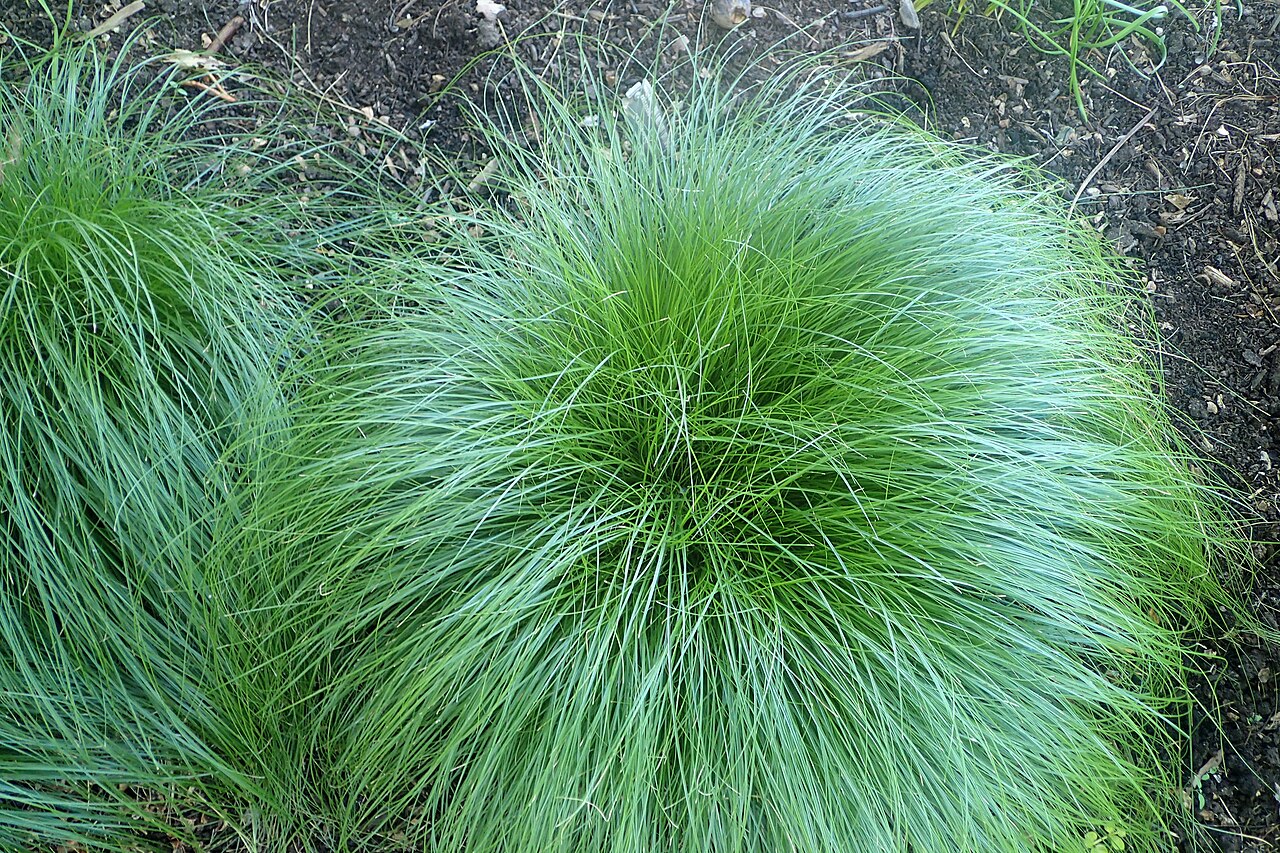
Carex rosea, known as Rosy Sedge or curly-styled wood sedge, is a small, clump-forming native sedge of deciduous forests in eastern and central North America. It makes a soft, fine-textured tuft of narrow green leaves 8 to 24 inches tall, with thin, arching flowering stems that carry a few tiny, star-shaped clusters of seeds in late spring. Despite the name, there is nothing pink about it; the name rosea is thought to refer to the rosette-like arrangement of its spikes.
Rosy sedge is one of the best native sedges for dry shade, the difficult ground under mature trees where lawn grass thins out. It stays green from spring well into late fall and often through mild winters, needs no mowing, and blends with woodland wildflowers, ferns and other shade plants. Native plant nurseries in the eastern United States increasingly sell it as a fine-textured groundcover and a native alternative to mondo grass and liriope.
It belongs to a group of closely related woodland sedges, the Carex rosea complex, which also includes Eastern Star Sedge (Carex radiata). This guide covers how to tell rosy sedge apart, where it grows, and how to use it in a shade garden.
Identification
Rosy sedge is a fine-leaved woodland sedge with small, widely spaced clusters of spreading seeds. Its curled styles are the most reliable feature for separating it from its close relatives.
Leaves & Growth Habit
A densely tufted perennial without long rhizomes, so it stays in tight clumps rather than spreading into a sod. The leaves are very narrow, about 1/16 to 1/8 inch wide, soft, flat and bright to medium green, forming a loose fountain-like mound. The leaves are mostly evergreen in the southern part of its range and semi-evergreen farther north.
Flowering Stems
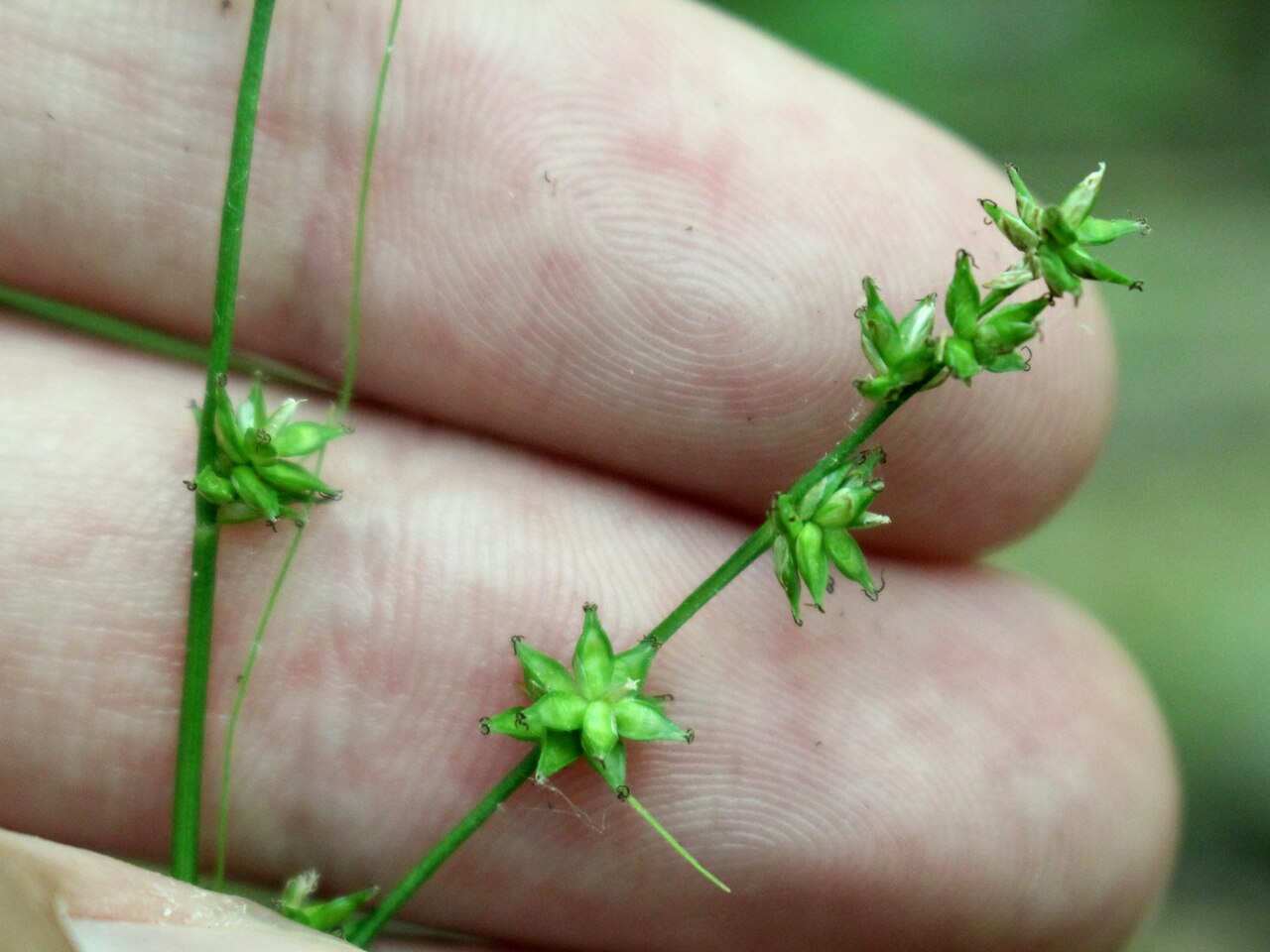
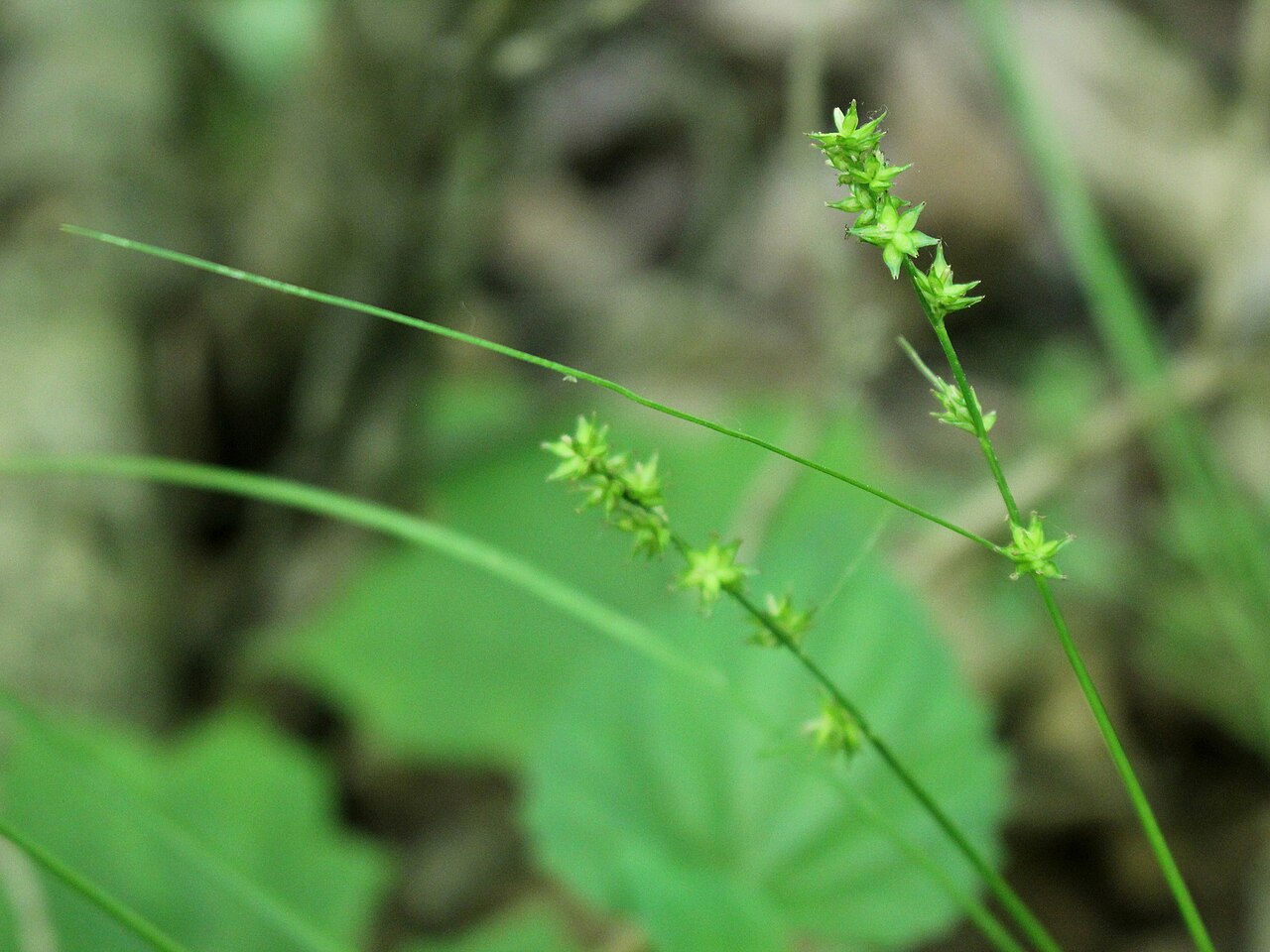
From mid-spring, slender three-angled stems rise to about the height of the leaves or slightly above, often arching or leaning outward. Each carries four to eight small, stalkless spikes spaced along the upper stem, the lowest ones often an inch or more apart.
Flowers & Seeds
Like all sedges, it has tiny wind-pollinated flowers without petals. Each spike has a few male flowers and several female flowers. The female flowers develop into green perigynia, the small sacs that hold each seed, about 1/8 inch long, which spread outward like the points of a star. The styles of rosy sedge are distinctively curled or kinked, a feature visible with a hand lens in spring, and the seeds ripen from late spring to early summer.
Look-alikes
Eastern Star Sedge (Carex radiata) is nearly identical, but its styles are straight rather than curled, and it usually grows in moister soils along streams and in bottomlands. Carex appalachica has even narrower leaves and grows in dry upland forests in the Appalachians. Botanists separate these species using style shape, leaf width and the shape of the perigynium base, and many gardeners simply grow them as “star sedges.”
Quick Facts
| Scientific Name | Carex rosea (syn. Carex convoluta, Carex flaccidula) |
| Family | Cyperaceae (sedge family) |
| Plant Type | Clump-forming perennial sedge; semi-evergreen |
| Mature Height | 8–24 in |
| Mature Spread | 10–18 in |
| Growth Rate | Moderate |
| Sun Exposure | Part shade to full shade |
| Water Needs | Low to medium; tolerates dry shade once established |
| Soil Type | Loamy or rocky woodland soil; tolerates clay and sandy loam |
| Soil pH | Acidic to neutral |
| Bloom Time | April–May (seeds ripen May–July) |
| Flower Color | Green (inconspicuous, no petals) |
| Fall Color | Stays green into late fall |
| Fruit | Small star-shaped clusters of perigynia, each holding one seed |
| Deer Resistant | Generally resistant; deer seldom browse it |
| USDA Hardiness Zones | 3–9 |
Native Range
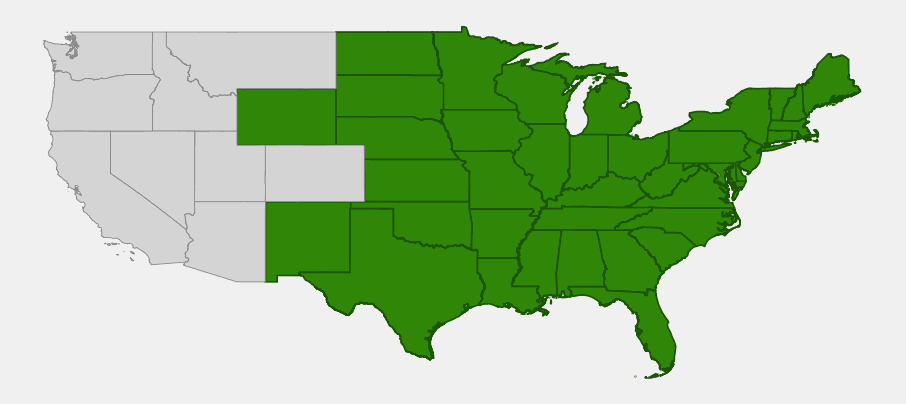
Rosy sedge is native to eastern and central North America. USDA PLANTS lists it from Maine and Vermont south to northern Florida and west to Minnesota, Iowa, Kansas, Oklahoma and eastern Texas, with records on the northern Great Plains in North Dakota, South Dakota and Nebraska. USDA also lists outlying records in Wyoming and New Mexico, far west of its main range. In Canada it is native from Nova Scotia and New Brunswick west through Quebec and Ontario.
It is most common in the deciduous forests of the Northeast, the Appalachians, the Ohio Valley and the upper Midwest, and becomes scarcer toward the Gulf Coast and the western edge of its range, where it is mostly confined to wooded ravines and river valleys. In Texas it grows in the eastern forests, not in the dry south and west of the state.
Its typical habitat is rich to dry upland deciduous and mixed forest, wooded slopes and ravines, and the edges of woodland clearings. It also grows on wooded stream terraces and in moist forests, but it is usually found on better-drained ground than its close relative eastern star sedge.
📋 Regional plant lists featuring Rosy Sedge: New Hampshire, Maine & Vermont · Connecticut, Massachusetts & Rhode Island · New York, Pennsylvania & Northern New Jersey · Delaware, Southern New Jersey & Long Island · Maryland, Virginia & West Virginia · North & South Carolina · Alabama, Georgia & Mississippi · North & South Florida · Kentucky & Tennessee · Ohio & Indiana · Michigan, Wisconsin & Eastern Minnesota · Illinois, Iowa & Missouri · Arkansas, Louisiana, Eastern Oklahoma & Eastern Texas · Nebraska, Kansas & Eastern Colorado · North Dakota, South Dakota & Western Minnesota · Montana & Wyoming
Growing & Care Guide
Rosy sedge is one of the easiest native sedges to grow in shade. It is long-lived, needs almost no care once established, and handles the root competition and dry summer soil under trees better than most groundcovers.
Light
Part shade to full shade. It does best in the dappled or open shade under deciduous trees. It tolerates some morning sun, but strong afternoon sun in dry soil can bleach or scorch the leaves.
Soil & Water
Grows in average woodland soil, from loam to clay or rocky ground, and does well in soil enriched with leaf litter. Water regularly during the first growing season; after that, it tolerates periods of summer drought in shade. It does not need fertilizer.
Planting Tips
Plant plugs or small pots in spring or early fall, about 10 to 12 inches apart for a groundcover, or in small drifts among ferns and woodland wildflowers. Because it is clump-forming, a mass planting fills in through self-seeding and gradual clump expansion rather than fast spreading. Mulch lightly with shredded leaves.
Pruning & Maintenance
Little is needed. Where the leaves look tattered at the end of winter, trim them back to a few inches in early spring before new growth starts; in mild areas you can simply leave the clumps alone. It does not need mowing, though it tolerates an occasional high mowing in a woodland lawn.
Propagation
Divide established clumps in spring or early fall. It also self-sows lightly in suitable spots. To grow it from seed, collect the ripe perigynia in early summer and sow them fresh outdoors, or give them a period of cold, moist stratification before sowing in spring.
Landscape Uses
- Dry-shade groundcover: under mature trees where turf grass struggles
- Native lawn alternative: a fine-textured, low-maintenance alternative to lawn in shaded areas
- Woodland gardens: as a matrix between spring wildflowers and ferns
- Edging and paths: soft, mounded clumps along shaded walks
- Replacement for mondo grass and liriope: a native alternative for shade plantings
Wildlife & Ecological Value
Like other woodland sedges, rosy sedge is a modest but useful part of the forest-floor community.
For Pollinators
Its flowers are wind-pollinated and offer little to bees. Sedges are, however, host plants for the caterpillars of several skippers and satyr butterflies, such as the eyed brown, and for many moths, which use a range of native Carex species.
For Birds
Ground-feeding birds such as juncos, sparrows and wild turkeys eat sedge seeds, and the clumps provide cover for ground-nesting woodland birds.
For Mammals
Small mammals eat the seeds, and deer occasionally graze the leaves, although it is not a preferred food.
Ecosystem Role
Its dense fibrous roots help hold soil on wooded slopes and in ravines, and its semi-evergreen leaves cover the forest floor when most other plants are dormant. As part of the native ground layer, it helps fill the niche that invasive shade plants such as Japanese stiltgrass or Asian sedges would otherwise occupy.
Cultural & Historical Uses
The species was described by Carl Ludwig Willdenow in 1805, based on a description by the German botanist Christian Schkuhr, so its full name is Carex rosea Schkuhr ex Willd. The name rosea does not refer to a pink color, which the plant lacks; it is usually explained as a reference to the small, rosette-like or star-shaped clusters of perigynia.
For much of the twentieth century, botanists disagreed about how to separate rosy sedge from eastern star sedge and related woodland sedges. Studies of the Carex rosea group have since established reliable features such as style shape and leaf width, and DNA studies place rosy sedge close to Carex radiata, Carex retroflexa, Carex texensis and Carex socialis.
As interest in native gardening has grown, woodland sedges like rosy sedge have become popular in shade gardens and native lawn alternatives. They are valued in landscape design as fine-textured “green mulch” that fills the ground between larger plants.
Frequently Asked Questions
Is rosy sedge pink?
No. Rosy sedge is green throughout. The name rosea is generally thought to refer to the rosette-like clusters of seeds along its stems, not to any pink color.
Does rosy sedge grow in dry shade?
Yes. It is one of the best native sedges for dry shade under trees. Water it during its first season; after that, it tolerates summer dryness in shade.
What is the difference between rosy sedge and star sedge?
They are very similar. Rosy sedge has curled styles and usually grows in drier upland woods, while eastern star sedge (Carex radiata) has straight styles and typically grows in moister soils along streams.
Can rosy sedge be used as a lawn substitute?
In shade, yes. It forms soft clumps that can be planted closely as a no-mow groundcover. It does not tolerate heavy foot traffic, so use stepping stones for paths.
Is rosy sedge evergreen?
It is semi-evergreen. In the South it usually stays green all winter; farther north the leaves may brown in late winter and are replaced by new growth in spring.

Looking for a nursery that carries Rosy Sedge?
Browse our native plant nursery directory: Alabama & Arkansas · Connecticut, Delaware, Florida & Georgia · Illinois, Indiana, Iowa & Kansas · Kentucky, Louisiana, Maine, Maryland, Massachusetts, Michigan, Minnesota, Mississippi & Missouri · Nebraska, New Hampshire, New Jersey, New Mexico, New York, North Carolina, North Dakota, Ohio & Oklahoma · Pennsylvania, Rhode Island, South Carolina, South Dakota, Tennessee, Texas, Vermont & Virginia · West Virginia, Wisconsin & Wyoming

