
Pōpolo Kū Mai (Phytolacca sandwicensis)
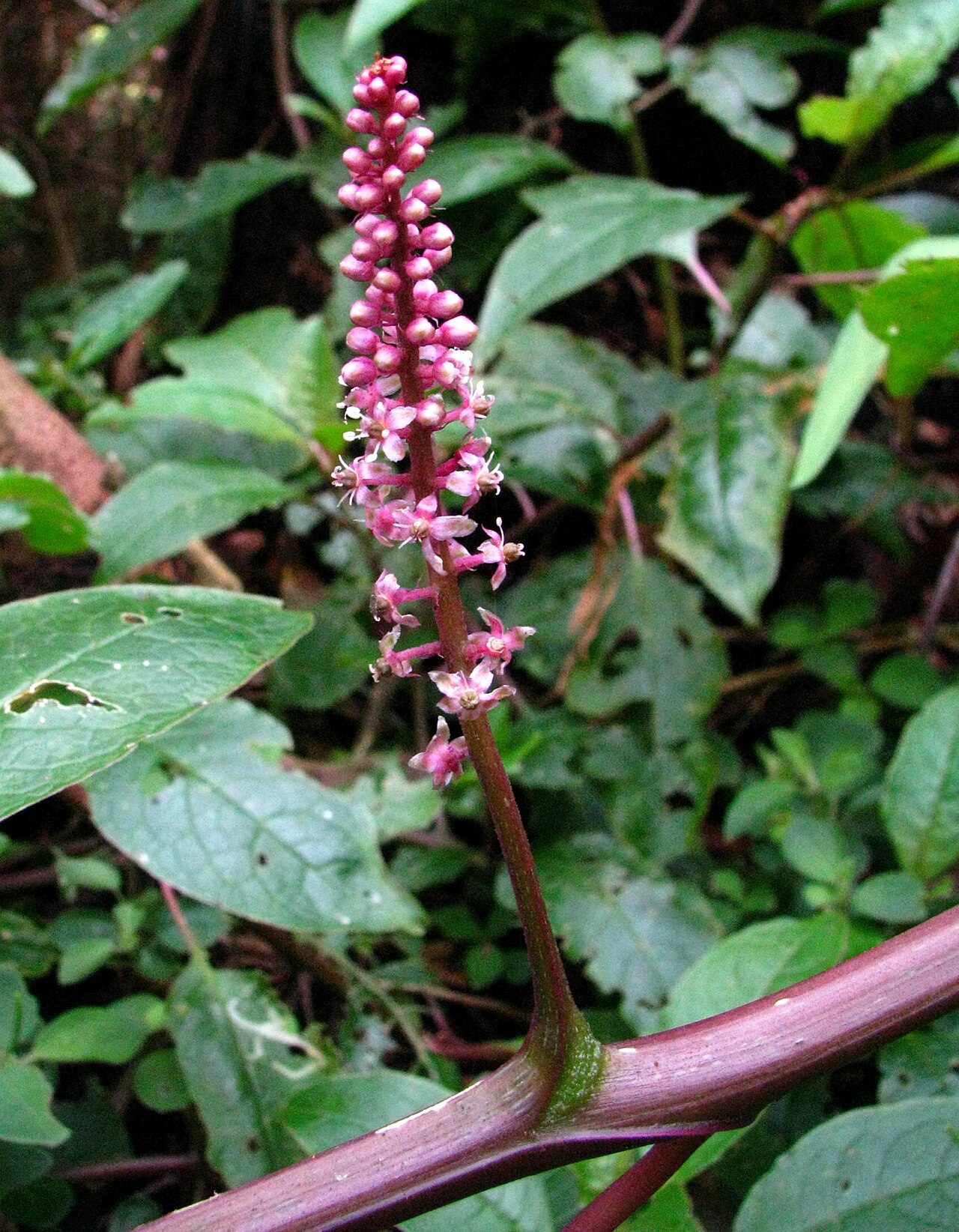
Phytolacca sandwicensis, known in Hawaiian as pōpolo kū mai (sometimes just pōpolo) and in English as Hawaiʻi pokeweed, is the only pokeweed that is native to Hawaiʻi. It is endemic to the Hawaiian Islands, which means it grows wild nowhere else on Earth. It is found on Kauaʻi, Oʻahu, Molokaʻi, Maui and Hawaiʻi Island, mostly in openings, gulches and stream bottoms in wet and mesic forests.
It is a soft-stemmed, shrubby perennial with purple-red stems, large smooth leaves and upright spikes of small pink to white flowers that turn into glossy, dark purple berries. The Hawaiian name pōpolo is also used for native Solanum (nightshade) plants, whose black berries look similar. In old Hawaiʻi the crushed berries were used as a purple dye.
Like its mainland cousin American Pokeweed, pōpolo kū mai is poisonous to people, pets and livestock, and it should not be eaten. This guide covers how to recognize it, where it grows in the islands, how to grow it in a Hawaiian native garden and its role in Hawaiian forests.
Identification
Pōpolo kū mai is a sprawling, soft-wooded plant with thick, often purplish stems, large oval leaves and erect spikes of small pink flowers followed by shiny purple-black berries.
Stems & Leaves
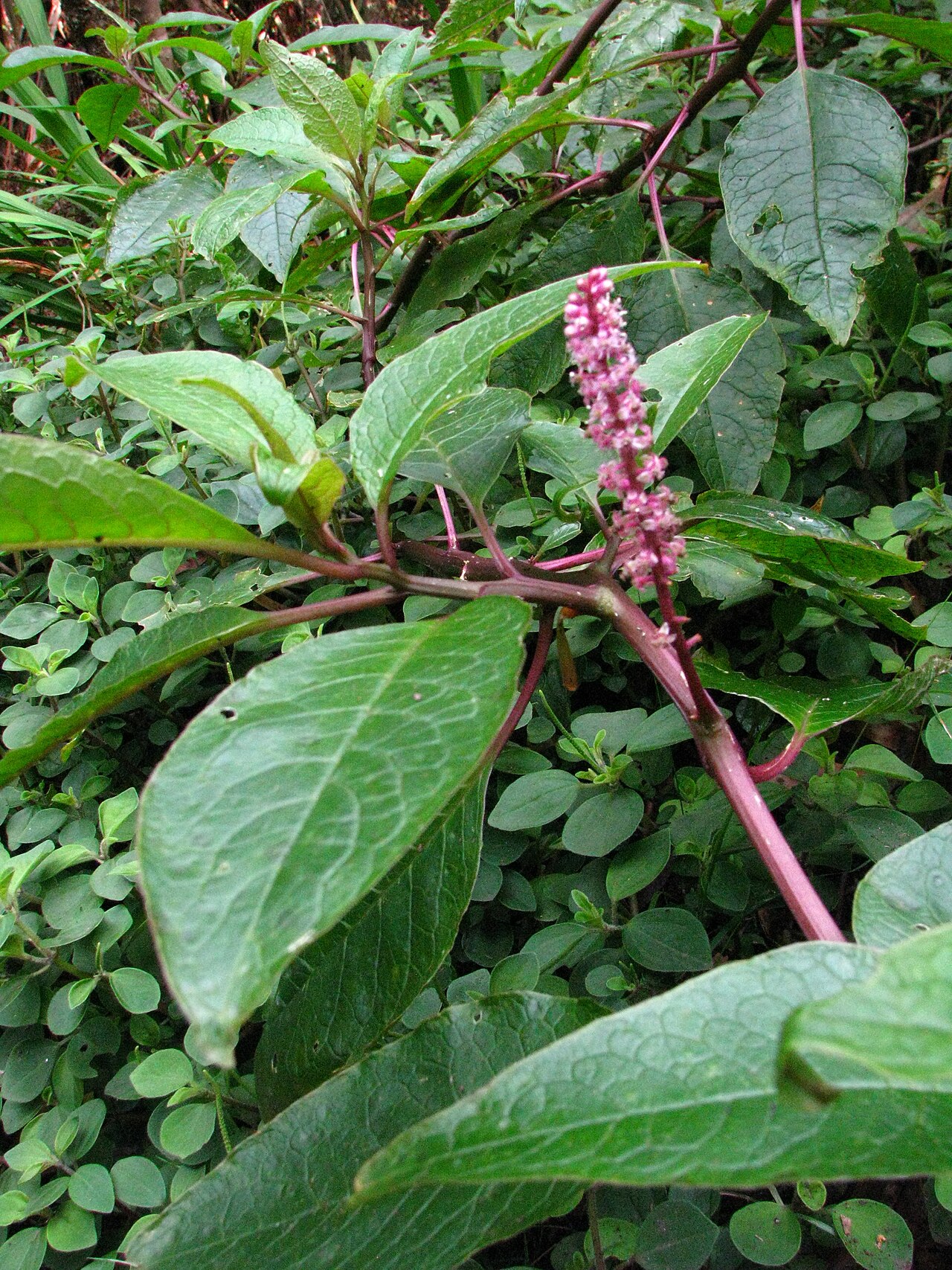
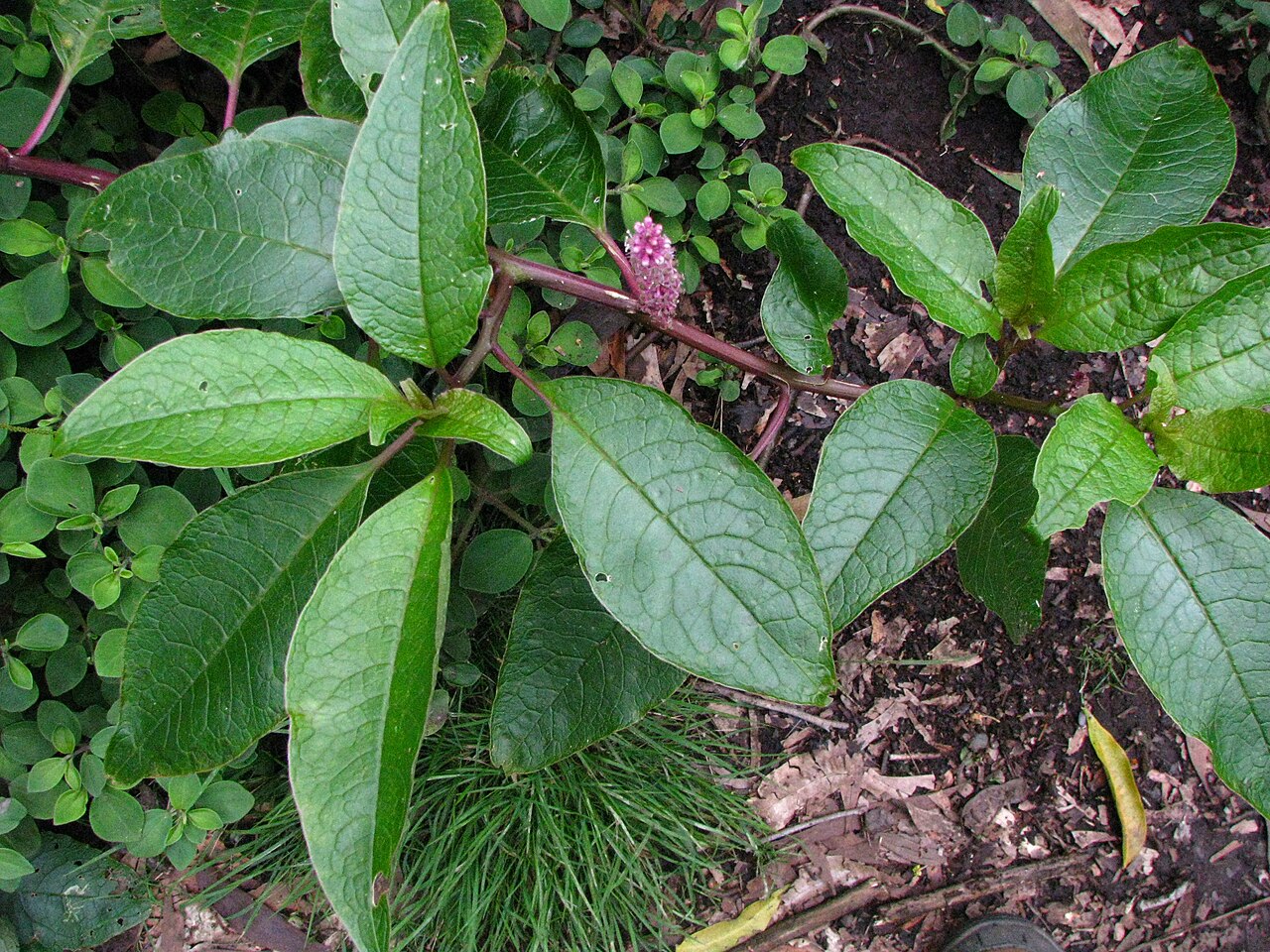
It usually grows 1 to 3 feet tall, sometimes taller, and can sprawl several feet across. The stems are thick, smooth and succulent, green to purple-red, and become somewhat woody at the base. The leaves are alternate, oval to elliptic, about 3 to 8 inches long, with smooth edges and pointed tips. They are usually hairless but can be slightly downy.
Flowers
The tiny flowers are borne in an upright spike (raceme) several inches long that stands up from the stem, which gives the plant its Hawaiian name: kū mai refers to standing up. Each flower is about ¼ inch across, with five pink, rose or whitish sepals and no true petals. The spike opens from the bottom upward, so a single spike often has open flowers, buds and young fruit at once.
Fruit
The fruit is a small, round, slightly flattened berry, ribbed like a tiny pumpkin, that ripens from green to a glossy dark purple or black. The juice is a deep purple-red. The berries and the rest of the plant are toxic to humans and mammals.
Look-alikes
The introduced Phytolacca octandra (inkweed), which arrived in Hawaiʻi in the early 1900s, is similar and can hybridize with pōpolo kū mai where they grow together. Inkweed is usually a more upright, weedy plant of disturbed ground. Native Solanum species also called pōpolo have star-shaped white flowers in small clusters instead of an upright spike.
Quick Facts
| Scientific Name | Phytolacca sandwicensis Endl. |
| Family | Phytolaccaceae (pokeweed family) |
| Plant Type | Soft-wooded perennial / subshrub (endemic to Hawaiʻi) |
| Mature Height | 1–3 ft (occasionally taller) |
| Mature Spread | 3–10 ft |
| Growth Rate | Fast |
| Sun Exposure | Partial shade to full sun |
| Water Needs | Moist; regular water |
| Soil Type | Well-drained, organic or cinder soil |
| Soil pH | About 5.5–7.0 |
| Bloom Time | Much of the year |
| Flower Color | Pink, rose or white |
| Fall Color | None (evergreen) |
| Fruit | Dark purple berry; toxic |
| Deer Resistant | Yes; toxic foliage is rarely browsed |
| USDA Hardiness Zones | 10–12 |
Native Range
Pōpolo kū mai is endemic to the Hawaiian Islands. USDA PLANTS lists it as native to Hawaiʻi only, and it has been recorded on Kauaʻi, Oʻahu, Molokaʻi, Maui and Hawaiʻi Island. It is not native anywhere on the mainland United States, and the only pokeweed native to the rest of the country is the larger American pokeweed of the East and Midwest.
It grows in wet and mesic forests from roughly 300 feet to about 6,500 feet in elevation, often in light gaps, gulches, stream bottoms and along forest edges, where it springs up quickly after a disturbance such as a tree fall. It is a scattered and fairly uncommon plant in the wild, and feral pigs, goats and deer have reduced it in many areas.
Because it needs steady moisture and some shade, it is absent from the dry leeward lowlands and coastal zones. Look for it on shaded, moist forest trails in upland native forest, especially where fencing has kept out feral ungulates.
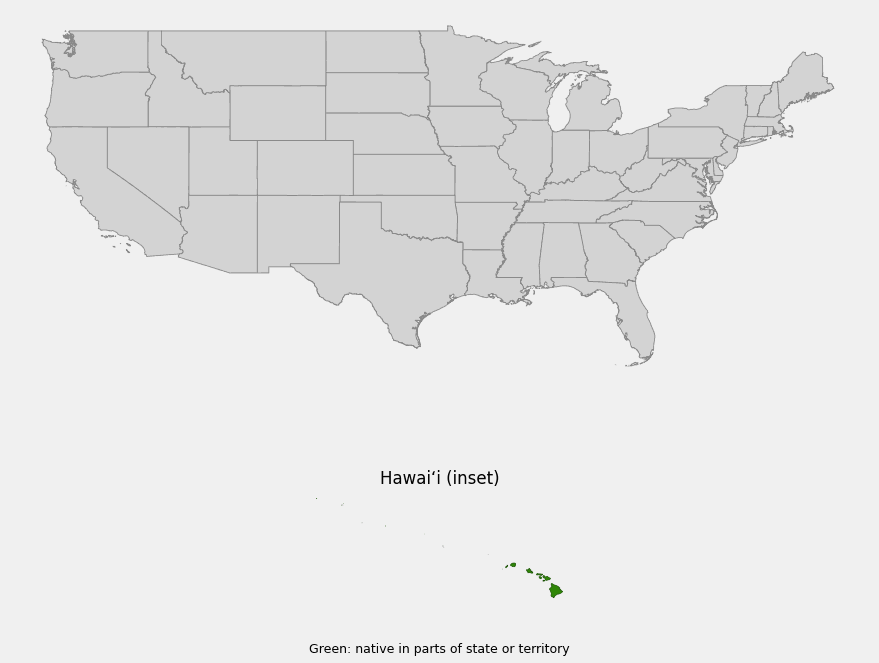
📋 Regional plant lists featuring Pōpolo Kū Mai: Hawaii
Growing & Care Guide
Pōpolo kū mai is grown by native plant nurseries in Hawaiʻi and is valued as a fast, colorful groundcover for shady native gardens. It is suited only to frost-free climates (zones 10 to 12) and is rarely grown elsewhere. Because every part of the plant is poisonous, avoid planting it where small children or pets might eat the berries.
Light
Light to partial shade gives the best leaf color and a compact, full shape. It tolerates full sun in cooler, wetter upland gardens, but in hot, dry lowland sites it needs afternoon shade.
Soil & Water
Give it moist, well-drained soil rich in organic matter, or a cinder mix. It likes regular water and does poorly in drought, but it rots in soggy, poorly drained soil. Mulch helps keep the roots evenly moist.
Planting Tips
Space plants about 3 to 5 feet apart as a groundcover. It works well under taller native trees and shrubs, along shady paths and in containers. Wear gloves when handling the plant and berries, since the sap can irritate skin.
Pruning & Maintenance
It responds well to trimming and can be cut back to keep it low and bushy. Watch for scale, mealybugs, aphids and ants, which can be controlled with a strong spray of water or insecticidal soap.
Propagation
It grows readily from fresh seed cleaned from ripe berries, which usually germinates within a few weeks. Stem cuttings also root. Seeds may come up on their own under the parent plant. Grow it only from garden or nursery stock; never collect from wild populations.
Landscape Uses
- Hawaiian native gardens: fast-growing, colorful groundcover for shade
- Shady borders and understory: fills in under native trees and tree ferns
- Containers: attractive pink spikes and purple berries in pots
- Forest restoration: quick cover for openings in wet and mesic forest
Wildlife & Ecological Value
Pōpolo kū mai is part of the native understory of Hawaiian wet and mesic forests, where its fruit feeds birds and its quick growth covers bare ground in forest gaps.
For Pollinators
The small flowers are visited by insects, including native bees and flies, for pollen and nectar.
For Birds
Birds eat the berries and pass the seeds unharmed, which spreads the plant to new openings in the forest. Birds are not affected by the toxins the way mammals are.
For Mammals
Hawaiʻi has only one native land mammal, the ʻōpeʻapeʻa (Hawaiian hoary bat), which does not eat it. The plant is toxic to people, pets and livestock, but feral pigs and goats still damage wild populations by trampling and rooting.
Ecosystem Role
As a fast-growing plant of light gaps, it helps cover and hold soil after a tree fall or landslide until slower native shrubs and trees fill in. It can hybridize with the introduced inkweed (P. octandra), which is a concern for keeping wild populations pure.
Cultural & Historical Uses
In traditional Hawaiian culture, the dark purple juice of the crushed berries was used as a dye, including, according to many accounts, for tattooing (kākau). The name pōpolo is shared with the native nightshades, whose black berries were used in a similar way and whose leaves were used medicinally.
The Austrian botanist Stephan Endlicher formally described Phytolacca sandwicensis in the 19th century. The species name refers to the Sandwich Islands, an old European name for the Hawaiian Islands.
All pokeweeds contain saponins and other compounds that cause vomiting, diarrhea and other symptoms when eaten. Pōpolo kū mai is one of the few native Hawaiian plants known to be toxic, so it is best enjoyed for its looks and never as food or medicine.
Frequently Asked Questions
Is pōpolo kū mai poisonous?
Yes. All parts, including the berries, are toxic to people, pets and livestock and can cause severe stomach upset. Do not eat any part of the plant, and plant it away from children and pets.
Is pōpolo kū mai native to Hawaiʻi?
Yes. It is endemic to the Hawaiian Islands, growing wild on Kauaʻi, Oʻahu, Molokaʻi, Maui and Hawaiʻi Island and nowhere else.
What is the difference between pōpolo kū mai and American pokeweed?
American pokeweed (Phytolacca americana) is a tall plant of the eastern and central mainland U.S. with drooping clusters of berries. Pōpolo kū mai is a lower, sprawling Hawaiian endemic with upright pink flower spikes.
Can I grow pōpolo kū mai outside Hawaiʻi?
Only in frost-free climates (zones 10 to 12) with moist soil and partial shade. It is grown mainly in Hawaiian native gardens.
How do I propagate pōpolo kū mai?
Sow fresh seed cleaned from ripe berries, or root stem cuttings. Wear gloves when handling the berries and sap.

Looking for a nursery that carries Pōpolo Kū Mai?
Browse our native plant nursery directory: Hawaii

