Eastern Star Sedge (Carex radiata)
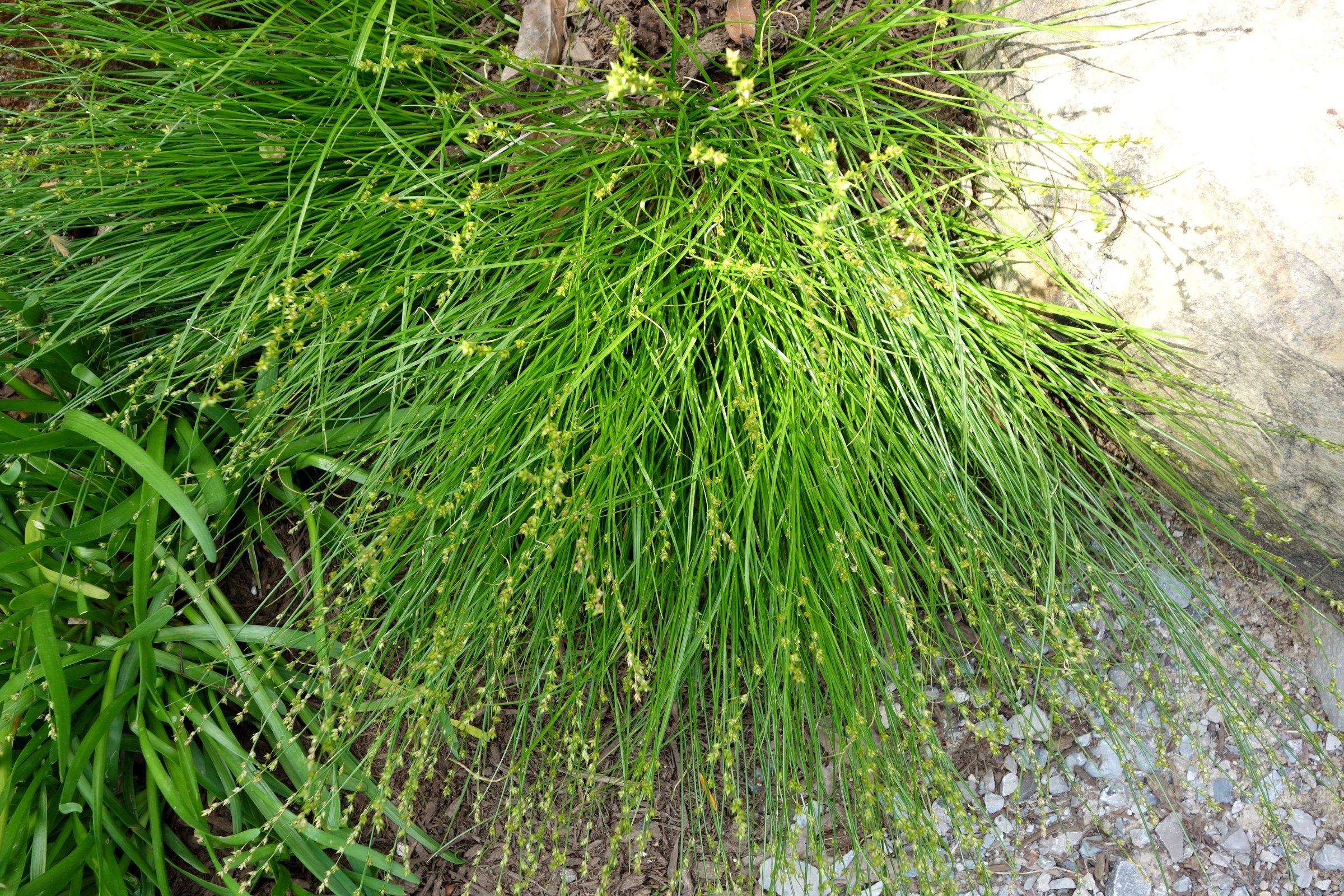
Carex radiata, commonly called eastern star sedge or straight-styled wood sedge, is a small, clump-forming sedge of eastern and central North American hardwood forests. It belongs to the Cyperaceae (sedge family) and is one of the many fine-leaved woodland Carex species that quietly carpet the floor of maple, beech and oak forests long before most wildflowers emerge. Gardeners who value texture over flash appreciate it for its tidy, grass-like mounds and its willingness to thrive in the dry shade that defeats so many other groundcovers.
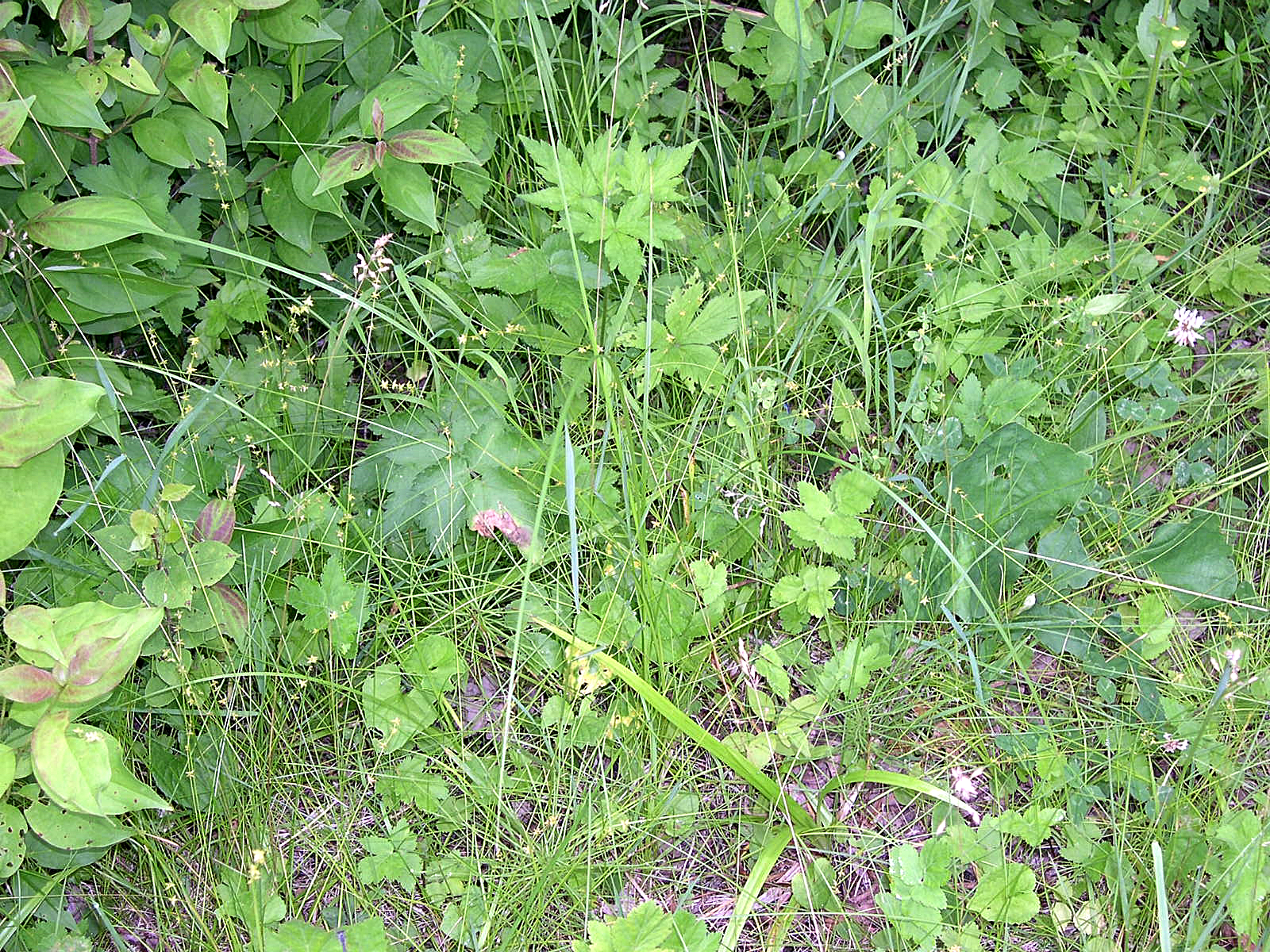
The plant forms dense tufts of narrow, bright to medium green leaves, from which thin, wiry stems rise in late spring carrying small, widely spaced clusters of greenish-yellow flowers and, later, tiny star-shaped seed heads that give the species its common name. It rarely exceeds 18 inches in height and spreads slowly by short rhizomes, staying in a well-behaved clump rather than running aggressively through a bed.
Eastern star sedge is native to mesic to wet-mesic bottomland and upland hardwood forests from New England and the Great Lakes south through the Appalachians and the Ozarks to the Gulf Coast states. In the home landscape it is best used as a textural groundcover or edging plant in shaded, naturalistic plantings, where it combines beautifully with spring ephemerals and ferns.
Identification
Eastern star sedge is a low, clump-forming perennial sedge, typically 8 to 18 inches tall, with a fibrous, slowly spreading root system that forms discrete tufts rather than a running mat. The overall look is fine-textured and fountain-like, with arching leaves that stay a fresh green through most of the growing season.
Leaves & Stems
The leaves are thread-like to narrowly linear, usually about 1/16 to 1/8 inch wide, with a slightly rough margin that can be felt by running a finger along the edge. They arch outward from the base of the clump in a loose fountain shape. The flowering stems (culms) are three-angled in cross-section, as in most sedges, slender, and slightly taller than the surrounding foliage.
Flowers
In late spring, each clump sends up several wiry stems bearing 4 to 8 small, widely separated spikes along the upper portion of the stem. Each spike carries both male and female flowers (the spikes are androgynous), a key identification trait that separates Carex radiata from several similar woodland sedges. The flowers themselves are inconspicuous and greenish, pollinated by wind rather than insects.
Fruit & Seeds
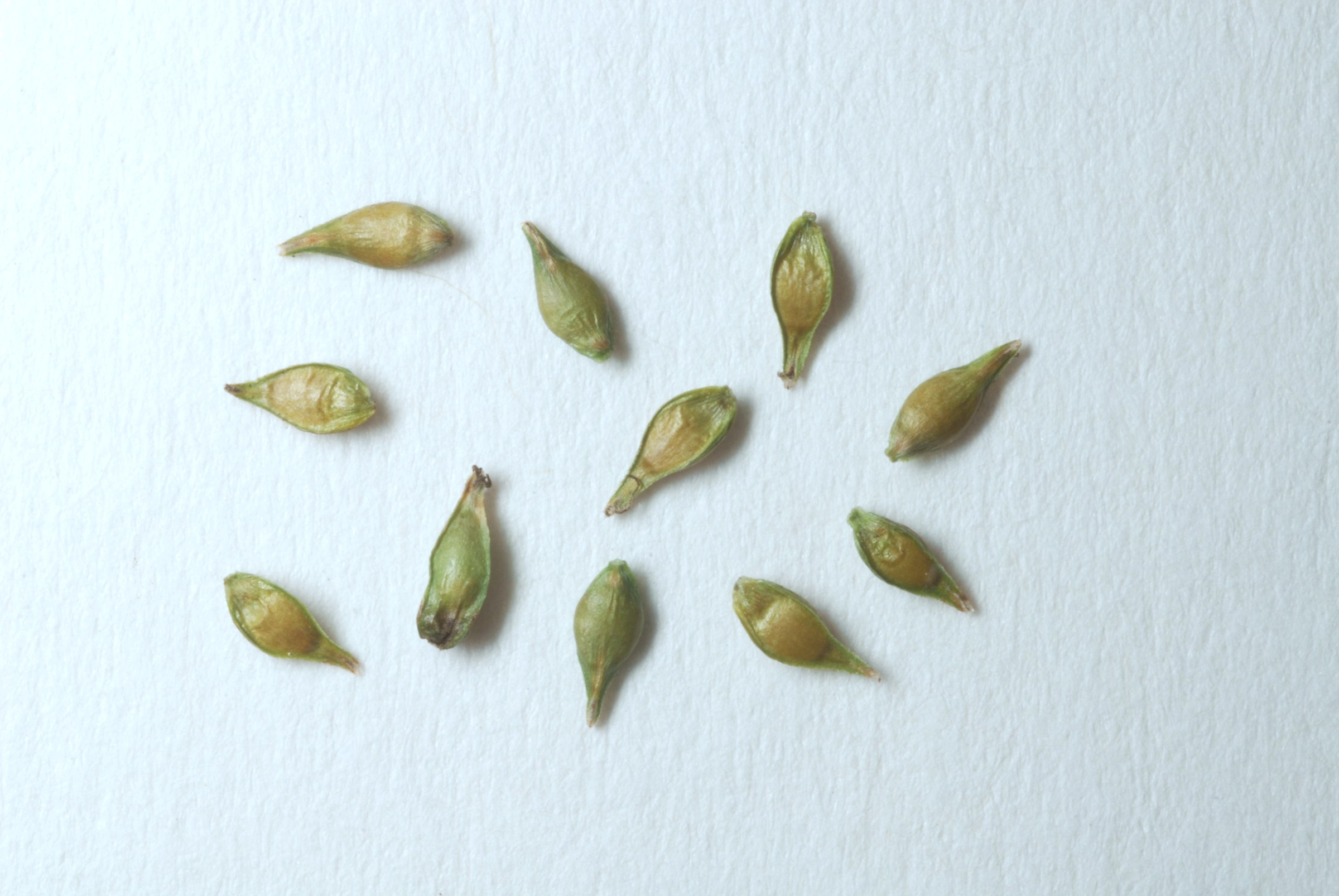
The perigynia (the small flask-shaped sacs that enclose each seed) are about 1/8 to 3/16 inch long, lens-shaped, and spread outward from the spike in a loose, radiating pattern — the “star” that gives the plant its common name. Each perigynium narrows to a short beak and contains a single lens-shaped achene. Seed matures in late spring to early summer and is dispersed mostly by gravity and by birds that forage through the leaf litter.
Quick Facts
| Scientific Name | Carex radiata |
| Family | Cyperaceae (Sedge) |
| Plant Type | Perennial Sedge |
| Mature Height | 8–18 in |
| Mature Spread | 10–14 in (slowly clump-forming) |
| Growth Rate | Slow to moderate |
| Sun Exposure | Part Shade to Full Shade |
| Water Needs | Average to moist; tolerates brief dryness once established |
| Soil Type | Humus-rich loam; tolerates clay |
| Soil pH | 5.5–7.0 (acidic to neutral) |
| Bloom Time | April – June |
| Flower Color | Greenish-yellow (inconspicuous) |
| Fall Color | Foliage remains green, fading tan in winter |
| Fruit | Small star-shaped clusters of perigynia (not showy) |
| Deer Resistant | Yes, generally avoided by deer and rabbits |
| USDA Hardiness Zones | 4–8 |
Native Range
Eastern star sedge is native to eastern and central North America, ranging from the Canadian Maritimes and New England west through the Great Lakes states to Missouri and eastern Oklahoma, and south through the Appalachians and Piedmont to the Gulf Coast states of Louisiana, Alabama and Georgia. It occurs in a broad band of deciduous forest across roughly thirty states and adjoining Canadian provinces, making it one of the more widely distributed woodland sedges in the East.
Within that broad range it is a plant of mesic to wet-mesic forests: shaded bottomlands, moist ravine slopes, and the drier margins of floodplain forests, usually in rich, humus-topped soils under a closed hardwood canopy. It is less common in pure conifer stands or in open, sunny habitats, where competition and dry heat work against it.
Eastern star sedge is widely offered by native plant nurseries across its range and is sometimes planted outside its native counties within states where it does occur; always confirm local native status with your state’s natural heritage program or county flora before assuming a given planting site is within its indigenous range, since distribution can be patchy even within a native state.
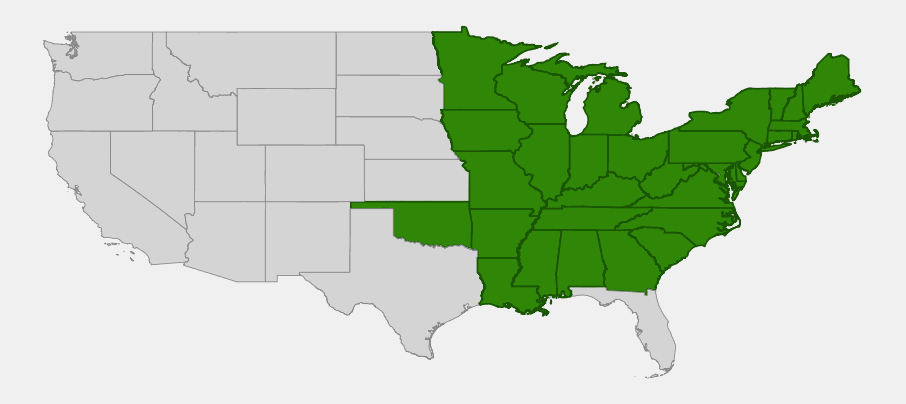
📋 Regional plant lists featuring eastern star sedge: New Hampshire, Maine & Vermont · Connecticut, Massachusetts & Rhode Island · New York, Pennsylvania & Northern New Jersey · Delaware, Southern New Jersey & Long Island · Maryland, Virginia & West Virginia · North Carolina & South Carolina · Georgia, Alabama & Mississippi · Arkansas, Louisiana, Eastern Oklahoma & Eastern Texas · Kentucky & Tennessee · Ohio & Indiana · Illinois, Iowa & Missouri · Michigan, Wisconsin & Eastern Minnesota
Growing & Care Guide
Eastern star sedge is one of the easier woodland sedges to establish, as long as it gets the dappled or deep shade it evolved under. It is not a plant for open, sunny beds, but in the right spot it needs very little attention once established.
Light
Part shade to full shade suits it best, mimicking the hardwood canopy of its native forests. It can take a few hours of morning sun, especially in cooler climates, but hot afternoon sun will scorch the fine foliage and slow growth. In deep shade it stays low and lush; with a bit more light it flowers more freely.
Soil & Water
It prefers humus-rich, well-drained to consistently moist loam, similar to a forest floor topped with leaf litter. It is not a true wetland sedge, but it tolerates periodic wetness in bottomland soils and also handles brief dry spells once its root system is established, which is one reason it has become popular for dry shade gardens. Heavy clay is tolerated if organic matter is worked in.
Planting Tips
Plant container-grown divisions in spring or fall, spacing clumps 10 to 14 inches apart for a continuous groundcover effect within two to three seasons. Mulch with shredded leaves or fine bark to hold moisture and suppress weeds while the clumps fill in. It transplants readily and establishes faster than many native sedges.
Pruning & Maintenance
Little maintenance is needed. Cut back tattered foliage in late winter before new growth emerges if the planting looks ragged, though this is optional — the semi-evergreen to tan winter foliage provides some cover for overwintering insects. Divide congested clumps every three to four years in spring to rejuvenate vigor and create new plants.
Propagation
The easiest method is division of established clumps in early spring, just as new growth starts. Seed can also be collected when the perigynia turn tan and dry (usually by early summer) and sown immediately, as sedge seed loses viability quickly in storage; germination is often slow and uneven over the following one to two years.
Landscape Uses
- Shade groundcover under trees where turf grass struggles
- Woodland garden edging along paths and beds
- Companion planting with spring ephemerals, ferns and shade perennials
- Dry shade solutions beneath mature trees with root competition
- Naturalized plantings in restoration of hardwood forest understory
- Rain garden margins where soil stays consistently moist but not flooded
Wildlife & Ecological Value
Though inconspicuous compared to showier native perennials, eastern star sedge plays a steady supporting role in woodland food webs and habitat structure.
For Pollinators
Like most sedges, eastern star sedge is wind-pollinated and does not rely on or particularly attract pollinating insects for reproduction. Its ecological value for pollinators lies instead in the structural cover it provides at ground level, sheltering small native bees and other beneficial insects that overwinter or forage in leaf litter.
For Birds
Ground-foraging birds such as native sparrows and thrushes work through sedge clumps and surrounding leaf litter searching for insects and fallen seed. The seed itself is eaten in small quantities by some songbirds and small mammals, though it is not a major food source compared to larger-seeded sedges.
For Mammals
The dense tufted growth offers cover for small mammals such as voles and shrews, and the foliage is browsed lightly by rabbits in some areas, though it is generally considered deer-resistant compared to showier woodland perennials.
Ecosystem Role
As a dense, fibrous-rooted groundcover, eastern star sedge helps stabilize soil on shaded slopes and forest floors, reducing erosion and slowing stormwater runoff. Its root mat and leaf litter contribute organic matter to the forest floor, supporting the fungal and invertebrate communities that keep hardwood forest soils healthy. In restoration plantings it is valued as a low, non-aggressive groundcover that fills gaps without outcompeting spring ephemerals and tree seedlings.
Cultural & Historical Uses
Eastern star sedge has no significant documented history of use by Indigenous peoples or early settlers, unlike many showier or more useful native plants. Sedges in general were sometimes used by Indigenous communities for weaving mats and baskets, but specific ethnobotanical records for this particular species are sparse, likely because its small, fine leaves are less practical for fiber work than larger sedge and rush species.
Its modern significance is almost entirely horticultural and ecological. Since the early 2000s, interest in native sedges as lawn and shade-garden alternatives to turf grass and non-native groundcovers has grown steadily, and eastern star sedge has become a modest but reliable choice in that movement, prized by ecological landscapers for its unfussy nature and fine texture.
Botanically, the species has occasionally been confused with and classified under other segregate names in the Carex rosea complex of fine-leaved woodland sedges; current treatments, including Flora of North America, recognize Carex radiata as a distinct species separated from its relatives by its androgynous (not solely pistillate) spikes.
Frequently Asked Questions
Is eastern star sedge the same as Carex rosea?
No, though the two are closely related and were once confused. Carex radiata is distinguished from Carex rosea and other relatives by technical spike and perigynium characters; both are fine-leaved woodland sedges of similar stature and habitat, and either makes a good garden groundcover.
Will eastern star sedge grow in full sun?
It can survive brief sun exposure but performs best in part to full shade. In hot, sunny sites the foliage tends to scorch and thin out, so it is best reserved for shaded beds, woodland gardens, and the north or east side of structures.
Does eastern star sedge spread aggressively?
No. It spreads slowly by short rhizomes and stays in a well-defined clump, making it a good choice for gardeners who want groundcover coverage without an aggressive runner that needs constant containment.
Can eastern star sedge handle dry shade?
Yes, reasonably well once established, which is one of its most valued traits. It prefers consistent moisture but tolerates the dry, root-filled shade under mature trees better than many other native groundcovers.
How do I tell eastern star sedge from grass?
Look at the stem cross-section: sedges have solid, triangular stems (“sedges have edges”), while true grasses have round, hollow stems. The flowering spikes with star-shaped seed clusters are also a giveaway once the plant blooms in late spring.

Looking for a nursery that carries eastern star sedge?
Browse our native plant nursery directory: Northeast & Ohio Valley · Mid-Atlantic & Southeast · Kentucky to Great Lakes & Gulf Coast · Delaware & Georgia · Illinois, Indiana & Iowa · Alabama & Arkansas · West Virginia & Wisconsin