Bush Anemone (Carpenteria californica)
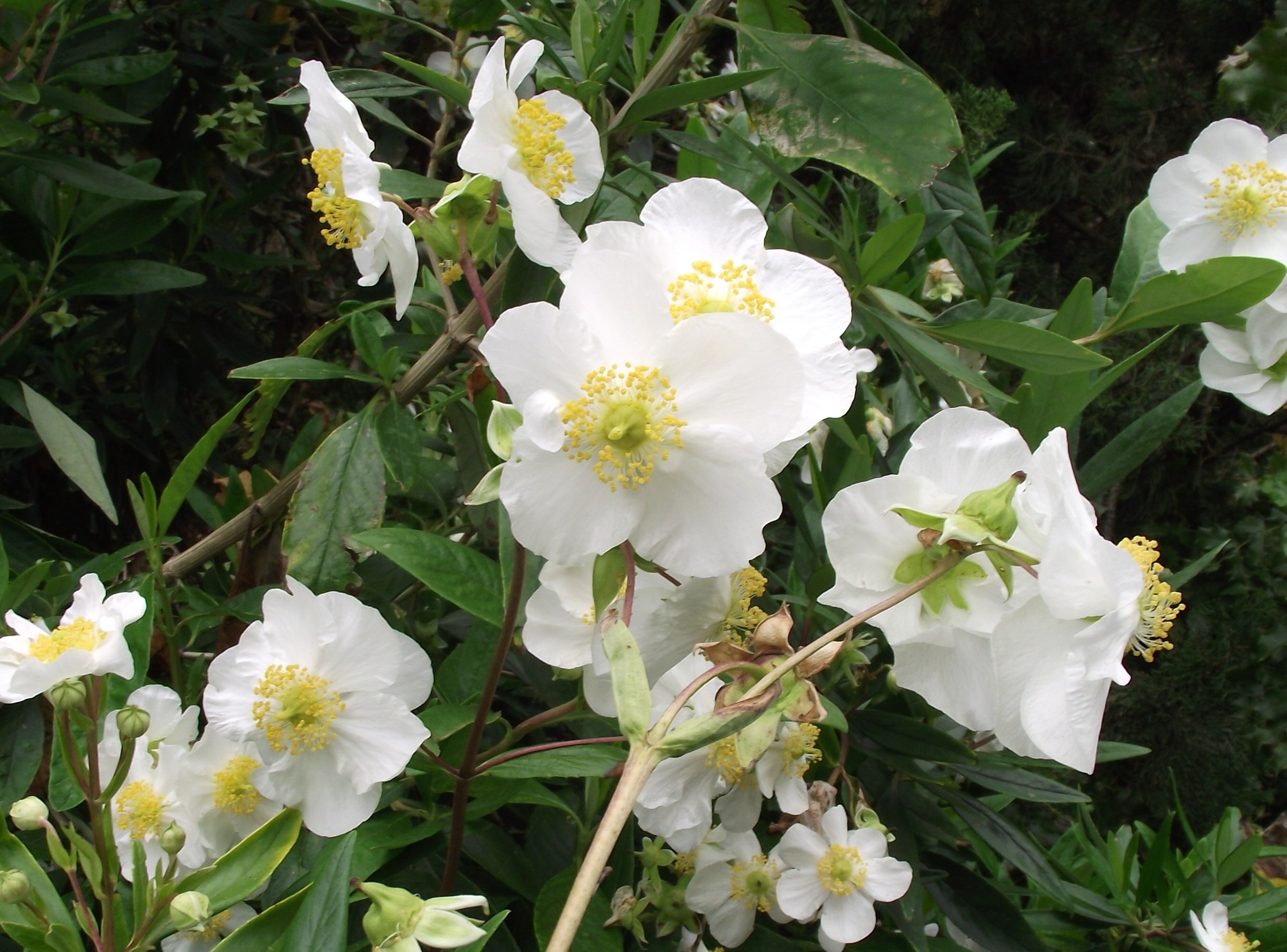
Carpenteria californica, commonly known as bush anemone or tree anemone, is an evergreen shrub in the hydrangea family (Hydrangeaceae) and the only species in its genus. It is one of California’s rarest native shrubs, found naturally in just a handful of locations in the Sierra Nevada foothills of Fresno and Madera counties, between the San Joaquin and Kings rivers. Bush anemone is listed as Threatened under the California Endangered Species Act (CESA), and it is illegal to collect, kill or possess wild plants without a permit. Any bush anemone grown in a home garden should come from a licensed native plant nursery propagating from cultivated stock, never from material dug or gathered in the wild.
In the garden, bush anemone is prized for its glossy, leathery evergreen foliage and its large, fragrant white flowers with a central boss of golden stamens, produced in loose clusters from late spring into summer. Established plants form a rounded, multi-stemmed shrub with distinctive shreddy, grayish bark, reaching up to 9 feet tall and wide in cultivation. Despite its extreme rarity in the wild, it has been in cultivation for over a century and is widely available from California native plant nurseries, making it one of the better examples of a rare species that gardeners can enjoy responsibly without any impact on wild populations.
Botanists consider bush anemone a possible paleoendemic — a species with ancient origins that may have survived past glacial periods in a narrow refuge in the central Sierra Nevada foothills, while its closest relatives died out elsewhere. Its extremely restricted native range, combined with threats from fire suppression, invasive weeds and habitat disturbance, make it a conservation priority even though it is easy to grow outside its native habitat.
Identification
Bush anemone is a rounded, multi-stemmed evergreen shrub typically 4 to 9 feet tall and similarly wide at maturity, occasionally reaching larger size in favorable sites. It has a dense, mounding form softened by long, arching branches.
Bark & Stems
Mature stems develop a distinctive shreddy, gray-brown bark that peels in thin strips, a useful identification feature even when the shrub is not in bloom. Young growth is more flexible and greenish, stiffening and developing the characteristic shreddy texture with age.
Leaves
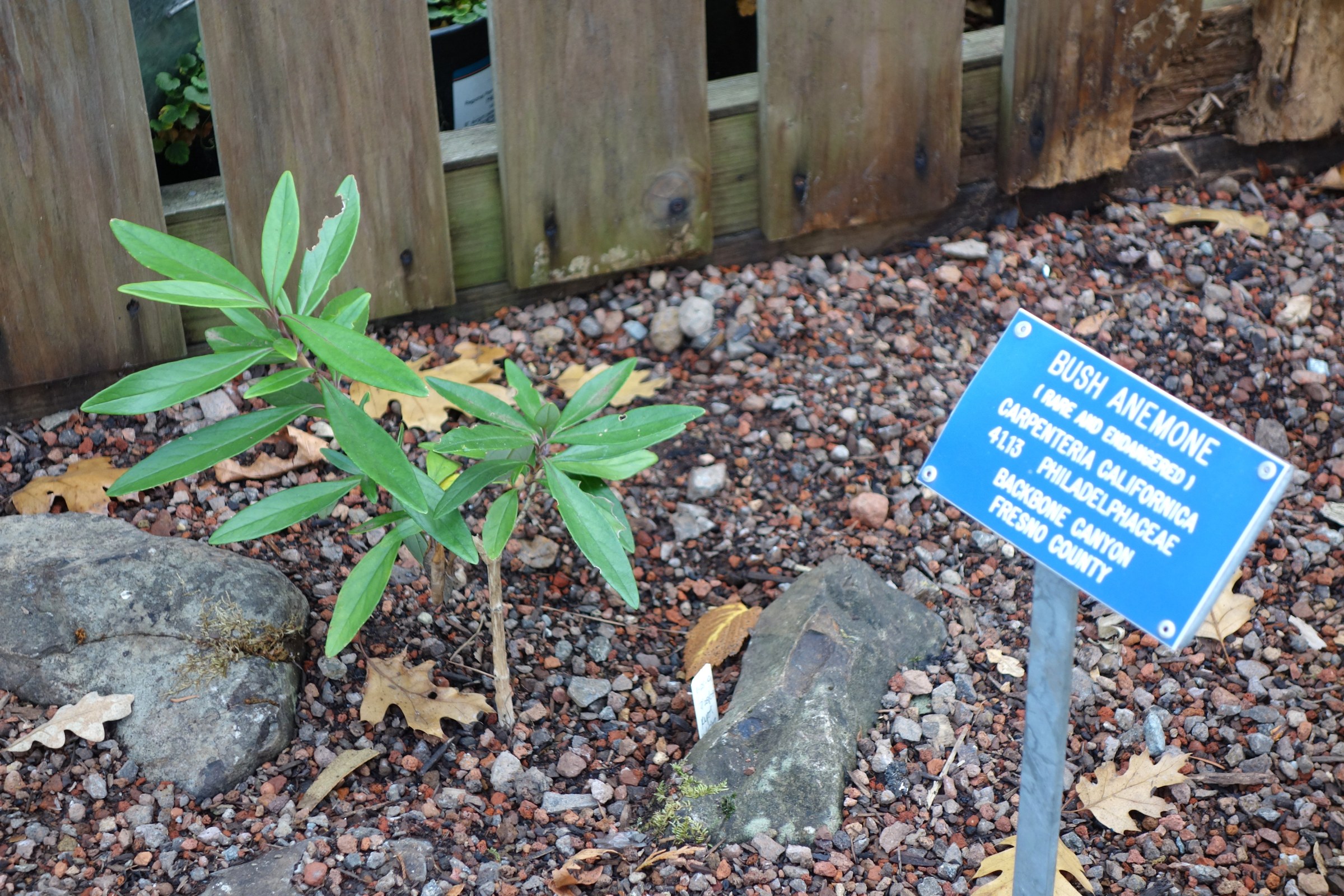
The leaves are evergreen, opposite on the stem, long and narrowly elliptic, typically 2 to 4 inches long, with smooth or very finely toothed margins. The upper surface is glossy dark green; the underside is paler and finely hairy. In the hottest part of summer, especially in the wild and in hot inland gardens, the leaves can wilt severely and take on a yellowish, drooping appearance, which looks alarming but is a normal seasonal response — plants recover fully once cooler, wetter fall weather arrives.
Flowers
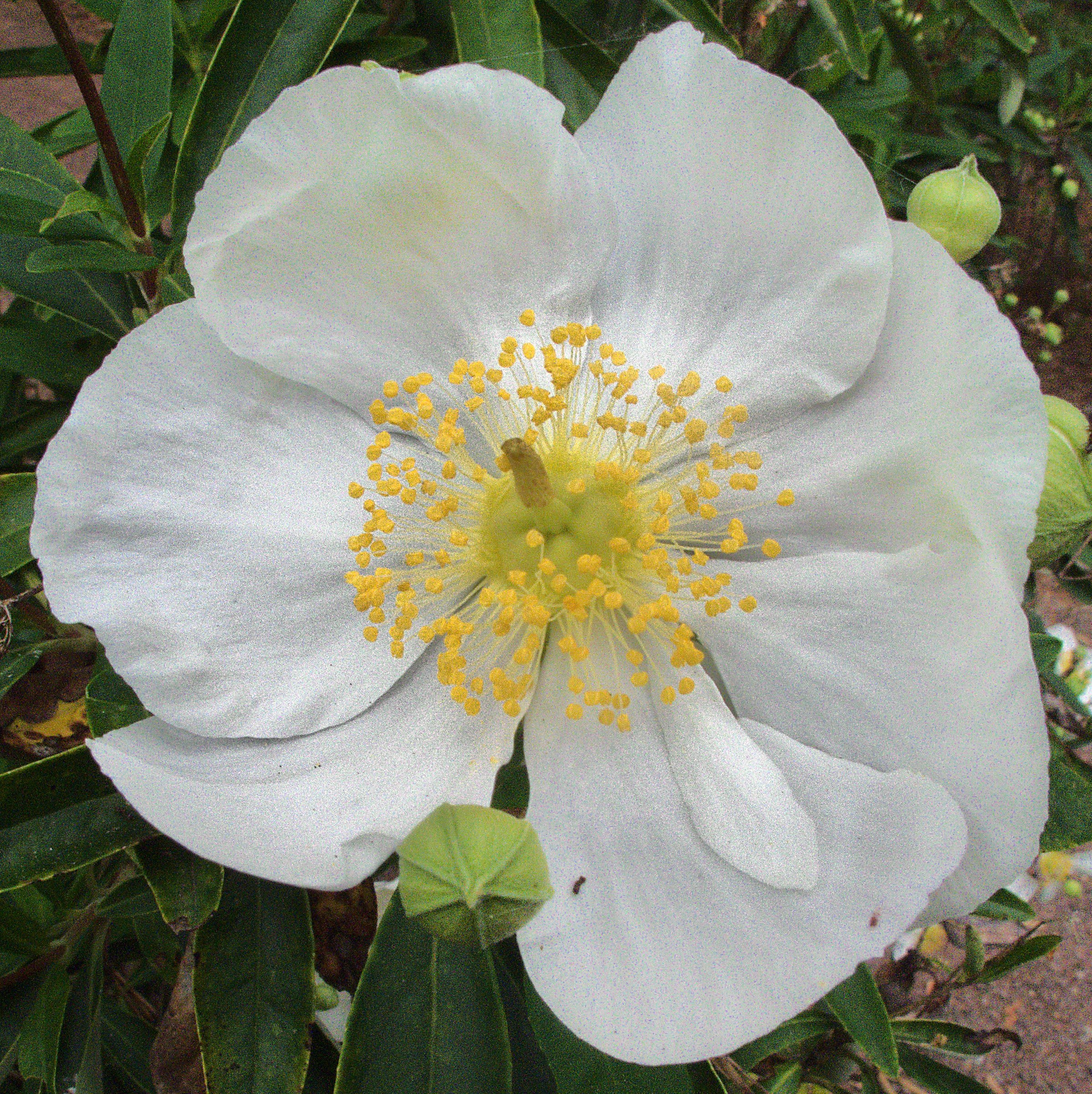
Flowers are 1.2 to 2.4 inches across, with five to eight papery white petals surrounding a prominent central cluster of many yellow stamens, giving each bloom a resemblance to a wild rose or an anemone — the source of the common name. Flowers are borne in loose clusters at the branch tips and are sweetly fragrant, blooming from May through July and attracting bumble bees, their primary pollinators.
Fruit & Seeds
After flowering, bush anemone produces small, dry woody capsules that split open to release numerous tiny seeds. Seed production can be heavy, but seedling survival in the wild is low; germination is stimulated by the heat and disturbance of wildfire, after which seedlings flush in burned areas, though only a small fraction reach maturity.
Quick Facts
| Scientific Name | Carpenteria californica |
| Family | Hydrangeaceae (Hydrangea) |
| Plant Type | Evergreen Shrub |
| Mature Height | 4–9 ft |
| Mature Spread | 4–9 ft |
| Growth Rate | Slow to moderate |
| Sun Exposure | Full Sun to Part Shade |
| Water Needs | Low to moderate once established; drought tolerant |
| Soil Type | Well-draining granitic or sandy loam |
| Soil pH | 6.0–7.5 (slightly acidic to neutral) |
| Bloom Time | May – July |
| Flower Color | White with yellow stamens |
| Fall Color | Evergreen; no fall color change |
| Fruit | Small dry woody seed capsules (not showy) |
| Deer Resistant | Generally yes |
| USDA Hardiness Zones | 8–10 |
Native Range
Bush anemone is a true California endemic with one of the most restricted native ranges of any shrub covered on this site. It is known from only about a dozen extant wild occurrences, concentrated in a narrow band of the Sierra Nevada foothills in central Fresno County, between the San Joaquin and Kings rivers, with a small additional population in neighboring Madera County. One historic occurrence has been lost to landfill and road construction. Nearly all remaining wild populations grow on federal land within the Sierra National Forest or on Bureau of Land Management property; the only population on non-federal land is protected within the Sierra Foothill Conservancy’s Mary Elizabeth Miller Preserve at Black Mountain.
In the wild, bush anemone grows at elevations of roughly 1,100 to 4,400 feet on well-drained granitic soils, in foothill woodland and chaparral alongside blue oak, foothill pine and various chaparral shrubs. It is fire-adapted, resprouting from the base after burns and producing flushes of seedlings in recently burned ground, though seedling survival to maturity is naturally low.
Outside this tiny native range, bush anemone is not found growing wild anywhere else in California or the United States; every bush anemone seen in a garden setting, from the Bay Area to Southern California, is a cultivated plant propagated from nursery stock, not a wild transplant. Gardeners should never attempt to collect seed, cuttings or whole plants from the wild populations, which are both legally protected and ecologically fragile.
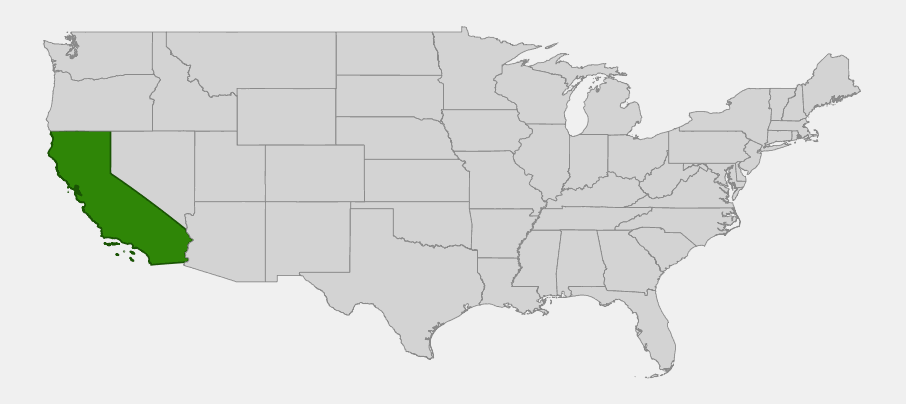
📋 Regional plant lists featuring bush anemone: none. Its entire wild distribution is confined to two Sierra Nevada foothill counties in central California, outside the areas covered by this site’s regional plant lists.
Growing & Care Guide
Despite its extreme rarity in the wild, bush anemone is a forgiving, low-maintenance garden shrub once established, adaptable to a wide range of California garden conditions well beyond its tiny native range.
Light
Full sun along the coast and in cooler climates; part shade is better in hot inland valleys, where afternoon shade helps reduce summer leaf wilt and scorch. In the wild it often grows in partial shade of foothill woodland, so some shelter from the most intense afternoon sun is generally beneficial.
Soil & Water
Bush anemone wants well-drained soil, ideally sandy or granitic in character, and is notably drought tolerant once established, needing little to no summer water in milder coastal gardens. In hotter inland gardens, occasional deep summer watering reduces the severe leaf wilting the species shows under drought stress, though the plant typically recovers on its own once temperatures cool. Good drainage is essential; it does not tolerate heavy, poorly drained clay or standing water.
Planting Tips
Plant container-grown nursery stock in fall or early spring to allow roots to establish before summer heat. Choose a site with good air circulation and well-drained soil, and space plants 5 to 8 feet apart for a naturalistic massed planting or hedge. Only purchase plants from reputable native plant nurseries that propagate bush anemone from cultivated stock — never from wild-collected material.
Pruning & Maintenance
Prune lightly after flowering to maintain a tidy shape and encourage dense new growth, removing dead or crossing branches as needed. The shrub tolerates harder renewal pruning and resprouts readily, a trait tied to its natural fire adaptation, but routine maintenance only calls for light shaping. It is generally untroubled by serious pests or diseases in cultivation.
Propagation
Bush anemone is propagated commercially by nursery growers from semi-hardwood cuttings taken in summer, which root reasonably well under mist with rooting hormone. Seed propagation is possible but slower and less commonly used commercially. Home gardeners should always source plants or propagation material from licensed nurseries rather than wild populations, both because collection from the wild is illegal under CESA and because the species’ few remaining populations cannot sustain any additional pressure.
Landscape Uses
- Specimen shrub for its fragrant, showy white flowers
- Informal flowering hedge or screen along property borders
- Woodland garden edges with light shade from oaks or pines
- Drought-tolerant California native gardens once established
- Pollinator gardens to support native bumble bees
- Conservation and botanic garden plantings that showcase rare California endemics responsibly
Wildlife & Ecological Value
Within its small native range and in cultivation, bush anemone supports a modest but valuable set of pollinator interactions centered on its showy summer flowers.
For Pollinators
Bush anemone’s large, fragrant white flowers are primarily pollinated by native bumble bees (Bombus species), which forage on the abundant yellow stamens and nectar. Supporting healthy bumble bee populations is considered an important complementary conservation strategy for the plant itself, since the two depend on each other in its native habitat.
For Birds
The dense evergreen branching provides year-round cover and nesting structure for small birds in gardens and in its native woodland-chaparral habitat, though the plant is not noted as a major food source for birds.
For Mammals
Dense bush anemone thickets provide shelter for small mammals in chaparral habitat. The foliage is not a preferred browse for deer, which makes the species useful in gardens where deer pressure is high.
Ecosystem Role
As a fire-adapted shrub, bush anemone plays a role in post-fire recovery within its native foothill woodland and chaparral community, resprouting from the base and regenerating from seed after burns. Its deep, drought-adapted root system helps stabilize the granitic slopes where it grows naturally. Because its total wild population is so small, every remaining occurrence has outsized importance for the long-term genetic health of the species.
Cultural & Historical Uses
Bush anemone has no significant documented history of use by Indigenous peoples; its restricted distribution in remote Sierra foothill canyons likely kept it out of common use and historical ethnobotanical records for the region. Its documented history is instead largely horticultural and scientific.
The genus was named by botanist John Torrey in honor of Professor William M. Carpenter, a 19th-century American naturalist. Because bush anemone was recognized early as both strikingly ornamental and extremely rare, it became a subject of conservation study through the 20th century, including species management guides prepared for the Sierra National Forest and status reports to the California Fish and Game Commission that led to its listing as Threatened under CESA in 1990.
Since the mid-20th century, bush anemone has also become a well-established garden plant, propagated and sold by native plant nurseries throughout California and valued by gardeners for its fragrant flowers and ease of care — a case where a species’ popularity in cultivation has had no connection to, and ideally takes pressure off, its small and vulnerable wild populations.
Frequently Asked Questions
Is it legal to grow bush anemone in my garden?
Yes. Buying and growing nursery-propagated bush anemone is completely legal and is the right way to enjoy this species. What is illegal under the California Endangered Species Act is collecting, killing or possessing plants taken from the wild without a permit. Always buy from a reputable native plant nursery.
Why does bush anemone look wilted in summer?
Severe leaf wilting and yellowing in hot summer weather is a normal, temporary stress response in this species, both in the wild and in gardens, especially in hot inland locations. Plants typically recover fully once cooler, wetter fall weather arrives; occasional deep irrigation during heat waves can reduce the severity.
How rare is bush anemone really?
Extremely rare in the wild. The California Natural Diversity Database recognizes only about a dozen extant wild occurrences, all within a small area of Fresno and Madera counties, with population sizes ranging from just a few individuals to several thousand at the largest site.
Can bush anemone be grown outside California?
Yes, it is hardy and cultivated well beyond its native range, including in parts of the Pacific Northwest and in mild-winter gardens elsewhere, typically in USDA zones 8 through 10. It is not considered invasive outside its native range.
What pollinates bush anemone?
Native bumble bees are its primary pollinators, drawn to the abundant pollen on the flower’s many yellow stamens. Supporting bumble bee habitat is considered beneficial to the long-term conservation of wild bush anemone populations.

Looking for a nursery that carries bush anemone?
Browse our native plant nursery directory: California. Always choose nursery-propagated stock — never plants, cuttings or seed collected from the wild.