Fox Sedge (Carex vulpinoidea)
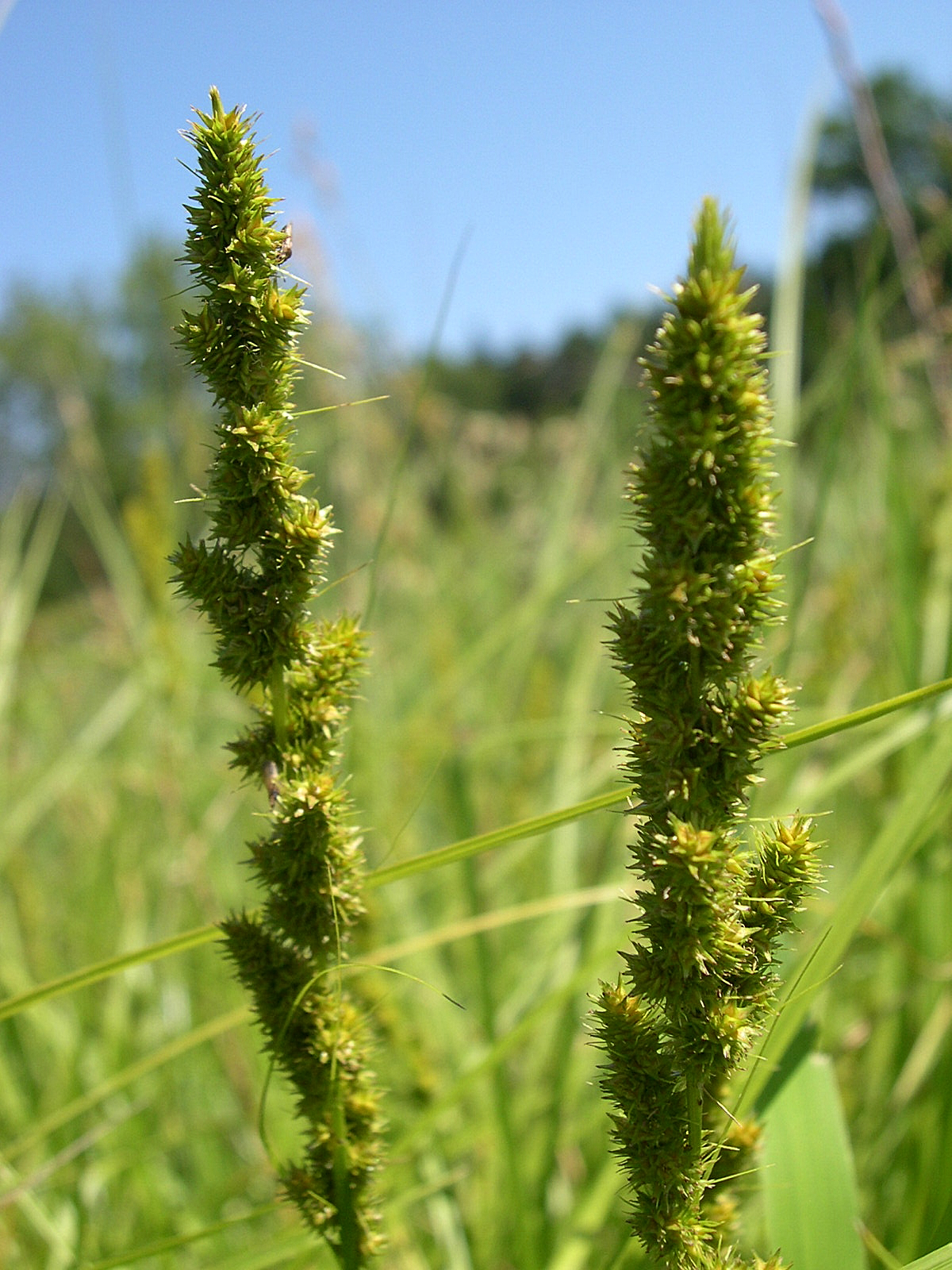
Carex vulpinoidea, commonly known as fox sedge or brown fox sedge, is one of the most widespread and adaptable native sedges in North America. A member of the Cyperaceae (sedge family), it earns its common name from its dense, cylindrical flower spikes, which bristle with pointed scales reminiscent of a fox’s tail. Unlike many woodland sedges that hide in deep shade, fox sedge is a plant of open, sunny wet ground — wet meadows, pond edges, ditches and seasonally flooded low spots — where it forms substantial, fountain-shaped clumps.
Fox sedge grows 1 to 3 feet tall on wiry, strongly triangular stems topped by a tight, branched cluster of narrow, bristly spikes. The foliage is bright grassy green through the growing season, aging to warm straw-brown in fall and winter, when the dried seed heads remain attractive and useful to wildlife. It spreads slowly from a fibrous root system, building dense tussocks rather than running aggressively, which makes it easy to place in a designed planting.
Because it tolerates both standing water and the periodic dry spells common at the margins of wetlands, fox sedge is a workhorse plant for rain gardens, pond edges and stormwater plantings across nearly its entire native range, which spans most of the continental United States and southern Canada.
Identification
Fox sedge is a clump-forming perennial sedge, typically 1 to 3 feet tall, with a dense, fibrous root system that slowly expands into substantial tussocks over several years. The overall silhouette is upright and grassy, topped in early summer by a distinctive bristly seed head.
Leaves & Stems
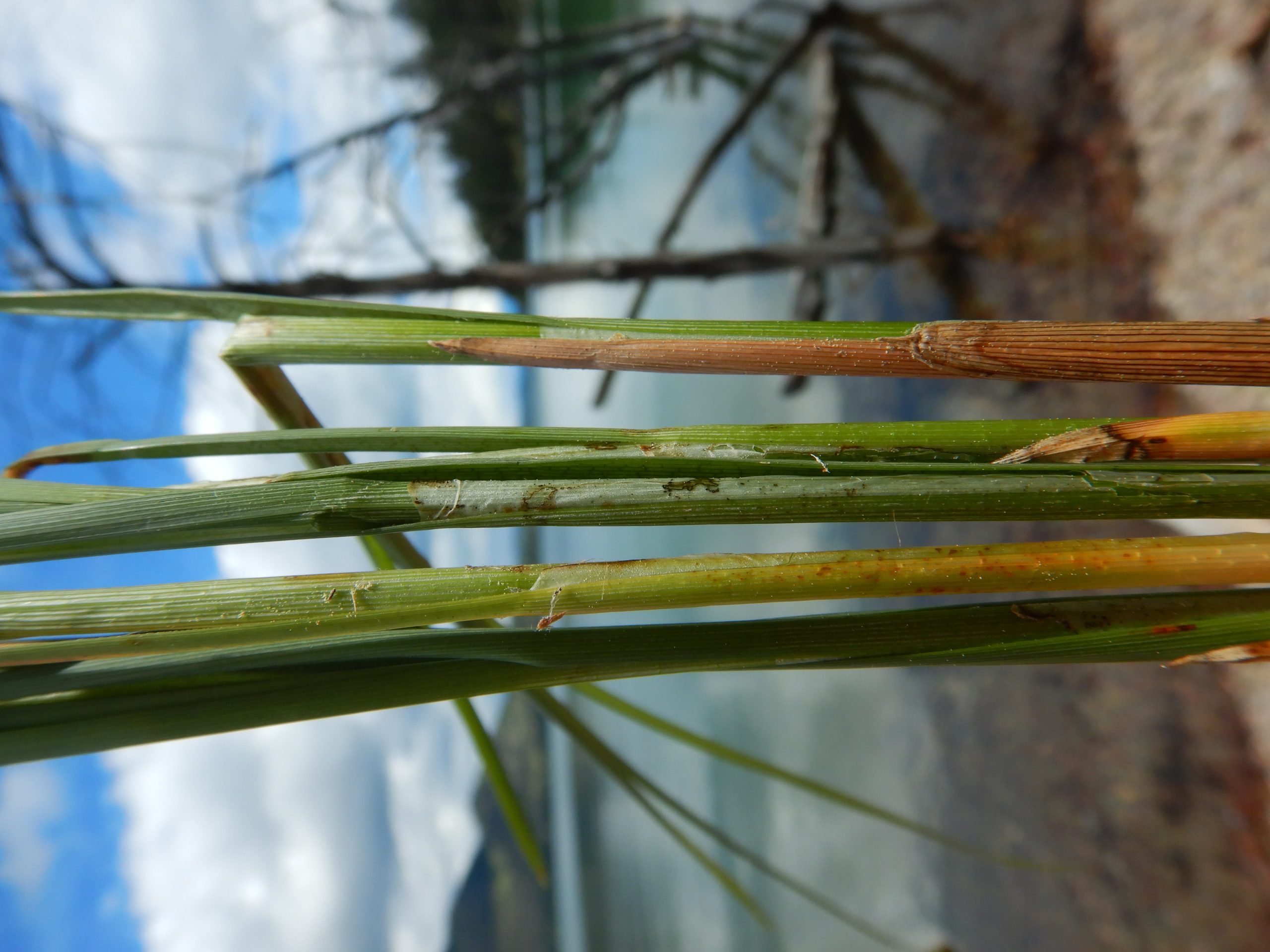
The leaves are narrow, flat and grass-like, typically 1/8 to 1/4 inch wide, bright green, and arching gracefully from the base of the clump. The flowering stems are sharply three-angled, as in all true sedges, and stand somewhat taller than the surrounding foliage, often with a slightly rough texture that can be felt when run between the fingers.
Flowers
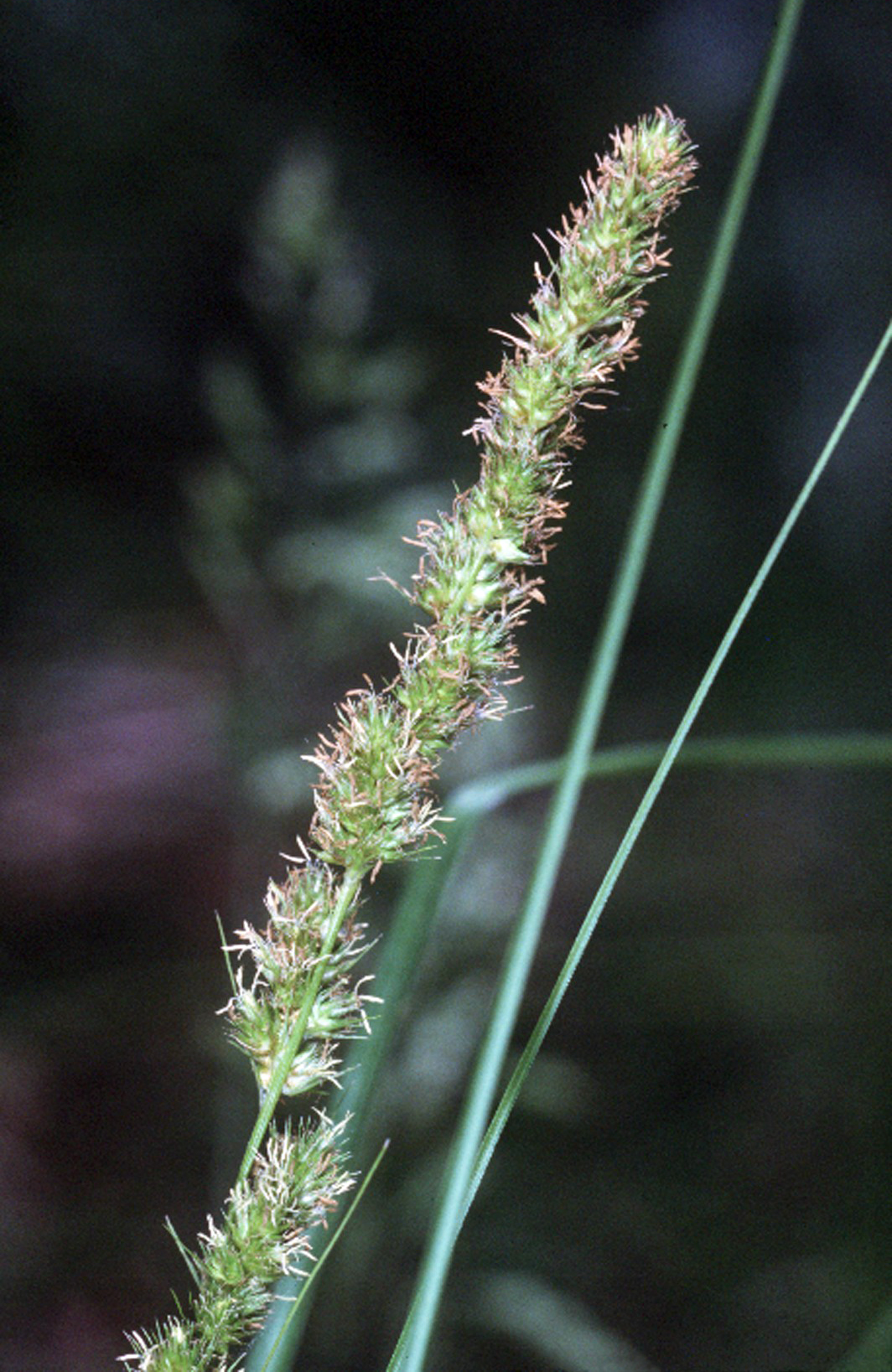
The inflorescence is a dense, branched cluster of numerous small spikes crowded tightly together into one continuous, cylindrical, bristly mass 1 to 3 inches long — this compact, spiky head, often likened to a fox’s tail, is the single best field mark for the species. Each spike bears both male and female flowers. Bloom occurs in late spring to midsummer, and like all sedges, the flowers are wind-pollinated and inconspicuous individually.
Fruit & Seeds
The perigynia are small, flattened, lance-shaped sacs tapering to a sharp two-toothed beak, packed tightly within the bristly spikes. As the seed head matures through summer it dries to a tawny, golden-brown color, giving rise to the alternate name “brown fox sedge.” The tightly packed seed heads persist into winter, offering a reliable, long-lasting source of small seed for birds foraging in wet meadows.
Quick Facts
| Scientific Name | Carex vulpinoidea |
| Family | Cyperaceae (Sedge) |
| Plant Type | Perennial Sedge |
| Mature Height | 1–3 ft |
| Mature Spread | 1–2 ft (slowly clump-forming) |
| Growth Rate | Moderate |
| Sun Exposure | Full Sun to Part Shade |
| Water Needs | Moist to wet; tolerates brief standing water and brief dry spells |
| Soil Type | Loam, clay or muck; tolerates poorly drained soil |
| Soil pH | 5.5–7.5 (acidic to neutral) |
| Bloom Time | May – July |
| Flower Color | Green, aging to golden-brown |
| Fall Color | Straw-brown |
| Fruit | Dense, bristly brown seed spikes (not showy, but persistent) |
| Deer Resistant | Yes, generally avoided by deer and rabbits |
| USDA Hardiness Zones | 3–9 |
Native Range
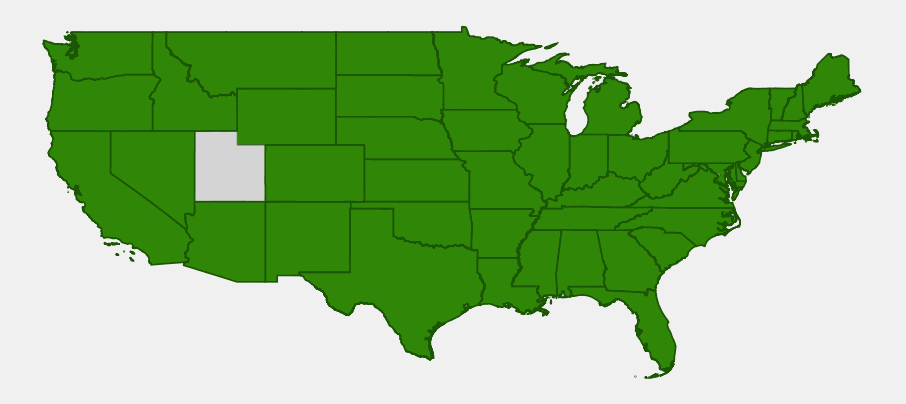
Fox sedge is native to nearly the entire continental United States and southern Canada, from the Atlantic Coast west to the Pacific Northwest and California, and from the Gulf Coast north into the boreal provinces. Its native range covers virtually every lower-48 state except Utah, making it one of the broadest-ranging native sedges available to gardeners anywhere in the country.
Within that enormous range, fox sedge is consistently a plant of open, sunny wet ground: wet meadows, marsh edges, ditches, floodplain swales, pond and stream margins, and seasonally wet prairie swales. It is notably more sun-tolerant than many sedges and rarely thrives in deep shade. In parts of the Pacific Coast states, populations found well outside wetland habitat are sometimes garden escapes rather than native stands, so gardeners there should favor locally sourced, wetland-origin stock and confirm native status with a local flora before assuming a planting site is within the indigenous range.
Fox sedge is not native to Utah, where it is absent from the state’s flora, and it is not documented as native to Alaska or Hawaii.
📋 Regional plant lists featuring fox sedge: New Hampshire, Maine & Vermont · Connecticut, Massachusetts & Rhode Island · New York, Pennsylvania & Northern New Jersey · Delaware, Southern New Jersey & Long Island · Maryland, Virginia & West Virginia · North Carolina & South Carolina · Georgia, Alabama & Mississippi · Arkansas, Louisiana, Eastern Oklahoma & Eastern Texas · Kentucky & Tennessee · Ohio & Indiana · Illinois, Iowa & Missouri · Michigan, Wisconsin & Eastern Minnesota · North Dakota, South Dakota & Western Minnesota · Nebraska, Kansas & Eastern Colorado · Arizona & New Mexico · Utah & Western Colorado · Montana & Wyoming · Idaho, Eastern Oregon & Eastern Washington · Western Oregon & Western Washington
Growing & Care Guide
Fox sedge is a forgiving, adaptable native that rewards gardeners who can give it consistent moisture. It is one of the easiest native sedges to establish from seed or division and tolerates a wider range of conditions than most of its relatives.
Light
Full sun to part shade suits fox sedge best, a preference that sets it apart from many shade-loving woodland sedges. In full sun with adequate moisture it forms the densest, most upright clumps and flowers most heavily; in part shade it stays a bit looser and more relaxed in habit.
Soil & Water
This sedge wants consistently moist to wet soil and tolerates brief standing water, making it an excellent choice for the wet edges of rain gardens, bioswales and pond margins. It adapts to clay, loam or muck, and established plants can handle short dry spells, though prolonged drought will stress the clump. It is not a plant for dry, well-drained upland beds.
Planting Tips
Plant container-grown divisions or plugs in spring, spacing them 12 to 18 inches apart for a filled-in look within two to three growing seasons. Fox sedge establishes readily from seed as well, which benefits from a period of cold, moist stratification over winter — a useful trait for direct-seeding wet meadow restorations. Choose the wettest, sunniest spot in the planting area for best results.
Pruning & Maintenance
Maintenance needs are minimal. Cut back the previous year’s foliage in late winter before new growth emerges if a tidier look is wanted, though leaving the dried seed heads standing through winter benefits foraging birds. Divide crowded clumps every three to four years in spring to maintain vigor and generate new plants for other wet spots in the garden.
Propagation
Fox sedge is readily propagated by division of established clumps in spring, or by seed collected in mid- to late summer once the spikes turn golden-brown. Fresh seed sown outdoors in fall, or cold-moist stratified for 60 to 90 days before spring sowing, germinates reliably — fox sedge is one of the more cooperative native sedges to grow from seed.
Landscape Uses
- Rain gardens and bioswales — handles both saturation and intermittent dry-down
- Pond and stream margins for erosion control and habitat
- Wet meadow and prairie restoration plantings
- Stormwater basin plantings in sunny, seasonally wet sites
- Mixed wet-prairie borders with rushes, milkweeds and native grasses
- Erosion control on wet, sloped ground near water features
Wildlife & Ecological Value
Fox sedge is a quiet but important contributor to wetland food webs and habitat structure across its enormous range, valued more for structure and seed than for flowers.
For Pollinators
As a wind-pollinated species, fox sedge does not rely on insect pollinators and offers no nectar. Its ecological value for pollinators is largely structural: the dense tussocks shelter ground-nesting native bees and provide overwintering cover for beneficial insects at the damp margins of meadows and wetlands.
For Birds
The abundant, persistent seed heads are an important food source for wetland and grassland songbirds, including sparrows and other seed-eating species that forage through wet meadows in fall and winter. The dense clumps also provide nesting and brood-rearing cover for marsh and meadow birds close to water.
For Mammals
Muskrats and other wetland mammals use fox sedge foliage for food and nesting material, and the dense tussocks provide cover for small mammals along pond and stream edges. The plant is generally avoided by deer and rabbits, making it a reliable choice in landscapes with heavy browse pressure.
Ecosystem Role
Fox sedge’s dense, fibrous root system is highly effective at stabilizing wet soils and shoreline edges, reducing erosion and filtering sediment and nutrients from runoff before it reaches open water — a key reason it is a staple in stormwater and wetland restoration plantings nationwide. Its tussock form also creates important microtopography in wet meadows, offering slightly elevated, drier perches used by insects and small animals during flood events.
Cultural & Historical Uses
Documented ethnobotanical use of fox sedge specifically is limited in the historical record, though sedges in general were used by Indigenous peoples across North America for weaving mats, baskets and cordage, and the long, fibrous leaves of robust wetland sedges like this one would have been among the more practical choices for such work in wet-meadow habitats.
Fox sedge’s modern significance is primarily ecological and horticultural. Since the 1990s, as wetland regulations expanded and stormwater management increasingly turned to native plantings, fox sedge became one of the standard species in wetland mitigation and restoration seed mixes across the country, prized by restoration ecologists for its wide native range, ease of establishment, and tolerance of the fluctuating water levels typical of constructed wetlands and rain gardens.
The species was formally described by French botanist André Michaux in the early 1800s from specimens collected during his travels through eastern North America, and it has remained a taxonomically stable, easily recognized species ever since, unlike some of its more difficult Carex relatives.
Frequently Asked Questions
Does fox sedge need standing water to grow?
No, though it tolerates brief standing water well. It thrives in consistently moist to wet soil and also handles short dry spells once established, making it more versatile than true aquatic or bog sedges.
Is fox sedge the same as other “fox tail” plants?
No. The common name refers only to the bristly, tail-like appearance of its seed spike. It is unrelated to foxtail grasses (Setaria and Alopecurus species), which are true grasses and, in several species, non-native and sometimes weedy.
Will fox sedge grow in a regular garden bed?
Only if the soil stays consistently moist to wet. In a typical well-drained perennial border it will struggle; it performs best in rain gardens, pond edges or naturally damp low spots.
Does fox sedge spread aggressively?
No. It expands slowly from a fibrous root system into larger clumps over several years rather than spreading by long rhizomes or runners, so it stays well-behaved in a designed planting.
Why is fox sedge not native to Utah?
Utah’s arid climate and limited wetland habitat fall outside the moisture range this sedge requires; the state’s documented flora does not include it as a native species, even though it occurs in every bordering state.

Looking for a nursery that carries fox sedge?
Browse our native plant nursery directory: Alabama, Arizona & Arkansas · California · Colorado to Georgia · Idaho to Kansas · Kentucky to Montana · Nebraska to Oklahoma · Oregon · Pennsylvania to Virginia · Washington · West Virginia to Wyoming