Pennsylvania Sedge (Carex pensylvanica)
Carex pensylvanica, known as Pennsylvania Sedge or Oak Sedge, is a remarkable native sedge that has become one of the most celebrated plants in the native landscaping world for one extraordinary ability: it can replace a conventional lawn in dry shade — a combination that defeats virtually every traditional turfgrass. Growing naturally as a fine-textured groundcover beneath oaks, hickories, and other deciduous trees in dry to medium woodlands across eastern North America, Pennsylvania Sedge forms a dense, 6- to 12-inch tall mat of graceful, arching, bright green leaves that stays green through most of the year.
Pennsylvania Sedge is a rhizomatous, colony-forming perennial that spreads slowly but steadily, filling in woodland floors and shaded lawn areas with a lush, meadow-like texture that requires mowing only once or twice a year — or not at all, for a more naturalistic look. Its tolerance of deep dry shade, moderate foot traffic, diverse soil types, and complete lack of irrigation or fertilization needs make it far superior to conventional turfgrass in shaded conditions. It has become the go-to groundcover recommendation for gardeners dealing with the perennial challenge of growing anything under large oaks and maples.
Beyond its horticultural virtues, Pennsylvania Sedge is a native plant with deep ecological roots. It is a larval host plant for several butterfly species, provides nesting material for ground-nesting birds, and its seeds are consumed by sparrows, juncos, and various small mammals. The dense mats suppress weeds naturally and create a stable, low-maintenance groundcover layer that benefits the entire woodland community above it.
Identification
Pennsylvania Sedge is a low, clump-forming to colony-forming perennial sedge growing 6 to 12 inches tall (occasionally to 15 inches). It spreads by thin rhizomes to form colonies that can eventually cover large areas. The overall texture is fine and grass-like, often leading beginners to mistake it for a true grass, but sedges are distinguished by their triangular stems (grass stems are round or flat) — as the adage goes: “sedges have edges.”
Leaves & Stems
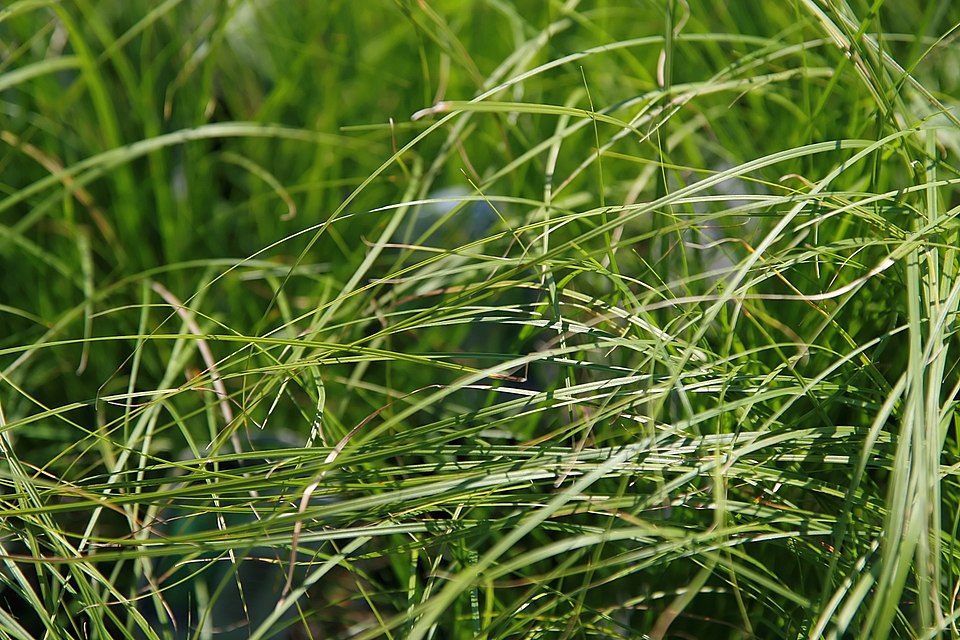
The leaves are linear, 1 to 3 mm wide, and rich green — brighter and finer-textured than most sedges. The leaf surface is smooth, and the edges are slightly rough. Leaves arch gracefully outward from the base, creating a soft, flowing texture at low height. The stems (culms) are triangular in cross-section — the telltale sedge characteristic. Multiple stems emerge from the same rhizome cluster, creating a dense, tufted appearance.
Flowers & Seeds
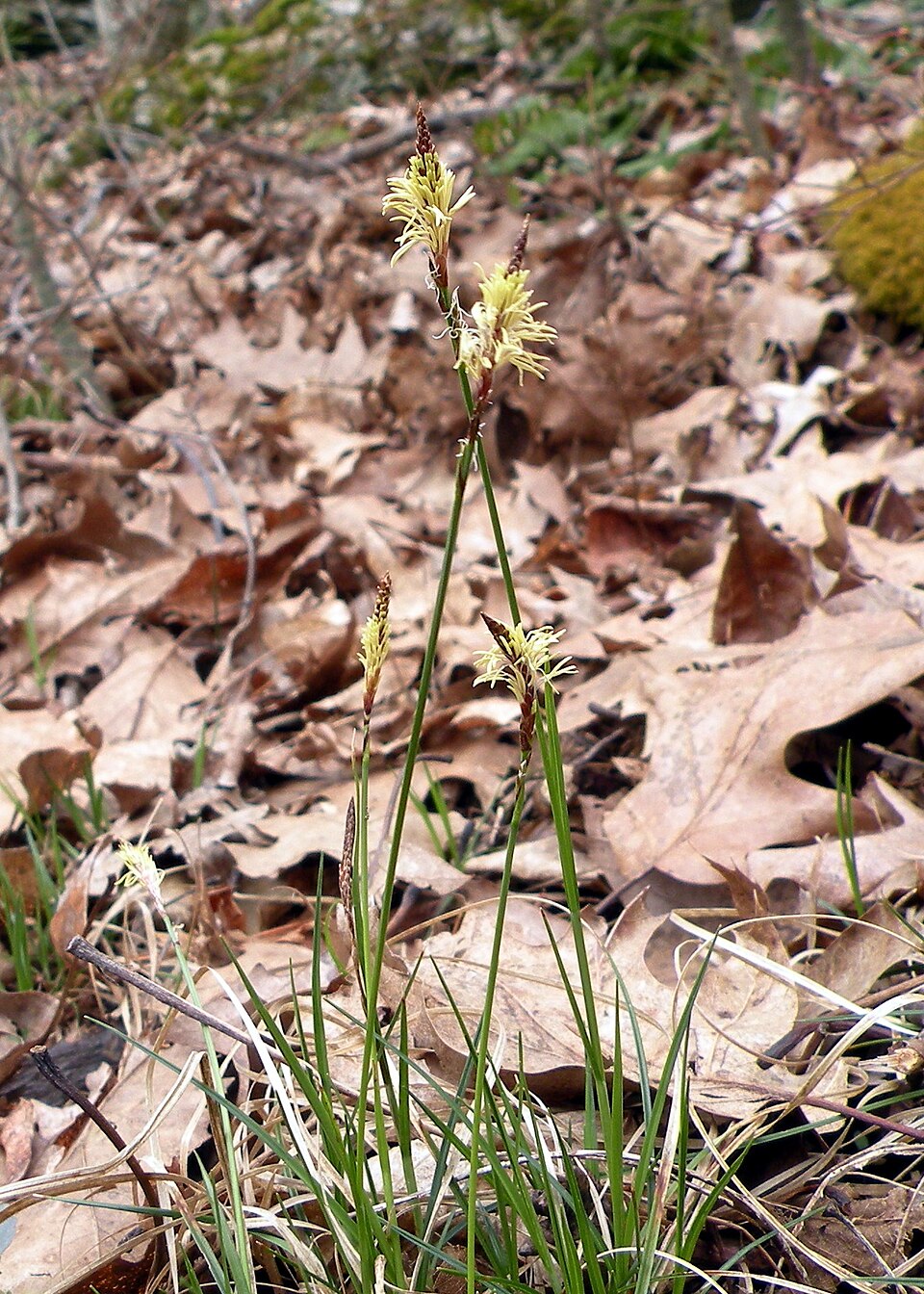
Pennsylvania Sedge flowers in early spring (March–April), producing tiny flower spikes that emerge at or just above the leaf level. The male (staminate) spikes appear at the top; female (pistillate) spikes are below. The inflorescence is inconspicuous, often hidden within the leaves. The seeds are small, oval achenes enclosed in a bottle-shaped perigynia (seed envelope) — typical sedge fruit structure. The seeds are food for Juncos, Song Sparrows, and other small seed-eating birds and mammals.
Quick Facts
| Scientific Name | Carex pensylvanica |
| Family | Cyperaceae (Sedge) |
| Plant Type | Perennial sedge / groundcover |
| Mature Height | 1 ft |
| Sun Exposure | Full Sun to Full Shade |
| Water Needs | Low to Moderate |
| Bloom Time | March – April (inconspicuous) |
| Flower Color | Green / tan (wind-pollinated, inconspicuous) |
| USDA Hardiness Zones | 3–8 |
Native Range
Pennsylvania Sedge is one of the most widely distributed native sedges in eastern North America, ranging from Nova Scotia and New Brunswick south to Georgia and west to Manitoba, Minnesota, Nebraska, and Kansas. It is native throughout Maryland, Virginia, and West Virginia, occurring in virtually every county. In its natural habitat, it grows primarily in dry to mesic upland forests, typically on well-drained, acidic soils beneath oaks (Quercus spp.), hickories (Carya spp.), and other deciduous trees.
The species name “pensylvanica” (note the historical spelling with one “n”) reflects the early botanical collections made in Pennsylvania, though the plant is certainly no more common there than in adjacent states. In Maryland and Virginia, it is a characteristic understory plant of dry oak-hickory forests in the piedmont and low mountains, but it also occurs in the coastal plain wherever well-drained, acidic upland soils and suitable tree canopy are present.
Pennsylvania Sedge thrives in the ecological niche created beneath large deciduous trees — a zone characterized by summer shade from the canopy, competition from tree roots for water and nutrients, deep leaf litter in fall, and alternating wet and dry soil conditions. Few plants are as well-adapted to this challenging combination of conditions, which is why Pennsylvania Sedge has become so widely used as a lawn substitute beneath trees.
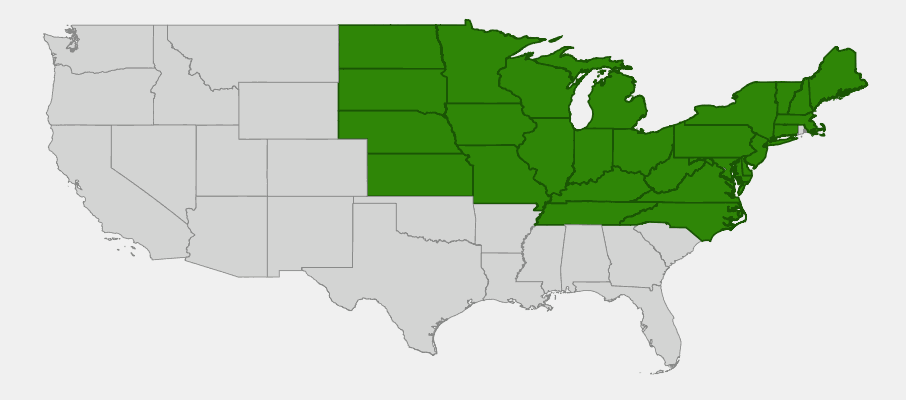
📋 Regional plant lists featuring Pennsylvania Sedge: Maryland, Virginia & West Virginia
Growing & Care Guide
Pennsylvania Sedge is the ideal solution for one of landscaping’s most persistent problems: growing something attractive and functional under large deciduous trees with dry, root-competitive soil. It is genuinely the best native plant for this use case in the Mid-Atlantic region.
Light
Pennsylvania Sedge is one of the most shade-tolerant native groundcovers available. It thrives in anything from full sun to deep shade, though its sweet spot is part shade to full shade beneath deciduous trees. In full sun, it may brown slightly at the tips in summer heat without adequate moisture. In deep shade under large oaks or maples, it remains a rich, consistent green where almost nothing else will grow.
Soil & Water
This sedge prefers well-drained, slightly acidic soils (pH 5.0–6.5) but adapts to most soil types except waterlogged sites. It is notably drought-tolerant for a shade plant, reflecting its natural occurrence in dry upland forest understories. Once established (typically after 1–2 growing seasons), it requires no supplemental irrigation in most of the Mid-Atlantic, even through summer drought. Avoid overly wet or heavy clay soils that stay saturated.
Planting Tips
Plant in plugs or divisions in fall or spring. Space 6 to 12 inches apart for quicker coverage; plants will fill in completely within 2–3 years. Do not bury the crown below soil level. Water consistently in the first growing season to support root establishment. It will be slow to establish but persistent and expanding once rooted. Mulching lightly with shredded leaves (not bark mulch over the crowns) in fall is beneficial. Plant directly under existing trees; it is specifically designed by evolution for this root-competitive environment.
Pruning & Maintenance
In late winter or early spring, mow or shear the sedge meadow back to 3 to 4 inches with a lawn mower set to its highest setting, or use a string trimmer. This removes old, winter-worn foliage and stimulates fresh new growth. For the most natural, lowest-maintenance look, some gardeners simply skip this step, as the new green growth emerges through and hides old leaves. Pennsylvania Sedge requires no fertilization, no irrigation once established, and has minimal pest or disease issues.
Landscape Uses
- Lawn substitute in dry shade under trees — the primary use
- Woodland groundcover in naturalized garden settings
- Slope stabilization on shaded banks
- Transition zone between lawn and woodland garden
- Low-maintenance border edging along shaded paths
- Green roof component in shaded situations (rare)
Wildlife & Ecological Value
Pennsylvania Sedge plays a quiet but genuine ecological role in the woodland communities it inhabits.
For Birds
The small seeds are eaten by Dark-eyed Juncos, Song Sparrows, White-throated Sparrows, and other ground-foraging sparrows and finches. The dense mat structure provides important cover for ground-nesting birds in woodland settings, including Ovenbirds and Wood Thrushes, which nest on or near the ground in eastern deciduous forests. The sedge mat creates a soft, insulating layer over the forest floor that also benefits ground-dwelling salamanders, toads, and small mammals.
For Butterflies & Insects
Pennsylvania Sedge serves as a larval host plant for several Satyr butterfly species, including the Northern Pearly-eye (Enodia anthedon), Appalachian Brown (Lethe appalachia), and Little Wood Satyr (Megisto cymela) — small, brown woodland butterflies that are completely dependent on native sedges and grasses to complete their life cycles. This relationship makes Pennsylvania Sedge irreplaceable for these specialist butterfly populations.
Ecosystem Role
At the community level, Pennsylvania Sedge provides significant ecological services. Its dense mat suppresses invasive weeds and non-native ground covers (such as English Ivy, Japanese Pachysandra, and Japanese Honeysuckle) that have devastated woodland understories throughout the Mid-Atlantic. The root system stabilizes soil and reduces erosion on sloped woodland sites. The leaf litter and thatch layer it creates supports a rich community of invertebrates — beetles, millipedes, earthworms, and ground-dwelling spiders — that form the base of the forest food web for birds, amphibians, and small mammals.
Cultural & Historical Uses
Native sedges, including Pennsylvania Sedge, were significant materials in the cultures of woodland peoples throughout the eastern United States. Algonquian-speaking nations and other woodland peoples wove sedge leaves and stems into baskets, mats, and cordage. The flexible, strong leaves of various Carex species were particularly valued for fine basket weaving, and Pennsylvania Sedge’s thin, pliable leaves were used by peoples including the Delaware, Lenape, and Iroquois nations for various woven goods. The dense mats of sedge on the woodland floor were also noted as useful indicators of well-drained, stable soils suitable for camp sites and village locations.
European botanists collected and described Pennsylvania Sedge early in the colonial period — hence its name, derived from specimens gathered in the Pennsylvania region. However, it remained botanically interesting but horticulturally overlooked for most of the following centuries, treated as simply another component of the understory flora rather than a potential garden plant.
The transformation of Pennsylvania Sedge from botanical curiosity to landscape superstar came in the late 20th and early 21st centuries, as the sustainable landscaping movement sought native alternatives to the resource-intensive conventional lawn. Pioneering native plant designers and ecologists — including Larry Weaner, William Cullina, and Ken Druse — championed Pennsylvania Sedge as the definitive native lawn substitute for shaded properties. Its promotion by organizations including the Lady Bird Johnson Wildflower Center and Brandywine Conservancy brought it to mainstream attention, and today it is one of the most widely used native plants in the Mid-Atlantic region, available at nurseries throughout Maryland and Virginia.
Frequently Asked Questions
Can Pennsylvania Sedge really replace a lawn?
Yes — in dry shade conditions where conventional turfgrass struggles or fails, Pennsylvania Sedge excels. It forms a dense, relatively uniform groundcover about 6–10 inches tall, stays green most of the year, tolerates light foot traffic, requires no fertilizer, needs little or no irrigation once established, and can be mowed once or twice a year (or left uncut for a more natural look). It won’t handle heavy, regular foot traffic like a sports field lawn, but for aesthetic groundcover with occasional use, it is superior to turfgrass in shade.
How fast does Pennsylvania Sedge spread?
It spreads moderately slowly — faster in good conditions, slower in deep dry shade. Expect it to fill in planted areas within 2–4 years when planted at 6–12 inch spacing. It is not invasive and won’t jump out of its intended area into lawns or gardens. Over time, established colonies can become quite dense and weed-suppressing.
Does Pennsylvania Sedge stay green in winter?
Mostly. In mild winters (typical for most of Maryland and Virginia), it remains semi-evergreen with acceptable foliage through winter. In harsh winters, it may become tattered and brown by late February, but it rebounds quickly with fresh green growth in March. The annual late-winter mow-back removes old foliage and stimulates the fresh spring flush.
Is Pennsylvania Sedge the same as Berkeley Sedge?
No. Berkeley Sedge (Carex tumulicola) is a different species native to the Pacific Coast, sometimes used similarly as a lawn substitute in western gardens. Pennsylvania Sedge is the appropriate eastern North American species for Mid-Atlantic gardens.
Will deer eat Pennsylvania Sedge?
Deer generally leave Pennsylvania Sedge alone — it is considered deer-resistant, though no plant is deer-proof. In areas with extreme deer pressure, some browsing may occur early in the season on fresh growth, but established colonies tend to recover quickly and are not typically favored browse over more palatable options.

Looking for a nursery that carries Pennsylvania Sedge?
Browse our native plant nursery directory: Maryland · Virginia · West Virginia