Top 5 Picks: Innovative Nursery Greenhouse Heater for Commercial Growers – Efficient Solutions for Year-Round Growth
We independently select all products and services. If you click through links we provide, Plant Native may earn a commission with no extra cost to you. As an Amazon Associate I earn from qualifying purchases.
Last updated: September 1, 2026
Keeping the right temperature in commercial nurseries is crucial for healthy plants and steady yields. Greenhouse heaters give growers control over warmth, protecting young plants from chilly weather or sudden cold snaps.
New heating tech has made these systems more efficient and environmentally friendly. There are now options that fit the needs of commercial operations, and honestly, the improvements are pretty impressive.
When it comes to nursery greenhouse heaters, energy efficiency, easy setup, and precise temperature control matter most. You’ll find forced-air units, radiant heaters, and glycol systems—each with perks depending on your greenhouse’s size and layout.
Choosing the right heater can lower costs and help you grow more sustainably. But it’s not just about saving money; it’s about making sure your plants actually thrive.
Fuel type, heating capacity, and how the heat gets distributed are all important. You also want to think about maintenance, safety features, and whether the heater works with your current ventilation.
We spent a lot of time testing and comparing innovative greenhouse heaters to find the best ones for commercial growers. Here are our top picks for heaters that keep things warm and efficient, even when the weather doesn’t cooperate.
Top 5 Picks: Innovative Nursery Greenhouse Heater for Commercial Growers
We researched a bunch of greenhouse heaters designed for commercial nurseries. These five stood out for efficiency, reliability, and features that actually make a difference for growers.
Our top pick

- Accurate VPD and temperature sensors keep growing conditions on point
- Flexible hose lets you direct heat exactly where you want
- Multiple heat levels for fine-tuning
Cons
- Learning the setup menu takes a bit of patience
- Hose smells a little odd at first
- Gets a bit noisier after long use
We liked how the controller and corded sensor made it simple to dial in the right temperatures. Setting heat triggers and cycles let us step away without worrying about wild swings.
The flexible hose was handy for warming up specific zones, so we weren’t wasting energy. Ten heat levels gave us a lot of control—no more overheating.
The interface felt a bit clunky at first, but it gets easier. The hose odor faded after a few days with decent ventilation. All in all, it’s a strong pick for commercial growers who want smart, steady temperature regulation.
Best runner-up

- Holds steady temps without big swings
- Compact and easy to move, with a sturdy handle
- Doubles as a fan when it gets warm
Cons
- Might need extra fans for bigger spaces
- Can get a bit noisy
- Some units have early issues
We found the Bio Green Palma heater kept frost at bay in a small greenhouse. Its digital thermostat worked smoothly, and we didn’t see much wasted energy.
It’s small enough to tuck near plants without getting in the way. The two heat settings gave us some flexibility, and the fan mode helped on warmer days.
If your space is big or not well insulated, you might need another fan to help spread the heat. A couple of units had issues early on, but the two-year warranty and customer support were reassuring.
Best budget option

- Digital thermostat with automatic on/off
- Portable, sturdy design
- Built-in overheat protection
Cons
- Instructions are pretty barebones
- Only covers about 150 sq. ft.
- Setup feels a bit fiddly
Programming the thermostat was straightforward once we figured it out, and it kept things steady without much fuss. The auto shutoff kicked in if temps got a degree too hot, which made us feel better about leaving it running.
It’s easy to move thanks to the handle, though figuring out the features took a bit of trial and error. Heat spread evenly and quickly, especially during those tricky shoulder seasons.
The stainless steel build and splash-proof design seem built to last in humid greenhouses.
Best premium choice

- Heats up fast—seriously, seconds
- Super portable and easy to move
- Overheat protection and dustproof
Cons
- Won’t heat big spaces well
- Thermostat sometimes lets temps swing
- Fan is a little loud
The VIVOSUN heater warmed up small areas quickly, which helped save our more delicate plants on cold nights. It’s light and easy to move wherever you need heat most.
We felt comfortable leaving it running, thanks to the safety shut-off. Sometimes it cycled heat a bit too aggressively, so temps bounced around in grow tents.
The fan makes some noise, but not enough to be a real problem. If you want fast, focused heat that doesn’t hog space or your budget, it’s a solid option.
Also great
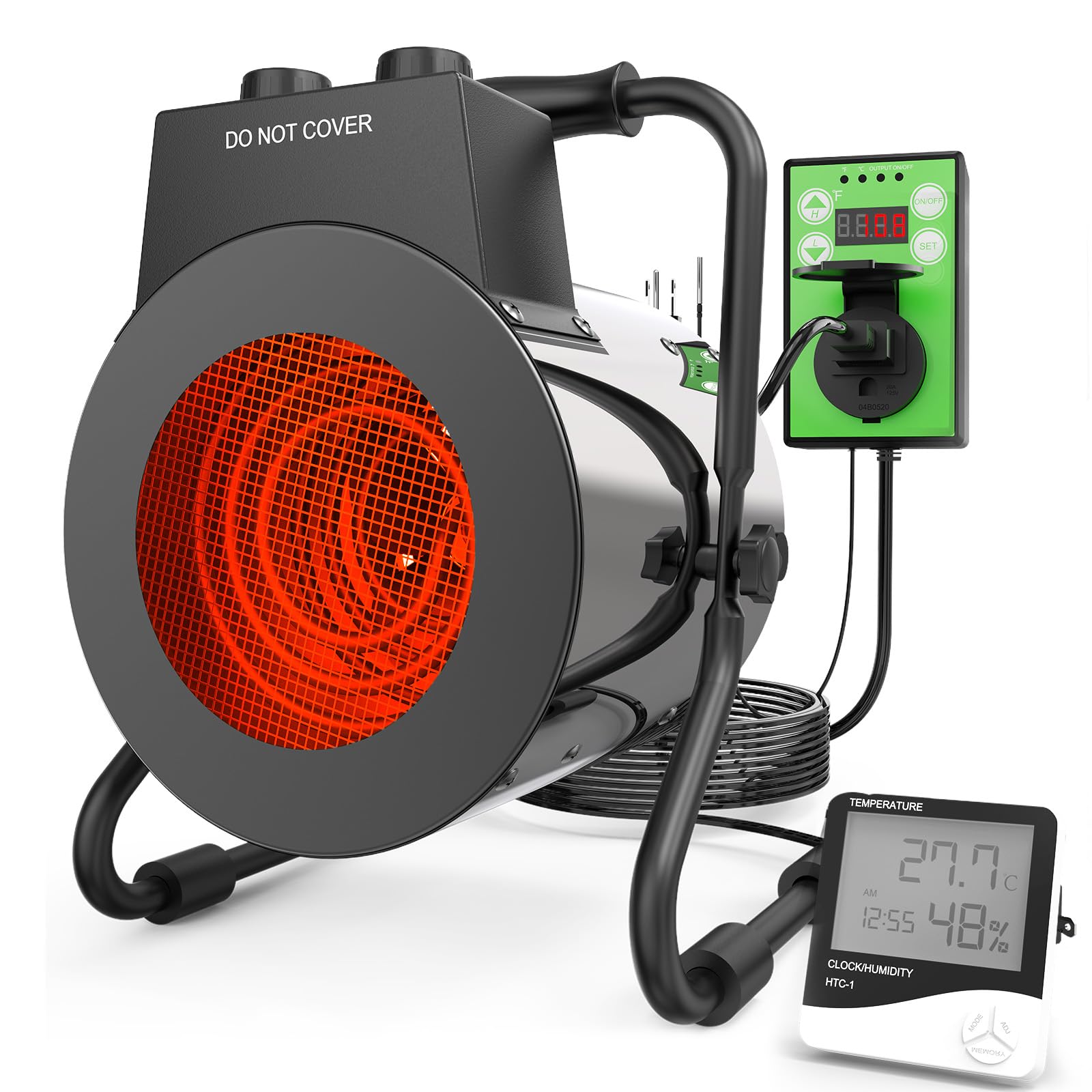
- Heats up spaces quickly
- Digital thermostat is precise and easy to adjust
- Overheat protection built-in
Cons
- Best for smaller areas, up to 215 sq. ft.
- Fan mode isn’t strong enough for big greenhouses
- Not really made for permanent installation
The Buyplus heater impressed us with how quickly it warmed up the greenhouse. The digital thermostat made it easy to keep things steady, which is crucial for sensitive plants.
Overheat protection gave us peace of mind during long runs. We liked being able to switch between gentle airflow and full heat, depending on the weather.
It covers smaller spaces well, but you’ll probably need more than one for bigger areas. The handle and long cord make it easy to move, and it’s quiet enough not to distract from work.
Choosing the right nursery greenhouse heater can feel tricky. First, we really need to look at the size of our greenhouse, since heaters come with different output capacities.
If we don’t match the heater’s BTU rating to the space, temperature control just won’t work well. Too much or too little heat? Both can be a headache.
Energy efficiency is a big deal. Heaters with better efficiency use less fuel or electricity, which means our bills stay lower.
Still, it’s a balancing act between upfront cost and what we’ll save down the road. Sometimes paying a bit more at the start pays off later.
Safety features are non-negotiable. We should pick heaters that have automatic shutoff, overheat protection, and a stable build.
These details aren’t just for peace of mind—they actually protect our plants and anyone working nearby. No one wants an accident.
Durability matters, especially for commercial setups. The heater’s got to handle humidity and run for long stretches.
Materials like stainless steel or coated metals help the heater last longer. It’s worth checking what it’s made of before buying.
Maintenance is another thing we can’t ignore. We’d rather have models that don’t need much upkeep and offer easy access for cleaning.
Less maintenance means less downtime and fewer labor costs. That’s always a plus.
If we weigh these points, we’ll have a much better shot at picking a heater that fits our operational needs without spending more than we should.
Buying Guide
Choosing the right nursery greenhouse heater can feel tricky. First, we really need to look at the size of our greenhouse, since heaters come with different output capacities.
If we don’t match the heater’s BTU rating to the space, temperature control just won’t work well. Too much or too little heat? Both can be a headache.
Energy efficiency is a big deal. Heaters with better efficiency use less fuel or electricity, which means our bills stay lower.
Still, it’s a balancing act between upfront cost and what we’ll save down the road. Sometimes paying a bit more at the start pays off later.
Safety features are non-negotiable. We should pick heaters that have automatic shutoff, overheat protection, and a stable build.
These details aren’t just for peace of mind—they actually protect our plants and anyone working nearby. No one wants an accident.
Durability matters, especially for commercial setups. The heater’s got to handle humidity and run for long stretches.
Materials like stainless steel or coated metals help the heater last longer. It’s worth checking what it’s made of before buying.
Maintenance is another thing we can’t ignore. We’d rather have models that don’t need much upkeep and offer easy access for cleaning.
Less maintenance means less downtime and fewer labor costs. That’s always a plus.
Key Features to Consider
| Feature | Importance | Notes |
|---|---|---|
| Heat Output (BTU) | Match space size | Avoid undersized or oversized heaters |
| Energy Efficiency | Lower fuel/electricity costs | Look for energy ratings or certifications |
| Safety Features | Protect plants and staff | Auto shutoff, tip-over protection |
| Durability | Longevity in humid environments | Use resistant materials |
| Maintenance | Ease and frequency | Simple cleaning and filter access |
If we weigh these points, we’ll have a much better shot at picking a heater that fits our operational needs without spending more than we should.