Best Nursery Greenhouse Heater Complete Guide for Commercial Growers to Maximize Efficiency and Crop Yield
We independently select all products and services. If you click through links we provide, Plant Native may earn a commission with no extra cost to you. As an Amazon Associate I earn from qualifying purchases.
Last updated: August 23, 2026
Keeping the right temperature in a nursery greenhouse is crucial for healthy plant growth and steady crop yields. Greenhouse heaters give you controlled warmth, shielding young plants from cold stress and helping you maintain optimal conditions through the colder months.
Heaters come in all shapes and sizes, with different fuel sources and heating capacities. It’s honestly a bit overwhelming at first, but understanding which type fits your commercial setup will save you headaches later.
Nursery greenhouse heaters aim to balance efficiency, safety, and even heat distribution. You might use propane, natural gas, electric, or radiant heat models—just make sure the heater’s output matches your greenhouse size and energy preferences.
Ventilation and heat regulation matter a lot too. If you don’t pay attention, overheating or humidity swings can sneak up and damage your plants.
When you’re picking a nursery greenhouse heater, you’ll want to look at heating capacity (BTU output), fuel efficiency, installation requirements, and safety features. Durability and maintenance matter too, since these things run for hours on end in commercial setups.
Best Nursery Greenhouse Heaters for Commercial Growers
We dug through a lot of options and narrowed it down to the best nursery greenhouse heaters for reliable temperature control and energy efficiency. This list covers different needs and greenhouse sizes.
Our top pick

- Heats up quickly and efficiently
- Compact and easy to move
- Safety features like overheat protection and dustproof design
Cons
- Limited heat output for bigger spaces
- Thermostat can cause some temperature swings
- Fan noise is noticeable
We liked the VIVOSUN heater for keeping smaller greenhouse areas at stable temps. It warms the air fast, which really helps protect sensitive plants from those sudden cold snaps.
Its small size fits easily on shelves or benches, and the tilting feature lets you aim warmth right where you want it.
Some of us noticed the thermostat cycles on and off, so you get minor temperature fluctuations. Still, the safety cut-off and flame retardant materials make us feel comfortable leaving it on for longer stretches.
Best runner-up

- Stable temperature control with dead zone regulation
- Quiet operation and a flexible timer
- Energy-efficient PTC heating and multiple fan speeds
Cons
- Temperature settings can be confusing
- Struggles to keep very high temps
- No remote or external display
We found the Spider Farmer heater easy to set up and reliable for keeping target temps in a home grow tent. The dead zone control helps keep things steady for sensitive plants.
The adjustable fan speeds and timer add flexibility for different schedules, whether you need heat day, night, or non-stop. The user interface isn’t super intuitive, though, so you might fumble through a few settings at first.
It has trouble holding temps above 86°F, which could be a dealbreaker if you need hotter conditions. For most commercial growers sticking to temperate crops, though, it balances efficiency and safety nicely.
Best budget option

- Keeps temperature steady with minimal swings
- Compact, so it fits in tight spots
- Fan mode helps circulate air in warmer seasons
Cons
- Needs an extra fan for even heat
- Some units don’t last as long as we’d like
- Can get noisy on high settings
We ran the Bio Green Palma in a modest greenhouse during early winter. The digital thermostat kept things steady and didn’t overshoot, which saved us some electricity.
Its compact size meant we could tuck it near plants without crowding. The fan function helped circulate air, so we didn’t get those annoying hot spots right around the heater.
Without extra fans, though, the heat didn’t spread evenly—some corners stayed chilly. Over months, it stayed effective, but a few users have said it might not last more than a couple seasons.
For keeping smaller greenhouses frost-free, it’s efficient and convenient. The occasional noise and uneven heat are trade-offs, but overall, we’d use it again.
Best premium choice
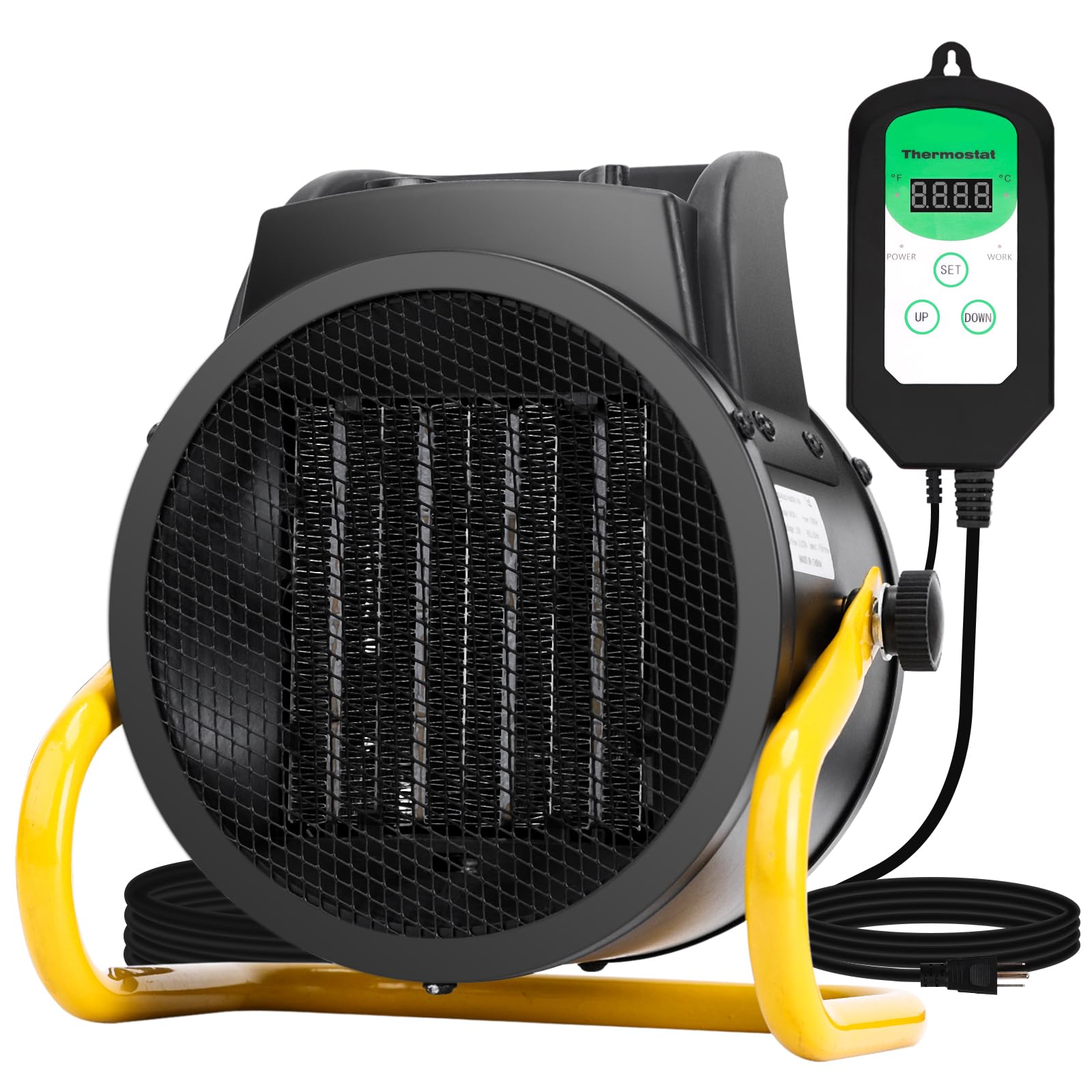
- Heats up fast and keeps temps steady
- Built-in safety features, including overheat protection
- Ventilation option for warm weather air circulation
Cons
- Some plastic parts feel flimsy
- Thermostat can act up now and then
- Best for spaces around 120 sq ft
We liked how quickly the SOSUNLID heater warmed the space. The automatic thermostat took the guesswork out of heat regulation, which is a relief when you’re busy with other tasks.
The ventilating fan is handy for summer, letting us move air without chilling the plants too much. Adjusting wind speed helped us keep the air moving just right.
On the downside, the plastic knobs and controls felt delicate. One broke after moderate use, which made fine-tuning temps kind of a pain. Despite that, the performance and safety features make it a dependable pick for most greenhouse setups.
Also great

- WiFi control lets you adjust temps anytime
- Multiple safety features, like overheat and tip-over shutoff
- Dual-function fan mode keeps air moving without drying plants
Cons
- Sometimes needs a reset after power surges
- Manual shutdown can lag behind the app
- Heating coverage suits small to medium spaces, not big ones
We liked how easy it was to hook up the heater to WiFi and check greenhouse temps from anywhere. Setting alerts for high or low temps helped us react before things went sideways.
It warmed a 150 sq ft space quickly and kept heat steady through cold nights. Switching to fan mode in milder weather kept air circulating without messing up humidity.
Occasionally, a power surge forced us to reset it by hand. The app didn’t always turn it off instantly, which is a bit annoying.
Still, the SwSun heater blends smart tech with safety and reliable heating. It fits well in most commercial or hobby greenhouse setups.
When picking out the best nursery greenhouse heater, you want to look at things like heating capacity, fuel type, and safety features. These factors help keep your plants and workers safe while making sure everything runs efficiently.
Heating capacity really comes down to the size of your greenhouse. Figure out how many BTUs (British Thermal Units) you need based on the square footage and how well your greenhouse holds in heat.
If your heater’s too small, it just won’t keep things warm enough.
Fuel type makes a big difference in both your budget and daily routine. You’ve got electric, propane, natural gas, and diesel to pick from.
Think about what’s easy to get, how much it costs, and how tricky the setup might be.
Safety matters a lot, especially in tight spaces. Look for heaters with automatic shutoff, tip-over protection, and flame failure devices.
Don’t forget about ventilation—nobody wants dangerous gases hanging around.
Durability and easy maintenance can save you a headache later. Heaters built with corrosion-resistant materials and simple-to-access parts mean less downtime and fewer repairs.
Buying Guide
When picking out the best nursery greenhouse heater, you want to look at things like heating capacity, fuel type, and safety features. These factors help keep your plants and workers safe while making sure everything runs efficiently.
Heating capacity really comes down to the size of your greenhouse. Figure out how many BTUs (British Thermal Units) you need based on the square footage and how well your greenhouse holds in heat.
If your heater’s too small, it just won’t keep things warm enough.
Fuel type makes a big difference in both your budget and daily routine. You’ve got electric, propane, natural gas, and diesel to pick from.
Think about what’s easy to get, how much it costs, and how tricky the setup might be.
Safety matters a lot, especially in tight spaces. Look for heaters with automatic shutoff, tip-over protection, and flame failure devices.
Don’t forget about ventilation—nobody wants dangerous gases hanging around.
Durability and easy maintenance can save you a headache later. Heaters built with corrosion-resistant materials and simple-to-access parts mean less downtime and fewer repairs.
| Feature | What to Look For | Why It Matters |
|---|---|---|
| Heating Capacity | BTU rating matching greenhouse size | Ensures adequate heat output |
| Fuel Type | Propane, electric, natural gas, or diesel | Balances cost and availability |
| Safety Features | Automatic shutoff, flame failure, tip-over | Prevents accidents and hazards |
| Durability | Corrosion-resistant, sturdy construction | Extends heater lifespan |
| Maintenance | Easy access to parts and cleaning requirements | Reduces downtime and repair costs |