5 Standout Commercial-Grade Commercial Greenhouse Comparison for Native Plant Nurseries: Features, Benefits, and Best Uses
We independently select all products and services. If you click through links we provide, Plant Native may earn a commission with no extra cost to you. As an Amazon Associate I earn from qualifying purchases.
Last updated: November 8, 2026
Commercial-grade greenhouses are essential tools for native plant nurseries. They provide controlled environments that optimize growth conditions and shield plants from harsh weather.
These structures come in a range of sizes, materials, and designs. Nurseries can choose based on their planting needs and the quirks of their local climate.
For native plant nurseries, greenhouses need to balance durability with precise environmental control. Features like ventilation, shading, and insulation really matter, especially since native species often need specific temperature and humidity levels.
Customizing these elements can make a noticeable difference in plant health. It’s not something to overlook if you’re hoping for nursery success.
When picking a commercial greenhouse, frame material, glazing type, and structural design should top your list. Durability against wind and snow, ease of assembly, and ventilation options also play big roles in keeping growing conditions just right.
We took a close look at five commercial-grade greenhouses that stand out for native plant nurseries. Each offers something unique for creating reliable and effective growing spaces.
Best Commercial-Grade Greenhouses for Native Plant Nurseries
We picked out five commercial-grade greenhouses that hit the mark for native plant nurseries. They balance durability, space, and environmental control.
Our top pick

- Easy to assemble without tools
- Multiple sturdy shelves provide good growing area
- Clear PVC cover protects plants from frost and pests
Cons
- Frame and shelves can feel a bit flimsy under strain
- Cover material is decent but prone to wear over time
- Stability can be an issue in strong winds despite included stakes
We put this together without any special tools. The metal frame pieces slid into place after a few gentle taps, which made the structure feel surprisingly solid.
Eight shelves give plenty of room for seedlings or trays without hogging floor space. The clear PVC cover helped us keep pests away and maintain a steady environment.
After a season, we noticed some wear on the cover, especially where wind and sun hit hardest. The lighter steel frame needs extra care if you’re in a windy area—we had to adjust guy lines more than once.
This greenhouse works for growers who want portability and versatility without heavy-duty needs. Just be ready to keep an eye on it and do some seasonal upkeep.
Best runner-up
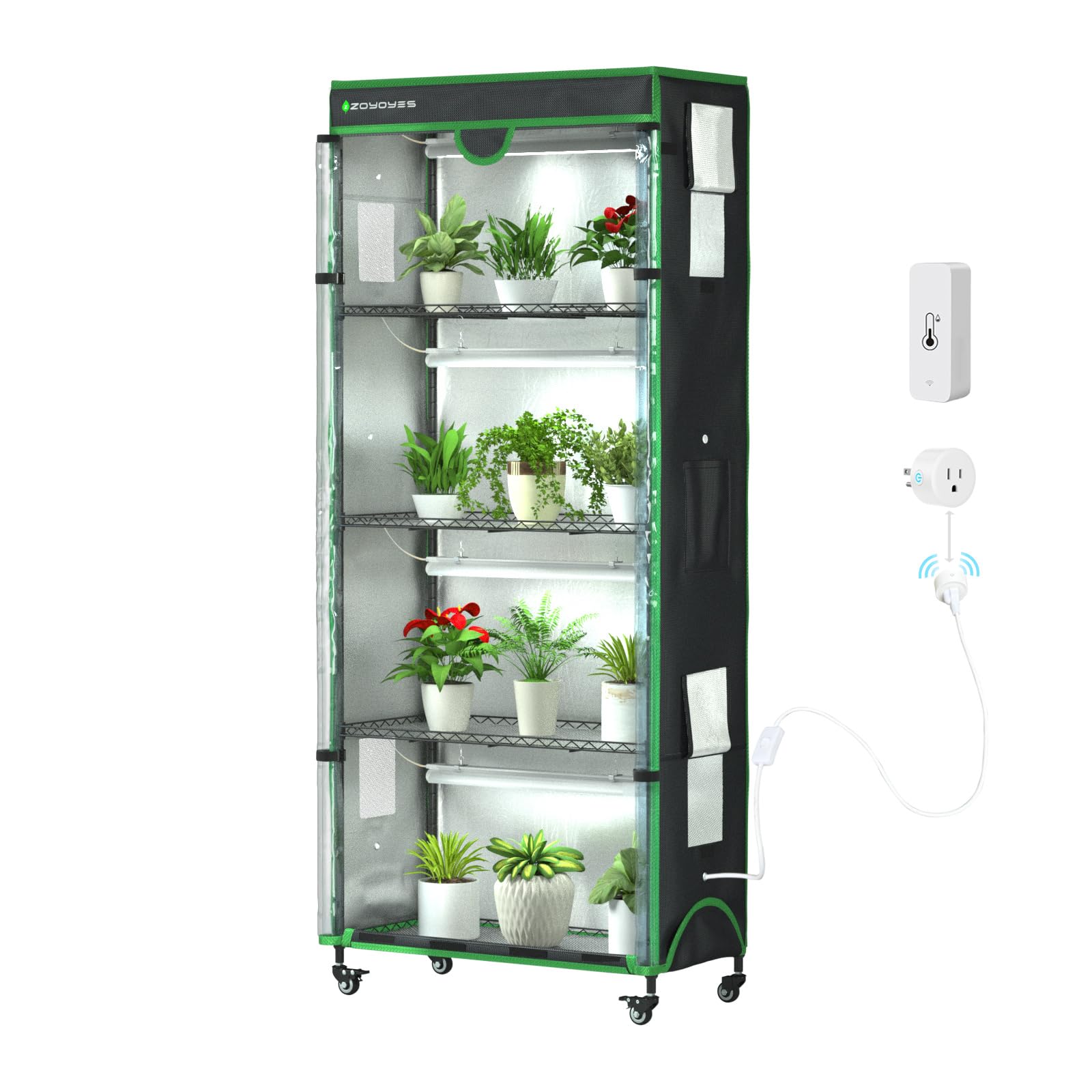
- Adjustable shelving and sturdy metal frame resist rust
- Integrated 3-color full spectrum lighting adapts to plant growth stages
- Enclosed waterproof cover with ventilation aids in microclimate control
Cons
- Designed primarily for indoor use, limiting outdoor flexibility
- The unit is quite tall and narrow, requiring stable placement
- Smart features depend on reliable phone connectivity
The five adjustable shelves made it easy to manage several plant types at once. We liked the grow lights with spectral adjustment—they let us tweak light exposure as plants grew.
The zippered enclosure kept humidity steady and pests out, which is a lifesaver for sensitive native seedlings. Ventilation worked well, though we checked conditions often to prevent too much moisture.
Moving the stand around was simple thanks to lockable wheels. Its height did make us a bit nervous about tipping, so we always made sure it was on a flat spot.
The smart socket and humidity meter gave us good control, but the app connection had its moments. All in all, it’s a practical, well-designed rack for indoor native plant propagation and display when you’re short on space but need solid environmental control.
Best budget option
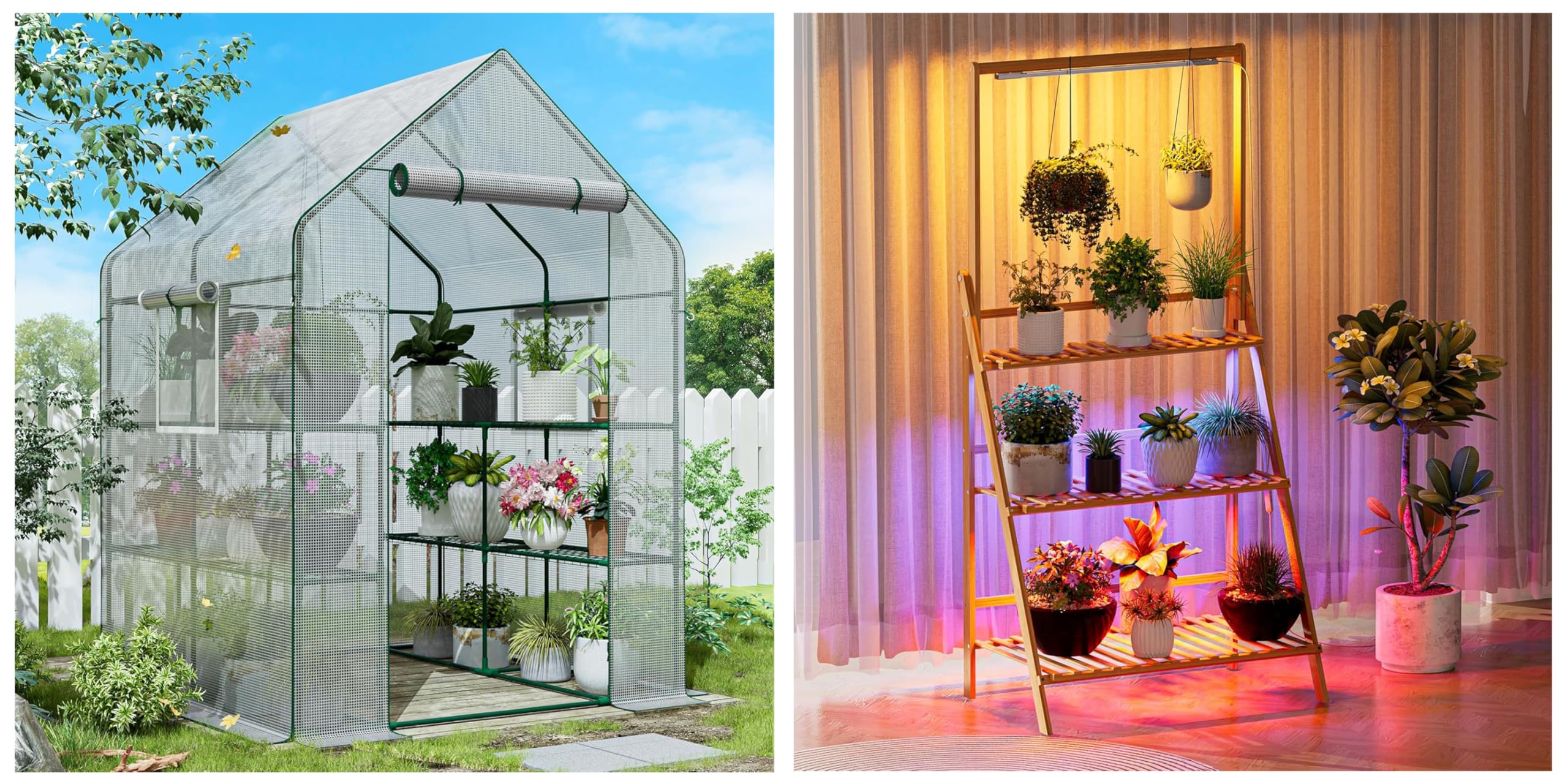
- Effective ventilation options to control temperature
- Thick PE cover guards plants from rain and snow
- Bamboo stand offers durability without rust issues
Cons
- Size might be limiting for larger scale operations
- Bamboo stand, while sturdy, needs careful handling to avoid damage
- Lighting included may not cover all plant needs in low light zones
The ventilation system made it easy to keep the environment stable. We opened the zipper door and mesh windows to adjust airflow, which helped during hot afternoons or chilly nights.
The thick polyethylene cover kept our plants dry during storms and didn’t let moisture build up inside. The bamboo plant stand was a highlight—it held several plants vertically and saved space, but it does need gentle handling to avoid damage.
The included grow light helped with early seedling growth, but it didn’t quite reach every corner. If you’re working with a bigger setup, you’ll probably need extra lights.
This model works well for nurseries that want a compact, weatherproof spot with flexible shelf space and reliable basics.
Best premium choice

- Sturdy frame with rust-resistant tubes holds heavy loads reliably
- Efficient vertical space use thanks to adjustable hanging rods
- Foldable design makes relocation quite simple
Cons
- Limited size may not support larger nursery operations
- Grow light coverage is basic and may not suit all plant types
- Assembly, while manageable, requires patience and some tools
We fit about two dozen pots inside, which was enough for our native plant mix. The metal frame felt tough, and the rust-resistant coating gave us peace of mind for long-term use.
The adjustable hanging system helped us make the most of vertical space, letting us fit plants of different heights. Moving the greenhouse around was easy because of the foldable design.
The grow light was okay but didn’t reach every spot, so we added a few extras. The footprint works best for smaller spaces, so it’s not ideal if you’re running a huge nursery.
This unit offers dependable support and thoughtful design for small- to mid-sized native plant growers. It’s not perfect, but it does the job well for its size.
Choosing the right commercial-grade greenhouse for native plant nurseries takes some real thought. We focus on features that support plant health, durability, and operational efficiency.
Aluminum and galvanized steel stand out. They’re strong, and they don’t rust easily, which is a relief.
Polyethylene films cost less, but honestly, they just don’t hold up as long. Think about your local weather and what you’re willing to spend.
Automated roof vents and sidewalls are a lifesaver. They keep conditions steady, and you don’t have to babysit them.
Here’s a quick breakdown:
Energy efficiency matters too. Greenhouses with energy-saving options can cut down on heating and cooling bills, which is always welcome.
It’s worth balancing cost with the features your native plants actually need. Try to pick what keeps things steady for your plants, but don’t blow your whole budget.
Buying Guide
Choosing the right commercial-grade greenhouse for native plant nurseries takes some real thought. We focus on features that support plant health, durability, and operational efficiency.
We always put frame material near the top of the list. After all, it affects how long your structure lasts and how much hassle you’ll have down the road.
Aluminum and galvanized steel stand out. They’re strong, and they don’t rust easily, which is a relief.
Now, covering types—that’s another biggie. Polycarbonate panels insulate well and diffuse light, so your plants get what they need without frying.
Polyethylene films cost less, but honestly, they just don’t hold up as long. Think about your local weather and what you’re willing to spend.
Ventilation systems matter a lot. Good airflow stops mold and keeps things from getting too hot.
Automated roof vents and sidewalls are a lifesaver. They keep conditions steady, and you don’t have to babysit them.
We also care about the size and modularity of the greenhouse. Modular designs let you add on later, which is smart if you expect your nursery to grow.
Here’s a quick breakdown:
| Feature | Importance | What to look for |
|---|---|---|
| Frame Material | Durability | Corrosion-resistant metals |
| Covering Type | Light, insulation, budget | Polycarbonate or polyethylene |
| Ventilation | Plant health | Automated vents for airflow |
| Size & Modularity | Flexibility | Expandable and adjustable |
Energy efficiency matters too. Greenhouses with energy-saving options can cut down on heating and cooling bills, which is always welcome.
It’s worth balancing cost with the features your native plants actually need. Try to pick what keeps things steady for your plants, but don’t blow your whole budget.