
Palmer’s Indian Mallow (Abutilon palmeri)
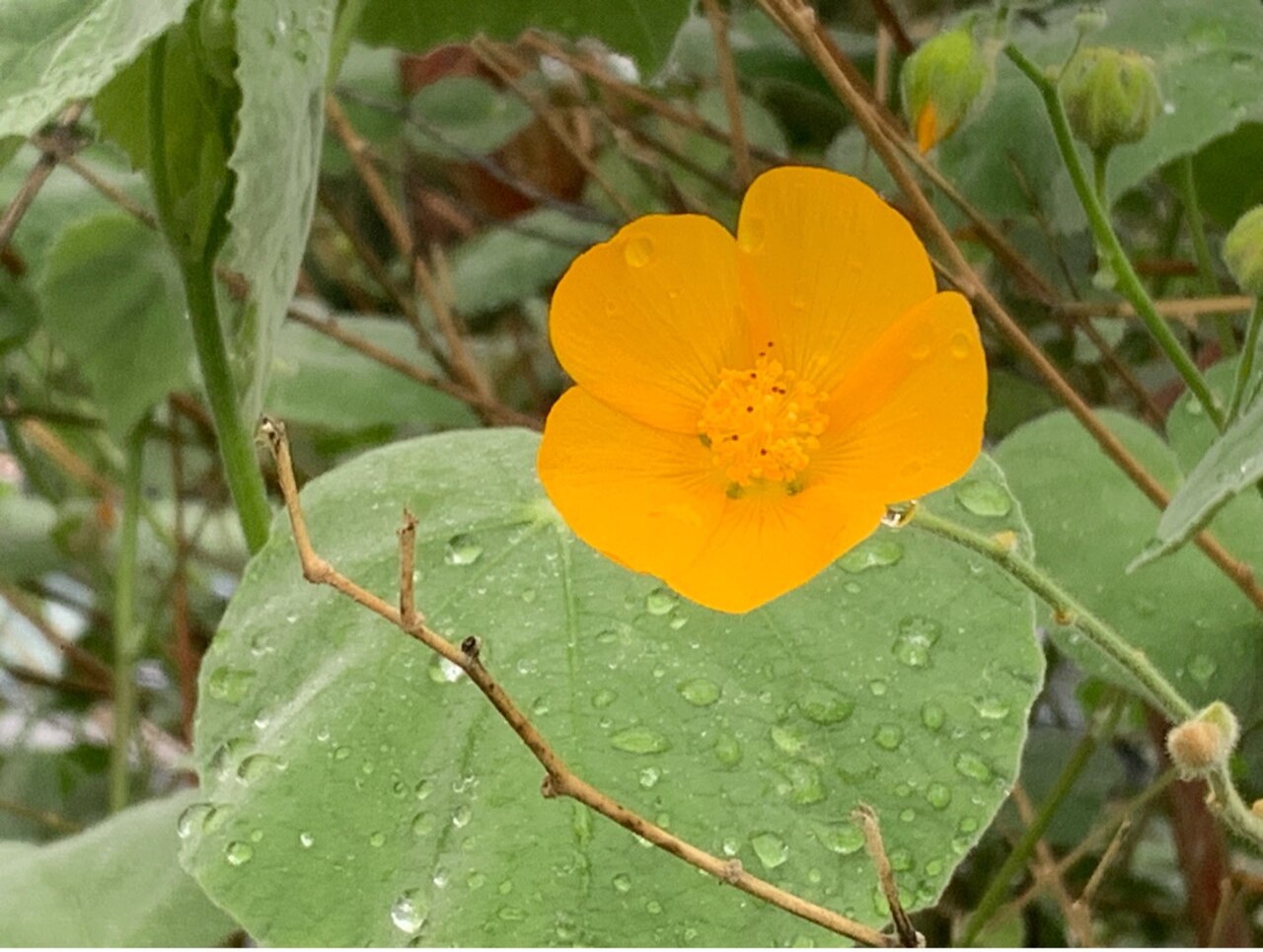
Abutilon palmeri, known as Palmer’s Indian Mallow, Palmer’s abutilon or superstition mallow, is a soft-leaved desert shrub of the Sonoran Desert. Its large, velvety, heart-shaped leaves have a gray-green to bluish sheen, and for much of the year it carries cup-shaped, apricot-orange to golden flowers about an inch across. It is one of the showiest native shrubs for low-water gardens in the desert Southwest.
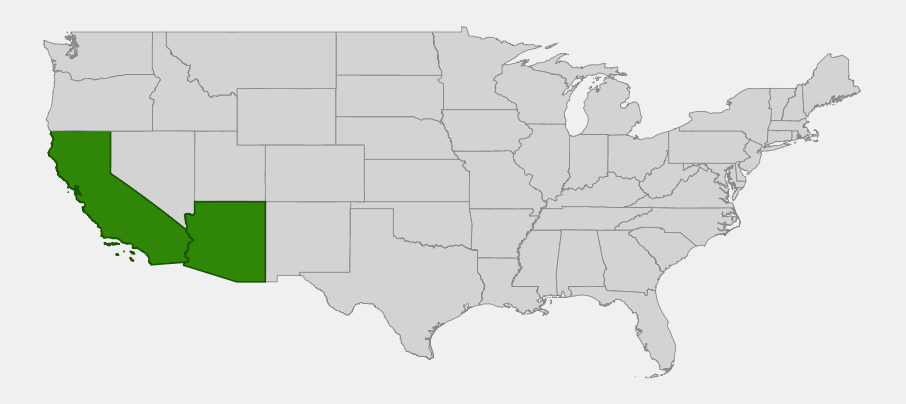
In the United States it grows wild only in southern Arizona and southeastern California, on rocky slopes, canyons and washes of the Sonoran Desert and the desert foothills of the Peninsular Ranges. Its range continues south into Sonora and Baja California in Mexico. It belongs to the mallow family (Malvaceae), alongside hibiscus, globemallows and the much smaller Sweet Indian Mallow.
Native plant nurseries in Arizona and Southern California grow Palmer’s Indian mallow for xeriscapes, wildlife gardens and habitat plantings. This page covers how to identify it, its native range and habitat, how to grow it, its value to bees and other wildlife, and its place in desert landscapes.
Identification
Palmer’s Indian mallow is easy to recognize: no other native shrub in its range has such large, soft, velvety heart-shaped leaves combined with orange, cup-shaped flowers.
Size & Form
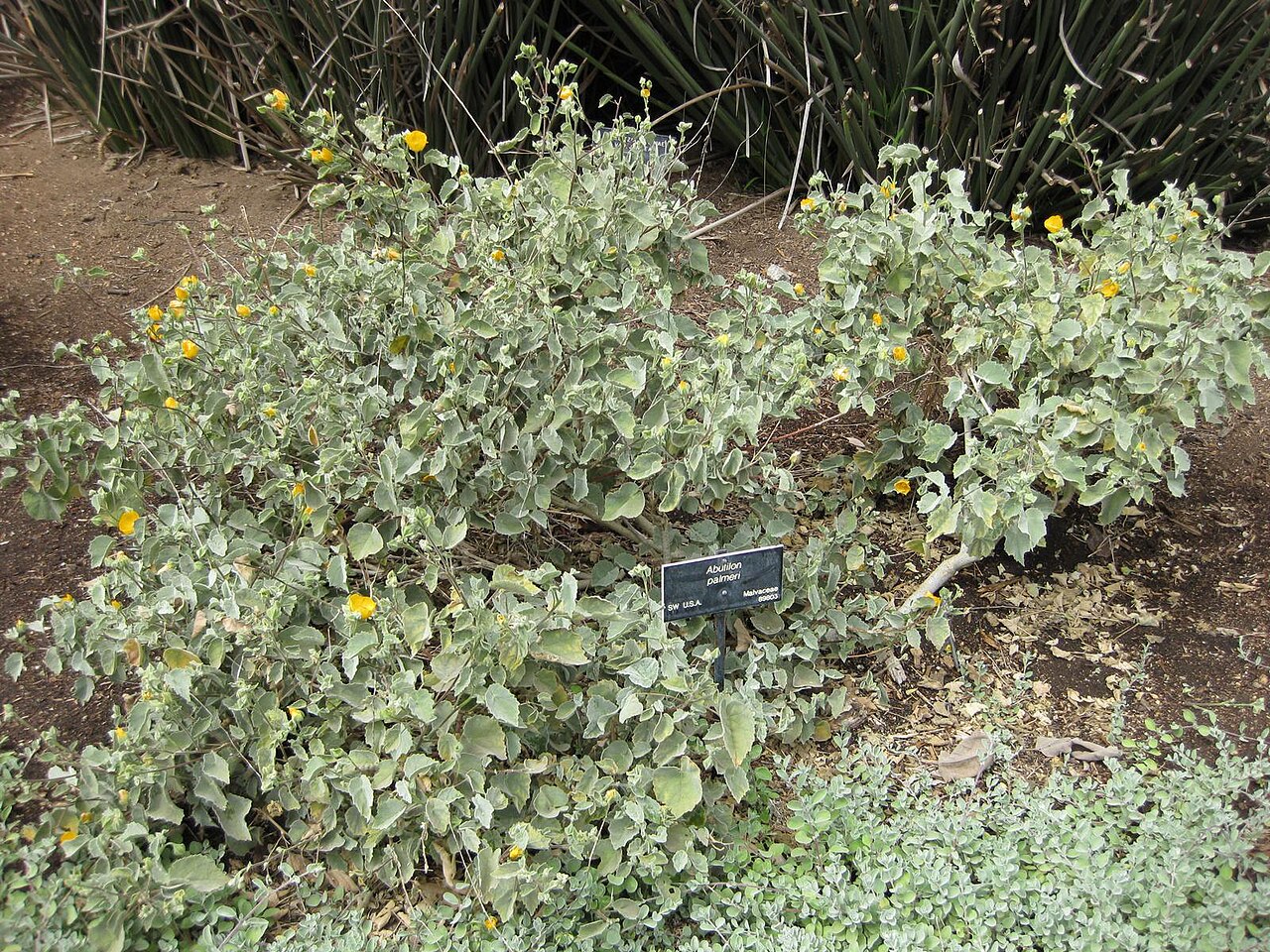
It is a semi-evergreen, multi-stemmed shrub usually 3 to 6 feet tall, occasionally to 8 feet, and 2 to 5 feet wide, with an open, rounded habit. The stems are green to reddish brown and covered in soft hairs. In severe drought or cold it may drop many leaves, then leaf out again after rain.
Leaves
The alternate leaves are broadly heart-shaped to nearly round, about 1 1/2 to 4 inches long, with a pointed tip, a deeply notched base and finely toothed edges. Both surfaces are densely covered with soft, star-shaped hairs, which give them a velvety feel and a gray-green to bluish color. The hairs reflect sunlight and help reduce water loss.
Flowers
The flowers are cup-shaped, about 1 inch across, with five broad, overlapping petals in shades of apricot-orange to golden yellow. A central column of fused stamens, typical of the mallow family, carries orange-yellow pollen. Flowers appear mainly in spring, but plants bloom off and on for much of the year after rains or with occasional garden watering.
Fruit
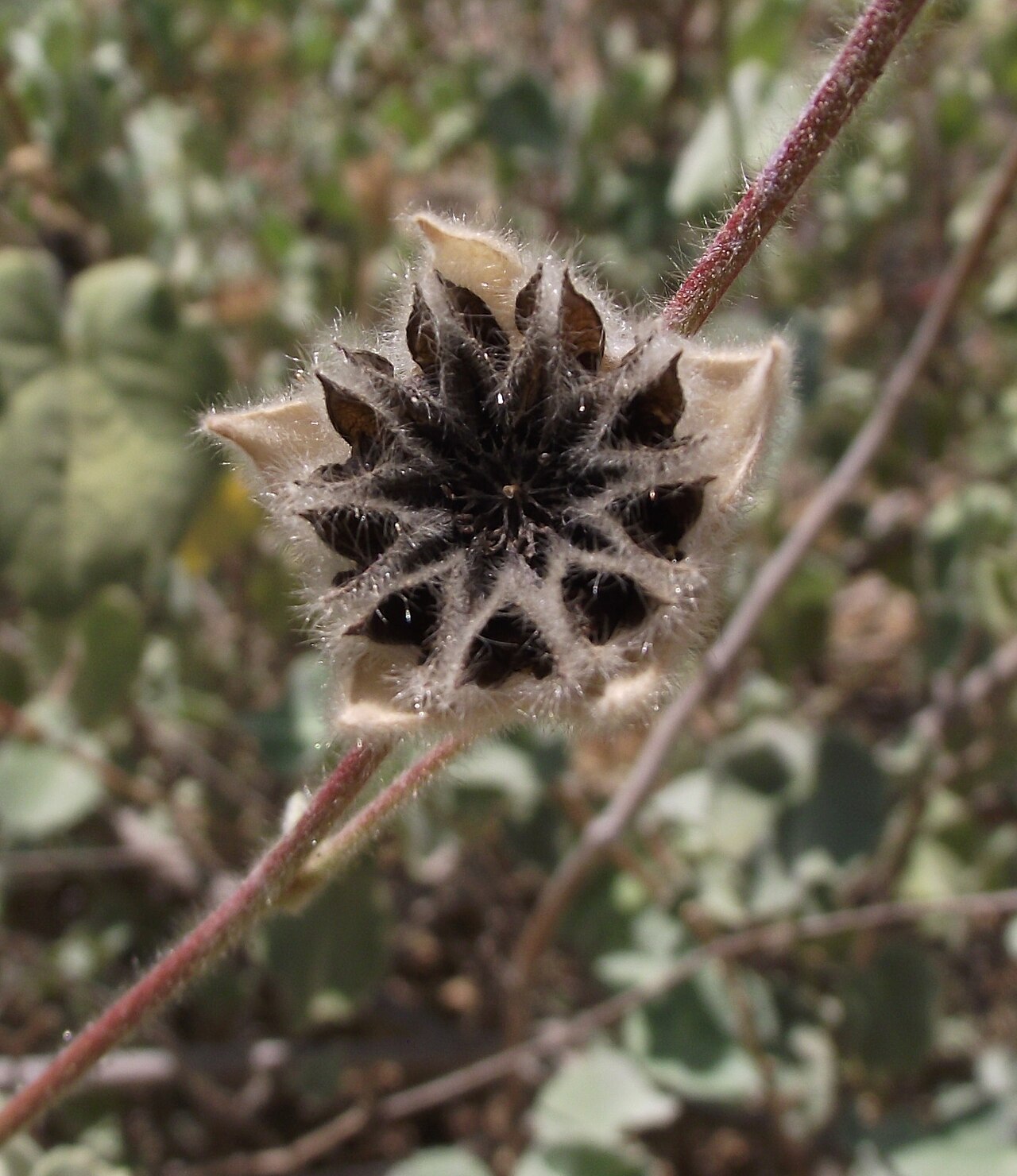
The fruit is a rounded, many-parted capsule about 1/2 inch across, densely hairy like the leaves. As it dries it turns dark brown and opens into a star-shaped, lantern-like shell whose segments each release a few small seeds.
Similar Species
Sweet Indian Mallow (Abutilon fruticosum) is a smaller, weaker-stemmed plant with smaller leaves and flowers. Desert globemallow (Sphaeralcea ambigua) has orange flowers too, but much smaller, crinkled, lobed leaves and many small flowers on long wands. Other native Abutilon species in Arizona, such as Abutilon incanum, have small, pinkish or orange flowers and narrower leaves.
Quick Facts
| Scientific Name | Abutilon palmeri A. Gray |
| Family | Malvaceae (mallow family) |
| Plant Type | Semi-evergreen shrub |
| Mature Height | 3–6 ft (occasionally to 8 ft) |
| Mature Spread | 2–5 ft |
| Growth Rate | Moderate to fast |
| Sun Exposure | Full sun to part shade |
| Water Needs | Low; occasional deep watering in summer |
| Soil Type | Well-drained rocky, gravelly or sandy soil |
| Soil pH | About 6.5–8.5 |
| Bloom Time | Mainly spring; sporadically much of the year |
| Flower Color | Apricot-orange to golden yellow |
| Fall Color | None; semi-evergreen gray-green |
| Fruit | Hairy, many-parted capsule drying to a star-shaped shell |
| Deer Resistant | Moderate; rabbits may browse young plants |
| USDA Hardiness Zones | 9–11 |
Native Range
USDA PLANTS lists Palmer’s Indian mallow as native in Arizona and California. In Arizona it grows in the Sonoran Desert of the southern and central parts of the state, including the mountains and foothills around Phoenix and Tucson, and the Superstition Mountains, which gave it the name superstition mallow. In California it is restricted to the Colorado Desert and the desert-facing foothills of the Peninsular Ranges in Riverside, San Diego and Imperial counties, where it is uncommon.
It grows on rocky, south-facing slopes, canyon walls, boulder fields and the edges of dry washes, usually below about 3,500 feet. These sites are hot and dry, but rocks and boulders shade the roots and channel extra runoff after rains.
Its range extends south into Sonora and Baja California, Mexico. Botanist Edward Palmer, who collected plants across the Southwest and northern Mexico in the 1800s, is honored in its name.
📋 Regional plant lists featuring Palmer’s Indian Mallow: Arizona & New Mexico · California & Nevada
Growing & Care Guide
Palmer’s Indian mallow is one of the easiest native shrubs for desert gardens. It grows quickly, needs little water once established and flowers over a long season. Native plant nurseries in Arizona and Southern California sell it, and it is often available at botanical garden plant sales.
Light
Grow it in full sun or light part shade. In low desert gardens it appreciates some afternoon shade or reflected light from rocks; in shade it becomes more open and flowers less.
Soil & Water
It needs well-drained soil, ideally rocky, gravelly or sandy. Heavy clay that stays wet causes root rot. Water regularly through its first summer. Once established, a deep soaking every two to four weeks in hot, dry weather keeps it leafy and blooming; it survives on rainfall alone in much of its range but may drop leaves in drought. Avoid frequent shallow watering.
Planting Tips
Plant in fall or early spring so roots establish before summer heat. Give it room to spread 4 to 5 feet. It looks good near boulders, along dry washes and in mixed plantings with other desert shrubs. Protect young plants from rabbits with a wire cage until they are established. It tolerates light frost; temperatures in the low 20s °F can damage it, but it usually regrows from the base.
Pruning & Maintenance
Cut it back by about a third in late winter or early spring to keep it dense and encourage new flowering growth; old, leggy plants can be cut back harder. Remove frost-damaged stems after the danger of frost has passed. Whiteflies or aphids sometimes appear on lush, overwatered plants. Wear gloves and long sleeves when pruning, as the hairs can irritate sensitive skin.
Propagation
It grows easily from seed. Scarify the seeds lightly or soak them in hot water before sowing to soften the hard seed coat, then sow in warm weather. It often self-sows in gardens. Softwood cuttings taken in spring or early summer also root.
Landscape Uses
- Desert xeriscapes: a fast, low-water shrub with soft foliage and long bloom for Sonoran Desert gardens
- Pollinator gardens: abundant pollen and nectar for native bees
- Habitat plantings: cover and food for birds and small wildlife
- Slopes and wash edges: suits rocky, well-drained sites and dry streambeds
- Silver-foliage accent: gray-green velvety leaves contrast with dark green desert shrubs
Wildlife & Ecological Value
Palmer’s Indian mallow is a valuable plant for desert wildlife, especially native bees.
For Pollinators
Its flowers are visited heavily by native bees, which can include mallow specialists such as globe mallow bees (Diadasia), as well as honey bees and other insects. Butterflies visit for nectar, and the leaves can host caterpillars of mallow-feeding butterflies such as checkered-skippers and painted ladies.
For Birds
Quail, finches and sparrows eat the seeds, and small birds use the shrub for shade and cover in the hot desert.
For Mammals
Rabbits and other small mammals browse young plants and shelter beneath larger shrubs. Deer may browse the foliage lightly.
Ecosystem Role
As a fast-growing shrub of rocky slopes and washes, Palmer’s Indian mallow helps stabilize soil and provides shade where seedlings of cacti and other desert plants can establish. Its long bloom season supports pollinators during periods when few other plants are flowering.
Cultural & Historical Uses
The species was described by Asa Gray from plants collected by Edward Palmer, an English-born naturalist and plant collector who made many expeditions in the American Southwest and Mexico. Many desert plants, including Palmer’s penstemon and Palmer’s agave, carry his name.
The common name Indian mallow is used for many Abutilon species, and other species of the genus have long been used as fiber plants, for food in famine and in traditional medicine in various parts of the world. Abutilons as a group are often called flowering maples or Chinese lanterns, for their maple-like leaves and lantern-shaped flowers and fruits. Palmer’s Indian mallow is now a popular native garden shrub across the low deserts of the Southwest.
Palmer’s Indian mallow is not known to be toxic. The fine hairs on the leaves and stems can irritate sensitive skin, so wear gloves when handling it. As with any plant, don’t eat it unless you are certain of a safe, established use.
Frequently Asked Questions
Where does Palmer’s Indian mallow grow naturally?
It is native to the Sonoran Desert of southern and central Arizona and the Colorado Desert of southeastern California, and south into Sonora and Baja California. It grows on rocky slopes, canyons and wash margins, usually below 3,500 feet.
How much water does Palmer’s Indian mallow need?
Very little once established. Water regularly during its first summer, then deeply every two to four weeks in hot, dry weather. It survives on rainfall alone but stays fuller and flowers more with occasional deep watering.
Is Palmer’s Indian mallow cold hardy?
It is suited to USDA zones 9 to 11. It tolerates light frost, but temperatures in the low 20s °F can damage stems. Damaged plants usually regrow from the base in spring.
Why is it called superstition mallow?
The name refers to the Superstition Mountains east of Phoenix, Arizona, where the shrub grows on rocky slopes.
How is Palmer’s Indian mallow different from sweet Indian mallow?
Palmer’s Indian mallow is a larger shrub with big, velvety, heart-shaped leaves and large orange flowers about an inch across. Sweet Indian Mallow is a smaller, weaker-stemmed plant with smaller leaves and flowers.

Looking for a nursery that carries Palmer’s Indian Mallow?
Browse our native plant nursery directory: Arizona · California

