
Sweet Indian Mallow (Abutilon fruticosum)
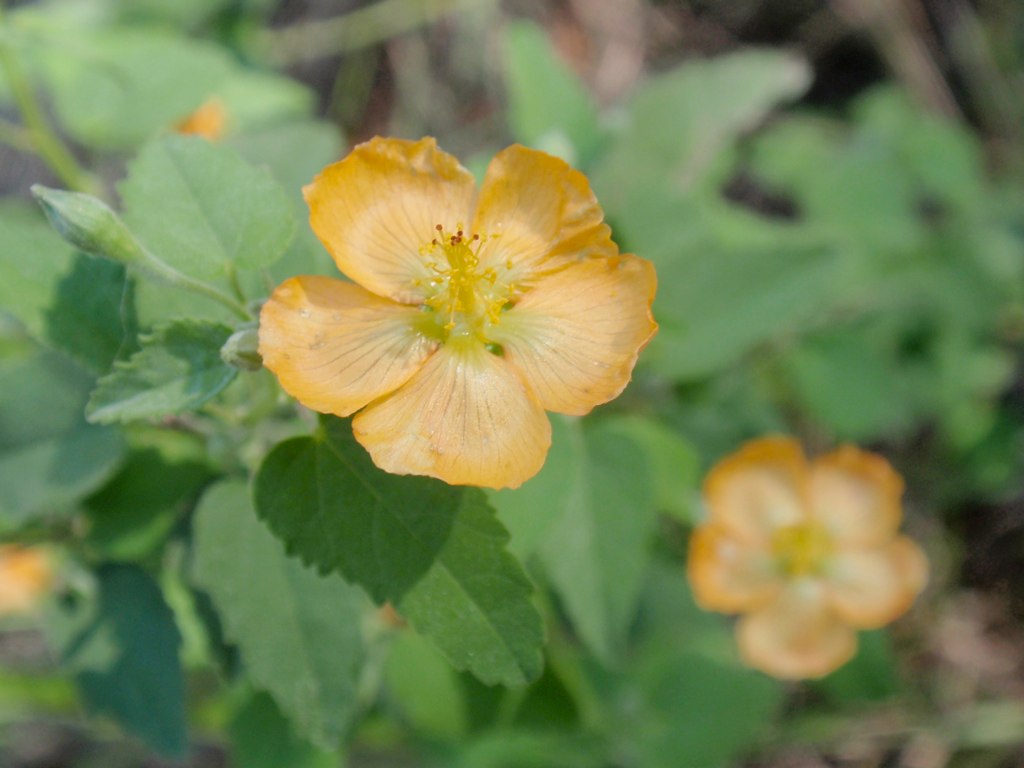
Abutilon fruticosum, known as Sweet Indian Mallow, Texas Indian mallow (the USDA common name) or pelotazo, is a native perennial of the mallow family (Malvaceae) in the south-central United States. It is a soft, gray-green plant, woody at the base and branching above, usually 2 to 3 feet tall, with velvety heart-shaped leaves and cheerful orange-yellow flowers from early summer into fall.
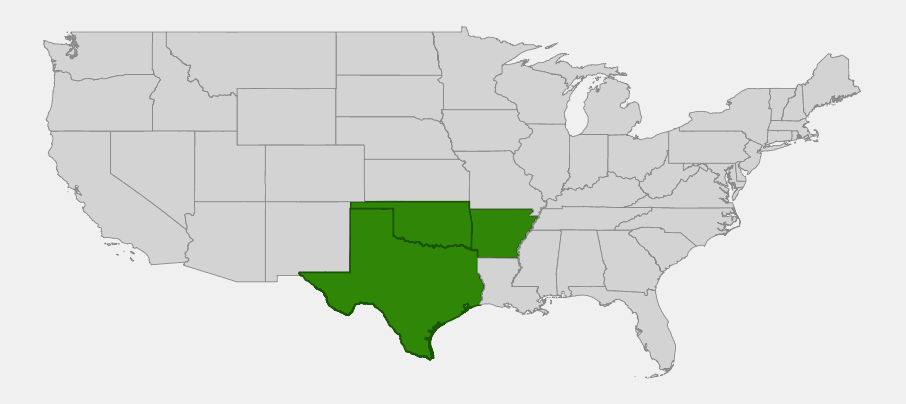
In the United States it grows mainly in central, south and west Texas, with records in Oklahoma and Arkansas. It is an unusually widespread species: the same plant is also native to northern Mexico, much of Africa, and southwestern and southern Asia from Arabia to India.
Sweet Indian mallow thrives in heat, drought and thin limestone soils, which makes it a useful and long-blooming plant for xeriscapes and wildlife gardens in Texas. This guide covers how to identify it, where it grows, how to grow it and the wildlife it supports.
Identification
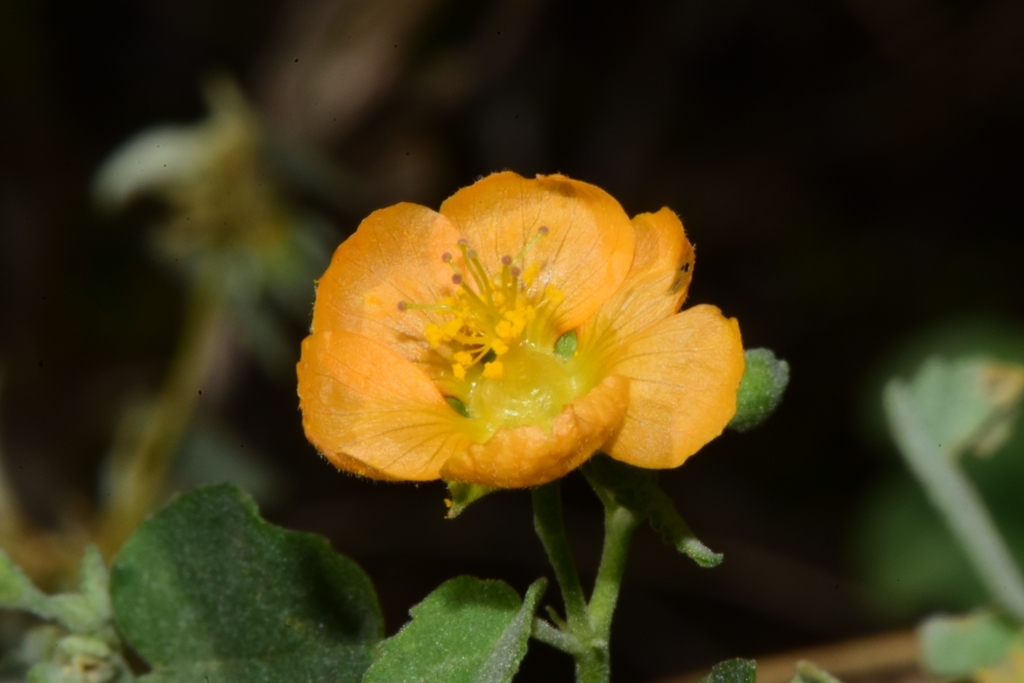
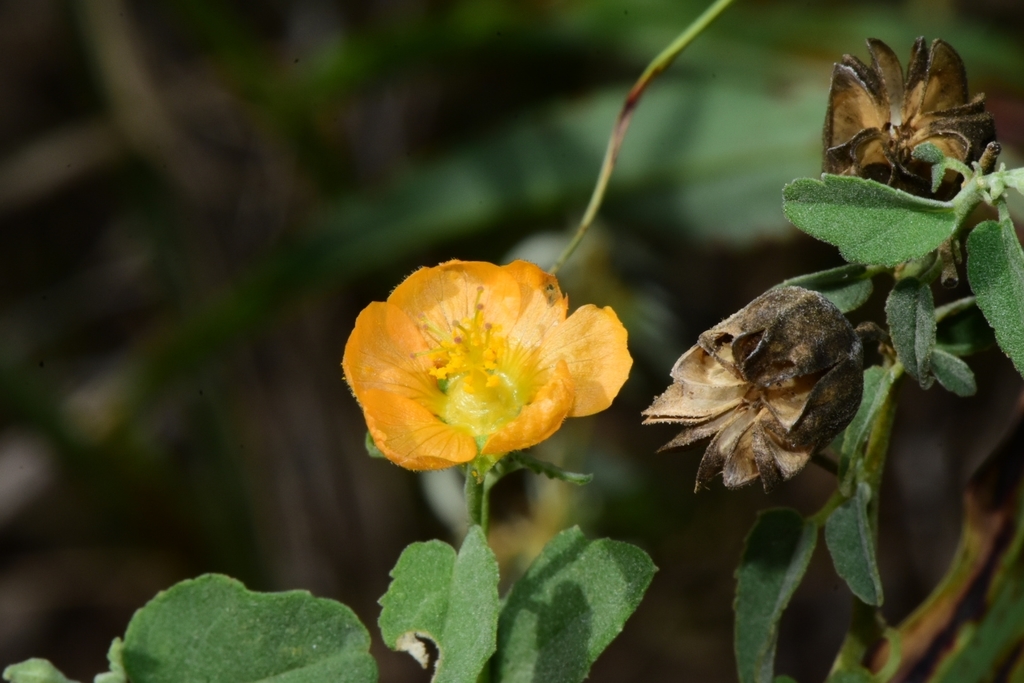
Look for a bushy, gray-green, softly hairy plant with alternate, heart-shaped, toothed leaves and solitary orange-yellow, five-petaled flowers held on stalks from the leaf axils, followed by round, segmented brown fruits.
Growth Form
A herbaceous perennial or subshrub with several stems from a woody base, much branched above, usually 2 to 3 feet tall and occasionally taller in sheltered spots. The whole plant is densely covered in tiny star-shaped (stellate) hairs, which give it a soft, grayish look and feel.
Leaves
The leaves are alternate, mostly ovate with a heart-shaped base and a pointed tip, irregularly toothed, thickish and velvety, up to about 4 inches long and smaller on the side branches. The undersides are paler and especially hairy.
Flowers
The flowers are borne singly on slender stalks in the leaf axils. Each is about ⅜ to 1 inch across, with five broad orange-yellow to golden petals and a central column of fused stamens, the hallmark of the mallow family. In Texas it flowers mainly from June through October, with the heaviest bloom after summer rains.
Fruit & Seeds
The fruit is a rounded, hairy schizocarp made of several wedge-shaped segments (mericarps) arranged like the sections of a tiny pumpkin. It ripens from green to dark brown and splits apart to release small, dark, kidney-shaped seeds.
Similar Species
Velvetleaf (Abutilon theophrasti), an introduced annual weed of fields, is much larger and coarser, with big, soft leaves and large, many-segmented pods. Other native Indian mallows in Texas, such as Wright’s Indian mallow (Abutilon wrightii) and hoary Indian mallow (Abutilon incanum), differ in leaf shape, hairiness and fruit details. Globemallows (Sphaeralcea) have deeply lobed leaves and often orange to salmon flowers in clusters.
Quick Facts
| Scientific Name | Abutilon fruticosum |
| Family | Malvaceae (mallow family) |
| Plant Type | Herbaceous perennial or subshrub |
| Mature Height | 2–3 ft |
| Mature Spread | 2–3 ft |
| Growth Rate | Moderate to fast |
| Sun Exposure | Full sun to part shade |
| Water Needs | Low; very drought tolerant |
| Soil Type | Dry, well-drained rocky, limestone, loam or sandy soils |
| Soil pH | About 7.0–8.5 (alkaline) |
| Bloom Time | June–October |
| Flower Color | Orange-yellow |
| Fall Color | None; gray-green foliage |
| Fruit | Round, hairy, segmented schizocarps |
| Deer Resistant | No; readily browsed |
| USDA Hardiness Zones | 8–10 |
Native Range
In the United States, sweet Indian mallow is native mainly to Texas, where it is common on the Edwards Plateau and the Balcones Escarpment, in the Rio Grande Plains of south Texas and in parts of west Texas. USDA PLANTS also records it in Oklahoma and Arkansas, where it is an outlying plant at the northern edge of its range. It continues south into northern Mexico.
Beyond North America, the same species is native across dry parts of Africa and southwestern and southern Asia, from the Arabian Peninsula to India. Few native Texas wildflowers have such a vast natural range.
It grows in dry, sunny or lightly shaded places: cliffs and rocky slopes, limestone outcrops, prairies, brushland and chaparral, and the edges of open woods. It is often found on thin, alkaline soils over limestone.
📋 Regional plant lists featuring Sweet Indian Mallow: Arkansas, Louisiana, Eastern Oklahoma & Eastern Texas · South & West Texas
Growing & Care Guide
Sweet Indian mallow is an easy, long-blooming native for hot, dry gardens in Texas and the southern Plains. It needs almost no care once established, and its soft gray leaves and orange-yellow flowers combine well with other Hill Country natives.
Light
It flowers best in full sun but also does well in part shade, such as the edge of a live oak canopy.
Soil & Water
Plant it in well-drained soil; rocky, gravelly, limestone and sandy soils are ideal, and it tolerates alkaline conditions. Water regularly for the first few months, then only during long droughts. It is very heat tolerant, and too much water makes it floppy.
Planting Tips
Use it in a dry border, on a rocky slope or along a fence line, spaced about 2 to 3 feet apart. It pairs well with Lindheimer senna, cedar sage and native grasses. In areas with many deer, protect young plants, since deer browse it readily.
Pruning & Maintenance
Cut it back by about half in late winter to keep it bushy, and remove any stems killed by hard freezes. It may self-sow lightly in open ground.
Propagation
Grow it from seed collected when the fruits turn brown. Nicking or briefly soaking the hard seeds in hot water helps them germinate. Sow in warm weather in spring or early summer. Softwood cuttings taken in late spring may also root.
Landscape Uses
- Xeriscapes: long summer bloom with little or no water
- Rock gardens and slopes: thrives in thin limestone soils
- Wildlife gardens: seeds for quail and songbirds, flowers for insects
- Butterfly gardens: a mallow-family nectar and host plant
- Native shrub borders: soft gray foliage among darker evergreens
Wildlife & Ecological Value
Sweet Indian mallow offers nectar in the hottest months, seeds in fall and browse for wildlife, which makes it a valuable plant in Texas brushlands.
For Pollinators
Native bees and butterflies visit the open, bowl-shaped flowers for pollen and nectar. Plants of the mallow family, including Indian mallows, are larval host plants for several butterflies, such as the gray hairstreak, painted lady and several skippers.
For Birds
The seeds are eaten by birds, including northern bobwhite quail, and the bushy plants give cover to ground-feeding birds.
For Mammals
It is readily eaten by deer, and by sheep and goats where they are raised, so it is considered good browse in Texas rangelands.
Ecosystem Role
As a deep-rooted, drought-hardy perennial of rocky slopes and limestone outcrops, it adds cover and food to brushland and savanna habitats and helps hold thin soils in place.
Cultural & Historical Uses
The genus name Abutilon comes from an old Arabic name for a mallow-like plant, and fruticosum means “shrubby,” for its woody base. The species was named by the French botanists Jean Baptiste Guillemin and Samuel Perrottet in their 1830s flora of Senegambia in West Africa, a reminder of how widely it is distributed.
Its Spanish common name in Mexico and Texas, pelotazo, is also used for other Indian mallows. In English, “Indian mallow” is a general name for the genus Abutilon, and “sweet” helps set this species apart from its relatives.
Sweet Indian mallow is a familiar plant along Hill Country trails, and the Lady Bird Johnson Wildflower Center recommends it for drought-tolerant, xeriscape plantings.
Frequently Asked Questions
Is sweet Indian mallow native to Texas?
Yes. USDA PLANTS lists it as native in the lower 48 states, mainly in Texas, with outlying records in Oklahoma and Arkansas. It is also native to northern Mexico, Africa and southwestern and southern Asia.
How tall does it get?
Usually 2 to 3 feet tall and about as wide, though plants in sheltered, moist spots can grow taller.
Is it a good plant for wildlife?
Yes. Its flowers attract bees and butterflies, mallow-family plants host several butterfly caterpillars, birds such as bobwhite quail eat the seeds, and deer browse the leaves.
Is sweet Indian mallow deer resistant?
No. Deer eat it readily. Protect young plants with a cage if deer are common in your area.
How is it different from velvetleaf?
Velvetleaf is a large introduced annual weed with big leaves and large pods. Sweet Indian mallow is a smaller, woody-based native perennial with smaller leaves, smaller orange-yellow flowers and small, round, segmented fruits.
