Green Needlegrass (Nassella viridula)
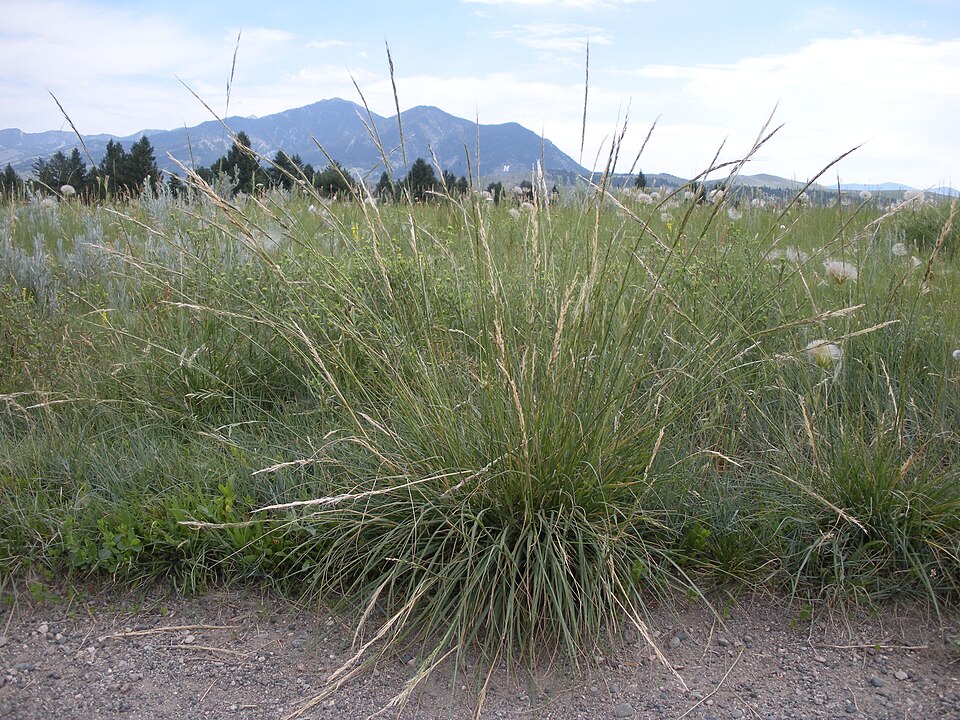
Nassella viridula (syn. Stipa viridula), commonly known as Green Needlegrass or Green Speargrass, is a graceful, cool-season bunchgrass native to the northern Great Plains and Rocky Mountain foothills — one of the most ecologically valuable and botanically distinctive grasses in Montana and Wyoming’s native flora. Growing in neat, dense tufts of fine, arching bright-green leaves surmounted by elegant, feathery seed heads adorned with long, twisted awns, Green Needlegrass is among the most recognizable and beautiful native grasses of the mixed-grass prairie and mountain grassland zones.
As a cool-season species, Green Needlegrass achieves its greatest growth and productivity in the cool, moist conditions of spring and early summer, typically going semi-dormant during the intense heat of midsummer before resuming active growth in late summer and early fall. This distinctive phenological pattern makes it an ecologically complementary companion to warm-season native grasses like Blue Grama and Buffalograss, which peak in midsummer when needlegrass is resting. A well-planned native grass mix that includes both cool-season and warm-season species ensures productive ground cover, soil protection, and wildlife habitat structure throughout the entire growing season.
Green Needlegrass’s combination of palatability to livestock and wildlife, high forage quality, and ecological benefits has made it one of the most important native range grasses of the northern Great Plains. It is a preferred forage species for cattle, horses, pronghorn antelope, mule deer, and elk, providing high-quality nutrition during the spring and fall growing seasons when its protein content peaks. Its value in restoration plantings, rangeland improvement, and native grass mixtures has been extensively documented by range scientists and land managers throughout the region.
Identification
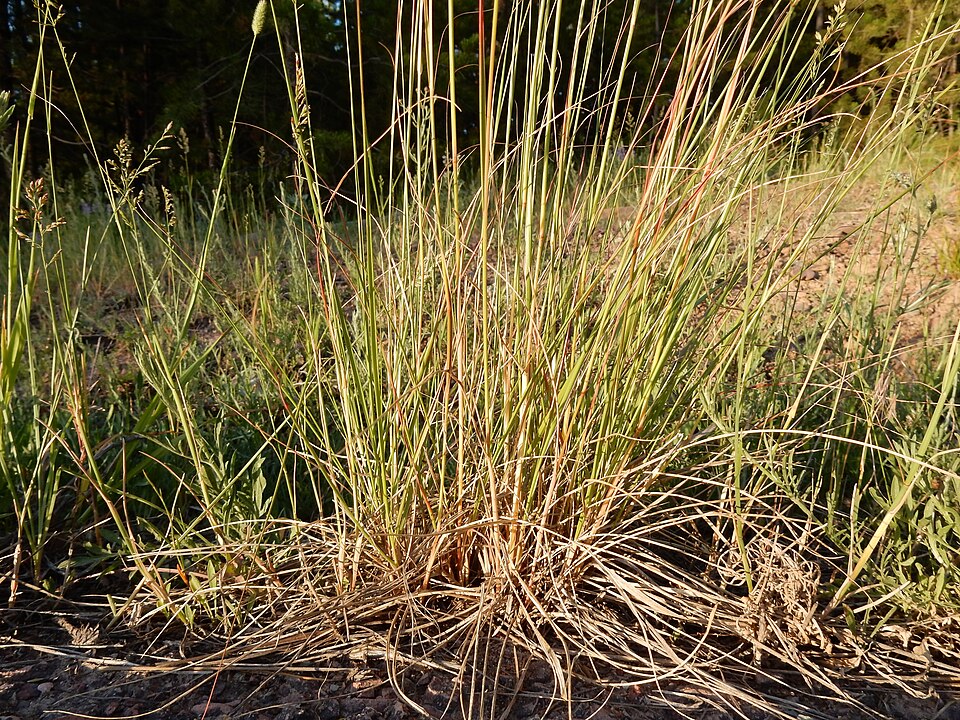
Green Needlegrass is a densely tufted, perennial bunchgrass growing 1 to 3 feet tall from a deep, fibrous root system. Unlike sod-forming grasses, it does not spread by stolons or rhizomes — it persists as an expanding clump and reproduces primarily by seed. The plant forms a neat, well-defined tuft that gradually becomes wider with age, creating the characteristic “bunchgrass” appearance of northern mixed-grass prairie communities. It is distinguishable from other needlegrasses by its distinctly bright green (not bluish-gray or straw-colored) foliage, relatively long leaves, and strongly twice-bent awns.
Leaves & Stems
The leaves are narrow (1 to 2 mm wide), flat or slightly rolled when dry, and bright green to medium green — the characteristic that gives the grass its common name. Leaves reach 8 to 16 inches long and have a soft, slightly rough texture from fine surface hairs. The ligule (the membrane at the junction of the leaf sheath and blade) is prominently membranous — an important technical identification feature that distinguishes Nassella viridula from similar species. Stems (culms) are erect, slender, smooth, and typically 18 to 36 inches tall, with 3 to 5 nodes, bearing open, nodding panicles at their tips.
Seed Heads (Panicles)
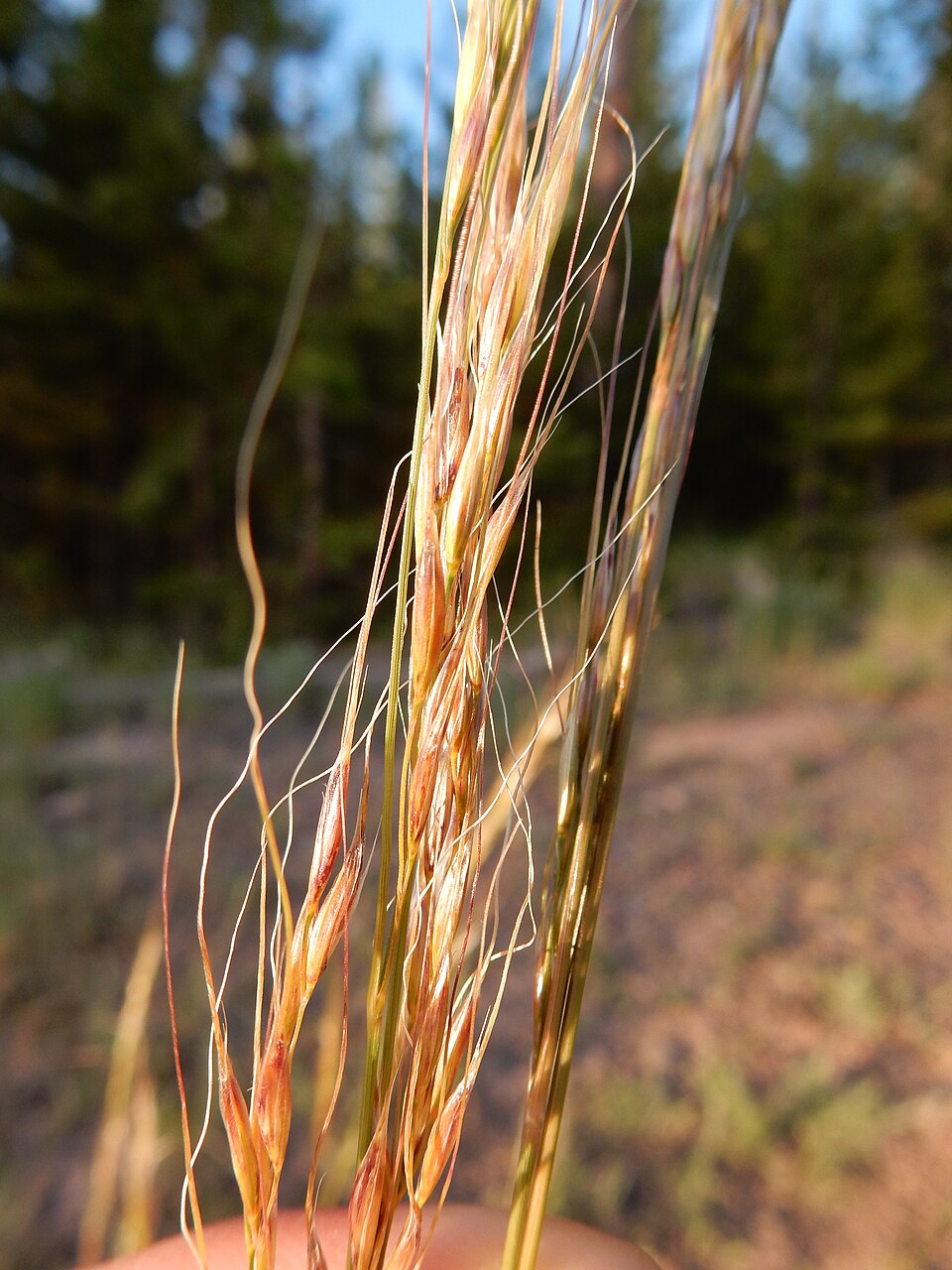
The seed heads are the plant’s most visually striking feature: open, nodding panicles 4 to 10 inches long, with the characteristic long, twisted awns that give the plant its “needlegrass” common name. Each seed (lemma) bears a single awn that is 1 to 2.5 inches long, twice-bent (with a knee-like bend), and strongly twisted in the lower portion. As the awns cycle through wet-dry periods, they twist and untwist hygroscopically, drilling the sharp-pointed seed into the soil — a sophisticated, self-planting dispersal mechanism. The seed heads emerge in late May and June, transitioning from bright green to a golden tan as they ripen and shed through July.
Quick Facts
| Scientific Name | Nassella viridula (syn. Stipa viridula) |
| Family | Poaceae (Grass) |
| Plant Type | Cool-Season Perennial Bunchgrass |
| Mature Height | 1–3 ft |
| Sun Exposure | Full Sun to Part Shade |
| Water Needs | Low to Moderate |
| Bloom / Seed Heads | May – July |
| Foliage Color | Bright green (spring/fall); dormant buff-tan (midsummer) |
| USDA Hardiness Zones | 3–8 |
Native Range
Green Needlegrass is native to the northern Great Plains and Rocky Mountain foothills, with its primary range centered in Montana, Wyoming, North Dakota, South Dakota, Nebraska, Colorado, and Idaho. It extends north into the prairie provinces of Canada (Alberta, Saskatchewan, and Manitoba) and occurs marginally in Oregon and Minnesota. The species is most abundant in the mixed-grass and mountain grassland zones, particularly in areas receiving 10 to 20 inches of annual precipitation, where it occupies a preferred niche on well-drained soils with moderate moisture availability.
Within the northern Rockies region, Green Needlegrass occurs from valley bottoms and plains upward through the foothills and into the montane zone, growing on well-drained loamy to sandy soils. It is characteristic of northern mixed-grass prairie communities and mountain grasslands, occupying a somewhat moister ecological niche than the most drought-tolerant shortgrass prairie species. It grows well in the transitional zone between shortgrass prairie and mixed-grass prairie, particularly on north-facing slopes and valley floors where moisture accumulates between rain events.
In Montana and Wyoming, Green Needlegrass is a key component of the native mixed-grass prairie communities that once covered millions of acres east of the Continental Divide. It commonly grows with Western Wheatgrass, Bluebunch Wheatgrass, Blue Grama, and Sandberg Bluegrass. Although much of the original mixed-grass prairie has been converted to cropland or replaced by introduced grasses such as Crested Wheatgrass and Smooth Brome, Green Needlegrass remains common on native rangeland, road rights-of-way, and areas managed for native vegetation throughout the region.
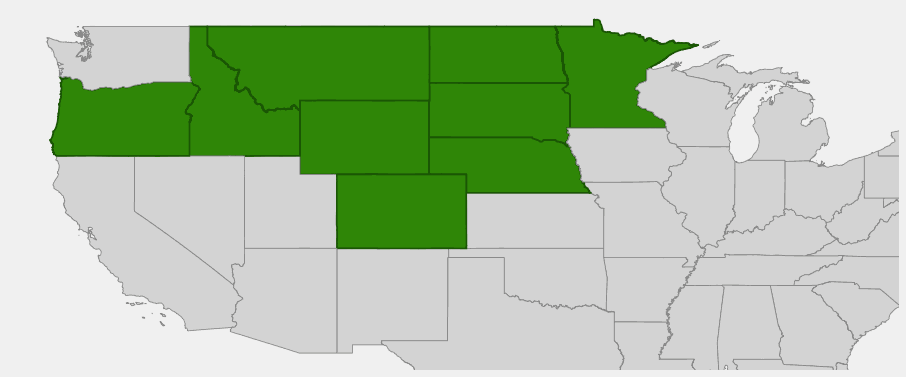
📋 Regional plant lists featuring Green Needlegrass: Montana & Wyoming
Growing & Care Guide
Green Needlegrass is an adaptable and relatively easy grass to establish in gardens and restoration plantings, provided it receives adequate sunlight and is planted in well-drained soil. As a cool-season grass, it is best established by fall seeding, which allows seeds to undergo natural cold stratification over winter for vigorous spring germination. It is an excellent component of native grass seed mixes for prairie gardens, restoration projects, and low-maintenance landscapes throughout the northern Rockies.
Light
Green Needlegrass thrives in full sun to partial shade, making it more versatile than many native grasses that demand full sun. It tolerates 3 to 4 hours of shade per day, which makes it useful at the edges of tree plantings and on north-facing slopes where full-sun grasses decline. However, for best growth, seed production, and natural bunchgrass structure, plant in full sun locations. In moderate shade, it grows taller and more open but remains healthy and ecologically functional.
Soil & Water
Green Needlegrass adapts well to a range of well-drained soils — from sandy loams and rocky substrates to moderately clayey soils. It does not tolerate waterlogged or poorly drained conditions. Once established, it has low to moderate water needs and tolerates dry periods well, though it grows most vigorously in areas receiving 12 to 20 inches of annual precipitation. As a cool-season grass, it uses most of its water during the spring and fall growing seasons; summer irrigation, if provided, should be minimal to prevent stress on the resting plant.
Planting Tips
Fall planting (September–October) is strongly preferred for direct seeding, as seeds benefit from cold stratification over winter. Alternatively, seeds can be cold-stratified (30–60 days at 35–40°F in moist medium) before spring planting. Seed at 4 to 6 pounds of pure live seed per acre in a native grass mix, or more densely in small garden areas. Weed control during the first two growing seasons is critical — slow-establishing native grasses are vulnerable to competition from weedy annual grasses (particularly cheatgrass) and broadleaf weeds. The plant list source notes that Green Needlegrass performs best in a mix with other cool-season grasses such as Bluebunch Wheatgrass, Sandberg Bluegrass, and Idaho Fescue, which provide complementary structural diversity.
Pruning & Maintenance
Green Needlegrass is essentially maintenance-free once established. An occasional prescribed burn or mow in early spring every 3 to 5 years removes accumulated thatch and stimulates new growth, mimicking the historic fire and grazing regime of native prairie. Take note that the sharp-awned seeds can penetrate skin, clothing, and the ears and skin of dogs and other animals — use gloves when working around mature seed heads, and check pets after walks through needlegrass areas.
Landscape Uses
- Native grass seed mixes — excellent complement to warm-season grasses for continuous seasonal cover
- Prairie and meadow restoration — a key component of northern mixed-grass prairie seed mixes
- Ornamental grass planting — elegant seed heads provide textural interest in designed landscapes
- Erosion control — deep fibrous root system holds soil on dry, rocky slopes and hillsides
- Wildlife plantings — provides important nesting cover and seed resources for prairie birds
- Rangeland improvement — reseeding degraded rangeland with Green Needlegrass improves forage quality
Wildlife & Ecological Value
Green Needlegrass is an important contributor to prairie wildlife habitat, providing high-quality forage, structural cover, and ecological diversity as a characteristic bunchgrass of the northern mixed-grass prairie community.
For Birds
The seeds of Green Needlegrass are consumed by Horned Larks, Savannah Sparrows, Grasshopper Sparrows, Chestnut-collared Longspurs, and other prairie bird species. The dense, clumping growth habit provides both nesting cover and escape cover for ground-nesting birds, including Bobolinks, Western Meadowlarks, and several sparrow species. The structural complexity created by mixed bunchgrass stands — with their pattern of upright clumps interspersed with open ground — is the preferred habitat structure for many grassland bird species of conservation concern, providing the heterogeneity that allows them to forage and nest simultaneously within a small territory.
For Mammals
Green Needlegrass is highly palatable and nutritious to a wide range of large mammals when grazed during the spring and fall growing seasons, when protein content is highest. Cattle and horses readily select it from among other forage grasses. Pronghorn antelope, mule deer, and elk graze it preferentially during the cool growing seasons. Prairie dogs also consume it. Notably, the sharp awns can cause eye, mouth, and skin injuries to livestock if grazed after seed maturity — ranchers managing native grasslands are advised to rotate grazing away from needlegrass-dominated areas during the midsummer seed-dispersal period.
Ecosystem Role
As a deep-rooted bunchgrass, Green Needlegrass makes significant contributions to soil health and carbon sequestration in northern Great Plains grasslands. Its clumping growth form creates structural diversity at the soil surface, providing micro-habitat for ground beetles, ants, spiders, and the small mammals that feed on them. The spaces between bunches create unique micro-habitats for wildflowers, lichens, and mosses that cannot compete within the dense sod of shortgrass prairie. Like all native bunchgrasses, it builds soil organic matter slowly but persistently over decades, contributing to the deep, carbon-rich prairie soils that have made the northern plains agriculturally productive.
Cultural & Historical Uses
Needlegrasses, including Green Needlegrass, were important forage plants for the horses of Plains Indian peoples, and their distribution was well-known to those whose mobility depended on finding abundant, nutritious grass. Several First Nations peoples across the northern plains and Rocky Mountain region used grasses including needlegrasses for weaving, basket-making, and thatching, though specific ethnobotanical records for Nassella viridula are limited. The plant’s unique self-burying seeds — drilling themselves into the soil by the hygroscopic action of their awns — were a source of fascination and scientific interest to early explorers and naturalists of the region.
Early Euro-American explorers and government surveyors in Montana and Wyoming consistently rated Green Needlegrass among the highest-quality native forage grasses of the northern plains. Government range surveys from the late 19th and early 20th centuries repeatedly noted its superior palatability and nutritional quality compared to tougher range grasses. The conversion of millions of acres of native mixed-grass prairie to wheat and other crops in the early 20th century dramatically reduced Green Needlegrass abundance, and the introduction of Crested Wheatgrass — an aggressive Eurasian grass promoted by government agencies for its ease of establishment and productivity — displaced large areas of native mixed-grass prairie including Green Needlegrass stands.
In the contemporary conservation landscape, Green Needlegrass has gained important attention from range ecologists and restoration practitioners seeking to restore native diversity to degraded rangeland in the northern Rockies. Conservation programs such as the USDA Conservation Reserve Program (CRP) now routinely include it in agency-approved native seed mixes for rangeland reclamation, and it is increasingly available from native plant seed suppliers throughout the region. Its importance in the historical ecology of the northern plains has also generated interest from carbon farming researchers studying the carbon sequestration potential of native grass restoration.
Frequently Asked Questions
How is Green Needlegrass different from other needlegrasses in Montana and Wyoming?
Several Nassella species occur in the region, including Nassella comata (Needle-and-Thread Grass) and Nassella thurberiana (Thurber’s Needlegrass). Green Needlegrass is distinguished by its distinctly bright green (rather than gray-green or blue-green) foliage, somewhat longer and more lax leaves, somewhat larger seed heads, and its preference for slightly moister conditions than the more drought-adapted species. Nassella comata has much longer awns (3–6 inches) and a preference for drier, sandier soils.
Are the awns dangerous to pets or livestock?
Yes — the sharp-pointed awns can penetrate skin, eyes, and mucous membranes of animals and people. They are a recognized veterinary hazard for dogs and livestock, particularly when seeds are mature and dry. Check dogs’ fur, ears, and paws after walks through needlegrass areas during the summer seeding season. For livestock management, avoid grazing needlegrass-dominated areas after seeds have fully matured.
Why is it recommended to use Green Needlegrass in a mix with other grasses?
Green Needlegrass tends to establish better and maintain greater long-term stability when planted with companion grasses. Mixed grass communities are more resilient to weed invasion and maintain ground cover through the full growing season — Green Needlegrass peaks in spring, while warm-season grasses like Blue Grama peak in summer. Diverse grass communities also provide better wildlife habitat structure than monocultures of any single species.
Does Green Needlegrass need mowing?
No — it thrives without mowing and is best left to grow and set seed naturally in native plantings. The dead stems and seed heads remain attractive through fall and winter. In designed landscapes where a neater appearance is desired, cut back dead stems in late winter before spring green-up. Periodic prescribed burning or mowing every few years prevents excessive thatch accumulation and maintains stand vigor.
Can I use Green Needlegrass as a turf substitute?
Its upright, clumping habit does not form the uniform, continuous sod expected of a conventional lawn, so it is not typically used as a direct turf substitute. It is far better suited to naturalistic prairie and meadow plantings where a textured, informal, wildlife-friendly appearance is desired. For a native turf grass alternative, Buffalograss is the more appropriate choice for Montana and Wyoming.