
Orange Agoseris (Agoseris aurantiaca)
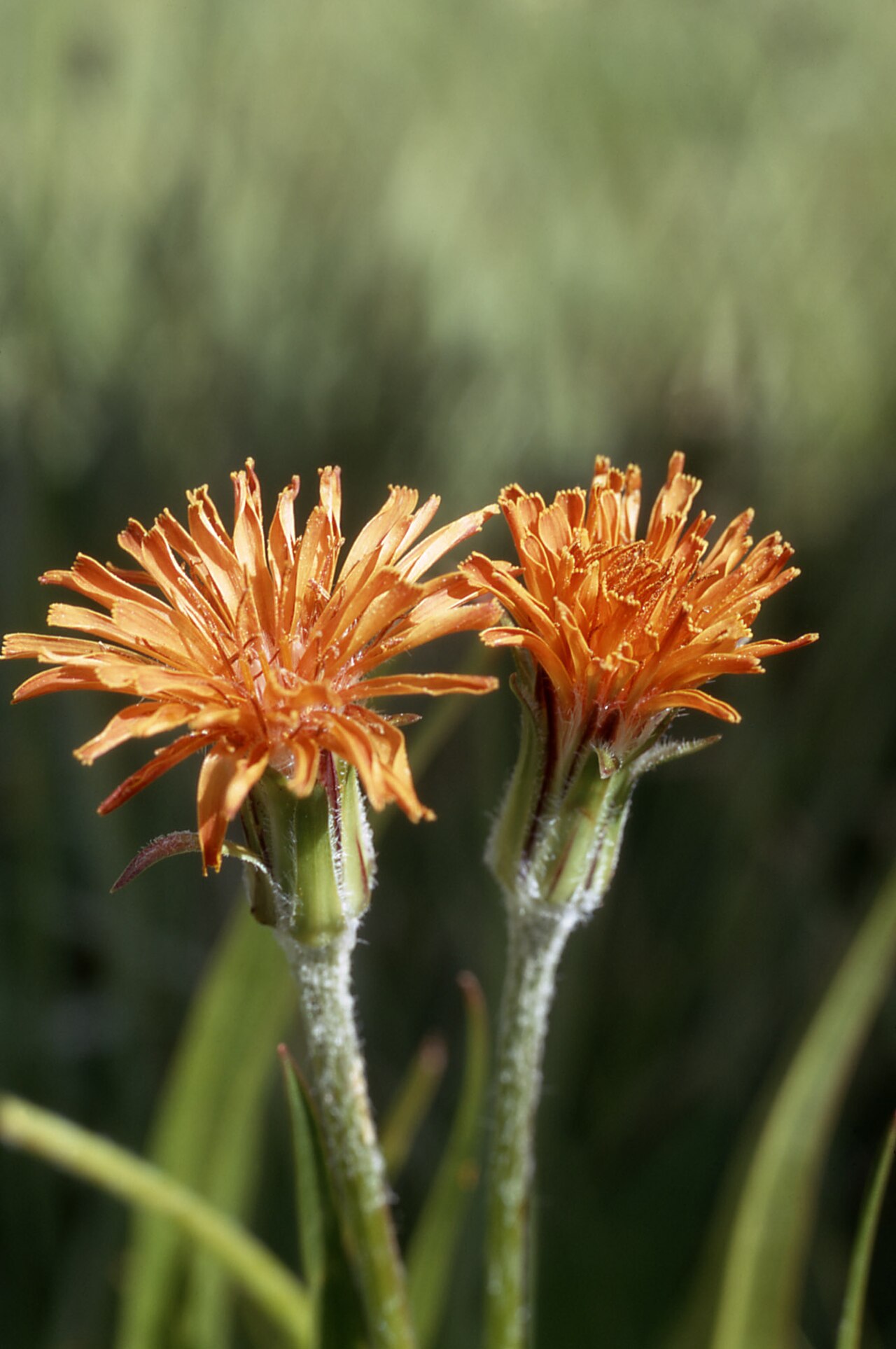
Agoseris aurantiaca, known as Orange Agoseris, orange mountain dandelion or orange false dandelion, is a perennial wildflower of mountain meadows in western North America. It belongs to the aster family (Asteraceae) and looks much like a slender dandelion: a rosette of narrow basal leaves, milky sap, and leafless stalks topped by single flower heads made only of strap-shaped florets. What sets it apart is the color. Its heads are a deep burnt orange to coppery red, often aging to pink or purple, and it is the only orange-flowered Agoseris.
Orange agoseris grows from Alaska and Yukon south through the Rocky Mountains, the Cascades and the Sierra Nevada to Arizona and New Mexico, mostly in moist to fairly dry meadows, grassy openings in conifer forests and subalpine slopes. It blooms in mid to late summer, when many mountain meadows are at their peak, and its seeds are carried on parachutes of white bristles like those of a dandelion.
It is not a common nursery plant, but it is a charming addition to a mountain or high-elevation meadow garden, where its rare orange tone mixes well with blue lupines, purple fleabanes and red paintbrushes. Grow it from seed collected responsibly or bought from a native seed supplier rather than digging wild plants, which have a deep taproot and rarely survive transplanting.
Identification
Look for a dandelion-like plant with milky sap, narrow, mostly untoothed basal leaves and single burnt-orange flower heads on bare stalks in western mountain meadows.
Growth Habit
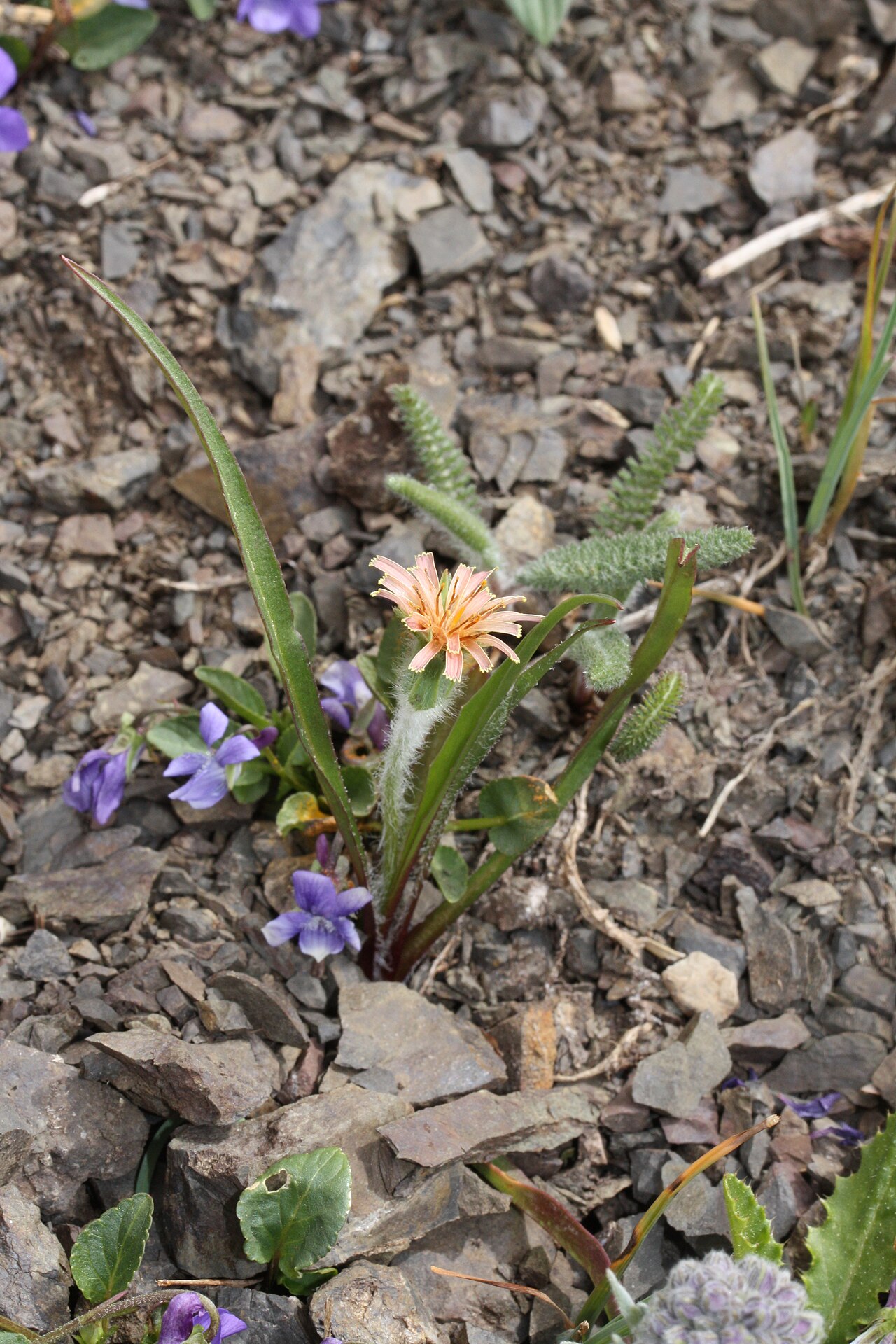
Orange agoseris is a taprooted perennial herb. Each plant forms a basal rosette of leaves and sends up one to several leafless flowering stalks (scapes), usually 4 to 24 inches tall. The stalks are often hairy near the top, just under the head. All parts contain a milky latex that oozes when the plant is broken.
Leaves
The leaves are all basal, erect to spreading, about 2 to 14 inches long and narrow, linear to oblanceolate. Their edges are usually smooth or have a few widely spaced teeth or narrow lobes. They are green and smooth to slightly hairy, sometimes with a grayish cast.
Flower Heads
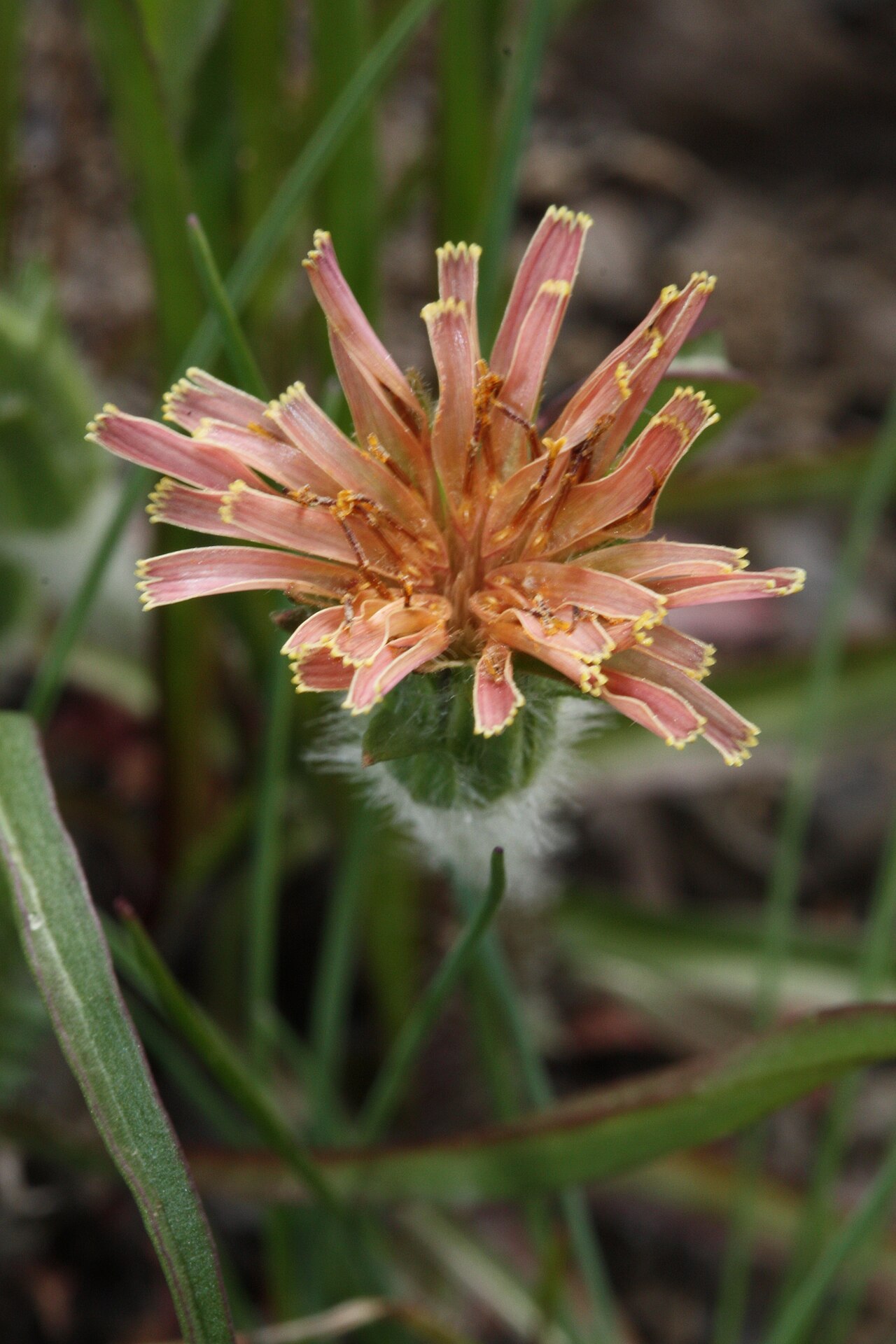
Each stalk carries a single head about 1 to 1 1/2 inches across. Like a dandelion, the head has only strap-shaped ray florets and no central disk. The florets are typically burnt orange to coppery, occasionally yellowish or pink, and they often turn pink, purple or reddish as they wither. The bracts (phyllaries) under the head are green, lance-shaped, in two to four rows, and often marked with purple spots or blotches. It blooms mainly from June to August.
Seeds
After flowering, the head forms a round seed head. Each seed (achene) has a slender beak about as long as or longer than the body, topped by a tuft of white, hair-like pappus bristles that carry it on the wind.
Varieties
Two varieties are usually recognized. Variety aurantiaca is the widespread orange-flowered form. Variety purpurea has pinkish to purple florets and grows in the southern Rocky Mountains and the Southwest. Some botanists treat it as a separate species.
Look-alikes
Orange hawkweed (Pilosella aurantiaca), a European weed of fields and roadsides, also has orange flowers, but it carries several small heads in a cluster on each stalk and spreads by runners. Orange agoseris has one larger head per stalk and no runners. Pale agoseris (Agoseris glauca) has yellow flowers. Other hawkweeds, such as white hawkweed, have leafy stems and many small heads.
Quick Facts
| Scientific Name | Agoseris aurantiaca |
| Family | Asteraceae (aster family) |
| Plant Type | Herbaceous perennial wildflower |
| Mature Height | 4–24 in |
| Mature Spread | 4–10 in |
| Growth Rate | Moderate |
| Sun Exposure | Full sun to part shade |
| Water Needs | Medium; moist to moderately dry |
| Soil Type | Well-drained loam, gravelly or rocky meadow soil |
| Soil pH | Slightly acidic to neutral (about 5.5–7.5) |
| Bloom Time | June–August |
| Flower Color | Burnt orange to coppery, aging pink or purple |
| Fall Color | None notable |
| Fruit | Beaked achenes with white bristles, in a round seed head |
| Deer Resistant | No; grazed by deer, elk and livestock |
| USDA Hardiness Zones | 3–8 |
Native Range
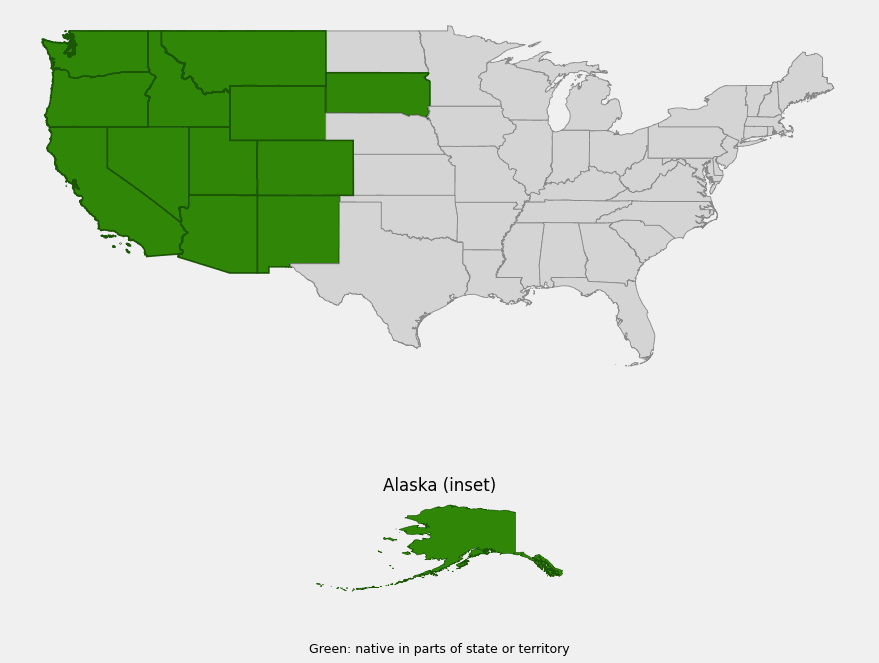
Orange agoseris is native to western North America. USDA PLANTS lists it as native in 13 states: Alaska, Arizona, California, Colorado, Idaho, Montana, Nevada, New Mexico, Oregon, South Dakota, Utah, Washington and Wyoming. In Canada it grows in British Columbia, Alberta, Yukon and the Northwest Territories, with an isolated eastern occurrence recorded in Quebec.
It is most common in the Rocky Mountains from Alberta and Montana south to Colorado, northern New Mexico and the mountains of Arizona, and in the Cascades, Olympic Mountains, Blue and Wallowa Mountains and the Sierra Nevada. It reaches the Great Basin ranges of Nevada and Utah and the Black Hills of western South Dakota, and it extends north into southern and interior Alaska. In Oregon and Washington it grows on both sides of the Cascades, mainly at middle to high elevations.
Typical habitats are mountain meadows, grassy openings and clearings in conifer forests, aspen groves, subalpine slopes and rocky ridges, from mid elevations to above treeline. It grows in moist meadow soils as well as in drier, gravelly sites, and it often shows up after disturbance such as logging or fire.
📋 Regional plant lists featuring Orange Agoseris: Idaho, Eastern Oregon & Eastern Washington · Montana & Wyoming · Utah & Western Colorado · Arizona & New Mexico · Alaska · North Dakota, South Dakota & Western Minnesota · Western Oregon & Western Washington · California & Nevada
Growing & Care Guide
Orange agoseris is a plant for gardeners in the mountain West and other cool-summer regions. It wants sun, good drainage and a cold winter, and it does best when grown from seed in place, because its taproot resents being moved.
Light
Full sun to light shade. In the wild it grows in open meadows and in forest clearings with a few hours of shade. In hot, low-elevation gardens give it afternoon shade, but expect it to struggle where summers are long and humid.
Soil & Water
Plant in well-drained loam or gravelly soil with average fertility. It tolerates a range of moisture, from moist meadows to fairly dry slopes, but not standing water or heavy, wet clay in winter. Water seedlings and first-year plants during dry spells. Established plants need little extra water in cool climates.
Planting Tips
Sow seed outdoors in fall, or give it 30 to 60 days of cold, moist stratification before spring sowing. Press the seed lightly into the surface. Plants usually flower in their second or third year. Grow it in a meadow-style planting with bunchgrasses and other mountain wildflowers rather than in a rich, crowded border, where taller plants shade it out. Do not dig plants from the wild.
Pruning & Maintenance
Little care is needed. Leave some seed heads to ripen if you want plants to self-sow. Remove competing weeds while plants are young, and cut back old flowering stalks in fall if they look untidy.
Propagation
Propagate from seed. Collect the seed heads when they open into fluffy balls in late summer, store the seed dry, and sow it in fall or after cold stratification. Mature plants have a deep taproot and do not divide well.
Landscape Uses
- Mountain meadow gardens: rare orange color among blue, purple and red wildflowers
- Rock gardens: a compact rosette for sunny, gravelly pockets
- Pollinator plantings: summer nectar and pollen for bees and flies
- Restoration: native forb for subalpine meadows and disturbed forest openings
- High-elevation landscapes: hardy where summers are short and cool
Wildlife & Ecological Value
Orange agoseris is a small but useful part of the summer meadow community in western mountains.
For Pollinators
Its flower heads are visited by native bees, including small sweat bees and mining bees, as well as hover flies, other flies and butterflies, which collect nectar and pollen.
For Birds
Seed-eating birds such as finches and sparrows may pick at the seeds, and grouse feed on the leaves and flowers of many meadow forbs, including dandelion relatives.
For Mammals
Deer, elk, mountain goats and domestic sheep and cattle graze the leaves and flower heads. Small mammals such as ground squirrels and pocket gophers also feed on the foliage and roots.
Ecosystem Role
It is a typical forb of montane and subalpine meadows and helps recolonize openings after fire, logging or other disturbance. Its wind-borne seeds let it reach new open patches quickly.
Cultural & Historical Uses
The genus name Agoseris comes from Greek words meaning “goat chicory,” and the species name aurantiaca means “orange.” The plant is often called mountain dandelion or false dandelion because of its close resemblance to the common dandelion.
Several Indigenous peoples of the West chewed the dried milky latex of Agoseris species as a gum, and some groups used the plants as food or medicine. These uses varied from group to group, and the plant should not be eaten or used as a home remedy without expert knowledge.
Mary Vaux Walcott painted orange agoseris for her early 20th-century series on North American wildflowers, published by the Smithsonian Institution. Today it is a familiar sight for hikers in places such as Glacier, Mount Rainier and Rocky Mountain national parks.
Frequently Asked Questions
Is orange agoseris a dandelion?
No, but it is a close relative in the same tribe of the aster family. Like a dandelion, it has milky sap, basal leaves and heads made only of strap-shaped florets, but it is a native western wildflower with orange flowers.
How do I tell orange agoseris from orange hawkweed?
Orange agoseris has one large head on each leafless stalk. Orange hawkweed, a non-native weed, has a cluster of several smaller heads on each stalk, very hairy leaves and spreads by runners.
When does orange agoseris bloom?
Mainly from June to August, depending on elevation. Plants at high elevations bloom later in the summer.
Can I grow orange agoseris in my garden?
Yes, in cool-summer areas with well-drained soil and sun. Grow it from seed. It is less successful in hot, humid lowland gardens.
Why do some orange agoseris flowers look pink?
The florets often fade to pink or purplish as they age, and the variety purpurea of the southern Rockies has pink to purple flowers.

Looking for a nursery that carries Orange Agoseris?
Browse our native plant nursery directory: Alaska & Arizona · California · Colorado · Idaho · Montana · Nevada & New Mexico · Oregon · South Dakota & Utah · Washington · Wyoming

