
Male Fern (Dryopteris filix-mas)
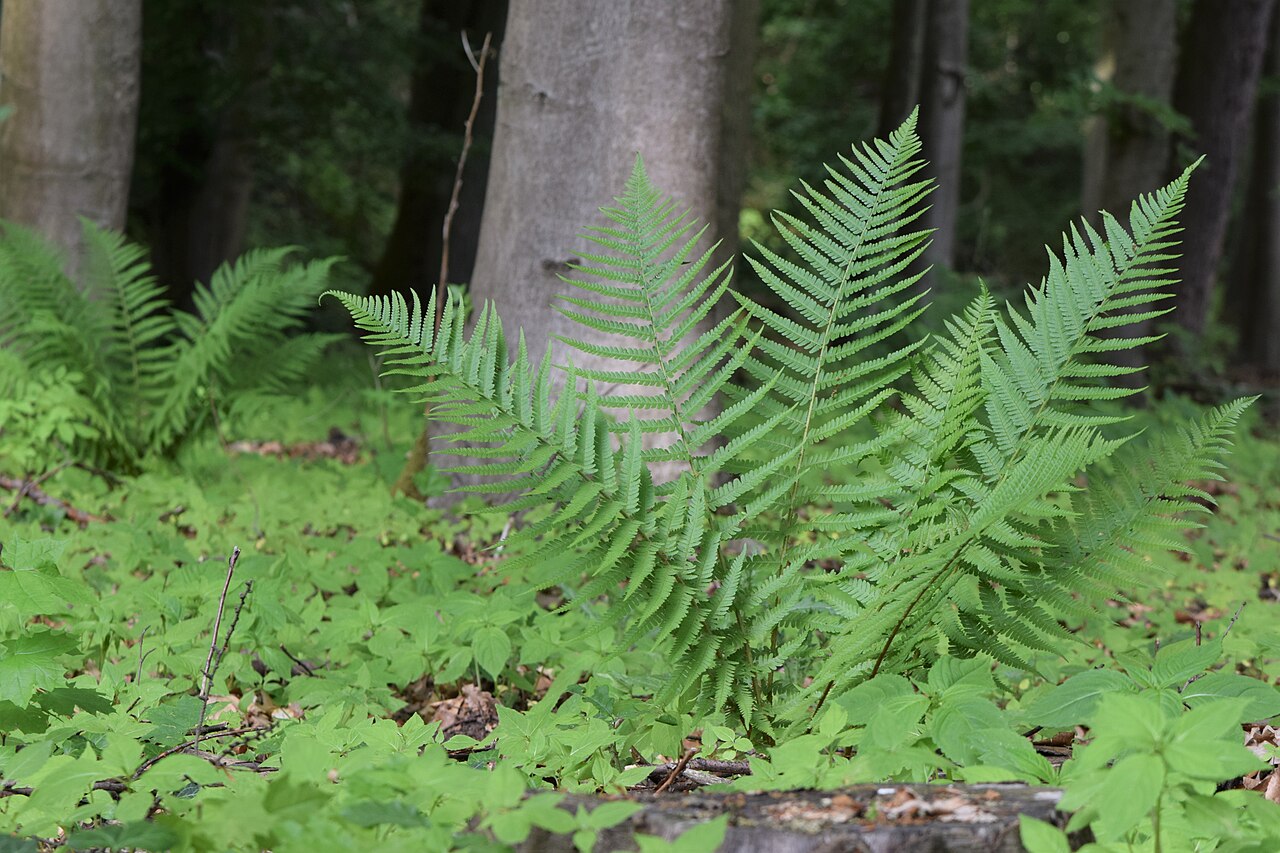
Dryopteris filix-mas, the Male Fern or male wood fern, is a large, robust wood fern that forms upright, vase-shaped clumps of tapering fronds 1½ to 4 feet tall. It is one of the most familiar ferns of Europe, where it grows in almost every shady woodland, and it is a classic garden fern on both sides of the Atlantic. In North America it is native but much less common, with an unusual, scattered distribution in the western mountains, around the Great Lakes and in northern New England.
The odd name comes from old herbal tradition. Its sturdy, coarse fronds were thought of as “male” in contrast to the delicate lady fern (Athyrium filix-femina), which often grows nearby. Filix-mas is simply Latin for “male fern.”
Male fern is also a historically important and toxic medicinal plant. For centuries its rhizome was used to expel tapeworms, and doses that killed the worms could also poison the patient. This guide covers identification, the native North American range, how to grow it as a tough, shade-loving garden fern, and the safety facts behind its history.
Identification
Male fern looks like several other large wood ferns. The best features to check are the cut of the fronds, the scales on the stalk, and the position of the round spore dots on the underside.
Fronds
The fronds rise in a circle from a stout crown, forming a “shuttlecock” clump. Each frond is lance-shaped, broadest in the middle and tapering at both ends, usually 1½ to 4 feet long and 8 to 12 inches wide. The blade is pinnate-pinnatifid: divided into 20 to 35 pairs of narrow leaflets (pinnae), each cut almost to the midrib into oblong, round-tipped segments with small teeth. The lowest pinnae are noticeably shorter than those in the middle. Fronds are deciduous to semi-evergreen and stay green into late fall, persisting longer in mild winters.
Stalk & Rhizome
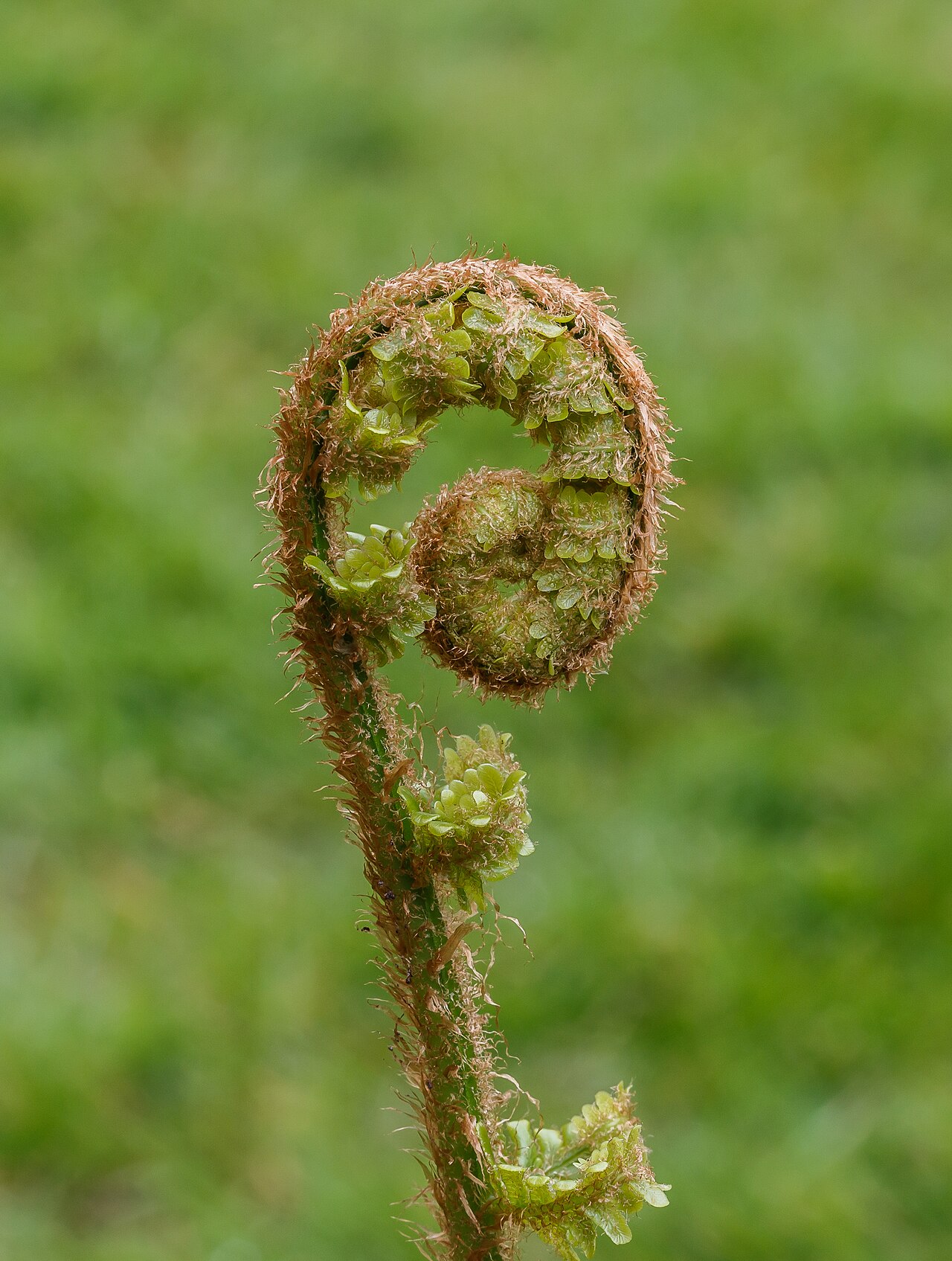
The leaf stalk (stipe) is short, usually a quarter to a third the length of the blade, and is densely covered with pale tan to light brown scales of two sizes: broad scales mixed with narrow, hair-like ones. The rhizome is thick, short and upright or creeping slightly, crowded with old leaf bases. New fronds unroll in spring as scaly fiddleheads.
Spores
Round spore dots (sori) form in two rows on the underside of the upper pinnae, about halfway between the midvein and the margin of each segment. Each sorus is covered when young by a kidney-shaped flap (indusium). Spores ripen in mid to late summer.
Look-alikes
Marginal wood fern (D. marginalis) has sori right at the edges of the segments and scales of one size. Goldie’s wood fern (D. goldiana) has much broader fronds that narrow abruptly at the tip. The European golden-scaled male fern (D. affinis), common in gardens, has a dark spot where each pinna joins the main stalk and more evergreen fronds. Rare hybrids between male fern and other wood ferns are known, including one with Clinton’s wood fern in Vermont.
Quick Facts
| Scientific Name | Dryopteris filix-mas (North American native plants: subsp. brittonii) |
| Family | Dryopteridaceae (wood fern family) |
| Plant Type | Large clump-forming fern; deciduous to semi-evergreen |
| Mature Height | 1½–4 ft |
| Mature Spread | 2–3 ft |
| Growth Rate | Moderate |
| Sun Exposure | Part shade to full shade |
| Water Needs | Moderate; tolerates dry shade once established |
| Soil Type | Humus-rich loam; rocky woodland soils, talus and crevices |
| Soil pH | About 5.0–7.5 (tolerates mildly alkaline soil) |
| Bloom Time | None (spores ripen July–September) |
| Flower Color | None; reproduces by spores |
| Fall Color | Fronds yellow-green to tan late in fall |
| Fruit | None; sori with kidney-shaped indusia on frond undersides |
| Deer Resistant | Yes; rarely browsed |
| USDA Hardiness Zones | 4–8 |
Native Range
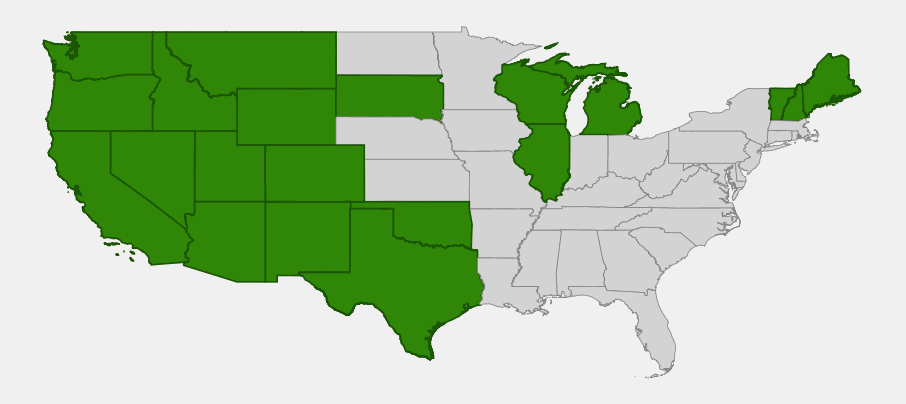
Male fern grows across Europe and much of temperate Asia, and in North America it has a patchy native range. In the West it occurs from British Columbia and Alberta south through the mountains of Washington (on both sides of the Cascades), Oregon, Idaho, Montana and Wyoming, the Black Hills of South Dakota, and the Rocky Mountains of Utah, Colorado, Arizona and New Mexico, with outlying records in Nevada, West Texas and California. In California it is known from only a few cold, rocky mountain sites, including the White Mountains on the Nevada border, and the Lady Bird Johnson Wildflower Center notes a disjunct station in southern California.
In the East it grows around the Great Lakes, in Michigan, Wisconsin, Illinois and Ontario, and in a few rich, rocky forests of Maine, New Hampshire and Vermont, as well as in New Brunswick, Nova Scotia and Newfoundland. Native Plant Trust’s Go Botany identifies the native North American plants as subsp. brittonii. European male fern has also escaped from gardens in some places. NatureServe treats it as introduced in New York and Rhode Island, so those states are left off the map.
It is rare in many of these states. Go Botany lists it as Endangered in Maine and New Hampshire (both S1) and Threatened in Vermont (S2). NatureServe ranks it as critically imperiled (S1) in Illinois, Wisconsin, Nevada and Texas, imperiled (S2) in California, and historical (SH) in Oklahoma, where the record is an outlying one.
📋 Regional plant lists featuring Male Fern: Western Oregon & Western Washington · Idaho, Eastern Oregon & Eastern Washington · California & Nevada · Arizona & New Mexico · Utah & Western Colorado · Montana & Wyoming · North Dakota, South Dakota & Western Minnesota · South & West Texas · Illinois, Iowa & Missouri · Michigan, Wisconsin & Eastern Minnesota · New Hampshire, Maine & Vermont
Growing & Care Guide
Male fern is one of the easiest and toughest ferns for shade gardens. Many cultivars, including crested and narrow-fronded forms, are sold, and most garden plants are of European origin. For a native planting within its range, look for nursery-propagated plants of North American origin. In New England and other states where it is rare, never dig it from the wild.
Light
Part shade to full shade. It tolerates more sun than most ferns if the soil stays moist, but fronds scorch in hot afternoon sun.
Soil & Water
It grows best in moist, humus-rich, well-drained soil, but it tolerates a wide range, from acidic loam to rocky, slightly alkaline soil. Once established it is one of the more drought-tolerant ferns for dry shade under trees. Water regularly during the first season.
Planting Tips
Plant in spring or early fall with the crown at soil level, 2 to 3 feet apart. Its upright, vase shape makes a strong vertical accent among hostas, wild ginger and lower ferns, and it works well as a backdrop in woodland borders.
Pruning & Maintenance
Cut back old fronds in late winter or early spring before the new fiddleheads unroll. Little else is needed. It is rarely troubled by pests or diseases and is not browsed by deer or rabbits. Wear gloves when dividing or handling the rhizomes, as described in the safety note below.
Propagation
Divide mature clumps with multiple crowns in early spring. It can also be grown from spores sown on sterile, moist medium, a slow but reliable method that some nurseries use.
Landscape Uses
- Shade and woodland gardens: a bold, upright fern for dry to moist shade
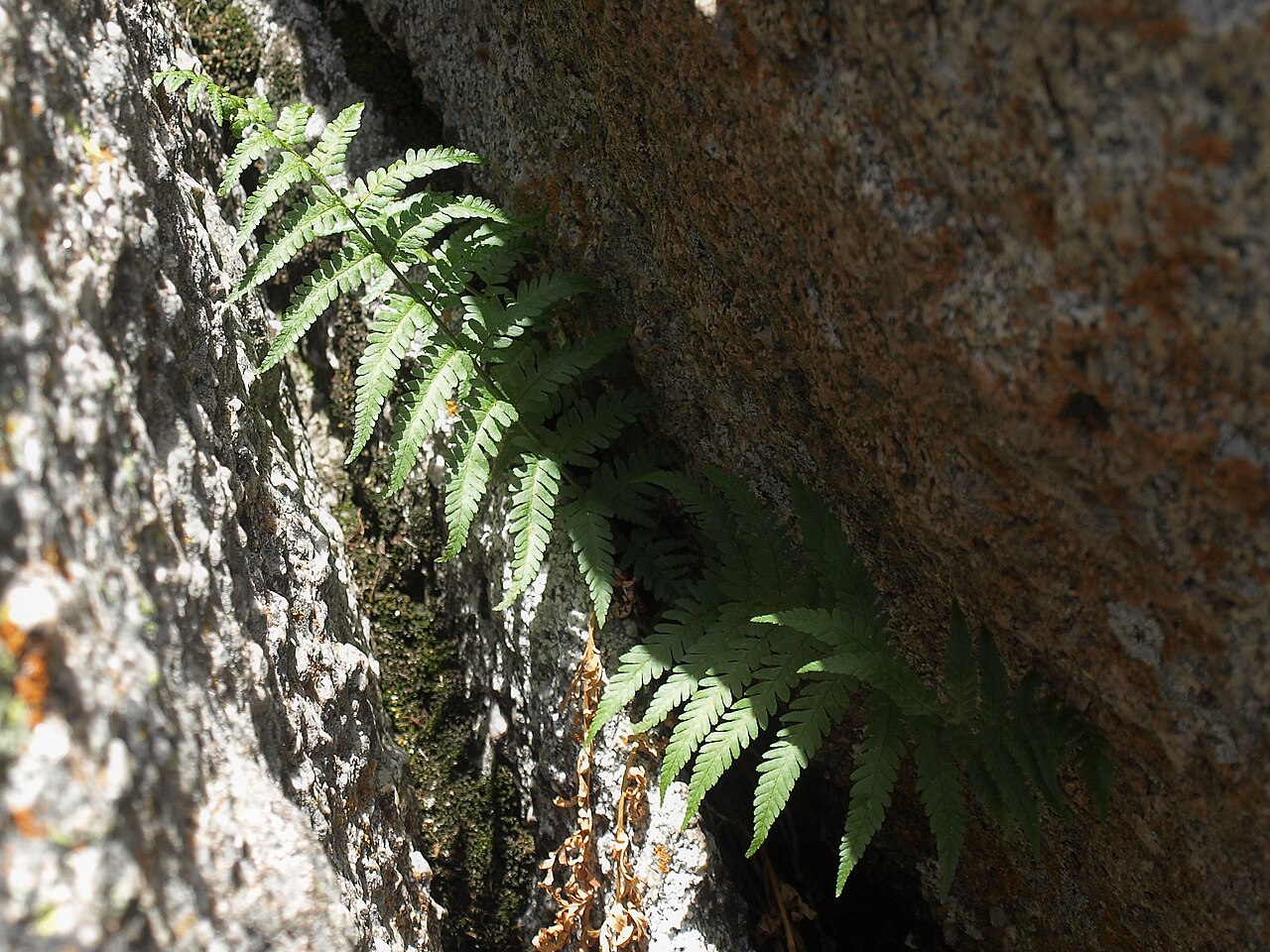
- Rock gardens and boulder plantings: grows naturally in shaded talus and crevices
- Deer-resistant plantings: rarely browsed by deer or rabbits
- Native mountain gardens: for shady, rocky sites within its western and northern range
- Fern collections: the parent of many crested and dwarf garden selections
Wildlife & Ecological Value
Like most ferns, male fern has no flowers or fruit for wildlife, but its large clumps provide shelter and structure in rocky woodlands.
For Pollinators
Ferns reproduce by spores and are not pollinated. Male fern offers no nectar or pollen, but its clumps shelter beetles, spiders and other small invertebrates.
For Birds
Ground-nesting birds and small songbirds use dense fern clumps as cover. The fronds and scales are sometimes used as nesting material.
For Mammals
Its chemical defenses make male fern unpalatable to most mammals. Deer, rabbits and livestock generally avoid it, which is why it persists in heavily browsed woods.
Ecosystem Role
On talus slopes, cliff bases and rocky ravines, its deep crowns help stabilize thin soils and rock debris. In the arid West it marks cool, moist microhabitats such as north-facing rock crevices, spring-fed ravines and old-growth forest patches that hold moisture through the summer.
Cultural & Historical Uses
Male fern was one of the best known medicinal plants of Europe for nearly 2,000 years. Ancient Greek and Roman physicians described it, and from the 18th century into the 20th century an oleoresin extracted from the rhizome, known as “aspidium” or male fern extract, was a standard treatment for tapeworm. Its active compounds, filicin and related phloroglucinol derivatives, paralyze the worms. The same compounds are toxic to people, and the narrow margin between an effective and a dangerous dose caused poisonings, including reports of blindness. Safer drugs replaced it, and male fern is no longer used in modern medicine.
Safety note: All parts of male fern, especially the rhizome, are toxic if eaten. Never use it as a home remedy, do not eat the fiddleheads (they are not the edible ostrich fern), and keep it away from children and pets that might chew the rhizomes. Wear gloves when dividing plants and wash your hands afterward. If someone swallows any part of the plant, contact a poison control center (in the U.S., 1-800-222-1222) or a doctor right away.
In European folklore, the invisible “seed” of ferns was said to make a person invisible if gathered on Midsummer Eve, a belief that arose because ferns seemed to reproduce without flowers or seeds. In Victorian Britain male fern was popular during the “pteridomania” fern craze, and collectors selected many crested and frilled forms of it, some of which are still sold today.
Frequently Asked Questions
Is male fern native to North America?
Yes. A native subspecies (subsp. brittonii) grows in the western mountains, around the Great Lakes and in northern New England, though it is rare in many states. European male fern is also widely planted and has escaped in some places, such as New York and Rhode Island.
Is male fern poisonous?
Yes. The rhizome and other parts contain filicin and related compounds that were once used to kill tapeworms but are toxic to people and animals. Do not eat any part of it, including the fiddleheads, and keep pets and children from chewing it.
Why is it called male fern?
Old herbalists called the sturdy, coarse fern “male” and the more delicate lady fern “female.” The scientific name filix-mas means “male fern” in Latin.
Does male fern grow in dry shade?
Yes. Once established it is one of the more drought-tolerant ferns and does well in dry shade under trees, although it looks best in moist, humus-rich soil.
How do I tell male fern from marginal wood fern?
Marginal wood fern has its spore dots right at the edges of the leaf segments and is fully evergreen. Male fern has spore dots midway between the midvein and the edge, scales of two sizes on the stalk, and fronds that usually die back in winter.

Looking for a nursery that carries Male Fern?
Browse our native plant nursery directory: Arizona · California · Colorado · Idaho & Illinois · Maine, Michigan & Montana · Nevada, New Hampshire, New Mexico & Oklahoma · Oregon · South Dakota, Texas, Utah & Vermont · Washington · Wisconsin & Wyoming

