
Brittle Bladderfern (Cystopteris fragilis)
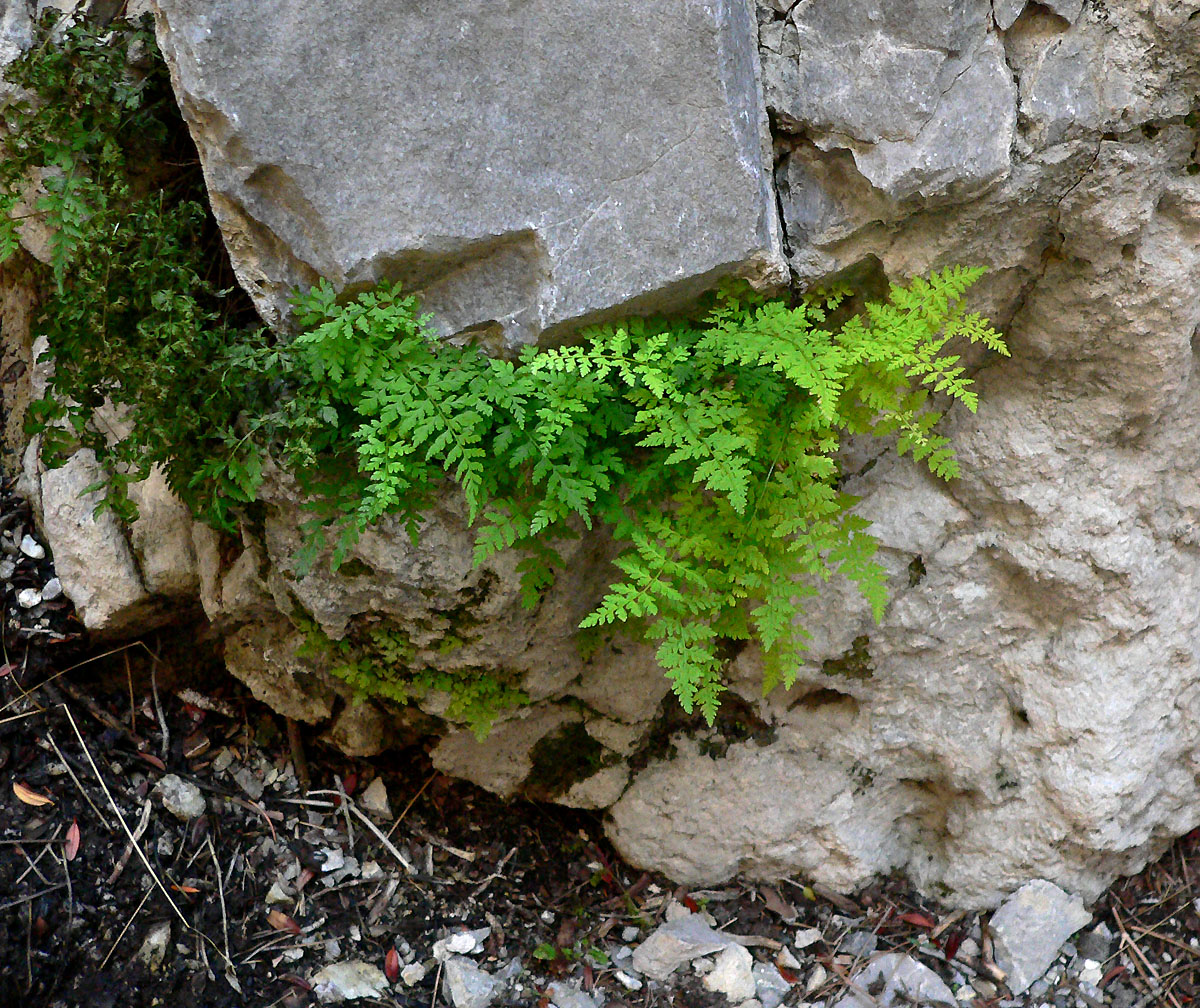
Cystopteris fragilis, known as Brittle Bladderfern, fragile fern or brittle fern, is a small, delicate, lacy fern of rock crevices, cliffs, ledges and shaded rocky woods. Its soft, bright green fronds are usually 4 to 16 inches long and grow in loose tufts from a short, stout rhizome.
It is one of the most widespread ferns in the world, found across the cooler parts of North America, Europe, Asia, and on mountains in Africa, South America and Australasia. In the United States it ranges from Alaska and the Pacific states across the Rockies and Great Plains to the Great Lakes and New England, and south in the mountains to Arizona, New Mexico and North Carolina.
It is often one of the first ferns to unfurl in spring. In dry summers the fronds may wither early, and the plant resprouts after rain or waits until the next year. The name “brittle” refers to the stalks, which snap easily. It is a charming, easy fern for shady rock gardens, stone walls and woodland edges.
Identification
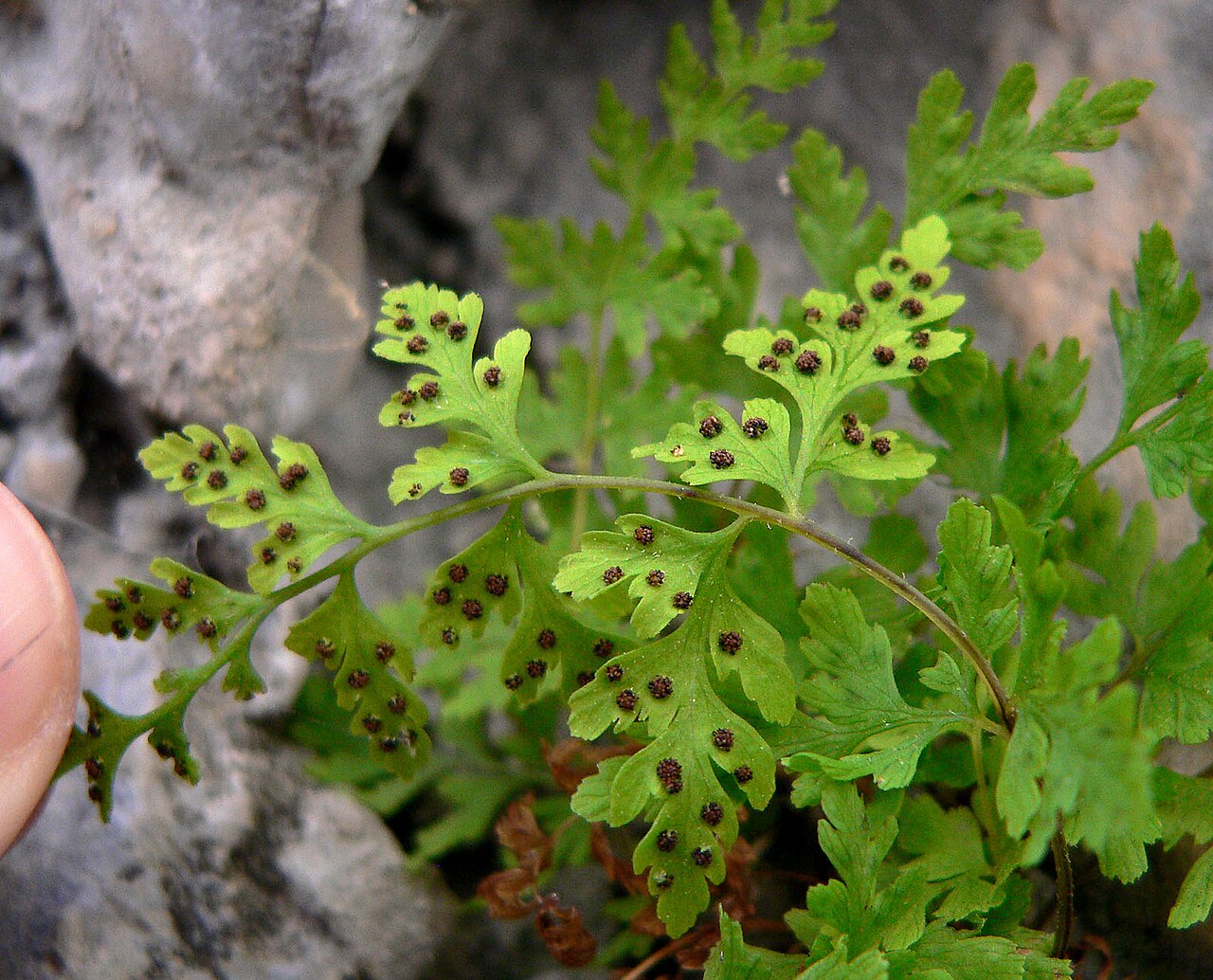
Look for small tufts of soft, lacy, twice-divided fronds with thin, brittle stalks growing from rock crevices or rocky soil, with small round sori covered by a hood-like flap on the undersides.
Growth Habit
A small, tufted, deciduous fern with a short, compact rhizome. The fronds arise close together in a clump rather than spreading widely along a creeping rhizome. Mature fronds are usually 4 to 16 inches long.
Fronds
The blade is lance-shaped, widest just below the middle, and twice divided (bipinnate), with toothed or lobed leaflets. The stalk (stipe) is shorter than or about as long as the blade, thin, dark brown at the base and straw-colored to green above, and it breaks easily. Fronds are thin and soft, not leathery.
Sori
Round sori sit on the veins on the underside of the leaflets. When young, each is covered by a thin, hood-shaped or inflated flap (indusium) attached on one side, which shrivels as the spores mature. This “bladder” gives the genus its name. The spores are dark and spiny.
Seasonal Changes
Fronds unroll early in spring and are deciduous. In dry sites they often turn brown and wither by midsummer, then may produce a few new fronds after late-summer rains.
Look-alikes
Lowland brittle fern (Cystopteris protrusa) of eastern woodlands grows from a creeping rhizome that extends beyond the current fronds, and grows in soil rather than rock. Bulblet fern (Cystopteris bulbifera) has long, narrowly triangular fronds with small green bulblets underneath. Mackay’s brittle fern (Cystopteris tenuis) has more upward-angled leaflets. Woodsias have indusia divided into hairs or scales that surround the sorus from below.
Quick Facts
| Scientific Name | Cystopteris fragilis |
| Family | Cystopteridaceae (bladderfern family) |
| Plant Type | Small deciduous fern |
| Mature Height | 4–16 in |
| Mature Spread | 6–12 in |
| Growth Rate | Moderate |
| Sun Exposure | Part shade to full shade |
| Water Needs | Moderate; tolerates brief drought by going dormant |
| Soil Type | Rocky, gritty, well-drained soil or rock crevices with humus |
| Soil pH | Slightly acidic to alkaline (about 6.0–8.0) |
| Bloom Time | None (fern; spores in summer) |
| Flower Color | None |
| Fall Color | Fronds brown and wither by late summer or fall |
| Fruit | None (reproduces by spores) |
| Deer Resistant | Yes, generally |
| USDA Hardiness Zones | 2–8 |
Native Range
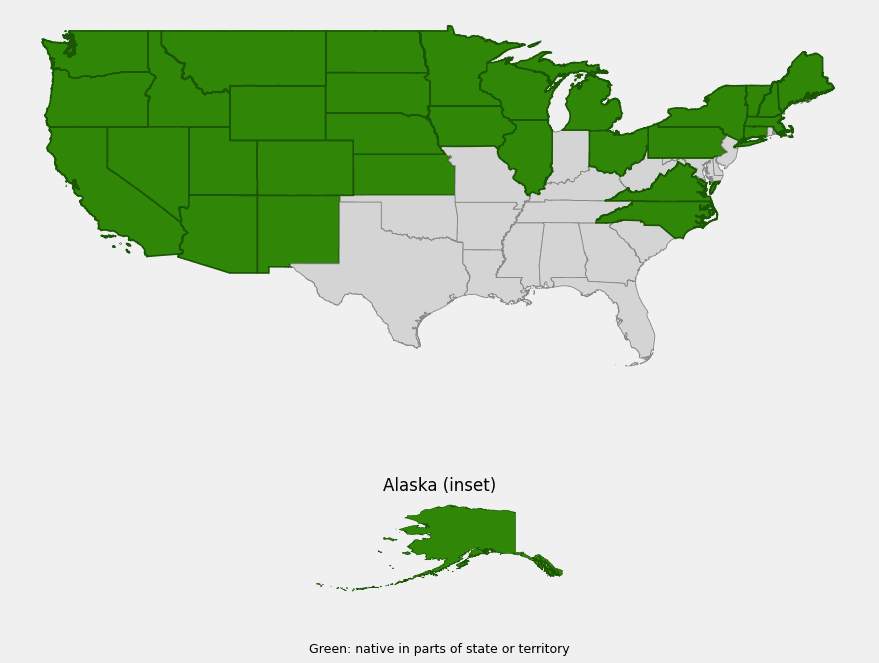
Brittle bladderfern has one of the largest ranges of any fern. It grows across the cooler parts of North America, Europe and Asia, and on high mountains farther south. In Canada it occurs in every province and territory. USDA PLANTS records it as native in Alaska and in about 30 states of the lower 48, from Washington, Oregon and California east to Maine and Connecticut, and south to Arizona, New Mexico and the mountains of Virginia and North Carolina.
It is most common in the West, the northern Great Plains, the Great Lakes region and the Northeast. In the southern and eastern parts of its range it is mostly restricted to cool, rocky places at higher elevations, and in much of the East the similar lowland brittle fern and Mackay’s brittle fern are more common in woods. USDA lists Hawaii plants as probably introduced, so Hawaii is not included here.
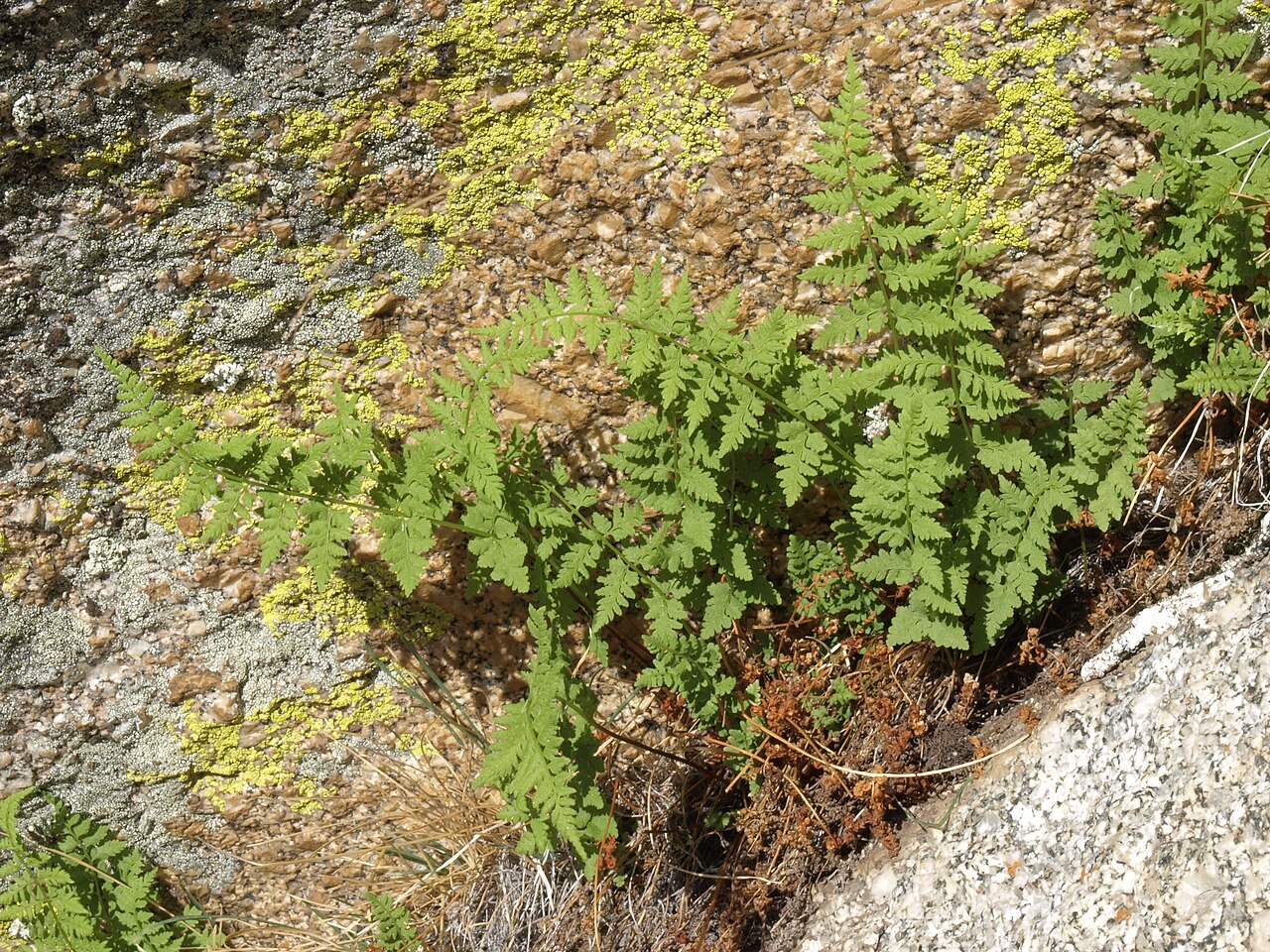
It grows on cliffs, ledges, rock walls, talus and boulders, in moist, shaded rocky woods, along streams and in alpine meadows, on limestone as well as granite, sandstone and volcanic rock. It ranges from near sea level in the north to above 12,000 feet in the western mountains.
📋 Regional plant lists featuring Brittle Bladderfern: New York, Pennsylvania & Northern New Jersey · Idaho, Eastern Oregon & Eastern Washington · Ohio & Indiana · Montana & Wyoming · Michigan, Wisconsin & Eastern Minnesota · Nebraska, Kansas & Eastern Colorado · Utah & Western Colorado · Connecticut, Massachusetts & Rhode Island · New Hampshire, Maine & Vermont · Maryland, Virginia & West Virginia · Delaware, Southern New Jersey & Long Island · Arizona & New Mexico · Illinois, Iowa & Missouri · Alaska · North & South Carolina · North Dakota, South Dakota & Western Minnesota · Western Oregon & Western Washington · California & Nevada
Growing & Care Guide
Brittle bladderfern is a small, easy fern for shady, rocky spots. It is very cold-hardy and adaptable to soil pH, and it looks best tucked into a stone wall, among boulders or along a shaded path where its fine texture can be seen up close.
Light
Part shade to full shade. It tolerates morning sun in cool climates, but hot afternoon sun scorches the thin fronds.
Soil & Water
Plant in gritty, well-drained soil with some leaf mold, or in the crevices of a shaded rock wall. Keep it evenly moist in spring. It tolerates dry spells by going dormant early, but regular moisture keeps the fronds green longer into summer. Avoid soggy soil.
Planting Tips
Set nursery-grown plants in spring with the crown at soil level, ideally against a rock where roots stay cool. Mulch lightly with leaf litter. Plant several together for a fuller look, since single plants are small.
Pruning & Maintenance
Remove withered fronds in fall or early spring if you want a tidier look, or leave them as mulch. It needs no fertilizer and little other care.
Propagation
Divide established clumps in early spring, or grow from spores sown on sterile, moist mix. Spores germinate readily, and young plants can reach a useful size in a year or two. Never dig ferns from the wild.
Landscape Uses
- Shade rock gardens: fine, lacy texture among stones
- Stone walls and steps: grows naturally in rock crevices
- Woodland gardens: early spring greenery in shade
- Containers and troughs: small enough for a shaded trough
- Native fern collections: one of the most widespread ferns in the world
Wildlife & Ecological Value
Brittle bladderfern is a small but very widespread part of rocky and woodland plant communities across much of the Northern Hemisphere.
For Pollinators
As a fern it has no flowers and does not feed pollinators directly. Its fronds give cover to small insects and spiders in rock crevices.
For Birds
It offers little food for birds, but its clumps add cover and insect life to cliff and woodland habitats used by wrens, phoebes and other small birds.
For Mammals
It is rarely eaten by deer. Small mammals such as pikas and voles may nibble fronds among talus and rocks.
Ecosystem Role
It is a pioneer of rock crevices, helping trap soil and organic matter on cliffs and ledges. It is also a textbook example of a polyploid species complex, with several chromosome races, and it has given rise to hybrids with other Cystopteris species.
Cultural & Historical Uses
The genus name Cystopteris comes from the Greek kystis (bladder) and pteris (fern), for the inflated, hood-like indusium that covers young sori. The species name fragilis means “brittle,” for the easily snapped stalks.
Linnaeus first described the plant in 1753 as a Polypodium. It was moved to the genus Cystopteris in the early 1800s. Fern specialists now treat it as a complex of closely related forms, and several former varieties are recognized as separate species.
Because it grows almost everywhere cool and rocky in the Northern Hemisphere, it is one of the ferns most often met by hikers, climbers and naturalists, from Alaskan sea cliffs to the alpine zone of the Rockies and the limestone ledges of the Midwest.
Frequently Asked Questions
Why is it called brittle bladderfern?
“Brittle” refers to the thin frond stalks, which snap easily. “Bladder” refers to the small, hood-like flap that covers each young spore cluster.
Is brittle bladderfern evergreen?
No. It is deciduous and often one of the first ferns up in spring. In dry summers the fronds may wither by midsummer.
Does brittle bladderfern grow on limestone?
Yes. It grows on limestone and many other rock types and tolerates acidic to alkaline conditions.
How is it different from bulblet fern?
Bulblet fern has much longer, narrowly triangular fronds with small round bulblets on the underside that drop off and grow into new plants. Brittle bladderfern has shorter, lance-shaped fronds and no bulblets.
Can I grow brittle bladderfern in my garden?
Yes. Give it shade, a gritty, well-drained soil with some humus or a rock crevice, and moderate moisture. Buy nursery-propagated plants rather than digging them from the wild.

Looking for a nursery that carries Brittle Bladderfern?
Browse our native plant nursery directory: Alaska & Arizona · California · Colorado & Connecticut · Idaho, Illinois, Iowa & Kansas · Maine, Massachusetts, Michigan, Minnesota & Montana · Nebraska, Nevada, New Hampshire, New Mexico, New York, North Carolina, North Dakota & Ohio · Oregon · Pennsylvania, South Dakota, Utah, Vermont & Virginia · Washington · Wisconsin & Wyoming

